Over the next two years, Britain will focus on the size of its divorce settlement with the EU, as well as on a UK-EU free trade agreement deal.

Although the UK can't negotiate any bilateral free trade deals until it formally leaves the EU, there will be informal talks over the next two years in readiness for a quick deal in 2019.
Australia has great form when it comes to doing comprehensive, meaningful free trade deals. Think Japan, Korea and China.
The big winners from a bilateral free trade agreement with the UK will be our agricultural exporters, especially beef, lamb and horticulture.
For Australian consumers, UK-manufactured goods should be cheaper. For car lovers, this could mean the best of British automotive at more affordable prices.
We'll hopefully see a better deal for Australians wanting to live and work in the UK.
Since 2008 the number of Australians working in the UK has fallen by 40 per cent.
This is a result of unlimited migration from EU countries to the UK. The only way British governments could control migrant numbers was to clamp down on non-EU migration.
And this meant Australians.
Once Britain formally leaves the EU, the situation for Australians should improve.
Finally, a post-Brexit free trade deal with Britain could mean more UK investment into Australia.
Britain is already our second-largest foreign investor after the US. An FTA could see the UK foreign investment threshold lifted to $1 billion, in line with other recent FTAs.
Britain is also looking for friends. British Prime Minister Theresa May wants to make the best of Brexit and this means opening Britain up to the world.
Contrary to those on the liberal Left, Britain will not be isolationist. Rather, it will once again engage with the world and Australia as it did prior to being sucked into the EU vortex.
Britain is already reorienting its foreign policy away from Europe. Its early focus is on English-speaking countries like Australia, the US, Canada, and New Zealand. The common values of the English-speaking world, of liberal democracy, the rule of law, and individual freedoms, have delivered peace and prosperity. Freed from the inward-looking shackles of Brussels, Britain can work together with Australia in defence of liberal democratic values in international affairs.
At a time when the global strategic landscape is so uncertain, with the rise of Russian influence in the Middle East, an ever belligerent North Korea, and uncertainty over US-China relations, there is a great opportunity for a renewed closeness in Australia's strategic relationship with Britain and for it to be a more thoughtful, strategic presence in our region.
Britain and Australia are two stable liberal democracies bookending a developing, but volatile, Silk Road.
Post-Brexit Britain will turn its focus to the engine room of the global economy, Asia, and how to solve the strategic challenges facing this region.
Australia should welcome this shift.
 Grandparents allegedly rorting the welfare system are a much bigger budget problem than multinational corporations allegedly rorting the tax system.
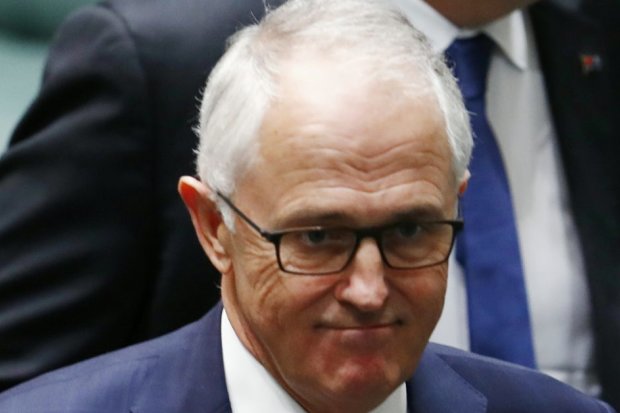 A harsh critic of his government might argue that since the federal election in July last year the government has meandered through policy and lacked a clear definition of its purpose.
 Predictably, the report got a strong
  Other changes announced are that the test for assessing whether conduct is unlawful — which is currently what offends a "reasonable member of a relevant group" — will become an objective test based on the assessment of the "reasonable member of the Australian community". Overdue procedural changes to the Australian Human Rights Commission will also be made.
 At Lincoln University, in northern England, Conservative students faced censorship this month after pointing out that their university is intolerant of free speech. The spiked Free Speech University Rankings 2017 found that 64 per cent of British universities now actively censor speech, and 31 per cent stifle speech through excessive regulation. These figures have been increasing over the past three years.
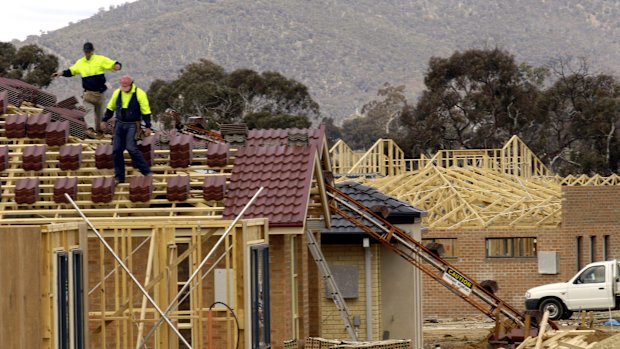 One of the biggest hurdles young people have to clear in buying their first home is saving enough money for a deposit. It takes time, and with rising house prices, the dream of owning a home keeps moving into the distance.
 When cultural values were agreed upon between the major political parties and shared throughout the community, politicians could afford to spend much of the time discussing economics. It's not that values have ever been less important than economics — because they haven't — it's just that there was no need for politicians to talk about values because those values weren't being challenged or debated. Until quite recently communities in western liberal democracies had assumed their values were settled and secure.
 The Committee of Melbourne, the lobby group behind the change are pushing to achieve 1:1 male and female representation at pedestrian crossings across the state.
 But section 18C has become such an iconic issue for such a broad group of Australians that its continuing presence on the statute books is utterly unsustainable — and calls to ignore section 18C and the freedom of speech concerns it raises only act to further motivate those who passionately believe in the repeal of section 18C and the consequent restoration of the human right to freely express oneself.
 The report lists a range of options for reform, including replacing the words "offend", "insult", and "humiliate" with "harass". Nowhere near enough, but at least it's a step in the right direction.