All Australians are equal. This principle is the basis of our freedoms and a cornerstone of the Australian constitution.

Any proposal that seeks to enshrine division between Australians on the basis of race should therefore be rejected. And it is why any suggestion of a treaty between Indigenous and non-Indigenous Australians should also be rejected.
Rarely has such a powerful defence of equality and the value of the individual been expressed as on a hot afternoon in Washington DC on 28 August 1963.
At 3pm that afternoon in front of the Lincoln Memorial, Martin Luther King jnr created history when he uttered the words: "I have a dream that my four little children will one day live in a nation where they will not be judged by the colour of their skin, but by the content of their character."
These words are as real and as relevant in 2017 as they were 53 years ago.
It is this sentiment of equality that Australians should bear in mind when considering proposals to change the Australian constitution.
The most recent proposal for constitutional change is contained in the Uluru Statement, released last week.
The Uluru Statement is the culmination of three days of discussions amongst Indigenous leaders at Uluru last week. The meeting in Uluru follows six months of community consultations with Indigenous leaders held by the government-appointed Referendum Council.
The Uluru Statement is a response to the key issue these deliberations were established to address: whether Indigenous leaders support the proposal to "recognise" Aboriginal and Torres Strait Islanders in the Australian constitution, and if so what form the change should take.
The Statement calls for a treaty between Indigenous and non-Indigenous Australians, and also proposes the establishment of a new constitutional body to represent Indigenous Australians: "We call for the establishment of a First Nations Voice enshrined in the constitution."
These are radical proposals that will divide Australians on the grounds of their racial identity. These proposals are the manifestation of radical identity politics.
Formally dividing Australians by law is a dangerous idea, doubly so when that division is done on the basis of race, skin colour, ethnicity or indigeneity.

A separate body, whether it is called an Aboriginal and Torres Strait Islander peoples advisory body, a new chamber of the Commonwealth parliament, an Indigenous parliament, or a First Nations Voice undermines the idea that all Australians are equal under our democratic system. All policy decisions are Indigenous policy decisions, because Indigenous Australians are Australians.
Treaty, which is sometimes referred to by the Yolgnu word for treaty, "Makarrata", would divide Australia into separate nations. Aboriginal and Torres Strait Islander peoples are Australian. The idea that they are separate from Australia is dangerous, and a treaty between Indigenous and non-Indigenous would divide Australians according to race.
Australia is one of the oldest and most successful democracies because our constitution is based on the idea of the equality of all Australians.
If any constitutional changes are to be contemplated they should make the constitution truly colour-blind and remove all references to race in the document.
There are two current sections in the Australian constitution that refer to race — sections 25 and 51 (xxvi). Section 25 was intended to prevent state governments from restricting the right to vote according to a person's race. Section 51(26) gives the Commonwealth government the power to pass race-based laws.
Section 25 is unnecessary because equal voting rights are already guaranteed under the constitution. Section 51(xxvi) is discriminatory and illiberal. Race-based laws are incompatible with the equality of all people.
Taking out these sections removes the Commonwealth government's constitutional power to divide Australians.
If these two sections are removed, no new references to race, or skin colour, or ethnicity, or indigeneity should be added.
I believe there should be no references to race in the constitution. The constitution should not divide Australians according to race.
Australia's success as a free and prosperous country is founded on the idea that all humans are of equal worth. Regardless of race or ethnic background, all Australians must be treated equally by the government and by the law.
In the constitution, all Australians should have the same rights and should share the same responsibilities.
Race has no place in the Australian constitution.
 Each is suffering from a combination of circumstances beyond their control as well as from their own mistakes.
 It is easy to attribute this to circumstance. May is the preferred Prime Minister by 61 per cent of voters; just 23 per cent want UK Labour leader Jeremy Corbyn, the incompetent babbling unreconstructed Marxist.
 Are Labor's plans a retreat to the 1970's or a preview of the developed world's future? Is Theresa May a "Red Tory" excising Thatcherism or a politician determined to claim the sensible centre? Is there a role for the state in setting wages or running trains, and should the voting age stay at 18 or be cut to 16?
 Nevertheless, last week they wrote to the Minister for Infrastructure and Transport, Darren Chester, strongly encouraging immediate action and "strengthened regulation" for drone technology.
 Belgravia Leisure, which operates the Council run Auburn Ruth Everuss Aquatic Centre, has said that it decided to erect the curtain to "overcome cultural barriers and encourage Muslim women to use the pool".
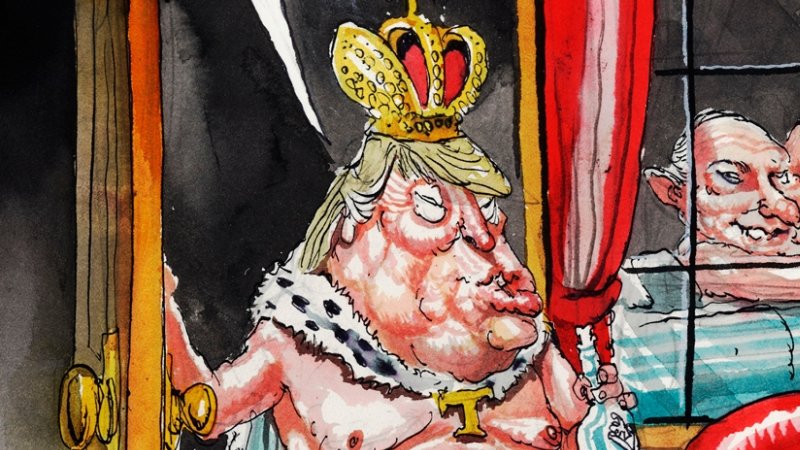 The stakes are high: intelligence methods potentially compromised; future access to vital intelligence on terrorist plots and other threats jeopardised; diplomatic relations with allies and partners strained; and, in some cases, the lives of agents put at risk.
 The government last week announced a package of reforms, including the abolition of suspended sentences and a new procedure for managing offenders released on parole. While prison is absolutely necessary for violent criminals, these reforms acknowledge that for those criminals we do release into the community, we need more options for managing their behaviour.
 Yet this approach is exactly how most western governments are tackling the question of skyrocketing electricity bills.
 In the House of Representatives on March 11, 1999, Peter Costello, then treasurer, accused the ALP of lacking discernible values: "The Labor Party stands for nothing but populist oppositionism."
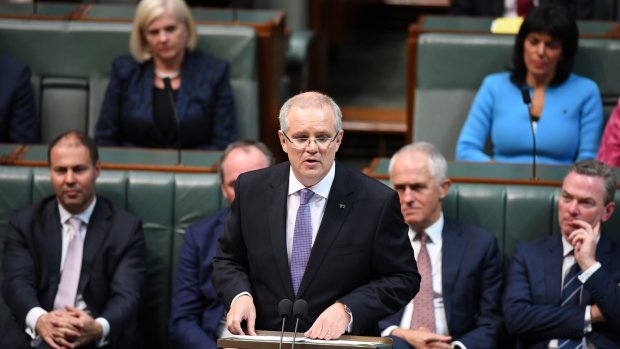 A unique period in Australia's modern history is drawing to a close. For three decades both of the country's major political parties held a commitment to policy reform based on the principles of economic liberalism.
 The debate over strengthening section 46 of the Competition and Consumer Act is about to heat up again.
 Returning to his home town and the inevitable protests for the first time since the inauguration, President Trump may have kept the PM waiting for a few hours. But it was worth it.
 While most Australians would consider employer involvement in these private financial matters to be antiquated, absurd, patriarchal, or even downright suspicious, the law currently allows considerable third party involvement in your superannuation.
 It is also when we get to hear why government should tax more. To hear some people tell it, the power of taxation is quite astonishing — it can solve any and every social ill.
 Today, the Victorian "civil liberties" advocacy organisation had this to say about Gillian Triggs, who as President of the Australian Human Rights Commission since 2012 has overseen some of the worst known abuses of section 18C:
 And that will continue under the government's
  But where is the fairness in asking the majority of Australians — three quarters of whom don't have a university qualification — to subsidise the debt of tomorrow's professional class who are likely to earn more over their lives than they will?
 It is true that the Racial Hatred Act 1995 was introduced following the tabling of three government reports in the early 1990s, but it is not accurate to say section 18C reflects the recommendations put forward in those reports. Not one of those reports recommended for a civil prohibition on offensive or insulting language.