Western Australia has always been a fast-moving, entrepreneurial, and successful state. Blessed with an abundance of natural resources, a thriving agricultural sector, and people with go-ahead attitude, WA has much to celebrate as the 2010s draw to a close.
Now is the time to take stock and consider the challenges and opportunities that WA has as we prepare to enter the first year of a new decade.
CHALLENGES
Red Tape
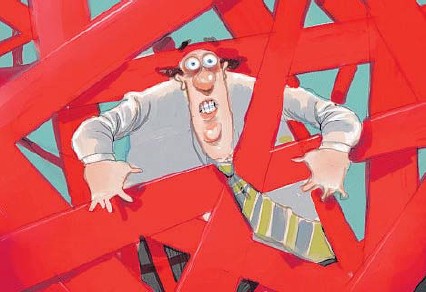
The first challenge for the West Australian economy is to cut red tape.
My recent research found WA regulations placed nearly 108,000 restrictions on businesses, organisations, and individuals. The restriction count is comparable to the Eastern States, even though they have far bigger populations than WA. There is significant work to do be done to cut the red tape burden that is weighing the economy down.
The Government has taken positive steps to cut red tape. Its willingness to work with the Federal Coalition has delivered positive results. Establishing a "one-stop shop" for environmental approvals will fast track investment in the resources sector by removing the onerous process of dealing separately with both State and Federal regulators.
Its Streamline WA project has also raised the profile of red tape reduction. The challenge now is for the government to deliver reductions that unleash the WA economy.
Green Activism
The second major challenge is to fend off the continual attempts by the green movement to undermine WA's resources and energy sectors.
The mining industry alone accounts for 40 per cent of the WA economy. Attempts by activists to shut down new mining projects through lawfare and boycotts must be resisted. The Environmental Protection Authority's plans from earlier this year to introduce a backdoor carbon tax through industry "contributions" to a carbon abatement fund has fortunately been quashed.
The Government needs to ensure that environmental policy does not take the state down an economically harmful route.
The WA Government should form sensible policy to allow the resources sector to flourish.
The move to allow fracking last year was a step in the right direction. However, the ban is still in place for 98 per cent of the state.
New gas projects will help drive down the cost of energy that is currently crippling the Australian economy.
Fair Share of GST
Thirdly, despite recent positive changes to the State distribution of GST, WA is still not receiving its share of revenue. Even with improvements, WA continues to subsidise economically underperforming states like South Australia.
West Australians should reap the full benefits of their strong economic performance and the WA Government should argue for States to retain 100 per cent of the share of the GST that they raise.
OPPORTUNITIES
Small Businesses
With red tape reduction on the cards, and the phasing in of small business tax cuts by the Federal Government, small business in WA is in a strong position to thrive. Small businesses account for 97 per cent of all businesses in WA and contribute over $48 billion to the State's economy. Small business growth promotes competition and creates employment opportunities. Favourable conditions for small business will allow WA to take full advantage of a strong culture of ingenuity and entrepreneurship.
Resources Sector
Next year will be another big year for the WA resources sector. The deal struck between Australia and the United States on mining rare earth materials will be a boon for the State's mining sector.
The ability to form new supply chains with the US offers Australia's mining industry a significant opportunity. WA has the resources to take full advantage of the new partnership. WA is already home to the largest rare earths producer outside of China, Lynas, which mines and processes rare earth oxides at Mt Weld, south of Laverton.
High iron ore prices have boosted Australia's mining exports and strong demand from Asia for Australian resources is likely to continue to grow in the new year.
The strong prices have resulted in higher-than-forecast Government surpluses, which have given the Government the opportunity to tackle the State's growing debt. While prices are expected to ease, the recent pickup in investment combined with moves to cut red tape in the resources sector will put the WA economy in a good position moving into the 2020s.
Sporting Capital of Australia
And finally, WA has the opportunity to turn Perth into Australia's new sporting capital in the new decade.
New and improved facilities will attract more sporting events. With the redevelopment of the WACA, the iconic wicket can play a greater part in world cricket. Optus Stadium has packed more Fremantle and West Coast fans in to create an even more hostile environment for the eastern clubs.
This should go a long way to boosting the odds of bringing a flag home to Perth in the 2020s.
 In this country, a committee assembled by the
  First, Mackenzie is employed at Sydney University, which is a taxpayer-funded institution. According to its annual report last year, the university pocketed a total of $710.3m in Australian government grants, plus an extra $45.5m in NSW government grants. This is hardly an insignificant amount of taxpayer dollars.
 Australian governments and regulators increasingly want to automate public administrative processes and regulatory compliance, taking advantage of new generations of technologies like artificial intelligence and blockchain to provide better services and controls with lower bureaucratic costs. There are good reasons for this. But our would-be reformers will need to study how robodebt went wrong if they want to get automation right.
 I've since shown that this was helped along by the Bureau replacing a mercury thermometer with an electronic probe that
  To take full advantage of this once in a generation opportunity, the Morrison government must aim for much more than a bare-bones FTA. It should use the existing Australia-New Zealand Closer Economic Relations Trade Agreement (CER) as a blueprint for a comprehensive agreement complete with reciprocal work rights for Australian and UK citizens.
 Becoming a hairdresser in New South Wales requires approximately 1,224 hours of study and can cost $12,060. In order to open a restaurant in the same state you must fill out 48 separate forms and acquire 72 licences.
 If that comparison seems dramatic, it is meant to be. The government's ham-fisted measures have absolutely no place in a liberal democracy like Australia.
 In an address to the Centre for Policy Development (CPD) last month, Hayne argued "a director acting in the best interests of the company must take account of, and the board must publicly report on, climate-related risks and issues relevant to the entity". Hayne appears to believe climate risk should be considered a fiduciary duty for company directors, which under the Corporations Act would mean it attracts a maximum penalty of five years in prison for a breach.
 Commonwealth public servants have had no big-picture reform narrative to work towards, and while the Coalition has spent the past few years chopping and changing prime ministers and ministers, the public service has been left alone to amuse itself.
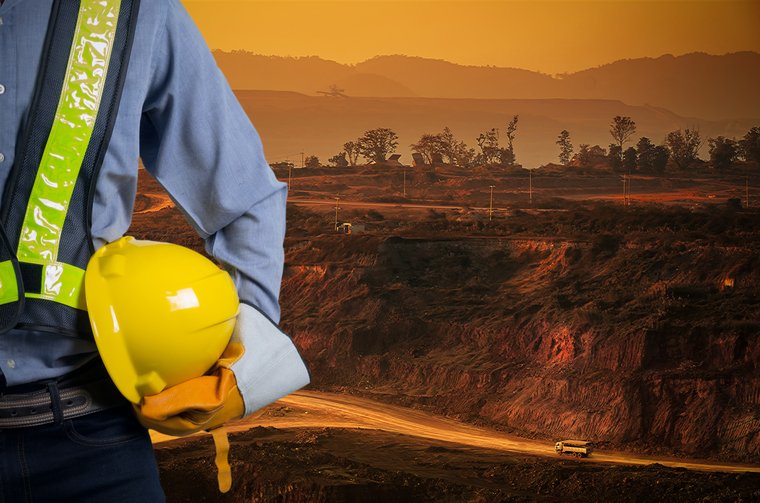 As reported in these pages on 27 November, the McGowen government has reached out to the federal government to establish a "one-stop shop" for environment approvals. This means that WA would be able to conduct the environmental assessment on major projects in the state, such as gas, gold, and iron ore developments, removing the need for assessment at the federal level as well.
 The subject matter discussed during this convention would have left anyone in the room who was not currently employed in the humanities wondering if they were witnessing the collapse of Western Civilisation. Day one began with a presentation called Ecopotency: Writing blak to power and influence in Australian ecopoetics, which was concluded by "an embodied performance of new poems and an exploration of ecopoetic spaces from the perspective of a young Munanjali queer". Following lunch, the audience enjoyed an afternoon of group self-flagellation while they listened to poems designed to "disrupt the national amnesia of the settler mythscape through dismantling the modern mythology of Australia as a settled space". They were also asked to ponder "much if not most of the built-up and over-built landscape that is the crime scene of post-Invasion Australia". In another presentation Naming without Claiming? Compositing Feminisms in the Environmental Humanities, the audience was told that "from the nature/culture binary to the notion of situation knowledges, feminist conceptual labours are arguably foundational to contemporary environmental humanities scholarship".
 Nobody had loathed Morrison's predecessor more than I had, but even I'd underestimated the way in which the Liberal party's vote would be boosted by blasting Malcolm Turnbull out. I shouldn't have, though, because there was a precedent. And so now, as we approach the tenth anniversary of the 2009 leadership spill, on the first of December, it's worth reflecting on the first time that the Liberal party vanquished its miserable ghost — and with him, the Coalition's electorally-poisonous climate change policy.
 The consequences for Westpac continued to mount. The bank is expected to be fined more than $1 billion. It lost $6 billion in market capitalisation, or 7 per cent of its value.
  It is not acceptable for bureaucrats to be running a covert political operation out of the Attorney-General's Department to silence Australians because of their political beliefs, but they are able to under the Foreign Influence Transparency Scheme legislation.
 Right now, the common law can distinguish between the legal liability of active publishers of information (like newspapers and broadcasters) and the passive platform operators that allow users to publish information themselves. Courts decide where this distinction is drawn according the unique facts of each case.
 New research released today by the Institute of Public Affairs finds that President Trump has overseen a $45.6 billion ($31 billion USD) reduction to the cost of red tape since 2017. That is the equivalent to around 20 new hospitals, 15 years work of Gonski 2.0 education funding, or four years' worth for funding for the NDIS.