Australia is not a racist country and the Australian Football League should know better than to give its support to a movement that says that it is.
 Before round two kicked off on 11 June, players from Collingwood and Richmond announced they would "take a knee" in support of Black Lives Matter, the international protest movement which claims to oppose police violence against black people. By the end of the round, all players at every match had performed the ritualistic pre-game kneeling. Like true rebels, this was all carried out with the approval and support of their clubs and the AFL administrators.
Black Lives Matter is on its face a phrase that is unobjectionable but masks a much more radical set of demands. The entire premise of the Black Lives Matter movement is that Western society structurally impedes racial equality and that this can only be cured by fundamental structural change to Western institutions.
One wonders what is it that the AFL and the clubs and the players believe when they say they support Black Lives Matters' radical ideas to defund and abolish the police, "disrupt the Western-prescribed nuclear family structure", or dismantle capitalism as one of the "state structures" which disproportionately harms black people. Surely if this is true and capitalism is immoral then the AFL must have some regrets about the corporatisation and professionalisation of Aussie rules and its transformation into an entertainment consumption product. Likewise, the players should be happy to sacrifice their salaries and lucrative sponsorship deals and play as amateurs for the love of the game.
Perhaps the Aussie rules establishment is just hopelessly naïve about this but more realistically the AFL simply doesn't care. In recent years the league has institutionalised political grandstanding and moralising to members and spectators as a central part of the game. The league's longstanding support to the campaign to divide Australians by race in the Australian Constitution and its support for changing the definition of marriage in 2017 has coincided with a condescending mission to change the values of fans. In 2019 the AFL allowed Behavioural Awareness Officers to patrol fans who were barracking a bit too passionately for their team at the AFL-owned Marvel Stadium.
Aside from the political moralising, the AFL also treats its supporters with contempt with the way it manages the game. Aussie rules fans are by and large traditionalist about the game they love, but the AFL's constant and arbitrary rule changes have confused spectators and not only changed the look of the game but highlights the AFL's faith in its ability to micromanage the game to a state of perfection.
The AFL as an organisation holds all the biases, assumptions and blind spots of any group of people who studied social science degrees at university and watch the ABC. Like many corporate entities in the West, they believe in central plans, identity politics, and climate change. They can not fathom why anyone would boo Adam Goodes, get upset by players "taking a knee", and probably haven't met anyone who didn't think Donald Trump was a fascist dictator.
An enduring mystery is why it is that the AFL which is supposedly a membership-based competition can have the same resemble the divisions that exist between other elites and the so-called deplorables. One explanation might make sense of the arrogance of the AFL. To understand the nature of the AFL it is necessary to understand the nature of "swamps". While swamps are usually associated with entrenched and self-serving public sector institutions, swamp-like behaviour can be observed in private sector bureaucracies such as sports administrators. The ideal that the monopolistic AFL would act selflessly and in the best interests of members is unrealistic. Individuals act in their own best interest, and this is no less true of the individuals in the AFL. As American public choice theorist William A. Niskanen observed, the bureaucrat is "not entirely motivated by the general welfare" ― or in the AFL's case the wellbeing of the game and service to the members.
The ambition to establish and always expand the "national competition" highlights the AFL's obsession with increasing its own prestige. In the 1980s and 1990s, the league's expansion into South Australia and Western Australia diminished the state leagues and left fans in those states with two teams to choose from in the national league. The end result was less choice for fans in a more distant sport, but a more prestigious AFL. In recent years, vast resources have been committed to creating new clubs in the rugby heartland of Western Sydney as well a second club in Queensland which despite the priority treatment they have been given, have had only limited or no success on or off the field after nearly a decade of operating.
All of this was possible because the AFL had monopolised the sport and without competition could rely on the automatic support of people who loved Aussie rules and had no other choice. And when the state governments shut down the country in response to the pandemic we found out that the league was not so secure. Reports suggested only four of the 18 clubs could survive if the 2020 season didn't go ahead, and the AFL itself had to take out a $500 million loan to get it through the year.
Contrast this with the enviable situation in the rugby states. The National Rugby League Commission's new chairman Peter V'landys has been a champion for the return of sport in Australia. Despite the catastrophist claims made by the likes of the Australian Medical Association, V'landys argued that rugby league should never have shut down during the pandemic and successfully set the 28 May as the NRL restart ― a fortnight before the AFL returned. He told 2GB that he couldn't see why there couldn't be a crowd at the first NRL game back. V'landys said "you have to base it on data, not emotional scare-mongering clichés … They've got no data to show. The infection rate is less than half a per cent ― how low do we need to get it?" Those are the words of a man that is committed to representing the fans, while Aussie rules fans are consigned to the AFL swamp.


 On all likelihood, the fee hike will mean a larger bill for the Australian taxpayer as many humanities students leave university without the skills needed to get a job and start to pay back their HECS debt.
 The demand to remove from public life any acknowledgment of anyone or anything identified as potentially racist has existed in various forms for a number of years but has gained impetus in recent weeks through the Black Lives Matter movement.
 In response to Scott Morrison's suggestions that this amounts to "coercion", Beijing has retaliated with the suggestion that Australia needs to do some "soul searching" and that the "racist incidents" were "based on a host of facts".
 In London, two bronzes of Winston Churchill were defaced, one of them daubed with the words "racist". In Leeds, a statue of Queen Victoria was graffitied with the words "racist", "murder" and "slave owner".
 This year marks the 250th anniversary of Captain Cook's landing at Botany Bay, so even before the Black Lives Matter protests were exported to our shores, a showdown over how we view the past seemed inevitable. With this in mind, Connor Court Publishing has organised a reprint of the book Captain James Cook, R.N. 150 Years After.
 The scheme HomeBuilder provides eligible owner-occupiers with a grant of $25,000 to build a new home or substantially renovate an existing home. The government claims HomeBuilder will assist the residential construction market by encouraging the start of new home builds and renovations.
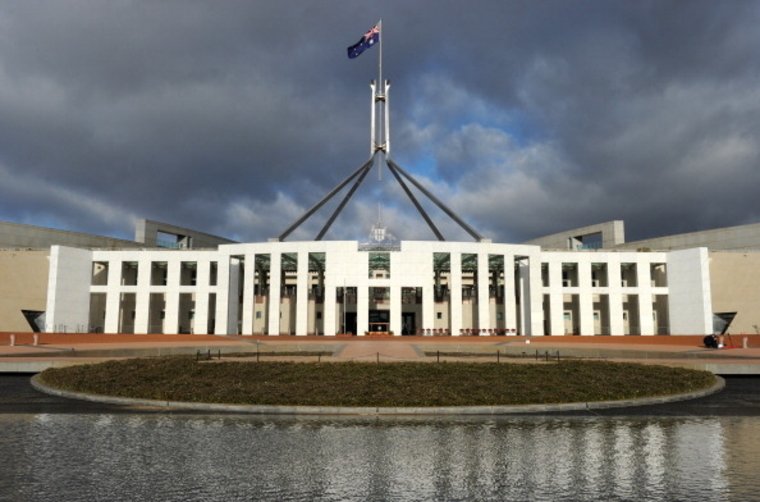 When he stood up at the
  Long before the lockdown measures to prevent the spread of COVID-19 were introduced, private sector wages were stagnant, job creation was at a crawl and there were fewer businesses per capita compared with a decade ago. Underemployment, where workers have a job but not enough hours, has been steadily rising and has not been below eight per cent at any time in the past six years. Youth unemployment, which spiked to almost 20 per cent in the wake of the 1990-91 recession and steadily trended down to 7.6 per cent in August 2008, has averaged 12.1 per cent since the global financial crisis.
 As part of his carefully branded "jobmaker" plan, the prime minister has called on big business and unions to come together at the negotiating table for the sake of our shared economic future. The idea is to emulate the Accords of Bob Hawke, which were similarly drawn up with the input of union leader Bill Kelty to help Australia out of a tough economic spot.
 The extent of the job losses are the worst in the nation.
 The recent call to expand hate speech laws comes in the context of an ongoing parliamentary inquiry into the Racial and Religious Tolerance Amendment Bill.