Labor's push for a so-called federal anti-corruption body would be an undemocratic and illiberal forum for legalised defamation to be weaponised against political opponents.
 The most recent call for a federal Independent Commission Against Corruption comes on the heels of last week's revelations that the CEO of Australia Post and the chairman of the Australian Securities & Investments Commission had both been stood aside pending investigations.
The first related to the awarding of luxury watches to Australia Post senior managers in late 2018, and the second to payments made by the corporate regulator for the ASIC chairman's tax advice.
These events have been exposed and are being investigated within the existing regulatory framework. The enthusiasm for a special-purpose anti-corruption body to deal with these kinds of issues deserves greater scrutiny.
The risks of wide-ranging anti-corruption agencies are not insignificant. Tackling corruption is a virtuous mission but agencies committed to this are prone to becoming kangaroo courts running show trials where the rule of law and respecting the legal rights of individuals caught up in their investigations are ignored.
In NSW, the Independent Commission Against Corruption has left a trail of destruction in its wake since its establishment in 1988. It has proved more effective at destroying lives and careers than it has at tackling genuine wrongdoing.
ICAC also has shown a tendency to exceed its legislated authority, as the NSW Court of Appeal found in the commission's pursuits of former NSW premier Nick Greiner in 1994, and the High Court found in its pursuit of former crown prosecutor Margaret Cunneen in 2015.
An explanation for why the political class would be so enthusiastic to take a chance on a federal ICAC is the opportunity to weaponise it to target political enemies.
A federal ICAC would operate as a forum for legalised defamation. As the NSW ICAC has demonstrated over three decades, being referred to ICAC carries a high political cost that can be enough to end careers.
The fact that these bodies are protected from defamation law is deeply concerning. Once they have these powers, defamatory and slanderous claims can be stated as fact, with no legal recourse for the accused.
Federal Labor is an enthusiastic supporter of replicating the NSW ICAC at the commonwealth level. Labor and shadow attorney-general Mark Dreyfus have overseen no fewer than 10 referrals of Coalition MPs to law enforcement bodies since 2015. None has resulted in any charges.
Although in opposition, in 2019 my freedom-of-information request revealed that Dreyfus personally directed the bureaucrats in the Attorney-General's department administering the Foreign Interference and Transparency Scheme to target conservative activists speaking at the Conservative Political Action Conference in Sydney. Conference organiser Andrew Cooper received a letter from the department to produce information and correspondence related to the conference within 14 days or risk being jailed for six months.
One proposal has been introduced to parliament this week. Known as the Australian Federal Integrity Commission and introduced by federal independent MP Helen Haines on Monday, it would allow public hearings to take place when it is in the public interest and allow any member of the public to make complaints.
Public interest is an ambiguous concept that would ultimately only be determined by the commission itself. In other words, it would have the power to run inquiries and hearings at any time and into any matter it chooses at its discretion. Allowing any member of the public to make complaints will be used most of all by the political class.
Like the NSW ICAC, the body proposed by Haines would be empowered to make findings of fact. In a court of law, allegations of facts are fiercely tested and proceedings are governed by the rules of evidence and the presumption of innocence. This is not the case at ICAC.
Over centuries the institution of parliament has developed the traditions and practices, based on intense partisanship and its adversarial structure, to scrutinise its members and hold members of the government to account.
Many modern politicians would prefer to outsource this and have anti-corruption agencies do their work as parliamentary opposition for them.
The federal government is in a no-win position. Since it committed to introducing some kind of anti-corruption body in 2018, it has tried to thread the needle on a proposal that would avoid the excesses of NSW ICAC. Every instance of delay opens it to criticism that it is weak on corruption.
Government wrongdoing and shortcomings in integrity are inevitable consequences when bureaucrats and politicians have vast powers and opportunities to squander taxpayer money. The fact that the preferred solution of so many is to grant more powers to more bureaucrats is indicative that improved governance and management of taxpayer money is not on the agenda.


 Lockdowns have undermined almost every civil society institution in this country. They mandated the emptying of places of worship and that volunteers cease to perform work in many instances. The financial hardship that resulted from this policy drained the pockets of donors and the charities they support.
 ACT Labor will continue to govern, as it has done since 2001, but the big winners were the Greens, who have more than doubled there representation. The 25 seat ACT Assembly will have ten Labor members (down from 12), nine Liberals (down from 11), and six Greens (up from two). The Greens already have a seat in cabinet, in exchange for propping up the minority Labor government, and will now be even more influential. The radical Greens are a party of government in the ACT.
 The paper is by academics at James Cook University's ARC Centre for Excellence for Coral Reef Studies. It is a scary headline. But is it true?
 Victorians are now divided exactly down the middle. Any sense of community unity and "we're all in this together" has long since disappeared.
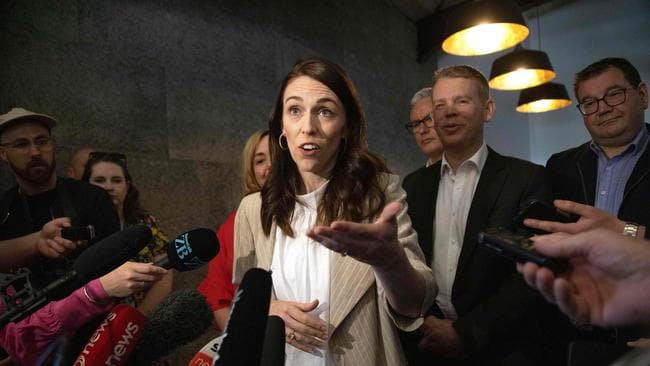 The same could be said about New Zealand Prime Minister Jacinda Ardern. She's a brilliant politician, but has been a grossly incompetent administrator. And with her seismic re-election on Saturday, New Zealand is in for a dangerous three years.
 The RBA's decade-long experiment with record low interest rates has created an economy that is dependent on low borrowing costs and has emboldened the Federal government to dramatically blow the government debt out to $1.7 trillion over the next decade.
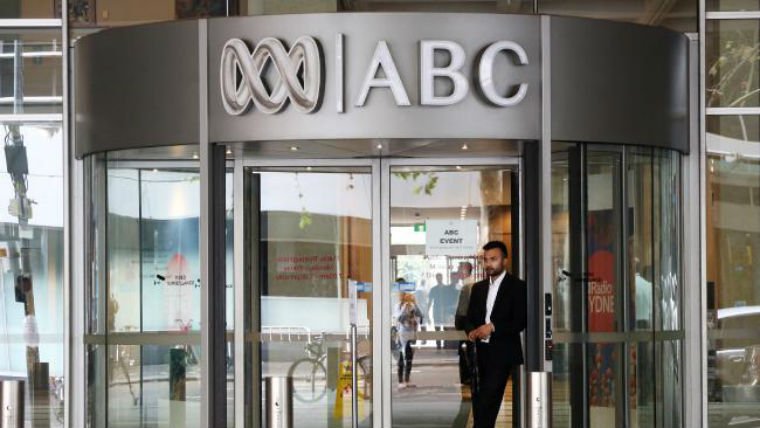 Congratulations! You have just started an internship at Australia's public broadcaster, the ABC.
 After seven hard months of social isolation, economic pain and despair about the future, the time has come to change course.
 It perfectly describes the popular reaction to this week's federal budget and the news the country faces more than a trillion dollars of government debt.
 This narrative creates anxiety because it follows that there really is a climate emergency and that we have pushed nature out of balance.
 Maybe after living under Boris Johnson's restrictions for the next six months, you'd want to get as far away from your house as possible. Or maybe Australians ― some of whom haven't been able to leave the house for more than two hours since July ― wanted to visit you.
 My modelling has estimated that it could take until 2045-46 for the Commonwealth government to deliver a budget surplus, with total debt expected to peak at $2.05 trillion and not be paid off until 2079-80.
 Instead of sticking to its guns, the Rob Guest Endowment swiftly capitulated, issued a grovelling apology, vowed to do better and cancelled the scholarship for 2020. So much for supporting the younger generation and "helping them achieve their dreams" as the endowment proudly purports to do.