Showing posts with label The Sydney Morning Herald. Show all posts

Monday, July 20, 2020

No Excuse For Shutting Parliament In The Digital Age

There has never been a time since the end of World War II when it has been more important to scrutinise government and hold politicians to account.  There are monumental issues for the federal Parliament to debate.  The future of JobKeeper, suppression v elimination strategies for COVID-19, and the billions of dollars that are flying out of Treasury at the moment.
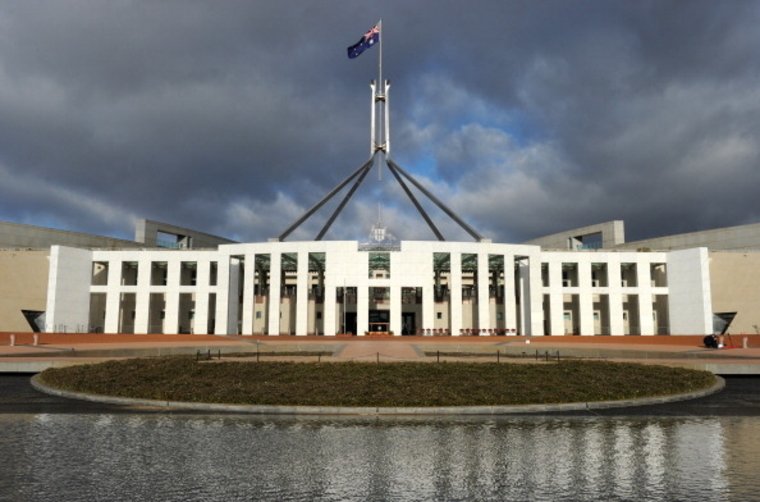
Parliament is the only way for these debates to be had and decisions to be adequately scrutinised.

Our elected politicians have been asking businesses and schools to change what they are doing to become "COVID-safe" workplaces.  Anything a politician asks a business owner to do, MPs should do also.

At the beginning of the pandemic, Prime Minister Scott Morrison said:  "Everyone who has a job in this economy is an essential worker.  Every single job that is being done in our economy with these severe restrictions that are taking place is essential."

On Saturday Morrison announced that Parliament's next sitting fortnight, due to begin on August 4, has been cancelled due to medical advice.  He said he did not believe it would be right to exclude parliamentarians from Victoria from the Parliament.

The federal Parliament sat during World War 1 and WWII.  During the blitz, Winston Churchill ensured the British Parliament still sat.

Federal Parliament has been called off next month after Prime Minister Scott Morrison was warned it was too high risk for Victorians to attend.

If what we have is a COVID-suppression strategy, where breakouts are inevitable, the PM and premiers have rightly said we cannot keep opening and shutting down the economy.  Shutting down Parliament seems to go against that advice.

In Britain, even at the height of the pandemic crisis, the Parliament was able to come together remotely.  On April 21, it approved a motion that would allow members to participate either virtually or physically in the chamber.  MPs could take part remotely over the course of any "hybrid proceedings".

Why is this too difficult in Australia?  Finance Minister Mathias Cormann said it was "not practical" for Parliament to run via video-conferencing.

Yet there is no legal or constitutional barrier to holding virtual sittings of Parliament.  Standing orders could be altered or legislation passed here, as in Britain, to allow for members and senators to participate in parliamentary sittings virtually.  Our politicians are already doing as much for parliamentary committees.

It is important in a parliamentary democracy that our leaders can still come together via reasonable modern means, during a pandemic, to make decisions on behalf of the people who elected them to serve.

There is an important principle at stake here.  In Victoria, the state that is the origin of the latest outbreak, the Andrews Labor government has blocked all attempts to scrutinise decisions through the parliamentary accounts and estimates committee and it has suspended Parliament indefinitely.  This is a terrible precedent for the federal government to follow.

Scott Morrison said earlier this year that MPs have a bigger job to do in their communities than in Canberra.  Which is absurd.  The job of an MP and senator is to represent the communities in Parliament, so their concerns are taken up by the government.

Parliament is where the decisions that politicians make are explained to the public.  The community still does not know whether governments are pursuing a strategy of suppression or elimination.  The goalposts are constantly changing and the Parliament is where those decisions can be debated and scrutinised.

"We're all in this together."  That's the phrase the Prime Minister has led with.

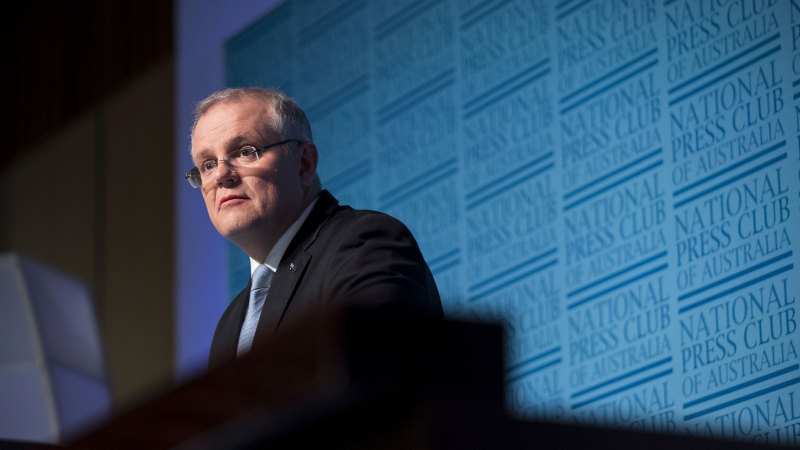
At his National Press Club address last month, upon receiving a question from Channel Ten's Peter van Onselen, Morrison declined to follow the lead of New Zealand Prime Minister Jacinda Ardern and cut the pay of politicians and senior public servants by 20 per cent, to match the pain going on in the private sector.  The cancelling of Parliament is just another reason that we are not all in this together.

Thursday, December 12, 2019

A Fake Assault On ''Fake News'':  Government's Intervention Is As Chilling As It Is Insulting

The Morrison government bills its proposed digital platform reforms, announced on Thursday, as "world-leading".  That may be true, in the same way that China's "Great Firewall" — a tool of authoritarian suppression — was "world-leading" when it began in the 1990s.

If that comparison seems dramatic, it is meant to be.  The government's ham-fisted measures have absolutely no place in a liberal democracy like Australia.
The proposed laws come as a response to the Australian Competition and Consumer Commission's digital platforms inquiry, which in itself was largely a response to complaints by conventional media outlets about the impact of social media on their business models.

Not that they don't have a point.  There is an uneven playing field, with broadcasters and publishers subject to a suite of regulations that digital platforms are not, ranging from advertising standards to defamation law.  But the way to achieve "platform neutrality" — as the government calls it — is to scrap said regulations, not apply them to new players in ways that are almost certainly unworkable.

But what should worry us most is the proposed remedy for "fake news" — fabricated stories on dubious websites purporting to be legitimate reporting.  Citing the "increased prevalence of fake news and disinformation", the government plans to have the digital platforms develop a "voluntary" code of conduct on "news quality", overseen by the Australian Communications and Media Authority.

For one thing, as problems go, fake news is extremely exaggerated, largely by sections of the commentariat seeking to explain away electoral phenomena such as Brexit or Donald Trump.  The conventional narrative is that huge sections of the population are being duped by nefarious conspiracy theorists flooding the internet with bogus reports.

But the evidence doesn't stack up.  Analysis of Twitter user patterns published in Science magazine this year, for example, found that more than 80 per cent of fake news sources were consumed by just 1 per cent of users and shared by just 0.1 per cent, largely on the extreme right.  In other words, most fake news is read and shared by a tiny proportion of social media users.

Even if fake news were a problem, the cure here would be much more cancerous to our democracy than the disease.  Sure, the code would be "voluntary" on paper, but that's not saying much.  We live in a world where regulators try to enforce a "culture of compliance" rather than just the laws themselves.

Companies that fail to comply with the code will just be named, shamed and beaten into submission.  And that is the pernicious rub.  One way or another, we will arrive at a situation in which unelected bureaucrats will decide what is real and what is fake, what is fit for public consumption and what is off-limits.

And how wide will ACMA cast the net?  Will it stick to obvious hoaxes containing plainly false reports?  Or will "fake news" include ill-informed opinion pieces?  Simplistic analysis?  Empty gossip?

We should be deeply suspicious of this, for the same reason we should be suspicious of every attempt by government to regulate the public debate.  The free and open exchange of ideas, reflected via the ballot box, is what confers democratic legitimacy on government.  It is not the place of government to confer legitimacy on the public debate.

John Howard has often said that in the end, the Australian people always get it right.  Scott Morrison seems to be saying that the Australian people will get it right if the government ensures they receive the right information.  It is a mindset as chilling as it is insulting.

Tuesday, November 26, 2019

Christian Porter's Defamation Reform Would Be A Catastrophic Mistake

Attorney-General Christian Porter wants social media platforms like Twitter and Facebook to be legally liable for defamatory comments made by their users.

Right now, the common law can distinguish between the legal liability of active publishers of information (like newspapers and broadcasters) and the passive platform operators that allow users to publish information themselves.  Courts decide where this distinction is drawn according the unique facts of each case.
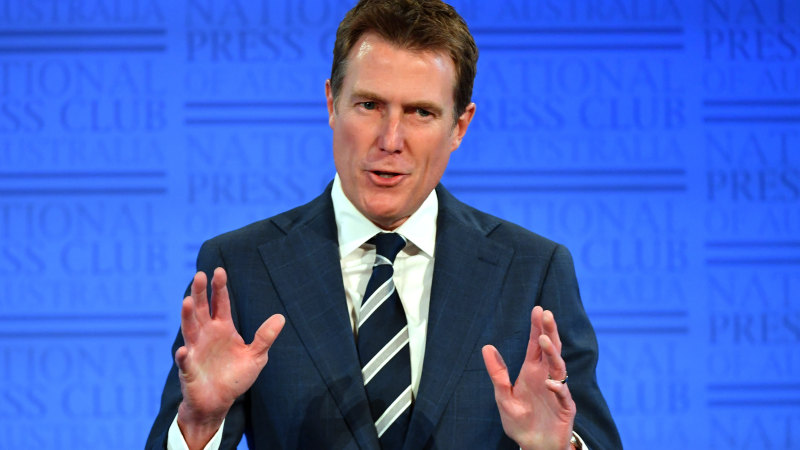
But in a speech to the National Press Club on Wednesday, the Attorney-General declared he wants to eliminate the distinction altogether:  "Online platforms should be held to essentially the same standards as other publishers."

The Attorney-General's proposal is fundamentally confused.  Removing the distinction between digital platforms and newspapers would have a devastating effect on both those platforms and our ability to communicate with each other.

The proposal is bad on its merits.  But even besides that, the conservative government needs to understand how destructive it would be to the conservative movement online.

Let's start with the legal principles.  It makes sense that newspapers and broadcasters are liable for what they publish.  They actively commission and produce the content that appears on their services.  They read it, edit it, arrange and curate it.  They pay for it.  Newspapers and broadcasters have not only an editorial voice, but complete editorial control.  Indeed, it is this close supervision of what they publish that gives them strength in the marketplace of ideas.

Social media platforms do nothing of the sort.  Not only do they not commission the content that appears on our newsfeeds (let alone read, factcheck, or edit that content), they don't typically confirm that their users are even real people — not, say, bots or foreign impersonators.  They merely provide a platform for us to communicate with each other.  Social media has facilitated a massive, global conversation.  But it has no editorial voice.

In the United States a parallel debate is going on among Republicans about whether Section 230 of the Communications Decency Act — which explicitly prevents courts from treating "interactive computer services" as publishers or speakers for the purpose of legal liability — should be abolished.

Section 230 has variously been described by scholars and commentators as "the 26 words that created the internet" or the "the internet's first amendment".  The internet law professor Jeff Kosseff writes that eliminating this provision would "turn the internet into a closed, one-way street".  Attorney-General Porter's proposal would have the same effect.

If social media platforms have to bear legal responsibility for what their users say, they will assume editorial responsibility for it.  That means editing, deleting, and blocking all content that could be even the least bit legally questionable.

Newspapers and broadcasters sometimes take calculated risks with what they print, if they believe that the information they reveal is in the public interest.  But why would a technological company — a company that lacks an editorial voice or the journalistic vision — be anything but hypercautious?  Why wouldn't it delete anything and everything with even the slightest risk?

And here is where the practical politics comes in.  Even if the Attorney-General's proposal was a good idea in principle, this policy would be particularly devastating for the conservative movement that supports his government.  Indeed, it is hard to imagine a legislative proposal that would more effectively, and immediately, cut down the Australian conservative movement online.

After all, what side of politics benefits most from the political diversity and openness of the modern internet?  What side of politics has relied most on the internet's ability to bypass traditional media gateways?  It is difficult to imagine the conservative political surge in recent years without social media — without Facebook, Twitter, YouTube, and all those podcast platforms.

If conservatives are concerned about social media networks "censoring" conservative content on their services now, well, making them liable for everything conservatives say would supercharge that.

And why would this policy stop at defamation laws?  Why wouldn't it also apply to liabilities around, say, Section 18C of the Racial Discrimination Act?  Or our sedition laws?  We are looking at a future where technology companies in California (companies that many conservatives believe are stacked with culturally left employees) could be required to second-guess how the most left-wing judges in Australia might enforce this country's draconian anti-speech restrictions.

The Coalition government should also reflect on how some of its most recent legislative programs have backfired on conservatives.  The Foreign Influence Transparency Scheme, passed in 2018 in order to tackle Chinese interference in Australian politics, is now being used to target the organiser of the Australian Conservative Political Action Conference, Andrew Cooper, and even Tony Abbott.

The Attorney-General is right that defamation law needs reform.  Australia's defamation framework is heavy-handed and disproportionately favours private reputation over the public need to discuss significant issues.  But removing the courts' ability to determine liability for defamation — and instead deputising the world's technology companies to enforce what they imagine it could be — would be a catastrophic mistake.

Thursday, June 06, 2019

A Violation Of Racial Equality

All Australians are equal.  The legal status of Australians should not be decided according to their skin colour or race.  Any proposal that seeks to establish a special "voice to Parliament" for some people and not others is radical, illiberal, and a violation of all principles of racial equality.  Our nation's founding document should not divide us.

Australia has just commemorated National Reconciliation Week, a period in which Australians are asked "to reflect on our shared histories and relationship with Aboriginal and Torres Strait Islander peoples and explore how each of us can contribute to achieving reconciliation".

This year, the focus turned to advocacy for a referendum to "recognise" Indigenous Australians in the constitution by establishing multiple representative bodies at a national, state and local level to advise Parliament on issues relevant to Indigenous Australians.

The establishment of such bodies, or an Indigenous voice to Parliament, is one of the most radical proposals for constitutional change in Australian political history.  It risks establishing a parallel system of representative government based on race.

The suggestion that the voice could be confined to issues affecting Indigenous Australians is fundamentally incoherent.  All policy decisions that have a general application are Indigenous policy decisions because Indigenous Australians are Australians.

Dangerously, the voice would in practice exercise a veto over any policy passed by the federal Parliament.  While a formal veto would not be written into the powers of the voice body, the political risk would make it too costly for a government to go against the Indigenous voice.  The accusation of racism, rather than the formal powers of the voice, is the veto.

In June 2017, the federal government's Referendum Council delivered its Uluru Statement from the Heart, which called on the Australian people to follow the precedent set by a successful effort to change the constitution in 1967.  In the statement it said "in 1967 we were counted.  In 2017 we seek to be heard".

Constitutional recognition advocates have always had a weak claim to be the spiritual successors of the 1967 referendum.  In that year Australians voted by an overwhelming margin to "alter the Constitution so as to omit certain words relating to the People of the Aboriginal Race in any State and so that Aboriginals are to be counted in reckoning the Population".

The symbolic importance of this vote should not be underestimated.  While the practical effect was to centralise much of, and kick-start the massive growth of, the Indigenous affairs bureaucracy in Canberra, this was a positive step forward in removing references to race in our constitution.

Australian voters then began to understand that race had no place in the constitution.

It is true that many Indigenous Australians face a range of challenges from unemployment, high rates of incarceration, and drug and alcohol abuse.  Addressing these challenges may well require local solutions.  Many conservatives are in favour of broad-based political decentralisation and empowerment of local communities to solve local problems.  But this doesn't mean that the universality of the Australian constitution needs to be compromised.  Nor does it mean that the concerns and needs of Indigenous Australians are fundamentally different to that of non-Indigenous Australians.

The basic needs of humans, Indigenous and non-Indigenous, are not culturally contingent.  For example, all Australians need access to the dignity of work, effective policing to reduce crime and violence, home ownership and high-quality education to live flourishing lives.  And the Australian Parliament, which represents all Australians regardless of race and is open to participation from all Australians, remains the best body to address these issues.

The idea of formal equality under the Crown is the cornerstone of the constitution and the principle underlying our freedoms and the rule of law.  Challenging this idea is a challenge to national unity and Australia itself.

Regardless of how the country votes in a referendum for constitutional recognition or an Indigenous voice, Australia will lose.  Merely asking Australians to divide themselves by race will divide Australia along racial lines forever.  The dignity of Indigenous Australians demands that they be treated the same as non-Indigenous Australians, which means being included and represented in a common national body:  the Australian Parliament.

Friday, April 12, 2019

The Outrage Mob Is Out To Get Folau

The outrage mob is out in force following rugby star Israel Folau's latest social media comments.  The mob wants to more than disagree with Folau's opinion, as is our right in a free society.  It wants to ban him from expressing it, which is totalitarian.

On Wednesday, a Rugby Australia spokesman branded Folau's comments about sexuality and religion "unacceptable", and said its integrity unit had been "engaged in the matter".  Now it has signalled its intention to sack him.

Folau shared on his Instagram account an image which said to "drunks, homosexuals, adulterers, liars, fornicators, thieves, atheists, idolators" that "Hell awaits you!  Repent!  Only Jesus saves."

In the caption to the image Folau provided quotes from the Bible, and added:  "Those that are living in Sin will end up in Hell unless you repent.  Jesus Christ loves you and is giving you time to turn away from your sin and come to him."

By all accounts, these opinions are a manifestation of Folau's religious beliefs.  Many people would profoundly disagree with what was said, and find such sentiments deeply offensive.

Should he lose his job for expressing a genuine religious belief?  One held not only by many Christians, and also those of other faiths.

The outrage that followed has far exceeded Folau's supposed wrongdoing.  On Instagram, Australian soccer player Sam Kerr wrote:  "Australia, we should not let athletes or ANYONE preach this hate in our country".  Prominent club level Aussie rules player Jason Ball called the comments "downright dangerous".  In this paper, Peter FitzSimons declared Folau needed to "repent" for his wrongthink before being allowed to play again.

The authoritarian desire to impose ideological orthodoxy on Australians is demonstrated in how our national flag carrier, and the sponsor for the Wallabies team, intervened in this situation.  Qantas said of Folau's comments in a statement released on Thursday afternoon that:  "These comments are really disappointing and clearly don't reflect the spirit of inclusion and diversity that we support."

While Qantas says it believes in diversity, it doesn't believe in the right of someone to express a religious viewpoint.  Qantas is hypocritical.  It has partner airlines such as Qatar Airways and Emirates, owned and operated by repressive regimes the Qatar and Dubai, respectively.  Qatar imprisons those deemed guilty of homosexual acts, and the United Arab Emirates (of which Dubai is a part) punishes homosexuality with the death penalty.

There is a genuine fear in many fields about the tyranny of corporate social justice policies, and Qantas's decision to intervene in this case shows why.

The NSW Waratahs — Folau's employer — may be entitled under the terms of his contract of employment to sack him.  But whether it should is a different question.

Friday, March 29, 2019

Let's Not Forfeit Our Own Freedoms In The Rush To Silence Terrorists

American founding father Benjamin Franklin once wrote:  "Any society that would give up essential liberty to obtain a little security will deserve neither and lose both."  Since September 11, 2001, it's a trade-off with which we are increasingly familiar.

The Christchurch attacks were senseless acts of terror that reverberated around the world, but we need to be wary of knee-jerk proposals to limit our freedoms — in this case, restrictions on free speech via tighter regulation of the internet.
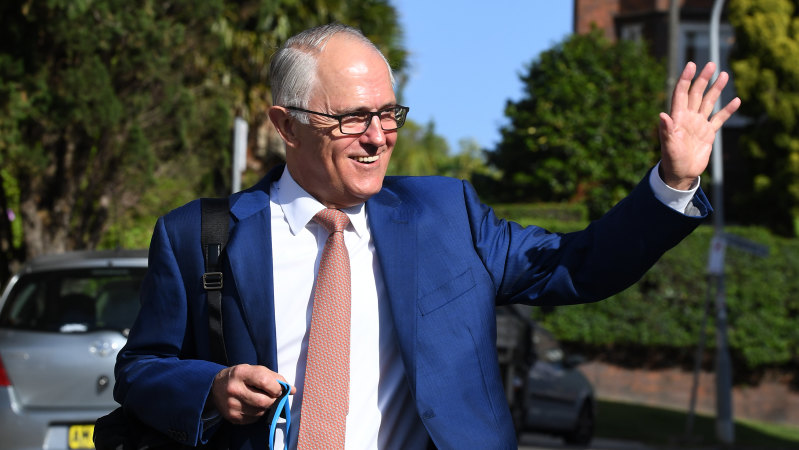
Prime Minister Scott Morrison is leading the charge among world leaders, warning G20 nations last week that it is "unacceptable to treat the internet as an ungoverned space".  However, the exact content that Morrison proposes to govern against is frustratingly unclear.

Morrison and Opposition Leader Bill Shorten are reported to be on a "rare unity ticket" on this issue.  We should be concerned when politicians on both sides come together to rush dramatic changes to our laws without time for proper consolation or policy development.

It could be that Morrison is simply referring to incitement of violence, which is already a crime, and for good reason.  But criminal incitement requires the direct encouragement of acts of violence, with the intent that such acts be committed.  If the Prime Minister is proposing to legislate to prevent the specific crime of incitement online, then it may well be a sensible reform.

To what extent do we want to trust the government to define the difference between the terrible events of Christchurch, and say, and the video footage of September 11, which still remains online.

Moves to regulate the internet are unlikely to end there.  Since the tragic events of Christchurch, the conversation around the "crackdown" on social media platforms seems to focus more on the prevention of so-called "hate speech".  Morrison belled the cat on this overreach, saying he is "quite confident" that tech companies "can write an algorithm to screen out hate content on social media platforms".

But government regulation of social media is wrong in principle and ineffective in practice.  The problem is that laws against "hate speech" are, at best, a blunt instrument that almost always incur unintended consequences.  We've seen anti-discrimination laws recently weaponised against Queensland University of Technology students who actually argued against racial segregation.

Facebook yesterday announced it would extend its ban on white supremacy to cover content that references white nationalism.  But how will it define white nationalism?  It is a concept so broad that it could very well include banning supporters of the elected President of the United States, Donald Trump.

According to Facebook "white nationalism and separatism cannot be meaningfully separated from white supremacy and organised hate groups."

This latest move by Facebook would, on face value, sound agreeable if it were not for the terrible track record of social media companies making similarly hamfisted efforts to scrub hate speech off their platforms.

At one stage, American conservative education organisation PragerU had about 80 of its educational videos on YouTube's list of "restricted content".  None of these videos could be considered remotely "alt-right" or "extremist", but they were nonetheless blocked by Silicon Valley.

In Australia, outspoken indigenous conservative Jacinta Price had her Facebook account suspended twice just last month.  Her crime?  Exposing the racial abuse that internet trolls had directed at her.

If this is the record of big tech companies policing "hate speech", we should be sceptical of any government that proposes to do better.

Existing laws regulating internet content have proven to be ineffective.  Court orders against accessing piracy sites such as Pirate Bay are easily circumvented, and a suite of otherwise illegal content is easily accessible via the dark web.  In all likelihood, genuine terrorist groups will simply move underground, while relatively innocuous content is taken down.

Internet censorship will do little to prevent the genuinely dangerous.  And in the process, our precious freedoms will take yet another hit for the false promise of safety.

Tuesday, December 04, 2018

Turnbull's Act Of Woeful Hypocrisy

It is disappointing that Malcolm Turnbull appears to be taking part in the same headline-grabbing antics for which he has criticised others.  When his efforts to get clean air and run with a political narrative were disrupted by an intervention by Tony Abbott, prime minister Turnbull and his supporters were rightly frustrated and would blame his conservative rival for many of the government's problems.

Now, by publicly calling on Prime Minister Morrison to bring forward the federal election, and intervening in Liberal Party factional matters, Turnbull is allowing his legacy to become entangled in the same personal bitterness and vitriol he so despised as prime minister.  It is an act of woeful hypocrisy.

There is no doubt that the revolving door of prime ministers has caused instability over the past decade.  From this instability has flowed policy paralysis, which has led into the federal Liberal Party lacking a reform agenda to rally around.

What the Liberals have to understand is that a cultural narrative is just as important as an economic narrative.  A cultural narrative also needs to go beyond wearing a lapel pin.

Turnbull's key mistake was focussing solely on economic matters, and even there he disappointed.

His reasons for toppling Abbott were solely about an economic message and Newspolls.  His signature tax policy was to return a portion of income tax to the states, a good policy to address a serious issue of fiscal imbalance.  Yet he disappointed many by ruling it out just a few days later.

But more fundamentally, Turnbull as prime minister was not interested in culture.  He once said that he supported protecting religious freedom just as much as he supported same sex marriage, only to flick the issue off to the review for someone else to deal with.

If a leader is purely focussed on economic policy, then who is there to defend religious schools that could soon lose the right to teach their ethos according to their faith?  Who will stand up for freedom of speech on campus?  Who will stand up for workers once every coal mine in Australia is run out of town?  And who will argue for literacy and numeracy in schools, over trendy activism?

It was only after a fierce effort by those that believe in freedom of speech that Turnbull was prepared to put a bill to the Senate to deal with 18C, something his predecessor was unable to do;  Turnbull should be credited for this.

But his latest entry into the public consciousness is unhelpful and hinders the party from building the holistic story that can capture the imagination of voters.  Voters will support a party with a coherent plan and a vision for the nation's future.

Many journalists and commentators are running the line that the Liberal Party lost in the Victorian state election because the party was too right wing on issues such as climate and energy policy.

This is wrong.  The exact same journalists and commentators were not as forthcoming with an equal analysis of the left of politics after Labor's defeat at the 2013 federal election, or the defeat of the Labor government in South Australia, both largely based on climate and energy policy.

Mainstream Australians want lower power prices rather than global warming gesturing.

They don't think it should be illegal to offend somebody.  They find identity politics grotesque and anti-ethical to the spirit of egalitarianism and merit-based selection.  They want lower taxes for themselves and for their children through lower debt.  And they want to celebrate Australia Day, sing Christmas carols at Christmas time, and for their children to receive a first-rate education regardless of the income of their family.

If the Liberal Party can rally behind a united economic and cultural message to sell to voters, without being distracted by former leaders, it will go a long way to winning the next election, whenever that may be.

Monday, October 08, 2018

The Great Divide Driving Voter Disgust

Australians are frustrated, disengaged and pessimistic.  There is widespread and growing dislike of politicians, the political process and lacklustre policy outcomes.  Australians think that the system is being stacked against them, their communities, families and potential for human flourishing.

"Public satisfaction with our democratic processes and public trust in the politicians we elect are at some of the lowest levels ever recorded," Professor Ian McAllister of the Australian National University surmised after the 2016 election.  Just a third of Australians are satisfied with the way that democracy is working.  Three-quarters think that "our government does not prioritise the concerns of people like me" — among the highest in the developed world.

Australia's shambolic political predicament is caused by a new divide driven by different identities, lifestyles and cultures.

Inners base their identity on educational and professional achievements.  They have degrees and live in the inner-city with professional jobs.  They value change, autonomy and diversity.  Their politics is cosmopolitan liberal.  Inners are a minority but dominate the upper echelons of Australian society — from politics and the bureaucracy to the media, civil society, universities and corporates.

Outers base their identity on family, community and nation.  They value stability, safety, and unity.  They live in the suburbs, have low to middle incomes and less education.  Outers are under relentless pressure in our ever-changing world.  They are marginalised, politically, culturally and economically in today's graduate-dominated knowledge economy era.

In the past self-identifying working class Australians voted overwhelmingly for Labor, and middle class Australians mostly choose the Liberal Party.  In 1970, political scientist Robert R. Alford wrote that "Australia's politics have been dominated by class cleavages before and since its foundation as a nation in 1901".

This is no longer the case.  A self-identifying working class voter is now more likely to vote for the Coalition than Labor, according to data from the Australian Election Study;  many middle class voters now opt for Labor and the Greens.  The Inners-Outers divide overlaps and often overrides the traditional left-right class distinctions of yesteryear.  Working class Outers who feel disillusioned by Labor's strong Inners focus are increasingly voting for the Liberals;  meanwhile, middle class Inners who are disappointed by the conservative political right are opting for Labor and the Greens.

The major parties cannot be all things to all people.  The Liberal Party struggles to simultaneously speak to the voters of Wentworth and western Sydney.  The Labor Party struggles to speak to inner-city Melbourne at the same time as North Queensland.  The outcome is insincerity and opportunism, which drives further frustrations, instability and fracturing across the political spectrum — including voting for the Inner parties, such as the Greens, and Outer parties, such as One Nation.

We should welcome the influence of Inners in many fields.  Inners-led campaigns on issues ranging from racial equality and women's liberation to gay rights have made Australia a more tolerant, interesting and forward looking society.  Nevertheless, Australian politics is too Inners centric.

Inners have come to dominate Australia's political, economic and cultural institutions.  Inners lead, staff and influence both major parties.  Since the "consensus" driven reform era of the 1980s, policymaking has become an iceberg.  On the surface, politicians, bureaucrats, corporate leadership, trade unionists, journalists and academics — who went to similar universities, live in near identical suburbs and have comparable values — argue about a narrow set of policy options.

Australia is not alone in these trends.  The "Inners" and "Outers" are inspired by British author David Goodhart's The Road to Somewhere.  Goodhart argues Britain is split into two tribes:  the Anywheres, the educated, mobile middle class, which values autonomy, openness and fluidity;  and the Somewheres, the less educated, more rooted, working class which values security and group identity.  Charles Murray's Coming Apart identified how America's educated elite are living geographically, politically and socially separate lives to those who have less education.

British magazine The Economist celebrated its 175th anniversary last month by declaring that the liberal creed is on the defensive.  From Donald Trump to Brexit, movements are defining themselves in opposition to a "liberal elite".  The association between liberalism and elitism is undermining core premise of liberalism, that all individuals are morally equal.

Inners pursue technocratic and paternalistic governance by the supposedly best and brightest, that is, decision making by themselves.  Process is often lacklustre.  Yesterday I released a report in conjunction with the new Democracy Foundation's Evidence Based Policy Research Project which found that Australian state and federal governments are failing to follow best practice policy-making — they are making policy on the run without full analysis and consultation.

Meanwhile, the growth and complexity of the regulatory state empowers Inners to make policy in their interests, often excluding Outer voices.  Managerialism may have mostly been a technical success — it has been 25 years since a recession — but it has not stopped many feeling helpless, disengaged and governed over.  Outers are frustrated and losing faith in a political system dominated by people unlike themselves.

Australia should respond to these challenges in a pluralist manner.  Both Inners and Outers are legitimate voices and should be allowed to contribute to the national debate.  The century long centralisation of power in Canberra must come to an end.  It is time for a localism agenda to empowers local communities towards for inclusive decision making at the state, city and local level.

The challenge in the years ahead will be to find and strengthen what unites us.  We will be stronger if a divided Australia can learn to live together.

Friday, May 18, 2018

Tax ''Cuts'' Are Rises To Pay For Spending

The budget is littered with titbits mostly designed to garner political support.  There's the targeted, low and middle-income tax offsets which will provide relatively small tax cuts for those earning up to $125,000 per year.

There's the proposal to raise the top threshold of the 32.5 per cent tax bracket from $87,000 to $90,000, which will stave off bracket creep for one or two years.
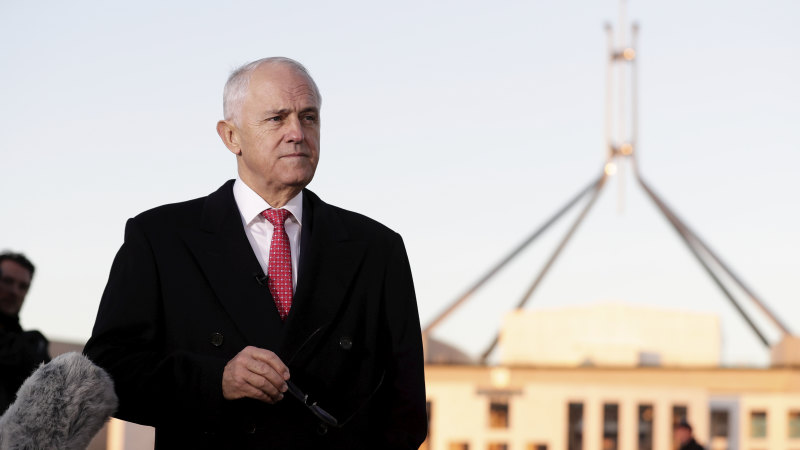
And then there is the proposal to raise the top threshold of the 19 per cent bracket from $37,000 to $41,000 from July 2022.  This, again, will prevent a small number of low-income households from entering a higher tax bracket, for about a year or two.

These changes will benefit a healthy number of Australian workers.  But they are marginal, won't last long, and do absolutely nothing to address the deeper, structural issues in Australia's tax system.

This is where the heftier proposed changes come in.  There are two measures in the budget which stand to make a more substantial difference to people's lives.

The first is the proposal to increase the top threshold of the 32.5 per cent bracket from $87,000 to $120,000 commencing in 2022.  This would come close to removing bracket creep for many middle-income earners, providing them with years of tax relief compared with the status quo.

The second hefty change is to eliminate the 37 per cent tax bracket from 2024-25.  This would constitute the most substantial change to the income tax system for years.  And it would mean that by 2024-25, around 94 per cent of taxpayers would face a top marginal tax rate of 32.5 per cent or less compared with 63 per cent if the system was unchanged.

Yet it is precisely these more substantial changes that are being so roundly criticised.  In his budget reply speech, Opposition Leader Bill Shorten claimed the tax cuts were handouts to the wealthy.  This is misleading.

While it is true that those who earn a higher income will receive a greater benefit in absolute terms, this is because they pay far more tax than lower-income earners to begin with.  In fact, the top 10 per cent of income earners pay 45 per cent of total income tax.  And analysis by KPMG found a staggering 60 per cent of Australian households pay zero or negative net income tax.

Despite its benefits, though, the government's budget leaves a lot to be desired.

For one thing, it continues with the debt-fuelled spending binge instigated by the Rudd government in 2008-09.  Indeed, this budget is the highest taxing, spending, and debt budget in Australia's history.  Over the past decade, under both the Coalition and Labor, government debt has risen by an eye-watering 380 per cent.  And the much bragged about spending restraint of 2 per cent in real terms per year is hardly anything to write home about.

It is also bizarre that the government has pushed the most meaningful parts of its tax plan years out into the future.  Much better to go hard and fast and put substantial changes to the Senate immediately, rather than the weak and timid piecemeal approach it has chosen.

Moreover, while the budget provides tax cuts, Australians will still see their overall tax burden rise.  Prime Minister Malcolm Turnbull and Treasurer Scott Morrison say they are cutting taxes.  But what they are really doing is increasing taxes at a slower rate than what otherwise would have been the case.

Real taxes per capita are set to rise by close to 5 per cent over the next four years.  Taxing you more is taxing you less.

The reason taxes will continue to rise is because spending will continue to rise.  Higher spending is the true cause of higher taxes.  Every extra dollar of spending must be paid back with higher taxes, either today or deferred into the future via the accumulation of government debt.

The iron-clad reality of public finance that no one wants to recognise is that the only way to permanently reduce taxes is to permanently reduce spending.

Permanent and sustainable tax cuts will not be in the offing until a broader discussion is had about what spending is going to be reduced.  And no amount of tinkering with offsets, marginal rates or bracket creep will change that fact.

Monday, May 14, 2018

Measures To Tackle Black Economy Are Suspiciously Totalitarian

The Turnbull government's proposed ban on cash payments above $10,000 is a disturbing breach of our right to privacy, an attack on the basic liberty of free exchange, and will worsen Australia's red tape crisis.

The aim of the ban, which was announced in the budget with other measures to tackle the "black economy", is to prevent money laundering and tax cheats.  These are genuine goals.  However, there is nothing inherently immoral or harmful about cash.  The government is punishing the vast majority who do nothing wrong in an ill-fated attempt to prevent a small number of people acting illegally.
In practice, the ban will be ineffective and unenforceable.  A transaction limit will not make criminals suddenly law-abiding citizens — they will flout the rules by using multiple smaller transactions and illegal bank accounts with stolen identities.

The ban will, however, prevent the many genuine uses of cash, including keeping transactions private from prying eyes, avoiding credit card transaction fees, and the preference for physical cash over non-material digital currency.

In 1984, George Orwell explored how Big Brother uses surveillance to control citizens.  "Always the eyes watching you and the voice enveloping you.  Asleep or awake, working or eating, indoors or out of doors, in the bath or in bed — no escape," Orwell wrote.

The intention of the cash ban is to create an accessible digital record of transactions that government can monitor.  This establishes a creepy precedent, foreshadowing a future in which you are only allowed to make purchases that Big Brother can watch.  If the government should be able to track our transactions why stop at $10,000?  Why not $5000?  Why not, as some commentators have proposed, $0?

In the long-run, a cashless society would immensely empower the state, which could use our spending habits to reward and punish certain behaviour, or introduce taxes on savings.  Imagine a future in which because you spend "too much" on unhealthy food, the government charges you higher taxes;  or because you don't have a gym membership you have to pay a higher Medicare surcharge.

Cash is not only an important protection from state power, it also provides privacy from partners and families, and financial institutions and businesses.

ASIC has warned that a sign of financial abuse is being compelled to tell your partner or family how your money is being spent.  A common method to avoid abuse is to use cash to hide your transactions from electronic records that the abuser can see.

Imagine you've just escaped a financially abusive relationship.  It's taken months of planning, carefully siphoning your savings into cash to hide from your controlling partner.  You plan to use the money to buy a car, and the freedom that would bring.

The car salesperson, however, informs you that thanks to new regulations it is illegal to accept a payment over $10,000, because the federal government assumes that the only reason to keep money out of a bank is to scrimp on tax.

Cash also allows customers to protect their privacy from businesses.  A credit card is a unique identifier which, when combined with big data and machine learning, allows companies to track your spending habits.

Australian Conservatives Senator Cory Bernardi has pointed out the myriad privacy risks.  "If everything you spend is traceable then so too is what you eat, drink and enjoy.  Big data becomes even bigger and it won't be just advertising you are susceptible to.  Imagine the alcohol consumer identified as drinking too often and has their health premiums raised accordingly.  Or the book buyer who is blocked from purchasing 'unauthorised content'."

In addition to the cash ban, the government will also require reporting of payments in cleaning and courier industries, building and construction, trucking, security and computer systems.  This creates substantial new red tape that will harm small business and contractors, destroying jobs and lowering incomes.  I have calculated that red tape is already costing our economy $176 billion a year.

The best way to combat illegal activity is to cut red tape and reduce taxation.

Countries with higher taxes and more regulation are plagued by a larger black economy and corruption.  Tamás K. Papp and ElÅ‘d Takáts of the IMF have found evidence that reducing tax rates increases revenues because of more compliance — when taxes are lower there is less incentive to avoid paying.  Academics Randall Holcombe and Christopher Boudreaux found that countries with more regulation and higher expenditures are associated with more corruption because it invites opportunities for government officials to be paid for favours, subsidies, and government contracts.

The solution to Australia's black economy is to cut taxes and red tape, not to adopt the techniques of a totalitarian surveillance state.

Thursday, April 05, 2018

A Universal Basic Income Would Create A Permanent Underclass

Greens leader Richard Di Natale told the National Press Club yesterday that, because of the changing nature of work, Australia should introduce a universal basic income.  His proposal would be costly, unnecessary and would create a permanent underclass.

A UBI is a liveable, unconditional payment to all citizens.  Theoretically, a UBI could be almost cost neutral if it replaced all welfare, health, education, and housing expenditure.  However, this is not what the Greens are proposing.  Di Natale has called for a UBI in addition to government services.

A UBI equal to the aged pension, which leaves no welfare recipient worse off, would cost an additional $230 billion, according to calculations by the Centre for Independent Studies.  To raise this revenue, it would require a 60 per cent marginal income tax for median earners and 80 per cent for high earners.

Even this, a pure UBI where everyone receives the same payment, is unlikely to eventuate.  In practice, there would be pressure to introduce top-up payments for families, disability, and more.

The UBI would become a more expensive version of our existing welfare system designed to buy off the middle class.

It is also not clear that a UBI is necessary.  UBI proponents typically assert that technology, particularly artificial intelligence, will shortly lead to mass unemployment.

Such predictions are commonplace in history.  In the 19th century, the Luddites violently destroyed machines because they would put artisans out of a job;  and in the 20th century there were similar concerns about computers and the internet.

Widespread joblessness has not eventuated.  Economists Jeff Borland and Michael Coelli of the University of Melbourne recently concluded that technology has not decreased the total availability of work in Australia, and there is a lack of evidence that this will happen in future.

In the 1960s, a quarter of Australians worked in manufacturing;  today it is just 7 per cent.  This has not caused mass unemployment.  The type of work we do has changed.  Technology has made us more productive.  We now do better, higher paying, and more interesting jobs.

The trouble with safety nets is that people get tangled up in them.

The inevitable result of the UBI, paying people to not work, is that fewer people will work.  This would create permanent underclass living at subsistence level — enough to survive, but lacking in the dignity of purpose in life provided by work and envious of those better off.

Meanwhile, the rest of society would be forced to slave away for their benefit.

Both the underclass and the workers would grow frustrated.  This is a model for social collapse, not a visionary plan for the future.

During his speech, Di Natale said full time work in the future may be neither "possible or desirable".  It is no surprise that the Greens, whose support comes from knowledge economy professionals, have a condescending attitude to the working class.  The Greens want those with low skills and education to squander their lives on welfare — rather than everyone having the income and purpose provided by a job.

We should be removing welfare traps, improving skills training, cutting red tape, and reforming industrial relations to get people into work — not encouraging unemployment with massive unaffordable handouts.

Friday, January 19, 2018

Dignity Is Attained Through Opportunity, Not Redistribution

The most important task of public policy is to ensure the next generation of Australians have more opportunities to flourish than the last.  But declining business investment, worsening school results, family breakdown, and youth joblessness suggest we are failing in this task.

This week, the left-leaning McKell Institute contributed to this important debate with the release of their report Mapping Opportunity:  A National Index on Wages and Income.

Unfortunately, the report misses the mark.

First, the report asserts "inequality in Australia is at a 75-year high" based on the share of income earned by the top 1 per cent.  But this measure has many shortcomings.  It is a pre-tax measure which doesn't account for the extra income low-income earners receive from welfare or the loss of income to high-income earners from taxes.  It doesn't account for other transfers from government and non-government organisations (such as medical care).  And it counts individuals rather than households, even though most people organise their financial affairs within a family unit.

A better, although still deficient, measure of inequality is the Gini coefficient, which accounts for the effect of taxes and transfers.  The best estimate of the Gini coefficient is provided by the Household, Income, and Labour Dynamics in Australia Survey undertaken by Melbourne University's Melbourne Institute.  This measure shows that income inequality is lower today than 15 years ago, when the data set begins, and is around the average of comparable OECD nations.

Second, the report says "Australia's minimum wage is declining".  But the measure used is the minimum wage as a percentage of the median wage.  This isn't the minimum wage;  the minimum wage is the minimum wage, and it has been increasing.  According to the Fair Work Commission, the weekly minimum wage in Australia was $374.4 in 1998, compared with $694.9 today — an increase of 22 per cent in real terms.  And according to the OECD, Australia's minimum wage is equal second highest in the OECD.

Third, the report says wealth inequality is higher than income inequality.  This is true, but largely the result of misguided public policy.  Low interest rates, high immigration and housing supply restrictions have raised property prices, and low interest rates and compulsory superannuation have elevated share prices.  All of this disproportionately benefits the wealthy.  Moreover, the report ignores that Australia has one of the most equal distributions of wealth in the developed world, according to the 2017 Credit Suisse Global Wealth Report.

Fourth, the report says Australia has a "declining middle class with the few at the top becoming richer and the poor getting poorer".  The rich are getting richer, but so are the poor, the middle, and everyone else.  According to the Australian Bureau of Statistics, real incomes for those in the bottom quintile grew by 58 per cent from 1994-2016.

Fifth, the report asserts "income inequality can give rise to a wide range of social problems ...".  Inequality certainly is a problem where it is the result of unfair cronyism rather than reward for hard work.  But the report fails to say what level of inequality is acceptable.  There is seemingly no limiting principle, with the implication that only perfect equality can be considered just.

This has several bizarre implications.  It implies that a society in which everyone is equally poor is better than one in which everyone is rich to unequal degrees.  It implies that Australia would be worse off if an unemployed person found work and earned a high wage.  It also implies that Bill Gates should be prevented from moving to Sydney in the interest of ensuring the Gini coefficient doesn't increase.

Instead of focusing on inequality, public policy should be directed towards providing individuals the opportunity to live good and flourishing lives, regardless of how this affects income distribution.  As we demonstrate in my November 2017 report, Understanding Inequality in Australia, this will often involve less government, not more.

Cutting taxes will increase job opportunities, reducing red tape will make it easier to start a business, and increasing school choice will improve education standards.  While taxes and transfers may make Australia more equal in a narrow sense, they also reduce individuals' access to opportunity and higher living standards.

However, more important than policy are institutions, cultural norms, and ways of life.  Time-honoured truths are as relevant today as ever:  pursuing a career, obtaining a good education, getting and staying married, participating in community and religious organisations, and eschewing crime and drugs and alcohol dependency are all necessary if people are to reach their potential and live a dignified life.

This knowledge, available to humans for millennia, has been erased in our modern times by an expansive state crowding out the institutions that passed this knowledge on, such as family, religion, and community.

To guide the next generation of Australians towards a life of opportunity and fulfilment, and to be flourishing, we need to rebuild the institutions of civil society.  This is work that we can only do for ourselves — we just need government to let us get on with it.

Friday, September 22, 2017

Equal Justice At Risk If Judges Consider Aboriginality In Sentencing

During the past 10 years, incarceration in Australia has risen 40 per cent.  A third of this is the result of more Indigenous Australians being jailed.  Indigenous Australians are now jailed at a rate more than 12 times that of non-Indigenous Australians.

The Australian Law Reform Commission is conducting an inquiry into this disproportionate rate of incarceration and how the criminal justice system might be reformed to address it.  There are a number of reforms being considered that have the potential to gain bipartisan support, such as making alternatives to prison, like work orders and home detention, more available to Indigenous offenders and improving access to justice by resolving issues such as a lack of translators.

Reformers should focus on ideas that have the potential for broad-based support and that reinforce traditional criminal justice principles like equality under the law, fair punishment, and personal responsibility.  Moves to further separate the administration of justice for Indigenous and non-Indigenous Australians are unnecessary and contrary to the universality on which the authority of the criminal law depends.  The NSW Bar Association's proposal to amend sentencing laws to specifically take into account an offender's Indigenous background and the high level of Indigenous incarceration should be rejected.

Sentencing is governed by two main principles:  consistency and proportionality.  Sentences must be consistent for all types of offending, so that like crimes are treated alike.  And sentences must keep a proportion between the severity of the punishment and the harm done to the victim and to society.

With this later question, judges can take into account the circumstances of an individual's offending, including factors known to be correlated with criminal offending, such as unemployment, low educational attainment, and alcohol abuse.

These factors are more present, on average, in Indigenous communities.  When they are relevant to an individual Indigenous offender's punishment, judges already have discretion to consider them.  Importantly, because these factors are universal, judges can consider them regardless of the cultural background of the offender, preserving the principle of consistency.

Instructing judges to consider the offender's Indigenous status poses a problem for equal justice because it may or may not be a factor in cases that are otherwise the same.  Moreover, describing Indigenous status as itself a form of disadvantage risks portraying all Indigenous communities as disordered, even though the vast majority of Indigenous Australians are law-abiding.  It also risks diminishing the harm experienced by victims, many of whom are themselves Indigenous.

Similarly, the high level of Indigenous incarceration is not relevant to the sentencing of any particular Indigenous offender.  The fact that other people are imprisoned does not lessen the harm an offender has caused, and again, taking it into consideration in some cases but not others is unfair and inconsistent.

More broadly, there is no principled reason to further entrench racial and cultural separatism in criminal law.  The law's moral authority rests on its universality.  Australians need to be able to depend on the law treating each of us the same way and to rely on our fellow citizens to act according to the norms embedded in the law.

It is possible to address Indigenous incarceration without compromising on universality.  The NSW government, for example, recently announced changes to the punishment of driving without a licence to make it less likely someone would be imprisoned for unpaid fines, an issue that disproportionately affects Indigenous people in rural areas.

Criminal justice is about defending the rights of individuals and keeping the community safe.  It is therefore a limited tool for addressing the socioeconomic and cultural factors underlying Indigenous disadvantage.  For more than two decades, states and territories have undertaken reforms such as specialist courts and diversion programs for Indigenous offenders, and yet the situation now is worse than ever.

The high level of Indigenous incarceration is an important public policy matter.  But treating Indigenous offenders as somehow distinct from other offenders diminishes their agency and dignity, and undermines the moral basis of criminal law.

Wednesday, May 31, 2017

Indigenous Treaty Would Divide Australia Into Two Nations According To Race

All Australians are equal.  This principle is the basis of our freedoms and a cornerstone of the Australian constitution.

Our nation's founding document should unify us — not divide us.

Any proposal that seeks to enshrine division between Australians on the basis of race should therefore be rejected.  And it is why any suggestion of a treaty between Indigenous and non-Indigenous Australians should also be rejected.

Rarely has such a powerful defence of equality and the value of the individual been expressed as on a hot afternoon in Washington DC on 28 August 1963.

At 3pm that afternoon in front of the Lincoln Memorial, Martin Luther King jnr created history when he uttered the words:  "I have a dream that my four little children will one day live in a nation where they will not be judged by the colour of their skin, but by the content of their character."

These words are as real and as relevant in 2017 as they were 53 years ago.

It is this sentiment of equality that Australians should bear in mind when considering proposals to change the Australian constitution.

The most recent proposal for constitutional change is contained in the Uluru Statement, released last week.

The Uluru Statement is the culmination of three days of discussions amongst Indigenous leaders at Uluru last week.  The meeting in Uluru follows six months of community consultations with Indigenous leaders held by the government-appointed Referendum Council.

The Uluru Statement is a response to the key issue these deliberations were established to address:  whether Indigenous leaders support the proposal to "recognise" Aboriginal and Torres Strait Islanders in the Australian constitution, and if so what form the change should take.

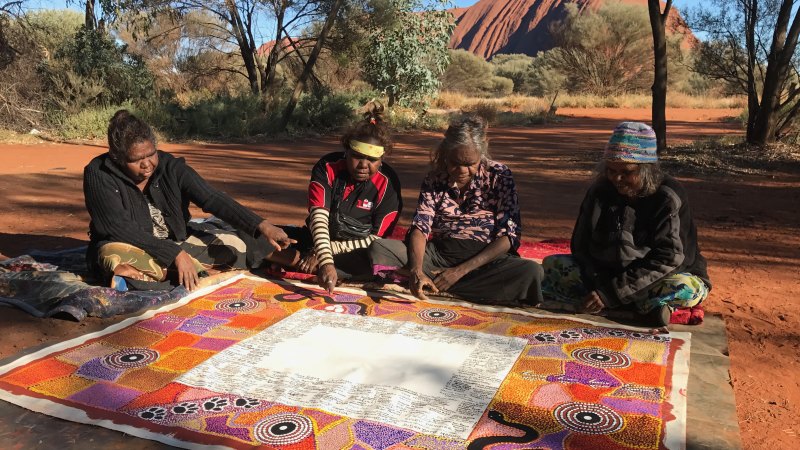
The Statement calls for a treaty between Indigenous and non-Indigenous Australians, and also proposes the establishment of a new constitutional body to represent Indigenous Australians:  "We call for the establishment of a First Nations Voice enshrined in the constitution."

These are radical proposals that will divide Australians on the grounds of their racial identity.  These proposals are the manifestation of radical identity politics.

Formally dividing Australians by law is a dangerous idea, doubly so when that division is done on the basis of race, skin colour, ethnicity or indigeneity.

The Commonwealth parliament represents all Australians.  This is why an advisory body for Aboriginal and Torres Strait Islander Peoples enshrined in the constitution cannot be accepted.
A separate body, whether it is called an Aboriginal and Torres Strait Islander peoples advisory body, a new chamber of the Commonwealth parliament, an Indigenous parliament, or a First Nations Voice undermines the idea that all Australians are equal under our democratic system.  All policy decisions are Indigenous policy decisions, because Indigenous Australians are Australians.

Treaty, which is sometimes referred to by the Yolgnu word for treaty, "Makarrata", would divide Australia into separate nations.  Aboriginal and Torres Strait Islander peoples are Australian.  The idea that they are separate from Australia is dangerous, and a treaty between Indigenous and non-Indigenous would divide Australians according to race.

Australia is one of the oldest and most successful democracies because our constitution is based on the idea of the equality of all Australians.

If any constitutional changes are to be contemplated they should make the constitution truly colour-blind and remove all references to race in the document.

There are two current sections in the Australian constitution that refer to race — sections 25 and 51 (xxvi).  Section 25 was intended to prevent state governments from restricting the right to vote according to a person's race.  Section 51(26) gives the Commonwealth government the power to pass race-based laws.

Section 25 is unnecessary because equal voting rights are already guaranteed under the constitution.  Section 51(xxvi) is discriminatory and illiberal.  Race-based laws are incompatible with the equality of all people.

Taking out these sections removes the Commonwealth government's constitutional power to divide Australians.

If these two sections are removed, no new references to race, or skin colour, or ethnicity, or indigeneity should be added.

I believe there should be no references to race in the constitution.  The constitution should not divide Australians according to race.

Australia's success as a free and prosperous country is founded on the idea that all humans are of equal worth.  Regardless of race or ethnic background, all Australians must be treated equally by the government and by the law.

In the constitution, all Australians should have the same rights and should share the same responsibilities.

Race has no place in the Australian constitution.

Tuesday, May 16, 2017

Changes Could Reduce Reoffending For Low-Risk Criminals

The NSW government continues to lead the way on innovative criminal justice policy.  Having last year committed $3.8 billion to new and improved prisons, the government is now pivoting to reforms designed to reduce the need for further prison spending over the longer-term, by lowering reoffending and improving community safety.

The government last week announced a package of reforms, including the abolition of suspended sentences and a new procedure for managing offenders released on parole.  While prison is absolutely necessary for violent criminals, these reforms acknowledge that for those criminals we do release into the community, we need more options for managing their behaviour.
These reforms correctly identify reducing reoffending as a top priority.  Fifty-two per cent of NSW prisoners have been imprisoned before.  Twenty-nine per cent of convicted adults commit another crime within two years of their conviction.  More effectively correcting offenders' behaviour will make a significant dent in the crime rate.

The parole changes are a clever way of addressing this problem.  Under the current system, parole breaches are reviewed by the State Parole Authority, a time-consuming process.  The reformed system will empower Community Corrections Officers to punish minor parole breaches quickly by imposing new conditions or taking away privileges.  A series of breaches will lead to escalating punishments.

This change is informed by evidence from overseas.  In the US, many states have adopted "swift, certain, and fair" punishments for parole and probation breaches.  The idea is a response to the reluctance of some case officers to punish breaches if the only available punishment is imprisonment.  Many case officers were looking the other way at minor breaches, like missed appointments, rather than sending offenders to prison.  Without consequences, or with only the vague threat of revocation hanging over them, offenders had no incentive to change their behaviour.

The main benefit of this change is that it increases the certainty of punishment for parole breaches.  By drawing a clear connection between the breach and the punishment, Community Corrections Officers will be able to better correct the behaviour of parolees.

This program has achieved significant results in Hawaii, especially with reducing drug use among program participants.  Missed and positive tests fell 80 per cent in the first five years of the program.  This in turn reduced participants' likelihood of reoffending.  Other states have copied the idea and have also seen some positive results.  In Texas, for example, program participants were up to 50 per cent less likely to be convicted of new crimes.

However, the program cannot guarantee success.  A 2016 study of four jurisdictions found mixed results, especially for higher-risk offenders.  What this suggests is that habitual offenders and those convicted of serious crimes should not be on parole in the first place.  The NSW government has acknowledged this in its reforms by making community safety the foremost consideration in the decision to grant parole and by making supervision mandatory for all parolees.

Overall, managed properly, this system can reduce reoffending for lower-risk parolees.  The increased level of supervision required is paid for by reducing reoffending, slowing the growth of incarceration and by handling of parole breaches more efficiently.

These parole reforms are part of a broader rationalisation of the corrections system towards community safety.  This agenda can also be seen in the decision to replace suspended sentences with the expanded use of community-based corrections.  Currently, convicted criminals are either imprisoned or released into the community.  This change will give judges more options for punishing nonviolent, low-risk criminals, who may now be subject to home detention, curfews, and movement restrictions.  These punishments are associated with better results in terms of reoffending.  Breaches of corrections orders will also be subject to swift and escalating punishments.  Again, the focus is on managing the transition of offenders back into society by filling in the spectrum of available punishments.

Crucially, the government is not reinventing the wheel.  Its actions are consistent with community expectations of personal responsibility and fair punishment.  This is good policy and good politics.  The state government is showing that it is possible to both be tough on violent criminals and to pursue targeted, safety-driven punishment reform for nonviolent offenders.

Tuesday, April 11, 2017

Reducing Immigration Won't Solve The Housing Crisis

Cutting red tape, rather than immigration, should be the principled and consistent solution to lowering prices and improving housing affordability.

Unfortunately, it seems politicians are more concerned with suppressing competition rather than freeing our housing markets.

Tony Abbott has said the government could ease housing demand by scaling back immigration "at least until land release and infrastructure can keep up".  Pauline Hanson and several other conservatives like Cory Bernardi and Mark Latham have all floated similar ideas in recent weeks.

This approach is not only wrong, but it is also short-sighted and dangerous.

Yes, reducing immigration will put downward pressure on housing prices, just as any reduction in demand would.  But its effects are overstated:  very few migrants are so cashed up that they are instantly able to purchase a home that would otherwise be bought by a young Australian.  Far from being cashed up, most who migrate here seek a better life for themselves and their families and work hard to achieve it.

My Nonno migrated from Italy in the 1950s.  Back then, he could not speak a word of English, but had particular skills with his hands and was able to find employment as a steelworker on the Snowy-Hydro.  He and his wife were not able to afford to buy a house immediately, but worked hard and were eventually able to afford a home in the outer northern suburbs of Melbourne.

This is a generational story that many Australians share.  It is one that also applies to the migrants of today.  Do we really believe, in 2017, that well off migrants are buying housing stock and keeping us stuck in traffic on our roads?

But there is a more fundamental point which Hanson and Co miss:  immigration policy isn't housing policy.  Equating the two means the massive benefits that migrants generate for our economy and society are ignored.  In Australia, skilled migrants accounted for on average 67.7 per cent of our total immigration intake in 2015-16.  These people make a great contribution to our economy.

The Migration Council of Australia's report on the economic impact of migration found that our migration program up until 2050 will contribute $1.6 trillion to the Australian economy.  Skilled immigrants and student visas in particular, are our most productive of all visa types.

Further, it is passing strange that some of the advocates of cutting our immigration intake to lower house prices, also are the staunchest supporters of free trade.

A growing immigration intake increases the size of the Australian market, and demand for services across Australia.

Free trade is the belief that the exchange of goods and services across borders is fundamental to our prosperity.  But if we believe free trade in goods, we should also believe in the movement of migrants with valuable skills.

Still, there is no doubt housing affordability is a real issue for many Australians, especially for those under 30.  But the root cause of this problem is not excessive demand, it is restricted supply.

Rentals are also under pressure, with a recent report revealing the proportion of Australian households who rent is now 31 per cent, and 63 per cent of those renters are aged 35 or above.

Reducing our migrant intake at first looks tempting to policymakers, both to bring housing prices down and to ease demand pressures in the rental market.  But unlocking more supply is the only credible long-term way to put downward pressure on rents.  And the way to achieve this is cutting red tape and reducing regulation on housing development.

There is hypocrisy on many sides of this debate that deserve to be called out.

The Greens advocate tax increases through changing negative gearing to reduce housing prices.  Yet it is green-flavoured local councils in the inner city of Melbourne and Sydney that mindlessly block all sensible high-density development in the inner city where public transport infrastructure is readily available.

This forces many Australians, particularly the poor, to suburbs in the outer fringe suburbs that require hour-long commutes into the city.  Not only do they frustrate and oppose the building of major roads to these suburbs, but these same greens will also oppose unlocking land in the green wedges of our cities.

This is compounded by direct costs governments place onto landowners through taxation, planning red tape and stamp duty.  In addition, the array of government commands is becoming more bizarre all the time:  some new houses need a certain percentage of the house made of glass;  some need high energy efficiency standards;  and others require two car parking spaces.  And all the while prices keep ratcheting up.

Cutting red tape on development and unlocking housing supply to meet our demand is the most sensible long-term policy prescription in this debate.

Cutting our immigration intake to reduce housing affordability is a reactionary populist policy that plays on the fears of Australians.

Thursday, February 23, 2017

America has the answer for Australia's failing schools

Australia must tackle the highly-centralised structures of public education if we are to stem the long-term decline of Australian students' performance compared to the rest of the world.

When it comes to public education, Australia has much to learn from the United States.
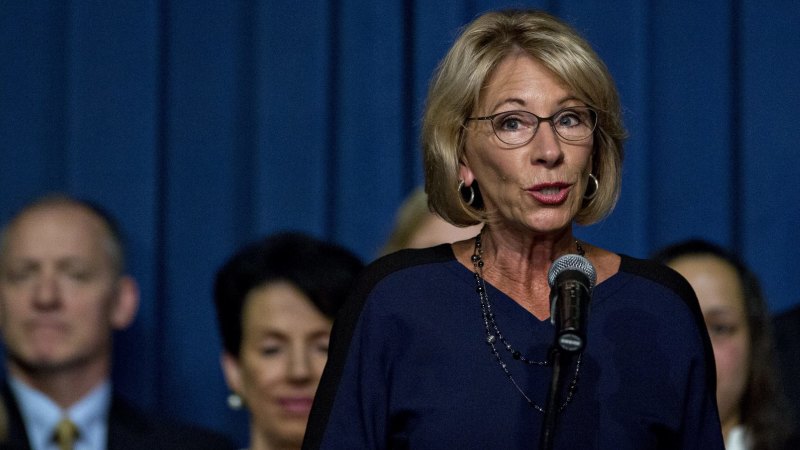
Last week, the US Senate voted to confirm President Donald Trump's controversial pick for Education Secretary, Betsy DeVos.  Vice-President Mike Pence was called in to break a tie vote for the first time in history for a cabinet appointment.

DeVos was a provocative nomination principally because she has spent decades campaigning for school choice — promoting charter schools and voucher programs.  While this has pitted her against the teaching unions, it is hardly a fringe position:  43 US states have adopted charter school laws, and more than 2.5 million students are enrolled in 6465 charter schools.

Research shows that school choice has increased parental satisfaction, and improved achievement and school completion rates for the most disadvantaged Americans.

Injecting school choice into Australia's public education system could be one way to lift our results.  Internationally, the latest PISA rankings show that Australian 15 year-old students' performance in science, mathematics, and reading is slipping — a declining trend since 2006.  At home, the 2016 NAPLAN report showed test scores flat-lining.

The tired response is to call for more public funding.  But throwing money at the problem has not worked.  According to the latest ABS data, commonwealth, state and territory government expenditure on primary and secondary education totalled $43.3 billion in 2014-15, up from $27.6 billion in 2005-06 — an increase of 56.9 per cent.  Claims of "funding cuts" under the federal government are sullied by the fact that education spending is continuing to increase over the forward estimates.

Another common response is to call for improvements in teacher quality.  But this attempts to treat the symptoms without curing the underlying disease.  The real problem is structural;  why doesn't the public education system incentivise improvements in teacher quality and student achievement in the first place?

In each state and territory, the public education system is highly centralised.  This is true even for states with so-called "independent public schools" programs.  In all jurisdictions, school teachers are employees of the government and subject to an industrialised salary structure.  This means a lack of incentives for schools to attract and retain the best teachers.  Removing poor teachers is extremely difficult, and schools are almost never shut down due to underperformance.  Schools must follow a government mandated curriculum and abide by its prescriptive policies and procedures.  Just like any other red tape, innovation is constrained.

Thinking structurally, we shouldn't be surprised that public education suffers from the same problems as any other government-run monopoly — high costs, an inflated bureaucracy, effectiveness issues, and lack of innovation.  A way forward is to separate the functions of public funding and public management of schools.  While there is no single decentralised model, charter schools have a long history of results in the US.

Charter schools are publicly funded schools of choice, run in competition with the centralised system.  They are established and governed by local community boards in accordance with their charters rather than run by government departments.

Charters are publicly accountable to authorising bodies for academic performance and financial management.  Charters have a high amount of autonomy, exempt from a range of government regulations.  Because they are a distinct legal entity, individual charters negotiate teachers' employment conditions locally.  Combined, these features allow charters to tailor educational programs and organisational structures to their own needs — unlocking the potential for innovation.  Effective charter programs can be combined with other school choice alternatives like voucher programs, education tax credits, and more.

As a first step, Australian states and territories could introduce this model by allowing existing public schools to convert to charters.  Universities with education faculties could act as the authorising bodies.  But this will not happen without ambitious leadership.  It would require champions of school choice in positions of power like DeVos.  It will also take grit to stand firm against union opposition, because recent research from education expert Dr Kevin Donnelly finds that the AEU have always placed impediments to increased school choice and autonomy.

None of this is to say that charter schools are a panacea.  But structural change is needed.  The alternative is continuing down the path of a highly-centralised public education system.

As DeVos warned in her opening remarks to her Senate confirmation hearing, "it will not be Washington DC that unlocks our nation's potential, nor a bigger bureaucracy, tougher mandates or a federal agency.  The answer is local control and listening to parents, students and teachers."

Thursday, November 17, 2016

Public service perks don't pass the pub test

Enterprise bargaining is a two-way street.  Public sector unions cannot continue to argue that well-paid public servants deserve additional entitlements without considering the trade-offs that could be made.  Public servants already enjoy generous conditions and entitlements that would not pass the pub test.

The Commonwealth public services' enterprise bargaining agreements notionally expired in 2014.  To date, 65 agreements have been finalised — despite union opposition to every single agreement — but many of the larger departments' agreements remain unresolved.
Whether in the private sector or the public sector, bargaining takes negotiation from both the employer and the employees.  The Turnbull government's workplace bargaining policy provides the flexibility for this to occur on the employer side.  It puts a cap on remuneration increases at 2 per cent a year, with scope to increase salary beyond this point through the packaging of other benefits or productivity increases.  The government's policy is currently subject to an inquiry by the Senate Education and Employment Committee, chaired by a Labor senator.

The idea that public servants are underpaid is completely unsubstantiated.  Over the past decade, federal public servants' pay has risen by 50.7 per cent, far more than the increase in CPI of 31.8 per cent.  According to the Australian Bureau of Statistics, in May 2016, public sector full-time adult average yearly earnings were $87,942.40, compared with the private sector average yearly earnings of $80,204.80.

If public sector unions want to continue with their campaign for pay increases beyond 2 per cent then they need to come to the bargaining table.  I have conducted research into the top 10 Australian Public Service enterprise agreements by agency size — covering 72.4 per cent of public servants — which identified three broad areas where trade-offs could be made.

The first area is the generous allowances that have the effect of increasing salaries by thousands of dollars each year.  For example, a Wellbeing Site Representative at the Australian Taxation Office comes with an allowance of $613 a year.  The Department of Health agreement provides staff with subsidised eyewear, at $165 for each prescription.  The Department of Agriculture agreement allows staff to claim $300 a year for health and fitness activities like gym memberships — whether or not they actually go to the gym is a different matter.  These examples are the tip of the iceberg.

The second area is the generous leave provisions that go well beyond the standard entitlements in the private sector.  The Department of Social Services Agreement has up to four days' paid leave a year to conduct volunteer work with a community organisation.  The Department of Foreign Affairs and Trade allows paid leave where employees are participating at an international sporting event.  Several agencies provide one day of paid leave a year for employees to move house.  Most private sector employees would be expected to take annual or unpaid leave for these activities.  The Department of Defence has what's called DECA day.  As I explained when I appeared before the Senate committee last week, "it's not part of your annual leave, it's not part of your sick leave, and it's not part of your personal leave.  You just take a day off when you feel like it."

The third area is the exclusive perks that are given to public sector unions.  The agreements provide unionists with access to workplace facilities, infrastructure, technology and resources — and paid time.  For example, union delegates have the right to paid time to represent the interests of members to the employer and in industrial tribunals, and also get paid leave to attend union training and events.  It is unacceptable that taxpayers are subsidising unions' industrial and political activities.

The current inquiry into the government's workplace bargaining policy is, of course, simply part of a wider political campaign.  Public sector unions are increasingly using the enterprise bargaining system to advance their own political agendas, rather than representing the best interests of their members.  There is a weight of evidence to show that potential trade-offs could be made to boost pay for public servants.  The government's policy is flexible;  whether the public sector unions' policy will become flexible remains to be seen.

Thursday, November 10, 2016

Donald Trump will lead the US in the right direction.  We should take note

Donald Trump's historic victory represents a huge opportunity for middle America.  It is a rejection of liberal internationalism, political correctness and the progressive politics of urban elites in favour of traditional American values — love of country, family and, for many, faith.  Like Brexit, it heralds a return to the pre-eminence of the nation state, of national sovereignty and democracy.

Many working-class Americans, who had traditionally put their faith in the Democratic Party to deliver for them, voted Republican for the first time.  In contrast, the Democrats, filled with the false confidence of urban progressives, condescended to call the working-class voter base uneducated and deplorable.
As is customary in presidential elections, Prime Minister Malcolm Turnbull called to congratulate US President-elect Donald Trump, remarking that he's a deal maker and pragmatist.

So, what did Americans vote for?  How will Donald Trump "Make America Great Again"?

Trump's first priority will be to boost the US economy and create jobs.  He aims to reshape US tax policy, dramatically cutting income and company taxes, deregulating the economy and cutting government spending.  Trump's aim is to boost US GDP growth to 4 per cent and create 25 million new jobs.  In a nod to his daughter Ivanka's efforts to support working women, Trump also wants to see greater female labour force participation and will offer tax deductions for child-care expenses for working parents.  Obamacare will go, and with it an unaffordable and inflexible system.  Trump will replace it with something more workable.

If you have visited the US in recent times, you will appreciate the urgent need for investment in its ageing infrastructure.  Many highways, railroads and bridges are in a state of disrepair.  Trump has promised big infrastructure investment.  How he pays for infrastructure projects will be a considerable challenge as tax revenues are likely to fall in the short term with his tax reform package.  Trump's solution will be to attract private sector investment in infrastructure through a system of tax credits.

Trump's election is a big rejection of the international environmental movement and its fatwa against carbon.  In the US where the basic wage is $7.25 an hour, the closure of coal mines and regulatory hurdles to shale gas are blamed for blowing out the cost of electricity for ordinary Americans.  Trump has tapped into this angst and has vowed to dramatically change US energy and climate policies, including overhauling the Environmental Protection Agency and scrapping Obama's Clean Power Plan.  Trump wants America to be energy self-sufficient and will encourage the development of US shale gas reserves as a source of low-emission, cheap energy.  South Australia should take heed.

Like Australia, America's success story is the story of migration.  Trump recognises this and is supportive of legal, regulated migration.  But, like Australia, average Americans want strong and safe borders and want people to play by the rules.  Trump has tapped into this by promising to build a wall along the US-Mexico border.  Expect him to ensure the letter of US immigration law is enforced, with the deportation of illegal migrants and a crackdown on employment of illegal migrants.

Finally, on foreign policy, a Trump administration will mark the end of internationalism and US adventurism.  Trump has little interest in intervening in the affairs of foreign countries.  However, he will take a hardline approach to defeating radical Islam which he views as a threat to American values and way of life as Communism was during the Cold War.

US allies have expressed concern that the Trump administration may not take existing relationships such as NATO and ANZUS as seriously as his predecessors.  He may reset some relationships and is likely to favour countries like Australia and Britain, who share American values of democracy, the rule of law, individual liberties and personal responsibility.  But he's not going to accept free riding off US military power, so expect him to demand European and Asian alliance partners start taking more responsibility for their own security and paying their way.

From Australia's perspective, we must monitor steps by Trump to implement a protectionist agenda.  This was a feature of both his and Clinton's campaign.  Starting a trade war with China and putting up tariffs on Chinese imports will just result in economic harm to everyday Americans who would have to pay more for everyday consumables.  The reason US manufacturing jobs have disappeared is more down to technology and automation than offshoring.  Reducing the tax and regulatory burden on businesses as well as decreasing energy prices will help USA Inc much more than erecting trade barriers.

Further, it is imperative that Foreign Affairs Minister Julie Bishop and her team remind the putative Trump administration in the next few weeks that abandoning the Trans Pacific Partnership would boost Chinese prestige in the Asian region at the expense of the US.  It would also be an enormous missed opportunity to expand US growth and jobs.  And that's not in anyone's interest.

Thursday, August 04, 2016

Look to New Zealand to help people on long-term welfare

Several aspects of the New Zealand welfare model are likely to deliver significant benefits for Australians trapped in long-term welfare dependency.

In recent weeks a flurry of political announcements has been made to the effect the federal government intends to reshape the welfare system as we know it.

The Social Services Minister Christian Porter indicated the Turnbull government endorses a so-called "investment approach" in which more intensive assistance packages are tailored for people at risk of long-term welfare dependency.  And in the very near future, the government expects to obtain results from a study using extensive longitudinal data analysis of DSS clients gathered over the past 15 years.

This information should reveal client groups with similar characteristics transitioning in and out of receiving certain working-age welfare payments, and the length of time that groups of people are getting welfare.

The reform agenda is expected to go beyond the more intensive use of welfare administrative data, since the government also intends to commission the non-government sector to establish plans assisting vulnerable people off the welfare rolls.

Encouraging tailored services for targeted groups, and even "social impact bonds" rewarding social entrepreneurs with public funding only when they achieve adequate outcomes, a potential exists for economic and social participation to be enhanced greatly.

The inspiration for these suggested changes happen to come from our near neighbour, New Zealand, whose centre-right government has pioneered better evaluation of welfare costs and is experimenting with alternative, non-governmental modes of assistance.

After finding that an insufficient focus on paid employment in the New Zealand welfare system created high levels of avoidable long-term benefit receipt, the Key government announced its investment approach to welfare in 2011.

The epicentre of this approach is an actuarial model projecting the future fiscal liabilities associated with long-term welfare receipt, and using projections to better target assistance measures based on the likelihood and extent to which future dependency could be reduced.

If providing more upfront assistance to somebody on welfare today would reduce their probability of remaining on welfare long-term, implying a reduced forward liability, then such a strategy could conceivably be endorsed under the investment approach.

As New Zealand's Minister for Finance Bill English said during a recent visit to Australia, "reducing misery, rather than servicing it, requires us to organise responses around these individuals, with them at the centre of public spending".

English added, "we are prepared to spend money now to secure better long-term results for the most vulnerable … and lower costs to the government in the future".

The Key government has claimed improvements in welfare outcomes and budgetary cost projections in the longer term, although some of these outcomes may also be influenced by improved economic conditions and refined actuarial welfare liability estimation methodologies.

Even so, the assessment that the investment approach contributed to 40,000 fewer Kiwi children living in a benefit-dependent household is noteworthy for Australia with a similar problem of intergenerational welfare dependence.

In fairness to the other side of the argument, however, the reforms have been contentious and numerous defenders of the welfare status quo, both here and across the Tasman, have argued the investment approach harms people more than it helps.

Some New Zealand critics argue for a broader balancing of economic benefit and cost considerations, rather than a liability calculation, when evaluating welfare policy changes, while others worry that reform is merely code for cutting people off welfare at any cost.

Economists have good reasons to advance the cause for comprehensive cost-benefit appraisals to assess the social, economic and fiscal performance of the welfare state, and it is possible future welfare policy would be framed using this broader methodological approach.

But the quantification of the full gamut of benefits and costs is difficult and prone to misapplication, not to mention political controversial every step of the way, so social policymakers maybe are some distance away from practical and feasible cost-benefit at this stage.

The advocates for change have been at pains to indicate their investment approach to welfare isn't a fiscal cut model in disguise, given that actuarial analysis may reveal additional and upfront supports are needed to build up economic resiliency for certain welfare client groups.

Certainly the New Zealand Productivity Commission, in a recent social services reform inquiry, "received no evidence that a simplistic interpretation of the [investment approach] is encouraging staff to, for example, push people off benefits they are entitled to or into unsuitable jobs".

Anyhow, a reduction in long-term fiscal liability imposed by the welfare state shouldn't necessarily be interpreted as problematic, because of the correlation between lessening welfare dependency and improved economic and social participation.

As many welfare experts rightly indicate, a sustained transition from fiscal dependency to satisfying and meaningful employment may contribute mental and other health improvements, better social connectivity, self-reported enhancements to well-being and other benefits.

Several commentators who criticise the investment approach to welfare reform decry the lack of satisfying employment opportunities available for those transitioning off welfare.

Accepting the argument that the availability of high-paying and interesting work, or lack thereof, is a legitimate concern, then it would be best to reform policies in an effort to ramp up economic growth and cut living costs.

The point being made here is that initiatives such as deregulating labour markets, eliminating occupational licensing restrictions, cutting red tape and taxes on childcare and other important services are necessary to make measures for a more sustainable welfare system a resounding success.

A dimension to this debate that seems to be somewhat downplayed is the potential of the investment approach to transform bureaucratic incentives, traditionally oriented toward maximising welfare budgets with seemingly less of a concern about affordability and maintaining a genuine safety net.

In this context, Jenesa Jeram of the New Zealand Initiative has poignantly asked, "why should taxpayers entrust government with even a cent more of their money, when it is unclear whether the current spending is effective and reaching the right people?"

The investment approach is unlikely to serve as the final destination for welfare reform, but nonetheless would appear to be an improvement upon the status quo.

If the model could be more ambitiously used as a basis for comparing and rewarding the efficacy of alternative publicly funded welfare interventions, delivered either by government or NGOs, then all for the better.

It would be a shame for Australia to forgo welfare reform, akin to the investment approach or even something else, for fear that it might actually reduce long-term dependency upon the state.