Showing posts with label Government Services. Show all posts

Monday, December 14, 2020

Hurry Up And Then Stop

Australia is not following the science.  The decision to dither on the Covid-19 vaccines will not delay the economic recovery but could risk lives and undermine faith in immunisation.

Last week the United Kingdom became the first country on the planet to approve the BioNTech-Pfizer vaccine.  This week rollout began.  The United States is expected to do the same in the coming days.

This is a momentous occasion for humanity ― from new disease to safe and effective vaccine in less than a year.  Millions of lives will be saved.

The Australian government has responded by painting our friends in Old Blighty as reckless.  Australia's Therapeutic Goods Agency (TGA) will wait until at least late January, if not February, for approval.

Distribution will begin in March.  "Well, I wouldn't want to use the word guinea pigs with the UK," John Skerritt, the head of the TGA said last week.

Skerritt did, nevertheless, talk up waiting for "the real world experience of several hundred thousand people having had the vaccine".

Australia's vaccine urgency is obviously not the same as elsewhere.  The border-first strategy and effective testing and tracing has kept cases extremely low.

Nevertheless, a slow vaccination rollout has real consequences.

On the health front, the government announced in September that Australia would have early access to 3.8 million doses of the University of Oxford/AstraZeneca vaccine available in January and February.

This would have allowed for the potentially life-saving immunisation of aged care residents and healthcare workers before the risk of spread grows again in winter.  These doses now appear to have fallen out of the equation.

On the economic front, Australia is a small, outward-looking trading nation that depends on people.  University and tourism sectors are already on their knees.

Australia's unemployment rate is now higher than many countries hit harder by the virus, including the US and the UK.  Meanwhile, as relations with China sour, building new links is paramount — and it takes face-to-face meetings to build trust for those multi-billion dollar deals.

The sooner we begin vaccinating, the sooner the risk to human life decreases, borders can reopen and the economy can fully recover.  Manufacturing, distributing and vaccinating millions of people, across two appointments, will take many, many months.  The quicker Australia begins this process the faster it will be over.

Trust must also be built.  The government has rightly said the vaccine will be voluntary.  People will therefore have to be persuaded it is safe and effective.

The insinuation that the UK has rushed approval risks sowing the seeds of doubt.  But Britain's regulators have not cut corners.

Their speed is explained by undertaking the usual rigorous steps in parallel, as new information was received, rather than at the end.

The vaccine itself was developed so quickly because scientists adapted existing technologies, designed to tackle other diseases, including coronaviruses like SARS and MERS.

Sarah Gilbert from Oxford has explained that "it's not breakthroughs.  We know what to do and we do it, and everything has worked out as expected."

There was also a singular global focus on developing a vaccine and big investments in trials, manufacturing, and distribution.  Never in human history have so many scientists, companies and governments been so focused on a single goal.

Also, the pharmaceutical multinationals, many of which are household names, have an extraordinary incentive to provide a safe vaccine.

The vaccines did not cause any serious side effects in tens of thousands of people after many months.  This is very reassuring.  Side effects typically appear straight away.

We won't know anything about longer term effects before Australian regulators look next month.  If we are waiting for that unknowable and unlikely long term side effect to suddenly materialise the vaccine will never be approved.

The clearest excuse for Australia's tardiness is the lack of emergency approval mechanism like the US and the UK.  This is worrying.

If Australia did have a large outbreak there would be no legal way to immediately start providing vaccination.  The same applies to other breakthrough medicines.

The Covid-19 vaccines represent a revolutionary shift in medicine.  The mRNA technology behind the BioNTech/Pfizer and Moderna vaccines can also be used to beat cancer, influenza, malaria, HIV, and much more.  There are also many other medical innovations on the horizon.

If Australians are to benefit sooner rather than later, it will take a new patient-centric approach to medicines regulation.

Australia should recognise approvals by the European Union, United Kingdom and United States.  Their regulators are robust and are stuffed full of the top global experts.

Australia's forthcoming trade deal with the United Kingdom should also use the idea of mutual recognition of product standards to facilitate much easier trade.

Australia also needs Right to Try legislation:  those with terminal diseases should be free to use any experimental drug from anywhere in the world.  There will be immense risks, but between death and potential survival the choice is obvious.

Approval delays are a deadly business.  Australia can do better.

Friday, December 11, 2020

Warts And All Memorial

As its name makes clear, the Australian War Memorial exists to memorialise the service and sacrifice of Australians in war, as a reflection of our shared commitment to our country and each other.  It does not exist to denigrate our national character nor to pander to the worst kinds of elite self-hatred so lamentably prominent across our national institutions.  Yet there is a danger now that this place of honour might be turned to these subversive ends.

In the wake of the Brereton report on alleged war crimes committed by Australian SAS troops in Afghanistan, there have been calls for the War Memorial to immediately reflect the allegations in its exhibitions.  Memorial director Matt Anderson has suggested that curators will indeed do just that.  Similarly, former Chief of the Defence Force, Admiral Chris Barrie has suggested that the SAS exhibit be removed altogether.  The prime minister has responded meekly, saying only that all such changes will need to be approved by the War Memorial's board.

But it should be clear that it would not fit the purpose of the War Memorial to foreground the bad acts of a few soldiers.  Of course, wherever criminality is proved, it should be punished to the fullest extent, and if this comes to pass, no one would suggest that it be whitewashed from the history of Australia's war in Afghanistan.  Yet it would not be, and should not be presented as, the sum total, or even the most important part, of that history.  Nor should the war in Afghanistan, despite its unprecedented length, be allowed to overshadow Australia's larger military history.

The War Memorial's curators are charged with telling the full story of Australians at war.  That story is overwhelmingly a story of courage, discipline, loyalty and other virtues, demonstrated in defence of our home, our values and our traditional liberties.  Australians have fought honourably from the Sommes to Kokoda to Long Tan and beyond, including in Afghanistan.

This is the truth to which the War Memorial is dedicated.  Undue emphasis on the bad acts of a few at the expense of this larger story would not be truthful.  It would, in fact, be deeply misleading.

Getting this larger story wrong is unfair to service members and veterans and their families.  Tens of thousands of Australians have served in Afghanistan.  Hundreds of thousands have served our country.  They should not be tarred with guilt by association.

Moreover, allowing these allegations to overshadow the true story of Australia's military history is unfair to civilians as well.  The story that the War Memorial and its curators exist to tell, they hold in trust for the Australian people, as a source of strength and meaning for all of us.  The pride and fellow feeling engendered by contemplating the sacrifices of men and women down the generations is integral to our identity and democracy.

It has been claimed that notice can be given to these allegations in a way that avoids denigrating the longer tradition.  Perhaps.  But Admiral Barrie's suggestion that a significant piece of Australia's military history simply be erased does not inspire confidence.  More broadly, we should be suspicious given the turn taken by so many of our other cultural bodies.  Because just as the War Memorial is now implying that in the telling of our military history, "warts and all" means mostly warts, the truth about our country is now regularly and widely misrepresented

Australia's cultural bodies now routinely see it as their mission to subject our nation, history and traditions to relentless critique.  The ABC, the universities and the bureaucracy all now insist that Australia must atone for its various sins, which together constitute, we are told, historic and systemic injustice.  The institutions of Australia, and the customs that support them, are held in contempt and this contempt has been forcefully injected into mainstream culture.

This is why every national event, from Australia Day to sporting matches, is accompanied by some attempt to demoralise us.  Not even the national anthem is safe.  The point is to wear us down and prepare us for revolution.

Meanwhile, the real story of Australia is left untold or is actively suppressed.

The truth is this:  Australia is a great democracy that has provided peace and prosperity for people from all over the world.  More so than perhaps any other nation, Australia was founded on the idea that our rules and institutions should be dedicated to improving the lives of the common people, not to shoring up the fortunes of a few or implementing some grand ideological project.  In this task, we have been astonishingly successful and Australians have generally enjoyed a standard of living unimaginable to our various ancestors.  Our history is not, of course, an unbroken string of successes.  But our failures are recognisable only as exceptions, and the proper way to think about resolving them is by drawing on our past, not by abandoning it.

Instead of celebrating our way of life, a small, self-appointed, unaccountable and heavily-subsidised cultural elite is making a concerted effort to disestablish Australian values ― to separate our every institution, ranging from the smallest custom to the apparatus of state itself, from our traditional notions of the good, the true and the right and to rebuild them in the image of an ideology that is foreign to our nation and its history.  The central question is which values should rule;  those of this social justice ideology or those of mainstream Australians?  The values that make us weak or those that have made us strong?

For a long time, the Australian military has managed to avoid being dragged into this culture war.  Given the importance of Anzac and our military history to the nation, it would be an unthinkable loss were the War Memorial to become just another Australian institution alienated from mainstream values and undermining its own mission.  To put it bluntly, it must not be allowed to happen.

Wednesday, December 02, 2020

Why Is The Coalition Planning To Give More Money To The ABC?

Given the spite and the scorn with which many at the national broadcaster view the Coalition and mainstream Australians, one would think that the last thing that a Coalition government worth its salt would want to do is give more money to the ABC.

But this is exactly what they've done.  Last week the Guardian ran an exclusive that Treasurer Josh Frydenberg plans to add public broadcasters the ABC and SBS to the revenue sharing arrangements as part of the proposed mandatory news code, which means they will receive payments from Google and Facebook for using their content.
It is frankly bizarre that a Coalition government is considering a new financial windfall for the ABC, on top of its annual $1.2 billion in public funding.

While the commercial media has been smashed as a result of the COVID pandemic, the ABC has remained untouched.

Last month, ABC staff rejected a plea from the Federal Government to freeze their pay for six months, to show some shared sacrifice with their colleagues in the commercial media.  Instead, they voted overwhelmingly to give themselves a pay rise.

In doing so, the employees of our national broadcaster considered themselves morally superior and more worthy of a 2% pay rise than staff at Services Australia, Centrelink, the Department of Health and the Department of Social Services, who have all been on the front line of the response to this pandemic and have all taken a six-month pay freeze. 

The ABC has continued to show its hostility towards the Coalition throughout the pandemic and its distain for commercial media.

The ABC has been a loud cheerleader for former Prime Minister Kevin Rudd's petition for a "Murdoch Royal Commission".

In just over one month since the petition was launched, the ABC across all its platforms has mentioned "Murdoch" and the petition over 3,000 times, highlighting its ideological obsession with its perceived enemies.

Defenders of the ABC constantly gloat that the ABC is "free from commercial influence or interests", making its news editorial stances fiercely independent.

They will not be able to use that defence anymore now that a key revenue stream for the ABC will be dependent on the commercial success of Google and Facebook.

Indeed one of the ABC's key editorial standards is to "Ensure that editorial decisions are not improperly influenced by political, sectional, commercial or personal interests".  The ABC grovelling for this new source of funding puts it at conflict with its own editorial standards.

The idea that the ABC, which is entirely funded by the government, would be a beneficiary of this scheme puts a lie to the idea that the mandatory media code is about levelling the playing field between news media businesses and digital platforms due to a loss in advertising revenue.

Treasurer Josh Frydenberg was correct in pointing this out only a few months ago in the Australian:

Importantly, the bargaining arrangements relating to the payment of remuneration will not be available to public broadcasters as they are principally funded by the government and not through advertising revenue.  Public broadcasters will, however, benefit for the minimum standards for non-remuneration matters set out in the draft mandatory code.

The ABC is a taxpayer-funded behemoth with guaranteed funding of over $1.1 billion per year.  Therefore, it has not lost any money through the existence of Google or Facebook eating up advertising revenue.

Indeed, it is the other way around.  The ABC's 2019-2020 annual report reveals an advertising spend of $5.5 million, which is a significant increase from a $2.7 million advertising spend reported from 2018-19.

Much of this is buying up Google advertising to increase ABC websites' positions in news searches.

So, the ABC will be giving money to Google with your tax dollars, only to receive it in return.  The relationship between big tech and big public broadcaster will inch that bit closer in a cosy deal that puts mainstream Australians last.

Surely a better outcome both for the ABC, and taxpayers, would be to reform the ABC into a subscription service like is being proposed for the BBC in the UK, privatise it completely, or at the very least, allow the ABC to air commercials since they are so keen on a slice of advertising revenue in the first place.

The ABC wants the perception of being independent from commercial interests while cashing in on revenue from commercial organisations like a seagull to a chip.

Thursday, November 26, 2020

Fake News:  Their ABC Is Not Popular

Whenever anyone criticises the ABC a stock standard response is that Australians love the ABC.

Well do they?

It turns out that the ABC tell us that Australians love them.  But the ABC tells us so many things that we simply do not believe, why should this be any different?

Chris Berg and Sinclair Davidson wrote about this in their book on the ABC:  Against Public Broadcasting:  Why and how we should privatise the ABC.

McNair and Swift point our attention to the ABC Annual Reports that usually contain survey data demonstrating how Australians perceive the ABC.  The ABC's satisfaction indicators are very impressive.  A selection of those indicators are shown in Table 1.

Eighty-six per cent of Australians value the ABC.  Seventy-seven per cent think it is balanced and even-handed.  Seventy-eight per cent think ABC television provides quality programming.

This rosy picture is complicated by the fact that ABC television only had a 17.6 per cent share of the primetime five-city metro market in 2015-16.  Indeed, there is a huge gap between the number of people who claim to value the ABC, and those people who actually consume its services.  It is also noteworthy that more people in the metro areas consume ABC radio than primetime television and the percentage of people who believe that the ABC provides quality radio programming is much lower (63 per cent) than those who believe the ABC provides quality television programming (78 per cent).  It appears that the more people know about the ABC the less they value it.

This kind of result is not necessarily surprising ― it is very likely that Australians have been socialised into believing that the ABC provides a quality service as opposed to having actually experienced that quality through their own viewing or listening.

It is true that the ABC has higher market share in regional areas than it does in metropolitan areas ― yet even there the gap between what people say about the ABC and their actual consumption of ABC services is large.  Unfortunately the ABC does not appear to publish market share data for its regional radio services.  It is one thing to be assured by politicians that the ABC provides valuable services to the community but it would be even more reassuring to see the actual data supporting that claim.

Not even the Wikipedia reports the ABC as being popular.

The ABC has lower ratings than does subscription television.  To put the channel 2 10% rating share into perspective The Greens got about 10% of the vote at the 2019 general election.

The ABC is a channel of Greens, by Greens, and for Greens.

Paid for by the taxpayer.

Tuesday, November 17, 2020

Their ABC Must Be Worried

Joe Gersh ― ABC board member ― has an op-ed in The Australian this morning.

Chris Kenny has been a vigorous critic of the ABC while previously "resisting calls for its privatisation or abolition", but after last week's Four Corners, Media Watch and Q&A he has asserted that it now "is beyond redemption".

True ― Chris Kenny has long been a critic of the ABC.  But his argument ― as is many journalists ― has been that the ABC needs to have conservative voices.  To my mind that criticism is that the ABC should employ him.

This follows similar calls from Richard J. Wood and other respected commentators.

To be clear, my recommendation for the ABC is:  Break up the ABC and put out to tender each individual function.  Moving along.

I cannot agree.  I declare my centre-right bias;  a long-time reader of The Australian, I was appointed to the ABC board by Turnbull government communications minister Mitch Fifield.

Ah Mitch.  Lovely guy.

The ABC is frequently criticised and sometimes for good reason.  Even the most passionate friend of the ABC could not argue that Aunty is beyond criticism.

… and yet.  Here we are.

Calls for the abolition or privatisation of the ABC (essentially the same thing) are a thought bubble for which there is no constituency on either side of politics.

Fake news!  The Liberal Party adopted a platform of privatising the ABC after the publication of Chris Berg and Sinclair Davidson's book.  Mitch Fifield ― yes that same Mitch ― immediately stated that privatisation of the ABC was not government policy.  This demonstrates the extent of Liberal politician capture ― they simply refuse to implement the policies of their own party.

Each time it is repeated, it damages the ABC's quest for the long-term, stable funding it needs and that underpins its independence.

More fake news!  The ABC has stable funding of about $900 million each year for operational expenses.  Then about another $120 million or so for transmission.  That funding is paid upfront by the government irrespective of whether anyone actually consumes ABC content.  Unlike every other media organisation, the ABC does not have to work for a living;  the food is on the table when they get there.

It may irritate the critics, but the ABC remains Australia's most trusted source of news and current affairs.

Some polling company told them that.  Their viewer numbers suggest otherwise.

Who but the ABC can we rely on for emergency broadcasting, which attracted universal appreciation yet again in the most recent bushfires?  Likewise with coronavirus.

There is no reason why taxpayers should pay $900 million for emergency broadcasting ― that function could be tendered out for a lot less.

Add to the list rural and regional Australia, Australian drama, comedy, children's shows, women's sport, music, Indigenous issues and the arts.

Ah yes.  Comedy.  The only contribution the ABC makes is to rebroadcast quality BBC shows.

Unsurprisingly, the ABC's political coverage attracts the most controversy.  But how can it be consistent with liberal values to call for the ABC to be defunded every time a controversial story is aired?

We need to get away from this notion of judging the ABC by small-l liberal values.  The ABC does not practice small-l liberalism.  The ABC is infested by extremist left-wing progressives who use small-l liberalism as camouflage to destroy our way of life and civilisation.  All their "controversial" stories are one-sided.

Cancel culture, which conservative columnists abhor, is just as absurd when applied to the ABC.

We don't want to cancel the ABC, we just don't want to pay for it.

I do not share in the hysteria about Rupert Murdoch.  News Corp, in my view, plays a valuable role, and if more media diversity is sought (and it should be) it can be achieved by encouraging as broad a range of competing voices as possible, including those that may require some taxpayer support.

Good to hear ― yet some many individuals who work for an organisation where Gersh is on the board use organisation time and resources to bag Rupert Murdoch.  Has he told them that News Corp plays a valuable role?

But I do find it hypocritical when journalists and commentators conflate issues of competi­tion with issues of bias.  News Corp is well able to deal with its commercial interests.

True ― News Corp is not above rent-seeking.  Their campaign against FaceBook and Google has been disgraceful.

Concerns about balance at the ABC, on the other hand, are an entirely legitimate issue for debate and the views expressed in the columns of this newspaper should be heard;  as should the views of others that may robustly differ.

Excellent advice ― yet the ABC doesn't seem to adopt that sort of approach.

The ABC is taxpayer funded, it does not accept advertising, and therefore it is not a commercial rival.  Nonetheless, it competes for eyeballs and clicks.  Some resent this.

A tad disingenuous.  Media companies are platforms ― they have to compete on two fronts;  for paying customers (advertisers) and consumer attention (eyeballs).  The ABC competes on neither front.

Freed of the obligation to satisfy advertisers or a proprietor, the ABC is able to do things others cannot do;  things that may not have a commercial return but that have profound civic benefit.

I'm going to have to break up that sentence into three parts.

Freed of the obligation to satisfy advertisers or a proprietor

As I said, the ABC does not compete on any margin.  This is the first problem.

the ABC is able to do things others cannot do

That is the second problem.

things that may not have a commercial return but that have profound civic benefit.

For example?

The case for public broadcasting in today's disrupted media environment and the era of "fake news" is stronger than ever.

Well?  Let's hear it then.  That is simply an unsubstantiated comment.  A large proportion of the Australian population thinks the ABC is a source of fake news.

I accept that some people were uncomfortable with Four Corners on Monday night last week.

So what is he doing about it?

Four Corners often does that.

So, um, nothing.

By its nature, long-form investigative journalism can make those under investigation feel exposed.

I can only imagine the horror George Pell must have felt.  A tad more than "exposed".

That goes with the territory.  To demand intervention by the ABC board is misconceived.

Yep.  Doing nothing.  I suspect being an ABC board member comes with a salary and they put on a nice lunch.  Actual corporate governance?  Not so much.

The role of the board is to ensure that the ABC conforms to its charter, and it does so via its editorial policies as explained clearly by ABC managing director David Anderson at Senate estimates last week in an extraordinary exchange in which he was asked to justify a program that had not yet gone to air.

Here is another sentence I'm going to have break up.

The role of the board is to ensure that the ABC conforms to its charter

Any time you're ready …

and it does so via its editorial policies as explained clearly by ABC managing director David Anderson

Perhaps an example could clarify our understanding …

at Senate estimates last week in an extraordinary exchange in which he was asked to justify a program that had not yet gone to air.

How dare those pesky politicians ask questions?  Was David Anderson feeling exposed?  Estimates often does that.

Critics often portray the ABC as a "conservative-free zone".

Fact Check:  True.

Yet Kenny's greatest criticism of Q&A was the heated exchange between Malcolm Turnbull and Paul Kelly, two leading, respected men I would describe as conservatives.

Two guests on a show?  That covers that particular criticism?  Anyway, nobody serious would describe either Paul Kelly or Malcolm Turnbull as being "conservative".  They are both small-l liberals.

Agree with either, or neither, but what sin has the ABC committed in putting these important issues — climate change and media diversity — to air?

"Media diversity" is ABC code for that evil monopolist Rupert Murdoch and how they ― the ABC ― need even more money for nothing from the taxpayer.

Kenny's throwaway line, "Sorry Ita, we had high hopes for you", apart from being inappropriate and patronising, fails to appreciate some of the bold and strategic thinking adopted under the leadership of Ita Buttrose and Anderson during a time of financial challenge.

Chris Kenny is a nice guy.  I had no expectation that Ita Buttrose would make any impression on the ABC.  Nobody else ever has.

This board has adopted a five-year plan to decentralise the ABC.  Three-quarters of content-makers will be outside Ultimo headquarters by 2025 and enhanced recruiting guidance will encourage greater diversity on and off air.

Oh dear god.  There will be even less managerial oversight than there currently is.  Define "diversity".

These are not "woke" words.

"I am not a racist, but … ".  Seriously?

They represent a fundamental shift to make the ABC more representative of today's Australia.

Like actual Liberal voters?  Or net taxpayers?  Patriots?  You know, people who actually love Australia.  Who take pride in the nation.  Is the ABC going to employ those people?  They sure as hell can't seem to find any for the Q&A audience, how are they going to find any to employ?

People in different parts of the country and from different cultures and backgrounds see issues differently.

Ah yes.  Post-modernism.  There are no facts, only social constructs.

In a measured and thoughtful way, this plan addresses the "unconscious bias" at the ABC that Buttrose identified early in her tenure.

Ha!  The bias is "unconscious".  Hmmmmm, no.

The ABC does not require redemption;  it accepts constructive criticism but needs support and stable funding.

Here is the thing:  The ABC cannot be redeemed.  It does not take on, or even ever recognise, constructive criticism.  It has stable funding already.  That is the problem.

Believers in a robust media would benefit from dial­ling down threats to its funding and continuity.

ABC Delenda Est.

Thursday, November 05, 2020

Bloated Super Sector Sucking Up Workers' Wealth

The Morrison government has a key decision to make before the end of this financial year:  does it stand with mainstream Australians who have suffered through the lockdown-induced recession, or with the financial sector and industry super elites that are seeking to line their pockets further at the expense of working people?

The compulsory superannuation contribution rate is legislated to rise from 9.5 per cent to 10 per cent next July and steadily increase to 12 per cent five years later.  In the wake of the largest economic shock in decades, and the sharpest spike in unemployment and underemployment, increasing the super rate will come at the expense of working people who are already struggling with a rising cost of living.

By scrapping the legislated increase in the super contribution rate, the Morrison government will demonstrate that it prioritises the interests of mainstream Australians above those in the bloated superannuation industry.

There is a misconception that employers pay superannuation contributions.  The legal incidence of contributions falls on employers, but it is workers who must pay them through lower wages.

This used to be an uncontested point.  Compulsory super was first introduced after Paul Keating as treasurer agreed with the ACTU that it would allow for wage increases without creating inflationary pressures.  In a speech in 2007 Keating reaffirmed the point that super was paid by employees:  "The cost of superannuation was never borne by employers.  It was absorbed into the overall wage cost … In other words, had employers not paid nine percentage points of wages, as superannuation contributions, they would have paid it in cash as wages."

In 2010, in a speech after the Labor government legislated to increase the contribution rate, Bill Shorten as assistant treasurer said:  "It's wages, not profits, that will fund super increases in the next few years.  Wages are the seedbed of the whole operation."

Keating and Shorten have since sung from different song sheets, arguing that increasing the contribution rate will not come at the expense of wages.

But their change of tune does not alter the fact super is paid by workers through lower wages, which is the agreed wisdom of the Parliamentary Budget Office, the Grattan Institute, a range of academic studies and the Rudd government-commissioned Henry tax review.

Compulsory super was designed to ensure that Australians could retire in comfort without putting too much strain on government pensions.  In reality, it prevents a decent working-life standard of living and often diminishes the ability of Australians to buy a home and raise a family.  The home ownership rate declined from 71 per cent in 1994-95 to 66 per cent in 2017-18.

In the meantime, things could not be better for the financial services industry with a guaranteed and growing revenue source from super fees.  Before compulsory super was introduced, the financial services industry represented 2.4 per cent of the economy.  Now it's 6.5 per cent.

The forced savings scheme has allowed the financial services sector to flourish as it enjoys a never-ending transfer of wealth from working Australians.  Meanwhile, working people struggle as private sector wage growth has been below its long-run average for the past decade as the cost of living increases.

The government should provide a message of hope and aspiration for Australians as they emerge from the lockdown recession.  This means making the case for individuals and families keeping more of their wages, rather than seeing more siphoned off into the accounts of the elites running super funds.  It also means making the case for liberal values rather than ac­qui­escing to the technocratic mantra that the government must force people to save for their own good.  Australians should be able to make their own decisions about how they spend or save;  they are best placed to make the right decision.

According to statistics from the Australian Prudential Regulation Authority, more than 3.3 million Australians have withdrawn an average of $7400 from their super under the COVID-19 early release scheme.  This indicates that young people are withdrawing their entire super balance and are voting with their feet;  they believe that they are better placed to manage this money than the super funds to which it was previously sacrificed.

The budget contained some sensible reforms of the super system, but there is still a long way to go in ensuring that it works in favour of mainstream Australians.  For example, the $450 a month earnings threshold after which contributions must be made has not increased since compulsory super was introduced in 1992, meaning people earning about half as much in real terms today are forced to make contributions to their retirement fund.

For most working Australians, the super system does not serve them well.  Forcing them to throw more money at it will do more harm than good.

Sunday, October 25, 2020

What The ACT Election Results Tell Us About Our Rulers In The Bubble

Last weekend's ACT election results have again revealed how out of touch our nation's capital city is with mainstream Australians.  While it is tempting to write off the ACT Legislative Assembly as little more than a glorified city council, ACT elections are one of the clearest indicators of elite opinion that we have ― and the results are alarming.

ACT Labor will continue to govern, as it has done since 2001, but the big winners were the Greens, who have more than doubled there representation.  The 25 seat ACT Assembly will have ten Labor members (down from 12), nine Liberals (down from 11), and six Greens (up from two).  The Greens already have a seat in cabinet, in exchange for propping up the minority Labor government, and will now be even more influential.  The radical Greens are a party of government in the ACT.
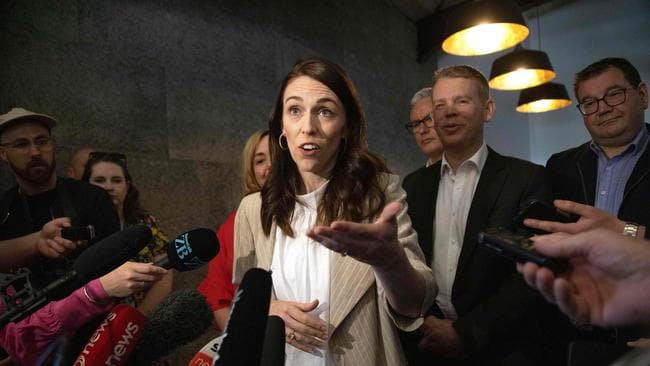
Overall, the ACT electorate is markedly out of step with the country.  Labor, the Greens, and minor left-wing parties received more than 58 per cent of the first preference vote ― a tally even exceeding the left's primary lower house vote in Victoria's landslide 2018 election (approximately 56 per cent).

Of course, this pattern diverges wildly from that seen in more conservative states.  At the 2019 New South Wales election, left-wing parties received only 44 per cent of the first preference vote (in the lower house), and at the 2017 Queensland election, the figure was 45 per cent.

Many Canberrans are transplants who have moved to the city to work in the federal bureaucracy, so the political differences are quite striking.  Canberra, it seems, both attracts a certain type of person and instils in people a certain set of beliefs and attitudes.  These sorting mechanisms have gradually separated the capital from the country over which it rules, encasing it in a bubble of ideology.

The left's stranglehold on Canberra poses two big problems for the rest of the country.

The first is that the residents of the Canberra bubble make policy for all of us.  Their detachment from the preferences and values of mainstream Australia has led to a range of policy disasters.

Perhaps most seriously, economic policy in this country increasingly favours the public sector and the corporate bureaucracies that oversee the enforcement of government regulation.

As my research has demonstrated, the COVID recession has made this trend worse.  Our country increasingly has a K-shaped economy, in which bureaucrats thrive even as the productive economy that sustains them is hobbled.

At the height of the recession, public sector wages in the ACT increased by 6.5 per cent.  The average wage in the ACT is $102,000, far exceeding other states and territories.  While the country has seen 600,000 private sector jobs lost this year, the ACT has largely been insulated from the fallout.

We also seem to be developing a K-shaped culture.  Consider, for example, the obscene and embarrassing fiasco that is national arts funding.  The ruling class amuses itself with deranged art, obscure research projects, and the self-flattery of the ABC, while traditional and elevating cultural pursuits are shunned and shuttered.

The second problem emerges from the unavoidable fact that the ACT electorate is highly educated.  The Canberra bubble represents, to a worrying extent, the best that our systems of education and moral instruction can produce, and they are turning against the values of the rest of the country.

This is one way that Canberra is similar to the rest of Australia: educated people are radicalising.  Just as we have seen in some wealthy parts of Sydney and Melbourne, the Greens in Canberra picked up votes mostly from the Liberal Party.  Our inner suburbs are filled with spiritual Canberrans.

Somehow, we have created a system that selects for these kinds of beliefs, or that fills the heads of many of our brightest people with bad ideas.  Maybe both.

The elite, the attitudes of which are made plain at ACT polling booths, is the main reason that elections in this country never seem to change anything ― a reminder that democracy means more than just elections.  If we want a democratic country in which policy aligns with mainstream values, our highest priority should be ending the miseducation of our ruling class.

Monday, October 19, 2020

Danger Across The Ditch As Incompetent Leader Ardern Wins Office

Nobody skewered Barack Obama during his presidency like legendary comedian Dennis Miller.  "It's not all that dramatic with me and Obama," Miller once told his audience.  "It's not racist, it's not classist, it's not ideological.  It's just that he's an inept civil servant.  He's the guy at the toll booth who's constantly giving out the wrong change."

The same could be said about New Zealand Prime Minister ­Jacinda Ardern.  She's a brilliant politician, but has been a grossly incompetent administrator.  And with her seismic re-election on Saturday, New Zealand is in for a dangerous three years.

"There is a distinct chance that if we don't sort out our economic challenges quickly, New Zealand could end up a failed state," says Oliver Hartwich, executive director of leading think tank the New Zealand Initiative.

Hartwich is right to be worried.  New Zealand has been hit particularly hard by the Ardern government's heavy-handed coronavirus response.  Before COVID-19, tourism was New Zealand's largest export industry, employing 8.4 per cent of its workforce and bringing in over one fifth of the country's foreign exchange earnings.  With corona, this key plank of the NZ economy has been shut down for the foreseeable future.

Fundamental economic indicators are even more concerning.  According to the OECD, New Zealand's GDP could fall by 10 per cent in 2020.  Likewise, unemployment is tipped to rise to just under 9 per cent in 2021 as New Zealand's $14bn corona wage subsidy program ends.  Public debt will soar from 19 per cent of GDP in 2019 to 56 per cent in 2026.

Jacinda Ardern is perhaps the worst person to lead New Zealand through this economic turbulence.  Her first term has been marked by political triumphs but public policy disasters.  Ardern's empathic — even admirable — responses to events like the Christchurch massacre and the White Island volcano have masked a damning suite of failures in government.

Ardern squeaked into office in 2017 promising to deliver 100,000 homes within a decade, but ultimately built just over 500.  Other projects, like a rail link from Auckland airport to the CBD and a new hospital for Dunedin were attempted, but quickly abandoned.  The $3bn Provincial Growth Fund — extracted by Winston Peters in coalition negotiations — has created more jobs in Wellington than it has in the regions.  Labour came to government promising to drive down carbon emissions, homelessness and child poverty;  all three have risen.

As for what Ardern has planned for a second term, the details are patchy.  Labour ran something of a "small target" strategy during the election, relying on the Prime Minister's star power and perceived success in warding off the coronavirus.

But from what we do know about their "policy-lite" platform, Labour will likely exacerbate New Zealand's economic woes.  Hiking income tax, re-regulating the industrial relations system and a bloodcurdling plan for 100 per cent renewable energy by 2030 could turn the corona-induced economic shock into a permanent state of impoverishment for thousands of Kiwis.  Worse-still is the possibility — still not ruled out at time of writing — that Ardern will go into coalition with the Green Party, with their plans for a new "wealth tax" and climate change evangelism on par with the Greens' Australian counterparts.

The great shame is that just three years ago, we could look to New Zealand as a beacon of good government and sensible economic and social reforms.

Over their nine years, the National Party governments of John Key and Bill English cut income and company taxes, brought the budget back to surplus, reformed the labour market and privatised state assets.

The hefty economic windfall was deployed towards a revamped welfare system inspired by what Key and English called "social ­investment".  The leaner but substantially better-targeted spend led to dramatic improvements in everything from welfare dependency and school attendance to crime rates.

But sadly, the National Party that submitted itself to the people on Saturday night was a shell of its old self in government.  It put forward a mixed bag of policies — some decent, like repealing planning laws and temporary tax cuts to kickstart the economy, and some just silly, like introducing a target for electric vehicles.  In any event, the opposition failed to put forward a clear, coherent alternative to Labour.

Throw in the spectacle of having three leaders in five months, constant infighting, and a $4bn hole in its pre-election costings, the Nationals were clearly nowhere near "match fit" in 2020.  They got the shellacking they deserved.

But the surge in support for the libertarian ACT party — which went from 0.5 per cent of the vote to 8 per cent — shows that there is still a constituency for lower taxes and smaller government.  In other words, many were looking for an alternative to Labour's agenda, but the Nationals just didn't offer it.

The end result should be familiar to Australians.  Alarmingly, there are strong parallels between the political dynamics in New Zealand and the state of Victoria:  A first-term Labour government that has steamrolled a weak and divided opposition, a popular leader with a big mandate and a hard-left political temperament, a degraded and politicised public sector, and a largely uncritical and compliant media.

The only hope for New Zealand now is that, whatever horrifying plans that Labour has in store, Jacinda Ardern is just as hopeless at actually implementing them in her second term as she was in her first.

Sunday, October 04, 2020

The ABC Has Just Moved Further From The Mainstream

Perhaps the staff at the ABC voted themselves a pay rise so they could donate the extra money to the 606,000 Australians who have lost their job in the private sector since March because of the lockdowns the public broadcaster has been amongst the loudest in cheerleading.

Or perhaps ABC staff simply think they are better and more deserving of a pay rise than mainstream Australians who are self-employed or work for small businesses.

In April the Assistant Minister to the Prime Minister, the Hon Ben Morton asked the Australian Public Service Commissioner (APSC) to write to non-Australian Public Service agencies, informing them of the government's expectations that they implement a six-month deferral of pay increases.

That request has been largely agreed to by non-APS agencies, except for the tin-eared pay increases voted for by staff at ASIC and the Australian Deep Space Communication Complex.

This week, ABC staff voted to accept a 2% pay increase over sensibly freezing their pay for 6 months in line with the government's public service wage freeze policy in response to the COVID-19 pandemic.

The Community and Public Sector Union called on ABC staff to reject the pay freeze, advising members they deserve the $5 million worth of pay rises.

This is further proof that the ABC, despite their insistence to the contrary, are not a part of Australia's cultural fabric but are completely removed from mainstream Australia.

My analysis of Australian Bureau of Statistics data found that jobs in the private sector decreased by 5% between 14 March and 5 September, while they increased by 2.4% in the public sector.  This represents around 606,000 jobs lost in the private sector and 19,700 gained in the public sector.

The ABC staffs decision to grant themselves a pay increase in defiance of government and APSC advice is further evidence of Australia's "K-shaped recession" where the private sector is languishing while the public sector and the ABC are shielded from the real-world impacts of the lockdowns and recession.

In May Communications Minister Paul Fletcher wrote to ABC Chair Ita Buttrose advising that he expects the ABC to comply with the six-month wage freeze, saying that it would be a "highly appropriate gesture of solidarity with journalists in the commercial media" who have been smashed by the COVID-19 pandemic.  He is right.

Paul Murphy, the Chief Executive of the Media, Entertainment and Arts Alliance, argued Minister Fletcher's intervention was an issue of ABC independence.

Given his apparent concern for independence, Paul Murphy will presumably be investigating the extent to which ABC journalistic integrity was compromised by payments it received from news site The New Daily which is funded by Industry Super.

One of the ABC's key editorial standards it to "Ensure that editorial decisions are not improperly influenced by political, sectional, commercial or personal interests".  ABC advocates often cite its complete independence from commercial interests as being vital for balanced journalism in the national interest.

Yet many journalists at the national broadcaster, along with those at The Guardian, have called for the ABC to get access to the Federal Government and the Australian Competition and Consumer Commission's planned digital platforms reform which would see advertising revenue from Google and Facebook syphoned off to commercial media.

If the ABC were to gain access to this questionable revenue stream, then a key part of the ABC balance sheet would be directly linked to the commercial success of Google and Facebook.  So much for independence from commercial interests.

Surely a better outcome both for the ABC, and taxpayers, would be privatisation, or at the very least, to allow the ABC to air commercials since they are so keen on a slice of advertising revenue in the first place.

Detachment from commercial interests causes independence issues too.  The ABC continues to run a pro-COVID elimination, pro-lockdown narrative, while it remains almost untouched by the pandemic.

While the rest of the media is being smashed as advertising revenue dries up, ABC staff have opted for an incredibly tone-deaf pay rise.

Staff members at our national broadcaster now consider themselves morally superior and more worthy of a 2% pay rise than staff at Services Australia, Centrelink, the Department of Health and the Department of Social Services, who have all been on the front line of the response to this pandemic and have all taken a six-month pay freeze.

This self-indulgent pay rise, though, is merely the consequence of a deliberate strategy of ABC staff to further remove the organisation from the mainstream.  Last November the ABC altered its editorial policies and asked staff to stop using unifying words such as "us" and "our values".

Not being all in this together is official ABC policy.

Friday, September 25, 2020

Please Welcome Victoria's First Public Sector Gender Equality Commissioner

In the middle of the COVID-19 pandemic, the Victorian Government last week decided to announce the appointment of the first Public Sector Gender Equality Commissioner, Dr Niki Vincent, to head up a new unaccountable and powerful identity-politics-based bureaucracy which will divide and dehumanise Victorians. 

For the general public distracted by the ritual reading of the COVID-19 cases the appointment might have passed them by.  Just as in February when the law that created the position was up for debate the Victorian Coalition was fawning over the cash for containers scheme.  This radical law was rushed through parliament without opposition or comment, except for the singular valiant effort of David Limbrick and the Liberal Democrats.

The job of this new Commissioner is to enforce the Gender Equality Act.  This law socially engineers the bureaucracy by imposing a new duty to "promote gender equality".  Come next March, more than 300 public bodies from councils to universities will be compelled to compile a "Gender Equality Action Plan" detailing how they will achieve equal gender representation in the organisation.  The legislation even allows the Commissioner to publicly name and shame non-compliment organisations.

But what's worse is that the Gender Equality Act does not even deserve its name as it promotes neither gender, nor equality, but intersectional equity.

Intersectionality is defined in the Webster dictionary as the "cumulative way in which the effects of multiple forms of discrimination (such as racism, sexism, and classism) combine, overlap, or intersect".  For example, intersectional theory would say that a woman is more oppressed than a man, but a black woman is more oppressed than a white woman.

The law introduces this concept by explaining that "gender inequality may be compounded by other forms of disadvantage".  The effect of this wording is that all Victorian public bodies must now review and amend their policies, programs and services not just for how they affect women but also consider "Aboriginality, age, disability, ethnicity, gender identity, race, religion, sexual orientation and other attributes". 

Moreover, the law defines equality as "equality of rights, opportunities, responsibilities and outcomes between persons of different genders".   This is not equality but equity.

Equality requires that people are treated the same, and are given the same opportunities to use their talents and succeed.  Where equality of opportunity is afforded to people the outcomes are based on the aspirations and talents of individuals.

Equity, by contrast, requires that people are treated differently in order to achieve equal outcomes (this is also known as positive discrimination).  Practically this means proportionate gender representation in everything from schools to garbage collectors.

Positive discrimination often reflects poorly on the very group it is trying to advance.  It can result in people pushed into positions they are not yet prepared for, or, assumptions that people are only hired to fill a quota. 

More importantly, positive discrimination is dehumanising.  No one wants to be a quota or to be told they can't succeed without special treatment.

All this is the result of the deeper problem referred to as identity politics which is the formation of political alliances based on group characteristics rather than appeals to people as individuals.

Treating groups as monolithic is to deny individuality, qualities, experience, and freedom of choice.  It drives a wedge between different groups when there is far more to unite them as Australians, such as by drawing on shared culture, heritage, and values.

These divisive ideas and concepts will not be quarantined to the Victorian public service.  They will metastasize out of the bureaucracy and into every nook and cranny of society.  Engage Victoria (whose role is to conduct public consultations on legislation) excitedly describes the law as a "once in a generation reform opportunity to influence policy shifts, social norms, cultural expectations and attitudes across Victoria … Australia and internationally". 

The new Commissioner will be nothing less than the legal enforcer of radical and divisive identity politics.  Victorian public servants will become quotas and targets based on immutable characterises like sex and race, rather than individuals with different qualities, experience, and desires.

If the inept response to the coronavirus has shown anything, it is that Victorian's need a practical and capable public service.  The last thing they need is more ideological positions like a Public Sector Gender Equality Commissioner.

Saturday, August 29, 2020

Dan Vs Democracy

When Victorian Premier Daniel Andrews says that it is "foreseeable" that a state of emergency could last beyond another 12 months, Australians would not be out of place in wondering if that means until or beyond the next state election due in November 2022.  Australians would also not be out of place in wondering what expectations Mr Andrews is trying to manage when he says "I hope we are wrong in predicting this [the virus] will still need rules in 12 months.  Hopefully we have got a vaccine by then."

Perhaps Brett Sutton, Victoria's Chief Health Officer, will declare voting in person a public health risk, and only electronic or postal voting would be allowed.  Or perhaps only those who wear a mask, have a contact tracing application on their phone, or who have received a vaccine if it should be available by then will be given permission to vote in person.

These are heady thoughts, but these are heady times and our freedoms, our democracy and our very way of life are too important for us not to start contemplating them.  Similar issues confront the American electorate ahead of November's presidential election, with Democrats' pushing for postal voting and Republicans preferring the more democratic in person voting due to concerns over the validity of postal ballots.

Of course, Mr Andrews can only use the absence of a vaccine as an excuse for a near-perpetual state of emergency because Scott Morrison has all but confirmed normality won't return until a vaccine is here.  And Mr Andrews knows that the federal government will simply pick up the tab for the economic and humanitarian destruction wrought by the brutal lockdown measures through, for example, extending JobKeeper or JobSeeker payments.

A state of emergency was first declared under Victoria's Public Health and Wellbeing Act 2008 on 16 March and can be extended by four-week increments up to a six-month limit.  This means that the state of emergency must end at 11:59pm on 13 September.  Mr Andrews wants to circumvent this constraint on his power either by introducing amendments to the Act or through a different legislative mechanism.  The Age is reporting that "A third, radical solution would be for the government to invoke an extraordinary power it already has to suspend the six-month limit without the approval of parliament."  This could potentially mean that the state of disaster powers, which were declared on 2 August, could be used to override the six-month limit on the state of emergency powers.

But Victorians and Australians would do well to remember just what these emergency declarations have achieved.  Nearly all agree that a state of emergency was valid and necessary back in March.  Governments did not know what they were dealing with and the consequences of getting it wrong in terms of an overwhelmed and underprepared hospital system were disastrous.  But it quickly became obvious to many by mid-April that the virus needed to be contained without jeopardising the economy.  Alas, we were ignored and instead, the trust and confidence that Australians placed in their premiers has been egregiously abused.  And nowhere more so than in Victoria.

Mr Andrews covered up the Covid cluster which emanated from the Cedar Meats abattoir ― a company which also happened to be a donor to the Labor party.  Then came the hotel quarantine fiasco, responsible for more than 99 per cent of cases genomically tested in Victoria and therefore responsible for the stage-4 lockdown restrictions Victorians are suffering under.  There were also the obnoxious double standards whereby Black Lives Matter protesters were exempt from Covid restrictions.

The lockdowns were petty and excessive, with activities like surfing alone in the ocean vigorously stamped out.  Worse, they were ineffective.  Victoria has had the strictest lockdowns in the nation, but the worst results in terms of rising case numbers and deaths.  Victorians have lost their jobs, livelihoods and freedoms and are now living in a state of perpetual anxiety and panic disproportionate to the public health risk.  Mr Andrews' latest power grab means they are at risk of losing their democratic rights, too.

Mr Andrews claims the state of emergency declaration is the "legal instrument that allows rules about face masks, about Covid-safe work plans in workplaces large and small, [and] density limits in pubs and cafes and restaurants."  This is simply false.  Such requirements, if considered necessary, can be made via Acts of Parliament, rather than through emergency declarations.  But that would mean Mr Andrews would have to face the scrutiny of the Victorian public via the lower house ― the people's house ― sitting as normal again, which is something he wishes to avoid at all costs.

This is no longer about epidemiology or public health.  This is Daniel Andrews versus democracy.

Friday, August 28, 2020

Dan's Divine Rule Betrays Our History

Most Victorians wouldn't have a clue what you were talking about if you said Premier Daniel Andrews was acting like King Charles I.

Coronavirus or not, the government of the state of Victoria ― with its arbitrary police arrests, the locking of people in their homes and the bankrupting of their businesses by executive decree, and the suspension of Parliament to avoid any measure of public scrutiny of the government's actions ― now has more in common with rule exercised by the imagined authority of the divine right of kings rather than with any notion of liberal democracy.

Because so much of the Melbourne establishment ― including its business elites, its cultural leaders, and particularly the legal profession ― as well as Victoria's media have supported Andrews for as long as they have, they're reluctant to acknowledge this truth.

Paul Keating famously declared the upper house of the Federal Parliament to be "unrepresentative swill", but when Parliament isn't there, you notice it ― which is the situation now in Victoria.

This week, when Andrews, after spending the last six months trying to shut down the State Parliament, said he wanted to recall Parliament so his emergency powers could be extended for 12 months, it started to finally dawn on Victorians that enough was enough.  In a poll of 1000 Victorians, 60 per cent of participants said the Victorian Parliament should continue to sit during the COVID-19 pandemic, 12 per cent said it should not, and 28 per cent had no opinion.

That's an overwhelming result.  But if Australians took their parliamentary democracy more seriously, the poll result might have been even more overwhelming.

Taking the country's parliamentary democracy more seriously requires, for a start, knowing where it comes from.  And that is a topic almost entirely absent from Australia's education system.

Practically every aspect of the Westminster-style parliamentary democracy of the Australian Commonwealth and of the states derives from the English Civil War and its consequences.

Yet in the Australian national curriculum ― which is compulsory for all schools, government and non-government, to teach ― there is no reference to the English Civil War.  There are many mentions of Gandhi, Rosa Parks and Eddie Mabo ― but none of Charles I, or Cromwell, let alone Pym or Hampden.  (It's sometimes forgotten that dead white European males did have some role in the creation of Australia's democracy.)


LACK OF HISTORICAL UNDERSTANDING

Today the average Australian 16-year-old would be shocked to discover that British history is responsible for something other than colonialism and slavery.

The absence of the origins of our parliamentary system from the education of young Australians is not an accident.  One of the authors of the national curriculum notoriously dismissed the relevance of the English Civil War to this country by claiming it was "arguably just a series of confused and confusing localised squabbles that may have a special significance for UK history, but not for anybody else (unless they like dressing up in period costume)".

Comments such as this betray precisely the same lack of historical understanding being bequeathed to Australian students.

There's another reason too why the English Civil War has no place in the nation's classrooms.

It has come to be profoundly unfashionable to argue that democratic rights are not the gift of the governments and the United Nations, but are instead inalienable to a country's citizens.  (As is to be expected, under the national curriculum Australian students are taught a lot about the UN.)

The situation is no better in our universities.  In 2017, I surveyed all 746 history subjects that were taught in the 35 Australian universities that offered history programs.  There were 41 subjects that taught the history of cinema and film, while 69 subjects examined the history of gender.  Seventeen subjects covered British history, and of those only seven dealt in any way with the English Civil War.

In other words, only 1 per cent of all history subjects offered by Australian universities dealt with the period of British history from which our parliamentary democracy was derived.

One of the benefits of that parliamentary democracy is that, compared with the fate that befell Charles I, elections are a better way of dealing with overmighty rulers.

Friday, August 14, 2020

Double Standard At Play As PM Stays Silent On Andrews

If Daniel Andrews were a bank chief executive instead of a state premier, he would have been forced to resign weeks ago.  And the person leading the demands for Andrews' resignation would have been the Prime Minister himself, Scott Morrison.

In 2018 when he was treasurer, Morrison called for, as described at the time, "heads to roll" at Commonwealth Bank after the Australian Prudential Regulation Authority released a report on the failures of the bank's anti-money laundering procedures.  Morrison labelled APRA's findings as "very damning".

In February last year, Morrison called on both the CEO and chairman of National Australia Bank to "consider their positions" following criticism of them by the banking royal commission.

Morrison said:  "Commissioner [Kenneth] Hayne was pretty sharp in his assessment and I think that gives them a lot to reflect on.  I wouldn't be so bold as to suggest [they should resign], but I think Commissioner Hayne was pretty sharp."  Within days, NAB's CEO and chairman had resigned.

Then in November last year, Morrison said the board of Westpac should reflect "very deeply" on the future of its chief executive, after the bank allegedly broke anti-money laundering laws.  Again within days, the Westpac CEO had resigned.

Many Victorians wish the Prime Minister would utter the magic words about Andrews.  Why Morrison hasn't yet, and why he probably won't, is worth reflecting on.  The single most critical thing Morrison has said about Victoria is his acknowledgment of the obvious, which is that the state is experiencing some challenges

It is not as though Andrews' catastrophic failure is not now obvious, not only for all Victorians and Australians to see, but also for the whole world to witness.  Describing what's happened in the state as the greatest public policy disaster in the country's history, if anything, understates the situation.

It's easy for prime ministers to give free advice to bank board members.  Politicians are forever telling CEOs and boards how they can run their companies better.  It's interesting, given how much politicians think they know about private enterprise, that so few of them ever make a successful transition to careers in the productive economy.

And, of course, business bosses never tire of telling politicians how to run the country.  But few of those bosses trouble themselves standing for election to political office.


COMMENTS HASTENED DEPARTURES

Politicians telling CEOs what to do, and vice versa, is a favourite pastime of both because neither is accountable for what they're saying.

While the Prime Minister's comments might have helped hasten the departure of the NAB and Westpac CEOs, no one would assume Morrison had then somehow taken responsibility for running those companies.  Ultimately, it is with the companies' boards of directors, representing the interests of the owners of the company, that responsibility for the operation of the company rests.

It might be that one of the reasons why the Prime Minister is so reluctant to utter a word of criticism of Andrews is that as soon as he does, Victoria's problems become Canberra's.

The lack of scrutiny, up until the past few days, of what has occurred in Victoria is part of the reason for the debacle engulfing the state.

The Prime Minister and his ministers have said practically nothing about Victoria, and the state's metropolitan media have largely toed the Andrews government line.

Meanwhile, the operations of the Victorian Parliament's lower house are suspended at the behest of the government, while in the upper house, which Andrews tried to shut down too but couldn't because he didn't have a majority, his ministers appear but refuse to answer any questions.

Some commentators have claimed about Victoria "now is the not the time for criticism ― we must be constructive" and "there'll be plenty of time later to allocate the blame".

The point is though that, at least in democracies, holding a government to account for its actions, while it is doing them ― and subjecting the government to scrutiny all of the time, not just some of the time ― ensures not only that the government will make better decisions into the future, but the public will have trust in those decisions and respect them.

Which is precisely what's not happening in Victoria at the moment.

Thursday, August 13, 2020

Checked Out:  When Activism Quarantines Common Sense

If you want to know what is going wrong in Victoria, all you need do is look at a job being advertised on Seek by the state's Department of Justice and Community Safety.  The department wishes to hire a "director, inclusion and intersectionality", for which it is offering a generous salary of $192,800-$249,700 plus superannuation.

According to the ad, the incumbent "will be responsible for providing authoritative, strategic and innovative advice in relation to inclusion and intersectionality to justice ministers, DJCS executives and other senior stakeholders".
Furthermore, they "will be able to demonstrate an extensive knowledge of inclusion, intersectionality and society and understanding of historical and contemporary issues".

This ad epitomises everything that is wrong with the Victorian government.  In a single job description, it explains the reason the government is incapable of running a quarantine program or looking after the elderly.  Instead of doing what it should be doing, which is governing, it is putting all its resources into a vast social experiment based on an ideology of social justice, intersectionality, and identity politics.

We are now watching as Victoria's Department of Health and Human Services, as well as the Department of Jobs, Precincts and Regions, fails the Australian public.  This is because they have put identity politics, and the concept of diversity and inclusion, before the health of the people, with deadly consequences.

This has come to light in the past few days with revelations that the DHHS farmed out its responsibilities to the DJPR by putting it in charge of the hotel quarantine program.  As revealed in The Age newspaper, the DJPR and its international trade agency, Global Victoria, were responsible for engaging private security firms for hotel quarantine.  The reason for selecting Unified Security, an indigenous-owned security company that was not on the government's preferred panel of security suppliers, was supposedly driven by an attempt to provide jobs under "social inclusion" policies.

The bureaucratic elite in Victoria clearly did not see a problem in selecting a company for hotel quarantine based on where it ranked on the intersectionality pyramid.  This should have been a strict police or military operation.

According to the DJPR's secretary, who states in the department's Aboriginal Recruitment and Career Strategy 2020-23, "diversity in the workplace is not just a nice thing to have" ... It is "the foundation of good business principles and will ensure the department is best placed to deliver on its purpose".

Under no circumstance would we want the pilot of our A380 or the surgeon performing open-heart surgery on a family member to be selected on the basis of diversity and inclusion rather than merit.  Those in charge of the hotel quarantine approached the job at hand as if it were a lavish junket.  They even made a self-congratulatory video in which they referred to the task as "one massive inbound super trade mission which keeps rolling ... which has been a really exciting project" rather than a serious quarantine operation in which there was so much at stake.

It is not difficult to see where priorities lie for these Victorian departments.

Two years ago, the DHHS enforced "They Day" for all staff, which mandated that every first Wednesday of the month, its 10,000 employees were to use gender neutral pronouns such as "they" and "them" rather than he and she.  Former Victorian deputy chief health officer Annaliese Van Diemen revealed her ideological leanings when she compared COVID-19 to James Cook with her ill-informed and notorious tweet.

The DJPR even has its own deputy secretary for inclusion, which is extraordinary given that the main purpose of the department appears to be the promotion of business and trade.  It clearly adheres to the utopian intellectual elite theory that the workforce of the private sector economy can and should be controlled by government.

Victoria, indeed Australia, would not be in today's predicament had these departments spent time and resources on real issues, not activism.  We know from reports that the contact tracing and pandemic team in the DHHS was severely under-resourced.

The government of Daniel Andrews appears to be operating in a different kind of reality in which it is blatantly more concerned with social engineering than it is healthcare.  This is because most of the government departments are staffed and run by individuals who have spent years in the humanities departments of our universities, which, of course, are mired in identity politics, social justice, postmodernism and pseudo-Marxism.

According the DHHS cultural and diversity plan, it not only has 18 diversity "deliverables" but it also claims that its commitment to diversity is "central to our goal of achieving better outcomes to all Victorians".

Tell this to the people of Victoria who are now living under the most draconian measures imposed on an Australian population since days of the penal colony, thanks to the hotel quarantine fiasco.  Tell this to the thousands of Victorians who have lost their jobs — perhaps even family members.

The real crisis we are facing is not being caused by COVID-19 but by the elite's stubborn attachment to identity politics, which is obscuring the real problems and jeopardising the lives and livelihoods of mainstream Australians.

Monday, August 10, 2020

We're Not All In This Together

As Victoria is plunged back into lockdowns, with those in greater Melbourne facing unprecedented restrictions on their every move, the difference between the two Australias has never been so stark.

Since March, the elites have been out of touch with ordinary Australians.  Over four months ago, Prime Minister Scott Morrison told us that "we're all in this together", a slogan repeated by the political class ever since.  Meanwhile, while almost one million Australians have been forced out of work and countless small businesses have shut down, the Victorian government gave its employees a 2% pay rise plus an additional "mobility payment" worth between $757 and $2,800 each.

Many mainstream Australians have accepted pay cuts to keep their jobs.  According to a poll published in May 60% of 18-24 year olds had either lost their job or had their pay or hours cut in the previous six weeks.  For those aged 25-34, this rose to 63%.

The public sector has been completely insulated from the experience of mainstream Australians.  My analysis of Australian Bureau of Statistics data published earlier this year found that between 14 March and 2 May the rate of job losses in the private sector was 4.5 times higher than the in the public sector.

Victoria is now the epitome of this divide between mainstream Australians and the elites.  The Minister for Health, Jenny Mikakos, refused to answer questions in parliament on Tuesday 4 August, clearly unhappy that she had to show up for work.  In April, Ms Mikonos argued that politicians were "working incredibly hard" and that she recognised that "many in our community are doing it tough".  It appears she lost her work ethic, along with any semblance of empathy, after receiving per 11.8% pay rise earlier this year, making her salary of $352,057 the equivalent of just over 7 times the median salary.

In another spurn of mainstream Australians, the Andrews government, without any proper scrutiny in the parliament, has imposed severe lockdown measures on the approximately 5 million residents of greater Melbourne.  I have estimated that these restrictions will cost the Victorian economy $3.17 billion each week, a 37% drop on the usual output of $8.58 billion a week in the state.  This is based on the Reserve Bank of New Zealand's estimate of equivalent stage four restrictions imposed in New Zealand.

For those who have been arguing for severe lockdowns all along, this cost means nothing.  To them, lives matter more than "the economy", and any cost is acceptable if it means preventing deaths from COVID-19.

But this is a fundamental misunderstanding of what the economy is.  The economy is lives.  It's the infinitely complex interdependencies between individual people, their families and their communities.  The $3.17 billion of missing economic activity is not an abstraction.  As NSW Treasurer Dominic Perrottet put it in a refreshing opinion article in the Daily Telegraph at the end of July, "In human terms, that's ... wages not being earned, bills not being paid, sales not being made, goods and services not being produced, all affecting the welfare of millions of people."

Mainstream Australians are the ones who will bear the costs of the Victorian lockdown.  The missing $3.17 billion won't be coming from the pockets of Dan Andrews and Jenny Mikakos, but from the pockets of hard-working tradies, students who work part-time in cafes, and the distribution centre workers who keep the essentials flowing to the rapidly-stripped shelves of supermarkets.

Ordinary Australians know that there has been no equality of sacrifice in this crisis.  That's why 74% of them think that politicians and senior public servants earning over $150,000 a year should take a 20% pay cut, according to a poll published at the end of April.

The new Victorian lockdown is going to amplify the harm inflicted on ordinary Australians, and the divide between them and the political elites will only grow.  By mid-July 170,000 Victorians had been forced out of work and an additional 80,900 were technically employed but working zero hours because there was no work, not enough work, or they had been stood down.

The Andrews government expects around 250,000 more people to be stood down as a result of lockdown 2.0.  The number is likely to be much higher, with The Australian on Friday 7 August reporting that Victoria's unemployment rate will reach almost 19%, meaning that approximately one in five Victorians will be out of work.  If the lockdown lasts even a few days longer than the anticipated six weeks this figure will be even higher.

The number one priority of governments across the country has to be getting Australians back into work.  For every additional week someone is unemployed, their mental and physical health deteriorate, and their chances of ever finding a job again diminish.

By refusing to acknowledge the suffering that mainstream Australians are experiencing, the elites, led by the likes of Andrews and Mikakos, are compounding the differences between the two Australias.

Monday, July 20, 2020

No Excuse For Shutting Parliament In The Digital Age

There has never been a time since the end of World War II when it has been more important to scrutinise government and hold politicians to account.  There are monumental issues for the federal Parliament to debate.  The future of JobKeeper, suppression v elimination strategies for COVID-19, and the billions of dollars that are flying out of Treasury at the moment.

Parliament is the only way for these debates to be had and decisions to be adequately scrutinised.

Our elected politicians have been asking businesses and schools to change what they are doing to become "COVID-safe" workplaces.  Anything a politician asks a business owner to do, MPs should do also.

At the beginning of the pandemic, Prime Minister Scott Morrison said:  "Everyone who has a job in this economy is an essential worker.  Every single job that is being done in our economy with these severe restrictions that are taking place is essential."

On Saturday Morrison announced that Parliament's next sitting fortnight, due to begin on August 4, has been cancelled due to medical advice.  He said he did not believe it would be right to exclude parliamentarians from Victoria from the Parliament.

The federal Parliament sat during World War 1 and WWII.  During the blitz, Winston Churchill ensured the British Parliament still sat.

Federal Parliament has been called off next month after Prime Minister Scott Morrison was warned it was too high risk for Victorians to attend.

If what we have is a COVID-suppression strategy, where breakouts are inevitable, the PM and premiers have rightly said we cannot keep opening and shutting down the economy.  Shutting down Parliament seems to go against that advice.

In Britain, even at the height of the pandemic crisis, the Parliament was able to come together remotely.  On April 21, it approved a motion that would allow members to participate either virtually or physically in the chamber.  MPs could take part remotely over the course of any "hybrid proceedings".

Why is this too difficult in Australia?  Finance Minister Mathias Cormann said it was "not practical" for Parliament to run via video-conferencing.

Yet there is no legal or constitutional barrier to holding virtual sittings of Parliament.  Standing orders could be altered or legislation passed here, as in Britain, to allow for members and senators to participate in parliamentary sittings virtually.  Our politicians are already doing as much for parliamentary committees.

It is important in a parliamentary democracy that our leaders can still come together via reasonable modern means, during a pandemic, to make decisions on behalf of the people who elected them to serve.

There is an important principle at stake here.  In Victoria, the state that is the origin of the latest outbreak, the Andrews Labor government has blocked all attempts to scrutinise decisions through the parliamentary accounts and estimates committee and it has suspended Parliament indefinitely.  This is a terrible precedent for the federal government to follow.

Scott Morrison said earlier this year that MPs have a bigger job to do in their communities than in Canberra.  Which is absurd.  The job of an MP and senator is to represent the communities in Parliament, so their concerns are taken up by the government.

Parliament is where the decisions that politicians make are explained to the public.  The community still does not know whether governments are pursuing a strategy of suppression or elimination.  The goalposts are constantly changing and the Parliament is where those decisions can be debated and scrutinised.

"We're all in this together."  That's the phrase the Prime Minister has led with.

At his National Press Club address last month, upon receiving a question from Channel Ten's Peter van Onselen, Morrison declined to follow the lead of New Zealand Prime Minister Jacinda Ardern and cut the pay of politicians and senior public servants by 20 per cent, to match the pain going on in the private sector.  The cancelling of Parliament is just another reason that we are not all in this together.

Wednesday, July 15, 2020

There Is No Smoking Sceptre At The Palace

The release of the "Palace Letters" reveals Queen Elizabeth had as much to do with the dismissal of the Whitlam government as did the CIA.

The correspondence, now made public, between Sir John Kerr and Buckingham Palace reveals very little that's new or interesting, other than that Kerr deliberately did not tell the Queen that he was planning to sack the prime minister.  But conspiracies die hard, and no doubt the myth-making about Gough Whitlam's martyrdom will continue unabated.

The relevance of the Palace Letters has less to do with their contents, and more to do with the efforts of some left-wing academics to prove to themselves that the somehow illegitimate actions of Kerr sanctify Whitlam and his government.  The truth is that during the constitutional crisis of 1975 Whitlam had as little regard for constitutional convention as did Kerr, and when Labor was comprehensively defeated at the subsequent federal election, Kerr's decision effectively received a democratic mandate.

The letters are shocking ― but only for those who put so much hope into them.  In a letter dated November 11, 1975 from Kerr to Sir Martin Charteris, the private secretary to the Queen, Kerr wrote:  "I should say that I decided to take the step I took without informing the Palace in advance because under the Constitution the responsibility is mine and I was of the opinion that it was better for Her Majesty not to know in advance."

Charteris' response six days later confirmed the Queen was not informed of the dismissal in advance and noted Kerr acted with "perfect constitutional propriety".

The letters should go a long way in redeeming the reputation of Kerr.  He made the best choice available to him to navigate the political stalemate, while fulfilling his constitutional role and ensuring that the final decision was one made by the Australian people.

If anything, it is Whitlam whose reputation is diminished by the release of these letters.  The letters reveal that following his sacking before the election, Whitlam attempted to have the Queen recommission him as prime minister.  As constitutional expert Professor Anne Twomey of Sydney University has commented:  "So instead of the British interfering in Australia's constitutional system, [it] seems that Gough Whitlam was rather hoping the British would interfere into the system by making him Prime Minister."  This hardly fits the popular stereotype of Whitlam as a proud and independent Australian republican.

The Australian people understood that the cause of Gough Whitlam's dismissal was Gough Whitlam.  At the post-dismissal election in 1975 Whitlam was defeated in the biggest landslide in Commonwealth history, followed by another heavy defeat in 1977.

Despite this, and due in no small part to the angry response to the dismissal, the event has cast a shadow over Australian politics ever since.

No prime minister has changed Australia more than Gough Whitlam.  In a flurry of reform between 1972 and 1975, He established bureaucratic-run healthcare, effectively nationalised higher education with free tuition, and increased public sector numbers and salaries.  He more than doubled the size of cabinet from 12 to 27 to administer all the extra Commonwealth activities.

When the Whitlam-led Labor party was elected in 1972, government spending was 19 per cent of Australia's GDP.  When Labor lost the 1975 election, the same statistic had soared to almost 24 per cent.  In 2019-20 federal government spending was 24.6 per cent of Australia's GDP.

Malcolm Fraser, who was a staunch opponent of the Whitlam agenda in parliament and was in the best position to roll back the Whitlam reforms, left them largely untouched.  Perhaps in response to the rage over Whitlam's dismissal, Fraser ensured his government was largely a continuation of the Whitlam era.  And no government has since challenged the Whitlam legacy in any effective way.

For those who are interested in the future of opportunity and prosperity of Australians, the letters are a reminder of the politically motivated fury that has effectively kept Whitlam's ideas in power for 45 years.

The Palace Letters will not advance the republican cause as it is a niche issue of interest to a relatively small group of people concentrated mainly in academia and the ABC.  Opposition Leader Anthony Albanese is wrong when he said on Tuesday the letters should prompt a renewed discussion about the republic.  Right now the Australian people have far more important things to worry about.

Wednesday, July 08, 2020

Déjà Vu In Dan Andrewstan

"For those of us who are old enough to remember it is starting to feel like 1990 has come again," James Campbell, the National Political Editor of the Herald Sun, wrote this week regarding the state of affairs in Victoria.

The re-introduction of Stage 3 lockdowns in Victoria should be of concern to all Australians.  Not only has the Victorian Labor government completely botched the handling of the COVID-19 lockdown, but it has mismanaged the state's finances for years on fantastically expensive infrastructure programs.

This meant that the Victorian economy was structurally weak going into the COVID crisis, with a high reliance on mass migration, international students, and construction.

If the original COVID lockdown, which was already the most draconian in the nation, pushed the Victorian economy to the brink, then this addition six weeks will push it over.

To give a sense of the scale of the infrastructure programs in Victoria, based on official estimates there are currently some 150 major transport projects being constructed or scheduled to be constructed in Victoria with a total estimated investment value of $74 billion.

Many of these projects seem to cost more in Victoria than anywhere else in the world.

The Metro Tunnel project ― a CBD rail project ― will cost $1.22 billion per kilometre of track.  The similar UK Cross Rail in the heart of London will only cost $0.33 billion per kilometre.

A labourer in Melbourne costs more than Toronto, Munich, Amsterdam and London.  For example, an entry-level labourer with just three months experience receives a $143,199 annual wage on the CityLink Tulla Widening project, which is a major road project.

And removing a level crossing cost $80 million five years ago, whereas it now costs $250 million to $300 million each time.

The proposed Suburban Rail Loop is the exemplar of the extent to which Victoria is broken.  In 2019 the Victorian government blithely committed to building a 90 kilometre underground heavy rail suburban loop Lline, with no published studies or identified funding sources.  At the time the headline cost figure of $50 billion was presented as emblematic of the Government's vision rather than a deep cause for concern.

The financing requirements for a project on this scale is leading the Government into unchartered territory.  Alone among the Australian states, and against the wishes of the federal government, the Andrews Government has committed to the Chinese Government's One Belt, One Road scheme, which is just one aspect of China's broader geopolitical strategy of expanding its global influence.

Under the CCP's scheme, China provides funding for infrastructure around the world and, in return, they can receive an ownership stake and access to the key construction and related contracts.

As a colony and a State, Victoria has endured three great economic crises:  in the 1890s after the land boom, in the 1930s when the stock market crash and economic collapse left it struggling to service borrowings, and in the 1990s in the aftermath of the Cain-Kirner government (1982-1992) spending splurge and financial mismanagement when the State Bank of Victoria had to be sold and there were severe credit rating downgrades.  In each case, much of the debt burden could be directly attributed to capital expenditure and operating subsidies for public transport networks.

Now, history is repeating.

Victoria is currently spending upwards of a billion dollars more than it earns each month.

The result is 100 billion of debt before COVID spending is factored in.

Don't think for a moment that a collapse of the Victorian economy can be quarantined like a coronavirus patient.

Firstly, the Victorian economy is the second-largest in the nation.  Any downturn will reverberate to other states due to factors such as cross-border supply chains.

Secondly, the structure of Australia's federation means that a federal government ― which, in practice means the other states — bail-out of a failing state is baked-in.

According to the 2019-20 Victorian budget, some 52% of the government's revenue is funded by the Commonwealth with 28% coming from the GST and 24% from other grants.

A collapsing economy means collapsing revenue which means the federal government will distribute more money to Victoria through the GST system at the expense of better performing states.

Victoria is currently being treated as a pariah, but it will soon become apparent to the rest of Australia that isolation is not an option.