One might think animal spirits had gripped the Australian economy as a flurry of better-than-expected economic figures hit the newsstands before Christmas.
 But Australians cannot let the political and bureaucratic class off scot-free for the devastation they have caused in 2020, or for their unwillingness to engage in serious reform which will underpin our future prosperity.
The Australian Bureau of Statistics' November labour force numbers showed that 90,000 Australians had secured work in the previous month, bringing the number of employed people one step closer to the pre-lockdown level Australians are desperate to return to.
And the Mid-Year Economic and Fiscal Outlook brought further good news.
Australia's economic recovery is going much better than expected only two months prior when the 2020-21 budget was released, and the federal budget deficit will be around $16 billion smaller than first thought.
The MYEFO is like a mini budget, usually released halfway between the annual federal budget, and provides an update on government revenue and expenditure.
It also contained improved outlooks for the unemployment rate and economic growth going forward.
For Australia's political elites, Christmas had come early.
After plunging the country into its first recession in almost 30 years, negatively impacting six million jobs, forcing children to stay home from school and away from friends, and keeping families separated by inane hard border policies, they're hoping that mainstream Australians will be content with the good news and reward them politically for "keeping us safe".
But don't be fooled. Australia has a long and tedious path back to economic prosperity, and current policy settings and an unwillingness to engage in necessary reform will only hold Australians back. For the 942,100 Australians still out of work, and the additional 1.3 million who cannot get enough hours, premature financial fanfare is insensitive.
And for the business owners who have been crippled by lockdowns, there's nothing to celebrate.
Australia's premiers have engaged in a reckless and devastating act of economic, cultural, and social self-harm.
While major lockdown measures have finally been lifted for the most part, they are likely to be reimposed if a few cases of coronavirus emerge, as in South Australia last month, presenting a real threat to the economic recovery.
Quite simply, businesses can't make plans to invest in new equipment or hire and train new staff if they might be forced to close shop at any moment.
That's why new private sector business investment is now at the second lowest level ever recorded at 10.3 per cent of GDP, according to the ABS.
But to Australia's political and bureaucratic rulers, this doesn't matter.
At the beginning of the pandemic, Prime Minister Scott Morrison insisted that we were “all in this together”, a phrase that became the unofficial slogan for those insisting that Australia should lock down. But as Institute of Public Affairs research shows, between March and September 607,000 private sector workers lost their job while almost 20,000 new bureaucrats were hired.
Politicians and bureaucrats are completely detached from the real economy which their edicts effect.
When they forced businesses to close back in March, they immediately put hundreds of thousands of Australians out of work, and forced millions more to take pay cuts.
But they refused to demonstrate any shared sacrifice, ignoring an IPA poll which showed 74 per cent of Australians wanted politicians and senior public servants earning more than $150,000 a year to take a 20 per cent pay cut.
There is little hope for an economic recovery based on structural reform that will turbocharge the economy because political and bureaucratic elites have no skin in the game.
The private business investment statistic quoted above is dire for working Australians. Business investment is the key to productivity gains, which ultimately underpin wage growth.
Without making Australia a more attractive place to do business, it will be impossible to arrest the decline in private sector business investment, which is in the longest-running structural decline on record.
Australia's corporate tax rate is the equal second highest among the 37 countries in the OECD, and the minimum wage is the highest in the world.
According to the World Economic Forum's 2019 Global Competitiveness Report, Australia ranks 80th out of 141 countries for the burden of red tape and 111th for hiring and firing practices.
These issues can only be addressed through structural reform, which was necessary before coronavirus came but is now vital considering the carnage lockdowns inflicted on Australians.
Good news found in the MYEFO and labour force numbers must not overwhelm the effort to hold politicians and bureaucrats accountable for the damage they have done.
And it should especially not let politicians off the hook for engaging in the structural reforms needed to ensure that all Australians can experience the dignity of work and the prosperity they deserve.


 This import from the USA has become ubiquitous, and is emblazoned all over our banks, supermarkets and even our Christmas cards.
 Last week the United Kingdom became the first country on the planet to approve the BioNTech-Pfizer vaccine. This week rollout began. The United States is expected to do the same in the coming days.
 This narrative creates anxiety because it follows that there really is a climate emergency and that we have pushed nature out of balance.
 Unfortunately, this does not appear to be happening. The Australia Council for the Arts is the Australian Government's arts funding and advisory body. It says its focus increasing the visibility of Australia's vibrant arts and culture, and recognising the evolving way that Australians make and experience art.
 Much of fault lies with the current NSW curriculum.
 Shane was one of the 22,640 citizens The Australian Border Force granted permission to leave the country between March 25 and July 31.
 And even with that, there would be no guarantee of success. An elimination strategy would also break from the goal broadly adopted by the Morrison government and National Cabinet, which is suppression. But suppression and elimination are hugely different strategies, with vastly different practical consequences.
 On all likelihood, the fee hike will mean a larger bill for the Australian taxpayer as many humanities students leave university without the skills needed to get a job and start to pay back their HECS debt.
 In London, two bronzes of Winston Churchill were defaced, one of them daubed with the words "racist". In Leeds, a statue of Queen Victoria was graffitied with the words "racist", "murder" and "slave owner".
 The message to the teachers from the Federal Government could not be clearer: it is safe to go back to doing your job with appropriate measures in place.
 The Morrison government is expected to announce today an economic stimulus package to offset the economic impacts of the coronavirus expected to be worth up to $20 billion. In a similar style to the Rudd government's failed stimulus during the global financial crisis, pensioners and Newstart recipients are expected to receive one-off cash payments of around $500. This is on top of a $2.4 billion package to deal with the health impacts of coronavirus.
 But in capitalising on this summer's bushfires, Turnbull has gone from bitter and twisted to positively ghoulish. As hundreds of Australians lost their homes and, tragically, their lives, Turnbull has wedged a callous "I Told You So" into the media cycle at every opportunity.
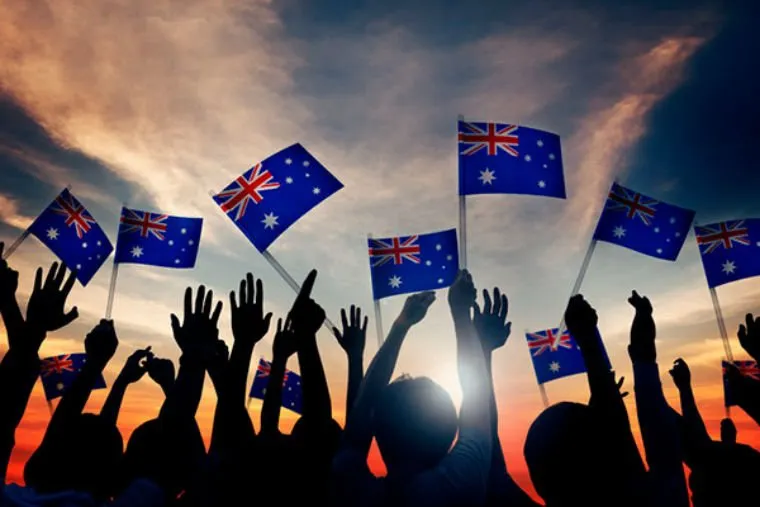 The extraordinary response of the Australian public to the devastation has brought to the fore a strong sense of community, a sense of belonging and a deep sense of patriotism.
 To take full advantage of this once in a generation opportunity, the Morrison government must aim for much more than a bare-bones FTA. It should use the existing Australia-New Zealand Closer Economic Relations Trade Agreement (CER) as a blueprint for a comprehensive agreement complete with reciprocal work rights for Australian and UK citizens.
 New research released today by the Institute of Public Affairs finds that President Trump has overseen a $45.6 billion ($31 billion USD) reduction to the cost of red tape since 2017. That is the equivalent to around 20 new hospitals, 15 years work of Gonski 2.0 education funding, or four years' worth for funding for the NDIS.
 In a speech to the Lowy Institute in October, Prime Minister Scott Morrison warned of the dangers of "negative" globalism; which "coercively seeks to impose a mandate from an often ill-defined borderless global community." "And worse still", Morrison added, "an unaccountable internationalist bureaucracy."