Last weekend's ACT election results have again revealed how out of touch our nation's capital city is with mainstream Australians. While it is tempting to write off the ACT Legislative Assembly as little more than a glorified city council, ACT elections are one of the clearest indicators of elite opinion that we have ― and the results are alarming.
 ACT Labor will continue to govern, as it has done since 2001, but the big winners were the Greens, who have more than doubled there representation. The 25 seat ACT Assembly will have ten Labor members (down from 12), nine Liberals (down from 11), and six Greens (up from two). The Greens already have a seat in cabinet, in exchange for propping up the minority Labor government, and will now be even more influential. The radical Greens are a party of government in the ACT.
Overall, the ACT electorate is markedly out of step with the country. Labor, the Greens, and minor left-wing parties received more than 58 per cent of the first preference vote ― a tally even exceeding the left's primary lower house vote in Victoria's landslide 2018 election (approximately 56 per cent).
Of course, this pattern diverges wildly from that seen in more conservative states. At the 2019 New South Wales election, left-wing parties received only 44 per cent of the first preference vote (in the lower house), and at the 2017 Queensland election, the figure was 45 per cent.
Many Canberrans are transplants who have moved to the city to work in the federal bureaucracy, so the political differences are quite striking. Canberra, it seems, both attracts a certain type of person and instils in people a certain set of beliefs and attitudes. These sorting mechanisms have gradually separated the capital from the country over which it rules, encasing it in a bubble of ideology.
The left's stranglehold on Canberra poses two big problems for the rest of the country.
The first is that the residents of the Canberra bubble make policy for all of us. Their detachment from the preferences and values of mainstream Australia has led to a range of policy disasters.
Perhaps most seriously, economic policy in this country increasingly favours the public sector and the corporate bureaucracies that oversee the enforcement of government regulation.
As my research has demonstrated, the COVID recession has made this trend worse. Our country increasingly has a K-shaped economy, in which bureaucrats thrive even as the productive economy that sustains them is hobbled.
At the height of the recession, public sector wages in the ACT increased by 6.5 per cent. The average wage in the ACT is $102,000, far exceeding other states and territories. While the country has seen 600,000 private sector jobs lost this year, the ACT has largely been insulated from the fallout.
We also seem to be developing a K-shaped culture. Consider, for example, the obscene and embarrassing fiasco that is national arts funding. The ruling class amuses itself with deranged art, obscure research projects, and the self-flattery of the ABC, while traditional and elevating cultural pursuits are shunned and shuttered.
The second problem emerges from the unavoidable fact that the ACT electorate is highly educated. The Canberra bubble represents, to a worrying extent, the best that our systems of education and moral instruction can produce, and they are turning against the values of the rest of the country.
This is one way that Canberra is similar to the rest of Australia: educated people are radicalising. Just as we have seen in some wealthy parts of Sydney and Melbourne, the Greens in Canberra picked up votes mostly from the Liberal Party. Our inner suburbs are filled with spiritual Canberrans.
Somehow, we have created a system that selects for these kinds of beliefs, or that fills the heads of many of our brightest people with bad ideas. Maybe both.
The elite, the attitudes of which are made plain at ACT polling booths, is the main reason that elections in this country never seem to change anything ― a reminder that democracy means more than just elections. If we want a democratic country in which policy aligns with mainstream values, our highest priority should be ending the miseducation of our ruling class.


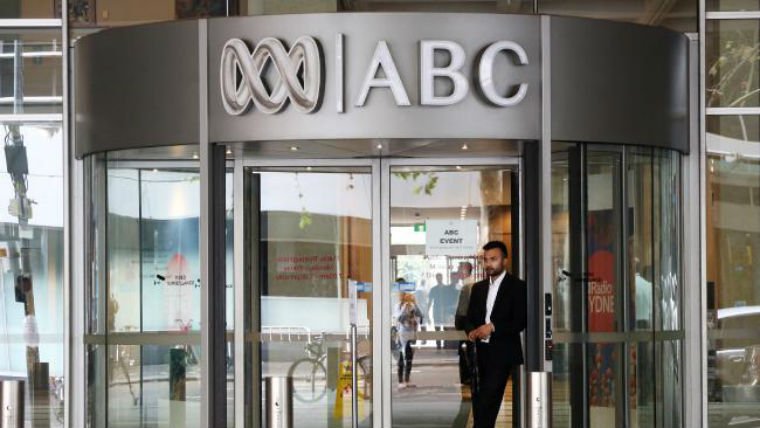 Congratulations! You have just started an internship at Australia's public broadcaster, the ABC.
 Instead of sticking to its guns, the Rob Guest Endowment swiftly capitulated, issued a grovelling apology, vowed to do better and cancelled the scholarship for 2020. So much for supporting the younger generation and "helping them achieve their dreams" as the endowment proudly purports to do.
 Or perhaps the answer will be in the weeks that followed, when barely a whimper was heard from federal Coalition government, the press gallery, the state broadcaster, civil liberty groups, university intellectuals, and the rest of the credentialled class who would rather stand with Dan than with freedom.
 Coronavirus or not,
  According to the ad, the incumbent "will be responsible for providing authoritative, strategic and innovative advice in relation to inclusion and intersectionality to justice ministers, DJCS executives and other senior stakeholders".
 Since March, the elites have been out of touch with ordinary Australians. Over four months ago, Prime Minister Scott Morrison told us that "we're all in this together", a slogan repeated by the political class ever since. Meanwhile, while almost one million Australians have been forced out of work and countless small businesses have shut down, the Victorian government gave its employees a 2% pay rise plus an additional "mobility payment" worth between $757 and $2,800 each.
 Predictably however, there is an interesting selection of humanities projects which, for reasons only known to the selection committee, have managed to make the cut. The University of Sydney's Faculty of Arts and Social Sciences, which appears to be staffed entirely by individuals who have devoted their lives to deconstructing knowledge and language while fighting the invisible systems of power, has done pretty well.
 The Ridd case is much more than a mere workplace relations dispute between an academic and his employer. It is even bigger than a dispute about climate change.
 This is why it is short-sighted to dismiss as juvenile the tearing down of statues, cancelling of old movies and removal of products from shelves deemed offensive.
 A survey commissioned by the Council of Small Business Organisations of Australia revealed a third of sole traders have been hit with an 80% decline in turnover, while three in four small businesses have experienced a decline in revenue since the beginning of the lockdown restrictions.
 The correspondence, now made public, between Sir John Kerr and Buckingham Palace reveals very little that's new or interesting, other than that
  In June in the AFL and the NRL, following the restart of their coronavirus-delayed seasons, players from all clubs participated in ritualistic pre-game kneeling in support of the international political movement, Black Lives Matter. This was carried out with the express approval of the AFL and the NRL administrators and the club officials and egged on by a sympathetic media.
 Three years ago, when some delinquents decided to daube the statue of Captain Cook in Sydney's Hyde Park with the words "No pride in genocide" and "Change the date", I went to Ballarat and made a short, slightly tongue-in-cheek film entitled A Politically Correct Walking Tour of Ballarat based on the aforementioned brochure.
 On all likelihood, the fee hike will mean a larger bill for the Australian taxpayer as many humanities students leave university without the skills needed to get a job and start to pay back their HECS debt.
 In response to Scott Morrison's suggestions that this amounts to "coercion", Beijing has retaliated with the suggestion that Australia needs to do some "soul searching" and that the "racist incidents" were "based on a host of facts".