Showing posts with label Foreign Affairs and Trade. Show all posts

Tuesday, May 12, 2020

University Of Queensland Takes Action Against Its Own To Curry Favour With China

We should all care about the case of 20-year-old Drew Pavlou, not only because of the injustice of a university intimidating its own student but also because it is symptomatic of the crisis of universities in Australia.

The University of Queensland's predicament did not begin with the news that it was employing one of the country's top legal firms to pursue a member of its own student body, nor will it end there.

On May 20, philosophy undergraduate Pavlou will be required to defend himself against allegations of misconduct, particularly in respect of his vocal criticism of the university's con­nections with China.  This goes far beyond the acceptable behaviour by a public institution.

The Pavlou affair has exposed two things to the Australian public.  First, it has exposed the fact UQ, like so many other Australian universities, is now in an extremely perilous financial position, having made the mistake of putting all its eggs in one international student basket.  Last year, the university had an estimated 53,305 students, 20,213 of whom were international, about half of whom hailed from China.  Last year, the university raked in $679m in direct tuition fees alone.

Second, this is another example of how Australian universities are more focused on their business model than engaging in free intellectual inquiry.  In the same way James Cook University (unlawfully) sacked Peter Ridd for exposing flawed Great Barrier Reef science that was lucrative to its business model, UQ is casting aside an outspoken student.

Last year there were scenes of chaos on campus as 200 pro-Chinese Communist Party students turned up to a peaceful pro-Hong Kong freedom demonstration organ­ised by Pavlou.  In several videos shared on social media, pro-CCP students were seen scream­ing, ripping up posters, playing the Chinese national anthem and assault­ing the pro-Hong Kong students.  The response of the Chinese consul-general in Brisbane, Xu Jie, who happens to be an adjunct professor at the university, was to praise the pro-CCP students for their actions as "self-motived patriotic behaviour".

The university did nothing to stop 200 pro-CCP students, and its statement following the fracas was unsatisfactory to say the least.  It did not name the pro-CCP students as the perpetrators of the viol­ence, nor did it mention disciplinary action.  It did not even mention how violent the protests had been, despite viral videos widely available on social media.

When some of the protesters received visits from Beijing's security apparatus, the university failed to protect them, instead siding with Beijing.  Moreover, Xu is still ensconced at the school of languages and cultures.

Also well and truly ensconced on the university campus is a Confucius Institute which, according to its website, is a "gateway to Chinese language and culture".  While this might be the formal mission of the 480 institutes around the world, their informal mission is to promote a highly uncritical view of Chinese society, and they are considered part of a wider pattern of activities that ensure Beijing's determined narrative is adhered to and disseminated widely in the host countries.

Among other things, this means subjects such as the three Ts — Tibet, Taiwan and Tiananmen Square — cannot be discussed in many classrooms without fear of a backlash.

Australia has 13 Confucius Institutes as well as 54 Confucius Classrooms that claim to support language education in schools.  This means we have the third highest number of Confucius Institutes and classrooms in the world, behind the US and Britain.  This when many universities in the US — including the University of Chicago — have been closing their Confucius Institutes, and academics have told Human Rights Watch the institutes are an affront to academic freedom.

Even more disturbing is that several of our prominent universities have signed profitable agreements with Hanban, the agency under which China's education ministry oversees the institutes.

Employees at UQ, for example, have signed an agreement in which they "must accept the assessment of the (Confucius Institute) Headquarters on the teaching quality".

China is using the full force of its economic weight to interfere with academic freedom and stifle free speech on campus in the same way it is putting pressure on Australia economically to silence us on an inquiry into COVID-19.

As UQ ponders the unravelling of the basket into which it has placed all its eggs, it should review the almost laughable scope and force of its disciplinary action against Pavlou.  The chancellor and the senate must be aware that the creation of martyrs tends to put the spotlight on precisely the issues they are trying to suppress.  As Australia becomes more concerned with the sacrifice of free speech in favour of Beijing, UQ may find itself taking direction from governments closer to home.

Friday, January 31, 2020

Economic Zone Can Be Boost For North

Making Northern Australia a special economic zone with low taxes and less red tape, and devolving governance away from Canberra to regional hubs such the Kimberly, will deliver an economic boom and make Australia safer.

According to a report earlier this month, the Government is planning to strengthen Australia's engagement with India and Southeast Asia, in part to reduce Australia's economic dependence on China.  The rise of China over the past two decades has generated many benefits for the Australian economy, particularly in the resources sector.  Increased demand for commodity exports from Australia has driven investment, job creation, and supported the growth of regional communities.

However, this has come at the cost of a growing dependence on the Communist dictatorship which, if not managed, will erode Australia's economic and political sovereignty.

The federal government's planned return to a Budget surplus this financial year would not be possible without the revenue generated from commodity exports to China.  This has created a vulnerability for Australia and provided China with leverage.

In December the Chinese Ambassador to Australia, Cheng Jingye, hinted at this when he said China's purchases of Australian exports "... is largely responsible for the federal budget returning to surplus ahead of schedule".

Northern Australia Minister Matt Canavan, for one, appears alive to the issue, stating "we [Australia] shouldn't hitch our star to one country because that elevates risk, not just from a political perspective but from an economic one, too."

The task is to pivot Northern Australia, which is the area above the Tropic of Capricorn and all of the Northern Territory, away from its heavy reliance on China.

There are already some good initiatives underway.  During the recent US-China trade war, concerns were raised that a large amount of the rare earth minerals used for US military equipment and industry came from China, creating a national security vulnerability.

This led to renewed interest in Australia culminating in an agreement last year for the US to expand its use of Australia's rare earth minerals including antimony, manganese, and rutile.  Australia is the second largest producer of rare earths, accounting for 13 per cent of global production.  This initiative sits alongside the Northern Australian Infrastructure Facility, which provides finance to projects in the region, and an expansion of defense capabilities in areas such as Darwin.

Now is the right time to build on this good start by turning Northern Australia into a Special Economic Zone.

SEZs are designated areas where tax and regulation are significantly relaxed or reduced.  The focus of such a zone in Northern Australia would be to promote investment, create employment opportunities, and transform depressed and under-developed regions into areas of considerable economic activity and opportunity.

Reducing regulation and red tape will enable the development of more infrastructure, such as dams, which is crucial to the development of the region.  The North of Australia receives approximately 60 per cent of Australia's rainfall but currently only about two per cent is captured.

Crucially, a special economic zone will enable the North to access more diverse sources of capital and investment.  The two major impediments to business investment in Australia are the corporate tax rate and red tape.  Australia's corporate tax rate of 30 per cent is well above the OECD average of 25 per cent, while red tape reduces the size of the Australian economy by $176 billion each year which is the equivalent to 10 per cent of GDP.

As a consequence, new private sector business investment in Australia is just 10.9 per cent of GDP which is lower than the rate in the economically depressed Whitlam-era.

A lower regulatory and tax impost will help the north access more capital from the US, South-East Asia, and India.

Economic liberalisation is not only necessary for economic prosperity.  It is now a national security imperative.

Thursday, December 19, 2019

Movement Of The People

Boris Johnson's landslide election victory provides Australia with a unique opportunity to strengthen ties with our oldest and one of our closest allies.

To take full advantage of this once in a generation opportunity, the Morrison government must aim for much more than a bare-bones FTA.  It should use the existing Australia-New Zealand Closer Economic Relations Trade Agreement (CER) as a blueprint for a comprehensive agreement complete with reciprocal work rights for Australian and UK citizens.
Boris Johnson has previously supported such a proposal, and when UK trade secretary Liz Truss visited Australia in September she said freedom of movement was "certainly something that we will be looking at as part of our free-trade negotiations".

High Commissioner to the UK George Brandis has also hinted at a relaxation on visa arrangements, stating "there are different visa categories and different visa restrictions that it would be good to see relaxed".

This is one of the key benefits of the Australia-New Zealand CER agreement.  In addition to be being one of the world's most comprehensive free trade agreements — which is based on mutual recognition of standards, rather than the regulatory harmonisation approach favoured by the EU — the CER agreement includes generous rights for Australians and New Zealanders to live and work in their respective countries.

Unfortunately, Morrison has previously rejected the idea of CER agreement as a basis for an Australia-UK FTA, saying "the New Zealand arrangement is quite unique and it's not one we would probably ever contemplate".  This must be re-evaluated.

Australia and the UK share deep institutional, cultural and historical ties dating back centuries.

When the First Fleet arrived in Botany Bay in 1788, they brought with them the institutions of parliamentary democracy and the rule of law.  They brought a culture that valued enlightenment principles like freedom of conscience, freedom of religion, and freedom of speech — even though they sometimes failed to live up to them.

Over the past 232 years the institutions we inherited have taken on some unique Australian characteristics, such as the American principles added to our Westminster parliamentary system.  Our culture has likewise been shaped by successive waves of immigration, as well our relations — both good and bad — with our indigenous communities.

But the culture and the institutions we inherited remain distinctly recognisable.  And our ties with the UK have been strengthened by everything from the wars we've fought together to the sports we play against each other.

This explains why the UK is the second largest source of foreign investment in Australia.  It's why almost 1.2 million Australians were born in the UK — more than any other foreign country.  And it's why living in London has been a rite of passage for many young Australians.

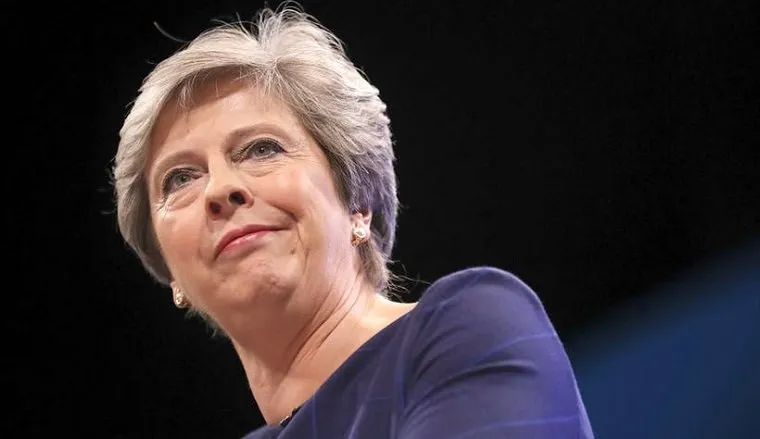
Unfortunately, this rite of passage has been made much more difficult in recent years.  Faced with rising discontent over the level of EU immigration, Theresa May, then the Home Secretary under the Cameron government, responded by attempting to make it more difficult for non-EU citizens to get visas (as restricting EU immigration was not an option).

May's "hostile environment policy" created a major scandal over the deportation of some legal migrants who had been in the country almost their entire lives.

But May's reforms also made it more difficult for Australians wanting to work in the UK, with the number of visas granted to Australians falling from 37,375 in 2005 to 19,134 in 2017 (according to figures compiled by the Adam Smith Institute).

Correcting this ought to be a priority when negotiating an Australia-UK FTA.

Opponents of reciprocal work rights may point out that Brexit was, at least in part, motivated by opposition to the EU's freedom of movement.  This is true.  But in 2018 a poll published by Canzuk International showed no such hostility exists to freedom of movement between Australia and the UK.

The poll asked 13,600 people in Canada, Australia, New Zealand and the UK whether they supported freedom of movement between the four countries.  Large majorities in all countries were in favour;  the proposal 73 per cent support in Australia and 68 per cent in the UK.  Only 17 per cent of Australians and 19 per cent of UK citizens were opposed.

This highlights the ongoing strength of the institutional, historical and cultural ties between the core Anglosphere countries.  But another factor is that all four countries have similar levels of economic development and standards of living.  This reduces risk of a country being overwhelmed by the number of immigrants, which can occur when freedom of movement exists between developed and relatively undeveloped, or relatively unstable nations.

The Morrison government must cease the opportunity that Boris Johnson's election victory provides and sign a wide-ranging FTA complete with reciprocal work rights for Australian and UK citizens.  The already existing CER agreement between Australia and New Zealand provides a blueprint for the type of agreement we should be aiming for.

If there's one thing that's clear, it's that an Australia-UK FTA that lacks improved visa arrangements will be a massive missed opportunity.

Tuesday, March 20, 2018

UK Is Right To Take A Stand Against Putin's Aggression

Britain's reaction to Russia's aggression on its soil is tough and right.  This is the type of response we should expect from a post-Brexit Britain, which is not bound by the lowest common denominator responses of the European Union, but defends its sovereignty, values and national interest against rising revisionist powers.

Russia's attempted murder of former double agent Sergei Skripal and his daughter, Yulia, isn't the first time it has undertaken a targeted killing on British soil.

The case of Russian FSB agent Alexander Litvinenko in 2006 made global headlines, but there are apparently 14 other unexplained Russia-related deaths in the UK as well.  The contrast between British Prime Minister Theresa May's response to the Skripal case with that of then PM Gordon Brown in 2006 to Litvinenko's murder couldn't be starker.

After a short deadline passed for Russia to respond to allegations that they were not responsible for the use of their own military grade nerve agent on British soil, May announced that she would expel 23 Russian intelligence officers, as well as cancel plans for members of the royal family and British government to attend soccer's World Cup in Russia.

Relations between the UK and Russia are now effectively on ice, with all high-level bilateral contacts suspended and tougher sanctions likely.  In contrast, Brown expelled only four Russian diplomats and demanded the extradition of the suspected murderer — a request which Russia ignored.

After pressure from Litvinenko's family, the UK government eventually ordered an inquest eight years later, which in 2016 concluded what was already known:  Russian nationals had murdered Litvinenko on the orders of the Russian secret service, most likely with the approval of President Vladimir Putin.

Since 2006, the EU has been painfully slow in realising that it must take a tougher approach to Russia's aggression.  It took Russia's annexation of Crimea in 2014 for the EU to impose trade and financial sanctions, including targeted individual sanctions on certain government officials.

That was followed by Russian-backed rebels shooting down a Malaysian Airlines flight over Ukraine, killing 298 crew and passengers, including 37 Australian citizens and permanent residents.

The issue for the UK and the EU more broadly is the balancing of two concerns:  taking a firm stand against Russian aggression and revisionism while maintaining a trade and investment relationship with it.

Britain is the largest foreign investor in Russia, particularly in the oil and gas industries, and the City of London is the stomping ground of many Russian oligarchs.

Russia now supplies about 40 per cent of the Europe's gas.

This dilemma in Europe and the UK is an issue we in Australia need to contend with when it comes to balancing our growing economic dependence on China while standing up for our values.

The Trump administration has made it clear that the central challenge to US prosperity and security is competition with the revisionist powers of Russia and China, which "want to shape a world consistent with their authoritarian model — gaining veto authority over other nations' economic, diplomatic, and security decisions".

This explains, in part, the motivation behind the Skripal hit.

For Russia, this was about sending a message to its diaspora that it is watching them, irrespective of time or distance, and that they are never safe.  But it was also about testing an (almost) post-Brexit UK's resolve to stand up to Russian aggression and the strength of the democratic West in general to stand up to authoritarian aggression.  Pleasingly, the US, France and Germany joined the UK in issuing a stern joint statement pinning the blame on Russia for "(threatening) the security of us all".

But what about the rest of the UK's friends in the West?  The EU's failure to join this statement is an indictment of its fecklessness in the face of authoritarianism.

Thursday, March 08, 2018

The Choice Between Hard Or Soft Brexit

It's been almost a year since the United Kingdom formally notified the European Union of its intention to leave the EU.  Since then, the UK and EU have been engaged in intense negotiations about the mechanics of Brexit, all with a view to the UK's formal departure on 29 March 2019.  In the meantime, British Prime Minister Theresa May called a snap general election in June 2017 in order to boost her majority and negotiating mandate — a strategy that failed dismally and delivered her a minority government and shaky hold on her own job.

The atmosphere in the UK is still intensely divided, with polls indicating support for Leave and Remain almost neck and neck.  That said, more Britons than not think the UK should go ahead with Brexit rather than attempt to reverse the referendum result.

UK-EU negotiations have been tetchy and at times chaotic.  There is no precedent for leaving the EU, only acceding to it, so both sides are in uncharted territory trying to disentangle the mess that is a 45-year EU membership.  Further, the referendum result gave the UK Government no direction on the nature of the post-Brexit relationship with the EU.  Among those who sensibly accept that Brexit is a fait accompli, two sides claim legitimacy for their own version of the result:  the choice between hard or soft Brexit.

Hard Brexit means leaving both the EU's Customs Union and Single Market, ending the EU budget payments and withdrawing from the jurisdiction of the European Court of Justice.  Soft Brexit means the UK leaves the EU but remains part of the Customs Union and/or Single Market, as a sort of quasi-EU member without voting power and perhaps with less constraints on its sovereignty.

If the UK wants to sign its own Free Trade Agreements (FTAs) — and all indications are that it does aspire to FTAs with Australia, the United States, and even to joining the Trans-Pacific Partnership — then it must leave the Customs Union.  The EU Customs Union creates a trading area with a common external tariff, but within which there are no tariffs or quotas.  Individual member states do not have the authority to enter into their own FTAs.  Rather, the European Commission negotiates and enters into these agreements on behalf of the EU.

If the UK wants to restrict the movement of EU citizens to the UK — and, again, the indications are that the British people want this — then it cannot be a member of the Single Market whose "four freedoms" require member states to grant the free movement of people, goods, services, and capital.

Simply put, Theresa May and her government are largely in favour of a hard Brexit (articulated in May's recent Mansion House speech), while the Opposition Leader Jeremy Corbyn favours a have-your-cake-and-eat-it soft Brexit.

With elections not due until May 2022, Corbyn's position on Brexit as laid out in his recent Coventry speech is more posture than policy.  (He wants a new, bespoke UK-EU Customs Union that would allow the UK to enter into its own trade agreements.)  Brexit will be done and dusted by the time he gets a chance at the top job.  Corbyn's agenda, rather, is to place maximum pressure on an already weakened Theresa May, perhaps claim her scalp, and set himself up to lead Labour to a win in four years' time.

In the meantime, when she's not taking heat from Corbyn during Prime Minister's Questions in the House of Commons, May must deal with the European Commission's Chief Negotiator, Frenchmen Michel Barnier.

The EU's latest offering in the negotiations is the Draft Withdrawal Agreement released on 28 February 2018.  While the document raised many contentious issues, including the nature and length of the implementation or transition period, the biggest debate has raged over the treatment of the EU-UK border between the Republic of Ireland and Northern Ireland.  May has made the maintenance of a "soft border" between the Republic of Ireland and Northern Ireland a negotiating red line for the UK, given the impact any change could have on the hard-won peace in Northern Ireland.

While much remains up in the air in the UK-EU negotiations, a few issues have settled relatively quickly.  For example, the rights of EU citizens currently living in the UK, and vice versa, are secure.  These citizens can remain in their host country indefinitely after 29 March 2019 by applying for "settled status", and then citizenship.  Further, on the so-called Brexit divorce bill, depending on the final agreement, the UK has agreed to pay the EU a staggering £35-39 billion.

Whatever the nature of the final deal struck, it will need approval by the British Parliament.  May's numbers in the House of Commons are wafer thin — she holds government with the support of 10 Democratic Unionist Party MPs from Northern Ireland — and the 11 Brexit rebels in her own party could prove problematic if they don't like the final deal.

The Brexit negotiations, the implementation of the final deal, and the ramifications of whatever is agreed are not going away anytime soon.  Britain might be technically free of the EU on 30 March 2019, but just how free remains an extremely vexed question.

Wednesday, November 08, 2017

West Will Have Sympathy For Catalan Anger

Catalonia.  For most Australians, the name of its capital, Barcelona, will resonate more.  The city conjures up images of the grand boulevard Las Ramblas, the architecture of Antoni Gaudí, epitomised in his Sagrada Familia basilica, the Summer Olympics in 1992 and Catalan tenor Jose Carreras crooning Amigos para siempre to Sarah Brightman.

Unlike the Basque Country, we don't associate Catalonia with a violent separatist movement like ETA, which killed 850 people in an almost 50-year campaign for independence from Spain.

But things turned violent in Catalonia on October 1 when the Catalan government held an independence referendum in defiance of Spain's central government.  The Spanish government sent in riot police to stop people voting.  Despite this heavy-handed response, 90 per cent of those who voted were in favour of independence from Spain.  That would seem an overwhelming result.  But those opposing independence boycotted the referendum, which meant turnout was only 43 per cent.

Catalonia's sense of independence and separateness from the rest of Spain is, like that of the Basque Country, nothing new.  For 1000 years, Catalonia has had a distinct history.  It has its own language, customs and culture.

Before the brutal dictatorship of General Franco from 1939-75, Catalonia operated as an autonomous region.  Under Franco, however, disunity meant death.  All regions were subsumed into greater Spain, and Franco banned regional languages and persecuted separatist politicians.

After Franco's death, there was a resurgence in Catalan nationalism.  Modern Catalonia, like an Australian state, has its own government and police force, and the Catalan language is taught in schools.  But what's behind the latest grievance with Madrid?  In Spain, Catalonia is an economic powerhouse.  While the Spanish economy has struggled through the Eurozone crisis, Catalonia feels aggrieved that its economy carries the weight of the rest of poorly performing Spain.  Its tax payments to the central government far exceed the level of government spending in the region.

The problem with Madrid's crackdown on Catalonia's push for independence is not that it is wrong to oppose independence from Spain.  For a start, the Spanish Constitution prohibits the breakup of Spain but also recognises the autonomy of the different regions.

Madrid's error has been that, rather than putting paid to the Catalan independence movement through compromise and persuasion of the merits of unity, its Franco-esque shutting down of dissent has given the independence movement considerable momentum.  The Catalonian separatist movement was arguably on the wane in the lead-up to the referendum.  But images of riot police dragging women by the hair from polling booths and the jailing of eight Catalan leaders will galvanise support for independence, making a quick negotiated solution unlikely.  Spain has created a problem it didn't need to have.

But where has the human rights-loving European Union been throughout this?  One might have expected the EU to have a few things to say about the Spanish government's violent crackdown.

But the EU has been mute, and that shouldn't come as a surprise.

The EU model is based on breaking down borders and national identities, pooling state sovereignty and centralising governance in Brussels.  So rising nationalism and a resurgence in support for state sovereignty is an existential threat.  The EU answer, so far, has been to condemn or ignore these sentiments, rather than reflect on its failings.

Catalonia is, for Australia, a cautionary tale for the health of our federation.  Our Constitution, like Spain's, provides for an "indissoluble union".  Regardless, from time to time, disgruntled West Australians call for WA to secede.  That sense of separateness stems from the pre-Federation era, when WA refused until the last minute to join the five other British colonies in forming the Commonwealth of Australia.

Things came to a head in 1933 with a referendum to secede from the Commonwealth.  Secession was supported by 66 per cent of the WA population.  But the British government rejected WA's request to secede and the independence movement fizzled.

More recently, WA's sense of unfairness at the distribution of GST revenue has fed calls for a WAxit.  The current arrangements for the carve-up of GST revenue do not work.  WA receives only 37c for every dollar of GST it generates and that engenders a sense of unfairness.  One solution would be to return tax-raising powers to the states to give them more autonomy over what they raise and accountability over spending and service delivery.

Another option could be the states retaining the GST revenue they raise.  If an acceptable solution isn't found, it shouldn't be a surprise that the grievances out west could escalate.

Thursday, November 02, 2017

Australia Must Push Donald Trump On Stronger Indo-Pacific

Later this week President Donald Trump embarks on a 12-day tour of Asia — the longest trip to the region by a US president for 25 years, taking in Japan, South Korea, China, Vietnam and the Philippines.

The President's time in Asia will be dominated by the threat posed by North Korean nuclear missiles, uncertainty about his administration's trade policies following his abrupt withdrawal from the Trans-Pacific Partnership, and carping for not staying an extra day for the East Asia Summit.

It would be better if Trump attended the EAS, but his trip should be judged on substance — in particular, the extent to which it reassures anxious allies, establishes a clear-eyed framework for managing competition with China, and lays out a vision for sustained US economic and diplomatic as well as military engagement in the region.  He will have an opportunity to do this in a major speech in Vietnam.

What can we expect him to say?


INDO-PACIFIC SHIFT

A recent speech by Secretary of State Rex Tillerson on the Trump administration's commitment to a "free and open Indo-Pacific" provides some clues.

It will be music to the ears of Foreign Minister Julie Bishop, who hails from Western Australia and has been a consistent promoter of the term "Indo-Pacific", to hear the US administration adopt it.  There are important implications for Australia.

Tillerson highlighted the Indo-Pacific as "the most consequential part of the globe in the 21st century, and the vital importance of working to ensure it is "a place of peace, stability, and growing prosperity" rather than allowing it to become "a region of disorder, conflict, and predatory economics" — the latter at least a clear pot-shot at China's vaunted "Belt and Road" initiative and other mercantilist policies.

Building on the Bush administration's historic strategic opening to India, he described the US and India as "global partners with growing strategic convergence", pointing to their shared commitment to upholding the rule of law, freedom of navigation, universal values, and free trade.  He made clear that the US looks to India to play a greater role in maintaining global security and stability.


CALLING OUT CHINA

Tillerson's speech called out China in unusually blunt language for undermining the rules-based order in the region, subverting the sovereignty of neighbouring countries, and disadvantaging the US and its friends.  The just-concluded Communist Party Congress gives little reason to expect China will change direction.  On the contrary, President Xi Jinping emerged with even more power, and if anything his lengthy address signalled that Beijing intends to double down on domestic political, social and economic controls, military power, mercantilist trade and investment practices, and a coercive foreign policy.

Here's where Australia comes in.

In response to these trends, Tillerson called for greater engagement and cooperation among Indo-Pacific democracies, who share the goals of "peace, security, freedom of navigation, and a free and open architecture".  He explicitly singled out Australia as a country that could work more closely with the US, India and Japan to address a range of challenges, including building greater security capacity in the region and expanding cooperation in other areas, such as awareness of what's happening in the Indo-Pacific maritime domain, cybersecurity, and humanitarian assistance and disaster relief.  He also dropped a heavy hint that India should readmit Australia to its annual Malabar naval exercise with the US and Japan.


THE QUADRILATERAL DIALOGUE

It is presumably no coincidence that just this week Julie Bishop signalled that Australia would be open to resuming the Quadrilateral Dialogue (which brought it together with the US, Japan, and India before Kevin Rudd bowed to Chinese pressure and pulled out).

Australia, as an Indian Ocean nation, a maritime democracy and a US ally, has a profound stake in these developments and should welcome the administration's vision.  Nonetheless, it also presents something of a challenge.

The last two Coalition governments worked hard to remove the impediments to a closer strategic partnership with India, lifting the pointless ban on uranium exports and pushing to boost economic ties and strengthen defence and security cooperation.  Yet progress remains limited, with bilateral free trade talks stalled, the Adani coal mining project blocked and only a modest uptick in defence cooperation.  There is a risk that Australia could be left behind as the US, India and Japan rapidly strengthen their strategic and other ties.

A good place to start would be to engage India in serious discussions about how the two countries might be able to coordinate their maritime surveillance efforts — and in time potentially even their anti-submarine warfare resources — in the eastern Indian Ocean.

Chinese warships and submarines are transiting the Malacca Strait and nearby maritime choke points in steadily increasing numbers.  Both countries operate American-supplied P-8 maritime surveillance aircraft, and their navies are stepping up bilateral exercises.  Utilising facilities on Australia's Cocos Island and India's Andaman Islands, these assets would provide an ideal platform for Australia and India to work together towards a free and open Indo-Pacific.

Thursday, October 12, 2017

When France Puts You To Shame With IR Reform, You're In Trouble

Australia needs politicians like Emmanuel Macron — politicians who are willing to take on powerful vested interests for the sake of reform.

Sure, there's plenty not to like about Macron:  the global warming evangelism, for one thing, or his "bold vision" for a beefed-up European Union.
But there is much to be admired in Macron's economic agenda.  More to the point, his success in actually implementing it should be a lesson for Australia on "the art of the possible", as Macron presses ahead with the kind of reforms that we have long consigned to the political too-hard basket.

This week has seen thousands of government employees take to the streets to protest Macron's plans to take the meat axe to France's bloated public sector.  The ensuing chaos has resulted in the closure of many schools, and the cancellation of 30 per cent of flights leaving French airports.  The responsibility for the chaos lies with those resisting reform.

Macron has indicated that, despite these mass protests, he is not for turning.

But this week's efforts pale in comparison to protests last month — in which the number of demonstrators ran into the hundreds of thousands — after Macron announced his overhaul of France's notoriously burdensome industrial relations laws.

Macron isn't the first president to take on France's 3,000-plus page labour code.  Several of his predecessors, from Chirac to Hollande, floated labour reforms that were either abandoned or watered down to the point of being meaningless.  Macron's reform package, by contrast, was signed into law largely unchanged late last month.

The changes represent a significant dismantling of France's highly centralised industrial relations system.  For the first time, small businesses will be able to negotiate working conditions without having a union representative present.  Larger companies will be able to negotiate deals with workers on an enterprise level, rather than being bound by industry-wide awards.

Onerous red tape requirements for companies with 50 or more employees — such as the nomination of workers' representatives and the establishment of health and safety committees and works councils — will be substantially pared back.  The reforms will also abolish the bizarre power held by courts to effectively veto mass layoffs by multinational companies operating in France if it can be proven that their global operations remain profitable.

Finally, Macron's package will substantially wind back the scope for unfair dismissal claims, capping the amount that can be awarded in damages and halving the time limit within which applications can be made.

In staring down fierce opposition from France's powerful trade unions, Macron has been unapologetic.  "I am fully determined," he has said, "and I won't cede any ground, not to slackers, nor cynics, nor hardliners".  Importantly, Macron defends his reforms on the basis that they will not only boost France's economic competitiveness but also alleviate "the sickness of mass unemployment", adding that its biggest victims were the unskilled and the young.  (The French youth unemployment rate sits at around 23 per cent and 9.5 per cent overall)

Not that it hasn't cost Macron politically, with his approval ratings falling from 66 per cent in May to just 30 per cent last month.

But that's the nature of leadership, and Macron should be commended for investing so much political capital in a difficult but desperately-needed reform.

Admittedly, it's easier for Macron than it is in Australia.  Macron's En Marche! Party controls France's National Assembly, whereas we have a Senate that either blocks or mangles beyond recognition anything put in front of it.

But that should not stop our politicians from having an industrial relations agenda beyond what has recently been, at best, piecemeal.  Trade union governance and the antics of the CFMEU are important issues but do not address the structural overhaul that our industrial relation system needs.

With unfair dismissal applications tripling in the last decade, one in five prime-age men out of work and employers tearing their hair out at the complex and burdensome Fair Work regime, Australia needs political leaders with the gumption to start a conversation about meaningful industrial relations reform.  We need a few Emmanuel Macrons of our own.

Saturday, October 07, 2017

Brexit Britain Can Learn From The Extraordinary Success Story Of Its Old Friend And Partner, Australia

Britain is at a political fork in the road.  Brexit provides an extraordinary opportunity to chart a new course in trade, regulation and immigration policy.

One place Britain can learn from is an old friend and partner, a country that has achieved over 25 years of economic growth, and has higher incomes and where people have longer lives.

A beacon of Western civilisation on the edge of Asia, Australia is an extraordinary success story.  It has been 103 quarters since Australia's last recession — withstanding the Asian banking crisis, the global financial crisis in 2008, and more recently the commodities-price downturn.

Britain may not be able to import Australia's weather, but there's still a lot to be learnt about what it takes to be successful.

  1. Free markets, free trade and an open economy are essential to prosperity

    At the beginning of the 1980s the Australia economy was a mess.  In an extraordinary era of bipartisan reform, the dollar was floated, we pursued unilateral free trade through subsidy and tariff reductions, industry was privatised, and our tax and spending system was radically reformed.  There have been plenty of bumps along the way — and more work to be done — but the philosophy of being an open, free economy has worked.

    The mood in the UK, from Theresa May's so-called "new centre" to Jeremy Corbyn's explicit socialism, is that of state interventionism.  This will not work.  It never has — just as the Venezuelans who face extreme food and energy rationing due to failed socialist policies.  Leaving the European Union provides a perfect opportunity to liberalise markets by cutting costly European Union red tape, and engage with the growing world through free trade.  That's the proven path to prosperity.

  2. The future is in Asia, not Europe

    The European Union as a percentage of the global economy has shrunk from about 35 per cent in 1980 to almost 20 per cent today.  This is because of the staggering rise of Asia, where thanks to liberalised markets and trade hundreds of millions of people have been lifted out of poverty.  Australia's open economy has massively benefited from this rise.  And in just the past few years Australia has signed free trade agreements with China (2015), Japan (2014), Korea (2014), Malaysia (2012), and ASEAN (South East Asian countries) (2008).

    The national debate in Britain is obsessed with Europe — but the future growth markets are in Asia.  Europe's population is about 750 million, Asia's is 4.4 billion.  China's middle class alone will be as big as 550 million people by 2020.  This means hundreds of millions of wealthy citizens looking to buy Western services from finance and banking to tourism and software.  And that's not to mention growth potential in India (pop. 1.3 billion), and already wealthy middle income economies such as South Korea and Japan.  The world is Britain's oyster.

  3. A controlled, generous immigration system

    Since the turn of the century Australia has faced thousands of boat arrivals, who typically cross by land and sea from the Middle East and South Asia to Indonesia, where they pay people smugglers to take them on a perilous journey to Australian territory — with many thousands dying along the way.  It's an often sad tale, raising complex moral questions akin to Europe's Mediterranean arrivals.  Politically it is notable that the mood turned against immigration when, following Labor coming to power in 2007, a series of successful border protection policies were dismantled.

    The core lesson is that you can have a generous, welcoming, popularly supported immigration system only when you also have a controlled immigration system.  This sentiment was succinctly put by former Prime Minister John Howard who said "we will decide who comes to this country and under what circumstances".  To maintain support for a comfortable level of economically and socially beneficial immigration the British people must be able to decide who comes.

  4. CANZUK free trade and free movement

    Australia, New Zealand, Canada and the United Kingdom share a head of state, common values and a history of close bonds.  As much as Europhiles talk about the openness and free movement, the European Union has always been a discriminatory inward looking bloc.  It blocks trade from outside, hurting the developing world, and it blocks many high skilled, capable young people from spending more than a limited time contributing to Britain.  Everyone loses out.

    As economies at a similar level of development and similarly skilled population, free trade and free movement face limited issues.  Movement and trade would be reciprocal rather than directional.  And despite claims that Brexit was a sign of a more inward looking world, in fact there's strong support for free movement.  A recent poll from the Royal Commonwealth Society found that 58% of Britons, 70% of Australians, 75% of Canadians and 82% of New Zealanders support free mobility.

  5. Promoting Western values

    The British people far too often fail to recognise their positive contribution to the world.  A small island that is home to some of the greatest liberal thinkers in the Enlightenment, from John Locke to Adam Smith;  a bastion of democracy in perhaps history's most dangerous time;  an inspiration for the most successful model of democracy:  the parliamentary system.

    While Australia has stood for these values in our region — for example, through the UN-backed intervention in East Timor in 1999 — Britain has a continuing role to play promoting democracy, economic freedom and individual liberty.  The challenges to the West, be global Islamism terrorism or Russian aggression, require a philosophical as well as military response.  A truly global Britain means a Britain that is promoting Western civilisation.

Thursday, October 05, 2017

Repeating Turnbull's Blunder

Watching the Conservatives fall apart over leadership gives me uncanny déjà vu after Australian politics.  In the last eight years, Australia has had four Prime Ministers.  So far, Britain has had three — and everyone can't stop talking about the fourth.

Theresa May's closing speech at the party conference this week was supposed to reboot her prime ministership.  It was disastrous in presentation but, more importantly, it was disastrous in content.  It was jumbled in principle and direction, showed her continued embarrassment at being a Tory, and, even if it were perfectly delivered, wouldn't have helped her poll numbers.

Meanwhile, the conference was dominated by leadership speculation — will May stay or go?  Boris or Ruth?  After Brexit or before?  The importation of the Australian disease, relentless leadership speculation, masks the underlying problem:  the Conservatives don't actually know what they stand for and what they want to achieve.  As a consequence of abandoning free market principles, they lack the capacity to articulate why Jeremy Corbyn's socialist policies would be disastrous for Britain.

Every Australian leadership change was supposed to save the respective party and fix all the internal problems.  For a short time, the leadership changes worked.  There was a sugar hit and a temporary boost in the polls.

However, once the public realised that the new leader didn't actually have any idea why they replaced the former, other than personal political ambition, it all turned south.  When the current Prime Minister, Malcolm Turnbull, challenged the previous leader, Tony Abbott, he pointed to the thirty lost Newspolls in a row.  Turnbull, after going to an election and losing seats, has now lost twenty.  Turnbull, with uncanny similarity to May, struggles to articulate a vision.

Voters want authenticity and vision.  This factor, more than anything else, explains Corbyn's success.  At the very least people feel they know where he stands.  They can accept that they may not agree with him on everything — like many did not agree with all of Margret Thatcher's policies — but at least it is clear what he wants to do.  Corbyn is unashamed in his views.

After going to an election fighting a straw man — "the cult of selfish individualism" — May now tries to claim the benefits of economic freedom.  "The free market — and the values of freedom, equality, rights, responsibilities, and the rule of law that lie at its heart — remains the greatest agent of collective human progress ever created," she said at party conference.  In the next breathe, however, she commits to "never hesitate to act where businesses aren't operating as they should".

At least in the manifesto, her words matched her actions.  Today there is even more confusion as she tries to please everyone — criticising markets than endorsing markets;  opposing interventionism than supporting more intervention in the next breathe.

The right adopting the left's policies has the unintended consequence of blunting attacks on Labour's policies.  May has allowed the Labour party to set the terms of debate.  How can May criticise Corbyn for increasing the debt and deficit when her policies are doing the same?  How can she criticise free tuition when she has admitted that tuition is too high?  How can she criticise nationalisation when she wants to regulate prices?

Corbyn was right to say at Labour Party conference that he is now the mainstream.  But that's only because the Conservatives let him move the centre.  The Overton window, of acceptable political thinking, has dramatically shifted.  The Conservatives have accepted the premise of his arguments, and on the key issues of the day do not put forward a distinctive vision.

Therefore it is perhaps not surprising that Corbyn is leading in many polls.  If people want leftist policies they will vote for the real thing in Corbyn, not the weak imitation in May.

Sadly, May, whose election manifesto adopted Labour rhetoric about "social division, injustice, and unfairness", is far too compromised to put forward an optimistic free market position.  She lacks any understanding of why market works and how it functions.  Her temptation to intervene is too strong.

The Conservatives do need to find new leadership.  However, more fundamentally, they need to re-find their principles.

Tuesday, August 29, 2017

Australia Can't Be Silent Amid The Misery Of Venezuela

Venezuela is a failing socialist state.  The economy is 40 per cent smaller than a few years ago.  Nine in 10 households are unable to ­afford enough food.  Infant mortality has risen 30 per cent.  The ­opposition is being severely ­repressed, even murdered.

A decade ago Venezuela was the richest country in South America, with the largest known oil reserves on the planet.  Today, the failed socialist state is brutally cracking down on democracy through violence against protesters and a constitutional rewrite.

British Foreign Secretary Boris Johnson recently tweeted that Venezuelan President Nicolas Maduro was "acting like a dictator of an evil regime and has destroyed Venezuelan economy, eroded human rights and imprisoned thousands".

The US has imposed sanctions on Maduro, including freezing his personal assets and banning firms from doing business with him.

"The people are suffering and they are dying," President Donald Trump said.  In his typical hyperbolic style, Trump even refused to rule out a "military option".

So, where does Australia stand?  As a middle power, proud to "punch above our weight" in foreign affairs, we have surely taken a stand?  Well, the Australian government has said — nothing.  Despite the deteriorating situation — more than 120 people have been killed in protests since January, people are starving and children dying, and the corrupt regime is rewriting the constitution to solidify its power — our government has said zilch this year.

No emotional dispatches in parliament, no statement from Foreign Minister Julie Bishop or perfunctory tweet from Malcolm Turnbull.  The Foreign Minister's office did not even respond to a ­ request for comment.

The only written government position is to "reconsider your need to travel" on Smart Traveller, and the outdated Department of Foreign Affairs and Trade fact page that notes Australia's "cordial relations", and claims Venezuela has a "democratically elected representative system".

The only statement in parliament this year on the situation in Venezuela came from Greens senator Peter Whish-Wilson.  In June he spoke briefly about the "escalating human rights abuses and ­deteriorating political situation".

Worryingly, it was reported in The Australian that Bishop sent a letter to Venezuela's representative in Australia, distancing the government from criticism by Whish-Wilson of the regime.  "I spoke to (Ms Bishop) and she sent me a letter saying (Whish-Wilson's criticism) is not necessarily the position of Australia, which we understand.  She's right," Venez­uelan charge d'affaires in Australia Daniel Gasparri Rey said.

The Australian government is also rejecting temporary visa ­applications — from students, and parents coming to visit their children who live here — because of the volatile situation.

Perversely, we are turning people away at the precise time we should be letting them in.  And that's just visas for people who aren't seeking to live here.

Even Britain's socialist Opposition Leader, Jeremy Corbyn, a previous supporter of the regime, has feebly condemned the violence "on both sides".

We live in globally challenging times, facing threats to our values and way of life, both internal and external.

The old saying, often attributed to Edmund Burke, that all that is necessary for the triumph of evil is that good people do nothing, could not be more fitting.

Australian foreign policy, if it is to have any meaning and purpose, must be driven by our values as a nation.

If we believe in freedom, democracy and the rule of law, we should advocate for these values abroad as well as at home.

There's no such thing as centrism in foreign policy — you stand for something or you have no relevance.

Venezuela is, admittedly, of limited strategic importance.  As its economy contracted, Australia's trade with Venezuela has halved in the past year.  Last year, our ­exports to Venezuela were worth just $15 million;  imports were worth about $1m.  Nor is Venezuela a powerful foreign operator.

But that's just the point.  If there is no good strategic logic to remain silent it should be even easier to say something meaningful.

This situation presents an opportunity to clearly position ourselves in world affairs, and express our solidarity with the Venezuelan people and the thousands of Venezuelans in Australia.

Most important, it is an opportunity to stand up for our values.

Tuesday, August 15, 2017

Resilient Alliance With Us Underwrites Our Strength

For all the furore it generated, the prickly phone call between Donald Trump and Malcolm Turnbull was a blip in Australia's alliance relations with the US.

In the mid-1950s Canberra and Washington differed over how to respond to the communist threat in Indochina.  In the 60s we were at odds over Indonesia's claim to Western New Guinea (now Papua), the struggle for independence in Laos and open versus preferential trade arrangements.  The alliance was spectacularly imperilled when personal relations between Richard Nixon and Gough Whitlam broke down almost completely in 1973 over Australian criticisms of the "Christmas bombing" of Hanoi and Haiphong.

The alliance later experienced severe strains over Ronald Reagan's response to Soviet missile deployments in Europe, the Labor left's opposition to joint defence facilities, and the Hawke government's rejection of a US request to support MX missile tests.  With the end of the Cold War, Australia-US tensions again focused on trade.

Nor are periods of Australian doubt about US staying power and commitment to our region anything new.

Australian worries about US disengagement from the region have recurred periodically since 1945.  They were pronounced in the aftermath of Vietnam and the bombshell announcement of the Guam Doctrine, when Nixon called on US allies in Asia to take more responsibility for their own defence, and again after the collapse of the Soviet Union and the end of the Cold War.

It's hardly a surprise, then, that doubts are resurfacing in the face of China's rise and a shifting power balance in Asia, and following the election of a US president sceptical of the value of America's alliance commitments.  Opposition to the US alliance is a longstanding minority strand of Australian foreign policy opinion, often dormant but virulent nonetheless.

This often manifests in calls for Australia to adopt a more "independent" foreign policy — a vacuous slogan that was popular in the debate about Iraq in 2003 and is resurfacing today in the context of China.

This ignores the reality that working with the US on security issues has not only contributed materially to our security and to the stability and prosperity of our region but hasn't held us back from pursuing our other interests, such as trade.

A second, related, argument is that maintaining a strong alliance with the US is inimical to nurturing close relationships in our region.

For all Labor's mythologising, it was Robert Menzies who declared in 1939 that "in the Pacific we have primary responsibilities and primary risks ... What Great Britain calls the Far East is to us the near north", and it was Menzies' brilliant foreign minister Percy Spender who not only negotiated the ANZUS Treaty but launched the Colombo Plan in Asia.

But even more than Menzies it was John Howard who demonstrated — by building closer ties with Japan, China, South Korea, India, Indonesia and other Southeast Asian countries as well as a deeper American alliance — that, far from jeopardising our relationships in Asia, a strong alliance with the US adds weight and value to Australia's regional engagement.

A third argument that is frequently made is that the ­alliance may endanger our economic interests in China.

The national interest is our lodestar when it comes to weighing closer co-operation with our allies.  But neither should we allow ourselves to be intimidated into compromising our fundamental national security choices or values through the threat of economic payback.

For one thing, China's economic leverage over Australia is less than many Australians assume.  The other key point, however, is that a strong alliance with the US strengthens Australia's hand when it comes to confronting possible economic coercion.

For all its domestic dysfunction, America will remain the world's richest and most powerful country for the foreseeable future.  Even if one were to accept China's inexorable rise, relative US decline and the emergence of a more multipolar world, what will matter most to Australia is how to shape our region and influence how other powers, particularly China, behave.

The notion that the best way to achieve this is to distance ourself from the US and to think that China will then respect and listen to us more flies in the face not only of logic and international theory but also of experience.

Nonetheless, the election of Trump as President has induced a rash of calls for Australia to do precisely that.

President Trump's temperament, Twitter outbursts, "America first" rhetoric and track record of ambivalence about US international security commitments have given opponents of the alliance a free kick.

We are already seeing the Labor Party abandon its traditional support for Israel.  Bill Shorten supports the US alliance, as does his party's current policy.  But we may be about to enter an era when bipartisan political support for the alliance can no longer be assumed.

Until now commentators have tended to worry about Australia being dragged into a war with China.

More recently, of course, it has been less "entrapment" in war between the US and China that has been in prospect than the risk of Australia being caught up in a conflict with North Korea.

To judge from much of the commentary you would think that President Trump's supposed unsteadiness is the real threat, rather than Kim Jong-un's nuclear and missile programs and brinkmanship.

In this context it is good to see the Australian government firmly supporting the Trump administration's position and declaring that Australia would invoke ANZUS in the event of a North Korean attack on the US.

No matter who occupies the White House, it has always been in Australia's national interest to build the strongest possible relationship with the US, and to maximise access and influence in Washington to help shape American policies in ways that support our national interests.

Friday, August 11, 2017

Timor's Prosperity Lies In Its Best Assets:  Its Beaches And People

East Timor holds a special place in the Australian psyche.  It is our newest neighbour, and we played a critical role in supporting its road to independence in 2002 through the Australian-led INTERFET peacekeeping mission.

Australian troops also kept the peace after the bloody Indonesian withdrawal in the aftermath of Timor's 1999 independence referendum.
A half-century earlier, Australian troops were in East Timor fighting against the Japanese enemy in World War II.  Many Timorese sacrificed their lives to help the Australian soldiers during the year-long guerilla campaign in 1942, providing food, water and shelter, and carting equipment and supplies.  When Australia pulled out of Timor, the Japanese sought revenge on those Timorese who had assisted our troops, executing them in their thousands.

So what should Australia make now of its newest and youngest neighbour nation-state?

Like so many postcolonial states, East Timor's long journey to independence and democracy has been bloody and violent.  As a post-conflict nation, East Timor more or less had to build its democratic institutions and governance systems from scratch.

In the 15 years since gaining independence from Indonesia in 2002, East Timor — with the help of Australia and many others in the international community — has made good progress.  But there is more to be done.

As an international observer at East Timor's general election on July 22, I was impressed by a generally successful democratic process.  This was the first election administered without the UN's assistance.  The contrast in the conduct and outcome of the election in nearby neighbour Papua New Guinea with East Timor couldn't be more stark.  The PNG elections have been marred by intimidation and violence, attempted kidnap­pings and burning buildings.  In one electorate, the third-ranked candidate was declared the winner, while in another two candidates were declared to have won.

In East Timor, the formal month-long election campaign was calm and orderly.  In many respects, the campaign mirrored what we see in Australia, with slick party billboards calling for fairness and equality, better investment in roads, health and education, while candidates appeared on televised debates, held political rallies and used social media to disseminate their messages.

Some elements of the election process were odd.  Notably, there was a lack of criticism of other parties or political leadership.  This is still a new and fragile democracy, and there is a nervousness that negative or scare campaigns could incite violence.

The two major parties, Fretilin and CNRT, came out on top and are likely to form a national unity government once again.

The challenge for Timor's government and democracy now is to move beyond a tussle for support for the charismatic leaders of the independence movement, and to focus on the serious policy and development issues facing the country.  In a country where 40 per cent of its 1.2 million people still live below the poverty line, Timor's leaders must focus on its prosperity and development.

Understandably, during the past 15 years political leaders in East Timor have been focused on keeping the peace and stabilising a country still traumatised by a bloody independence movement in which more than 200,000 people died.  For Australia, a peaceful East Timor is of paramount importance.  We do not want to see a return to the violent clashes of 2006 when the country was on the precipice of civil war and Australia had to send troops in to keep the peace.

So far, Timor's budget expenditure has been sustained by dipping into the capital of its $16 billion petroleum sovereign wealth fund.  This year it accounted for 78 per cent of the budget.  This is unsustainable and the fund is expected to be depleted within the decade.

It would be folly to pin Timor's hopes of future prosperity on a favourable outcome to the present conciliation with Australia on the maritime boundary.  Economic development needs to move beyond oil and gas to other industries such as agriculture and tourism.  This is important for the 60 per cent unemployed Timorese youth who are yearning for jobs and opportunities.

As a tourist destination, it is clear that East Timor has considerable potential.  It offers beau­tiful beaches, friendly people, delicious locally grown coffee and a Portuguese-infused cuisine.  But so far the investment has failed to come.

Investment will come to East Timor only with a transparent and internationally competitive tax system, and a stable government without sovereign risk.  Ease of doing business in Timor is one of the worst in the world — it is ranked at 175 out of 190 countries.  While the country's tax regime looks relatively benign on paper, the local law requirement to have a local partner and inability of overseas investors to own private property has so far discouraged inbound investment.  Sovereign risk also casts a shadow over the economy.

A variety of local and international left-wing ideologues agitate for East Timor to tear up maritime boundaries and undermine major oil and gas investments.  This only undermines business confidence further.

With a new government and president, Timor has an opportunity to put itself on course for growth and prosperity.

The decisions made now are critical and will set up Timor for success or failure.  Let's hope it's the former.

Friday, May 19, 2017

Why Canberra Will Ignore Trump's Gaffes

It's every intelligence chief's nightmare — a phone call announcing the unexpected disclosure of highly sensitive secrets.

The stakes are high:  intelligence methods potentially compromised;  future access to vital intelligence on terrorist plots and other threats jeopardised;  diplomatic relations with allies and partners strained;  and, in some cases, the lives of agents put at risk.

Alarm bells clearly rang at the highest levels of the US national security apparatus following President Donald Trump's ill-advised Oval Office meeting with the Russian foreign minister, Sergei Lavrov.  Based initially on well sourced leaks and then confirmed in his own tweets, the President told Lavrov the United States had highly sensitive intelligence about a terrorist plot to attack airliners using explosives concealed in laptop computers (which in March led the US and Britain to ban laptops from carry-on luggage on certain routes from the Middle East).

According to media reports, senior White House officials contacted the CIA and the National Security Agency, the US eavesdropping organisation, after the meeting.  They must have been difficult conversations, particularly given the highly charged relationship between the Trump White House and the American intelligence community.

Of course intelligence disclosures, while damaging and unfortunate, are a fact of life.  After this one occurred the relevant US agencies would have swung immediately into damage control.  They would have conducted a rapid assessment of the harm done, including to the intelligence-sharing relationship with the country that provided the material — in this case reportedly Israel.

The Israeli government is relieved to see the back of the Obama administration, which it saw as hopelessly naive about the threat posed by Iran;  but presumably this incident will create at least a little awkwardness during Trump's visit next week.

Losing access to further information on a major terrorist threat such as this one could obviously be immensely costly, but national security adviser HR McMaster — widely regarded as a man of integrity — has said no details of intelligence sources or methods were disclosed.

US agency chiefs would also have had the unwelcome task of telling their Israeli counterparts what had happened and reassuring them that the United States can still be trusted to protect their secrets.

President Trump is correct when he says that he has the authority to share intelligence with other leaders.  But this episode is disturbing, for three reasons.

The first is that Trump seems to have disclosed the intelligence not as part of a deliberate decision-making process after consultation with his senior officials but impulsively on the spur of the moment — reportedly as a boast about US capabilities.  That can only feed concerns about his judgment, temperament, and fitness to be commander-in-chief.

The second reason is that it is pretty clear the President passed on the intelligence without first consulting the government that provided it.  This is a grave breach of intelligence-sharing practice.  If it is repeated and becomes a pattern, it will make other partners, including the other "Five Eyes" countries, nervous about sharing their secrets.  Ultimately it can only undermine the mutual trust that lies at the heart of effective intelligence co-operation.  The consequences for efforts to combat global terrorism and other threats such as North Korea would be severe.

The third reason to be disturbed is that Trump shared the intelligence with Russia, of all countries.  At a minimum the fact he did so the day after he fired the director of the FBI and himself linked that decision to his unhappiness with the Bureau's investigation into his administration's Russia links demonstrates poor political judgment.  But the more fundamental concern is Trump's failure to appreciate that, far from being a dependable partner, Russia is working aggressively to undermine American interests and the liberal international order more broadly, whether in Europe or the Middle East or by interfering in the US election.

For all this, however, the responses of Australia and other key US intelligence partners will be measured.

Our intelligence relationship with the United States is simply too important to be put at risk.  Australia's intelligence agencies are highly regarded and we make a valuable contribution.  But we get far more out of the intelligence partnership than we put in, including information affecting Australian interests from all around the world and access to sophisticated US collection systems we could never afford to replicate on our own.

Australian law enforcement and security services depend on intelligence from the United States and other partners to disrupt terrorist attacks here and abroad.  Intelligence informs our diplomacy.  The Australian Defence Force simply could not operate the way it does in the era of networked warfare without our deep and longstanding intelligence links with the US.

More than 70 years ago Australians and Americans worked together to crack Japan's codes and helped win the Pacific War.  In a world facing so many new threats those ties are as important as ever.

Monday, May 08, 2017

Turnbull And Trump Showed We Were Allies, Now To Work Together On China

Relief may be Malcolm Turnbull's overwhelming emotion as he settles back for the long flight home from New York before a crucial budget.

Returning to his home town and the inevitable protests for the first time since the inauguration, President Trump may have kept the PM waiting for a few hours.  But it was worth it.

Trump was welcoming, warm and — dare one say it — presidential, putting the two leaders' testy February phone call behind them and declaring his love for Australia.

For a leader who is often criticised for lacking discipline and disrespecting history, he stuck to the script throughout a thoughtful and often passionate speech about the the two countries' shared military history and sacrifices.  His remarks were made poignant by the presence of surviving Australian and US servicemen at a gala event commemorating the 75th anniversary of the crucial Battle of the Coral Sea.


MEETING THE PRESIDENT MATTERS

It is always a big deal when Australia's Prime Minister meets the US President.  Irrespective of party politics, the vast majority of Australians recognise that the US alliance is important to Australia's security, and the voting public expect the prime minister of the day to manage the alliance effectively.

Gough Whitlam's clash with President Richard Nixon strained the alliance and contributed to public anxiety about his leadership;  Mark Latham's petulance towards the George W Bush administration fed into a narrative that he was too erratic to be allowed to remain Labor opposition leader, contributing to his political downfall.

The stakes were higher than usual this time following the phone call — demonstrated by the fact that Turnbull took the time to make the trip the week before the budget.  Australian diplomats worked every avenue to get the President to attend the commemorative event.

The setting provided a good opportunity.  The commemorative event on the USS Intrepid — herself a veteran of the Pacific campaign — was the perfect setting to underline the long history of shared interests, values and sacrifice that underpin today's Australia-US alliance.  It was an ideal opportunity for the two leaders to patch up their differences and get their relationship off to a fresh start.


A REMINDER OF SERVICE

It served as a timely reminder of the vital contribution US maritime power and alliances have made to both countries' security and prosperity — and to the wider Indo-Pacific region — since the Second World War.

It also highlighted the daunting array of threats and challenges facing the United States, Australia and their allies today — whether from a nuclear-armed North Korea, Islamic State and other Islamist terror networks, a revanchist Russia, an increasingly bullying China, or the domestic forces of populism and protectionism.

Hopefully Turnbull reinforced the efforts of his Japanese counterpart Shinzo Abe to convince the President and author of The Art of the Deal that for the United States strong alliances and partnerships mean significantly more negotiating leverage rather than unnecessary cost.  Over the long term they bring the United States benefits that a transactional approach can never equal.

The same can be said for open regional economic arrangements such as the now defunct Trans Pacific Partnership.


TRUMP IS CHANGING ON FOREIGN POLICY

Many of the serious figures around the President such as Secretary of Defense Jim Mattis, National Security Advisor HR McMaster and Secretary of State Rex Tillerson know this, and Trump has changed course on a number of important foreign policy issues, including the role of NATO, US alliances with Japan and South Korea, and — seemingly — initiating a trade war with China.

Nonetheless, there is still work for Australia and other US allies to do to convince a sceptical President that alliances and free trade serve American interests.

The New York summit provided a forum for the two leaders to compare notes on how to tighten the screws on North Korea, including by inducing China to take real action to rein in its belligerent ally (rather than continuing to go through the motions).

With US, Australian and other coalition forces making ground against IS in Syria and in Mosul, its capital in Iraq, Turnbull will have been able to remind the President of Australia's significant military commitment and to discuss strategy in that campaign, as well as in Afghanistan and the Middle East more broadly.

It is also an important time for US and Australian political leaders to compare notes on the Indo-Pacific region, including with an eye to the forthcoming APEC leaders' meeting and East Asia Summit.


AUSTRALIAN LEADERS ARE LISTENED TO

Going right back to prime minister Robert Menzies and his peerless foreign minister Percy Spender, US presidents listen when Australian leaders articulate a thoughtful, coherent agenda for how the two countries can work together, and with other allies and partners, to reinforce security and promote prosperity in the region — particularly when allies step up and show a preparedness to accept the inherent risks and costs.

North Korea and Islamic State are serious threats (in different ways).  But the strategic trajectory China seems embarked on will be of greater long-term consequence for the United States, Australia and the rest of the world.

China is adept at leveraging its cooperation on the issue of the day to obtain time and space to pursue its salami-slicing coercive strategy to erode US influence, weaken alliances and extend its own influence in the Western Pacific.  Beijing repeatedly used non-binding promises on climate change as a bait-and-switch gambit with the Obama administration, and it has gamed the last few administrations on North Korea.  Getting Australia, other key allies and the Trump administration on the same page will be vital to avoid the same trap this time round.

Ultimately both sides shared a modest goal for the New York encounter:  smiling media images to show they have put the phone call behind them.  To that extent, they will be satisfied.  But Australians — and Americans — have the right to expect their leaders to aim higher, and to show that they have agreed a solid plan on how their countries will work together to deal with current and future challenges and to shape a secure and prosperous future for their peoples.

Saturday, April 01, 2017

No Escaping Brexit Lesson

But that is what will be required of British Prime Minister Theresa May and her European Union counterpart, Donald Tusk, as they navigate what will be the world's most complicated and expensive divorce settlement over the next two years.  Added to that, the EU will need to get its remaining 27 member states to agree to the terms of the divorce, an exercise tantamount to herding cats if previous experience of EU decision-making is any guide.

Regardless of the naysayers and the doubters who still campaign to this day for the UK to remain in the EU, have no doubt the Brexit divorce will go ahead.  By 2019, the UK will be out and free to be a major player on the global stage once again.

Brexit is good news for Australia, but it won't all be plain sailing.  We will need to be as nimble as the UK in making the most of the changing geopolitical landscape.

The most obvious benefit for us is a quick and comprehensive free trade deal with the UK as soon as it exits the EU in 2019.  We can expect wins for our exporters as the UK leaves the protected EU market and opens up its market to our Aussie beef, lamb, wine and fruit.

For most of us, as consumers, we should benefit from cheaper British cars and manufactured goods.  Hopefully we'll get a better deal when it comes to visas for those who wish to live and work in the UK.  The past decade has seen a sharp decline in the number of Australians living in the UK, which can be put down to the British Government's attempt to rein in non-EU migrant numbers.  Out of the EU, the UK will have control over its migrant levels and Australians should expect a return to more favourable treatment in recognition of our shared ties of history, culture and values.

Free of the shackles of the EU, which consumes so much of the UK's diplomatic time and energy, the UK will look to the world.  That goes against the narrative of the ardent "Remainers" that Brexit is a return to a nativist Little England.  Prime Minister May has been quite clear:  post-Brexit UK will be open and global.  Old friends, like Australia, will be back in vogue and we should expect the UK to be focused on our shared interests, especially in the Asia Pacific region where the UK has been largely absent for the past few decades.

The UK will look for new friends too, especially Asian powerhouses like China, Japan and Korea.  We can be part of those new friendships.

The biggest challenge posed by Brexit will be navigating our relationship with the EU.  The EU without Britain means an EU without our most like-minded partner, without its most liberal and outward-looking member state and without its second-biggest economy and contributor.

Without the UK, the EU will be poorer, more introverted, less trans-Atlantic and less internationally engaged.  Coupled with the blow of losing Britain, it will continue to grapple with intractable problems:  the Eurozone crisis and high levels of government debt, systemic low growth and ageing populations, as well as the migrant crisis with its serious ramifications for internal security and social cohesion.

Let's be clear.  An EU distracted, depressed and without British leadership will mean it will be harder for Australia to negotiate its dawdling FTA with the Union.  Without free trade-loving Britain, the much more protectionist French and Italians will be less interested in doing a deal with Australia and more interested in protecting their own farmers.

NOW is a turning point for the EU.  Without Britain, the EU must reshape itself to ensure its own survival.  Elections this year, including in France and Germany, could see Eurosceptic leaders in place, putting the future of the EU in doubt.

EU leaders need to heed the lessons of Brexit — that democracies work when governments stay connected and responsive to people.  Respecting the national sovereignty, identity and values of member states should always trump the interests of the EU and other supranational bodies.  Ultimately, standing up for the common good only matters if it's for the common good of people and not the institutions that profess to serve them.  Losing sight of people means losing their faith.  If you do that, recent history shows they won't be afraid to show their displeasure at the ballot box.

Such is the enduring power of democracy.  That is surely the lesson for the EU and globalism more broadly.

Thursday, March 30, 2017

British Divorce Will Be Australia's Gain

Over the next two years, Britain will focus on the size of its divorce settlement with the EU, as well as on a UK-EU free trade agreement deal.

But for Australia, now that Brexit really does mean Brexit, what next?  The big ticket item for Australia is a free trade deal with the UK.
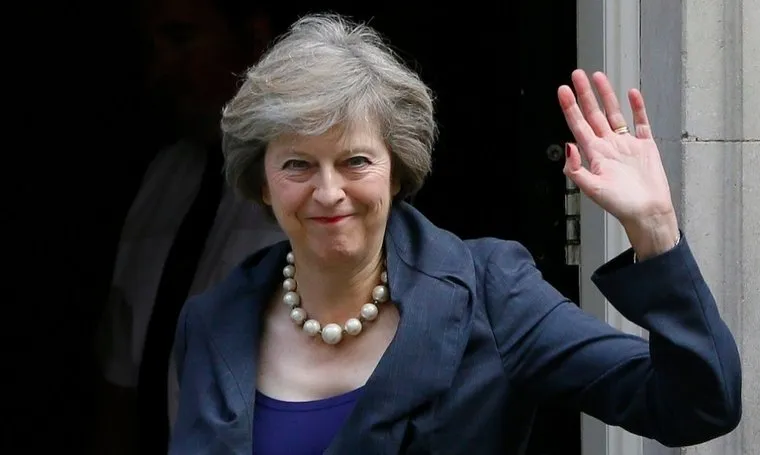
Although the UK can't negotiate any bilateral free trade deals until it formally leaves the EU, there will be informal talks over the next two years in readiness for a quick deal in 2019.

Australia has great form when it comes to doing comprehensive, meaningful free trade deals.  Think Japan, Korea and China.

The big winners from a bilateral free trade agreement with the UK will be our agricultural exporters, especially beef, lamb and horticulture.

For Australian consumers, UK-manufactured goods should be cheaper.  For car lovers, this could mean the best of British automotive at more affordable prices.

We'll hopefully see a better deal for Australians wanting to live and work in the UK.

Since 2008 the number of Australians working in the UK has fallen by 40 per cent.

This is a result of unlimited migration from EU countries to the UK.  The only way British governments could control migrant numbers was to clamp down on non-EU migration.

And this meant Australians.

Once Britain formally leaves the EU, the situation for Australians should improve.

Finally, a post-Brexit free trade deal with Britain could mean more UK investment into Australia.

Britain is already our second-largest foreign investor after the US.  An FTA could see the UK foreign investment threshold lifted to $1 billion, in line with other recent FTAs.

Britain is also looking for friends.  British Prime Minister Theresa May wants to make the best of Brexit and this means opening Britain up to the world.

Contrary to those on the liberal Left, Britain will not be isolationist.  Rather, it will once again engage with the world and Australia as it did prior to being sucked into the EU vortex.

Britain is already reorienting its foreign policy away from Europe.  Its early focus is on English-speaking countries like Australia, the US, Canada, and New Zealand.  The common values of the English-speaking world, of liberal democracy, the rule of law, and individual freedoms, have delivered peace and prosperity.  Freed from the inward-looking shackles of Brussels, Britain can work together with Australia in defence of liberal democratic values in international affairs.

At a time when the global strategic landscape is so uncertain, with the rise of Russian influence in the Middle East, an ever belligerent North Korea, and uncertainty over US-China relations, there is a great opportunity for a renewed closeness in Australia's strategic relationship with Britain and for it to be a more thoughtful, strategic presence in our region.

Britain and Australia are two stable liberal democracies bookending a developing, but volatile, Silk Road.

Post-Brexit Britain will turn its focus to the engine room of the global economy, Asia, and how to solve the strategic challenges facing this region.

Australia should welcome this shift.

Thursday, July 14, 2016

Britain’s First Post-Brexit PM Theresa May Will Be Tested

Theresa May is Britain’s new prime minister.  Should we “Keep Calm and Carry On” or hit the panic button?

The initial reaction from markets and the British political establishment has been a collective sigh of relief.  Markets and institutions value certainty of political leadership and they reacted positively when May became PM.  May triumphed when the other candidate for the premiership, the relatively unknown Andrea Leadsom, pulled out of the race on Monday.

Under May’s leadership, Britain will undergo its most significant period of change since World War II.

So what can we expect of May, up until now the UK’s longest serving Home Secretary of the modern era?

No-nonsense, loyal and tough are words used to describe her by supporters.  Cold, aloof, a micromanager and risk-averse say her detractors.

May is clearly resilient and hard working.  She survived six years at the helm of the notoriously tricky Home Office (immigration) portfolio, which had been a career death spiral for many predecessors.  She developed a reputation for toughness on counter terrorism and countering violent extremism.

May earned her stripes with the public for her tough stance against hate preachers in the UK, personally negotiating an extradition agreement with the Jordanian government to rid the UK of Osama bin Laden’s deputy in Europe, Abu Qatada.

But she failed in her promise to limit immigration to the UK;  there was nothing she could do about EU migration to the UK under the EU’s freedom of movement requirement.  In 2015, 270,000 EU migrants decided to call the UK home.  Given border control was such a galvanising issue in the Brexit referendum, May will need to deliver a much better result for the UK in its exit negotiations with the EU.

Efforts to compare May with Britain’s only other female prime minister, Margaret Thatcher, may be misplaced.  Gender aside, May and Thatcher are on opposite ends of the Tory ideological spectrum.  Thatcher’s New Right championed free markets and the aggressive pursuit of British interests, while May is a Tory moderniser or One Nation Conservative.  In 2002 May called for the Conservative Party to distance itself from its Thatcher-era reputation as the “nasty party”.  Rather, May, like former PM David Cameron, favours compassionate conservatism, social justice and consensus-building.

Early indications are that May will be less free market and more interventionist than Cameron’s government.  She has called for caps on executive salaries and the appointment of employee representatives on company boards.  Those policies play into a populist anti-big business agenda and presumably are designed to set May up for the General Election in 2020.  But they will terrify those voted Leave to free Britain of the EU’s anti-competitive, red tape-heavy and big government agenda.

Critically, May did not support the Leave campaign in last month’s referendum.  She was a Remainer, although not vocal enough to rule herself out of the prime ministership.  In her campaign pitch for the leadership, however, May was unequivocal about her commitment to Brexit.  She needed to do that to be a credible candidate.

But her former position on Brexit does beg the question:  will the 17.4 million Britons who voted for Brexit have confidence in a leader who didn’t support their side?

Key to May’s success will be healing the internal rifts in the Conservative Party.  That means including prominent Brexit campaigners like Boris Johnson in her Cabinet.  Those who supported Brexit will expect nothing less, as many are devastated by Johnson’s failed attempt to secure the top job.

An important appointment will be the minister responsible for the Brexit negotiations.  Again, Brexit supporters will expect a Leave campaigner to get the job:  surely only someone who deeply believes in Brexit should spearhead these negotiations.

It will be critical for May to have a clear plan for what sort of relationship Britain wants with the EU, and the rest of the world, before invoking Article 50 and starting the two-year countdown for the exit negotiations.  That includes what sort of trade relationship Britain will seek with the EU, including the nature of its access to the single market, especially in the services area which forms the bedrock of the UK economy.

May’s government must also prioritise fast-tracking trade deals with the United States, Australia and the Asian powerhouses such as China.

A sticking point for May will surely be immigration.  The referendum result made clear that Britons want to decide who comes to their country and the circumstances in which they come.  May cannot countenance completely free migration from EU countries to the UK as it would be a betrayal of the British public.

Working all this out will take time and patience and every bit of negotiating nous in the face of the strong urge among many in the EU to punish Britain for leaving.  That is a childish approach as common sense would dictate that EU leaders should seek the best deal for the bloc, rather than carry out petty vendettas.

But it’s a real risk when one considers the EU’s leadership of ideologues lacks the accountability and democratic sensitivities that one expects of Western leadership.  And that’s another reason the UK will be better off Out.


ADVERTISEMENT

Sunday, July 20, 2014

The Missing Foundation Of Development:  Individual Rights

The Tyranny of Experts:  Economists, Dictators, and the Forgotten Rights of the Poor
by William Easterly
Basic Books, 2014, 416 pages

The major contribution of William Easterly's new book, The Tyranny of Experts, is simple and profound.  For the poor, individual rights isn't just the most effective path to development for poverty-stricken countries.  No, for the poor, individual rights is development.

Plenty has been written about the inefficiency of foreign aid.  Easterly's previous book ― The White Man's Burden, a practical "how-to" guide for reforming foreign aid ― is arguably the most prominent.  And plenty has been written about the instrumental role of individual rights along with free markets, property rights, the rule of law and democracy to achieve economic growth in poor countries.  But the intrinsic value of individual rights for poor people has for too long been overlooked.  What's more, it's completely foreign territory for the vast majority of those in the foreign aid industry.

Most foreign aid agencies don't acknowledge the instrumental, let alone the intrinsic value of individual rights.  They believe poverty is a technical problem to be solved by experts.  They implement their expert plans through and with authoritarian central governments, strengthening and legitimising those governments in the process.  Easterly's thesis is that it is these authoritarian governments that are causing poverty in the first place and from whom poor people need protection through individual rights.

The Tyranny of Experts charts the history of the philosophical underpinnings of foreign aid through the twentieth century.  It reaches the damning conclusion that the foreign aid status quo doesn't just place the rights of poor people second, it often places them last.

Easterly recalls one such tragic example in 2010.  The World Bank (where Easterly was previously employed as an economist ― he is now a professor at New York University) wished to implement a forestation project in Uganda.  To make way for the project, villagers were violently removed from their land at gunpoint by government troops, their villages and farms burnt to the ground with one child dying in the process.  The farmers were told to never come back because the land was no longer theirs.

While no one is suggesting the World Bank would have sanctioned such activity, it is a graphic indication of where the individual rights of poor people sits on aid agencies' and authoritarian governments' list of priorities.  The point being that the foreign aid status quo doesn't simply neglect to consider individual rights, but often acts in direct competition to them.

Easterly couches the philosophy of foreign aid into three central issues.  Firstly, he believes the foreign aid status quo views recipient nations as if they are a "blank slate" instead of learning from the history of that country.  It pays no heed to how a county came to be poor and seeks only to shoe-horn its pre-determined solutions regardless of the circumstances.

Easterly highlights the absurdity of this approach by outlining the incredibly long-running causes of poverty.  For example, he cites one study that shows that the Aja people in Benin, Togo and Nigeria today display less trust towards their neighbours than similar ethnic groups in the same area because they were victimised by slave traders and betrayed by fellow African tribes in the seventeenth and eighteenth centuries.

This is a hindrance to them today in engaging in many activities predicated on norms of trust, such as commerce with strangers.

In fact, Easterly claims Italians from the north of Italy are more likely to be organ donors than those in the south because of the presence of "free cities" in the country's north in the twelfth century, compared to the absolutist regime in the south.  The implication being that individual rights have the long run effect of normalising behaviour that benefits strangers outside an individual's family or localised cultural groupings.

The blank slate view has negative ramifications for individuals in two ways.  Firstly, it allows foreign aid experts to ignore the effectiveness of individual rights in generating economic growth in other countries.  Secondly, because foreign aid experts ignore existing institutions and cultures, they require the coercive power of autocratic states to implement their plans.

The second part of Easterly's analysis focuses on the pre-eminence of nations over individuals in the foreign aid status quo.  That is, not only are nation states thought to be the goal of development but the vehicle through which development is meant to be achieved.  Clearly the advent of "national goals" proposed by organisations such as the World Bank are the antithesis of individual rights as it is impossible to aggregate all the choices and preferences of individuals, as famously demonstrated by Nobel laureate Kenneth Arrow.

Easterly quotes Friedrich Hayek in this regard, who once wrote of this view, "the individual is merely a means to serve the ends of the higher entity called ... the nation".  Easterly also notes that Swedish economist Gunnar Myrdal, the socialist economist who shared the economics Nobel in 1974 with Hayek, summed up the view of the foreign aid status quo perfectly when he said national governments needed to achieve development in spite of, "a largely illiterate and apathetic citizenry".  (The Tyranny of Experts is worth reading if nothing else for the imagined debate Easterly recreates between Hayek and Myrdal.)

The third area of the foreign aid status quo Easterly shines a light on is the preference for consciously designing solutions to poverty as opposed to those that spontaneously emerge.  Easterly stresses this is not a standard government intervention against free market argument.  Indeed, he asks readers to leave their domestic political allegiances at the door by drawing very little distinction between countries as economically and politically diverse as Norway and the United States when compared to a poor country like the Democratic Republic of Congo.  Whilst Easterly is very much in favour of free markets, he says the blunt feedback system and the checks on government provided by individual political rights and democracy are equally as important.

Easterly is at pains to point out that those in favour of individual rights for poor people have been misunderstood as zealots of the free market by the foreign aid status quo for six decades.  He wryly notes that foreign aid stalwart Owen Barder in 2013 called development "an emergent property of a complex adaptive system", meaning that genuine development emerged from a whole system that was too complex to be run by any one leader.  But the system was adaptive as it generated decentralised feedback and responses that enabled it to self-correct.  Barder's talk generated a positive buzz on development blogs and "nobody called him a free market extremist".

Easterly's book comes at an important stage for foreign aid.  Following The White Man's Burden, criticism of the status quo has mounted in the form of books such as Dead Aid by Dambiso Moyo, The Idealist by Nina Munk and Poor Economics by Abhijit Banerjee and Esther Duflo.  The emergence of New Institutional Economics (think Why Nations Fail by Daron Acemoglu and James Robinson) has sharpened academic focus on the individual rights of poor people.

And budgetary pressures have meant many governments are open to the idea of a new way of fighting poverty that may potentially require less public funding.

The Tyranny of Experts is not about aid effectiveness.  It is about aid philosophy.  Foreign aid has failed because it is based on a philosophy that believes poor people are incapable of making decisions for themselves.  For too long those who value individual rights have dismissed aid as a misguided sideshow.  The Tyranny of Experts is a call for those people to re-imagine aid's task as claiming the individual rights for poor people that will enable them to transform their own destinies.