The Victorian Government's new Statement on Future Uses of Brown Coal, released earlier this month, is further proof that there is no such thing as bipartisanship when it comes to energy policy, and that those who strive for agreement are on a fool's errand.
 The press release accompanying the statement said that the government had "unveiled a new policy that will drive investment, create jobs and balance environmental needs in future Victorian coal projects."
The policy also allegedly "supports projects that create highly-skilled jobs and boost investment in areas like the Latrobe Valley and Gippsland."
Sounds great for a state whose historic wealth was built on mining — gold — and whose world-class gas and brown coal deposits gave it Australia's lowest cost energy for decades.
But it always pays to read the fine print.
While the Andrews Government claims to be open to new projects, and to creating jobs in the Latrobe Valley, the two page statement says that "decisions regarding new uses of brown coal will be made against the backdrop" of the State Government's commitments to reduce carbon dioxide emissions by 15-20 per cent between 2005 and 2020, and to achieve "net zero greenhouse emissions" by 2050.
It also said that emissions standards for new projects "initially be set equivalent to emissions from existing efficient gas-fired generation i.e. 0.3 tonnes of CO2 equivalent per tonne of coal or 0.45 tonnes of CO2 equivalent per megawatt hour."
In plain English, these are virtually impossible benchmarks for any coal project to achieve, akin to saying that you're happy to eat vegetarian food so long as it comes from an animal.
It also shows the damage that targets and goals can do when the policy and program rubber actually hits the road.
Carbon dioxide is as inevitable an outcome from coal-fired power stations as it is from human breathing. Assessing mining and electricity projects on the basis that in 2050 Victoria must have no net emissions virtually guarantees that no project will make the grade.
The old Hazelwood Power Station emitted 1.5 tonnes of CO2 per megawatt hour of electricity produced and Victoria's most modern operational plant, Loy Yang B, emits around 1.2 tonnes. In Germany, the global brown coal industrial powerhouse, emissions at the upgraded Neurath power station are 0.9 tonnes and its planned BOA plant will be 0.75 tonnes.
Setting new brown coal power station emissions limits at half the level of world's best practice and referencing a benchmark that uses a different fuel source — gas — makes no sense, and is worse than the Finkel Review.
The statement also makes it clear that with some exceptions, the government prefers that "new brown coal projects source their coal from existing mines" which is hard to reconcile with claims to support jobs and industry growth.
The only possible outcome is the eventual departure of all existing brown coal generators from the Victorian market with no replacements. Given that coal accounts for around 80 per cent of Victorian electricity, this is a big problem.
However, given that this brown coal policy was announced only two days after a $50,000 grant to radical environmental lawyers Environmental Justice Australia to "help Victorians engage in the process of approving projects" on top of the ban on new gas fields and adherence to the 34-year-old prohibition on uranium mining, it is hard to shake the feeling that the Greens are setting the policy agenda.
A feeling reinforced by the astounding weekend announcement that the Andrews Government would spend $4.7 million on climate change innovation grants and workshops throughout the state, which was welcomed by Friends of the Earth as it would "bring jobs and investment to regional Victoria".
The Victorian Government should be doing everything it can to support new private sector jobs in mining, develop new brown coal projects and reduce the cost of energy. This means new mines, new power stations and new competitors to existing generators.
None of these objectives can be achieved by looking at the electricity sector through carbon dioxide glasses.
As long as policy makers continue down this path, blackouts and electricity rationing will become more common and the price rises of over 100 per cent since 2006 will be just the beginning.


 The Australian Gold Rush didn't just produce enormous wealth. The Chartists on the Victorian goldfields in the 1850s, and the demands they made after the Eureka Stockade, permanently shifted our political landscape.
 Apparently a
 In a speech dedicated to Benjamin Disraeli, one of the founders of the United Kingdom's Conservative party, Turnbull mounted an argument for the state's role in securing the borders and fighting terrorism, rightly framing this as necessary for defending liberal values. The speech, though, ultimately showed a government bereft of sound philosophy and trapped in the language of its opponents, its leftward drift distinguished by vague gestures towards pragmatism.
 So, you may believe in climate change from natural causes, but if you don't believe it is human-caused right now — at this point in our history: you are best described as a "doubter".
 Our social services are organised by massive databases. Health, welfare, education and the pension all require reams of information about identity, social needs, eligibility, and entitlement.
 The evidence, however, for a rise in global temperatures is actually not that compelling — unless you believe the output from computer models. Rather, since at least November 2009 there has been evidence piling up and up, and up some more, that key temperature records are being remodelled to prop-up the notion that global temperatures are rising — and to agree with the output from the computer models.
 The Prime Minister's remarks were made as part of
 The trouble is that while Dutton wants the support of "rusted on conservatives", his party haven't returned the favour.
 I went 12,000 miles to save my life. After being declared terminally ill two years ago, I moved from Melbourne to the UK to enter a clinical trial of an experimental drug at Barts Hospital in London.
 Nonetheless, we should be optimistic about our future. Here are five steps the government should follow to turn the economy around and restore prosperity.
 Note already the difference with Australia — in America, the government is aiming for "energy dominance" whereas in Australia the government is just trying to
 You'd immediately hone in on the fact that the South Australian government has doubled down on the Federal Coalition's bank levy by introducing its own state bank levy.
 The time has come to reform contempt of court laws to better protect freedom of speech.
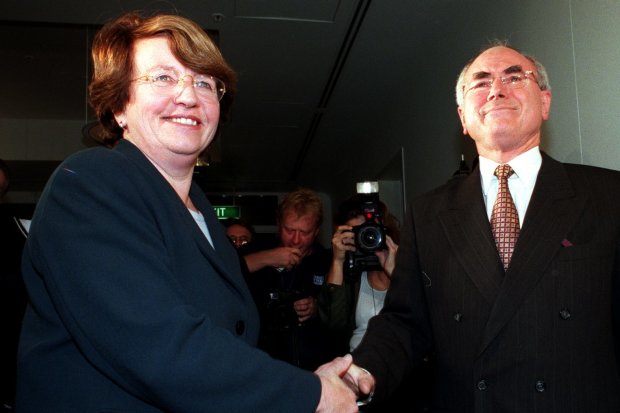 The electorate has held politicians to that deal — tampering with the GST has very quickly become a no-go zone. Politicians who try to vary the rate, or base, fast find themselves on the receiving end of voter dissatisfaction.
 The massive new impost on the four major banks and the Macquarie Group was announced by SA Treasurer Tom Koutsantonis in the state budget released last week.
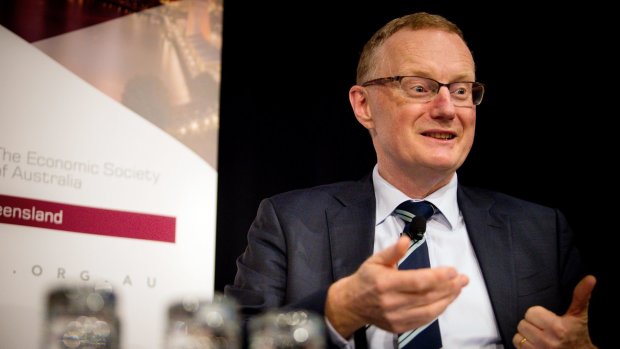 Therein lies the problem with Philip Lowe's comments. A growing economy, with surging profits, and a declining unemployment rate should be a great time to be telling the boss that you needed a tad more in your pay packet. But outside of official government forecasts the economy doesn't look to be in that happy place. Right now rising wages would simply translate to rising business failures and greater unemployment.
 The Coalition under Malcolm Turnbull has now lost 14 consecutive Newspoll surveys to Labor. Famously, the current PM said the former PM had to be removed because the Liberals had lost "30 Newspolls in a row". Those focused on the long-term will be contemplating the future for the Liberal Party and for liberalism in the years ahead.
 A lack of fiscal discipline has seen ten years of budget deficits translate into over half a trillion dollars worth of debt. That is over five hundred thousand million dollars. You'd think that the government would have stopped spending money, cut staff, and salaries. Delayed, or even cancelled, big ticket spending items that are unaffordable? Well, no.
 Gichuhi is Australia's first black African-born senator. She arrived in Australia on a "warm summer day in 1999", and was immediately struck by Australia's successful melting pot. "Right in that airport, I encountered Australians, Europeans, Asians and Africans from all over the world, living and working together harmoniously".