One might think animal spirits had gripped the Australian economy as a flurry of better-than-expected economic figures hit the newsstands before Christmas.
 But Australians cannot let the political and bureaucratic class off scot-free for the devastation they have caused in 2020, or for their unwillingness to engage in serious reform which will underpin our future prosperity.
The Australian Bureau of Statistics' November labour force numbers showed that 90,000 Australians had secured work in the previous month, bringing the number of employed people one step closer to the pre-lockdown level Australians are desperate to return to.
And the Mid-Year Economic and Fiscal Outlook brought further good news.
Australia's economic recovery is going much better than expected only two months prior when the 2020-21 budget was released, and the federal budget deficit will be around $16 billion smaller than first thought.
The MYEFO is like a mini budget, usually released halfway between the annual federal budget, and provides an update on government revenue and expenditure.
It also contained improved outlooks for the unemployment rate and economic growth going forward.
For Australia's political elites, Christmas had come early.
After plunging the country into its first recession in almost 30 years, negatively impacting six million jobs, forcing children to stay home from school and away from friends, and keeping families separated by inane hard border policies, they're hoping that mainstream Australians will be content with the good news and reward them politically for "keeping us safe".
But don't be fooled. Australia has a long and tedious path back to economic prosperity, and current policy settings and an unwillingness to engage in necessary reform will only hold Australians back. For the 942,100 Australians still out of work, and the additional 1.3 million who cannot get enough hours, premature financial fanfare is insensitive.
And for the business owners who have been crippled by lockdowns, there's nothing to celebrate.
Australia's premiers have engaged in a reckless and devastating act of economic, cultural, and social self-harm.
While major lockdown measures have finally been lifted for the most part, they are likely to be reimposed if a few cases of coronavirus emerge, as in South Australia last month, presenting a real threat to the economic recovery.
Quite simply, businesses can't make plans to invest in new equipment or hire and train new staff if they might be forced to close shop at any moment.
That's why new private sector business investment is now at the second lowest level ever recorded at 10.3 per cent of GDP, according to the ABS.
But to Australia's political and bureaucratic rulers, this doesn't matter.
At the beginning of the pandemic, Prime Minister Scott Morrison insisted that we were “all in this together”, a phrase that became the unofficial slogan for those insisting that Australia should lock down. But as Institute of Public Affairs research shows, between March and September 607,000 private sector workers lost their job while almost 20,000 new bureaucrats were hired.
Politicians and bureaucrats are completely detached from the real economy which their edicts effect.
When they forced businesses to close back in March, they immediately put hundreds of thousands of Australians out of work, and forced millions more to take pay cuts.
But they refused to demonstrate any shared sacrifice, ignoring an IPA poll which showed 74 per cent of Australians wanted politicians and senior public servants earning more than $150,000 a year to take a 20 per cent pay cut.
There is little hope for an economic recovery based on structural reform that will turbocharge the economy because political and bureaucratic elites have no skin in the game.
The private business investment statistic quoted above is dire for working Australians. Business investment is the key to productivity gains, which ultimately underpin wage growth.
Without making Australia a more attractive place to do business, it will be impossible to arrest the decline in private sector business investment, which is in the longest-running structural decline on record.
Australia's corporate tax rate is the equal second highest among the 37 countries in the OECD, and the minimum wage is the highest in the world.
According to the World Economic Forum's 2019 Global Competitiveness Report, Australia ranks 80th out of 141 countries for the burden of red tape and 111th for hiring and firing practices.
These issues can only be addressed through structural reform, which was necessary before coronavirus came but is now vital considering the carnage lockdowns inflicted on Australians.
Good news found in the MYEFO and labour force numbers must not overwhelm the effort to hold politicians and bureaucrats accountable for the damage they have done.
And it should especially not let politicians off the hook for engaging in the structural reforms needed to ensure that all Australians can experience the dignity of work and the prosperity they deserve.


 This import from the USA has become ubiquitous, and is emblazoned all over our banks, supermarkets and even our Christmas cards.
 They did two things. First, they tried to forget what had happened. Then, what they couldn't forget they created myths about. The myths and stories they told themselves might have an element of truth, but they were just as likely to be a consequence of individuals wishing for something to have occurred, when in fact it didn't.
 The legislated increase of forced super contributions from the current rate of 9.5% to 12% of wages will in many cases work against the financial interests of Australians, both now and in retirement. Forced super contributions come directly at the expense of savings outside of super that can be put towards a house deposit or used to reduce debt. Increasing the compulsory rate will only put the aspiration of homeownership and financial security further out of reach of an increasing proportion of the population.
 Last week the United Kingdom became the first country on the planet to approve the BioNTech-Pfizer vaccine. This week rollout began. The United States is expected to do the same in the coming days.
 In the wake of the Brereton report on alleged war crimes committed by Australian SAS troops in Afghanistan, there have been calls for the War Memorial to immediately reflect the allegations in its exhibitions. Memorial director Matt Anderson has suggested that curators will indeed do just that. Similarly, former Chief of the Defence Force, Admiral Chris Barrie has suggested that the SAS exhibit be removed altogether. The prime minister has responded meekly, saying only that all such changes will need to be approved by the War Memorial's board.
 But the comments from McManus, nonetheless, provide an insight into the priorities of the ACTU and show how far removed from the opinion of mainstream Australians the union movement has become.
 But this is exactly what they've done. Last week
  Well do they?

 It was the Andrews' government's incompetence in managing hotel quarantine, along with an inadequate contact tracing system, which kept Victorians under lockdown longer than almost any other place in the world. The utopian elimination strategy, which has been pursued across Australia, has forced hundreds of thousands of employees out of work, with these job losses being concentrated in small businesses in the private sector.
 The first and most striking change from ordinary court process came with the announcements, beginning in March, that jury trials in all states and territories will be suspended for various periods of time.
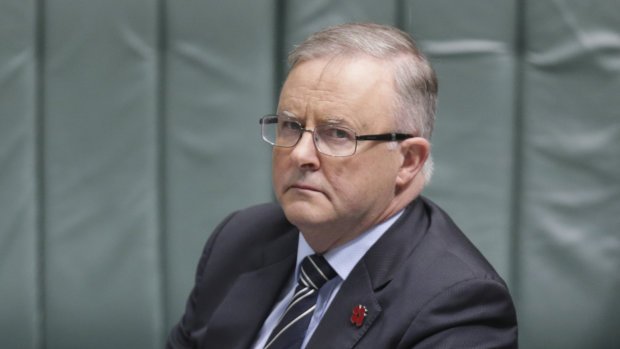 Unkind critics of Rudd might say that was one of his few positive contributions to Australian public policy. Rudd succeeded in changing the narrative of the economic debate in the country ― at least until the onset of the GFC. Whether he actually ever was the "fiscal conservative" he made himself out to be will be is one of the mysteries of Rudd's prime ministership. As a "fiscal conservative" Rudd won an easy election victory a fortnight later, and after a few months in The Lodge had a 71 percent approval rating.
 Time "inside" is turning out to be considerably easier than expected. Having spent the last nine months in Melbourne, I am used to a complete loss of freedom, mandatory mask wearing and oppressive police enforcement, neatly topped off with disproportionate fines. I suppose that this conditioning is one thing I can thank Dan Andrews for. Mealtimes are sometimes a highlight, but most often a lowlight. A furtive knock on the door, or sound of a large trolley rumbling by, indicates that our food has arrived, and we emerge from our rooms to snatch up the morning's offerings. The same routine for lunch, which usually arrives while we are still recovering from the assaults of the breakfast baked beans, omelette, and sausage. Dinner is anybody's guess, and we are becoming very adept at keeping edible lunch salads for when the kitchen staff have decided to resort to inedible meat loaf or grey slices of lamb for the evening meal. We have been so very fortunate with our neighbours. On Day Two, we discovered that the cabins next to ours are inhabited by musicians Joe Camilleri and Claude Carranza. They are members of the Australian band The Black Sorrows and are on their way to tour New South Wales and South Australiaa. It took a while to coax them out of their rooms to practise on their veranda within earshot of others, but after a few nights, they came alive again after months of being isolated from each other. Soon, practice turned into a full show complete with banter for a highly appreciative, and in the truest sense of the word, captive audience. Their music filled the camp with joy. Gradually, the nightly concerts began to attract more and more residents of the Orange Zone, until one night, the set went on just a little bit too long and the crowd became just a little bit too big. The police shut the whole thing down. Joe told us afterwards that they had not really wanted to, but that they had a job to do. Such is life.
 And Anthony Albanese's recommitment to Labor's net-zero emissions by 2050 mandate is exactly the type of policy someone from inner-city Sydney would think Australia needs in the middle of a recession.
 Last week a Rudd-initiated petition was submitted to the House of Representatives calling for a Royal Commission into "the strength and diversity of Australian news media". In case anyone was in any doubt over what that meant, Rudd called the Murdoch media a "cancer on democracy" when announcing the petition on Twitter last month. The petition had over 500,000 signatures including Malcolm Turnbull's.