Showing posts with label Economics and Deregulation. Show all posts

Tuesday, April 11, 2017

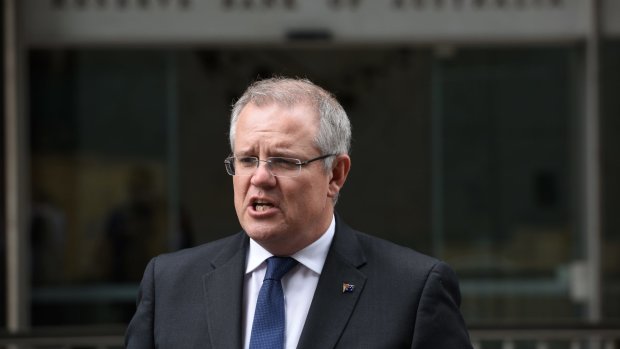
GST Change Is A Plain And Simple Tariff, Scott Morrison

The Turnbull government's proposal to eliminate the $1000 threshold before the GST is levied on imported goods is not a tax integrity measure.  It is a tariff, and one that will have serious repercussions that the government does not seem to have considered seriously.

The end of the low-value threshold was first flagged by the government in December 2014.  It formed part of last year's budget.  Now there is actual separate legislation before parliament, and a Senate committee inquiry that will give its verdict on the legislation the same day Scott Morrison releases his 2017 budget.

By July, if everything goes to the government's plan, the commonwealth will be receiving a stream of GST revenue from every global internet retailer that supplies Australian customers with a total of more than $75,000 worth of goods.

That's the plan, anyway.  This proposal is no more convincing now than it was two years ago when it was first announced.

In 2011 the Productivity Commission concluded that inspecting low-value imports at the border to assess their GST liability would cost more money than it would raise.  So rather than getting Customs to collect the GST, the government wants to convince foreign online retailers to do it for them.

Let's imagine this ploy works.  Some of the consequences are easily predictable.  First, many Australians will substitute away from well-known online sellers — such as eBay and Amazon — that have built excellent reputations for facilitating and protecting trade, to those less well-known sellers that are likely not to charge the GST.

Doing so will expose more Australians to online fraud and lead to them purchasing less reliable products from unreliable suppliers that may not meet our high quality and safety standards.  It also will expose more Australians to the more unsavoury sellers on the internet, possibly leading to an increase in unlawful imports into the country.

At the very least, a 10 per cent increase in the cost of digital goods will make intellectual property ­piracy just that little bit more ­attractive.  This is a real cost of the policy that must be fully accounted for.

Second, the way the government proposes to implement this measure constitutes an exercise in extraterritorial power.  The commonwealth Treasury does not have jurisdiction over eBay (headquartered in San Jose, California) or Amazon (headquartered in Seattle).  Attempting to rope them into our tax system will place the Australian government in conflict with our major trading partners.  At the very least this should generate trade disputes at the World Trade Organisation.

Doubly so if our trading partners read the Treasurer's second reading speech introducing the legislation, which makes it clear that this is a protectionist measure to benefit the Australian small businesses that have been "unfairly disadvantaged" by the fact they pay taxes that firms in other countries do not.

This is the nub of the issue.  Transactions that occur in foreign countries should not be liable to the Australian GST.

The GST is usually described as being a "consumption tax" but in fact, for practical reasons, it is a tax on sales.

When Australian consumers purchase goods online from, say, a company based in Britain, the sale does not occur in Australia — it occurs in Britain.

The money is exchanged in Britain, the order is produced in Britain, the sale is processed in the Britain and the dispatch order is made from Britain.

The fact the goods are subsequently imported into Australia does not mean those goods should be liable to an Australian sales tax.  A tax levied on imports is a tariff.  This legislation is an embarrassing reversal of Australia's longstanding free trade agenda.

Morrison pointed out in his second reading speech that his legislation is a "significant world first".  That is not something of which he should be proud.

In the realm of tax administration, at least, Australia is showing itself to be a bad international player.

Rather than introducing a new tariff to protect Australian business from international competi­tion, the government should focus its efforts on those features of the Australian business environment that impose such high prices on local consumers.

Working to lower company tax, high wage structures and reducing red tape would benefit Australians far more than protectionist measures for their small-business constituency.

Thursday, March 16, 2017

There is a better home for superannuation

Giving people access to their own money is an uncontroversial idea.  Young people trying to enter the housing market should be granted access to their own superannuation accounts to help make it happen.

One of the biggest hurdles young people have to clear in buying their first home is saving enough money for a deposit.  It takes time, and with rising house prices, the dream of owning a home keeps moving into the distance.

There is a simple solution to this problem.  Many young people already have a house deposit, or a partial deposit, set aside.  They are just not able to access it because it is locked away in a superannuation account that they are not allowed to get their hands on until they retire.

There are many layers to the senselessness of this policy.  The most obvious is that money in your superannuation account is yours.  You have earned it, and you should be able to do with it what you like.  If you want to use your money to buy a house you should be free to do so.

But even if one accepts the rationale for the current system of government-mandated savings there are a number of reasons why granting access to superannuation for first home buyers makes sense.

Money set aside in your superannuation account is invested in the expectation that the initial capital you have put into the account will grow over the long run until you are ready to retire.  There are a range of investments that you can choose to make, but one of them is property.  Including residential property.

In fact, according to the latest Russell Investments/ASX Long-term Investing Report that is the best investment your superannuation fund could have made over the last 20 years.  Superannuation funds that invested in residential investment property in the 20 years to 2016 returned an average of 9.7 per cent per year, the highest of any investment class measured in the report.  Australian shares returned 9.1 per cent, and Australian listed property gave returns of 6.9 per cent.

So your superannuation fund is very likely to be investing your money in residential property anyway.  It is not much of a leap to allow for that money to be invested in your own home rather than someone else's.

The other thing to keep in mind is how important it is to own your own home in retirement.  The disparity in outcomes between people that own their own home and those that do not is stark.

With house prices continuing to go up, and young people finding it increasingly difficult to get their foot in the door, this problem is set to explode over the coming decades.

The problem of not owning a home in retirement is that you have to keep paying rent right up until the day you die.  Recent research from the Australian Housing and Urban Research Institute projects that by 2050 there will be 832,319 people over the age of 50 living in private rental accommodation, up from just over 420,000 today.

This is not just a problem for older Australians.  Young people also risk depleting their savings during their working life as they continue to rent before buying a home, potentially offsetting any benefits of forced saving through compulsory superannuation.

We need to be clear about one aspect of this debate:  allowing access to superannuation to buy a home is not going to bring down house prices.  It is much more likely to have the opposite effect.

But this is not a policy aimed at housing affordability.  Only releasing more land and relaxing density restrictions can bring house prices down over the long run.  This is a policy aimed at helping young people to become members of the homeowners' club.

Treasurer Scott Morrison should be applauded for looking at creative solutions to break down the rigidity of the current superannuation investment model.  Allowing individuals to access their own money held in superannuation accounts is not a radical proposal.  Especially if the money is being used to invest.  Giving young Australians the flexibility to use super to invest in their own home is just the kind of positive, forward-thinking policy a modern Coalition government should be championing.

Friday, February 24, 2017

Immigrants boost the economy and should be welcomed

Populism is being mainstreamed in Australia.  At a book launch former prime minister Tony Abbott set out an aggressive populist agenda for Australia — presumably a second Abbott government.  Abolish the renewable energy target, abolish the Human Rights Commission, cut spending, reform the Senate, and cut immigration.

This from a man who couldn't amend a single section of the Racial Discrimination Act while PM.  A man who increased taxes.  A man whose government set the current renewable energy target.  Good luck with that.

More concerning, however, is the increased antagonism towards immigration.  To be sure, there is much to dislike about immigrants.  They take our jobs, live in our houses, marry our women, deprive our children of jobs, and speak with strange accents.  Most immigrants have the temerity to integrate into Australian society and come to think of themselves as being Australian!

Now Tony Abbott wasn't as crude as that in his call for restricted immigration but many would nod in approval while thinking those, or similar, thoughts.  The official line for restricting immigration is to reduce house prices (at least until housing starts pick up).  As if most new migrants to Australia could afford to buy a house upon arrival.

Abbott accuses the federal Treasury of having a "big is best" mode of thinking.  Quite right.  Most economists support free trade and have done so since Adam Smith.  Economists understand that more trade leads to improvements in our standard of living and greater prosperity.  This is the basis for promoting international trade.

What many people don't seem to realise is that domestic trade is good for prosperity too.  We can trade with foreigners across international borders, or we can trade with immigrants right here at home.  The case for free trade — an argument Abbott knows well — is also the case for immigration.  We are better off when goods and services cross borders and when people cross borders, too.

International trade and immigration are not substitutes, they are compliments.

Arguments in favour of immigration usually emphasise diversity, food choice, and the like.  These arguments are true, but trivial.  The benefit of immigration comes from the fact that immigrants increase the size of the market.

Immigrants don't just increase demand for Australian goods and services, they also increase the supply of Australian goods and services.  This is especially so given the fact that Australia's immigrant intake is skewed towards skilled migrants.  People who are likely to quickly gain employment, start paying taxes, and making other contributions to Australian life.

A restriction on immigration is a restriction on economic prosperity — much like increased taxation.
If Abbott truly believes that housing starts are lagging population growth he should focus his attention on supply side barriers to entry and not on restricting the demand side of the economy.  That means lowering taxation, cutting red tape, cutting green tape, and forcing the states to do so, too.

Monday, February 20, 2017

IMF Report Shows Old-Time Fiscal Religion Is Needed To Counter The New Mediocre

The latest annual IMF Australia Consultation might have passed unnoticed but for this highly damning statement:  "the new mediocre".  Perhaps they were being polite — Australia's lacklustre fiscal performance has become the new normal or just mediocre.  There is nothing new about the increasing debt and ongoing deficits we have experienced since the Rudd government panicked in 2008 and went on a never-ending spending spree.

A stable and predictable fiscal policy creates a sound environment for business decision making.  Investors who trust that governments can and will manage their own affairs wisely are more likely to engage in long-term economic projects to their benefit, and that of the community at large, and the government too.

As it turns out Australia has a reasonably well-defined fiscal policy framework.  It was articulated by Peter Costello in 2007:  "Our tax system exists to fund the decent services in health, education, aged care, and other services that Australians legitimately expect and are entitled to receive.  If after we provide for those services, invest for the future, and balance our budget, we can reduce the tax burden, we should do so."  The federal government budget should be balanced.  In practice — and as articulated by the Rudd government — that means the budget should have a positive balance of about 1 per cent of GDP.


ALL TALK AND NO ACTION

No government in the last 10 years — since the Howard government was voted out of office — has managed that task.  Politicians give themselves wriggle room by arguing that the budget should be balanced, on average, over the cycle.  That can be described as being the budget anchor:  the policy statement that anchors expectations of budgetary movements.  If and when the budget is in deficit, government will move towards surplus.  If the budget surplus is too large government will reduce it by either spending more or cutting taxes.

Australian governments have failed utterly to achieve this policy goal.  Rather helpfully the IMF have recommended another policy that will mask this ongoing failure.  They suggest a debt anchor.  Rather than target a 1 per cent of GDP budget balance, the government should target some or other level of debt in the long run.  This proposal was critiqued in these pages last week.  It is even more vague and non-binding than our existing budget anchor.

Worse — Australia already has a debt anchor.  Observed in the breach, but also established by Costello:  Australian federal government net debt should be zero.  In essence then, it is unclear what the IMF truly proposes other than to relax the already quite lax fiscal constraints that bind politicians.

It is, however, well worth having a debate on politically binding fiscal constraints.  Just as Australia has a political constitution that spells out the rules of political decision making in the Parliament, so too we should have a fiscal constitution that spells out the rules of fiscal decision making.  Right now politicians tax as much as they think they can get away with, spend as much as they can, and borrow to make up the difference.


THAT OLD-TIME FISCAL RELIGION

Many Australians subscribe to what the 1986 economics laureate James Buchanan described as being "the old-time fiscal religion".  The notion that budgets are balanced, that government spending is frugal, and debt used sparingly and responsibly.  Instead we have "the new mediocre".

It's not entirely fair to blame the government — of either persuasion — for this state of affairs.  All politicians of all parties are to blame.  The budget is brought down every year and should be voted on every year.  By convention, however, a lot of existing budget measures go through on a nod and a wink and many spending policies are legislated to be ongoing.  This is an abrogation of responsibility.  Furthermore politicians — and many bureaucrats too — have absolutely no skin in the game.  Their salaries and pensions are not dependent on economic growth or paying customers, but rather on the ability to tax and borrow.  Putting the budget onto automatic pilot with a debt and deficit trajectory and then borrowing to pay their own salaries is symptomatic of the new mediocre.

Australians pay top dollar for their government and public services and can expect better.  Holding politicians to account for poor fiscal outcomes is a good place to start.  Re-legislating the debt ceiling should be a priority.  Unfortunately out of sight is out of mind and removing the debt ceiling (introduced by the Rudd government and repealed by the Abbott government) has allowed debt to spiral out of control with little public debate.

So while the IMF proposal itself is trivial, we should use this opportunity to drive a harder fiscal bargain in Canberra.

Wednesday, February 15, 2017

Taxi licence compensation sends the wrong message

Lines of taxi drivers crawled across the Bolte Bridge in Melbourne on Monday.  Their protest wasn't over pay, conditions or safety.  It was over the size of their consumer-funded compensation handout as Victoria legalises Uber.

The transition from ageing taxis to innovators like Uber is inevitable and has forced governments to reconsider their cosy relationship with the taxi industry.  Victoria's taxi licensing system will soon be scrapped and replaced with a single commercial licence for taxis, hire cars and ride-sharing services.

But before we quibble over the level of compensation taxi owners get, we need to ask this:  why should they get any compensation at all?

After all, taxi licenses are government-granted privileges to restrict competition in transport.

There is abundant economic evidence that suggests taxi licences have raised the prices we pay for our journeys, while at the same time limiting our transport choices and reducing the quality of service.

For years the industry has benefited from government privileges through obtaining much higher profits than they would have done without those licences.

We've been paying "compensation" to taxi licence holders for decades.

Taxi licences are financial assets.  Nobody who bought those assets should have believed they had a guaranteed return.  All their value came from government policy, which was always at risk of changing.  So who should bear the risk?  Surely not the taxpayer.

Taxi licence holders knew they were receiving a privilege through government regulation, which could be taken away as easy as it was given.

Consumers may start to prefer Uber to taxis but, if so, that will be entirely because taxis are being out-competed by better, cheaper, higher quality transport.

Let's be clear.  The Victorian Government is not "picking winners" — favouring ride-sharing over taxis.  Evidence suggests that since the introduction of ride-sharing, the growth in the taxi market has remained steady.

Even so, taxi licence holders believe the government's proposed compensation of $100,000 for the first licence and $50,000 for the second licence is inadequate.

Such a blanket approach, no matter the original price paid for the licence, has nothing to do with equity or hardship.  It's a handout.

The compensation will be funded by a $2 levy on all taxi and Uber trips.  That money will be pooled and distributed to licence holders at a total cost to consumers of about $453 million.

Taxi licensees want even more compensation, despite the fact that this generous package is already much bigger than the packages announced by other states.

In New South Wales, for instance, taxpayers are being slugged $20,000 per licence, which with a hardship fund combines to make a $250 million package.

It is certainly true that many people invested large amounts of money in taxi licences and their investments will suffer when the regulations come in.

It is entirely reasonable that the public feels some sympathy for them.  Taxi licences were a bad investment.  But the decisions of parliament must always consider the interests of consumers first, not special interests.

We should be extremely wary of the precedent that taxi licence compensation might set.  Imagine paying every time governments wanted to make public policy changes.

Every day, new technologies enter and enrich our lives by disrupting old businesses.  Good public policy understands that Australians are better off when we welcome new technologies.

It has been almost five years since Uber came to Australia.  It's a worry that it takes five years for an innovative, beneficial, popular service to even establish the legal right to exist.  Old incumbent industries watching these debates will learn one thing:  it really does pay to spend time lobbying government for red tape on your competitors rather than adapting to new economic conditions.  To stop this happening again, the core message for governments should be that red tape, once imposed, holds back competition, hurts consumers and costs us all money.

My research have found that red tape costs our economy $176 billion each year.  That prevents us from transitioning to modern, digitally empowered services.

More regulatory battles are coming.  How will the government decide to regulate drones or driverless cars?  Will it introduce complex red tape and licences, only to have to pay compensation decades down the track?

Policymakers must take a stand against taxis holding our finances to ransom and reject these claims of consumer-funded compensation.

Monday, January 30, 2017

The UK's relationship with Australia will be revitalised after Brexit

Theresa May confirmed in her landmark speech at Lancaster House earlier in the month that Brexit really does mean Brexit.  Britain will be leaving the economically strangling common market protectionist racket and seeking opportunities across the world.

This, however, was not welcomed by all.  Green MP and co-leader Caroline Lucas has complained that May is "hoping for far flung countries to do good deals with us".
The concept that the rest of the world is "far flung" and that there is a low probability of good deals is laughable.  Politically, socially and culturally Britain has far stronger bonds to many far flung countries than it does to Europe.

Taking the case closest to my heart — Australia — we share a language, a common political system, culture, history, the rule of law, and similar economic and legal systems.  We sent thousands of our young to fight, and many die, side-by-side in two world wars.

These traditional bonds, however, are clearly not as strong as they used to be.  Australia is no longer a colony, and, following the Australia Act of 1986, the UK no longer has residual legislative or judicial authority.  These are of course positive steps.  Australia is one of Britain's many success stories spreading the core institutions of Western civilisation, establishing a fellow constitutional monarchy, on the other side of the world.

Nevertheless, relations — which already include strong trade and security bonds — have ebbed and flowed.  The most damning moment in the Australia-UK relationship came in 1973 when the UK joined the European Economic Community.  This decision was a shock to the Australian government which had previously been promised by the UK that nothing would be done to damage our trade relations.

Symbolically, it was a turning away from traditional bonds, an abandonment of the Australia-UK relationship in favour of new friends.  In practice, the UK's decision meant the imposition of tariffs on Australian goods that had previously never existed, and a consequential decline in Australian exports to the UK.

Let's start with an example close to my heart:  wine.  Australia is the UK's biggest source of wine imports after Italy.  In 2014, Britain imported 245 million litres of Aussie wine.  However, the EU imposes various tariffs on wine, up to an astonishing 32 per cent.  This hurts Australian exporters, to the tune of £36 million per year, according to the Australian Grape and Wine Authority, and pushes up the cost of Australian wine for British consumers.

An example with even more wide ranging importance is agriculture.  The origins of British food, stretching back to the monumental debates over the Corn Laws in the 19th century, are largely foreign:  more than half of the UK's food comes from abroad.  Australia, on the other hand, with abundant land, is a food exporter.  Sixty per cent of our food is exported — and this is predicted to increase over the coming years.  Historically, much of these exports went to the UK.

At the end of World War II, the UK represented a third of Australian agricultural exports, including 90 per cent of butter and 80 per cent of beef.  However, following the introduction of EEC tariffs, and the emergence of other markets, by the mid-1980s the UK became just 2 per cent of Australia's rural exports.  Today it is just 1.5 per cent.  We are largely locked out of British agriculture due to EU tariffs of up to 20 per cent, as well as import quotas on our key export products, including beef.

The full Brexit gives the UK the opportunity to remove these barriers to trade, substantially benefiting consumers.  It means cheaper Aussie wine on British shelves.  It means access to high quality Australian agriculture products.  This provides substantial benefits for UK consumers, as well as opportunities for British exports back to Australia, particularly in services.

Brexit also provides other opportunities outside of trade.  It hopefully means a fairer, less discriminatory immigration system.  The concept of free movement may nicely appeal to Europeans;  however, it quite clearly discriminates against the rest of the world.  It tells Australians, New Zealanders and Canadians — who share a head of state with the UK — that we are less welcome than others.  This makes the UK a lot less appealing to much of world's best talent.

Brexit also means the UK can provide independent leadership at the World Trade Organisation, a particularly important facet at a time when protectionist sentiments are growing around the world.  It also means potential trade agreements across the Commonwealth, as well as with the world's biggest economies — the United States and China.

This will of course all depend on appropriate deals that deliver mutual recognition of standards, and the abolition of tariffs and quotas.  However, I am confident of a high probability of success, particularly in Australia's case.

In just the last few years Australia has completed trade deals with China, Japan and South Korea.  Australian Prime Minister Malcolm Turnbull was the world's first leader to propose a trade deal with Britain after Brexit.  Australian Treasurer Scott Morrison visiting London last week and met with his counterpart, Philip Hammond, to lay the foundations of a new trade agreement and easing restrictions on movement.

Australia and the UK not only have a range of economic symmetries, we have shared bonds that stretch the entity of our history.  These bonds will grow ever stronger after Brexit.

Tuesday, December 20, 2016

More of the same is not good enough

Despite four prime ministers and four treasurers since 2013, Australia's budget situation has not improved.  Only Chris Bowen has no case to answer as his time as treasurer was too short for any serious budget repair work to have been attempted.

It was the then prime minister Kevin Rudd who initially unleashed the spending and Julia Gillard who added fuel.  Their treasurer, Wayne Swan, seemed to think that given enough time the economy would grow the budget out of deficit.  To be fair, every treasurer since has adopted the same strategy.
That allowed for the introduction of high-spending programs such as the National Broadband Network (NBN), Gonski education funding model and the National Disability Insurance Scheme (NDIS).  Treasurer Swan wasn't averse to silly tax proposals that either raised no revenue, or added substantial costs to the economy and households for little gain.

A change in government in 2013 should have brought a return to sensible economic management.  But no.  The Abbott government did get around to repealing the mining tax and carbon tax but didn't seem to feel any urgency in doing so.

The debt ceiling was abolished too.  That was one mechanism introduced by the Rudd government that could have delayed the enviable blow-out in debt (from A$319.5 billion in the 2013-14 federal budget to A$498 billion in the MYEFO).

A constant drip feed of reports of the government having to approach the parliament to raise the debt ceiling would have placed some political pressure on the government.  But politicians don't like accountability for themselves, and the debt ceiling was abolished well before the carbon tax or mining tax.

Joe Hockey's first budget was incoherent.  Spending was forecast to increase from $410.7 billion in 2013-14 to $412.52 billion in 2014-15.  The budget deficit was initially forecast to be $29.8 billion.  We now know the deficit was $37.9 billion that year — the MYEFO forecasts a $36.5 billion deficit for 2016.

Liberal propaganda blamed the parliament's refusal to pass "budget savings" — a hodgepodge of incoherent and/or poorly explained tax increases.  Hockey's second budget was a cash splash for small business — but again lacked any serious purpose or intent to rein in excessive expenditure.  Luckily a new prime minister and treasurer saved us from a third Hockey budget.

Despite promising early signs, the Turnbull-Morrison combination has been disappointing.  The government is easily distracted and appears timid on the economic front.

There is also a complete lack of goodwill on the electorate's part.  Mind you, after several years of lacklustre economic performance and second-rate political leadership it is not surprising that the electorate is grumpy.

So the poor budget figures should be no surprise.  While the AAA rating remains intact for now, we should not be surprised that a downgrade remains a real possibility.

Our friends in Canberra have no idea how to return the budget to surplus.  This lack of imagination and initiative is bipartisan.  Losing the AAA rating would be a lagging indicator of a continued, sustained and persistent failure to rein in spending and restore the budget to surplus.

Tuesday, December 06, 2016

Key lesson is that a bold agenda is possible

The New Zealand prime minister is rightly being showered with praise from over this side of the Tasman.  Prime Minister Malcolm Turnbull said Key's resignation was "a great loss to New Zealand and a great loss to the world".  Tony Abbott congratulated Key for a "fine innings".

Key's shock resignation yesterday comes with his three-term government, first elected in 2008, in a strong position to retain government at next year's election.

Our political class should not only ponder Key's electoral success but the bold policy agenda that made it possible.  The lesson of Key's stint in office is that it is possible to stand on principle and build widespread popular support for economic reform.

In Australia too many people have written off policy reform as too hard.  Or alternatively they've argued that what policy reform there is must inevitably involve higher taxes, more regulation and bigger government.  The John Key experience shows that argument is not true.

A measure of Key's boldness can be judged by the size of his cuts to unsustainable government spending.  By 2018 government spending as a share of the economy will have fallen to 32 per cent — in 2010 it was 40 per cent.  New Zealand's budget is now in surplus.

When Key came to power, his country was reeling from the effects of the global financial crisis.  New Zealand was in recession, inflation was spiking and unemployment had more than doubled over the preceding two years.

In response, Key's government took action to remove structural impediments to economic growth.  Personal income taxes were cut and with the top marginal rate falling from 39 per cent to 33 per cent.  Significantly there is no income tax-free threshold in New Zealand.  This is important because it ensures as many as people as possible have a stake in the government because they know they are paying for it.

Key didn't shy away from away from hard decisions.  He increased the GST from 12.5 per cent to 15 per cent, and they pushed on with the partial privatisation of state-owned enterprises, including the iconic Air New Zealand.  He also changed workplace relations law to give small business greater flexibility in hiring.


Beacon of clarity

And on the world stage, Key was a strong voice for free trade.  He publicly defended the Trans-Pacific Partnership and signed New Zealand up to the deal this year.  Fittingly, the finalised proposal was signed by potential members in Auckland.

Apart from one or two missteps (including the poorly-received referendum on changing the national flag), Key was consistently able to connect to Kiwi voters and bring them along with him as he pursued complex, but vitally important, policy.  New Zealanders knew who John Key was, and they knew the policies that his government would pursues.

New Zealand voters responded positively to this clarity of vision.

The challenge for Australians is for us to match Key's purposefulness.  In this country we tend to be satisfied too often with fiddling at the margins.  Admittedly John Key didn't have a recalcitrant senate to deal with, but even so he had his own country's bizarre electoral processes to manage.

The Coalition did succeed in getting rid of the carbon and mining taxes, but as yet has failed to build a case for reducing government and liberating the economy from the burdens of over-regulation.

In Australia federal government spending remains at post-GFC levels, about 24 per cent of GDP, and failed to cut the Commonwealth bureaucracy..

For business, the policy environment remains unhelpful, even punitive.  Corporate tax remains high, even as competitor countries cut theirs.  And notwithstanding some worthwhile industrial relations reforms achieved in recent weeks the Coalition is yet to undo Labor's re-regulation of the labour market.

The politics of tax reform still bedevils the Coalition.  Earlier this year, an increase of the GST was floated and then shot down within a couple of weeks, after the first sign of opposition, while a proposal to give the states income taxation power lasted no more than a day.

And Abbott's government started full of ideas about reforming health and welfare spending but was quickly scared off.  The best it could do was reduce the rate of growth of entitlement spending from recklessly unsustainable to unsustainable but less conspicuously so.

And so our two sister countries provide a study in contrasts.  Over the past decade, one has pursued a series of hard reforms, and its economy has thrived and its leader is leaving to sustained applause.  One has shied away from decision, has weak growth and growing political unrest, and has cycled through five different changes in leadership.

It is time to remember one of the old maxims of government:  good policy is good politics.  John Key proved it, and his example could not be clearer for any Australian leader who cares to follow it.

Monday, November 07, 2016

Brexit means Brexit — and democracy, too

The stench of elite hatred for democracy is sifting through the streets of London.

The courts have ruled against the Government's ability to implement the clear democratic will of the people.  Meanwhile, Remainers disparage those who voted for Brexit as uneducated and uninformed, tricked by a campaign of deceit, and voting against their supposed best interest.  They show an absolute inability to accept that maybe, just maybe, the majority is not on their side.

Of course, this is nothing new.  The idea that the masses are incapable of governing themselves, and must be led by the enlightened few, is one of the oldest diseases.  Plato rejected Athenian democracy, preferring the idealised rule of "philosopher kings" (i.e. himself).  Similar arguments about people being "creatures of impulse and emotion" who lack reason were used against women's suffrage.

Democracy had no lower ebb in the twentieth century than May 1940.  Britain's last major ally on the continent, France, had fallen.  The chances of a successful evacuation of Dunkirk appeared weak.  Nazism, in collaboration with Russian communism, was now dominating the continent.  Meanwhile, much of Asia was falling to Imperial Japan.  America seemed uninterested in helping.

It was left to Britain to defend western civilisation against the onslaught of some of the most extraordinary hatred.  However, even at this time, there were many elites in Britain who, uninterested in democracy, were sympathetic to compromise.  Despite the victory for democracy, it seems the anti-democratic strain of thought remains strong.  It comes out in full flight when a decision is made contrary to their worldview.

Brexit is one part of it.  However, we are more generally seeing a loss of faith in democratic systems.  Surveys across western democracies have found young people are less supportive of democracy than their parents.  Meanwhile, Donald Trump has consistently refused to say whether he would accept an election result against him.

The problem has become self-perpetuating.  The people, sick of a feeling that elites are not listening to them, are increasingly choosing previously fringe parties and politicians on all sides of the spectrum.  This leads the establishment to decry the impact of populism and seek to minimise democratic will — by, for example, attempting to block Brexit.

As former Australian prime minister John Howard reminded a British audience this week — "populism" has always been with us.  It is the role of politicians is to lead, to persuade the people.  They must then respect their collective wisdom.  No, not every person is right.  Nor will everyone make the right decisions for the correct reasons.  But they capability of humanity to choose its own leadership is fundamental to our humanity.

Democracy reflects the fundamental principle that "all people have exactly the same right to participate in the construction of a political community".  It is a fundamental element of our liberty and equal moral worth.  This is not to say that there should not be constraints on democracy — constitutions, rights and norms of accountability and responsibility.  However, ultimately these institutions must be created with a sense of popular support or otherwise they will crumble at the first sign of strain.

Brexit is very difficult for the many whose entire world view it challenges.  However, this is not a reason to make apocalyptic predictions of a new European dark age, nor is it a reason to block the people's will.  Remainers should focus on making a success of Brexit — representing the 48 percent who voted "In" by encouraging cooperation and mutual agreements in their priority areas.

The decision by the courts to block the triggering of Article 50, as well as other attempts to stop or delay Brexit in Parliament, will only do more damage to our democratic foundations.  It expands the "elites versus the people" dichotomy that is endangering the rising of extremists.  If the appeal fails, the British parliament must swiftly respect the people's will and allow the Government to trigger Article 50.  The future of democracy depends on it.

Wednesday, October 12, 2016

After Brexit, Anglo-Oz relations can flourish

Australia's cultural, social and political history is entwined with Britain's.  We share a language, the Westminster democratic system, the common law and a respect for diversity, individualism and freedom.

Australia's modern incarnation was defined by British colonisation.  As former Australian prime minister Tony Abbott put it last week, during a discussion of Anglo-Australian trade relations at the UK Conservative Party conference, "Once, you exported people to Australia, of course ... chosen by the finest British judges".  Today, Australia and the UK continue to have particularly strong ties in intelligence and international relations, but the UK's decision to join the European Economic Community in 1973 put a strain on our close friendship.
In the 1950s, the UK government assured the Australian government that it would do nothing to diminish trade relations.  Consequently, Australia was genuinely shocked and affronted by the UK's application to join the EEC in 1961.  French president Charles de Gaulle vetoed Britain's entry in 1963, and again in 1967.  In order to join the EEC, Britain was compelled to sever economic ties with the Commonwealth, imposing extensive trade restrictions on Australian exports.  This has had a profound cultural and economic effect on Australia.  As former Australian prime minister Paul Keating put it during the 1990s, the UK had "walked out on us and joined the common market".  This secondary status is writ large at British airports, where, despite sharing a queen with Brits, Australians are shuffled into the slow lane while Europeans are given priority.  (Just a few weeks ago, I waited for 50 minutes in one such line.)

This is why Australia is excited about Brexit.  It is an extraordinary opportunity to right a historic wrong, and rebuild our relations, both economic and cultural.

Many pessimists have pointed out that Australia's trade with the UK is very small — minimising the importance of any trade deals.  Indeed, Britain is only Australia's 8th largest export market.  However, this focus ignores the reason why Australia-UK trade has declined — Australia's lack of access to the common market.  Australian businesses cannot compete on an equal footing with European businesses.

Take one industry:  butter.  Older Britons might remember that until the mid-1970s Australian butter was a significant presence on UK supermarket shelves.  But after Britain joined the EEC, Australian butter exports dropped by more than 90 per cent.  Or take the case of apples:  exports declined from 86,000 tonnes in 1975 to 27,000 tonnes in 1990.  Similarly, before the UK's membership of the EEC, about a third of Australia's sugar exports went to the UK.  This market virtually disappeared overnight.

Australia began negotiating a free-trade agreement with the European Union in 2015.  Sadly, however, talks have stalled due to Italy's protest about Australia's anti-dumping duties on Italian canned tomatoes.  As a consequence of a completely irrelevant delay, Australia and Britain are missing out on the mutual benefits of freer trade.

Our passion to rebuild historic relations with the UK, playing off our complimentary economies, is the reason why we are the first country in line to sign a deal with the UK.  We're pretty good at trade agreements, too, having completed negotiations with China, Japan and Korea in the past few years.

There has also been substantial decline in the number of Australians issued visas by the Home Office in recent years.  This is not because young Aussies are uninterested in coming to the UK, but rather due to new visa regulations and migration caps.  UK foreign secretary Boris Johnson has previously supported a "free-mobility labour zone" between Australia, Canada, New Zealand and Britain.  UK home secretary Amber Rudd has since poured cold water on the idea of increasing the number of Australian migrants.  But, with negotiations yet to begin, there's no reason to dismiss the possibility of it happening.

The consequences of these trade and migration restrictions are bad for both Britain and Australia.  Nevertheless, Australia has flourished since the 1970s, largely thanks to our open economy.  According to the International Monetary Fund, we have the 16th highest per capita income in the world (the UK sits at 25), and, according to the World Health Organisation, the fourth highest life expectancy (the UK sits at 20).  We are proud of our achievements and are ready to re-establish a strong independent relationship with the UK, one that would be beneficial to both our nations.

Friday, September 23, 2016

Red tape ready for Malcolm Turnbull to cut

The ridiculous story of Tori Gentle and Bea Cobon and their cafe reveals how red tape threatens Australia's prosperity.  Their cafe is a small business, but what's happening to them is the same thing happening to big business.

Tori and Bea are the owners of Crate Speciality Coffee cafe in Heidelberg Heights, Melbourne.  In response to customer demand they recently applied to their local council, Banyule Council, to increase the cafe's seating from 15 to 30 people and extend its opening hours to 9pm on Thursdays, Fridays and Saturdays.  If their application had been successful, Tori and Bea would have had to hire more staff.  But it wasn't successful.  The council rejected Tori and Bea's application as a result of a single anonymous objection from a member of the public.  That's right.  Because one person objected, the application was refused.  According to the council, "the proposal needed to balance economic opportunities and amenity impacts".  And apparently, according in Heidelberg Heights, one single anonymous objection can tip the scales against economic opportunity.

In the light of red tape like this it should be no surprise that according to the World Economic Forum, Australia now places 80th out of 140 countries in a ranking of the burden of government regulation on companies.  The country rated as the best place for doing business was, of course, Singapore.

What Banyule Council forgets is that community amenity is a product of economic activity.  If it wasn't for the rates businesses pay Banyule Council wouldn't have the money to fund its Arts Plan as outlined in a glossy 76-page full colour brochure.  As part of the plan the council consulted with five-year-olds about the cultural activities they wanted in their neighbourhood.  Among the things the children said they'd like to have were a chocolate mountain, "a big beautiful castle with steps that go up", a circus and dinosaurs.

We tend to think of red tape as only unnecessary or unproductive rules and regulations imposed by government.  And there's certainly lots of this kind of red tape in Australia.  I have calculated red tape costs the country $176 billion a year in foregone economic output.  Some industries are hit harder than others.  The consulting firm Deloitte estimated that nearly one in 10 employees in the mining sector works in compliance.  The Roy Hill iron ore project in Western Australia required more than 4000 government permits, approvals and licences in its pre-construction phase alone.


Abolish bodies that create red tape

One of the ways to cut such red tape is simply to abolish the bodies that impose and implement red tape.  The Rudd/Gillard/Rudd government established 497 new authorities and organisations.  In the three years since it was elected in 2013, the Coalition has abolished and amalgamated just 53 of those bodies.

Another kind of red tape is the requirement for seemingly endless "stakeholder engagement".  Certainly there's a role for community consultation, and there's nothing wrong with Banyule Council asking residents for their views about a cafe operating in a residential area, but the opinion of one person shouldn't necessarily decide the cafe's opening hours.  In a democracy the voices for and against economic development can be heard, but left-wing activist environmental groups should not be able to use the legal system to delay projects for years.  And those groups shouldn't be funded by state government to run litigation against projects.  Adani has spent $1 billion and six years on community consultation and in court in an effort to build its coal mine in central Queensland.  The Environmental Impact Statement for the project was 22,000 pages long.  The project would create up to 10,000 jobs.

In an interview with this newspaper a few days ago the Prime Minister, Malcolm Turnbull, said "top of mind for me are jobs and growth and the critical objective for us is to deliver the economic reform measures, whether it is in the form of savings or whether it is in the form of getting rid of red tape and excessive regulation ..."

If the Prime Minister is serious about cutting red tape, he should start by chatting to Tori and Bea and then he could visit the municipal offices of Banyule Council.

Thursday, September 22, 2016

Federal spending a dangerous drug of dependence

While the deal struck last week between the government and opposition to get $6.3 billion of savings over four years through the Parliament is welcome, it is still just treating the symptoms rather than tackling the disease.

In fact it is the expectation that Canberra must be involved in tackling every problem and managing every program, with the assumption that this commitment is backed by spending, funded by taxes and powered by regulation, which is slowly poisoning the patient.

Government spending has become a dangerous drug of dependence.

According to the budget papers, Australian government spending more than doubled from $209 billion in 2003-04 to $425 billion in 2015-16 and is forecast to reach $502 billion by 2019-20.

Gross debt, which was worth about $55 billion in 2007-08 rose to $427 billion in 2015-16 and will pass $500 billion in the next 12 months.

It is the inability to control government spending that recently led the three major credit rating agencies to issue warnings to Australia.

It is the need to fund government spending that drove the government's superannuation tax changes, turning the objectives of the retirement incomes system on its head and convulsing its voter base for a paltry $2.9 billion net over the forward estimates.

It is the absence of any government spending boundaries that has drawn the federal government into so many areas of private sector or state government responsibility including health, education, childcare, energy, transport, planning, the environment, and local government to name but eight.

This trajectory is clearly unsustainable yet still doesn't include the full impact of the NDIS from 2019-2020, the cost of implementing election promises and deals with minor parties, or — heaven forbid — another global financial crisis or dip in commodity prices.

To begin the healing process you must first isolate the patient from the cause.

As a first step, the government should use the deteriorating budget position, fractious political climate and ratings agency warnings to set a firm target to cut its own spending to the pre-GFC benchmark of 23.1 per cent of GDP (currently 25.8 per cent) as soon as possible, but by no later than the end of this parliamentary term.

All spending commitments over the next three years would need to be viewed through this prism, with all policy ideas on the table.  Achieving this target would alone put the budget back in surplus and enable the government to start paying off debt.

But to get there, a number of big changes need to be made to our approach to government.

The federal health and education departments should be abolished, and these powers transferred back to the states.  A small secretariat inside the Prime Minister's Department could administer residual responsibilities, with the states wholly responsible and accountable for policy and service delivery.

Australia's clean air, water and impressive state and national parks are due to state and not federal government management.  All environmental, planning and other land management functions should be returned to the states with the federal government absolving itself of responsibility for funding cities and local governments.

Noting that the federal government collects about 80 per cent of taxation revenue, the partial repatriation of income taxing powers or a fixed proportion of existing income tax revenue would help the states to fund these returned responsibilities.

The government should also abolish the Renewable Energy Target, and supporting bureaucracies.  The role of government should be to promote cheap sources of energy, and support genuine competition between technologies, rather than cripple one of Australia's few remaining international advantages.

If the government must get itself involved in childcare, a more affordable policy that respects parent choice would be to just offer vouchers so that parents can choose the arrangements that best suit them, rather than featherbedding the interests of private-sector operators.

In the second decade of the 21st century, the rationale for state-run media organisations, a parcel service and national communications infrastructure or vast bureaucracies that regulate what people say to each other, whose cars they can get into or what they can charge for their labour is also worthy of consideration.

The resurgence of protectionist forces both domestically and overseas, and parlous financial state of many governments and central banks, mean that unless we address our spending and debt addiction now we risk international events taking these decisions out of our hands.

Making it crystal clear at the beginning of the new parliamentary term that there is a limit to what individuals and businesses can expect from government would be a major step towards healing the body politic.

Saturday, September 17, 2016

How to defuse the authoritarian populist timebomb

It is no foregone conclusion that simply giving government more power and money will fix income inequality.

Adam Smith once wryly said "there is a great deal of ruin in a nation", and many would argue this statement is aptly represented in the re-emergence of an anti-immigration, anti-trade populism mainly on the right, but also from the far left, in many countries.
The Swedish think tank Timbro recently released a study showing authoritarian populism well and truly on the rise in European politics, but this trend is also evident in the US (Donald Trump) and Australia (Pauline Hanson).

There are many economic, political and social factors that could be used to explain the increasing voting shares captured by these groups, but for some commentators the answer seems pretty clear-cut already.

The issue, apparently, is that growing inequality of incomes and wealth between the rich and the poor has been driven, almost wholly and solely, by a dreaded neo-liberal "Washington Consensus" seeking to fiscally starve the state and to lift trade barriers.

Inequality-inducing neo-liberalism, it is alleged, foments political resentment among the less well-off, leaving such disaffected people to be lured by politicians somehow offering a better way through rebuilding walls and retooling "picking winners" industry policy.

The Labor-aligned think tank Chifley Research Centre released a report promulgating this kind of narrative, suggesting the best way to beat Hansonism at home is to upend inequality.

Much of the current discussion about economic inequality rests on movements in the measure of income concentration, known as the Gini coefficient, within any given society, with higher values of Gini implying that income is being earned by relatively fewer people.

There have been some recent empirical works, published by the likes of the OECD and the IMF, which claim that there is a negative correlation between inequality, as measured by the Gini, and economic growth.

The studies received much fanfare as of late, and have been approvingly cited by Chifley including in background consultancy studies it has commissioned.

However the studies do not present a definitive case about the relationship between inequality and growth, let alone the kinds of policy prescriptions needed to suppress income dispersion.

Indeed, the methodological underpinnings and policy conclusions have been contested on several grounds — for example, Eric Crampton of the New Zealand Initiative pointed out a few problems with Federico Cingano's OECD paper late last year.

As for the Jonathan Ostry IMF study, which no doubt influenced Chifley's positions concerning the economic implications of income inequality, it shows that a degree of government redistribution above a certain threshold is detrimental to growth.

Australia's social welfare state is lauded by many as reasonably well-targeted, but Ostry and his IMF colleagues estimated us to be close to the critical threshold whereby any further redistribution would be associated with falling growth rates.

Despite its popularity by inequality economists there is a more fundamental question as to whether the Gini coefficient itself represents the most useful measurement of inequality in the first place.

Some economists have been critical of the predominating usage of Gini during the contemporary inequality debate given the numerous limitations of the measure, say, in relation to the treatment of non-cash benefits and how demographic changes affect the coefficient results.

The Gini coefficient provides low informational content in that it is difficult to infer to what extent the measured inequality is wrought by beneficial changes, such as improved productivity or market-tested entrepreneurship, or by malign changes such as economic cronyism and corruption.

And the Gini cannot appropriately account for the degree and breadth of changes in economic and social opportunities, nor the mass improvements in living standards enjoyed over the past few decades and even longer.

Indeed, classical liberals have stressed that relative income changes, as reflected in movements in the Gini coefficient over time, do not necessarily provide the insight needed to establish whether economic conditions have improved on a broad scale.

In her critical review of Thomas Piketty's work, economic historian Deirdre McCloskey argues that the size of Gini is "irrelevant to the noble and ethically relevant purpose of raising the poor to a condition of dignity".

Elsewhere, McCloskey refuted the notion the poor are getting poorer:  "Millions more have gas heating, cars, smallpox vaccinations, indoor plumbing, cheap travel, rights for women, lower child mortality, adequate nutrition, taller bodies, doubled life expectancy, schooling for their kids, newspapers, a vote, a shot at university, and respect."

The redistributive approach pursued by Chifley appears grounded, to some extent, upon an economic view that diminishing marginal utility of income implies that poorer people value an extra dollar in their hand far more than a wealthy person already in possession of many dollars.

But a key dilemma is that forcibly redistributing incomes, or other rewards emanating from the production process, could potentially reduce the available total bounty (including resources that could be redistributed) in future.

As philosopher David Schmidtz described it in his book The Elements of Justice, "the society takes seed corn out of production and diverts it to current consumption, thereby cannibalising itself".

Now, there should always be some place in civil society for charitable contributions to the needy, and influential liberals like Milton Friedman and Friedrich Hayek agree a lean, efficient public sector "safety net" should complement charity.

But there always is a question of balance here, and it isn't a foregone conclusion that politicians have the knowledge and incentive to ensure the welfare state is always well proportioned with the market-based economy.

An aggressive redistributive agenda, perhaps to greatly reduce the Gini coefficient, could threaten opportunities for productive economic advancement, which could have a particularly injurious effect upon the poor who most urgently need chances to improve their situations.

And expanding the public sector in such circumstances would give a certain class of people more political power to non-consensually transfer resources from politically unfavoured constituencies to the politically favoured, potentially treating the former group in unjust ways.

One could agree with the likes of the Chifley Research Centre that lots of people seem politically disaffected right now, an unsurprising outcome in this low-growth, high-cost economy at the present.

But giving government an opportunity to star in its own "Super Size Me" policy experiment is unlikely to fix inequality, nor placate those whose political preferences gravitate toward extremist parties.

Friday, September 09, 2016

The Turnbull government backs an unprincipled purpose of super

On Wednesday the Turnbull government released draft legislation to bring some of its superannuation promises into law.  These changes are not the whole policy — we are told that some of the most contentious parts will be legislated in the future.  But in many ways this legislation is even more significant than the policy of how superannuation should be taxed.  Because for the first time the draft legislation enshrines the purpose — the principles — of our compulsory superannuation system into law.

When the government used the May budget to shred its promise not to increase taxes on superannuation, it did not consult the public on its proposal.  At least they're having a consultation this time.  But the consultation will go for nine days.  That's correct.  The public get nine days from when the draft legislation was unveiled (7 September) to the date consultations close (16 September) to make submissions on the future of an industry with more than $2 trillion in assets.

Meanwhile, the government estimates it will get $100 million this year from new taxes from overseas backpackers working in Australia.  The consultation period was a month, and reportedly resulted in 1000 public submissions.  But the consultation on the objective of superannuation goes for nine days.  A sceptical observer might conclude that perhaps ministers have already made up their mind.

Over the last month the Treasurer has travelled the country assuring the public that the Coalition's plans to retrospectively apply a $500,000 cap on post-tax contributions and limit the amount that can be held in accounts in the pension phase will only affect one per cent of superannuants.  The problem with this analysis is that even if the one per cent figure is true (accurate figures for superannuation are notoriously inaccurate), the number only applies to people who are immediately affected by the change.

The figure takes no account of people potentially affected into the future.  Further, the implication of the Treasurer's claim is that if only one per cent of superannuants are affected by arbitrary and retrospective changes to superannuation, then there's nothing to worry about.  He is coming perilously close to claiming the rule of law shouldn't apply to rich people.


'Primary objective'

The thing that the government will spend nine days consulting the public on is the idea that the "primary objective" of superannuation should be put into law.  According to the Coalition the primary objective of the superannuation system should be "to provide income in retirement to substitute or supplement the age pension."

The problem with this as the objective of the superannuation is that it puts superannuation and the age pension the wrong way around.

The focus on any retirement income policy should be on strengthening self-funded superannuation, and the age pension should only act as add-on or top-up.  The government should aim to have as few people rely on the welfare of the age pension.

Expressing the objective of superannuation in the way the government proposes is to put tax and financial consideration at the centre of superannuation policy.  Instead, the starting point for any consideration of superannuation should be the inherent dignity of individuals taking personal responsibility for the care of themselves in retirement.

Saying that the main objective of superannuation is merely to save taxpayers the cost of the pension, is like saying people should be encouraged to get a job so the government doesn't have to incur the expense of paying the Newstart Allowance.  Work is important in and of itself.  The self-respect of a retirement that doesn't rely on support from someone else is no less important.

An objective for superannuation that was centred on dignity and choice in retirement could be expressed in the following way.

"The objective of the superannuation system is to ensure that as many Australians as possible take personal responsibility to save for their own retirement.  The age pension provides a safety net for those who are unable to provide for themselves in retirement."

Their policy on superannuation is not the only thing Turnbull and Morrison have got wrong.

They're also wrong on the principles of superannuation.  Getting a principle wrong is much more serious than mucking up a policy.  Policies can be fixed and reversed.  Principles are more difficult to correct.

Monday, September 05, 2016

A shift in monetary policy won't work miracles

A nominal GDP target for central banks isn't without merit, but a monetary fix won't be a cure-all for our economic problems.

Given these chaotic days of unorthodox monetary policy practice, such as ultra-low interest rates and quantitative easing, talk about reforming the way central banks manage the monetary system is seemingly at an all-time high.

Bursting from the academic literature into the blogosphere, and from international economic bloggers into the Australian public policy discourse, comes an idea that the Reserve Bank's longstanding policy to target price inflation at least ought to change.

That the RBA must forgo its effort to keep increases in consumer prices between 2 and 3 per cent, on average and over the business cycle, comes from an unlikely source:  protectionist South Australian senator Nick Xenophon.

In collaborative work with economist Danny Pearce, Xenophon says that inflation targeting as a basis for monetary policy has passed its use-by date, especially in a low-growth world in which the inflation scourge appears well and truly vanquished (at least for now).

Xenophon and Price call for the RBA's inflation target to be swapped with a "nominal GDP growth target" of 5.5 per cent per annum for Australia, which they claim will deliver a more stable macroeconomic environment.

The call to refurbish this country's monetary policy settings in favour of a NGDP target, which incorporates both prices and real GDP, is something that has gained significant traction among economists irrespective of their ideological leanings.

Classical liberal economists Scott Sumner, Lars Christensen and Tyler Cowen are proponents of an NGDP objective for monetary policy, and these sentiments are broadly shared by progressive economists including Paul Krugman and Australian John Quiggin.

Before discussing the merits and limitations of changing the ground rules for how monetary policy is conducted in Australia, it may be beneficial to rekindle memories as to how and why the RBA came to earn its modern reputation as an "inflation fighter".

During the 1970s and early '80s, Australia and most other advanced economies confronted high rates of price inflation, oftentimes with bouts of high unemployment, as oil prices peaked, wage costs escalated, and discretionary fiscal and monetary policies boosted prices but failed to sustainably raise output.

We briefly flirted with directly targeting money supply growth to control inflation, in line with first-wave monetarist precepts about price inflation always and everywhere representing a monetary problem, but with targets proving a touch too tricky for the RBA to reliably pin down.

Price inflation remained particularly troublesome during the 1980s, continuing to erode the real wages earned by Australian workers, and measures of inflationary expectations stayed in double-digit figures.

It was only following the severe recession of 1990-91 that inflationary expectations were finally subdued, and the opportunity to lay out a basis for a new monetary policy framework arose.

Determined to ensure general price increases remained modest, the Keating government entered an agreement with the RBA setting the price inflation target as a monetary policy objective.

Australia's rate of price inflation has since been kept to an average 2.5 per cent, which has been largely attributed to the role of monetary policy anchoring price-inflationary expectations, although falling trade barriers and other microeconomic reforms have also contributed.

With price inflation still seemingly nipped in the bud, the argument is that central bankers must now do something different in an attempt to wake the economy up from its post-GFC coma.

If the RBA adopted a NGDP target of 5.5 per cent, as recommended by Xenophon and Price, then the presently "easy" monetary policy stance under the price inflation targeting regime might be reinterpreted as "tight", given our current NGDP growth rate is only 2 per cent.

A new monetary policy regime in these circumstances would imply further reductions in our already-low cash-rate interest rate or, worse still, a green light to dabble with unorthodox policies that have side-tracked the US, Europe and Japan firmly onto a slow-growth path.

It is not clear that additional easing would be beneficial, given the dismal international track record for monetary policy exotica and the non-monetary problems constraining our growth potential.

In fairness, from a theoretical perspective, there are certainly some potential upsides to pursuing a style of monetary policy that engages in NGDP targeting.

The new-wave "market monetarists" such as Sumner and Christensen argue that a specified NGDP objective would serve as an improvement over price inflation targeting, because the former places fewer informational requirements upon central bankers.

Under NGDP targeting the RBA would not have to undergo the fatigue of trying to determine whether a change in average prices in the economy is primarily attributable to developments in the supply or demand side of the economy, and whether change should warrant a monetary policy response.

Consider the example of a positive supply shock resulting from microeconomic reforms, which would generally be seen as a beneficial development.

Under the price inflation targeting regime for monetary policy, the central bank would feel obliged to impose expansionary monetary policy to counter the falling generalised prices threatening the achievement of the target, but with the potential side-effect of exacerbating asset price bubbles.

But under an NGDP target there is no need for a policy response from the central bank because the declining price level is offset by increases in actual, and potential, output in the wake of supply-side economic reform.

Nick Xenophon has indicated that he prefers the government to abolish the price inflation framework when it sits down with the incoming RBA governor Philip Lowe to strike a new agreement on the framework for monetary policy.

It is best to consider any change to monetary policy frameworks soberly and carefully.

After all, the current inflation-oriented approach has helped focus monetary policy on a clear objective (that is, price stability) where arguably none existed beforehand, and Australians have benefited immensely from lower rates of price inflation.

And there is plenty of other reform business for the new Parliament to contend with, such as reducing red tape burdens, cutting taxes, and repairing the budget, all of which would improve our productive capacity if implemented.

NGDP targeting isn't the worst reform idea going around, but let's not think that changing monetary policy would magically resolve our economic issues.

Sunday, July 31, 2016

Cut green and red tape to drive more growth in farming sector

The release of the new Productivity Commission draft report into the regulation of agriculture confirms that Tasmanian farmers are shackled by costly and unnecessary red tape.

The report covered many issues — from the growth of strict environmental laws and rules inhibiting foreign investment to regulation of shipping — and should be used as a ready guide for where governments should direct their attention.

While Tasmania contributes nearly $1.5 billion in agricultural commodity production each year, it is held back by governments ignoring regulatory design principles.

The idea the benefits of regulation must outweigh the costs is trumped by special interests and bureaucracy.

Every day Australian farmers compete in a global market — about two thirds of Australia's agricultural produce is exported — which makes them highly sensitive to the costs of regulation.

Farmers cannot afford to waste time filling in permits and approvals rather than remaining competitive.

A 2013 report by Stenning and Associates found that in the Tasmanian agriculture, forestry and fishing industries, those businesses that employ staff spend a remarkable 19.9 hours per week on meeting regulatory requirements.

That is a huge cost.

My recent research estimated that across all sectors red tape costs Australia $176 billion a year in foregone economic output.

Red tape costs us more each year than we pay in income tax.

Many concerns are covered in the report that deserve swift attention:  relaxing foreign investment restrictions in line with other industries, holding back the continual creep of environmental regulations, and anti-competitive coastal shipping regulation.

As the report recommends, the threshold for foreign investment review should be increased in line with other industries — including telecommunications, transport and defence — to $252 million.

The Australian economy is small, open, and heavily reliant on investment to fund the shortfall in national savings — we simply cannot afford to stymie international investor interest.

Preventing voluntary investment is an attack on the fundamental right of farmers to sell their own private land to whom they wish, for the highest price they can achieve.

Many criticisms rallied against this change are unfounded.  For instance, when foreigners purchase Australian land they do not bring with them their own laws — Australian laws and regulations, including labour laws, still apply.

Another long-running issue for farmers has been environmental legislation, especially its capture by the growing political sentiment that no harm in the environment can be tolerated.

Native vegetation clearing rules cause unnecessary headaches for farmers, especially the widespread inconsistencies between different levels of government — what is approved at one level of government may be rejected by another.

Regulatory uncertainty makes it difficult for farmers to manage their land.

Rather than government heaping more stringent rules on landowners with little concern for the cost, the PC report recommends governments develop market-based solutions.

That includes the possibility for governments to buy environmental services from existing landholders — a vital change not only for native vegetation but more broadly for regulatory design.

When governments must pay for their policy objectives this will slow down new red tape.  This would be welcome recognition that government restrictions on land clearing are an assault on property rights, which must be adequately compensated.

Anti-competitive coastal shipping legislation — where foreign ships face government-backed barriers to entry — is particularly costly for Tasmania.

For instance, the Tasmanian Farmers and Graziers Association claims that the route across the Bass Strait is the most expensive route in the world.

With 99 per cent of freight volume in and out of Tasmania occurring over sea, this is an enormous cost.

No wonder the PC recommends winding back the coastal shipping laws by 2018 to breathe competition back into the shipping industry.

These regulatory hurdles will not be solved overnight.  It will require a systematic approach and cross-department collaboration.

If Tasmania wants growth in agriculture, it should take this PC report as a guide and cut red tape.

Thursday, July 28, 2016

Drive productivity through innovation

When digesting the Productivity Commission report into the regulation of agriculture, policy makers should redouble efforts to drive productivity growth through innovation.

Specifically, reform efforts should centre on cutting red tape holding back new technologies.

Agribusiness is fundamentally a global game.

Every year in Australia some 275,000 employees export around two-thirds of their produce to the world.

For farmers, what is critical is maintaining production of internationally competitive and high quality output.

But many threats to farmers remain.

For instance, the Australian agricultural sector is in the midst of a long-term downward trend in the price farmers receive, compared to their cost of inputs.

This trend should be a signal of the importance of productivity enhancements.

And as economists have now long agreed, the key to productivity growth is innovation.

Innovation is a contemporary political cliché.

But the idea that technology is central to agricultural productivity is in no doubt.

There are continuing suggestions that agriculture may well be sitting on the cusp of a technological revolution — from virtual fencing to robots to drones — that was unimaginable even a few decades ago.

To discover precisely how these technologies are commercialised into cost effective market applications, however, requires experimentation.  The market process — through trial and error learning — is the only way to discover these uses.

But there is one fundamental friction in this market process:  the shackles of unnecessary red tape.

Red tape is the low quality regulations that do little in the public interest, fail to reach their objectives, and are generally slow to change.

There are two ways such red tape stymies the innovative progress.

First, it explicitly prevents farmers discovering new uses and applications.  And second, the burden of red tape shifts farmers' gaze from entrepreneurship to compliance.

Let's take one recent example of cutting red tape on technology:  unmanned aerial vehicle (UAV) technology, often known as drones.

The potential cost reductions from this technology are remarkable.

And if the burgeoning hype is to believed, drones will outnumber tractors in the near future.

The relationship between regulation and technology have always been in tension.

This is inevitable when regulation is static and back-ward looking, while innovation is dynamic and novel.

And the treatment of drones by regulators has not escaped this problem.

This is especially due to the catalysing effect of widespread cautionary calls in the light of privacy, insurance and interactions with passenger aircraft.

Back in 2002 Australia was the first in the world to regulate UAVs.

But as is often the case, as the technology got faster, lighter and cheaper, regulation struggled to keep up.

Some recent changes by the Civil Aviation Safety Authority for instance, relaxing the exemption of UAVs under 2kg from various licences — were desperately needed and are welcome.

The changes do keep some strict boundaries.  For instance, you still can't fly with 5km of an airport, but also understand the trade-off between safety and growth.

Indeed, Australia should be optimistic that business people, not bureaucrats, hold the local knowledge to make informed decisions about applying new technology.

The most obvious cost of red tape is the time and money spent finding, understanding and complying with all the permits, licences and approvals imposed by governments.

For the adopters of UAVs, for instance, some estimate that the new UAV regulations will save farmers will save up to six months and thousands of dollars in bureaucratic licensing requirements.

Complex regulations imposed across multiple regulators means less entrepreneurship.

Every minute farmers spend wading through red tape is time they don't spend finding new innovative applications for technologies.

Australian industries, and thereby consumers, face a growing red tape problem.

My recent research estimates the economic costs of red tape at approximately $176 billion every year.

That means red tape is the equivalent of 11 per cent of GDP.

That figure estimates the lost economic output from poor quality regulation and policy — the cost of businesses never started and the employees that were never hired because of red tape.

Cutting red tape on agricultural technologies will not only yield huge economic benefits in the long term but should be a simple initiative for regulators because it means doing less, not more.

If our globally-competitive agricultural industry is to increase productivity through new technologies — regulators must free farmers to make their own decisions.


ADVERTISEMENT

Wednesday, July 27, 2016

Why the Productivity Commission is on the money

Australia must reduce its farming sector red tape to better position itself as the food bowl of Asia.

Australian farming businesses want consistent and common-sense rules empowering them to manage land and other scarce resources in such ways to appropriately project a clean, green image for food and other commodities they market both domestically and internationally.

The desire for minimally effective government regulation is sound in theory but, as is sadly all too common in practice, excessive red tape gets in the way of farmers being able to become even more efficient and more innovative as market opportunities change.  The recent draft report by the Productivity Commission on agricultural regulation chronicles numerous instances whereby poor-quality regulation imposes unnecessary red tape on the farm sector.

Mountains of red tape upon agriculturalists is especially problematic for the many small-scale producers, who lack the time and financial resources to effectively comply with the many rules imposed by all governments.

The breadth of red tape and lax regulatory governance outlined by the Commission is extensive, and should serve as a wake-up call for all sides of politics to push a new red tape repeal agenda.

What is also significant about the Commission agricultural regulation draft report is that Queensland, with over 75 Acts and 17,590 pages of regulations on agriculture alone, is identified as an epicentre of numerous regulatory problems.

The state's sugar industry has long served as effectively a bottomless pit of corporate welfare and other forms of discriminatory assistance, with the recent move to partially re-regulate the Queensland sugar market heavily criticised by the Commission.

The push by the LNP state opposition, with the support of the Katter Party and independents, to re-regulate the international marketing of sugar has been found by the Commission to likely "reduce the productivity and profitability of the industry".

The Commission assessed that repealing the December 2015 state legislation "could enable consolidation and productivity gains which would enhance the international competitiveness of the sugar industry".

Transport red tape affecting farming businesses throughout Qld was also identified as a major impediment to getting food and fibre to markets in the cheapest and most seamless ways possible.

A producer provided testimony to the Commission about the time delays and other burdens surrounding obtaining permits from different levels of government simply for the privilege of moving an oversized agricultural machine between farms along 25km of a public road.  Other information was supplied about the effect of heavy vehicle restrictions in Qld, which led, in one instance, to a transport cost premium of almost 40 per cent for delivering cattle to abattoirs.

The excessive red tape burdens associated with managing native vegetation on farming properties was also raised as an important issue for local farmers, given the extensive uncertainties due to policy changes in recent years.

Other matters, such as inefficient biofuel mandates, restrictive animal welfare conditions, and increasingly prescriptive foreign investment rules, were also cited by the Commission as major concerns for producers in Queensland.

The Productivity Commission has made it clear that the build-up of red tape is holding Queensland producers back, with the onus squarely on governments to eliminate restrictions against farmers using common-sense approaches to get food on plates and fibre on backs.

If this report helps to recharge an agenda to cut farming red tape, then Queensland and Australia will benefit enormously in the years and decades to come.


ADVERTISEMENT

Tuesday, July 26, 2016

What is the meaning of Andrew Leigh's pay cut?

Word is that all Labor MPs have to be a member of a trade union.  It is surprising then that Andrew Leigh's union haven't been knocking on Bill Shorten's door.  Perhaps they are planning a picket for the first day of parliament.

Andrew Leigh has just had to accept a $40,000 pay cut while remaining in the Labor shadow cabinet — he has also had his portfolio responsibilities increased.  Any other employer increasing an employee's workload while cutting wages would quickly find themselves victims of an orchestrated outrage campaign.  Yet the usual suspects are all lauding Leigh for "not being in it for the money".

Well, yes.  Good for him.  But this instance illustrates more than a politician "doing the right thing" or being "committed to public service".

Bill Shorten's predicament — wanting to employ Leigh but only able to afford him at a lower salary — is a problem many employers face every day.  Similarly Leigh's predicament — wanting to work in a particular job, but having to take a pay cut to do so — is a problem many unemployed workers face every day.  Inflexible labour laws — advocated and legislated by the Labor party — prevent potential employers and employees from making precisely the deal Bill Shorten and Andrew Leigh have made.

This is not just a charge of hypocrisy against political elites.  The fact is that we're better off having Andrew Leigh on the Labor front bench.  Shorten knows this — and Leigh wants to do the work.  Some might argue that this simply demonstrates that all politicians are overpaid.  But there are deeper lessons to be learned.


Greater prosperity

We are all better off when more people work.  The late James Buchanan, the 1986 economics laureate, argued that work generates positive externalities leading to a bigger economy and greater prosperity for all.  To be sure many people would generally prefer to work less and they are induced to work more by money.

In our society we also have people who would like to work but are priced out of the market by government regulation or perhaps they are excluded by various societal prejudices.  Labour market regulation prevents these groups of individuals from taking a pay cut in order to work.  The moral choice to exclude some people from employment has both an economic cost and a human cost.  If Leigh is genuinely happy to work at a lower wage who are we to deny that privilege to anyone else?

Ironically Andrew Leigh is the Australian expert on labour market discrimination.  Having had to take a pay cut to keep his job, simply because he isn't a member of any Labor faction, is exactly the sort of labour market discrimination he researched as an academic, and publicised in these pages as a columnist.


ADVERTISEMENT

Monday, July 25, 2016

Red tape strangling opportunity

Australia is supposed to be the land of the fair go.  When someone wants to take on a new challenge, most of us cheer them on.  This spirit is one of the things that makes Australia so great.

But the decision by the Baird government on Wednesday to retain red-tape barriers to becoming a hairdresser is the latest example of how unnecessary regulation deprives far too many Australians of the economic opportunity and fair go they deserve.

To legally operate as a hairdresser in NSW you need at least a Certificate III from TAFE (unless you are an apprentice).  The only other Australian state that has similar requirements is South Australia.

And getting this qualification isn't a walk in the park.  It can take years and cost thousands, making it out of reach for many on who are on a low income.

A discussion paper released by the government that looked into the issue floated two options:  retain and update or repeal the certification requirement.  All signs pointed toward repeal.

But unfortunately the Baird government decided against this and went with a third option:  leave things as they are.  No one would be happier with this decision than unions and industry lobby groups.

Premier Baird certainly understands the cost of red tape.  My research found red tape costs the economy $176 billion a year in lost economic output.  It is unfortunate the NSW government didn't take on an opportunity to get this number down.  But perhaps even more important than the economic costs are the disastrous effects this red tape, and others like it, have on some of the poorest in society, who need job opportunities the most.

By making it harder for outsiders to get a job, red tape on working bolsters the wages of workers who already have a job and props up industry profits.  It's little wonder that unions and industry groups were the most vocal in opposition to the changes.  But what is so shameful is that these higher wages come as a direct result of keeping others out of a job.

It is precisely those who don't have a job — or want a better one — who are in desperate need of opportunity and a fair go.  In the main they have lower incomes and are less educated than those who are certified.  And they are less likely to be able to afford education, or take time off work or from carers duties to find the time to study.

This red tape is disastrous for them.

Some claim this deprivation of economic opportunity serves a much more noble purpose.  The lobby groups tell us this red tape is for our own good — a necessary evil to uphold quality and safety.  This red tape is needed to save us from ourselves, they say.  But people are pretty discerning.  We know when we've had a bad haircut (and so does everyone else).  If you end up looking like Boris Johnson for a week you won't go back to that hairdresser.

But a large and growing body of research shows certification and licensing does nothing to improve quality and safety.  In fact, some studies show it actually worsens it.  Why?  Because red tape stunts competition, which is vital to keeping quality high and consumers safe.  No, this concern about quality, health and safety is just a masquerade put on by lobby groups whose members privately benefit from suffocating everyone else with red tape.

It is disappointing the Baird government didn't push ahead with these very sensible changes.


ADVERTISEMENT