The Grattan Institute's report demanding a new sugar tax on soft drinks is a blatant insult to the Australian people.
 Grattan, founded by the Rudd government, prides itself on "evidence-based" policy. Its latest work, which follows Greens policy, smacks of anything but.
Sugar taxes do not work. Research has found they fail to reduce obesity and have a regressive impact on the poor. They change the behaviour of very few and reduce consumption of unhealthy food so little that they have almost no impact on obesity.
A study published in Contemporary Economic Policy, which analysed American states that had introduced soft drink taxes, found they had practically no impact on body mass index (BMI) and obesity. These findings were confirmed by Denmark's "fat tax", which proved economically damaging but did not change the habits of 80 per cent of Danes. The tax led to a tiny 0.4 per cent reduction in fat consumption in seven months, while food prices increased by 14 per cent. It was repealed after 15 months.
Mexico's sugar tax has reduced soft drink consumption by just 5 per cent. Emilio Gutierrez, a professor at Mexico's ITAM University, described it as "useless".
Soft drinks are a relatively small part of our energy intake and can be easily substituted. Other unhealthy products, such as flavoured milk, will be immune from a fizzy drink tax, thus having no effect on the consumption of other unhealthy drinks.
A study in the Journal of Public Economics in 2010 found that statebased soft drink taxation in the US between 1989 and 2006 had been offset by consumption of other highcalorie drinks. A Cornell University study in 2012 found it even increased purchases of beer — perhaps not the intended consequence! The tax would also affect the poor far more than the wealthy. Those on lower incomes tend to consume more sugary products and are less able to pay for alternatives.
Grattan's report is also chasing a declining problem. According to the ABS, the percentage of Australians who consume sweetened beverages has declined from 49 per cent in 1995 to 42 per cent in 2011-12. Australians may be getting more obese, but soft drinks are not the primary cause.
Ironically, the measure could also be quite costly. The UK's Office of Budget Responsibility has predicted an increase in inflation due to their upcoming sugar tax, pushing up the cost of servicing index-linked government bonds by 1 billion in 2018-19.
Not only is taxing people for their consumption choices illiberal, asserting an excessive role for government in personal dietary choices, it also lacks evidential justification. Obesity is a complex issue. Taxation has proven to fail as a solution.


 Having spent the better part of the past decade involved in Liberal politics. It's safe to say that I hold a minority view in my own party.
 When asked about whether there were any lessons for Australia from what had just happened in the United States the minister "denied there were any significant implications for the Coalition from Trump's popularity".
 The Commonwealth public services' enterprise bargaining agreements notionally expired in 2014. To date, 65 agreements have been finalised — despite union opposition to every single agreement — but many of the larger departments' agreements remain unresolved.
 So it is with section 18C of the Racial Discrimination Act. Removing the words "offend" and "insult" from a provision that has been used as a weapon against newspaper cartoonists and university students is an incredibly modest proposal.
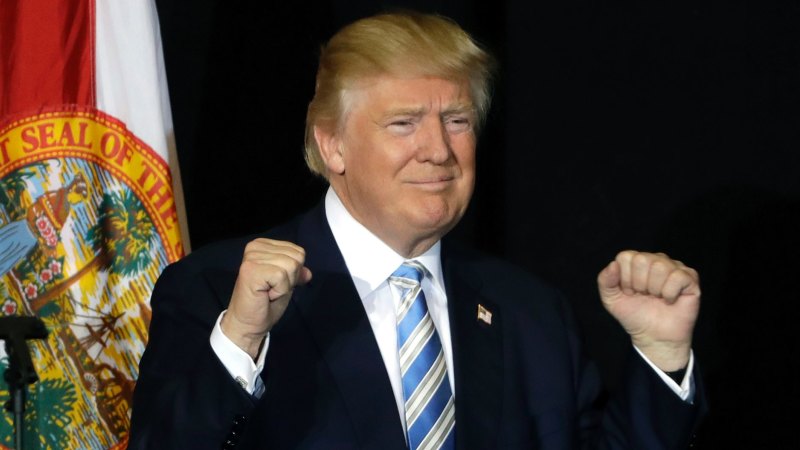 Many working-class Americans, who had traditionally put their faith in the Democratic Party to deliver for them, voted Republican for the first time. In contrast, the Democrats, filled with the false confidence of urban progressives, condescended to call the working-class voter base uneducated and deplorable.
 The courts have ruled against the Government's ability to implement the clear democratic will of the people. Meanwhile, Remainers disparage those who voted for Brexit as uneducated and uninformed, tricked by a campaign of deceit, and voting against their supposed best interest. They show an absolute inability to accept that maybe, just maybe, the majority is not on their side.
 Instead of focusing all of management's attention on helping the victims' families, assisting traumatised staff and co-operating with the authorities, company executives were talking about how much they should pay themselves.
 The fact that Mr Bassani is complaining is a good thing. It means he feels like he is being punished, which is precisely the point of his sentence.
 So at the moment, the federal Liberal Party is what it is and Malcolm Turnbull is its leader. Given that many Australians would be hard-pressed to identify a single achievement of the PM's first year in office, other than breaking an election promise not to increase taxes on superannuation, the fact that according to the latest polling the Coalition is only four points behind Labor is no mean feat.
 Now Bill Leak, an Australian cartoonist, is in the firing line for a cartoon depicting the importance of parental responsibility in indigenous communities. Leak is being investigated by Australia's so-called Human Rights Commission. The cartoon in question depicts an indigenous police officer, presenting a child to his father. He says: "You'll have to sit down and talk to your son about personal responsibility." The indigenous parent responds: "Yeah righto, what's his name then?" The notion that parents in indigenous communities must take more responsibility for their children is not particularly controversial — it's a point often made by indigenous leaders such as Noel Pearson and Warren Mundine. Mundine, who is also a former national president in the Australian Labor Party, has
 Last week, Senator James Paterson suggested that the painting, currently on loan to the Royal Academy of Arts in London, should be sold to the highest bidder in order to help with our national debt.
 It's a fundamental human right — which is also vital to the proper operation of a functioning liberal democracy — that is breached whenever the state places restrictions upon it.
 Canberrans only have to look south to see what a union-dominated government looks like.
 Australia's modern incarnation was defined by British colonisation. As former Australian prime minister Tony Abbott put it last week, during a discussion of Anglo-Australian trade relations at the UK Conservative Party conference, "Once, you exported people to Australia, of course ... chosen by the finest British judges". Today, Australia and the UK continue to have particularly strong ties in intelligence and international relations, but the UK's decision to join the European Economic Community in 1973 put a strain on our close friendship.
 On the long flight over to London I have the opportunity to read Arthur Brooks' masterful Conservative Heart. Brooks contrasts Europe's lost mojo to aspirational developing countries. In India people are agile and innovative — moving to shanty towns desperately looking for opportunities to create a better world for themselves and their children. In Europe, the energy is lacking. The best days are behind them. They have accepted their slow slide to mediocrity.
 Last Wednesday the Queensland Supreme Court rejected a frivolous legal challenge mounted by green group Coast and Country concerning a coal mine near Alpha, in central Queensland. The green group argued that the burning of coal in export destinations such as India would create carbon emissions, and these emissions needed to be considered by the State Government when granting approvals.
 Tori and Bea are the owners of Crate Speciality Coffee cafe in Heidelberg Heights, Melbourne. In response to customer demand they recently applied to their local council, Banyule Council, to increase the cafe's seating from 15 to 30 people and extend its opening hours to 9pm on Thursdays, Fridays and Saturdays. If their application had been successful, Tori and Bea would have had to hire more staff. But it wasn't successful. The council rejected Tori and Bea's application as a result of a single anonymous objection from a member of the public. That's right. Because one person objected, the application was refused. According to the council, "the proposal needed to balance economic opportunities and amenity impacts". And apparently, according in Heidelberg Heights, one single anonymous objection can tip the scales against economic opportunity.