Showing posts with label Innovation and Entrepreneurship. Show all posts

Thursday, January 23, 2020

We'll Not Prosper In A World Tied By Red Tape

While the wider Australian economy struggles under excessive regulatory burden and lack of ­opportunity, the Canberra swamp charges ahead as a perpetual growth machine.

According to Deloitte Access Economics's latest quarterly business outlook released on Monday, Australia continues to suffer the triple threat of drought, a downturn in housing construction, and low confidence among consumers and business.

According to the ­report, Australia is "locked into slow growth" with an outlook ­described as "comfortably treading water rather than roaring into recovery".

Claims about the robustness of the economy do not stand up to scrutiny.  Even Josh Frydenberg in The Australian on Wednesday pointed to an International ­Monetary Fund report showing only "tentative signs of improved market sentiment" and recent data showing unemployment has fallen to the still high rate of 5.2 per cent.  Conditions are sluggish and the federal government is not doing enough to improve productivity.

But while Australia's private sector is living "in the slow lane" and "productivity growth has been as dead as a doornail", Deloitte ­reserved special praise for the ­nation's apparent economic leader, the ACT.

"Canberra is defying the ­national downturn, continuing the drive which has seen it record its largest ever share of the nat­ional economy.  Job growth is healthy and lower interest rates are loosening the noose on family budgets," noted the paper's lead author, Chris Richardson.

Data published by the Australian Bureau of Statistics in Nov­em­ber reveals what is so unique about the ACT.  Last year "public administration and safety" — which refers to most public sector activities but doesn't include education and health — accounted for about 28 per cent of the ACT's economic activity alone.  Nationally, public administration and safety accounts for about 5.7 per cent of the Australian economy.

Success for Canberra is based on a business model of regulatory and bureaucratic expansion.  A paper last year by a team of ­researchers at the Mercatus Centre of the George Mason Univer­sity in the US and RMIT in Melbourne found that the number of regulatory restrictions in Australia increased from about 2000 in the late 1970s to 95,000 in 2015, and in that time has ­become substantially more complex and wordy.

Government agencies have been given broad powers and discretion to administer this regulatory expansion, which in turn leads to further calls for red tape.  This month the Australian Communications and Media Authority ­released a discussion paper on ­impartiality and conflicts of interest in news broadcasting.  Having taken the initiative to identify the problem, it now assumes the ­responsibility for solving it.  This will undoubtedly mean more powers for bureaucrats and more regulatory burden for commercial broadcasters.

Notably, the public broad­casters — another intractable part of the swamp — were explicitly excluded from the scope of the ACMA's review.

The expansion of regulation is further facilitated by former politicians who, on retirement from parliament, rarely cease being members of the permanent political class.

In the past 12 months, former ministers Julie Bishop and Christopher Pyne have come under criticism for taking jobs closely connected to their former port­folios.  For many, this confirms the view that there is a revolving door between the corridors of power in parliament and the lobby and consultancy industry.

This system has many benefits for firms such as Deloitte, which benefits directly from bureaucratic expansion.  Between 2007 and 2017, the annual collective value of government consulting contracts between the federal ­government and the big four ­accounting firms — Deloitte, PricewaterhouseCoopers, Ernst & Young and KPMG — increased from $44m to $453m.  The total in that period amounted to $3.4bn.

But economic success for Canberra, which is contingent on the proliferation of big government, necessarily comes at the expense of the rest of the country, which must contend with more regulations and red tape.

The consequences for this model are plaguing the Australian economy.  For instance, private sector investment has sunk to 10.9 per cent of gross domestic product, which is lower than the levels experienced during the hostile Whitlam years.  The rates for small businesses ­exiting the economy are at historic highs.

Redefining economic success to mean the size of the public sector is a recipe for disaster in the real economy.

Australians already understand the problem of red tape.  Polling by Dynata of 1016 Australians last month found 64 per cent of Australians agreed with the statement that "unelected bureaucrats have too much control over our lives".  The same poll found 58 per cent of ­respondents believe Australia has too much red tape.

Red tape is the largest barrier to economic opportunity and prosperity in Australia.  My research estimates red tape reduces economic output by $176bn a year, the equivalent to 10 per cent of GDP.

You could say that this makes red tape Australia's largest ­industry.

Challenging this status quo and cutting red tape and lowering taxes will lead to significant economic benefits for all of us.  The US under the Trump administration, by adopting red tape ­reduction programs such as the one-in, two-out model for new rules, has lifted the US out of its sluggish Obama era "recovery".

Relying on the bureaucracy to generate economic growth will only feed the beast that is already strangling the private sector.  Draining the swamp will mean that more Australians can reach their potential and unleash prosperity in the Australian economy.

Friday, December 20, 2019

Automating The Big State Will Need More Than Computers

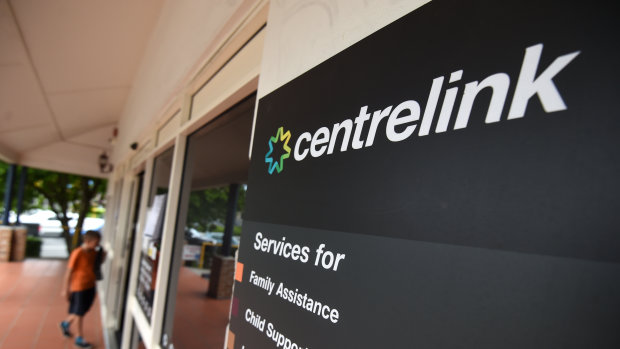
Robodebt — the automated Centrelink debt issuance program that was found invalid by a federal court last month — is not just an embarrassment for the government.  It is the first truly twenty-first century administrative policy debacle.

Australian governments and regulators increasingly want to automate public administrative processes and regulatory compliance, taking advantage of new generations of technologies like artificial intelligence and blockchain to provide better services and controls with lower bureaucratic costs.  There are good reasons for this.  But our would-be reformers will need to study how robodebt went wrong if they want to get automation right.

The robodebt program (officially described as a new online compliance intervention system) was established in 2016 to automate the monitoring and enforcement of welfare fraud.  Robodebt compared an individual's historical Centrelink payments with their averaged historical income (according to tax returns held by the Australian Taxation Office).  If the Centrelink recipient had earned more money than they were entitled to under Centrelink rules, then the system automatically issued a debt notice.

That was how it was supposed to work.  In practice robodebt was poorly designed, sending out notices when no debt actually existed.  Around 20 per cent of debts issued were eventually waived or reduced.  The fact that those who bore the brunt of these errors had limited financial resources to contest their debts contributed to robodebt's cruelty.  In November, the federal court declared that debts calculated using the income average approach had not been validly made, and the government has now abandoned the approach.

Automation in government has a lot of promise, and a lot of advocates.  Urban planners are increasingly using AI to predict and affect transport flows.  The Australian Senate is inquiring into the use of technology for regulatory compliance ("regtech") particularly in the finance sector.  Some regulatory frameworks are so byzantine that regulated firms have to use frontier technologies just to meet bare compliance rules:  Australia's adoption of the Basel II capital accords led to major changes in IT systems.  And the open banking standards being developed by CSIRO's Data61 promise deeper technological integration between private and public sectors.

Regulatory compliance costs can be incredibly high.  I have estimated that red tape costs the economy around 11 per cent of GDP in foregone output.  The cost of public administration to the taxpayer is considerably more.  Anything that lowers these costs is desirable.

But robodebt shows us how attempts to reduce the cost of administration and regulatory compliance can be harmful when done incompetently.  The reason is built into the modern philosophy of government.

Economists distinguish between administrative regimes governed by discretion and those governed by rules.  The prototypical example here is monetary policy.  Rules-based monetary policies, where central banks are required to meet targets fixed in advance, are less flexible (as the RBA, which has consistently failed to meet its inflation target is keenly aware) but at the same time provide a lot more certainty to the economy.  And while discretionary regimes are flexible, they also vest a lot of power in unelected bureaucrats and regulators, which comes at the cost of democratic legitimacy.

Automation in government is possible when we have clear rules that can be automated.  If we are going to build administrative and compliance processes into code, we need to be very specific about what those processes actually are.  But since the sharp growth of the regulatory state in the 1980s governments have increasingly relied less on rules and more on discretion.  ASIC's shrinks-in-the-boardroom approach to corporate governance is almost a parody of the discretionary style.

The program of automating public administration is therefore a massive task of converting — or at least adapting — decades of built up discretionary systems into rules-based ones.  This was where robodebt fell over.  Before robodebt, individual human bureaucrats had to manually process welfare compliance, which gave them some discretion to second-guess whether debt notices should be sent.  Automating the process removed that discretion.

The move from discretion to rules is, to be clear, a task very much worth doing.  Discretionary administration feeds economic uncertainty, and ultimately lowers economic growth.  We have a historically unique opportunity to reduce the regulatory burden and reassert democratic control over the non-democratic regulatory empires that have been building up.

Of course, public administration-by-algorithm is only as effective (or fair, or just, or efficient) as those who write the algorithm build it to be.  There's a lot of discussion at the moment in technology circles about AI bias.  But biased or counterproductive administrative systems are not a new problem.  Even the best-intentioned regulations can be harmful if poorly designed, or if bureaucrats decide to use discretion in their interest rather than the public interest.

Robodebt failed because of an incompetent attempt to change a discretionary system to a rules-based system, which was then compounded by political disregard for the effect of policy on welfare recipients.  But robodebt is also a warning for the rest of government.  The benefits of technology for public administration won't be quickly or easily realised.

Because when we talk about public sector automation, we're not just talking about a technical upgrade.  We're talking about an overhaul of the regulatory state itself.

Tuesday, July 16, 2019

Why Is NSW Fining Farmers Under Laws That No Longer Exist?

The New South Wales government must grant an amnesty to all farmers who are being prosecuted under laws which no longer exist.

They are facing huge fines of up to half a million dollars for clearing vegetation on their own land and the threat of additional fines of up to $13,000 a day are also reportedly being directed toward farmers who refuse to answer questions from the Office of Environment and Heritage.

According to Webb & Boland solicitor Brendan Moylan, farmers are being targeted by the OEH for actions taken under now repealed legislation.  Moylan has worked with many farmers who "had they waited for the law to change, their actions would have been legal under the new legislation."

Moylan has told Ben Fordham's listeners of the chilling realities faced by farmers who have gone years without an income due to the drought and now face bankrupting fines:  "When you're sitting in your clients shed putting the rifle away ... trying to help him go inside away from the firearms cabinet, there's something inherently wrong with the way that we're approaching this issue."

Native vegetation laws are a thorn in the side of farmers trying to run their business and make ends meet.  Farmers must obtain a permit to clear trees and scrub on their own private land, and are required to set aside large amounts of their land to be locked away from future clearing.  This red tape has decimated farm stock because many farmers cannot properly manage invasive native vegetation.  The result is an undermining of productivity, made worse by drought conditions, resulting in higher food prices, lower land value, and a loss of income to farmers, their families and local communities.

Adding insult to injury are the associated costs of maintaining land to government specifications.  Landowners bear the full cost of removing weeds and controlling feral animals, for example.  Every minute spent on complying with red tape is a minute less to spend on the farm doing productive work.

Dictating what farmers can and cannot do with their own land is a clear violation of property rights.  Farmers should be free to clear land for crops and grazing without having to jump through bureaucratic hurdles and give up sovereignty over their own property.  Agriculture regulation has grown to such a large extent that it is questionable whether farmers truly still have private property.  It is government ownership and control by stealth.

At a minimum, farmers should be compensated for the income forgone due to compliance with native vegetation laws.  This would force the government to take the cost of their regulation more seriously instead of burdening those who can least afford it.

Recent outcry about the rate of land clearing from inner city activists completely overlooks the realities faced by people in the bush.  The idea that activists living in their concrete inner suburbs care more about the land than multi-generational farmers who have poured their lives into the land is insulting.  Farmers know best how to allocate the use of their property and are more than aware of the benefits of environmentally sustainable practices.

The reason for volatility to land clearing rates is farmers are acting under uncertain regulatory conditions.  When the laws are relaxed, as they have recently been in NSW, farmers have an opportunity clean up their land that went by the weigh side under a stricter regime.  On the other hand, if farmers are fearful of increased restriction, they will naturally want to exercise their property rights while they can.

The NSW government recognised that previous vegetation laws were unfair to farmers and too restrictive on land rights when they repealed the law.  This was a very welcomed move.  However, it is unjust for the government to be prosecuting farmers for violation of laws that have now been repealed and were recognised as unfair.

As farmers struggle to make ends meet in a time of drought and low product prices, the government needs to cut red tape across the board in the agriculture sector.  This would allow farmers to continue to work the land producing the country's food, clothes, and grain, all of which the Sydney-based bureaucrats who are prosecuting farmers rely on.

Friday, June 21, 2019

Intrusions That Just Drive Us Crazy

Maybe ASIC is trying to do to big public companies what the AFL is well on the way to doing to the game of Australian football.

Numerous and never-ending changes to the rules, ever-shifting interpretations of those rules by an ever-increasing number of umpires and tribunals, and now the introduction of "Behavioural Awareness Officers" patrolling through the crowd is a recipe for the destruction of a once-great game.

Players, coaches and most importantly AFL supporters now spend more time talking about the latest hare-brained scheme from AFL House than they do talking about the game of football.  And this doesn't take account of the fact that it's impossible to attend a game of AFL football without being preached at by the AFL about climate change, identity politics or whatever is the latest bien pensant topic that's taken the fancy of the administrators.  To know what Australia could look like in a decade one only needs to study the AFL today.

The decision of the Australian Securities and Investments Commission to have an ASIC-appointed psychologist sit in on the board meetings of ASX companies to monitor corporate "culture" is exactly the sort of stunt the AFL would try if ever the AFL were let anywhere near a public company.  As was reported in this newspaper, at least one leading company had described what ASIC is doing as "stupid" because directors would of course change how they act while the psychologist was present.  Stupid is one word for what ASIC is doing.  Other words to describe ASIC's behaviour are dangerous and Orwellian.

It is gravely disturbing that it appears ASIC is trying to keep what it is doing a secret.  It is not known to how many companies and to which companies ASIC has sent psychologists, although Qantas, Woolworths and AMP have been named.  When the psychologist engaged by ASIC was asked by The Australian Financial Review to comment on her work she replied that she couldn't because of confidentiality agreements.  There are so many problems with what ASIC is attempting to do that it is hard to to know where to begin.  Not the least of difficulties raised by having a government-enforced psychologist being in attendance at a board meeting is that even if they say nothing, their mere presence ultimately makes them complicit in the board's decisions.  Blurring the line between the decisions of a private organisation and the actions of a government regulator violates the rule of law.  Furthermore, it's impossible to have democratic and transparent oversight of ASIC if they're conducting such operations in secret.

What ASIC is doing is exactly the sort of behaviour by regulators that is documented by my research paper released last month.  Regulatory Dark Matter — How unaccountable regulators subvert democracy by imposing red tape without transparency examines how ASIC, the Australian Prudential Regulation Authority, the Australian Competition and Consumer Commission, the Australian Accounting Standards Board, and the Auditing and Assurance Standards Board used not just legislation, but regulation, and quasi-regulation in the form of guidelines, policies and directives to increase the burden of red tape on business.

One measure of red tape, which is simple but admittedly broad-brush is the number of pages of legislation regulating an activity or an organisation.  The above-mentioned five regulatory agencies are empowered to act under a total of 9520 pages of legislation.  But these agencies also have powers under another 75,970 pages of regulations and quasi-regulations.  For example, ASIC operates under 2900 pages of legislation, in addition to 2750 pages of regulations and explanatory documents and another 8260 pages of regulatory guidance.  Presumably somewhere in nearly 14,000 pages of law and regulations, ASIC has divined that it has the power to send psychological commissars to sit in judgment of the actions of company directors.

It's absolutely no wonder that red tape costs the Australian economy $176 billion a year and is now the nation's largest industry.  And surely red tape is part of the explanation why new private sector investment in the economy is lower than during even the Whitlam era.

Sending in psychologists to company board meetings might make the staff of ASIC feel better about themselves, but it won't do anything to solve this country's red tape crisis.

Friday, May 31, 2019

The Higher Pay Paradox

In Australia, nothing is certain except death, taxes and increases to the minimum wage.  And while understandably welcome news for workers, each wage hike tightens the noose around the necks of small business and millions of Australian job-seekers.

Minimum wage cases have become a Groundhog Day-like ritual.  Every year, the Australian Council of Trade Unions demands an unreasonably high increase, employer groups like the Australian Chamber of Commerce and Industry lob in a low-ball offer, and the Fair Work Commission orders an increase somewhere around the middle.

So it was this year, where the ACTU asked for a six per cent increase, ACCI countered with 1.8 per cent, and the FWC settled on three per cent rise, taking the minimum wage to $740.80 per week.

This represents an increase on what is already the second-highest hourly minimum wage in the developed world, second only to France.  Bear in mind also that for most workers, the statutory minimum is much higher, because of Australia's unique system of 122 industrial awards covering various occupations.  These awards cover around 2.3 million Australian workers, 92 per cent of whom receive pay in excess of the statutory minimum.

Now, the Sally McManus's of the world will tell you that this is a good thing and, if anything, Australia's wages aren't high enough.

But the reality is that Australia's industrial relations system is, for one thing, a massive handbrake on the economy.  In fact, "restrictive labour regulations" has ranked as the number one most problematic factor in doing business in Australia almost every year over the past decade or so, according to the World Economic Forum.

Small businesses are hit particularly hard.  Because they can't afford the lawyers and consultants needed to do "sweetheart deals" with unions, they don't have the ability to "bargain out" of various wage premiums.  That's why, for example, a big chain like KFC pays a relatively low rate to its staff on Sundays, while the charcoal chicken place down the road is forced to pay the full penalty rate.

Bigger businesses also have greater ability to automate.  Coles and Woolworths, for example, can simply sack workers and replace them with checkout machines.  The local grocery store does not.

And that brings us to another group hit hard by Australia's annual wage spectacle — the low-paid and unskilled, the very people who our industrial relations system is designed to protect.

The experience in the US — where various states and cities have been experimenting with steeper minimum wages for years — suggests that the costs actually outweigh the benefits.  One study estimates that thanks to wage hikes in Seattle, the average low-wage worker lost US$125 a month as businesses have cut their payrolls, put off new hiring, reduced hours and let workers go.

Elsewhere in California, there have been reports that municipalities which have recently raised their minimum wage have seen almost one in 10 restaurants shut their doors.  Obviously, that is bad news for both business owners and workers.

But the biggest losers of our industrial relations system are Australia's most disadvantaged:  The over 700,000 unemployed looking for work, the around 1.1 million underemployed looking for more work, and the countless others who do not even show up on unemployment statistics because they have simply given up looking.

For these vulnerable Australians, each minimum wage hike is a slap in the face that puts gainful employment further out of reach.  It is a devastating barrier to work that entrenches poverty.

Think of it this way:  The Newstart Allowance — the income source of many jobless Australians — currently works out to around seven dollars an hour, averaged across the Australian working week.  As of 1 July, the hourly minimum wage will be $19.40.

This means that an unemployed person cannot get a job unless they find an employer able to afford the statutory minimum.  They cannot, as a matter of law, accept a job that pays, say, $13 or $14 or $15 an hour — lower than the minimum wage but higher than the dole.

This costs unemployed Australians more than just much-needed income.  For many, it means missing out on that "foot in the door" job-wise that is often so critical.  It means going without the non-economic benefits of work that so many of us take for granted:  Creating value, building skills, enjoying earned success.

The Fair Work Commission should keep that in mind the next time it contemplates yet another wage hike, depriving millions of Australians of the dignity of work.

Tuesday, May 14, 2019

Latest First Home Buyers Policy Is Shortsighted And Likely To Create A Bubble

The now-bipartisan bank deposit subsidy scheme is a shortsighted policy which, far from solving the problem of housing affordability, is likely to push up house prices and make housing less accessible for first time buyers.

Under the proposed scheme, first proposed by the government, a limited number of eligible households earning up to $200,000 would require just a 5 per cent house deposit instead of the usual 20 per cent.

The remaining 15 per cent would be underwritten by the government-run National Housing and Finance Investment Commission.

The apparent objective is to encourage more lending, which is the exact opposite to what the government has been promoting for the past three years.

The banking royal commission, the $6 billion bank tax, and the Banking Executive and Accountability Regime have combined to cause a nationwide credit crunch.  Interest-only lending, for example, has dropped from 30 per cent of all new owner-occupier home loans five years ago to just 7 per cent today.

Apparently unhappy with the results of its own regulation, both major parties seem to now want taxpayers to underwrite the provision of home loans to the riskiest of potential borrowers — those who cannot save more than 5 per cent of their wanted property value.

The moral hazard problem is ­obvious.

Usually when banks provide a loan to those with less than a 20 per cent deposit, they require the borrower to purchase lenders mortgage insurance, or LMI.

This protects the bank in the event the borrower misses mortgage repayments, which internalises the risk to the borrower and the lender.

Now banks will be able to do away with this responsible lending practice knowing full well that taxpayers will meet the costs of unmet mortgage payments.

This is precisely the financial logic that led to the growth of subprime mortgage lending in the United States in the lead up to the Global Financial Crisis.  Indeed, the government appears to be setting up Australia's very own version of Fannie Mae and Freddie Mac.

The home loan subsidy scheme likewise will also not necessarily encourage its own objective, though whether the size of the program is big enough to make major difference to prices remains to be seen.

In announcing the scheme, Prime Minister Scott Morrison said the policy will allow more young Australians to buy their first home.  However, the effect is likely to be the opposite.

Government subsidies increase demand which in turn causes prices to rise, not fall.

Scott Morrison recognised this fact this when he criticised Labor's child care policy to expand subsidies to parents on the same grounds.

But here's the thing:  If it really wanted to improve housing affordability, the government would address structural supply and demand issues in the market.

On the supply of housing, developers are hamstrung by red tape and over-regulation.

A 2018 report by the Reserve Bank of Australia, for example, found that restrictive zoning rules add $489,000 to the cost of the average Sydney home, compared with $324,000 in Melbourne.

Meanwhile, on the demand side, two decades of rapid population growth underpinned by mass migration have pushed many Australians out of the housing market, or to the outer suburbs, or into tiny apartments.

By ignoring these issues both Labor and the Coalition have decided that propping up house prices for existing homeowners is a better strategy than expanding that base through greater home ownership.

This is the opposite direction to that taken by the founder of the Liberal Party, and Australia's longest-serving prime minister, Sir Robert Menzies.

Menzies understood that home ownership was a key conduit that connected the past, the present and the future.  Homeowners are conservative by disposition.  They oppose radical change, have an interest in preserving the amenity of their local area, and have a stake in the nation's future.

Australians will not support capitalism if they are not capitalists themselves, and they will not support a society based on the sanctity of ­private property if they do not own property.

The government can cry that Labor is "socialist" all they want, but in a decade's time the Liberals may realise that they have helped create the conditions in which socialism can flourish.

Friday, March 08, 2019

Shorten's Alternative IR Reality Based On Trumpian Alternative Facts

This week the Prime Minister got his wish.

On Tuesday, in his speech to The Australian Financial Review Business Summit, Scott Morrison wanted to get the media talking about the risk of a recession under a Labor government.

On Wednesday we learned Australia was actually already in a recession, at least as measured by economic growth per head.

The release of the national accounts revealed growth per head of population had declined for the previous two quarters, ie the country was in a "per capita" recession.  Somehow this result came as shock to the Reserve Bank — but it shouldn't have.  Anyone who's spoken to a small-business owner in the last few months could have predicted such an outcome.

In response to the national accounts, the Coalition claimed that a statistical measure few people have ever heard of, "real net national disposable income", was a better indicator of the economic conditions.  (Hopefully the government won't try to put that on car bumper stickers.)  Meanwhile others tried to claim that declining growth per head wasn't really a "real" recession.

What's been ignored over the last few days amidst all the talk of a recession is the statement from the Australian Bureau of Statistics that government expenditure "was the main contributor to growth in the quarter, due to increases in social benefits to households from continued government spending on disability, health and aged care services".

In other words, over the last three months the main reason the economy got bigger was because the government got bigger.

The irony for Scott Morrison and the Treasurer Josh Frydenberg, although of course they can't acknowledge it, is that if the economy is in a recession their chances of being re-elected actually increase.  The Coalition consistently outpolls Labor on the question of which party is better at managing the economy.

Something else that's been largely ignored is the speech to the Summit from the leader of the opposition, Bill Shorten the day after the PM.  Shorten said he wanted to make the next election "a referendum on wages".  What he didn't say was how higher wages were going to be paid for — but then again perhaps in the context of the $200 billion in extra taxes he's promised to implement if Labor wins office, he didn't need to.

Under the Coalition, economic growth has been fuelled by higher government spending and higher taxes — which is presumably how Labor believes it can fund its promise of higher wages.

The problem with Labor's approach is that so many of the assumptions upon which their policies are based are wrong.

For example, Shorten claimed "inequality is at historic highs".  This simply isn't true.  The high taxing and high spending of successive Labor and Coalition governments has resulted in the country creating a welfare state in which inequality is low and declining.

Then from the opposition leader came the statement that stagnant wages are "proof that leaving it to the market leaves Australians struck in working poverty".  Wages and conditions in this country have hardly anything to do with the free market.  According to the World Economic Forum, Australia ranks 105 out of 140 countries for flexibility of wage determination and 100 for "flexibility of hiring and firing workers".

Similarly Shorten said that many Australians are "trapped" in labour hire arrangements and that "insecure" work and rates of casualisation have increased.  Again this is simply not true.

In his submission to the Victorian government's inquiry to the On-Demand Workforce, John Lloyd, a former Commonwealth Public Service Commissioner, pointed that a recent CSIRO study found that 88 per cent of people working as freelancers would continue freelancing even if they were offered a full-time position.

The percentage of the workforce in a "casual" employment arrangement, defined as one without entitlements, but which may be compensated by "casual leave loading", in 1997 was 24.18 per cent.  In recent years the share of casuals in the workforce peaked in 2004 at 25.72 per cent, and in 2017 that share was 25.08 per cent.

Unfortunately for the future of Australia's prosperity, it increasingly looks like Labor has created its industrial relations according to an alternative reality based on Trump-style alternative facts.

Friday, November 23, 2018

Daniel Andrews:  A Threat To A Twenty-First Century Economy

Melbourne prides itself on its cafe culture, vibrant laneways, quality restaurants, and marquee sporting events.  This dynamic and cosmopolitan lifestyle that Melburnians enjoy owes much to the rise of flexible business models built around independent contracting and casual work arrangements, but it is under threat from the Andrews government's proposals designed to restrict the sharing economy.

These proposals have received little attention, but if implemented would put services like food-delivery, ride-sharing, and letting handyman jobs through Airtasker at risk, for the sake of favouring the union agenda to move all Victorians into the award system.  In particular, new laws would regulate if not eliminate key sections of the sharing economy, further restrict the labour-hire industry, and strike a blow at the hospitality industry through punitive laws covering so-called "wage theft".

Most concerning is the promised inquiry into the "gig economy", with the Premier justifying it with reference to "wages and conditions being offered to workers", a phrase that effectively denies that participants are independent contractors.  Framing the inquiry this way demonstrates the government's opposition to participants enjoying the flexibility that comes with the sharing economy, and suggests any recommendations by the inquiry are pre-ordained.

For example, currently Uber drivers earn money from trips made and control their own hours and conditions.  If the unions get their way, online platforms would be forced to directly employ workers, pay wages and dictate hours.  This would destroy the business model that has revolutionised the way Melburnians move around the city, which created an alternative to the highly regulated taxi industry.  It could also wipe out the food delivery services that are currently enjoyed by hundreds of thousands of busy Victorians, and which have expanded the opportunities for many entrepreneurial cafes and restaurants.

New labour hire laws secured by the government in 2018, set to come into effect next year, will add more red tape to the already beleaguered industry.  The licensing system being introduced was justified by the actions of a few rogue firms, regarding offences which were already illegal.  The issue could have been solved with better enforcement of existing laws, without burdening the industry with licensing fees and compliance costs.  The regulations line up with the anti-labour hire views of the ACTU's Sally McManus who has said:  "you've got to take away the incentive for employers to use labour hire".

Daniel Andrews has also promised to crack down on employers who are underpaying wages and entitlements with the introduction of new "wage theft" laws.  The eagerness to create new laws instead of enforcing the existing laws is concerning, especially when they would duplicate and possibly conflict with laws administered by the Fair Work Commission.

After its restoration by the Rudd/Gillard government the award system small businesses have to grapple with is fantastically complex, which makes errors virtually inevitable.  While employees should be able to get back any underpayments, there should be no in-built assumption that every breach is "theft".  Threatening jail time and massive fines will further deter employers from taking on the casual or part-time employees needed to service the needs of our twenty-four-hour city.  If we make compliance too hard and too risky for our world-class hospitality sector, Melbourne's hard-earned reputation will be lost.

Should the Andrews government be returned, we will see reduced opportunities for those thousands of Victorians who have shown a preference to work flexibly and as independently as possible.  The Liberal Party should put on record their opposition to these measures, and develop policy that will undo long-standing barriers to employment.  Rather than buckling to the union movement's self-interested demands, we need to foster a business environment that encourages innovation and opportunity and meets the needs of the lifestyle wanted by Victorians.

Thursday, June 21, 2018

Where Have All Our Entrepreneurs Gone?

Australia is has experienced a gigantic fall in entrepreneurship.  Between 2003-05 and 2012-14, small business start-ups — as a percentage of all small businesses — declined by 40 per cent.  This decline is substantially larger decline than in comparable countries, including the United States, United Kingdom, Canada, and Germany.

This is a key finding from my new book, which explores the importance of mitigating the effects of an ageing population on entrepreneurial activity.

Entrepreneurship is the backbone of a successful, growing, and innovative economy.  New firms challenge existing practices and ensure jobs and investment are allocated to their most worthwhile ventures.  This raises living standards by delivering new products, creating jobs, and boosting wages.

This is what Joseph A. Schumpeter called creative destruction:  the "process of industrial mutation ... that incessantly revolutionizes the economic structure from within, incessantly destroying the old one, incessantly creating a new one".

Australia, along with other Western developed nations, has experienced a downturn in entrepreneurship that will only worsen over time as the population ages.  The percentage of Australians in the key entrepreneurial age group, those aged 25-to-49, has declined from 38 per cent to 35 per cent and will reach 30 per cent by 2065.

While government cannot do much to prevent an ageing population, it is becoming increasingly essential that policymakers take steps to reinvigorate entrepreneurial activity.  I have found that there would be 250,000 more businesses in Australia today if business growth had continued pace with pre-Global Financial Crisis levels.

A key barrier to entrepreneurship is a nation's level of taxation.  Australia now has the third highest company tax rate in the OECD, following substantial reductions years of reductions in the United Kingdom and the United States.  High taxes reduce available savings for entrepreneurial state-ups and reduces the potential rewards of starting a business.

Australia's businesses face some of the highest corporate taxes in the world.  The World Economic Forum ranks Australia at 102nd out of 138 countries for total tax burden, including corporate, labour and profit taxes.  The United States has reduced their corporate tax from 35 per cent to 21 per cent, Britain is already at 19 per cent, and, in our region, Singapore's rate is 17 per cent, and Hong Kong is 16.5 per cent.

Capital investment is extremely mobile.  Australia's relatively high corporate tax rate reduces potential returns, meaning fewer businesses and fewer jobs.  Business investment has already shrunk to 12 per cent of GDP and is projected by Macquarie Wealth Management to fall to 9 per cent.

Red tape is holding back Australia's entrepreneurial spirit.  I have calculated that red tape costs $176 billion a year in lost economic opportunity, an average of $19,300 for each Australian household.

According to the World Economic Forum, Australia is ranked 80 out of 137 countries for the burden of regulation.  The OECD ranks Australia at 20 out of 47 countries for barriers to entrepreneurship, which considers the regulatory burdens such as licences and protection of incumbents.  We have more barriers than similar liberal market economies such as New Zealand, Canada, and the United Kingdom.

Red tape prevents entrepreneurs from experimenting with new ideas, technologies and starting new businesses.  Existing firms are often sympathetic to red tape, as they have adjusted to the cost and it prevents competitors from entering the market.

We should adopt the principle of "permissionless innovation", as described by George Mason University's Adam Thierer.  That is, removing the regulatory barriers for those who are willing to take risk and innovate, and only stepping in if a new product will bring serious harm or when it causes problems.

Australia's inflexible labour market regulation is also damaging entrepreneurship by making it difficult to hire additional staff.  The World Economic Forum ranks Australia at 110th out of 137 countries for hiring and firing practices, and 109th out of 137 countries for flexibility of wage determination.

If we are to maintain our prosperity, Australia must unshackle our entrepreneurs by cutting red tape, reforming industrial relations, and lowering taxes.

Tuesday, May 08, 2018

Scott Morrison Must Show He Has Real Courage

When a politician promises to give you something in 10 years, you can bet it'll never happen.

Promised tax cuts in Tuesday night's Budget won't match expectations, and a Coalition government — which, after almost five years in office, should be renowned for getting government out of our lives — will have overseen further growth in government expenditure and debt.

At 7.30pm, Treasurer Scott Morrison will rise to deliver the 2018-2019 Commonwealth Budget.

Every Budget is important.  They are crucial to marking out a government's agenda.  But this one is particularly important because it will be the last to be delivered before the Australian people deliver their verdict on the Turnbull Government.

As we've come to expect, much of the broad policy agenda behind this year's Budget is already on the public record.

We know there will be personal income tax cuts.  We know there will be infrastructure spending, much of it in the great state of Victoria.  We know spending will continue to increase about 2 per cent.  We know there will be a deficit of about $20 billion.  And we know there is a debt bomb that keeps getting bigger every year, currently headed for an eye-watering $684 billion by 2027-28.

What we don't yet have a clear idea about is the detail.

And for the 2018-19 Budget, the disappointment will be in the detail.

The tax cuts will be small.  At the weekend, Morrison said:  "I'm not going to pretend these are going to be mammoth tax cuts or anything like that."  Which means they'll be way down the other end of the scale.  More mouse than mammoth.  They will also be phased in over 10 years.  Which means they won't actually happen.

Promising a cut to the top marginal tax rate somewhere in the mid-2020s is worthless.  In order for you to believe that will actually come about, you've got to believe the Coalition will remain in power until 2029 to see out its 10-year plan.  That would make the life of the Abbott/Turnbull Government longer than that of the Howard government.

Another aspect of the tax plan is that any cuts in the early years will be focused on low- to middle- income earners.  It's likely we'll see an increase in the tax-free threshold, an increase in the low-income tax offset and a reduction in the rate applied to those earning $87,000 or less (and/or a slight increase in the income threshold for those brackets).

These are not the ingredients of thoughtful tax reform.  Any serious attempt at reforming Australia's income tax system needs to confront some hard truths about who pays tax and who doesn't.

Here are a few:

  1. The top 1 per cent of income earners are responsible for 17 per cent of the total personal income tax revenue;
  2. The top 10 per cent of income earners are responsible for 45 per cent of the total personal income tax revenue;  and
  3. The bottom 50 per cent of Australian households have an effective personal income tax rate of 0 per cent.

The reason these inconvenient facts are important is obvious:  you can't give tax relief to people who don't pay any tax.  Cutting taxes only matters for people who actually have the money they have earned confiscated by the ATO.

Tax relief at the bottom end of the income scale also pushes the burden of government on to fewer people.  This problem is amplified in an environment such as the one we find ourselves in now, where government expenditure continues to increase.

A tax rate of 45 per cent at any point on the income scale is preposterous.

Spending almost half your time working for the government and not your family, friends or local community, or yourself is absurd.

A serious tax reform agenda would confront that issue head on, in full recognition these are people who take risks, invest, create jobs and help to build a flourishing and prosperous economy.

They are also the people who would flock back to the Coalition, after the infamous superannuation betrayal, if the top marginal tax rate was cut from 45 per cent to, say, 40 per cent.  They would still be enormous contributors to government coffers but they would have a reason to be invested in this government.

None of the discussion about tax reform is to deflect or ignore the painful cost-of-living pressures that, in particular, those on lower incomes struggle with every day.

My analysis has revealed that over the past 20 years, house prices have increased by 330 per cent, childcare costs have soared by 310 per cent, electricity prices have increased by 215 per cent and insurance is up 209 per cent.

Every household in the country is dealing with those out-of-control costs and, especially in an environment of low wages growth, governments are not doing enough to cut the red tape that keeps pushing prices higher.  In fact, if the government slashed red tape in Australia, the economy would grow by about the same amount as the government takes in personal income tax — every year.

There is a clear way forward for the government but doing the right thing sometimes takes an enormous amount of courage.

US president Ronald Reagan cut company and personal income taxes before the 1984 presidential election and went on to win 49 out of 50 states.  Imagine what might be possible if Prime Minister Malcolm Turnbull and Mr Morrison surprised us all on Tuesday night.

Wednesday, July 26, 2017

Too Much Red Tape Could Keep Drones Grounded

From spraying pastures to collecting crop data, drones are set to revolutionise Australian agriculture.  However, despite this enormous potential, calls for more regulation threaten to keep drones firmly on the ground.

The application of drones in agriculture alone is estimated to be worth an enormous $32 billion globally.  How can Australian regulators make sure we embrace this revolution?

No one knows the future of drones and how they will be used.  That's why entrepreneurs must be allowed to experiment and test.  But this entrepreneurial process requires a flexible regulatory system.  What's more, business investors will only be attracted to a regulatory environment that is both certain and stable.

Nevertheless, it appears Australia is about to backflip on last year's decision to relax drone regulations.  For farmers this is a worrying sign because the changes had freed them to fly drones under 25kg for use on private land.

Since the announcement, however, there have been increasing calls to reverse the changes and impose more red tape.  Indeed, we now have a senate inquiry and an upcoming safety review.  This regulatory uncertainty threatens the early stage investments necessary for our domestic drone industry to flourish.

Australia must resist the temptation to stifle development based on fear.  There have been no incidents of collisions with manned aircraft in Australia.  And we still have strict rules preventing drones flying over 120m or within 5km of airports.

It's also unclear why privacy concerns cannot be solved using existing legal principles such as harassment and trespass.

Regulators should cut even more red tape on drones.  They should consider reviewing rules restricting autonomous flight and flying drones beyond visual line of sight.  The agricultural drones of tomorrow may be autonomous ones, flying over vast properties, monitoring crop yields and detecting early plant diseases.

Australia is in a prime position to embrace drone technology.  But this will only happen if we encourage entrepreneurship and investment through flexible and certain drone regulations.

Friday, May 19, 2017

Drone Regulations Stifle Business And Innovation With New Technology

The Senate committee examining Australian drone regulations has had just one public hearing and is months away from its December reporting date.

Nevertheless, last week they wrote to the Minister for Infrastructure and Transport, Darren Chester, strongly encouraging immediate action and "strengthened regulation" for drone technology.

Calls for more red tape and restrictions on drones is not only premature, but represents a disturbing precautionary shift in Australia's drone debate.

The $100 billion global drone market holds remarkable opportunity to boost productivity for our key primary industries.  Farmers can better manage their land in difficult or cumbersome roles by collecting data to improve yields.  Miners use drones for exploration and to assist with environmental management over long distances.

But Australia risks passing up these opportunities if we over-regulate today.

Regulatory tensions for drones have existed in Australia for more than a decade.  But in September last year, the Civil Aviation Safety Authority updated the rules to reflect the growth of the industry.

The most contentious change was the scrapping of licences and expensive training for flying low-risk drones under 2kg.  Farmers working on their own private land were also given more freedom to use drones under 25kg.

Despite the disastrous picture being painted, these new regulations won't realise the dystopian images of blackened out skies.

Hobbyists and small commercial operations still face strict rules.  There are prohibitions on flight within 5km of airports, higher than 120m in controlled airspace, and within 30m of people.  Breaching these rules incurs fines of $9000.

CASA clearly recognises the trade-off between safety and flexibility.  It also understands that regulation should be risk-based, and that it's simply unviable to heavily regulate all uses.

Encouraging drone deregulation is particularly important because businesses looking to adopt drones are keenly observing the regulatory environment globally.  For instance, when Domino's chose to fly its first pizza last year in New Zealand, it said the country had "the most forward-thinking aviation regulations".

Good drone regulations give freedom to entrepreneurs to experiment and test.

Poor policy, in contrast, emerges when safety is considered inherently more important than growth.  This is known as the precautionary principle:  where regulations underweigh the potential benefits to human lives that new technology brings.

The precautionary principle has existed for centuries.  The 19th century "red flag laws" for cars in Britain are a prime example.  The laws instituted a speed limit of 2mph in the city, and required a person to walk in front of all self-propelled vehicles waving flags.  Of course this meant pedestrians were safe, but the enormous potential of cars was clearly delayed.

There's a threat that Australia is heading down this same precautionary path for drones.

On Page 9 of the only public hearing in Brisbane, a temporary ban on the sale of drones is discussed.  Such an extreme outcome is unlikely.

But we are seeing the precautionary principle in action:  regulation based on potential harm, not demonstrated harm.  It is telling that the committee has called for immediate action because of "mounting fears of the real prospect of a serious accident".

According to the Australian Transport Safety Bureau there have been no collisions between drones and manned aircraft.

Drone incidents are inevitable, as is inherent in all transport options.  But policymakers must weigh up trying to prevent these accidents with leaving room for entrepreneurs and hobbyists to realise opportunities.

Viewing the regulation debate from this optimistic perspective suggests regulators should consider further deregulation.

Maybe we should allow entrepreneurs to fly more than one drone at a time.

What about autonomous flight?  Or even the prospect of enabling drones to be flown beyond visual line of sight.  Companies such as Australia Post and Telstra have sought exclusions from regulations so they can test and trial new uses drones.

Regulatory challenges for drones will keep arising, but where possible the private sector should take a lead role.

The deregulation of the drone industry should not just be defended, but encouraged.  Further, relaxed rules certainly shouldn't be reversed based solely on hypothetical fears and prospects.

Sunday, February 01, 2015

Better to Ask For Forgiveness, Not Permission

Permissionless Innovation:  The continuing case for Comprehensive Technological Freedom
by Adam Thierer
Mercatus Center at George Mason University, 2014, 106 pages

The abundance of information available to us today would have been unimaginable to people living only twenty years ago.  Previous generations found themselves bound to a restricted group of information channels and distribution networks, which were often slow and with limited scope.  With the emergence of the internet everything changed.  Suddenly, the flow of information and the methods of exchange became seemingly limitless.

Through recent developments in mobile technologies ― laptops, tablets, and wearable digital devices such as glasses and watches ― the movement and exchange of ideas and knowledge has made information even more accessible and ubiquitous.

Underpinning this great leap forward has been the ability for anyone to participate.  The internet is a global platform which gives a high school student in Siberia or a university drop-out in Shepparton the same opportunity to experiment and create as a professor at Stanford University.

According to Adam Thierer, the author of a new book Permissionless Innovation:  The Continuing Case for Comprehensive Technological Freedom, it is this freedom to experiment and invent without asking permission that has underpinned the economic benefits of the internet.

Thierer argues:  "Permissionless innovation is about the creativity of the human mind to run wild in its inherent curiosity and inventiveness.  In a word, permissionless innovation is about freedom."  The key outcome of the freedom that results from permissionless innovation is not anarchy but openness.  It creates an environment in which entrepreneurs and innovators can flourish by removing the barriers to entry.

However, new technologies are disruptive.  Faced with the upheaval that they can cause, modern policy debates continue to revolve around one key question:  "Must the creators of new technologies seek the blessing of public officials before they develop and deploy their innovations?"

On the one side, those that espouse the importance of the precautionary principle argue that new inventions and technologies must be curtailed until an inventor can prove beyond all doubt that their inventions will not harm individuals, the environment, or damage cultural or social norms.

The other disposition, "permissionless innovation", refers to the notion that "experimentation with new technologies and business models should generally be allowed by default".

Of course, history is riddled with examples of regulators being precautious by default.  In the mid-nineteenth century, the British Parliament passed the "Red Flag Law" as part of the 1865 Locomotive Act, designed to limit the dangers caused by the development of the automobile.

As a result, early cars were restricted to a speed limit of two miles an hour in towns and cities and four miles on the open road.  The law also stipulated that three people were required to operate any automobile:  one to drive, one to stoke the engine, and one to walk fifty meters in front with a red flag or lantern and warn pedestrians of the approaching danger.

These laws, which were introduced because of heavy lobbying from stage coach and railroad companies, stifled the growth of the industry in Britain.  But in Germany and the United States (except the state of Vermont), who did not have any such laws, the industry flourished.  Britain finally repealed this law in 1896.

More recently, the regulatory reaction to the use of commercial drones, 3D printing, and autonomous cars offer interesting case studies which Thierer examines in an accessible fashion.  But it is tempting to think about restrictions that continue to be applied to GM crops and the onerous regulations that add millions of dollars to the cost of developing new pharmaceutical drugs and medications ― a cost that is inevitably passed onto the consumer.

The internet itself is the most poignant example of the dangers of the precautionary principle in practice.  Although permissionless innovation has been a pivotal element of the success of the platform in transforming our lives, few people realise that it was not always the default position.

Indeed, for many years commercial use of the internet was not allowed.  Drawing from the 1982 MIT handbook for the use of ARPAnet, the predecessor of the internet, Thierer highlights original restrictions that were placed on the technology:

It is considered illegal to use the ARPAnet for anything which is not in direct support of government business ... Sending electronic mail over the ARPAnet for commercial profit or political purposes is both anti-social and illegal.  By sending such messages, you can offend people, and it is possible to get MIT in serious trouble with the government agencies which manage the ARPAnet.

As a result of those restrictions, the internet remained, in its formative years, a closed club for selected university professors, government bureaucrats, and some engineers.  Although these restrictions were no doubt placed on the web with the best of intentions, in hindsight the opportunity costs of such restrictions were immense.

Once these restrictions were removed and commercial use was allowed to proceed, social and economic opportunities became apparent and the internet developed beyond most people's wildest expectations.

Yet despite the technological progress that has resulted from innovators who did not seek prior approval from regulatory bodies and the beneficial results that have emerged from the internet, social networks, and mobile technologies, there remains a prevalent disposition to be overly cautious about new things.  Groups that espouse this way of thinking seek to beat all imagined harms out of any new development before they will allow it to proceed, with intensely harmful consequences for innovation and economic growth.

Of course, that does not mean that problems that develop from disruptive technologies should be ignored.  But regulation should remain a last resort.  Bottom-up adjustment and integration will always be more effective than top-down bureaucratic controls.

Furthermore, Thierer argues that torts, common law, and class actions provide mechanisms that hold firms introducing potentially dangerous products in to the market accountable.  These instruments create an incentive for firms to make better, safer products over time.

The limited regulation placed on the internet has shown what entrepreneurs can achieve when government gets out of the way.  Thierer makes a powerful case for slow-moving and risk-averse regulators to take heed of this lesson and ensure the freedom to innovate without permission becomes the default position, rather than the rare exception.

Sunday, January 26, 2014

How Entrepreneurs Fuel Creative Destruction

Knowledge and Power:  The Information Theory of Capitalism and How it is Rovolutionizing our World
by George Gilder
Regnery Publishing, 2013, 400 pages

In 1983, Peter Drucker wrote "it is [Joseph] Schumpeter who will shape the thinking and inform the questions on economic policy for the rest of this century, if not the next thirty or fifty years".  George Gilder would agree.  Gilder is one of the world's most influential supply-side economists.  His previous works, particularly his 1993 book The Spirit of Enterprise, have drawn heavily on Schumpeter's theory of creative destruction.  Much of his latest offering, Knowledge and Power:  The Information Theory of Capitalism and how it is Revolutionizing Our World, does the same.

Knowledge and Power is a challenging and powerful critique of standard blackboard economics and its focus on order and equilibrium.  Gilder's project is to map information theory ― with its emphasis on dynamism and disorder ― onto traditional economic interest like competition and markets.  The key, for Gilder, is to create an economics of information with human creativity and new technology the central element of progression and human development.

According to Schumpeter, creative destruction is the process of industrial mutation "that incessantly revolutionises the economic structure from within, incessantly destroying the old one, incessantly creating a new one", a process that is "the essential fact about capitalism".  In the same way that Schumpeter's entrepreneurs are creators of opportunities, Gilder's entrepreneurs are creators of knowledge ― the central actors in a capitalist system he sees as an information system.  In unveiling his information theory of capitalism, Gilder argues that in an economy "everything useful or interesting depends on [these] agents of change".

Information theory was created by Claude Samuels and Alan Turning in the 1930s and is a branch of applied mathematics relating to the qualification and transmission of information.  Pertaining to economics, Gilder sees the key insight of information theory to be the grading of information by the degree it is unexpected ― i.e. its entropy.  He sees the entrepreneur as an agent of change constantly involved in the process of trial and error in an attempt to create surprising, high-entropy information that will disrupt the status quo and generate growth beyond what was previously available.

A symbolic example of this process is Qualcomm, a corporation encountered by Gilder in 1993 through his work as a journalist for Forbes ASAP.  At the time, Qualcomm was working on a method of information transfer to overcome the restrictions imposed by the physical carrying capacity of an analogue connection.  Seemingly restricted by the laws of physics, Qualcomm was able to overcome these issues by moving into a system of code-based wireless transfer.  In his book The Qualcomm Equation, Dave Mock notes that Gilder's early support of the company's investigations gave it credence and helped it win investment ― to the ire of those "who contended that code-based wireless was a complete fraud with the subversive intention of mulcting billions of dollars from unsuspecting investors".

Qualcomm's transformation of the "physical scarcity of 'bandwidth' into an abundance of wireless communications" is a clear example of the creative destructive power of entrepreneurs.  By "transcending the laws of physics by the laws of information" the company was able to act as a key force for economic growth.

Through their discovery of new knowledge, Gilder places the creative entrepreneur at the very centre of economic growth and progress.  He contends a key failure of economics thus far has been its inability to grasp this idea, a failure that has seen economists "council governments to attend to everything except what matters most:  the environment for innovation".

Through his application of information theory, Gilder also stresses the important role a small but effective government can play.  As a low-entropy actor, government ― through the protection of trade routes, reasonable regulations, stable currencies, modest taxation and reliable protection of property rights ― provides the predictable base from which high-entropy activities can occur.  By providing a clear and stable channel for the movement of information, limited and steady government provides the environment for innovation by private citizens and operators.  Unfortunately, Gilder finds this is seldom the case.  In most countries, government is the most common source of destructive noise that interrupts the channel from which entrepreneurs discern information.  As a centripetal power, government's attempts to impose order distract entrepreneurs from their purpose, while obtaining by fiat the entrepreneur's rightful profits.

Which brings us to the central thesis of Gilder's book:  that power must not be taken away from those with the knowledge to use it effectively.  That is, successful entrepreneurs who have created businesses and driven the growth of jobs, markets and wealth ― and all the positive societal benefits that stem from them ― have thus proven themselves the most capable to reinvest the profits.  Capitalism succeeds, therefore, not with a system of sticks and carrots, but by linking knowledge and power.

To illustrate this point, Gilder tells the story of Warren Buffet and his concern that his personal tax rate of seventeen per cent was unfairly lower than that of his secretary.  Leaving aside the validity of this statement, and his failure to take into consideration corporate income tax and other levies, Gilder argues that this is exactly the way it should be as wealth can only grow when those who created it remain in control of it.  As such capitalism prevails because it assigns the exacting task of re-investment "to people like Warren Buffet rather than to people like his secretary".

With this key point, Gilder also articulates the clear misunderstanding that underpins socialism.  By attempting to seize capital and redistribute it to the population, socialism disconnects knowledge and power.  This, according to Gilder is the great secret of capitalism, "detached from a capitalist, there is no capital".

At the heart of Gilder's thesis is the refreshingly optimistic idea that growth and development are truly unlimited.  As the real source of wealth is knowledge, new players and technologies will always emerge that will disrupt old paradigms and continue to drive prosperity.  Gilder's writing can sometimes take a conversational tone as he moves from topic to topic whilst picking-up and dropping threads of thought in a somewhat arbitrary fashion.  But the text represents a new and interesting take on the school of economics and an impassioned defence of the morality and power of the free market.

Friday, May 31, 2013

The End Of Ideology

The Revenge of Geography:  What the map tells us about coming conflicts and the battle against fate
by Robert D. Kaplan
Random House, 2012, 432 pages

The collapse of the Soviet Union invalidated at a stroke the foundational geopolitical models of the Cold War.  The Manichean power struggle between the competing ideologies of liberal democracy and communism had provided an obvious basis for abstracting the vicissitudes of war and diplomacy into an overarching framework.  What emerged from communism's defeat was a more complex and fragmented world.

The academic vacuum was quickly filled by new frameworks, two of which deserve mention.  Francis Fukuyama's The End of History and the Last Man argued that liberal democracy had emerged victorious from the clash of ideologies, and would become the universal creed of a peaceful world, despite the inevitable decades of colour and movement as recalcitrant legacy regimes adapted or were overthrown.  Samuel P. Huntington's The Clash of Civilisations and the Remaking of World Order foresaw a different world, in which cultural conflicts would replace ideological ones, proposing a model of nine competing civilisations to facilitate analysis and prediction of world events.  The latter framework has better stood the test of the intervening years.

In the same period, a third author rose to prominence amongst US national security cognoscenti.  Robert D. Kaplan did not proffer the same impeccable academic credentials as Fukuyama or Huntington, but something arguably more valuable:  experience on the ground.  Kaplan's background is as a foreign correspondent in Soviet-era Eastern Europe and the Middle East, Mengistu's Ethiopia, Afghanistan (where he lived with the mujahidin) and, more recently, as a traveller around the Indian Ocean rim and throughout Asia.

From the 1980s onwards, Kaplan has produced insightful books and essays that marry anecdotal experience with strategic analysis.  His philosophy is that, "A good place to understand the present, and to ask questions about the future, is on the ground, travelling as slowly as possible".  While he has shied away from proposing a holistic Fukuyama/Huntington-style framework, Kaplan has increasingly used historical works of geostrategy (many predating the coining of that term) to add theoretical perspective.

His latest work, The Revenge of Geography:  What the map tells us about coming conflicts and the battle against fate, further advances his evolution from strategically-aware travel writer to empirically-minded geostrategic theorist.  The underpinning premise of the book is that, in our 20th century obsession with ideology as a driver of human conflict and our post-Cold War euphoria, we lost sight of the importance of geography as a field of study and a basis for understanding and predicting the course of human events.

The Revenge of Geography is divided into three distinct parts.  The first is a survey of "a group of decidedly unfashionable thinkers, who push up hard against the notion that geography no longer matters".  These largely twentieth century thinkers espoused various models for analysing geostrategic power based on geographical reality, coining terms like "Heartland" (the ex-Soviet heart of the Eurasian continent) and "Rimland" (attached maritime-facing regions such as Europe, coastal China and the Indian subcontinent).

A balance of power between the controller of the Heartland, and the Rimland powers, is seen as desirable, and can be facilitated by the exercise of maritime power by the United States, protected as it is by two oceans.

As population centres spread, "the earth's political geography increasingly constitutes a closed, claustrophobic system", increasing the likelihood of conflict on the Eurasian landmass even as technological developments increase the severity of its consequences.

While some of these intellectual models appear overly simplistic, and some of the attempts to retrofit them to history can feel contrived, they have the merit of facilitating practical analysis of overwhelmingly complex events.  Kaplan himself recognises that some of his chosen thinkers can appear too crudely deterministic in their approach, seemingly denying the impact of human agency on world affairs.  He acknowledges this point repeatedly, and encourages a less rigid interpretation.  For instance, "we delude ourselves in believing that we are completely in control of our destinies;  rather, [geostrategic scholar] Braudel leads us to the attendant realisation that the more we are aware of our limits, the more power we have to affect outcomes within them".

Having provided the reader with a set of theoretical frameworks, the second part of Kaplan's book purports to apply them to the contemporary map, in chapters focussing respectively on:  (i) Europe and the concept of Mitteleuropa;  (ii) the rationale for Russia's obsession with hegemony beyond its western and south-western borders and its paranoia over its south-east;  (iii) the geography and history underpinning a resurgent and increasingly assertive China;  (iv) India's potential and the geographical challenges that may constrain it;  (v) the significance of Iran to Islam and the prospects of a revitalised Persian cultural imperialism;  and (vi) the divergence of Turkey from the West even as its economic and political power grows.

This is Kaplan at his best:  melding historical and geographical facts, geostrategic theory and anecdotal observation into a compelling overview of the present state and likely future scenarios of each significant region.

For instance, Russia is a largely flat landmass with no natural defences and a consequent history of invasion across its exposed land borders:  hence, it seeks security through hegemonic control of buffer states in Central Asia and Central Europe, even as it fears Chinese demographic expansion into resource-rich but lightly populated Siberia.

China's transition to projecting hard power mainly through its emerging blue water navy may lead it to become "benevolent in the way of other maritime nations and empires in history, such as Venice, Great Britain and the United States;  that is, it should be concerned mainly with the free movement of trade and the preservation of a peaceful maritime system".  But in the short to medium term, as an "immature power, obsessed with the territorial humiliations of the past two centuries", it "thinks territorially, like an insecure land power" about the sea, viewing Japan, Taiwan, South Korea, the Philippines and Indonesia as "archipelagic extensions of the Chinese landmass".

Successful rule over the Indian subcontinent, or at least the Gangean plain, has historically conformed to a geographical logic which drives Indian policy elites to regard Pakistan, Afghanistan, Nepal, Bhutan and Bangladesh as part of their immediate sphere of influence.

True, Kaplan's collection of regional perspectives lacks the holistic elegance of the overarching theoretical framework of a Fukuyama or Huntington.  His attempt to leverage the theoretical survey in the first part of the book as an analytical toolkit for the second is, at times, contrived;  at times, half-hearted;  occasionally forgotten.  He frequently calls upon the historical consciousness of a people to explain its strategic obsessions, without always linking the borders of the historical empires for which they supposedly yearn to the discipline of the relief map.  Geography's revenge seems far from complete.

Yet his willingness to put theory aside and explore idiosyncratic detail, rather than trying to stuff all facts into the straitjacket of theory, lends his analysis greater accuracy at the cost of simplicity.  For the geostrategic practitioner, if not the academic, this is the right trade-off.  It may not yield an easily applicable theoretical framework, but in a world with a finite number of regions, the most significant of which Kaplan analyses in detail, this shortcoming is not critical.  And the macro-thesis is still vindicated:  geography is a far more significant factor in human affairs than most contemporary commentators suggest.

The third and shortest part of Kaplan's book is a reflection on the geostrategic priorities of the United States.  Kaplan argues that "America faces three primary geopolitical dilemmas:  a chaotic Eurasian heartland in the Middle East, a rising and assertive Chinese superpower, and a state in deep trouble in Mexico".  While the first two of these are addressed earlier in the book, it is the significance of the Mexican issue that Kaplan seeks to emphasise in its conclusion.

Kaplan shares in part the view of Huntington, who, in his last book, Who Are We?  The challenges to America's national identity, argued that cosmopolitan US policy elites were wilfully blind to the largest post-Cold War geostrategic issue facing the country.  "Truly," Kaplan writes, "Mexico registers far less in the elite imagination than does Israel or China, or India even.  Yet Mexico could affect America's destiny more than any of those countries."

Yet where Huntington's book was a call for a more muscular assertion of traditional American nationalism, based on the British and Protestant values of the founding fathers, Kaplan's experiences as a long time traveller in the world's worst regions make him both more pessimistic about the sustainability of the cultural status quo, and less deferential towards national borders, which, as he has learnt abroad, are frequently porous and ephemeral.

Kaplan describes "northern Mexico's ongoing, undeclared, substantially unreported, and undeniable unification with the Southwestern United States, and consequent separation from the rest of Mexico", while noting the appalling levels of violence in the northern Mexican narco-states.  But, drawing on Arnold J. Toynbee's analysis of the failure of Roman "limes", Kaplan concludes that attempts to build an impervious, static boundary between two contiguous states with such different levels of affluence are doomed to failure by the reality imposed by the map, and the incentives of traders and adventurers to breach the border.

Thus Kaplan believes that "... the preservation of American nationalism to the degree that would satisfy Huntington is unachievable unless Mexico reaches First World status". In his view, the optimal policy is helping northern Mexico eliminate its drug cartels, using US military power allied with Mexican forces, and helping to build an affluent Mexican state.

This is not a means to preserve the border, so much as to render its obsolescence less threatening as a larger North American polity emerges.  It is a bold and radical vision, but one which seems daily more realistic compared with the long-term preservation of the late Professor Huntington's America.

All three parts of Kaplan's book are an intellectual treat for the geostrategic dilettante.  For those of us not willing to risk our lives in the badlands of the AfPak border, Kaplan is as good a substitute for experience on the ground as one can acquire.  A careful reading yields insights that add deeper context and meaning to the frenetic daily news cycle of world affairs.

Kaplan exhorts, "Just as Stephen Dedalus affirms 'his significance as a conscious rational animal', in effect resisting fate, we must never give in to geography, but must fundamentally be aware of it in our quest for a better world".  Kaplan's book is a good place to start.