Friday, August 10, 2018

Government Snooping Will Not Stop At The Banks

Here's an idea.  In order to improve the confidence of the public in democracy, the federal government should embed "Taxpayer Compliance Officers" in cabinet and the Expenditure Review Committee.  The role of such officers would be three-fold.  They would have a general responsibility for ensuring taxpayers' money was spent efficiently and not wasted, they would ensure compliance with all the processes and procedures appropriate to good government, and finally the officers would be proactive and would be charged with stopping bad policies before they were implemented.

Taxpayer Compliance Officers would sit in on cabinet meetings, pop in to the Prime Minister's office to ask question the PM and the PM's staff, and would read and vet all cabinet submissions.  Officers would be embedded for up to three months at a time and would be regularly rotated to avoid them getting too close to ministers and public servants.  Once a year, Taxpayer Compliance Officers would issue a public report detailing how the government was complying with its responsibilities to taxpayers.

Without doubt such a scheme would be immensely popular.  Taxpayer Compliance Officers would help satisfy the public's demand that government be more accountable and transparent, and the scheme would go a long way to demonstrating to the community that governments were complying with the social licence to operate.  The involvement of Taxpayer Compliance Officers in every aspect and at every level of government decision-making would ensure that government acted in the best interests of the community and not simply for the benefit of whichever political party happened to be in power at the time.

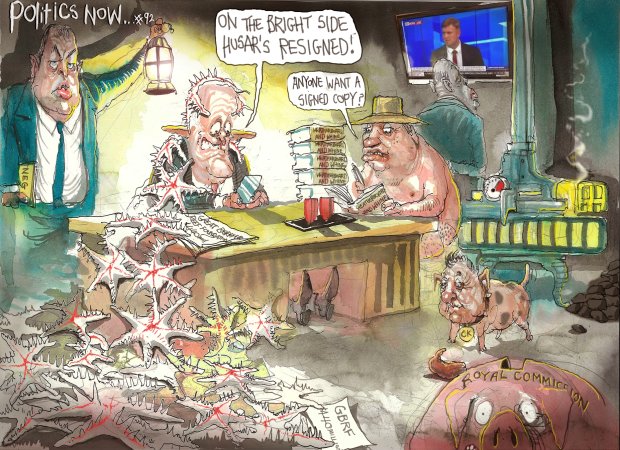
If Taxpayer Compliance Officers were already in place, they'd be able to explain to the public the process for the decision of the federal government to give nearly half a billion dollars of taxpayers' funds to an organisation with six full-time staff, the Great Barrier Reef Foundation, without a tender process and without the Foundation even asking for the money.

Such a scheme would overturn most of the principles of representative and parliamentary democracy, but many would argue that the public's trust in politicians is now so low that drastic times call for drastic measures.

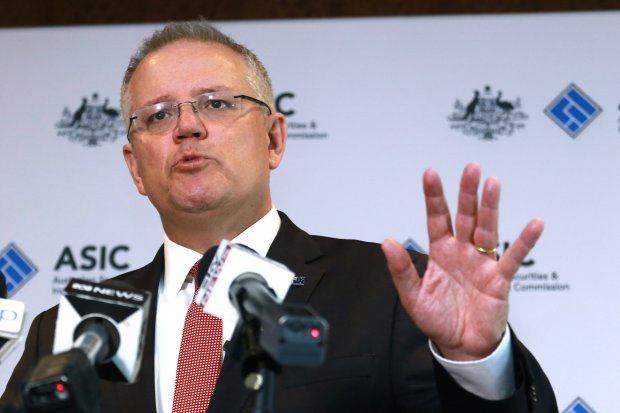
Taxpayer Compliance Officers sounds like a radical idea — but it isn't.  On Tuesday, the Turnbull government announced such a scheme to apply to the private sector, whereby staff from the Australian Securities and Investments Commission will be embedded in banks.  At his press conference when the Treasurer, Scott Morrison, was questioned about the scheme — "Treasurer, can I ask, if it will work, can it be extended to other sectors, like mining companies, insurance companies, super funds you heard are problematic too?" — the Treasurer replied:  "We have an open mind on all of these things.  Take the Banking Executive Accountability Regime.  I've flagged very clearly that we're keen to extend that into other sectors once we've stood up the model and it's working ..."

The Banking Executive Accountability Regime gives the government the power to decide who financial institutions can employ in executive positions and how much those executives can be paid.

What will be left of the free enterprise system in Australia after the Coalition government is finished with it is anyone's guess.

If the Coalition is going to start embedding government officials to monitor and control non-government organisations, there's no reason why the Coalition should stop at the banks.  Before Labor rushes to embrace the government's plan for the banks, it might stop to consider its reaction to the Office of the Australian Building and Construction Commissioner embedding its staff in the headquarters of the Construction, Forestry, Maritime, Mining and Energy Union or the Australian Prudential Regulation Authority embedding its staff in the offices of industry superannuation funds.

In these pages yesterday, Professor Rodney Maddock of the Monash Business School outlined in convincing and persuasive detail why the federal government is so bad.  As he wrote in relation to the government's regulation of the finance sector — "There are fundamental issues of privacy, of private ownership, of the freedom to run a business, and of responsibility for the outcomes, which need to be discussed."

Unfortunately that's a discussion the Turnbull government at the moment either doesn't understand, or doesn't want to have — or both.

Wednesday, August 08, 2018

Free Speech Now Comes With Security Costs?

La Trobe University is encouraging censorious behaviour by charging special security fees for an event with commentator Bettina Arndt hosted by the campus Liberal club.

Security fees create a heckler's veto:  the charge empowers the people who disagree to organise the biggest, most aggressive and therefore costliest protest they can muster.  The Liberal club could ultimately be forced to cancel the event if security fees become too high.  In the end, the censors win, free speech loses.

The charging of security fees to the Liberal club is a form of victim blaming.  The disturbance is not expected to come from within event, it could only come from outside.  It makes no sense to punish Liberal students for the danger imposed by others.

There is also a serious inconsistency issue which reveals a university closed to opposing perspectives.  If La Trobe does not charge left-wing groups for speakers then why are they charging Liberal students for a speaker?  Is it because they are seeking to discourage and punish certain speech?

This inconsistency would be unconstitutional in the United States, where the Supreme Court has declared that the content of speech is not justification for additional costs.

This is why the University of California at Berkeley paid hundreds of thousands of dollars to secure events with provocateur Milo Yiannopoulos and conservative Ben Shapiro.  The university may not have liked their speech, but they declared themselves open to free debate and put money behind their principles.

La Trobe appears to be taking a very different approach to free debate.  Revealingly, the security bill came after La Trobe withdrew their initial ban of Arndt.

Arndt has become a controversial figure.  She is a sex therapist who writes and speaks about gender relations and domestic violence.  These are difficult topics — particularly when you question the dominant narrative about campus sexual harassment and assault, as Arndt does.

In an era of intellectual monoculture on campus, Arndt is precisely the type of person that our universities should be welcoming.  She helps provide the missing counterpoint to the left wing perspective, the missing debate that is necessary for effective teaching and research.

John Stuart Mill wrote that "He who knows only his own side of the case knows little of that".  You have no reason to prefer your own ideas if you do not understand the opposing perspective.  Nor is it good enough to "hear the opinions of adversaries from his own teachers," Mill says, "He must be able to hear them from persons who actually believe them ... he must know them in their most plausible and persuasive form".

The near ban and disgraceful security fees are not the first sign that something is wrong at La Trobe.  My free speech on campus research has revealed La Trobe's serious lack of viewpoint diversity.

My Free Speech on Campus Audit awarded La Trobe a "Red" ranking for policies that forbid "unintentional ... offence" and language that causes "emotional injury".  It is impossible to freely explore controversial ideas without potentially causing unintentional offence or perhaps even emotional distress.  It is difficult to hear ideas that are different from your own — but being intellectually challenged is the entire purpose of a university.

The on-campus experience reflects these policies.  Students have told me about lecturers encouraging them "to pursue social justice causes" — instead of teaching all ideas and letting students reach their own conclusions.  They have also reported that academics mock conservatives in class and give them lower marks.

In response classical liberal and conservative students are pretending to hold a left-wing perspective or say nothing.  "Generally, I don't talk in class on political issues," one student, who has seen their conservative classmates harassed by tutors, said.

In the past, La Trobe was well known for their radicalism, protests, and differing ideas.  Today, the university is suffering from the left wing monoculture disease.  La Trobe has a responsibility to not shy away from debate and encourage the voicing of a range of perspectives.

Wednesday, August 01, 2018

The Kids Aren't All Left

Last week Elin Ersson, a 21-year-old Swedish student, halted the deportation of an Afghan asylum seeker from Sweden by refusing to sit down on a plane.

Not shy of the publicity, Ersson broadcast the affair live on Facebook and subsequently received substantial international media attention.  The usual suspects have held Ersson up as a hero and a welcome sign of growing activism.

Emma Taylor-Collins, a PhD candidate at the University of Birmingham, wrote an article in The Conversation with the headline "Nearly 60 per cent of young children are social justice activists — a future full of Elin Erssons".

Let's unpack this claim.  Are 60 per cent of young people really "social justice activists"?

The answer is a resounding no.

Taylor-Collins cites a 2017 survey by Ipsos MORI, commissioned by the British government, which found that 58 per cent of 10-20-year-olds have taken part in "practical action in the service of others to create positive change".  What Taylor-Collins does not mention is that this included a range of activities including "fundraising, campaigning, tutoring/mentoring and giving time to charity".

Taylor-Collins gives the example of the "children [who] participated in the recent protests during Trump's visit to London".  But the survey does not capture the ideological tinge of their social action, nor does it exclusively relate to political change.  They could have been campaigning for the Conservative Party or fundraising to help a pro-Brexit campaign.  They could have been volunteering for a homeless charity or mentoring a disadvantaged kid.  None of this makes them a social justice warrior.

There are broader problems in claiming that all young people are like Elin Erssons.

Youth activism tends to be confined to the higher socioeconomic social strata.  Ipsos MORI found that the most affluent young Brits are 60 per cent more likely to participate in regular social action.  Youth activism is, therefore, most representative of elite social justice values, not broader views held by young people.

When people like Ersson speak out — which they, of course, are welcome to do — they are only speaking for the views of a segment of their generation.  They are not speaking for the thousands of young people attending Jordan Peterson events across the world, quietly listening to David Rubin podcasts between their lectures, or coming to Generation Liberty events across Australia.  Although it is true that young people tend to veer to the left, they are not exclusively of one mindset and are more open to different ideas than usually claimed.

The Growing Freedom survey found that 60 per cent of young Australians are interested in starting their own business one day — indicating less of a social justice tinge and more of an aspirational self-starter generation.  The survey also found that the majority of young Australians (52 per cent) who have entered the workforce support smaller government, fewer services and lower taxes.  This finding shows that once young people have skin in the game, that is, they are paying taxes themselves, their social justice views diminish.

The Conversation, which is Melbourne based and primarily funded by the Victorian government and universities, uses the tagline "Academic rigour, journalistic flair".  Taylor-Collins's article certainly shows a lot of flair (read:  nonsense);  it doesn't show much academic rigour.

Friday, July 27, 2018

Fairfax Finally Learning How The Free Market Works

Yesterday Fairfax Media and Nine Entertainment announced that they will merge, forming a media organisation worth $4.2 billion.

The new organisation will be known as Nine.

This merger has only been able to occur due to the recent media market liberalisation by the Coalition Government in abolishing the two-out-of-three rule.  Which prevented a media organisation from owning local newspapers, television stations and radio stations in a single city.

This reform was strongly opposed by many on the left, as well as Labor and the Greens.

When the rule came into place, then Treasurer Paul Keating famously said media organisations could be princes of print and queens of the screen, but not both.

Without long advocated media reform.  Fairfax would have been left languishing, unable to expand its business into other areas of the media.

With the explosion of Google, Facebook, Netflix and other globally competitive organisations that have given consumers a digestible way to consume their media, to argue anything other than market liberalisation of the media now looks petulant and backward.

Fairfax's news arm is clearly in need of a restructure.  Domain contributes over a third of Fairfax's total earnings.  Nine CEO Hugh Marks has admitted that Stan and Domain, not the news section, was the primary motivator for the merger.

Fairfax mastheads have been subject to what seems like yearly cuts and staff restructure, resulting in strikes by the media union, and the inevitable complaints about a lack of media diversity.

News of the merger triggered the same tired argument by many on the left about the lack of political "media diversity".  The Canberra Press Gallery already leans to the left.  Many journalists and writers at the NewsCorp daily's and The Australian lean to the left, even though its political offerings tend to be centre right.  Have you ever seen a conservative or classical liberal opinion piece at The Guardian recently?  Of course not.

The merger also triggered claims about the merger being a threat to democracy.  Last time I checked democracy was about an individual's choice and freedom.  If declining revenues are anything to go by, Australians are voting with their feet.

There has never been more media proliferation and diversity as there is today, to argue anything otherwise is rubbish.  If you are in the market for a one-sided clickbait site that openly leans left, there are multiple news outlets for you.

There was no better example of media introspection after the recent passing of a motion to privatise the ABC at Liberal Party Federal Council, it became one of the most talked about national political issues.  To its credit, the Sydney Morning Herald published an opinion piece by NSW Young Liberal President Harry Stutchbury about why the ABC should be privatised.  It should be assumed that the majority of SMH readers would not agree, but Guardian journalist Amanda Meade was quick to point out that Mr Stutchbury's piece was somehow a sign of a lurch to the right for the masthead.

How ridiculous, that a newspaper would publish an opposing view of a policy debate of national significance is criticised, it is not a sign of a lurch to the right, but the right thing to do.  The Guardian is a private media organisation;  it is within its right to have a singular green left wing view on all public policy issues.  However, speculating and lecturing other media organisations for having viewpoint diversity shows how far from balanced they are.

The elephant in the room on the declining news revenues of Fairfax, that none of its writers want to talk about is the ABC.  It is a $1.1 billion behemoth that provides exactly the same viewpoint and opinion as Fairfax, subsidised by the taxpayer.

With the exception of the Australian Financial Review, they have never quite got their head around it.  Why would a left-wing consumer of news pay for a leaning of journalism they can quite easily get for free over at the ABC?

Ultimately, enabling media organisations to scale to meet the needs of consumers is the right thing to do.  Noise over at the media union calling for the ACCC to block this merger has direct equivalence to the taxi industry calling for Uber to be banned.  The future is here, consumers are digesting all sorts of products, including media, in a way that is most accessible to them.  Learn to deal with it to adapt.

Fairfax, Nine Merger A Win For Media And Consumers

The merger of Fairfax Media and Nine Entertainment is good for media diversity, good for journalists, good for the Australian public, and demonstrates the benefits of the Turnbull government's media reforms.

An unemployed journalist who once worked for a newspaper that's gone out of business isn't doing much to add to media diversity.  That's the reality that those who harken back to the days before the internet, Instagram, and mobile phones fail to grasp.

The journalists' union is wrong.  The Media, Entertainment and Arts Alliance yesterday announced it opposed the merger because supposedly "it harms the ability of an independent media to scrutinise the powerful, threatens the functioning of a healthy democracy [and] undermines ... quality journalism."  The merger is the best opportunity any journalist currently working at Fairfax Media has of keeping their job.  True, it will now be a job at "Nine" not "Fairfax" — but good reportage and good writing will always be read and will always have a market regardless of who's publishing it.  Certainly it's sad to lose the history of a name, but the end of the name "Fairfax Media" is no less sad then when David Syme and Co became a subsidiary of John Fairfax and Sons Ltd in the 1980s.

It was Fairfax Media as a stand-alone company that announced last year it was cutting 115 newsroom staff from The Sydney Morning Herald, The Age, Brisbane Times and WA Today.  A media company's "independence" doesn't guarantee anything, and it definitely doesn't guarantee its survival.  The only media company in Australia guaranteed to survive (for the time being) is the ABC.  The ABC survives because the political retribution it threatens against any political party contemplating reducing its taxpayer funding.  The way that today the ABC board talks of the need for the ABC to continue to exist is reminiscent of how Sir Frank Packer talked in the 1940s of the "birthright" of his magazines to receive access to government-rationed newsprint in preference to his competitors.

If the ABC truly is the much-beloved national institution that its supporters claim it to be, presumably the consumers of the products the ABC provides would happily and voluntarily choose to pay for those products.

The biggest threats to the functioning of democracy in Australia come from what governments do, not from what commercial media companies decide to do.  Defamation laws, legislative restrictions on reporting put in place under the guise of "national security", judge-ordered suppression orders on court proceedings, and provisions such as Section 18C of the Racial Discrimination Act are all the product of government decisions.

The Fairfax/Nine merger is also a win for taxpayers.  It should put to rest, for the time being, the suggestion contemplated last year during the Senate inquiry into the future of public interest journalism that taxpayers should provide financial assistance to bail out ailing newspaper companies.  It's ironic that it is often suggested that one way of ensuring the existence of an "independent" media is to have the government fund it.

The point of the merger is that it will allow the new entity to get new customers, viewers, readers, and listeners in a way that by themselves neither Fairfax or Nine could do.  Of course the merger might not work, and most mergers don't — but a merger is better than the alternative.

The combined Fairfax/Nine with a market capitalisation of around $4 billion will also be of a size better able to compete with the overseas media behemoths.  However to put this into perspective, the market capitalisation of, for example, Netflix is in equivalent terms $216 billion.  Reed Hastings the CEO and co-founder of Netflix owns around 2.5 per cent of the company.  Hastings' net worth is more than the market capitalisation of both Fairfax Media and Nine Entertainment combined.  Apple, Alphabet (the parent company of Google), and Microsoft each have a market capitalisation in Australian dollars of more than $1000 billion ($1 trillion).

Whether any Australian media company will ever be able to compete with the might of such organisations is an open question, but almost certainly the new "Nine" media company will stand a better chance of doing so than Nine and Fairfax standing alone.

Friday, July 20, 2018

Finally, Parliament Can Act On Restoring The Right To Free Speech

There is no right not to be ­offended.  Yet dozens of provisions on the commonwealth statute books make it unlawful or illegal to ­offend.

There is a right to freedom of speech, and each of these laws is an attack on that right.

The existence of these laws is an embarrassment to Australia as a country that holds itself out as a liberal democracy.  As a minimum, from the perspective of the restoration of free speech, every one of these laws should be repealed.

And as luck would have it, a bill that does just that was introduced by NSW Liberal Democratic Party senator David Leyonhjelm just last month.

It's a revealing read.  No doubt readers of this paper will be familiar with perhaps the most famous legislative use of the word "offend" — section 18C of the Racial Discrimination Act 1975 makes it ­unlawful to "offend, insult, humiliate or intimidate" another person on the basis of their "race, colour or national or ethnic origin".

But the Leyonhjelm bill demonstrates that section 18C is not alone.  Far from it.  The bill catalogues more than a dozen provisions that make it unlawful or illegal to offend.

Most people would have no problem removing some of the provisions included in the bill.  Did you know it's unlawful to register a name in respect of a plant variety if the government deems it to be offensive?  Better yet, did you know about the Plant Breeder's Act 1994?  It's not clear how society functioned before 1994.

Under the present Criminal Code Act 1995 you could also find yourself in jail if you use the postal service to "cause offence".

Cause offence?  Until recently I lived in a local government area where the council used the postal service to send me a five-times-a-year magazine called Divercity, which helpfully recorded all the left-wing, virtue-signalling garbage the council was engaged in.

That was pretty offensive.  And why five times a year?  Surely that's enough to make it an aggravated offence.

The removal of other provisions — despite the logic of the argument — is a bit harder to swallow.

But the great thing about the Leyonhjelm bill is that it is con­sistent.  And it progresses a debate that has been raging for some years now.  The argument for ­repealing section 18C is clear ­because the practical consequences of the provision are so well known.

The Australian public has been made aware of the existence of this law through a number of high-profile cases.  And through those examples, Australians have made up their minds about the malevolence at the heart of this provision.

We don't want to see university students such as Alex Wood and Calum Thwaites dragged through secret legal proceedings for sensible commentary about race-based university programs;  we don't want cartoonists such as the late, great Bill Leak hauled ­before a government bureaucrat for making funny cultural observations;  we don't want journalists censored for writing about ­important matters of public policy, which is what happened to ­Andrew Bolt in 2011.

And if it's wrong to make it ­unlawful to offend in the context of the RDA, then it's also wrong elsewhere.  So the challenge is now before federal parliamentarians.

Because the concept of freedom of speech still holds significant rhetorical power and cultural significance, everyone says they are in favour of it.  But in so many cases this is just not true.

If every time you say the words "I'm in favour of freedom of speech" and then follow it up with the word "but", you might be better off admitting you are not in fact in favour of freedom of speech.

It's not yet the most socially ­acceptable thing to admit, but if it's true and you are willing to say it, you might just be in for a much more honest and interesting ­discussion.  So much modern political debate is hamstrung by ­dishonesty.

Evidently, a majority of federal politicians over the years have paid lip service to the principles of free speech while voting for legislation that places restrictions on it.  Parliamentarians have allowed these restrictions to accumulate and, despite appearing in some cases small and innocuous, they should not be ignored.

Our liberties are often put at risk incrementally.  Overnight ­authoritarianism is rare.  Creeping authoritarianism is much more commonplace.  Every one of these provisions is an attack on our ­freedoms.

The parliament ought to use this opportunity to start making inroads into the hundreds of laws that restrict free speech.  As James Spigelman, a former chairman of the ABC, said in his 2012 Human Rights Day Oration, "there is no right not to be offended".

Thursday, July 19, 2018

Sorry Scott, But The GST Fight Isn't Over

It is a safe rule of thumb to assume that whenever a minister or a bureaucrat says "no one will be worse off", that means everyone will be worse off.

For proof of this, consider the so-called GST "reform" proposed by Federal Treasurer Scott Morrison earlier this month.  Morrison's proposal followed the recommendations made by the Productivity Commission to tinker with the formula that underlies the distribution of GST revenue, the already complex process known as "horizontal fiscal equalisation".

The Productivity Commission's recommendations, limited as they were, would have resulted in states like Tasmania and South Australia receiving slightly less than they may have expected to receive in future years under the current system.  Cue the outrage.

South Australian Liberal Treasurer Rob Lucas branded the PC's proposal as "disastrous", while the Tasmanian economist Saul Eslake predicted American style inequalities between the states would develop.  Dismally, the Federal Treasurer considered the PC's option would "move too far away from the 'fair go' principle of HFE, and risk leaving smaller states behind".

In other words, the Productivity Commission's reform, insubstantial as they were, were a bridge too far.  Too many states would be "worse off".

At the core of the federal government's GST proposal is to ensure that no state would be "worse off".  This involves marginal changes to the HFE formula and the introduction of a "relativity floor" to ensure that Western Australia's share of the GST pool does not drop below a certain level again.

In other words, instead of losing $4bn in GST revenue to the other states and territories each year, WA would in the future only lose one or two billion dollars each year.  This has been reported as a big "win" for the West.

But even so, WA's increased share will not come from other states — the federal government will provide a series of funding top ups to ensure that no state's share is lower because of the change.

So in a way, no state will be worse off.  In another, more correct way, every single taxpayer in the country will be worse off, as they are asked to front up the billions of dollars to support this massive increase in federal spending.

Since the states aren't in the position of levying the tax or incurring the debt to support this spending increase, it is unsurprising that the states have generally welcomed this proposal.  This is vertical fiscal imbalance at work — the states depend on the GST to fund their spending activities, but do not answer for how that money is collected in the first place.

The states only incentive is to maximise the amount they collect.  These incentives are enhanced by very real and persistent effects of the equalisation process.  Under fiscal equalisation, over $104 billion has been transferred from New South Wales, Western Australia, and Victoria to the other states and territories since the introduction of the GST in 2000.

Under this neo-Marxist model of distributing GST revenue "from each according to his ability, to each according to his need" there is a substantial amount of money up for grabs if a state can ensure they remain in the need column, not the ability column.

Actual reform of the GST would see the premises of fiscal equalisation challenged at its foundations.  As long as the current system remains in place, in any form, states will be discouraged from pursuing pro-growth policy reform.  States that bear the cost of promoting contentious reforms will not necessarily receive all the benefits in terms of state government revenue, but will certainly bear the political costs.

In the same way that people can be induced to remain in joblessness by way of financial dependence on the government, state governments can also fall into similar poverty traps.  By effectively rewarding smaller jurisdictions to forego revenue from their own state, equalisation perversely makes those states more reliant on other jurisdictions.  A state like Tasmania, which receives over 40 per cent of its state revenue from GST payments, is particularly sensitive to this.

There are numerous practical flaws with the GST, but the core of the problem is the larger institutional problem of the loss of state fiscal autonomy.

One of the common justifications for fiscal equalisation is that it compensates states for having lost the ability to levy taxes of their own, through a series of pro-Canberra High Court decisions.  Indeed, the extent of Australia's vertical fiscal imbalance is among the worst in the world.

Following two High Court decisions in 1997 that deemed a range of state franchise and licence fees constitutionally invalid, a centrally administered GST was offered as a replacement for the loss of state revenue.

But the centralised system merely compounds the problem of lost autonomy.  When a federation has institutionalised state autonomy, a state is able to levy its own taxes and determine which rate applies in that jurisdiction (and whether there needs to be a tax at all).  This enables jurisdictional competition, where different states compete with one another to introduce the best range of policies to attract business and individuals to operate in their jurisdiction.

The states now have little control over a major source of their own revenue.  The confusion from having one level of government collecting taxes and another responsible for service delivery fosters the endless blame game where governments fall short of their governmental responsibilities.  This diminishes democratic accountability.

The Productivity Commission's recommendations may have led to slight technical improvements in the GST process.  But as long as the principle of fiscal equalisation remains in place we will continue to see fundamentally inequitable results of states generating most of the revenue but receiving considerably less.

At the very least, we should acknowledge that central-imposed equalisation is an undesirable goal.  The only winners of this system are the bureaucrats that run it and the state and federal politicians that play with the money.

Aiming instead for neutrality by letting the states keep the revenue they generate themselves is the only "fair go" option.

Friday, July 13, 2018

How Pessimism Helps The Bureaucrats

Why we so often believe things are getting worse when in fact they're getting better, why bureaucracies always get bigger not smaller, and why governments ban plastic bags is explained in an academic paper published last month in Science, the journal of the American Association for the Advancement of Science.

"Prevalence-induced concept change in human judgment" could turn out to be one of the most significant pieces of social science research published in recent years.  It's six authors include Daniel Gilbert, professor of psychology at Harvard University, whose book Stumbling on Happiness has sold more than a million copies.

The paper can be summarised as:  "In a series of experiments, we show that people often respond to decreases in the prevalence of a stimulus by expanding their concept of it.  When blue dots become rare, participants began to see purple dots as blue;  when threatening faces became rare, participants began to see neutral faces as threatening ... this "prevalence-induced concept change" occurred even when participants were forewarned about it and even when they were instructed and paid to resist it.  Social problems may seem intractable in part because reductions in their prevalence lead people to see more of them."

One of the experiments the researchers conducted was to show participants a series of 1000 coloured dots shaded on a continuum from very purple to very blue.  Participants were asked to designate whether a dot was blue.  Participants were split into two groups, one group shown the same number of blue dots (the "stable prevalence condition") and another group shown a lesser number of blue dots (the "decreasing prevalence condition").  The researchers found, "participants in the decreasing prevalence condition were more likely to identify dots as blue when those dots appeared in a final trial than when those dots appeared in an initial trial.  In other words, when the prevalence of blue dots decreased, participants' concept of blue expanded to include dots that it had previously excluded."

What's interesting is that the participants' perception of what was a blue dot changed, even after they were told the prevalence of blue dots would decrease, and even after they were offered monetary incentives to be consistent in their judgment of what was and wasn't a blue dot.


THE SCIENCE OF "CREEP"

The paper cites two other experiments.  Participants were shown a series of images of computer-generated human faces ranked on a continuum of "very threatening" to "not very threatening".  As the prevalence of "very threatening" faces was reduced, "participants' concept of threat expanded to include targets that it had previously excluded".

The researchers then expanded their experiments to consider whether abstract concepts could expand.  Participants were shown 240 proposals for scientific experiments ranked on a continuum from "very ethical" to "very unethical".  Again, when the prevalence of unethical research proposals decreased, participants' concept of what was unethical expanded to include what had previously been excluded.

The researchers are correct to say, "These results have sobering implications", and they were careful to acknowledge they "took no position" on whether expanding a concept is necessarily good or bad.  They reference the fact that "creep" is a well-known phenomenon, as in "feature creep" (the unintended expansion of a product's features over time), "scope creep" (the unintended expansion of a team's mandate over time), and "mission creep" (the unintended expansion of a campaign's objectives over time).

Few bureaucracies will ever admit their job is done, either because of their own self-interest or because as the paper says, "even well-meaning agents may sometimes fail to recognise the success of their own efforts".  And sometimes bureaucracies and governments are not well-meaning — they just want more power over people's lives.

"Prevalence-induced concept change" has fascinating consequences for how we understand modern-day politics.

The paper notes:  "As it turns out, abstract concepts can creep, too.  For example, in 1960, Webster's dictionary defined 'aggression' as 'an unprovoked attack or invasion', but today that concept can include behaviours such as making insufficient eye contact or asking people where they are from.  Many other concepts, such as abuse, bullying, mental disorder, trauma, addiction and prejudice, have expanded of late as well.  Some take these expansions as signs of political correctness and others as signs of social awakening."

Thursday, July 12, 2018

Time To Axe Destructive Anti-Discrimination Laws

The recent case of a Sydney barber demonstrates the pressing need to dismantle the growing anti-discrimination regime that threatens our livelihood and our freedom.

The barber at the heart of this latest controversy is a young man by the name of Sam Rahim.  Sam is married to Ronda, and he has two very cute little boys named Kiyan and Boston.  He owns and operates the Hunters Hill Barbershop.

According to Sam, last year a woman walked into his barbershop with her daughter.  She requested that Sam cut her daughter's hair.  Sam refused, and says he cited the fact that he was only trained to cut men's hair.  He recommended a hairdresser across the road.  Apparently not satisfied with Sam's explanation, the woman stormed out of his shop and subsequently made a complaint to the Australian Human Rights Commission under the Sex Discrimination Act.

I met Sam in April this year.  I had read reports about his case, and I was visiting Sydney to attend the 2018 Friedman Conference.  I decided to use the opportunity to visit his barbershop and talk with him about the complaint that had been made against him and how he was coping with it all.

The thing that struck me about him is how kind he is.  Sam is an unassuming, softly spoken, young man who obviously cares about his clients and his business.  There is a caricature that appears in your mind when you think of someone who has been accused of sex discrimination.  Sam is about as far from that as you can imagine.  I was left with the impression that he's just a normal bloke, working hard to run his business, provide for his family, and get on with his life.

But following his encounter with Australia's anti-discrimination laws, Sam is lucky his life hasn't been ruined.

Think about that statement for a second.

Once the anti-discrimination machine was in operation the expectation was disaster.

Sam was lucky that the matter didn't proceed to a full trial, and was instead resolved in a private settlement.  He was lucky that he had the good sense to raise money using the crowd-funding website GoFundMe.  And he was lucky that hundreds of people from around the country saw fit to donate their hard-earned money in order to help pay his legal fees.

But without these crucial elements he told me he could have lost everything.

The destruction caused by anti-discrimination laws is too often ignored because of the professed good intentions behind them.  We're told that laws such as the Sex Discrimination Act are required to ensure harmony and equality.  But it's hard to see how those ends have been achieved in this case.

And perhaps more concerning is that the way these so-called good intentions are used to justify laws in a case like this.  In fact, anti-discrimination laws are wrong in principle because they force people to provide services against their will.  This is a form of involuntary servitude.

Not only is this regime wrong in principle, it also detracts from the chaotic but ultimately fulfilling role that inestimably complex human relationships can have on human welfare.

What social malaise has gripped Australia that we seem incapable of meaningfully engaging with one another?  Testing boundaries, resolving conflicts and forgiving one another are vital components of human existence.  But a legal system that governs ever larger portions of our lives threatens to cause the underdevelopment of the skills that are required for human interface.  Too often the modern default is to turn to the state for a sterile and simplistic resolution to the difficult problems thrown up by social interaction.

Despite the existence of the Human Rights Commission and the mountains of oppressive anti-discrimination law that body administers, there is so much cause for hope.

While this case has had an extraordinary impact on Sam and his family, it has also opened the eyes of thousands of people who may never have known that this country was home to such authoritarian laws.  And those people are part of a growing discussion about the kind of place they want to live.

Just this week, a post went up on the Hunters Hill Barbershop Facebook page:

"As we are all on the topic, let's have an open discussion.  Should a barber be allowed to say no to females wanting a cut at any barber shop?  (I'm not specifically talking about my barber shop, this is just a general question) also should barber shops be considered for an exemption from the anti-discrimination act (law) as positive discrimination (e.g like female only gyms) What are your thoughts?"

The responses exemplify the Australia I love.  They are sensible, well-reasoned, supportive, funny, and warm.  And they're overwhelmingly in favour of freedom.

Wednesday, July 11, 2018

Labor Is Setting A New Gold Standard For Changing The Rules

Sometimes you have to wonder how politicians can be so utterly shameless when it comes to their own self-interest.  The Andrews government's changes to the Victorian Electoral Act, currently before Parliament, are the perfect example.  If passed, the bill would allow for the brazen manipulation of the democratic process, at great expense for us, the Victorian taxpayers.

Of course, politicians gaming the system in their favour is nothing new.  But with its Electoral Legislation Amendment Bill, Labor is setting a new gold standard for changing the rules for their own advantage.

One of the bill's most egregious features is limiting the amount of money that individuals can privately donate to political parties and candidates, which will be capped at just $1000 a year.  Such a stringent donations cap would be a grievous attack on freedom of speech and political communication.

It is self-evident that genuine democracy requires that all citizens are free to speak on political issues.  But free speech is more than just the right to literally speak.  Thousands of Australians exercise their right to participate not by speaking themselves, but by supporting other organisations — including political parties — which espouse values and policies with which they agree.  This includes financial support.

Limiting Victorians' ability to donate money to candidates and parties is an unjustified restriction on participation in the democratic process.  It is no different from limiting how many how-to-vote cards a party volunteer can hand out, how much door-knocking they can do, or how many petitions a citizen can sign.

So if there are restrictions on private donation, how will parties fund their election campaigns?  Well, under the government's bill, "public" (that is, taxpayer) funding for political campaigns is going to go through the roof, jumping from $9.6 million in actual payments at the last state election to a staggering $27.6 million under the proposed system.  Currently, the Victorian Electoral Commission forks out about $1.65 per primary vote.  Under the Andrews government's bill, parties will receive $6 per vote in the lower house and $3 per vote in the upper house.

Almost all of this money would flow to the two major parties and the Greens.  This is because Labor's bill retains the requirement that candidates receive a primary vote of more than 4 per cent to qualify.  So minor parties will miss out on almost all of this taxpayer largesse.  (To the Coalition's credit, it opposes the bill, despite the hefty windfall it will receive under the proposed system.)

On top of that, political parties will also receive a new quarterly payment of $10,000 per elected MP to assist with "administrative costs" — such as staff, rent, stationery and the like — slugging Victorians another $5.12 million a year.

The government is quick to point out that it will be unlawful to use these payments on campaign expenses, which is technically right.  But obviously there is an "opportunity cost" factor at play here.  If political parties have the cost of running their offices taken care of, then more of their own money will be freed up for political campaigning.  And once again, the payment will heavily favour the major parties, as it is calculated on the basis of how many elected MPs each party has in Parliament.

Finally, to add insult to injury, the government has snuck in a few loopholes that will mean business as usual for the Labor Party.  For example, the new donations cap does not apply to what the bill calls "affiliation fees", the kind of fees Labor rakes in from its constituent trade unions.  So while private individuals freely donating their money to causes they support is now verboten, unions can continue to give millions in members' money by "affiliating" with the Labor Party.  There is no good reason for this double standard.

The bottom line is that if this stink bomb of a bill passes, Spring Street will be even further removed from the people it is supposed to represent.  Once upon a time, pollies had to rely on the generosity of free individuals to fund their campaigns, largely by reflecting supporters' values and policies.  With this bill, Labor is cutting out the middle man, seizing campaign funds from ordinary Victorians with the force of law.

And so state politics will look less like a reflection of Western democracy, and more like some kind of gigantic boxing match to which every Victorian will be forced to buy a ticket.  Give a few million to the guy in the red corner, a few million to the guy in the blue corner, and watch as they duke it out.  And unlike a real boxing match, the real losers will be the ordinary Victorians who are funding the whole grotesque spectacle.

Friday, July 06, 2018

Cultural pronunciation

SBS presenters are confused about their role

When I lived in Sweden, I would watch football with my Swedish mate Rob and struggle with some of the Swedish players' names.  Even now, I cannot roll an "r", let alone roll one into the Swedish "g", as in the common name "Berg" — which sounds more like our word "berry" than something into which you might crash a ship.  Once, Rob asked, perhaps redundantly, why English commentators never try to say Swedish names properly.  I could only tell him that most people don't know they are saying the names incorrectly, and even if they did know, they would likely pronounce them about as well as me.  Being Swedish, Rob found this reasonable.  Others, apparently, do not.

Last week, a minor controversy broke out over the way that SBS World Cup presenter Lucy Zelic pronounces players' names.  Following the example of the iconic Les Murray, Zelic often says the names as would native speakers.  For this she has been subjected, shamefully, to abuse on social media.  Zelic is an excellent professional, who clearly studies the players and the game very closely.  Her decision to pronounce the players' names as she does is not inherently objectionable.  However, in response to the criticism, Zelic and her co-host, former Socceroo Craig Foster, moved from the reasonable view that a commentator should know the players' names to implying the country as a whole needs a multicultural education and everyone should aspire to know all the names of the world.  Foster said that Zelic's pronunciation is "what SBS is about ... respecting every culture".  He went on, "If you can't get someone's name right, you've got no regard [for him or her]".  Zelic added that the criticism means it is time for SBS to "re-educate a different audience".  But this suggestion that respect for others demands native, rather than anglicised, pronunciation is far too high a standard.

The purpose of language is to enable interaction, and this requires a shared understanding of signifiers and referents.  People must recognise the words spoken and which objects they pick out.  In Australia, this context of meaning is provided by the English language.  Though we are blessed with a grammar that allows us to incorporate non-English words into our idiom, it is unavoidable that our communication is mostly governed by English-language norms.  It is fair enough, then, for Australians not to know how some names are pronounced, and even to expect that their pronunciation will be, if not anglicised entirely, softened so as to be intelligible to non-native ears.  Indeed, many immigrants anticipate English speakers will struggle with non-English names and choose to make their lives easier by choosing English names.  Being too clever or dismissive about this choice can lead the pedant into error.  For example, the great Australian footballer Mark Bresciano was often incorrectly assumed by commentators to be named "Marco" because of his Italian heritage and success in that country's top league.

It is not merely that the standard propounded by Zelic and Foster is impractical, but also that it imposes a moral duty that cannot readily be discharged.  Just as I cannot roll an "r", many Australians, including most immigrants, are unable to pronounce foreign names precisely.  In the video of her response to the criticism, Zelic herself pronounces "Peru" as an Australian would.  In Spanish, there is an accent on the "u" and the "r" is rolled — a particular problem for me, as my wife is Peruvian.  Or should that be peruana?  Why not use other native words of identification?  But as with Peru, we don't even use most countries' real names.  The proper pronunciation of "Sverige" never arises, since we call the country "Sweden".  And whether or not people can learn all this, we cannot expect that everyone invest the time and effort to do so.  When even Zelic drops in and out of "proper" pronunciation, the rest of us have little hope.  Yet we are told that if we do not try, we are bigots, individually responsible for the broader sociological phenomenon of "exclusion".  Against this charge, we can say that familiarity with other languages and cultures might be praiseworthy, but is not obligatory.  There are many reasons why someone might not be multiculturally literate.  Moreover, issues like this are a low priority for many people from non-English-speaking backgrounds;  they may even be actively trying to adapt.  Affecting an accent with them might be considered rude.  So despite what multiculturalists demand, people are permitted to rely on common sense in their practical reasoning, even where it is not entirely accurate.  Around the world, this is the prevailing standard.  Living in Peru, I gave up on using my name with all but my wife and friends as most people could not say it.  On the other hand, I don't think I have ever managed to say Rob's name properly.  This is the messy reality of communication between cultures.  It is foolish to make of it a moral offence.  In truth, relying on received wisdom and ingrained patterns of speech and behaviour is what it means to have a culture.

The irony of the SBS approach is that in paying respect to other cultures, it discounts the practical knowledge and institutions of our own culture.  Rather than assisting immigrants to better understand the context within which they have chosen to live, SBS conceives its mission as revolutionising Australian culture.  This little dispute over the pronunciation of footballers' names is part of a broader campaign against the established norms of our society, which, being largely (though not exclusively) founded on our British inheritance, are deemed insufficiently democratic.  The words and rules of our language are each institutions, and the logic that sees them as problematic is the same logic that is applied to our other institutions that are now so disfavoured by progressives, like equality before the law and freedom of speech.  They too stand accused of encoding not wisdom but ignorance, not utility but harm.  The question SBS-style multiculturalism poses, then, is not whether you should make an effort to say a few names properly, but what else you might be called upon to do to disestablish our traditional norms in the name of respect for other cultures.

Tuesday, July 03, 2018

Current Australian Tax Cut Debate A Tale Of Two Populisms

Since 2007-8 — the last time Australia enjoyed a budget surplus and zero net public debt — government spending has increased by 78 per cent.  Spending now makes up 25.4 per cent of GDP.  By contrast, government revenue has increased by 61 per cent and makes up 24.9 per cent of GDP.  For those of us who thought John Howard ran a big-taxing, big-spending-government things have got much worse.

Over the same period the consumer price index is up 30 per cent, gross domestic product by 69 per cent, and GDP per capita just 41 per cent.  So it isn't clear all that spending has added much value to the community.

On a positive note, the Turnbull government has legislated personal tax cuts that phase in over several years.  Better than nothing;  but the perverse incentive effects associated with the slow phase-in suggest that the benefits of those cuts may be obscured.  That brings us the on-again, off-again and currently off-again company tax cuts.

Unlike most other OECD economies, Australia collects a lot of company tax and public spending is reliant on that revenue.  That suggests that debates around company tax should be focused on the economic and fiscal impact of tax changes.  Unfortunately that debate is somewhat lacking at the moment.

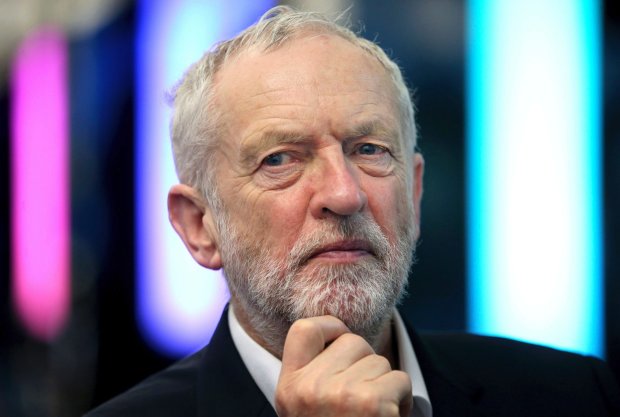
The debate surrounding company tax rates can be thought of as being a tale of two populisms.  One form of populism, following Donald Trump, is to cut company tax rates despite budgetary impacts.  While the other, following Jeremy Corbyn, is to punish business and not cut tax rates despite economic consequences.

As we saw late last week, there is less appetite for the Corbyn position than Labor Leader Bill Shorten had thought.  Shorten had to back-flip on a promise — passed by the ALP expenditure review committee but not discussed by the shadow cabinet, although presumably the same people — to repeal existing company tax cuts that had already been legislated.


WEAK AND IRRESPONSIBLE

The Corbyn form of populism is weak and irresponsible.  Business is not a conscious monolith with its own agenda.  Rather "business" is an institutional mechanism whereby people pursue their economic interests.  To argue that "business" has lost its social licence to operate is to attack the economic interests of people.  To refuse a business tax cut is to refuse people the opportunity to better themselves and earn a living.

While the Turnbull government hasn't quite fallen for Trump-style populism it has got itself into a muddle.  It understands the need to lower taxes, yet has introduced new taxes under the guise of "integrity measures" in order to raise revenue.  Those new taxes explicitly target the beneficiaries of a company tax cut.  It is not clear how random attacks on banks, multinationals and technology companies will benefit the Australian economy.

In 2010 the Rudd government proposed cutting the company tax rate from 30 per cent to 28 per cent in two steps.  The rationale was to grow the economy, attract investment and increase after-tax real wages.  It is difficult to understand why Wayne Swan now argues against the very policy he championed in office.  That was after the Henry Tax Review had proposed lowering the rate to 25 per cent.  Lowering the rate to 25 per cent — again over a long time-frame — is the current government policy.  Again the perverse timing incentive effects are likely to obscure any economic benefits.

The logic for cutting company tax is much the same now as it was then.  As Bill Clinton said, "It's the economy, stupid".  Or as Warren Mundine wrote in these pages, business tax cuts will either result in more plant and equipment being bought or wages being paid.

The current distinction between taxing large and small businesses at different rates seems to be very arbitrary.  This is especially the case when income is taxed at personal marginal tax rates as it is under the dividend imputation system.  Australian resident taxpayers should be indifferent to the company tax rate.  To argue that tax cuts reward the top end of town is to misunderstand how the tax system works.

What high company tax does do, however, is provide disincentives to investment that ultimately reduce the level of employment and wages within an economy.

In addition to the economy stupid, we should always keep it simple stupid.  At the same time as the government has simplified the personal tax system by eliminating an entire tax bracket, we may end up with a tiered company system where large and small companies pay different rates.  This creates disincentives to expansion and adds complexity to the tax system.  The Turnbull government certainly didn't help its case when it introduced the ill-conceived bank levy.  The "logic" of that tax is now being thrown back in its face.

The purpose of the tax system is to raise finance for the provision of public goods while inflicting as little economic cost on the community as possible.  Unfortunately the debate so far has been about either rewarding political friends or punishing political enemies.  A strong, vibrant economy is the one thing that we should be able to agree on — that means a comprehensive and honest debate about company tax is something we should welcome.

Monday, July 02, 2018

We Deserve The Chance To Save Our Own Lives

This week marks the end of a turbulent time of my life.  For the past three years I've been travelling to the other side of the world for lifesaving treatment at a huge personal cost.  This week, I will walk into the Peter MaCallum Hospital in Melbourne to collect my lifesaving drugs from the pharmacy.

In 2015 I was set to die.  I had an incurable form of Chronic Lymphocytic Leukaemia from which I'd relapsed after chemotherapy failed.  But for a 46-year-old with three children, death was not an option.

Following online research I discovered there were novel drugs in development that might just save my life.

The problem was I couldn't access them in Australia.  Only 3 per cent of terminally ill patients can get onto trials of such drugs.

After a trip to the US, and a lucky meeting with a British doctor, I moved to London to join a clinical trial of an experimental drug at Bart's Hospital.

Ironically my wonder drug, venetoclax, was invented in Australia but I had to travel to London to take it.

I was lucky enough to become patient 49 on a "phase 1" trial.  This combination therapy followed a first in human safety trial of 80 brave patients, but came before the drug was listed by the Food and Drug Administration in the US.

I was one of just 75 people worldwide who received the treatment.  Within three months I was in complete remission and within seven months I had no detectable cancer — it just melted away.

I had to fly to London for monthly appointments for a year, then three monthly appointments up until now.  I have had no traceable disease for 29 months and take my drug daily with no side effects.

I work full-time and my children have their father.  But I am one of the very few lucky ones.  Red tape is preventing dying patients from accessing lifesaving drugs.

I am now campaigning for all terminally ill patients to have access to the latest drugs.

Right to Try, letting patients legally access these, is an important part of that.  As it stands, dying patients have to wait for phase 1, 2 and 3 clinical trials to be completed before drugs are made available.

My CLL drug has taken 30 years to reach that stage.

It has since received Therapeutic Goods Administration approval for use in Australia — but is still not available on pharmacy shelves.

Right to Try laws in the US were created to enable terminally ill patients — with advice from their treating doctors — to try experimental therapies which have completed phase 1 testing but have not yet been approved for use by the FDA.

The legislation has its roots in the HIV epidemic.  The Dallas Buyers Club movie shows how people with HIV sought access to experimental drugs through illicit means.

Legislation in the US began in 2014, thanks to the work of the Goldwater Institute, a libertarian think tank objecting to government interference between patients, doctors and pharmaceutical companies.

"This is really a law for people who are very sick, who have exhausted all treatment options and who cannot enrol in a clinical trial," Goldwater's Starlee Coleman explains.

If a doctor believes an investigational drug is your best hope, they can initiate contact with that drug manufacturer's compassionate use program to discuss options for access.

"It's only for people who say, "I understand the risk.  I know this drug is not fully approved," Coleman says.

The TGA's Special Access Scheme allows doctors to prescribe a drug listed anywhere in the world to dying patients.

Australia should extend this to the US model of allowing access to all drugs which have passed phase 1 testing.

Doctors knew my drug was working years ago.  Signing the consent form to take part in the clinical trial was terrifying but it was more terrifying knowing the alternative.  All patients, with informed consent, should have the opportunity to save their own lives.

Saturday, June 30, 2018

Universities Of The Closed Mind

A series of leaked emails reveal the depths of prejudice and groupthink at Australia's universities.  In late May, Macquarie University academics were invited to a presentation by an Israeli.  The first to respond, to the entire Faculty of Arts, was John Hunter, holder of the "Fellowship for Indigenous Researchers".  Hunter declared he would not attend because of "the Human Rights abuses currently occurring in Gaza".  Hunter was joined by other academics who proudly announced their support for the Boycott Divestment Sanctions against Israel, asserting Israel's responsibility for "gross human rights abuses".

Avi Shavit was invited to speak at Macquarie University about cybersecurity.  He has 25 years of experience in the field, including in the military, software industry, investment banking, entrepreneurship, and consulting for the Israeli government and the European Commission.  Shavit's experience was irrelevant to Macquarie academics who put his religious and national background foremost in their mind.

The boycott of Shavit is bigotry, pure and simple.  It is judging someone based on their nationality and religion, not as an individual.  Shavit, who identifies as left-wing, was speaking about a technology issue, cybersecurity, not about Israel or Gaza.

The treatment of Shavit is just another case of the closed minds at Australia's universities.  The Ramsay Centre was rejected by ANU because students and academics complained its premises are too conservative.  Professor Peter Ridd was sacked by James Cook University after criticising science about the Great Barrier Reef by his colleagues.

Australian universities are ostracising individuals and rejecting ideas that do not fit the dominant progressive monoculture.  This weakens the entire academic process — how can you claim to be a "university" when you are no longer open to debate in the pursuit of truth?

The rejection of Shavit shows how groupthink develops in practice.  Across the emails multiple academics announced their joining of the boycott, signalling their virtuous behaviour, and then congratulating each other for the self-righteous non-attendance.  "Thank you John, Jeanette and other (sic) for raising this.  I will not attend the talk and will sign the pledge," a later reply-all email stated.

One of the boycott supporters was Noah Bassil, the Associate Dean of Higher Degree Research in the Faculty of Arts.  Bassil is the gateway to people's future.  He is supposed to be the impartial decider of what research projects get funded and which PhD students are accepted.  And yet he has shown clear bias that raises red flags.  What if an Israeli or Zionist Jew proposes a research project?  Are they less likely to get funding because of their background or their views?

Bassil's rapid willingness to boycott a speaker, despite his administrative position, shows the depths of the problems that our universities face.  It is not simply that a majority of academics are of the Left — this has been the case for a long time.  The lack of conservative, classical liberal, or libertarian voices has reached crisis levels.  Less than 10 per cent of US academics are conservative, and there is no reason to think it's any different here.  The monoculture has reached such heights that an administrator is willing to boycott a speaker without any shame, second thoughts, or repercussions.

A Macquarie academic told me how the collective naming and shaming has a chilling effect on free intellectual inquiry.  "Could you imagine merely being interested in Cyber Security and having your career destroyed because you turned up in a room to listen to a man speak?" the academic says.  "He's not even necessarily endorsing any recent actions by the Israeli government, for fuck's sake.  He's just a man trying to do his job."  The academic said that the display "made me think twice about attending".

The boycott was not completely unanimous.  Gil Davis, a senior lecturer in ancient Greek history, courageously declared his opposition.  "I don't agree that this call for a boycott is showing ethical leadership at all.  I think it is self-indulgent moral posturing which diminishes our University's reputation.  I plan to attend," Davis wrote.

In a moment of breath-taking self-aggrandisement, the first boycotter, John Hunter, claimed to be following in the footsteps of William Cooper.  Cooper was an Aboriginal political activist who delivered a petition to the Nazi German Consulate in Melbourne in 1938 as the Jewish people's darkest hour approached.  Cooper objected to the Kristallnacht, the violent anti-Jewish pogroms in Germany and Austria that foreshadowed the Holocaust.  Cooper's demonstration is the only known private protest against Kristallnacht.  Last week the Australian Electoral Commission announced a new seat in Victoria in Cooper's name.

Davis responded to Hunter by saying that the Jewish community celebrates Cooper, and that "it is almost certain that [Cooper] would not have had a bar of any boycott of Jews or the Jewish State, and would have immediately spotted the ugly demonisation underpinning it."

The unthinking dismissal of a speaker without hearing their views exposes a culture of intolerance emerging at our universities.  As a law faculty academic pointed out, "Whatever their personal or ideological views, this has nothing at all to do with the subject on which Mr Shavit is speaking.  How can one oppose what one does not know?  How can you argue against his views if you have not heard them?"  She signed off:  "Yours in freedom of thought".

The essence of prejudice is pre-judgement.  Prejudice is not bothering to make the effort to engage with a person or their ideas because you have made a lazy ideological judgement.  University academics are free to associate and not associate, to attend and not attend whatever lectures for whatever reasons.  Nevertheless, the Shavit case shows how closed minded our academics have become;  it shows their willingness to put their bigoted ideological tropes before a debate of ideas.

Plastic Bags And The Nuisance State

The lives of ordinary people have been made worse by the elimination of plastic bags in supermarkets — achieved by legislation in most states and by the corporate virtue-signalling led by the ever-diminishing duopoly of Coles and Woolworth.  This impact, you must understand, is not a side-effect or something taken into consideration during the pursuit of a broader policy objective;  the harm and confusion it causes to the mass of the people is actually the real objective.

Elite decision-makers live with the existential guilt associated with their good fortune to live remarkably free and prosperous lives.  They cannot abide that so many further down the social hierarchy do not share that guilt, being as they are concerned with such quotidian matters as scraping together a living, trying to keep the government's hands off what they do earn while keeping a family fed and housed.

The elites, though guardians of the social order, realise they cannot convince the masses to experience a guilt similar to their own, and so develop new ways to humiliate and confuse.  They might even say publicly that a change in attitude will eventually follow from an enforced change in behaviour, but to do so would be disingenuous.

To make somebody live a certain way, especially when that mode of life is against that person's interests and beliefs, is surely the most satisfying intervention a power seeking guardian of the social order can undertake.  It was Orwell who pointed out that a totalitarian state would make someone say that black is white or 2+2=5 not in order to change their mind but to break their spirit and prove that they can be made to say or do anything.

The desire to control others people's lives lies deep within human nature.  Homo sapiens evolved in clans and tribes, with evolution rewarding behaviours appropriate to self-preservation but also behaviours associated with group preservation.  It is no use being able to dominate everybody around me if my group is attacked and massacred by the neighbouring groups.  If you have any doubts on this, read Napoleon A. Chagnon's account of the Yanomamo people of the Orinoco basin in South America, along with Matt Ridley's excellent account of the evolution of humans and their societies in The Origins of Virtue.

Evolution within groups relies on reciprocity and the gradual building of intra-group trust.  To encourage trade and exchange of gifts, I must be confident that you will reciprocate in the approved way, so I receive something, and that you will be punished if you don't.  Thus, norms, rules and culture are developed, and the leaders of law and culture enforce those norms and rules.

Mostly this is by social pressure, and sometimes by physical punishment.  In traditional societies, the enforcers emerge organically and become the "big men", or even the "uncles" and "aunties", whose word is law even if the law is verbal and partly mutable.  In modern societies, law is more abstract and impersonal, but around it exists a stratum of society which derives deep satisfaction from policing the viewpoints and behaviours of the society.  Even though western society has, uniquely, shed clan and tribal affiliations in favour of individualism, it has not and cannot shed the habits of mind attributable to the evolution of a moral sense.

Jonathan Haidt, in The Righteous Mind, neatly demolishes the conceit that with the decline of religion and the crisis in conservativism the forces of morality are in retreat.  Rather, it might be true that a stern form of Christianity ever-watchful for fornication, adultery, intemperance and impiety is in retreat, but a different yet no less stern morality has taken its place at the centre of most liberal democracies.

Obsessed with fairness, it believes that all sacrifices must be borne equally.  Better that all live equally in mediocrity or misery than that some may aspire and flourish.  God (or Gaia) forbid, literally, that someone might get some enjoyment out of life.  But how to instantiate that equality of sacrifice?  Answer:  by creating sacrifices so that they can then can be endured equally.

I can well imagine that our social guardians may well lie awake tormented not by the prospect of the fires of damnation — as someone of their personality type most certainly would have been five centuries ago — but rather by the sight of dolphins swimming through plastic bags.  In either case, the fear of purgatory requires penance, a sign of self-abnegation through surrender and sacrifice.

But it is not enough that they take a righteous course by carrying hemp bags in their bicycle baskets for when they might need to buy some groceries.  No, it is vital and extremely satisfying to make sure that everybody else also has to.  That other people may not be cycling home through Fitzroy and Ultimo and dropping into the vegan grocer on the way home from a hard day at the university, but rather slipping into the supermarket (quelle horreur) after a long shift to make sure they have milk to put on the kids' breakfast cereal the next morning, is irrelevant.  All must pay, all must sacrifice.

The pleasure taken and the smugness displayed by politicians and self-appointed defenders of "the environment" reminds me of the famous quip of Macaulay's, that "the Puritan hated bear-baiting, not because it gave pain to the bear, but because it gave pleasure to the spectators."

What we have now is not the Nanny State, it is the Nuisance State.  The phrase Nanny State implies a degree of maternalism, a care for the subject.  Rather, the state is now in the business of creating nuisances.  Ironically, the common law of England evolved to protect people from nuisance, usually from a neighbour.  The tests for a case of nuisance applied by judges and juries are:

  • unreasonableness on the part of a defendant;
  • continuance of acts constituting nuisance for an unreasonable period;
  • causal connection between defendant and nuisance complained of;  and
  • existence of injury or damage threat.

In cases of deliberate nuisance, which we see in the case of disputes between neighbours turned toxic and vindictive, courts could award exemplary damages beyond the mere harm suffered.

The state increasingly, through measures like bans on plastic bags, is creating a deliberate nuisance, which in the absence of access to common law remedies has the happy accompaniment of creating a class of supplicants.  We must either keep a slew of reusable bags secreted in various locations and vehicles for when we might need to shop, or we pay out our penance through the 15 cent charge on a plastic bag.  The latter option is exactly equivalent — in psychological terms — to the sale of indulgences as practised by the mediaeval Catholic Church, with the State standing in for the Vatican.

Confession is too time-consuming, and has in any event been anathematised, so better to pay the almoner.  Perhaps Coles will ask its long-suffering checkout staff to recite the words of the most notorious quaestiarii (pardoner) of the fifteenth century, Johann Tetzel, who would say as money was exchanged for absolution:  "as soon as the coin rings in the bowl, the soul for whom it is paid will fly out of purgatory and straight to heaven."

In the ban on plastic bags and in a thousand petty ways every day, ordinary people are forcibly reminded of their lowly position in the social hierarchy, and the determination of their betters to police the boundaries of social behaviour.  The nuisance it creates for all of us is not a bug, it's a feature.

Friday, June 29, 2018

A Class Divide That's Too Wide

Sometimes political parties create their own narratives, and sometimes those narratives are created for them.  Right at the moment Bill Shorten's Labor Party is doing a good job at creating the Coalition government's narrative.

This week's announcement by the Labor Party that if it wins government the reductions in the corporate tax rate for companies with a turnover of more than $10 million will be repealed, hands to Malcolm Turnbull not just one powerful narrative, but two.

The first narrative is of course that Labor is attacking "aspiration".  That's true and it's a line the Prime Minister and his ministers are using.

Big business has few friends these days on either side of politics.  In any case big business doesn't do much to help itself.  The fact that big business accounts for 65 per cent of jobs growth in the private sector since 2010 isn't often talked about.  So Labor's opposition to tax cuts for large companies is misconceived, but at least the politics Labor's playing is understandable.  The effects of corporate tax cuts are contested and they don't have the immediate impact on individuals of cuts to personal tax rates.  Indeed in economic and political terms there's a good argument that the Coalition should have made personal income tax reductions, not cuts to corporate tax, the centrepiece of the government's economic strategy.

Opposing tax cuts for small and medium-size businesses is an altogether different proposition.  Not many Australians can in all honestly see themselves running and owning a big business.  But unless they want to be a public servant, many Australians can see themselves as one day owning a small business.

A survey of 1000 Australians between the ages of 16 and 25 commissioned in 2016 found that 60 per cent of young Australians were interested in starting their own business, 23 were not interested, and 17 per cent didn't know.


SYMBOLISM COUNTS

Most voters would be hard-pressed to say what is the current tax rate on small and medium-sized businesses and what the Turnbull government has cut it to.  But unless the Coalition is completely inept, it can be assumed that by the time of the federal election most voters will at least have an inkling that Labor will increase taxes on small business.

What counts is the symbolism of Labor "going after" small business and everyone who has ever aspired to a small business of their own.

Potentially even more powerful for the Coalition is the second narrative Labor has given birth to — namely the narrative of division.  By saying it will increase taxes on businesses in the way it has, Labor is going one step beyond the traditional "class war" rhetoric.  Class wars are traditionally between the rich and powerful and the poor and downtrodden, with Labor usually claiming to be on the side of the latter.  On the scale of poor and downtrodden of popular perception in Australia, small business ranks just behind farmers.

The ALP isn't only dividing up Australia between big business and small business, it's dividing the people of the country up into two groups — those who work in a business (either big or small) and those who don't.  The aspirant for Shorten's job, Anthony Albanese isn't a fool.  Albanese knew exactly what he was doing when in a speech a week ago he said Australians should reject community "discord" and "division".

The irony of Labor's position is that it says it wants to spend the money it will get from increases taxes on business on health and education.  And opinion polls show the public want more money spent on health and education.  But part of the reason the public like health and education spending is because such spending is perceived at its core as building a stronger community and sense of social cohesion, which puts Labor at risk of trying to communicate two messages that contradict each other.

The ideal of "mateship", however it's precisely defined, is part of the national psyche.  If mateship is anything it's about sticking together and sharing some common values.  Labor's current rhetoric of division and difference strikes at the core of the notion of Australian mateship.

University Regulator TEQSA Has Lost Its Way On Political Matters

Australia's university regulator, the Tertiary Education Quality and Standards Agency, is not only failing to protect free intellectual inquiry but its ideologically driven interventions are part of the problem.

Australia's universities are facing a serious reputational crisis.  The more universities become aligned with a single line of political thought, the more the community will wonder, rightly, why billions of taxpayer dollars fund these institutions.

Senator James Paterson wrote on this page last week that universities that did not uphold free intellectual inquiry should be fined.  Radio broadcaster Alan Jones has discussed freezing funding to James Cook University following the sacking of Peter Ridd.  Malcolm Turnbull has said he will be speaking to the Australian National University following its rejection of the Ramsay Centre.

A competent regulator would be on top of this issue by now.

But TEQSA has been captured by the same progressive monoculture that is afflicting our universities.  This is concerning because it is the agency that decides which institutions can call themselves a university, award degrees and receive generous taxpayer funds.

Its website mentions progressive concepts such as "diversity" 119 times and "equity" a further 57 times.  "Free intellectual inquiry" is mentioned six times and "freedom of expression" just twice.  TEQSA has issued guidance notes on diversity and equity and wellbeing and safety but it has yet to issue a note about free speech on campus.

In 2011 the Gillard Labor government amended the Higher Education Support Act to require universities, as a condition of receiving federal funding, to have "a policy that upholds free intellectual inquiry in relation to learning, teaching and research".  TEQSA has made no effort to enforce this requirement.

My Free Speech on Campus Audit 2017 found that only eight out of Australia's 42 universities have a stand-alone intellectual freedom policy.  Charles Sturt University has 403 policies including a 1600-word document on when, where and how flags should be flown.  But it does not have a policy dedicated to free intellectual inquiry.

The audit also found that Australia's universities maintain speech codes that prevent "insulting" and "unwelcome" comments, "offensive" language and, in some cases, "sarcasm" and hurt feelings.  These policies encourage academics and students to remain silent for fear of repercussions.  They are not compatible with a university's role to facilitate debate in the pursuit of truth.  Offence and hurt feelings are a normal by-product of hearing ideas with which you disagree.

TEQSA has not held universities to account for policies that threaten intellectual freedom, the sacking of professors for expressing their scholarly views and complaints by academics across the political spectrum about the dangerous ideological monoculture in higher education.  The agency's internal thinking was revealed by its draft diversity and equity guidance note quietly released late in 2016.

The guidance note discusses all types of diversity — including racial, ethnic, religious, national and sexual — except the diversity necessary for a functioning university:  viewpoint diversity.  The draft note listed identity politics victim groups.  It included censorious "inclusive language" requirements.  It asserted that creating "equivalent opportunities for academic success" could mean "creating the conditions for equity of outcomes" — undermining the competitive nature of a university and the reality that not everybody can or should get first-class honours.  It also redefined "social responsibility" to include the progressive political idea of "social justice".  These elements ultimately were removed from the final note following my submission;  however, its existence in the first place is concerning.

TEQSA's latest focus is the questionable demand that universities become responsible for mediating sexual harassment allegations.  TEQSA is de facto encouraging the creation of inquisitive, low-evidence kangaroo courts.  This follows the footsteps of the problematic "Dear Colleague" letter that lowered the evidential standards for campus sexual assault allegations in the US.  The letter recently was withdrawn by US Education Secretary Betsy DeVos.  Universities lack the expertise to facilitate natural justice.  These complex matters should be the responsibility of the police and the legal system.

One way to improve education quality is the creation of more universities.  All our universities teach every subject in a similar way.  There are no specialist science or economics and politics universities — such as Imperial College London and the London School of Economics — or a wide array of liberal arts colleges as in the US.

TEQSA benefits existing players by creating barriers to entry that prevent competition.  The agency has created so much red tape that it is almost impossible to create new or specialist universities.  The abolition of TEQSA — or the cutting of red tape — could generate a much-needed university boom.  Australia's university cartel finally would be challenged on quality and price by new institutions.  These new universities also could provide students with the choice to study at a university that has not been afflicted by a debilitating ideological monoculture.

Tuesday, June 26, 2018

Power Policy Prioritises Expensive Green Goals

The key lesson of recent wrangling over energy policy is this:  if it sounds like a tax and looks like a tax, then it probably is a tax.

The National Energy Guarantee (NEG) is the government's energy policy centrepiece.

It promises to manage the so-called policy "trilemma" of affordability, reliability and emissions reductions in the energy sector.  It will do so by mandating both a reliability and emissions reductions guarantee.

The emissions reduction component is driven by Australia's commitment to the Paris Climate agreement which requires Australia to reduce its emissions by 26-28 per cent on 2005 levels by 2030.

However, the only way emissions reductions on the scale mandated by the Paris Agreement can be achieved is through heavy government intervention which favours less carbon intensive forms of energy generation.

And just like the Gillard government's full-blown carbon tax, the complex web of regulations and fines which form the basis of the NEG will amount of an effective tax on carbon-intensive forms of energy generation.

Translation:  coal will be taxed and renewables will be subsidised.

The de facto carbon tax stems from two areas.

The first is the mere existence of an emissions guarantee, which would force energy retailers to acquire a certain amount of energy which is generated from greener sources.  This makes the NEG indistinguishable from the Renewable Energy Target, a Clean Energy Target, an Emissions Intensity Scheme, or a carbon tax.  The outcome is policy favouritism of renewables at the expense of coal.

The second component is an explicit tax.

A $100 million tax (the government refers to it as a fine) will be placed on energy retailers who do not meet their emissions reductions obligations.

Yet just a $10 million tax will be placed on those who do not meet their reliability requirements.  This means the government is voting 10-to-one in favour of emissions reductions over reliable energy supply.

The extent of government command and control of Australia's energy policy would have made even Commissars in the Soviet Union blush.

The government is imposing a set of make-believe objectives onto the energy market.

It is then sabotaging the natural operation of the market by imposing a web of regulations and taxes, strong-arming energy retailers, running a nationalised electricity generator (Snowy Hydro), handing out billions to the Clean Energy Finance Corporation and Australian Renewable Energy Agency, and allowing the whole show to be directed by unelected bureaucrats.

That the Department of the Environment and Energy's website refers to the NEG as a "market-based solution" is surely a joke.  But this joke is on us.

The energy crisis in Australia is the latest sign of a deep sickness in our political system.

Australia is blessed with a bounty of onshore and offshore gas, 1000 years' worth of coal, and 30 per cent of the world's uranium supplies.

Yet the Canberra political class has taken Australia from having among the lowest energy costs in the world to having among the highest.

Rather than a bona fide public policy, emissions reductions are best understood as a vanity project of the political elite.

Human emissions account for around 3 per cent of total carbon dioxide emissions.  Australia accounts for 1.5 per cent of that.

And according to data from the International Energy Agency and the Climate Council of Australia, the Commonwealth Renewable Energy Target — which favours renewables over coal — reduced emissions from fuel combustion exercises by just 1 per cent over a 15-year period.

You don't need a calculator to figure out that 1 per cent of 1.5 per cent of 3 per cent is mathematically zero.

The cost, though, is immense.  The working and middle classes of Australia are being bludgeoned with higher electricity prices which is trashing their standing of living.  And businesses are avoiding Australia like the plague.

That is why new private business investment is just 11.7 per cent of GDP, which is lower than the rate which prevailed during the economically hostile Whitlam years.  Worse than Whitlam, indeed.

This is the price we must all pay so the political class can continue with their vanity project.  Now that is a true expression of "class privilege".

The last time Australians were consulted on energy policy they voted for affordability and reliability over emissions reductions.  That is the key reason the Coalition won a thumping majority at the 2013 election and the carbon tax was abolished.

There is now talk that some on the right flank in the government will cross the floor to vote against the government's own energy policy.

Don't hold your breath.  Talk is cheap.  But they should.

Any government that cannot deliver affordable and reliable energy doesn't deserve to govern any longer.

That is the lesson of the Gillard years, and they are being repeated again today.