La Trobe University is encouraging censorious behaviour by charging special security fees for an event with commentator Bettina Arndt hosted by the campus Liberal club.
 Security fees create a heckler's veto: the charge empowers the people who disagree to organise the biggest, most aggressive and therefore costliest protest they can muster. The Liberal club could ultimately be forced to cancel the event if security fees become too high. In the end, the censors win, free speech loses.
The charging of security fees to the Liberal club is a form of victim blaming. The disturbance is not expected to come from within event, it could only come from outside. It makes no sense to punish Liberal students for the danger imposed by others.
There is also a serious inconsistency issue which reveals a university closed to opposing perspectives. If La Trobe does not charge left-wing groups for speakers then why are they charging Liberal students for a speaker? Is it because they are seeking to discourage and punish certain speech?
This inconsistency would be unconstitutional in the United States, where the Supreme Court has declared that the content of speech is not justification for additional costs.
This is why the University of California at Berkeley paid hundreds of thousands of dollars to secure events with provocateur Milo Yiannopoulos and conservative Ben Shapiro. The university may not have liked their speech, but they declared themselves open to free debate and put money behind their principles.
La Trobe appears to be taking a very different approach to free debate. Revealingly, the security bill came after La Trobe withdrew their initial ban of Arndt.
Arndt has become a controversial figure. She is a sex therapist who writes and speaks about gender relations and domestic violence. These are difficult topics — particularly when you question the dominant narrative about campus sexual harassment and assault, as Arndt does.
In an era of intellectual monoculture on campus, Arndt is precisely the type of person that our universities should be welcoming. She helps provide the missing counterpoint to the left wing perspective, the missing debate that is necessary for effective teaching and research.
John Stuart Mill wrote that "He who knows only his own side of the case knows little of that". You have no reason to prefer your own ideas if you do not understand the opposing perspective. Nor is it good enough to "hear the opinions of adversaries from his own teachers," Mill says, "He must be able to hear them from persons who actually believe them ... he must know them in their most plausible and persuasive form".
The near ban and disgraceful security fees are not the first sign that something is wrong at La Trobe. My free speech on campus research has revealed La Trobe's serious lack of viewpoint diversity.
My Free Speech on Campus Audit awarded La Trobe a "Red" ranking for policies that forbid "unintentional ... offence" and language that causes "emotional injury". It is impossible to freely explore controversial ideas without potentially causing unintentional offence or perhaps even emotional distress. It is difficult to hear ideas that are different from your own — but being intellectually challenged is the entire purpose of a university.
The on-campus experience reflects these policies. Students have told me about lecturers encouraging them "to pursue social justice causes" — instead of teaching all ideas and letting students reach their own conclusions. They have also reported that academics mock conservatives in class and give them lower marks.
In response classical liberal and conservative students are pretending to hold a left-wing perspective or say nothing. "Generally, I don't talk in class on political issues," one student, who has seen their conservative classmates harassed by tutors, said.
In the past, La Trobe was well known for their radicalism, protests, and differing ideas. Today, the university is suffering from the left wing monoculture disease. La Trobe has a responsibility to not shy away from debate and encourage the voicing of a range of perspectives.


 Not shy of the publicity, Ersson broadcast the affair live on Facebook and subsequently received substantial international media attention. The usual suspects have held Ersson up
 The new organisation will be known as Nine.
 An unemployed journalist who once worked for a newspaper that's gone out of business isn't doing much to add to media diversity. That's the reality that those who harken back to the days before the internet, Instagram, and mobile phones fail to grasp.
 The Fairfax/Nine merger is also a win for taxpayers. It should put to rest, for the time being, the suggestion contemplated last year during the Senate inquiry into the future of public interest journalism that taxpayers should provide financial assistance to bail out ailing newspaper companies. It's ironic that it is often suggested that one way of ensuring the existence of an "independent" media is to have the government fund it.
 There is a right to freedom of speech, and each of these laws is an attack on that right.
 For proof of this, consider the so-called GST "reform" proposed by Federal Treasurer Scott Morrison earlier this month. Morrison's proposal followed the recommendations made by the Productivity Commission to tinker with the formula that underlies the distribution of GST revenue, the already complex process known as "horizontal fiscal equalisation".
 "Prevalence-induced concept change in human judgment" could turn out to be one of the most significant pieces of social science research published in recent years. It's six authors include Daniel Gilbert, professor of psychology at Harvard University, whose book Stumbling on Happiness has sold more than a million copies.
 The barber at the heart of this latest controversy is a young man by the name of Sam Rahim. Sam is married to Ronda, and he has two very cute little boys named Kiyan and Boston. He owns and operates the Hunters Hill Barbershop.
 Of course, politicians gaming the system in their favour is nothing new. But with its Electoral Legislation Amendment Bill, Labor is setting a new gold standard for changing the rules for their own advantage.
 When I lived in Sweden, I would watch football with my Swedish mate Rob and struggle with some of the Swedish players' names. Even now, I cannot roll an "r", let alone roll one into the Swedish "g", as in the common name "Berg" — which sounds more like our word "berry" than something into which you might crash a ship. Once, Rob asked, perhaps redundantly, why English commentators never try to say Swedish names properly. I could only tell him that most people don't know they are saying the names incorrectly, and even if they did know, they would likely pronounce them about as well as me. Being Swedish, Rob found this reasonable. Others, apparently, do not.
 Over the same period the consumer price index is up 30 per cent, gross domestic product by 69 per cent, and GDP per capita just 41 per cent. So it isn't clear all that spending has added much value to the community.
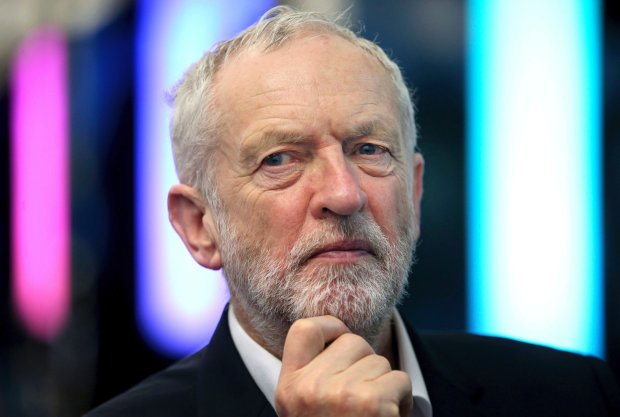 The Corbyn form of populism is weak and irresponsible. Business is not a conscious monolith with its own agenda. Rather "business" is an institutional mechanism whereby people pursue their economic interests. To argue that "business" has lost its social licence to operate is to attack the economic interests of people. To refuse a business tax cut is to refuse people the opportunity to better themselves and earn a living.
 In 2015 I was set to die. I had an incurable form of Chronic Lymphocytic Leukaemia from which I'd relapsed after chemotherapy failed. But for a 46-year-old with three children, death was not an option.
 Avi Shavit was invited to speak at Macquarie University about cybersecurity. He has 25 years of experience in the field, including in the military, software industry, investment banking, entrepreneurship, and consulting for the Israeli government and the European Commission. Shavit's experience was irrelevant to Macquarie academics who put his religious and national background foremost in their mind.
 Elite decision-makers live with the existential guilt associated with their good fortune to live remarkably free and prosperous lives. They cannot abide that so many further down the social hierarchy do not share that guilt, being as they are concerned with such quotidian matters as scraping together a living, trying to keep the government's hands off what they do earn while keeping a family fed and housed.
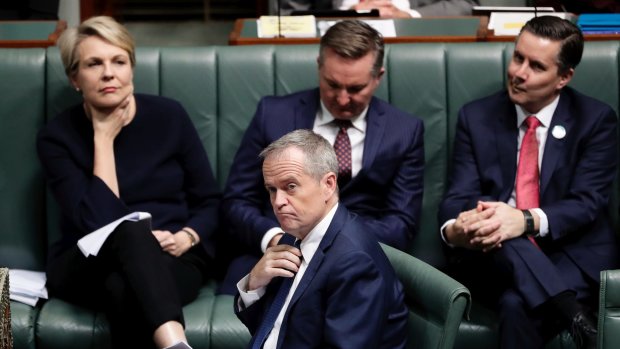 This week's announcement by the Labor Party that if it wins government the reductions in the corporate tax rate for companies with a turnover of more than $10 million will be repealed, hands to Malcolm Turnbull not just one powerful narrative, but two.
 Australia's universities are facing a serious reputational crisis. The more universities become aligned with a single line of political thought, the more the community will wonder, rightly, why billions of taxpayer dollars fund these institutions.
 The National Energy Guarantee (NEG) is the government's energy policy centrepiece.
 The government's own budget figures show that revenue from personal income tax will rise six per cent in 2018-19, five per cent in 2019-20, and seven per cent in both 2020-21 and 2021-22. The annual rise is well above the rate of inflation growth, or growth to nominal GDP.
 We watched as he nodded his head and did not express any disagreement with the extreme posturing and slander of a student from the socialist alternative in the