Tuesday, November 26, 2019

Cut Red Tape, Get In Black

If Scott Morrison and his government want to deliver an economic boom, they should follow the highly successful template of President Trump in the US and cut red tape.

New research released today by the Institute of Public Affairs finds that President Trump has overseen a $45.6 billion ($31 billion USD) reduction to the cost of red tape since 2017.  That is the equivalent to around 20 new hospitals, 15 years work of Gonski 2.0 education funding, or four years' worth for funding for the NDIS.

The new research, titled The Trump Administration's Red Tape Reduction Agenda, finds that the key to Trump's success has been a one-in-two-out requirement where two regulations must be repealed for every new regulation introduced.  This requirement imposes a binding restraint on the bureaucracy to consider the costs of the new rules they impose by introducing a trade-off into the equation.  If bureaucrats consider that a new rule is of such importance then they can introduce it.  But they have to find two existing rules to get rid of first.

The outcome of the red tape reduction agenda, along with corporate tax cuts and liberalisation of domestic energy production, has been a once-in-a-generation economic boom.

The unemployment in the US fell to just 3.5 per cent in September, which is the lowest rate since 1968.  The unemployment rate in Australia, by contrast, is 5.3 per cent.  New private sector business investment is above its 40-year average.  There has been an increase to average quarterly business applications (a good indicator of new business formation) from 650,000 in 2016 to 826,000 in 2019.  And a net increase of 422,000 jobs in the manufacturing sector since 2016.  Try impeaching a President with that economic record, Democrats.

Importantly, the bounty of this economic boom has been widely shared across the US.  The unemployment rate for African Americans is at a record low 5.4 per cent, which is down from eight per cent when Trump took office.  And the Hispanic unemployment rate dipped to below four per cent for the first time on record in September this year.

To be sure, not all of this success can be attributed to Trump's economic policies.  There has been a long-term structural improvement to the US labour market following the GFC in 2010.

But Trump's red tape cuts have supercharged the economy by making it easier and less expensive to do business in the United States.  Indeed, while business investment into the US is booming, it is stagnating in Australia.  New Private sector business investment in Australia is just over 11 per cent of GDP, which is lower than during the economically-hostile Whitlam years.

While not yet at Trumpian levels, the Morrison government have cottoned on to the fact that red tape reduction is the key to economic growth.  In a speech to the Business Council of Australia last week, the Prime Minister outlined a number of important reforms including simplifying Australia's employment laws system and speeding up approvals for major projects.

In addition, government's red tape reform efforts are being driven by the highly capable Ben Morton, who is the Assistant Minister to the Prime Minister.  Just yesterday Morton outlined important changes to the policy-making process that will require departments to provide more rigorous analysis to justify new regulations.

This is a welcome start.  But much more work needs to be done.

To start with, the government must take the scissors to the mountain of green tape which is holding up projects across the country from dams and mines in Queensland to logging projects in Tasmania.

As reported in these pages on October 23, there has been a 80-fold increase in green laws since the first federal environmental department was set up in 1971.  Much of this increase is duplication — and triplication in some cases — between local, state, and federal laws.  At a minimum the government should remove areas of duplication by removing the federal government from regulating any areas that state governments or local councils are already involved with.

Most importantly, though, the government must hold the bureaucrats to account.  Every year, more bureaucrats are employed by state and federal governments and, inevitably, look for more work to do.  Unfortunately, more work for bureaucrats typically means more regulation for everyone else.

Imposing a regulatory budget on all federal government departments will bring them to heal.  Such a budget could take a one-in-two-out form, such as with President Trump.  Or it could be a numerical target of, say, a 10 per cent reduction to red tape each year.  Either way, the bureaucracy would finally have some skin in the game and would feel the pinch of the ever-expanding array of regulations.

Morrison and Morton should build on a good start to cutting red tape in Australia by applying the highly successful approach of Trump.  They too might just find it will produce a once-in-a-generation economic boom.

Friday, November 22, 2019

Australian universities are abandoning their role as custodians of Western civilisation in favour of a seemingly endless obsession with identity politics.

I wrote recently about the University of Sydney's Resurgent Racism project, a flagship program that provides taxpayer funds to academics so they can berate Australians for supposedly being racist.

But it is the tip of the iceberg when it comes to taxpayer-funded identity politics research.

My new report has confirmed the extent to which our universities are fixated on class, race and gender — and just how much Australians are paying for it.

The Humanities in Crisis:  An Audit of Taxpayer-funded ARC Grants found the Australian Research Council's national competitive grants program has distributed $1.34bn in funding to humanities research since 2002.

These projects cover historical studies, linguistics, cultural studies, human geography, and communication and media studies.

According to the ARC, its purpose is "to grow knowledge and innovation for the benefit of the Australian community".  It also claims "the outcomes of ARC-funded research deliver cultural, economic, social and environmental benefits to all Australians".

So, has the research of the past 17 years done that and helped ensure our success as a prosperous, peaceful and stable nation?

Not quite.  What the audit reveals is academics spending millions on projects that are narrow, incomprehensible and reflect the obsession with identity politics, cultural studies, critical theory and radical feminism.

At Macquarie University academics received $391,000 for a historical studies project called Sexing Scholasticism:  Gender in Medieval Thought, which explored "medieval theological debates about why it was necessary that Christ was born as a man".

Academics at the University of Sydney were awarded $735,000 for a cultural studies research project called Reconceiving the Queer Public Sphere:  An Interdisciplinary Analysis of Same-Sex Couple Domesticity.  By "critically analysing queer home life" the project would "transform current understandings of the relation between homosexuality, private life and the public sphere".

The ARC awarded the University of Melbourne $100,000 for a cultural studies project examining Female Stardom and Gay Subcultural Reception.  And James Cook University was given a bumper $2.7m for a cultural studies proposal, How Gender Shapes the World:  A Linguistic Perspective, the authors claimed would "enhance our nation's capacity to interpret and manage gender roles in multicultural contexts".

The preoccupation with identity politics is especially notable in historical studies.

There have been 616 such research proposals to have received funding since 2002 — with the total cost amounting to $192m.

The most common theme is "identity politics", with 112 of the proposals focusing on the leitmotifs of class, race and gender.

The second most common theme is "indigenous history and studies", with 99 projects, while the third most common, "war and conflict" attracted 88 proposals.  In contrast, there are only three research projects that talk about the rule of law and a solitary proposal examining free speech.

This shows our universities are not interested in the history or values of institutions that are essential to understanding Australia's present and shaping its future.

As curators of Western civilisation, academics have a duty to look after some of society's most valuable material.  But two decades of ARC funding shows they are neglecting their duties.

Having bought into the postmodernist notion that Western civilisation is a white patriarchy, they have released themselves from the obligation to study the Western canon.  Aristotle's thoughts on the meaning of tragedy are apparently irrelevant, as are Shakespeare's observations of human nature and John Stuart Mill's views on democracy.  There is a great deal that universities could pick up from Machiavelli when it comes to the problem of free speech on campus.

Today's academics mostly believe there is nothing we can learn from the 2500 years of accumulated wisdom and knowledge passed down to us by those who have lived before us.  This arrogance was articulated by academics at the University of Sydney when they rejected the Ramsay Centre for Western Civilisation's proposed curriculum, which at the time was derided as "structurally, institutionally, morally and epistemically violent to other knowledges" and summarily dismissed as "white supremacy writ large".

By rejecting the Western canon, academics not only are depriving university students of their dues but they also are depriving us all of the intellectual and moral nourishment that only the humanities can provide.  Academics are no longer interested in properly feeding the society that ultimately feeds them.

The phrase "Go Woke, Go Broke" doesn't quite apply to Westpac.  But it nearly does.

Allegations that it breached anti-money-laundering laws 23 million times probably won't send Westpac broke.  But the bank's share price has been smashed and Prime Minister Scott Morrison has as good as called for the Westpac board to sack its chief executive.
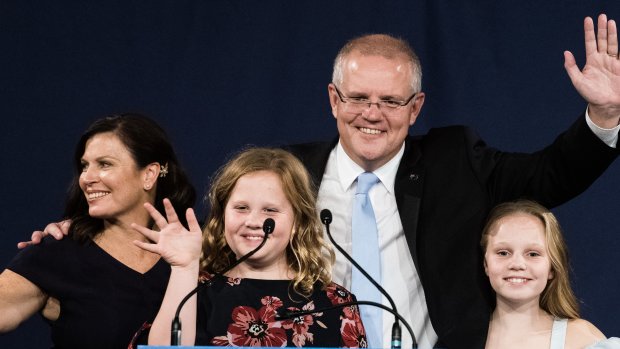
If you're a company like Westpac that parades its progressive social agenda credentials at every opportunity, you'd better make sure you're not accused of turning a blind eye and facilitating the funding of some of the most evil crimes imaginable.

One day it's going to dawn on chief executives that you can talk all you want about climate change and gender diversity and asylum seekers — as Westpac has spent the past 10 years doing — but that won't save you if you when the government and the regulators start coming after you.

Attending to your customers and shareholders and not breaking the law is usually a better path to long-term success.

The website Know Your Meme provides a handy definition of "Go Woke, Go Broke" — "an expression typically used to express the sentiment that companies who embrace political correctness or cave to demands of social justice activists will suffer financially as a result".

The idea of being "woke" originated in the United States as a way of describing someone who was awake to the ills that left-wing activists and academics believe plague Western liberal democracies, in particular racism, sexism, and "classism".

The most notorious manifestation of Australia's woke corporate culture is what Luke Sayers, the chief executive of consulting firm PwC Australia, did in 2016.

After Donald Trump's election as US President, Sayers wrote to PwC's 7,000 Australian staff offering counselling and support to those who were worried or upset by the poll result.

PwC Australia has a "chief diversity and inclusion officer" and apparently the firm puts "diversity and inclusion" at "the centre" of its strategy.  It's a topic for debate as to just how "included" a PwC staff member who supported Trump would have felt on the receipt of Sayers' message.

Admittedly Westpac hasn't done anything as outrageous as that, but nonetheless over the years it has missed few opportunities to signal its virtues, especially on climate change.

Under former chief executive Gail Kelly, Westpac was a vocal supporter of Labor's emissions trading scheme.

Current CEO Brian Hartzer received front-page publicity in 2017 when he announced Westpac would not provide finance to the Adani coal mine, and the Australasian Centre for Corporate Responsibility, a lobby group for centre-left causes, has ranked Westpac as having one of "the most progressive positions on climate change".

In the wake of what's happened to Westpac, the claim from the political left has been, "here's the proof of the crisis of capitalism".  Nothing could be further from the truth.

The tale of Westpac demonstrates what happens when a company, and especially a bank, starts to forget it's a capitalist enterprise and thinks of itself instead as a progressive political outfit, telling everyone else how to live their lives.

The pity of what's happened to Westpac, as much as the temptation to schadenfreude, is that the bigger issues of what the government and regulators can reasonably expect of companies will be ignored.

The bank has something like 14 million customers.  The worst of the 23 million breaches of the law Westpac is alleged to have committed relate to the supposed activities of 12 of those customers.  A sense of the scale of the challenge Westpac and every other financial institution faces under anti-money-laundering laws has so far not been discussed.

Westpac is theoretically liable to a maximum penalty of up to $400 trillion.  Whether the risk of a potential financial penalty a few hundred times larger than the entire Australian economy is the best way to improve corporate behaviour is likewise something that won't get much talked about.

Within a few days there'll probably be calls for yet another inquiry/investigation/royal commission into what's happened.

And no doubt there's going to be a whole new series of laws/regulations/rules proposed so that politicians can declare to the public, "I have made sure that this terrible thing will never happen again."  If only that were true.

Wednesday, November 20, 2019

Taxpayers Fleeced, Betrayed As Unis Ponder Why Christ Born A Man

Australian universities are abandoning their role as custodians of Western civilisation in favour of a seemingly endless obsession with identity politics.

I wrote recently about the University of Sydney's Resurgent Racism project, a flagship program that provides taxpayer funds to academics so they can berate Australians for supposedly being racist.

But it is the tip of the iceberg when it comes to taxpayer-funded identity politics research.

My new report has confirmed the extent to which our universities are fixated on class, race and gender — and just how much Australians are paying for it.

The Humanities in Crisis:  An Audit of Taxpayer-funded ARC Grants found the Australian Research Council's national competitive grants program has distributed $1.34bn in funding to humanities research since 2002.

These projects cover historical studies, linguistics, cultural studies, human geography, and communication and media studies.

According to the ARC, its purpose is "to grow knowledge and innovation for the benefit of the Australian community".  It also claims "the outcomes of ARC-funded research deliver cultural, economic, social and environmental benefits to all Australians".

So, has the research of the past 17 years done that and helped ensure our success as a prosperous, peaceful and stable nation?

Not quite.  What the audit reveals is academics spending millions on projects that are narrow, incomprehensible and reflect the obsession with identity politics, cultural studies, critical theory and radical feminism.

At Macquarie University academics received $391,000 for a historical studies project called Sexing Scholasticism:  Gender in Medieval Thought, which explored "medieval theological debates about why it was necessary that Christ was born as a man".

Academics at the University of Sydney were awarded $735,000 for a cultural studies research project called Reconceiving the Queer Public Sphere:  An Interdisciplinary Analysis of Same-Sex Couple Domesticity.  By "critically analysing queer home life" the project would "transform current understandings of the relation between homosexuality, private life and the public sphere".

The ARC awarded the University of Melbourne $100,000 for a cultural studies project examining Female Stardom and Gay Subcultural Reception.  And James Cook University was given a bumper $2.7m for a cultural studies proposal, How Gender Shapes the World:  A Linguistic Perspective, the authors claimed would "enhance our nation's capacity to interpret and manage gender roles in multicultural contexts".

The preoccupation with identity politics is especially notable in historical studies.

There have been 616 such research proposals to have received funding since 2002 — with the total cost amounting to $192m.

The most common theme is "identity politics", with 112 of the proposals focusing on the leitmotifs of class, race and gender.

The second most common theme is "indigenous history and studies", with 99 projects, while the third most common, "war and conflict" attracted 88 proposals.  In contrast, there are only three research projects that talk about the rule of law and a solitary proposal examining free speech.

This shows our universities are not interested in the history or values of institutions that are essential to understanding Australia's present and shaping its future.

As curators of Western civilisation, academics have a duty to look after some of society's most valuable material.  But two decades of ARC funding shows they are neglecting their duties.

Having bought into the postmodernist notion that Western civilisation is a white patriarchy, they have released themselves from the obligation to study the Western canon.  Aristotle's thoughts on the meaning of tragedy are apparently irrelevant, as are Shakespeare's observations of human nature and John Stuart Mill's views on democracy.  There is a great deal that universities could pick up from Machiavelli when it comes to the problem of free speech on campus.

Today's academics mostly believe there is nothing we can learn from the 2500 years of accumulated wisdom and knowledge passed down to us by those who have lived before us.  This arrogance was articulated by academics at the University of Sydney when they rejected the Ramsay Centre for Western Civilisation's proposed curriculum, which at the time was derided as "structurally, institutionally, morally and epistemically violent to other knowledges" and summarily dismissed as "white supremacy writ large".

By rejecting the Western canon, academics not only are depriving university students of their dues but they also are depriving us all of the intellectual and moral nourishment that only the humanities can provide.  Academics are no longer interested in properly feeding the society that ultimately feeds them.

Friday, November 08, 2019

What The Liberals Must Learn From Labor

The Labor Party's review of its federal election debacle was delivered to the party's national executive on Thursday.  Apparently the review has concluded the ALP ran a poor campaign, had too many policies and was led by an unpopular leader.  Labor didn't need six months to work that out — they knew that on the Sunday morning after the election.  Since the poll in May, as the former deputy leader Tanya Plibersek so nicely put it, the ALP has been doing "its therapy in public".

While Labor engages in its seemingly endless soul-searching, it should remember one thing:  it's losing elections but it's winning the battle of ideas.

That Labor has won only three of the last 10 federal elections has been pointed out endlessly.  It's true that if you judge Labor only by the number of its victories at the polls, it's lost many more electoral battles than it has won.

However, if you judge Labor not by its election results but by its success in deciding the nation's policy agenda, on any fair assessment you'd have to say that for at least the past two decades Labor has been winning comprehensively.

Almost every contour of public discussion about economic and social policy in Australia has in recent years been determined by the Labor Party and its allies on the left.  The only two exceptions to this rule are foreign policy and border security.

Discussion about taxes is centred on debates about fairness and inequality, not on how to cut them.  Industrial relations policy is regarded as the means to punish bad bosses, not to create jobs.  And energy policy is focused on how to increase renewables, not how to bring down power costs to internationally competitive levels.  The big social policy programs implemented by Coalition governments since 2013 have been the National Disability Insurance Scheme and the so-called Gonski education reforms.  Both were Labor initiatives.  That's happening at the macro level.

At the micro level taxpayer-funded universities are sacking academics who challenge the extremist climate change orthodoxy.  Meanwhile, Commonwealth public servants are using arbitrary and unchecked powers under a law designed to curb foreign influence and passed by the Liberals themselves to persecute individuals organising and participating in conferences aligned with conservative causes.  Not a single left-wing or green-aligned group has had the law applied to it.  Attorney-General Christian Porter, who is responsible for the law, says he's got no problem with the law and the only issue is the way it's been administered.  (Presumably the Attorney-General will have that same attitude to the law when Labor is in power.)

It's no consolation to the Labor MPs sitting in Parliament on the opposition benches, but there's lots of parallels between the ALP in the 2010s and the Liberals in the 1980s.

Back then Labor governments were implementing the policies of the centre-right.  Since 2013, Liberal governments have been implementing the policies of the centre-left.

All of this goes to the question of the purpose of political parties.  Success and failure can't be measured only by parliamentary seats and ministerial salaries won and lost — a point which hopefully will be made by Labor's election review.

Why Labor has been so successful in the battle of ideas and so bad at elections is the subject of a much longer discussion.  Partly it might be because the labour movement has always a movement of philosophy, not politics.  On the flip side, the Liberal Party has traditionally disdained philosophy for pragmatism.  Of course there's nothing wrong with pragmatism.  It wins you elections.  But pragmatism doesn't change anything.

The ALP and the left have a far better appreciation of the role and power of bureaucratic and cultural institutions than do the Liberals.  Labor doesn't win as many elections as the Liberals, but when Labor does win it does things.  When the Liberals win elections, they're in government but not in power.

The global financial crisis and its ongoing consequences must also help explain what's happened.  The times suit the ideology of the centre-left.  And depending on the results of the British general election and the American presidential ballot, we could discover that the times might even suit a modern-day version of socialism.

Australia Must Withdraw From Paris Agreement

President Trump is keeping a promise he made during the 2016 election campaign to get the United States out of the Paris Climate Agreement.  Australia must do the same.

In a speech to the Lowy Institute in October, Prime Minister Scott Morrison warned of the dangers of "negative" globalism;  which "coercively seeks to impose a mandate from an often ill-defined borderless global community."  "And worse still", Morrison added, "an unaccountable internationalist bureaucracy."

The Paris Climate Agreement is an exemplar of this "negative globalism."

The Paris Agreement is a global agreement between 188 nations, which mandates greenhouse gas emissions reductions.  It is littered with neo-pagan earth-worship neologisms like "Mother Earth" — with a capital "M" and capital "E" — "climate justice", and "international equality".  This could have easily have been penned by the great unwashed of Extension Rebellion in between spells of gluing their hands to footpaths, or spitting on passers-by as they make their way to work.

Seriously, do any Ministers read these agreements before they sign them?

Under the Paris Agreement, Australia is forced to reduce its emissions by 28 per cent by 2030 on 2005 levels.  These are the deepest cuts imposed on any nation on a per capita basis.

While Australia must cut its emissions, China — the world's largest emitter of greenhouse gasses — is able to increase its emissions by 150 per cent.

The world's second largest emitter, the United States, has now issued formal notice that it will be exiting the agreement.

Not one of the nations of the European Union — collectively the third largest emitters — are on target to meet their emission reduction obligations.

And India, the fourth largest emitter, will meet its emission reduction requirements under the business as usual scenario, meaning the Paris Agreement has no effect.

So while the Greta Thunberg's and Bob Brown's of the world may want to stop Adani, they are curiously silent about the fact that China has some 1,032 coal-fired power stations currently in operation, and a further 126 under construction.  Or that has India 291 coal plants and 33 more on the way.

Much of China and India's coal plants are fuelled using Australian coal.  Yet Australia has just 20 coal-fired power plants in operation and a grant total of zero in construction.  Apparently, Australian coal is good enough to be exported around the world, but cannot be used to deliver affordable and reliable energy at home.  Australia first?  More like Australia last.

You might be wondering which nations are actually meeting their Paris Agreement obligations.

The Climate Action Tracker, a consortium of three research organisations, tracks the progress of 32 nations in meeting their Paris Agreement emissions reduction targets.  These 32 nations account for 80 per cent of total emissions — so they provide a good baseline for how the agreement is faring.  The tracker finds that only Morocco has policies which are "Paris Agreement compatible".  Morocco might be an economic powerhouse, but it accounts for just 0.6 per cent of global greenhouse gas emissions.

Put simply, Australia is being taken advantage of by the rest of the world.  The negotiators from Brussels, Beijing, and Mumbai, have out-played Australia's inept and incompetent foreign policy and economic establishment.

All the nations failing to follow the agreement are able to obtain a competitive economic advantage against Australia.  Low electricity prices mean more investment, jobs, and economic growth.

It would be a comedy if it weren't so tragic.

My research has estimated that the Paris Agreement will increase the cost of generating electricity in Australia by $52 billion, or $8,566 per family.  This $52 billion could provide funding for 22 new hospitals, two decades' worth of the Gonski 2.0 education funding, or over four years' worth of funding for the National Disability Insurance Scheme.

For families, $8,566 would provide funding for five years' worth of schooling at a local government school, paying down entire credit card debt, or four years' worth of electricity bills.

For all of this economic self-harm, there will be no noticeable environmental benefit.  Researchers from the Massachusetts Institute of Technology have estimated that the Paris Agreement will only produce a two-tenths of one-degree Celsius reduction in global warming by the year 2100.

In other words, instead of the temperature reaching 42 degrees on a hot summer's day, it will be just 41.8 degrees — so don't throw away your air-conditioner just yet.

This economic self-harm is even more foolish when you consider the fact that Australia accounts for just 1.3 per cent of the global emissions caused by human activity, and human activity accounts for just three per cent of total emissions.  Even Australia's Chief Scientist Alan Finkel said the complete cessation of all emissions from Australia would do "virtually nothing" to the global climate.

President Trump is putting America first and the globalists last by withdrawing from the Paris Climate Agreement.

Scott Morrison and the Coalition would do well to remember that they were elected by the Australian people to represent the voters of Penrith and Parramatta, not Paris.  An agreement which imposes significant and irreparable economic damage without delivering a discernible environmental benefit is the very definition of negative globalism.

Wednesday, November 06, 2019

This Foolish Act Must Be Repealed At Once

Bureaucrats are using Australia's foreign-influence laws to run a covert political operation out of the Attorney-General's Department to silence Australians becaus­e of their political beliefs, all under the nose of the Coalition government.

This is the kind of behaviour one would expect from the Stasi in East Germany in 1961, not in Australia­ today.

On Saturday, The Weekend Australian reported that Andrew Cooper, the founder and president of libertarian advocacy organisation LibertyWorks, had received a letter from the Attorney-General­'s Department advising him to provide all documents ­"detailing any understanding or arrangement" between LibertyWorks and the American Conservative Union.

LibertyWorks and the ACU co-hosted the Conservative Political Action Conference in Sydney in August, which featured a range of speakers from Australia and overseas.

The notice, issued by the deputy secretary of the department's Integrity and International Group, also requested copies of correspondence with speakers, as well as the transcripts and recordings of the addresses given at the conference.

It further noted that a failure to comply with the notice within 14 days could expose ­Cooper to criminal penalties, with a maximum penalty of six months' jail.

Former prime minister Tony Abbott has also been harassed by A-G's bureaucrats under the same laws.  This political intimidation was enabled by the government's Foreign Influence Transparency Scheme, which came into force last December.

Under section 45(2) of the scheme, officials in the Attorney-General's Department are given broad powers to issues notices requiring a person to produce­ information where offic­ials "reason­ably suspect" that a person might be liable to register under the scheme.

When the Turnbull government introduced the laws into parliament in 2017, the scheme was purportedly designed to counter the "serious threat posed to Australia and our interests by covert interference and espionage".  Specifically, the laws were introduced as part of a push to challenge intrusions into Australian democratic activities undertaken by the Chinese Communist Party and its agents.

The Chinese government operate­s an extensive influence apparatus that includes Confucius Institutes embedded within Australian universities, Chinese govern­ment-owned companies that are deeply linked to the Commun­ist Party, and so-called community groups active in Aust­ralia but that lobby governments here on behalf of foreign powers.

However, instead of implementing careful and proportionate measures to curtail foreign influence, the Coalition government has handed the bureaucracy untrammelled power to operate a covert political operation to target Australians based on their political views.

Cooper has not been charged with a crime.  The laws enable a bureaucrat to go on fishing exped­itions without a warrant or court order to collect information on the mere suspicion of foreign influence.  The nature of this scheme raises the question of which govern­ment parliamentarians sat down to read the bill, and how they could approve of it.

Apparently the department has sent about 500 letters to a range of individuals asking them to consider whether they need to register under the scheme.  It is not an isolated problem.

Under the circumstances, the departmental secretary should be stood down so that an investigation can take place to understand why this has happened, who else has been targeted, and to ensure it does not happen again.

Observers of American politics will recognise the parallels to the Lois Lerner saga during the latter half of the Obama administration.  Lerner was the head of the Internal Revenue Service division which processed applications for tax-exempt groups.

A 2013 investigation found that the IRS had singled out conservative organisations for intense scrutiny, sometimes based on such arbitrary grounds as the name of the organisation.  The IRS delayed applications and improperly questioned some organisations about their donors and religious affiliations and practices.

This was the result of a massive bureaucracy becoming a power unto itself.  The signs from Aust­ralia's foreign-influence laws suggest­ we may be heading down a similar path.  The difference here is that the abuse of power is ­happening under the noses of an ostensibly centre-right government.  This is what happens when you try to govern with a public service­ stacked with people who align with a green-left agenda.

These consequences were not unknowable or unforeseen.  In research published in January, I identified that the Foreign Influence Transparency Scheme Act 2018 added to the body of laws that undermine our fundamental freedoms and betray the rule of law.

The research revealed that the legislation removes the right to silenc­e and imposes criminal penalties for failing to give inform­ation when requested to do so under a notice.  It even abolishes the privilege against self-incrim­ination when such information might expose the person to a penalty.  Finally, natural justice is ­removed as departmental officials are not required to observe procedural fairness when exercising the powers granted under the act.  An investigation must be launched into the Attorney-­General's Department to find out how deep and widespread the ­potential abuses of power are.  For every Andrew Cooper and Tony Abbott, who have the profile and public support to fight back, there could be thousands of conservative Australians being told to shut down and shut up.

The Foreign Influence Transparency Scheme Act 2018 must be repealed.  If the government fails to act swiftly, it could find that s45(2) becomes the new s18C.

End The Man-Made Drought.  Rip Up The Murray Darling Basin Plan

The failure of the Murray Darling Basin Plan is an example of what happens when decisions are taken out of the hands of locals and given to distant Canberra bureaucrats.

By taking an extra 2000GL of water out of the agricultural sector every year since 2012 — the largest re-direction of water to the environment for any large river basin in the world — the Murray Darling Basin Plan has created nothing less than a man-made drought.

This could all have been avoided if the Australia's state and federal governments had heeded the advice of our founding fathers, who deliberately left responsibility for the administration of rivers to the states.

Our founding fathers understood that when it comes to juggling environmental and economic needs, local knowledge is crucial.  People on the ground have a vested interest in ensuring both the viability of long-term investment as well as the environmental sustainability that will keep that investment secure.

But when decisions are made at a distance, environmental utopianism is often given priority over people's livelihoods.  This phenomenon was demonstrated in the May 18 election, when Queenslanders reliant on mining jobs voted overwhelmingly to reject the ecological extremism being pushed in the inner suburbs of distant major cities.

This local knowledge is why New South Wales Deputy Premier John Barilaro has called for his state to withdraw from the Murray Darling Basin Plan.  As the MP for an electorate near the Murray, Barilaro has first-hand knowledge of the damage the plan is doing to hardworking Australian farmers.

Constitutionally speaking, NSW should be able to act on the deputy premier's proposal.  The question of rivers was raised during the federal conventions of the 1890s, with the South Australians concerned that Victorian and New South Wales agriculture would use up the water they wanted for river boating.  In the face of this controversy, the delegates deliberately chose to leave the issue to the states under the premise that decisions should be in the hands of those immediately affected by them.

The only mention of rivers in the entire Constitution is in Section 100, where it deliberately restricts the federal government from using its Trade and Commerce powers to "abridge the right of a State or of the residents therein to the reasonable use of the waters of rivers for conservation or irrigation".  "Conservation" in this context meant pastoralism, with the founders aware that in a country as dry as Australia there was a limit to how much water could be used for irrigation.

Unfortunately, the federal government has bypassed this protection and taken control of the issue, damaging the principles of federalism in the process.

While there have been centrally coordinated agreements over the use of the Murray River since 1914, the current Murray Darling Basin Plan is based on Section 96 of the Constitution, which allows the federal government to make grants to the states with attached conditions.

Because the Commonwealth has deliberately monopolised the major sources of taxation, states are now reliant on these grants which allow the central government to dictate to them on policy areas where they have no constitutional right.

As a result, any attempt on the part of NSW to withdraw from the plan would carry with it significant financial penalties.

Even if the state government was willing to endure this, there is every chance that the High Court would allow the federal government to legislate on the basis of the External Affairs power in Section 51(xxix) of the Constitution.  This has been interpreted as allowing the federal government to enforce international environmental agreements regardless of the intended delegation of powers.

If we want a healthy system of federalism, we need to reverse this process and restrict the ability of the Commonwealth to centralise control without a constitutional mandate.

As far as the Murray Darling Basin Plan is concerned, it is probably too late for such a structural initiative.  The Morrison government must urgently tear up the plan and allow desperate farmers to access the water that is flowing agonisingly past their front doors.

To lessen the likelihood that such awful decisions are made in the future, policymakers should look to the wisdom of our founding fathers and allow decisions to be made at the most local level practicable.  At a minimum, this means the state level, where the smaller size of the electorate allows individuals to have a greater impact on political decision-making.

The concept of federalism is about letting individuals take control of their own lives — it is a principle on which our great nation was founded, and it's a principle we must revive.

Thursday, October 31, 2019

The Humanities in Crisis:  An Audit of Taxpayer-Funded ARC Grants

Australian Research Council (ARC) grants to the humanities are disproportionately biased towards identity politics, according to a new research report released today.

The Humanities in Crisis: An Audit of Taxpayer-Funded ARC Grants investigates taxpayer-funded ARC humanities grants awarded to Australian universities since 2002.

The report finds that between 2002 and 2019, the ARC National Competitive Grants Program has administered a total of $1.34 billion in funding to humanities research projects.

This included 616 Historical Studies research projects, which received $192 million in taxpayer-funded grants. Of these, 112 focused on the themes of class, race and gender; while only 5 projects focused on the rule of law, free speech, or capitalism.

These findings further prove the humanities departments are obsessed with identity politics.

The ARC states that “the outcomes of ARC-funded research deliver cultural, economic, social and environmental benefits to all Australians.”

There is an enormous disconnect between the ARC’s stated aims and the predominance of identity politics in the research proposals that have received funding.

Australian taxpayers need to know that their hard-earned money is funding research that can in no way be considered of benefit to society.

The report recommends the introduction of the National Interest Test proposed by the Minister for Education, Dan Tehan. It also suggests that another solution could come in the form of self-funded research, similar to what exists in Britain and Canada.

The ARC needs to exercise greater rigour when evaluating projects, and introduce an element of accountability at the end of each project, so that taxpayers can have confidence in how their money is being spent.

REPLACE THIS SUMMARY WITH HTML OF THE REPORT HERE.

Let's Be An Open, Modern Society Without Trashing Our Heritage

For a political party that preaches tolerance, the Greens never miss an opportunity to take a whack at Australia's roughly 12 million Christians.

So it was this week, when the NSW Greens took aim at the humble Lord's Prayer, with a motion to scrap it in the state upper house.

For those unfamiliar with the finer points of parliamentary procedure, the Christian Lord's Prayer is ­traditionally recited at the beginning of every sitting day.  It has been a ­parliamentary tradition for almost two centuries.

The Greens aren't the first to take issue with this harmless little ritual — it's long been a bug bear of the usual crop of militant atheists with nothing better to worry about.

Just months ago, Victoria's virtue-signaller-in-chief Daniel Andrews left the door open to replacing the Lord's Prayer with some kind of "multi-faith" moment that better reflects the state's "diversity".

One wonders how Andrews will find the time to actually govern, given the number of traditions that will need to be incorporated into this spiritual catch-all.

Fortunately for NSW, the Greens' proposed replacement is more ­workable:  A depressingly bland "meditation-style" ritual in which MPs will simply stand there and say nothing at all.

Let's call this out for what it is:  Empty pandering that is almost, dare I say, offensive.

There is something deeply condescending about the idea that non-Christians are so emotionally fragile that any and all references to Christianity must be scrubbed out of public life, lest we feel "excluded".

Ironically, this nonsense almost ­always seems to be peddled by ­people of white, Anglo-Saxon and presumably Christian backgrounds themselves.

No tradition is safe from this ­patronising mindset.

Every year, we see stories about how nativity plays, Christmas carols and even Santa are being blackballed by individual schools.

Meanwhile, "merry Christmas" has long been replaced by insipid platitudes like "seasons greetings".

This de-Christianisation fad is being driven by more than cuddly ­notions of "diversity".

There is also the tired idea that religion is antiquated, irrational and divisive, that it should be done away with in the interests of a more enlightened society.

But religion does much more good than harm, and we will all be poorer for its absence.

Think of all the civic institutions run by religious orders:  schools, hospitals, aged care homes, homeless shelters, drug rehabilitation programs and community centres.

Could all of these services be provided voluntarily without religious motivation?  Theoretically yes.  Would they?  Probably not, at least not to the same extent.

Aside from its practical civic value, religion forms part of Australia's cultural heritage.

It has influenced many of our institutions, values and fundamental freedoms.

Lessons such as "love thy neighbour" and "do unto others" are still valuable, even if we don't subscribe to the particular religious tradition from which they came.

None of this takes away from the fact that we are an open, pluralistic and, yes, largely secular society.

We should be fiercely protective of our freedom to practise any religion we like, or no religion at all.

And we can be proud of the fact that we have welcomed people of all faiths, backgrounds and cultures to our shores.

But conversely, none of this means that we need to trash our heritage and chase religion from the public square.  We can be a modern and open society without erasing the past.

There's no need to throw the baby out with the holy water.

Friday, October 25, 2019

Journalists Want Free Speech For Them, Censorship For The Rest Of Us

The self-importance and self-interest of the Canberra bubble of journalists and the media has been on full display this week.  Blacking out the front pages of newspapers across the country was an effective way of saying:  "Look at me, look at me".

Media companies, the ABC, SBS, and the journalists' trade union have formed the Right to Know Coalition to lobby for a number of legal and regulatory changes to protect "public-interest journalism".  Some of those changes are worthwhile and long overdue.  For example, the coalition is right to argue for reform to defamation law — and in fact the right to sue for defamation in all but the most egregious cases should be abolished anyway.  Similarly, the coalition is correct to say that governments are far too quick to classify information as "secret" and that freedom of information laws are now largely ineffective.

These are the good bits among what the media companies and journalists want.

But, unfortunately, they want a lot of very bad things, too.  Which is why this particular campaign will, hopefully, end up going nowhere.

At the heart of the demands of the Right to Know Coalition is that there should be one law for journalists and another for everyone else.  For instance, the coalition wants journalists to be exempted from prosecution under certain national security laws and for media outlets to have special rights to challenge search warrants.  Scott Morrison has been absolutely right to hold the campaign at arm's length.  As the Prime Minister says, said "no-one is above it [the law], including me or anyone else, any journalist or anyone else".

The coalition's justification for these special privileges for the media is that freedom of the press is essential to a well-functioning democracy.  That's true, of course, but it is subject to an important qualification.  "Freedom of the press" is actually the freedom to print and publish — for anyone, not just the press.

In a democracy, governments, media companies, and journalists' trade unions don't have, and should never have, the right to decide who is or isn't "a journalist" and who qualifies as "the press", so they can get special rights.  To do so would be to create an "official media", so effectively license and censor the media — yet, bizarrely, this is what the coalition seems to want.

In 2012, when the Labor government-appointed Finkelstein inquiry into media regulation recommended a de facto scheme for licensing the press, much of the media welcomed such an initiative.

At the moment, the Right to Know Coalition can too easily be portrayed as wanting to run a protection racket for the established media companies against interloping bloggers sitting in their pyjamas at their dining room table, publishing political commentary on the internet at 2am.

No doubt some supporters of the coalition are acting from the purest of motives.  But it's very easy to sense a degree of hypocrisy from at least some of those who are lending their name to the campaign, as in the case of Greens senator Sarah Hanson-Young.  Yet it was the Greens who went to the last federal election with a policy to censor commentators whose opinions they disagreed with.  Admittedly the coalition can't be held responsible for winning the support of the Greens, but then it would be taken a lot more seriously if it disassociated itself from people who believe in "freedom of the press we agree with".


"CULTURE WARS"

The campaign of the Right to Know Coalition has also uncovered the double standards of some in the Canberra press gallery.

In 2014 the efforts of the Liberal government to reform section 18C of the Racial Discrimination Act (which makes insults based on someone's race unlawful) were dismissed by many journalists as merely a part of the "culture wars", and the idea of freedom of speech was portrayed as irrelevant to most Australians.

Now, five years later, those same journalists are proclaiming freedom of the press as a basic principle of democracy.

An unfair cynic would say that this reveals that too many in the media start caring about freedom only when it affects them.  And when their complaints can be used as a stick to beat a conservative government.

Monday, October 21, 2019

Age Of Appeasement

We can be thankful to the Hong Kong protesters for highlighting the moral conflict at the heart of the rivalry between Red China and the West.  While an important aspect of the power struggle is one of economics and geo-political power, which has been the focus of much of the commentary, only recently has the West awoken to the contest of values that divide us and China.  It is a contest about the core values which define our civilisation.  In the West, it is the values of individual liberties, the rule of law and the ideas underpinning liberal democracy.  In China, it is the resilient ideas of Mao, a governing ideology which combined one-party autocracy, militarism and the censorship and control of all levels of society.  Through a vast network of influence, the Chinese government is exporting its brand of communism around the world.  It has met a level of compliance that the Soviet Union could only have dreamed of.

The struggle for the people of Hong Kong to retain their freedoms has exposed this compliance.  Naturally the people of Hong Kong have been much more aware of the precarious state of their freedoms.  After decades of repressing, starving, and murdering its own people, the People's Republic of China was inexplicably gifted the crown colony of Hong Kong in 1997 on the mere hope that mainland governance would improve.  The given basis for this transfer was the expiry of a "lease" signed in 1898 between the British Empire and the Qing dynasty, a document to which the Chinese communist party was not a signatory and whose claim should not have been recognised.  It is a sad note in modern history that in the same decade the West prevailed over the communist bear, it immediately made territorial concessions to the communist dragon.

The terms of the handover provided that Hong Kong would be governed under a "one-country, two-systems" model, meaning the territory would be incorporated as a territory of mainland China but would retain many aspects of its pre-existing legal and political system, underpinned by the British common law, the rule of law and individual freedoms.  However, the "one-country, two-systems" model is due to expire in 2047, and the communist party's attitude to its "autonomous" territories such as Hong Kong and Macau, as well as its ambitions towards Taiwan, is to see their full integration into the mainland's economic and political systems.  In other words, it will no longer be "one-country two-systems", but "one-country, red-system".

The present conflict between the people of Hong Kong and the Chinese authorities erupted in June when one million Hong Kong residents took to the streets in opposition to a proposed extradition treaty between the two systems.  The treaty, which was ultimately withdrawn in September, would have meant that Hong Kongers could be extradited for trial on mainland China where the rule of law is not practised, legal rights are not protected and the conviction rate is 99.9 per cent.  The proposed law gave a glimpse into what Hong Kong post-2047 might look like, and the protests continue as a cause for democracy.

The Chinese communist party has been sensitive to any public remarks made in sympathy to the Hong Kong protesters and have used their influence to shut those comments down.  Earlier this month, Daryl Morey, the general manager of National Basketball Association team the Houston Rockets posted an image on Twitter saying "Fight for Freedom.  Stand with Hong Kong".  As sponsors and broadcast partners begun to cut ties with the Rockets and the competition as a whole, the Rockets disowned Morey's comment and Morey himself apologised and deleted the tweet.  The NBA released an official statement, where it acknowledged Morey's post "deeply offended many of our friends and fans in China, which is regrettable".  In a statement for Chinese audiences, the NBA went further, saying it was "extremely disappointed" by the "inappropriate" comment which "severely hurt the feelings of Chinese fans".  It is standard now to equate the interests of the Chinese communist party with the feelings and sentiments of the Chinese population as a whole.

Also this month, American video game developer and publisher Blizzard has come under fire for how it has responded to a professional game player expressing his support for Hong Kong protesters.  During an official Blizzard interview, a victorious competitor and Hong Kong-based professional gamer "blitzchung" wore a face mask in reference to the government-issued ban on wearing masks while protesting, and also shouted "Liberate Hong Kong, revolution of our age!"  Blizzard brought the hammer down on blitzchung, relying on discretionary competition rules to take away his victory and prize money and to ban him from competition for a year.  Like the NBA, Blizzard released an official statement to Chinese social media expressing its "strong indignation" of blitzchung's actions and concluded that the "players involved will be banned, and the commentators involved will be immediately terminated from any official business.  Also, we will protect our national dignity."

The commonality of the response by NBA, Blizzard and their sponsors and partners is emblematic of the swiftness of Western corporations to self-censor to appease the thin-skin sensitivities of Chinese communists.  In effect, corporations that are based in the West and which arose from the opportunities presented by Western economic systems, have become vessels for the dissemination and enforcement of China's values around the globe which are ultimately anti-Western.  As Scott Morrison pointed out in a speech to the Lowy Institute earlier this month, this is an era of strategic competition between China and the West.  In fact, it is the clash of civilisations defined by our attitudes to freedom and human dignity over oppressive totalitarianism.  And it is a battle we are currently fighting with one hand tied behind our backs.

Friday, October 18, 2019

Reserve Runs Out Of Ideas To Stimulate The Economy

The Reserve Bank's extended low interest rate policy and consideration of "unconventional monetary policy tools" reveals a lack of self-reflection and a commitment to a model that is unsustainable.

This month the RBA continued its 84-month unprecedented experiment with low interest rates, setting a record low 0.75 per cent.  Since October 2012, every interest rate decision has held or set another record low.
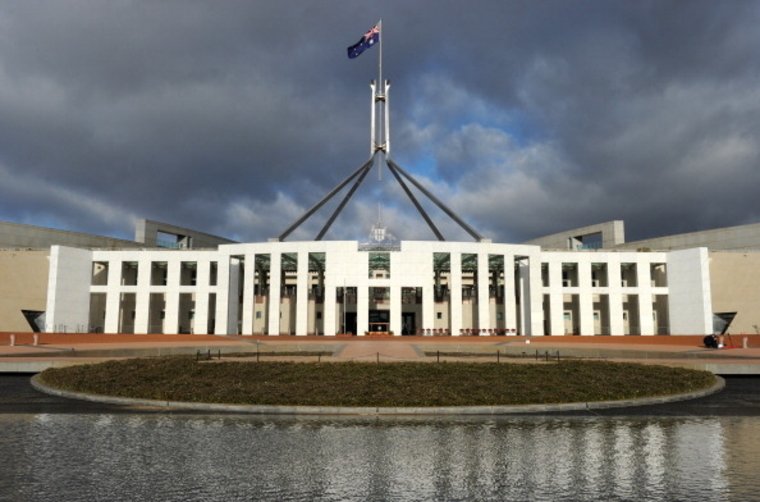
With little economic success to show for this experiment, the solution according to the RBA is to go even harder.

"Unconventional monetary policy tools" now are being considered, including negative interest rates and quantitative easing that would result in rapid monetary expansion through the credit market.

This approach relies on expanding a debt-based economy already approaching its limits.  Australia has the second highest household debt-to-GDP ratio in the OECD behind Switzerland and, despite recent budget improvements, government debt remains at record highs.  The RBA has created its own quagmire.  Any tightening of monetary policy risks popping the RBA-induced debt bubble, while additional easing of policy will likely further inflate the bubble and worsen the inevitable economic consequences.

This same predicament was faced earlier this year by the US Federal Reserve when it abandoned an attempt to normalise interest rates.  By holding interest rates at zero for seven years the Fed created an economy dependent on high levels of debt with low borrowing rates.

Despite low unemployment numbers, the Fed is clearly concerned by weaker-than-expected growth, a volatile stockmarket and increased government debt.  The US economy simply cannot handle a return to normal interest rates, causing the Fed to change course and continue with monetary expansion.

The underlying problem is that the RBA remains committed to a view that boosting consumption spending will ignite the economy.  Low interest rate policy promotes consumption by leaving households with more to spend by lowering loan repayments, the single largest expense for many households.  Low interest rates and monetary expansion also inflate asset prices, increasing asset owners' wealth and making them more likely to consume.

But the attempt to expand debt-financed consumption is losing its stimulus effect as it is becoming increasingly inconsistent with individual financial interests.

With high and rising household debt, and an uncertain economic future, it is little wonder households are reluctant to increase spending and instead are taking advantage of low interest payments to pay down their debt.

But according to the Keynesian economic framework that informs RBA decision-making, responsible individual and household behaviour leads to undesirable economic outcomes.  Rather than saving for the future, individuals should consume for the present.  The Keynesian view is that higher savings at the individual level leads to a reduction in demand through less spending, which reduces economic growth.  According to this view, this will lead to reduced income and in turn reduce total savings, often referred to as the "paradox of thrift".

The problem with this approach is that it reverses the economic fundamentals of growth.  Increasing consumer spending at the expense of saving will produce only a short-term boom.  No amount of meddling by the central bank can bypass the basic economic reality that economic expansion requires resources to be diverted away from present consumption towards the production of future goods.

Long-term sustainable growth requires savings to invest res­ources into expanding the nation's capital stock, which enables productivity and wage growth.  And it is precisely the investment, not the consumption, side of the equation that is missing.  New private sector business investment is just 11.2 per cent of GDP, lower than the rate during the economically hostile Whitlam years and near the recessionary lows of the early 1990s.

There are several areas governments need to address to boost investment.  High and complex taxation discourages domestic and international investment and distorts resources away from their most productive use.

Added to this is a substantial red-tape burden.  This week the latest World Economic Forum global competi­tiveness figures were released.  The report provides a comparison of global competitiveness based in part on a worldwide survey of business executives.  Australia's competitiveness is being weighed down by regulation.  Australia has dropped from 77th to 80th in the world for the burden of regulation.  Red tape is stif­ling business investment and reducing economic opportunity and growth.  Rather than focusing on boosting debt-financed consumption within a highly indebted economy, governments should focus on expanding the ability of the econ­omy to generate long-run prosperity.  This means liberating supply rather than artificially and unsustainably stimulating demand.

Wednesday, October 16, 2019

Freedom Is Not A Government Gift

There is a freedom of religion problem in Australia because there is a freedom of speech problem.

The Coalition government has failed to refute the notion that freedom of speech is a positive right granted by government as the right to discriminate.

Section 18C of the Racial Discrimination Act, for example, makes it unlawful for a person to engage in an action, including speech, that is reasonably likely to "offend, insult, humiliate, or intimidate another person or a group of people" on the basis of their "race, colour, or national or ethnic origin".

Having imposed this general restriction on speech, the government then provides for a series of conditional exemptions via section 18D, where offending, insulting, humiliating or intimidating someone on the basis of their race, colour, or national or ethnic origin is permitted.

There are two things to notice.  First, discrimination in this context has been defined down to the right not to be offended or insulted.  This is not discrimination at all.  It is a subjective and emotional interpretation one person has of what someone has said to or about them.

Second, section 18C reframes freedom of speech from a natural right, which all Australians possess as citizens of a free nation, to a positive right bestowed by government in certain circumstances.  That is, section 18C takes away freedom, and section 18D gives it back in a qualified, truncated and demented fashion that depends on the good grace of government and the Australian Human Rights Commission.

The confusion over the government's proposed approach to protecting religious freedom is a direct result of its failure to offer an alternative to its political opponents' framing of freedom of speech.

There are two processes under way in the context of freedom of religion.  The first is the Religious Discrimination Bill 2019, which proposes to outlaw discrimination on the basis of one's religious beliefs or actions.

The second is the review into the framework of religious exemptions in anti-discrimination legislation being undertaken by the Australian Law Reform Commission.  This review is to consider whether today's religious exemptions to anti-discrimination laws for people of faith remain appropriate.

The failure is that both processes propose to maintain the underlying structure of the anti-discrimination law.  This is paradoxical since the government is seeking to introduce laws that preserve freedom, placed within the context of anti-discrimination, a concept antithetical to freedom.

But this approach also opens proponents of religious freedom to the same types of attacks as proponents of freedom of speech.  Those who argue for the maintenance of section 18C assert that those who seek its abolition are seeking not freedom of speech but the right to be a racist or a bigot.  Similarly, it is argued that those who seek the limiting or removal of anti-discrimination laws are seeking not freedom of association but the right to discriminate.

Of course, such criticisms are logically correct, given the framing of freedom as a positive right from government.  If freedom of speech and religion are gifts from government, then government has every right to choose how those freedoms should and should not be exercised.

If, however, freedom is a gift from God, as many of faith hold, or a natural pre-government right, as secular liberals maintain, then its curtailing through anti-discrimination laws is unjustified.

Newspeak was integral to the ruling class of George Orwell's Nineteen Eighty-Four, not just because it provided a medium of expression for the state ideology but because it made all other modes of thought impossible:  "If you control the language, you control the argument."

Redefining freedom to mean discrimination implies we can never be free but can be given the privilege to discriminate only by government.  It is an inherently disempowering and inhuman notion.

If freedom is the product only of government fiat, then humans are not born free, nor are they endowed with free will, nor are they assumed to possess the dignity that comes with freedom.

Adding new anti-discrimination laws, as proposed by Attorney-General Christian Porter, or altering existing exemptions to anti-discrimination laws, as the ALRC is investigating, will only further embed the idea that freedom is solely provided through state power.

The only policy approach that will help protect freedom of speech and freedom of religion is to remove government-imposed constraints on those freedoms.

But to win the argument about freedom, the Coalition must change the language.  And changing the language means recognising that freedom is not a gift from government.  It is a natural human right that is necessary to human dignity and human flourishing.

Tuesday, October 15, 2019

Sydney Motorists Do Not Want A Congestion Tax

If there were fewer poor people on the roads, rich people could get to work more easily and everyone would be better off.  This, in a nutshell, is the argument for the congestion tax, a charge on drivers of vehicles seeking to enter and exit the city during morning and evening peak times.

The idea has returned to public debate this week after the Grattan Institute released a report recommending its implementation in Australia's capital cities.

Pointing to international examples London, Singapore and Stockholm, the report argues for a flat fee to be imposed on vehicles crossing a cordon around the inner city in peak hour.

The fee would be roughly equivalent to the cost of a public transport ticket.

This enables the remaining vehicles to move through the city more efficiently.  People deterred by the fee would be expected to use alternatives like public transport, cycling and walking.

According to the Grattan Institute, we should care about congestion not only because it is uncomfortable to sit in traffic but because transportation inefficiency reduces the economic benefits of cities.  Delays impose opportunity costs, limit employment mobility, and make it harder to access goods and services.

If this all seems familiar, that is because the congestion tax is a zombie idea, one that has already consumed many brains.

Around the country, various government-backed bodies have floated this idea since it was implemented in London more than 15 years ago.

Yet time after time, governments continue to reject it.

This time, the New South Wales and Victorian governments, coming from either side of the political aisle, both rejected the idea immediately.

And for good reasons.

A congestion tax hits the least wealthy hardest.

The suburban working-class would be forced either to pay extra to get to work or to cram themselves into unreliable, already full trains.

Or take the bus, gazing out the window at the people who were able to afford the new tax.

Car commuters may be more likely to have above-average incomes, but this will be no consolation to those working-class people who are priced out of their preferred mode of travel.

Moreover, the connection between car commuting and higher incomes is probably just that owning a car is increasingly expensive anyway.

Motorists already pay registration, insurance, parking fees and the fuel excise.  In the eyes of the government, driving is becoming a vice, akin to drinking or smoking.

We should also doubt the supposed social benefits of this tax.
It is not possible to know whether economic growth will be higher if people are forced against their will onto public transport.  Nor is it possible to calculate the value of lost amenity as people move into higher-density housing closer to the city or public transport.

This gets to the fundamental problem with rationalist schemes such as this one.

Whenever a system is directed by central planning towards a specific end, in this case efficiency, other values within the system are displaced.

The choices of drivers and public transport users are burdened by the costs of realising the priorities of the planners.  This is what bureaucrats mean when they speak of changing people's behaviour:  they mean penalising choices that they don't like.

In fact, this is what government is for.  The real question is who determines what gets penalised by whom.

As always, what is at stake is a clash of values.

The congestion tax replaces the experience of a city as a home with the planners' vision of the city as an economic engine.

It is consistent with the agenda of centralisation and densification that has reshaped our cities over the past generation.

Governments across the country have regulated small and medium businesses out of existence, while encouraging the move to a service economy by rendering Australian workers uncompetitive.

Now, if you want a job, the city is the only place you can find one.

At the same time, the government has made suburban life more expensive and inaccessible.

The Commonwealth has gamed its aggregate economic figures with mass immigration, while the states have artificially tried to limit the development of new suburbs.

Just as the congestion tax suggests government would prefer you take a train than drive, the recent history of our country suggests that apartment life is being promoted ahead of the mainstream Australian dream of a family home in the suburbs.

This track record might suggest that the day of the congestion tax will come eventually.

But governments would do well to remember that recent elections here and overseas have been decided in the suburbs, which have roundly rejected the elite class that wants to impose its vision of progress upon them, preferring their traditional order to promises of dynamism and efficiency.

Friday, October 11, 2019

Identity Politics Thrives On The Ideas That Divide Us

Everything that's wrong with the toxic culture of identity politics was revealed by the reaction to a photo of four people watching an NFL football game in the United States on Sunday.  At the game between the Dallas Cowboys and the Green Bay Packers, George W. Bush was sitting between his wife Laura and Ellen DeGeneres.  On the other side of DeGeneres sat her wife, Portia de Rossi.

Bush is a former Republican president who opposed gay marriage.  DeGeneres is a high-profile talk-show host whose political stance would in Australian terms be called centre-left, but in America is described as liberal or progressive.  Social media and many parts of the mainstream media in the US erupted as DeGeneres was attacked for, among other things, creating "a bad look", betraying the gay and progressive community, and being "irresponsible and dangerous" for being seen with Bush.

DeGeneres has since replied, "Here's the thing:  I'm friends with George Bush.  In fact, I'm friends with a lot of people who don't share the same beliefs that I have.  We're all different, and I think that we've forgotten that that's OK ... Just because I don't agree with someone on everything doesn't mean that I'm not gonna be friends with them."  DeGeneres has so far failed to placate her critics.

A new book by the British writer Douglas Murray, The Madness of Crowds:  Gender, Race and Identity, is a brilliant analysis of the world in which we now seem to be living, in which a gay liberal woman is condemned on social media because she's friends with a heterosexual conservative man.

Douglas describes the new political and social culture of the US, Britain and Australia whereby people are encouraged to discover not how we are all essentially the same as each other, but how we are all different — and how we will always be different, with all the consequences that follow.  Instead of looking for things on which to agree with each other, we're urged to emphasise how many things we disagree on.  As Murray notes this is not a recipe for long-term social cohesion.  His previous book was titled The Strange Death of Europe:  Immigration, Identity, Islam.

The Madness of Crowds offers a few DeGeneres-like examples of what happens when people step out of their assumed identity.  In 2016 at the Republican national convention, the billionaire entrepreneur Peter Thiel gave a speech endorsing Donald Trump.  Thiel was condemned by the most prominent gay magazine in the America.  Thiel is gay.  Last year when Kanye West met Trump in the Oval Office, he was criticised for meeting a white Republican.  West's response was he rejected the idea that "if you're black you have to be a Democrat".

Murray writes that organised religion and the "grand narrative" of human equality has been replaced with a search for meaning "by waging a constant war against anybody who seems to be on the wrong side of a question which may itself have just been reframed and the answer to which has only just been altered".

He highlights how the public sector, universities and increasingly the corporate world are in the grip of a mania for diversity and difference based on gender and race, but not on other characteristics such as religion, political opinion or, interestingly, socio-economic class.  Furthermore, the notion of "diversity" is full contradictions.

"For instance, every firm that makes a concerted effort to promote people of colour, women, or sexual minorities will always arrive at a moment where they make some version of the following discovery:  the people they have promoted are themselves likely to be comparatively privileged.  In many, though not all, cases they are people who have already been well served by the system ...

"At companies across Europe and America which have adopted this approach to hiring, a common story is emerging, albeit one only talked about in whispers.  For people in such companies are gradually realising that there are costs to all this.  That is, while their companies have managed to increase female mobility and ethnic minority mobility, their level of class mobility has never been lower.  All they have managed to do is build a new hierarchy."

Monday, October 07, 2019

Climate Change:  The Facts — And How You Can Help To Spread Them

As the editor of many books, I spend a lot of time pondering the nature of "facts".

A fact is something that has become known as true.  A fact may be dependent on accumulated knowledge.  Facts are considered superior to an opinion or an interpretation.  But sometimes the facts change.

There is the famous quote variously attributed to John Maynard Keynes, and sometimes Winston Churchill:  "When the facts change, I change my mind.  What do you do?"

Right up until the city of Brisbane in my home state of Queensland was flooded back in January 2011 — flooded following the emergency release of water from the overflowing Wivenhoe Dam — the considered opinion from Australian experts was that the dams would never fill again.  This was accepted by many as a "fact".

After that exceptionally wet summer, the Australian Bureau of Meteorology continued to forecast below-average rainfall even for Australia's Murray Darling Basin through the exceptionally wet spring of 2016.  Now there is drought again across much of eastern and southern Australia, and what farmers really need to know is:  "When will it rain again?"

Of course, droughts in Australia always break, and with flooding rains.  But there is no indication from the Bureau when we can expect this break.

Many claim such flood events are unpredictable.  In which case, we arguably don't have a scientific theory of climate.  A scientific theory is something substantiated:  a body of facts that has been repeatedly confirmed through observation and experimentation and that can be confirmed through accurate prediction.

There is no doubt that the Western World is currently being significantly affected by climate change activism.  But, the more rational amongst us — who are not necessarily those with a more formal education — can perhaps already see that very little of what is currently being articulated by this populist movement resembles fact.

Currently what we see from activists is more prophecy than numerically verifiable prediction — certainly no testing of falsifiable theory through what might be considered the scientific method.

Indeed, the leaders of the current populist movement against climate change seem unaware of the history of science or the history of climate change embedded in the geological record.  And while obsessed with climate, they seem unable to make a practical forecast for next week or next year when it comes to issues such as when the drought here in Australia might break.

This is a long introduction to my next book, which will be available for sale early next year.

It will be a book obsessed with facts that the climate is always changing.

As editor, I get to choose chapter authors.  The four most important chapters will be on "water" and it is my intention that they will move us towards a new theory of climate.

The four chapters are variously about cosmic rays, cloud cover, tropical convection and water vapour.  Indeed, water — in its many forms rather than carbon dioxide — will be dominant in the new emerging theory of climate.

This theory perhaps has its origins in a little-noted paper written by Richard Lindzen, Ming-Dah Chou and Arthur Hou back in 2001.  It got physicists like Peter Ridd thinking.

Dr Ridd is contributing one of the four seminal water chapters in the next book.  He will explain how deep convection, which can be thought of as a huge heat engine — is an alternative pathway for the upward transfer of energy from greenhouse gases.  The other important chapters in this section on water are by Henrik Svensmark, Geoffrey Duffy and the great Richard Lindzen.

I am seeking your support for the book's publication.

If you can spare more than $A400, you have the option of your name being printed in the book.  I am proud that will be my own name will on the front cover of the book alongside Duffy, Svensmark, Ridd, Lindzen and other fine scientists.

The last book in the series sold more than 30,000 copies.  It has made a difference, in a small way.

My hypothesis is that this next book will sell three times as many copies, and eventually be recognised as articulating the beginning of a new theory of climate, with Peter Ridd's contribution significantly building on the earlier work of Richard Lindzen.

But these four water chapters will be controversial, with technically complex elements, but 
the book will also include chapters that are easier to digest, and a few that are more philosophical.

One of the most popular chapters in the last book (my 2017 edition) — and the least technical, and most literary chapter — was by legendary poet and writer, Clive James, which was an amusing poke at "climate change" and catastrophism as popular culture.

Scott Hargreaves has already written something literary for the next edition (CCTF2020) and he has drawn on Clive's James' translation of Dante's Inferno to help describe the nine circles of "climate skepticism".  This will perhaps be the last chapter in this next 2020 edition.  What Scott has written is so insightful and also fun.

There will be about 20 chapters in total in the next book, including several chapters on Antarctica.  So, of course, there is a chapter on penguins, and perhaps will be two on volcanoes.

Antarctica is twice the size of Australia, and has a complex climate that is central to understanding global atmospheric and oceanic circulation patterns — including drought and flood cycles in Australia.

The history of science suggests that paradigms are never disproven until they are replaced.  So, now more than ever, it is important that you back this book that will challenge the current consensus, which is the current dominant paradigm.

Physicist and philosopher, the late Thomas Kuhn, explained that competition within segments of the scientific community is the only process that historically has ever actually resulted in the replacement and then eventual rejection of one previously accepted paradigm or theory.  It is so important that alternative voices are heard, that there is opportunity for a new theory of climate to emerge.

If you are at all sceptical of the catastrophist's claims that the current drought in Australia is the very worst on record, sea levels at record highs, and the planet about to melt — and most importantly, if you would like to contribute in a practical way to a fact-based new theory of climate change — then make a financial contribution to my next book in the series.

After all, everyone is entitled to their own opinion, but not their own facts.

Friday, October 04, 2019

Why Hong Kong Matters

As the Chinese Communist Party celebrated its 70 years of rule in China on Tuesday, an 18-year old anti-government student protester in Hong Kong was shot at point blank range in the chest by police.

The contrast between the youth of Hong Kong, demanding political and economic freedoms, and the brutal repression of the Chinese dictatorship could hardly be clearer.

The protests in Hong Kong began on 4 June when one million Hong Kong nationals took to the streets in opposition to a proposed extradition treaty between Hong Kong and China.  The treaty, which was withdrawn in September, would have meant Hong Kongers could be extradited for trial on the Chinese mainland, where the conviction rate is 99.9 per cent.

That one million people came out to protest out of a country of seven million demonstrates the deep desire for freedom and independence that runs through Hong Kong.  It would have been the equivalent to some 3.8 million Australians turning out to protest, around half of Victoria's population.

Protestors saw the proposed extradition treaty as another step of Chinese involvement and influence over Hong Kong's internal affairs.

Hong Kong was a British colony from 1842, when it was ceded from the Chinese following the First Opium War, until 1997.  In 1997 the British handed Hong Kong back to China under a model of "one country, two systems", meaning that Hong Kong would notionally be recognized as a part of China but remain as semi-autonomous city-state.

As a consequence, Hong Kong has its own legal and political system, underpinned by the British common law, the rule of law, and individual rights including freedom of speech, association, and assembly.

Hong Kong is also the most economically free nation in the world, according to the annual Index of Economic Freedom published by the conservative United States think tank the Heritage Foundation.

The index uses measures such as the security of property rights, the ease of starting a business, the extent of personal income and business taxes, and government integrity to rank the economic freedom of 180 nations around the world.  As the famous free market economist Milton Friedman once remarked, "if you want see capitalism in action, go to Hong Kong."

And it is this economic freedom that has allowed Hong Kong to flourish.  Hong Kong is an international trading and financial mecca, with an economic growth rate of close to four per cent and an unemployment rate of just three per cent.

But under the British handover agreement, the "one country, two systems" model is due last 50 years and expire in 2047.  What will happen to Hong Kong at that point is anyone's guess.

The protestors see the 800,000 people held in prison camps in mainland China, the mass surveillance state, and the brutal suppression of the minority Muslim Uighur population and fear what may come.

The Chinese Communist Party for its part is clear about its intentions.

On Tuesday at the 70th anniversary celebrations, China's dictator-for-life Xi Xining said "there is no force that can shake the foundation of this great nation."

Xi also promised the "peaceful" integration of Hong Kong, as well as Macau and Taiwan with mainland China.

Hong Kong might seem like a universe away from Australia.  But through a sophisticated web of power and influence, China is seeking to export its brand of Communism around the world including into Australia.

This can be seen with the one-belt-one-road and Made in China 2025 initiatives.

One-belt-one-road is a land and maritime economic infrastructure program.  It involves creating a vast network of highways, energy pipelines, railways, sea-ports, stretching though some 60 nations accounting for more than two-thirds of the world's population.  It has even reached Australia's shores with the Andrews Labor government signing onto the Communist Party initiative in 2018.

The purpose is to draw signatory jurisdictions closer to Beijing's orbit in a bid to boost Chinese economic and political influence and pry nations away from the United States.

Alongside sits the Made in China 2025 initiative which is a state-led program aimed at turning China the world's foremost producer of advanced manufacturing, including in areas involving robotics and artificial intelligence.  The program uses state-owned and directed enterprises, government subsides, and the acquisition of intellectual property to become an advanced industrial super-power.

What all of this means is that the free world is facing an increasingly assertive and belligerent China, seeking to shape the global economic and political order around its aspirations and preferences.

And this is why Hong Kong matters.  The values of freedom, independence, and self-rule are at stake.

These values speak not just to the protestors in Hong Kong, but to what it means to be human.

There is no dignity without the freedom for individuals to start a small business, form families and communities in which they can flourish, experience the dignity of work, and to collectively and democratically chart the course for their nations' future.

These are mainstream values not just in Hong Kong, but in Australia and across the western world.

The battle for Hong Kong is the defining civilizational battle of our time.  It is the age-old contest between freedom and human dignity over oppression and subjugation.

Thursday, October 03, 2019

Braving Two Terrifying Tribes:  Academics And Racism Warriors

Anthropologist Napoleon Chagnon, who died this week aged 81, was in the last generation of that profession who could claim to have studied an indigenous culture more or less unsullied by contact with modernity.  And he was among the first of his generation to experience personal attacks from the ascendant cultural left in full flight;  subject to deplatforming, character assassination, professional ostracism and all the other tools by which conformity to the canons of identity politics is enforced.  I mark Chagnon's passing this week, because his life and times are a study in miniature of the destruction of an academic discipline by identity politics.

An American, Chagnon graduated in Anthropology from University of Michigan and went and lived amongst the Yanomamö Indians who live the region which stretches across Brazil and Venezuela, and he produced books of field research on them.  He famously labelled them "the fierce people".

His field research started in the 1960s when anthropology in the popular imagination and in the Universities was dominated by Margaret Mead and a sort of noble savage view of what native peoples are like.  There is of course a classic contrast in views of life among native peoples;  you can either take the Rousseauian view of the noble savage or the Hobbesian view that life prior to the imposition of sovereign authority is poor, nasty, brutish and short.  Mead became famous with the publication of Coming of Age in Samoa (1928), which famously portrayed a native people living in harmony and being unfussed about premarital relations or even post marital relations.

This was somewhat what Changon expected to find.  Instead he found a culture among the Yanomamö that was strong and impressive in its own way, but which was unmistakably violent, with lots of raids against competing groups, and he noted that much of the violence was over women.  Adultery was not indulged and could lead to fatal outcomes.  Thus were the battlelines drawn — Mead's book was said to be the most widely read book in the field, until it was overtaken by Chagnon's Yanomamö:  The Fierce People (1967).

Having observed this behaviour, Chagnon developed an explanation that ultimately fed into the emerging fields of sociobiology and evolutionary psychology.  The idea essentially is that human behaviour can be explained a lot by reference to the desire to maintain bloodlines whether consciously or otherwise, trying to preserve our genetic material.  So you would go to war with those in your kin groups against those who were not in your kin groups, which is what Chagnon observed.  And this is what drives small pre-political societies.

It was this, in the 1970s that led to Chagnon being targeted by the cultural left, as were other "controversial" figures such as the founder of sociobiology, E O Wilson.  This narrative of traditional cultures being violent, and pursuing the narrow interest of their genetically defined in-group, conflicted with the new movement's determination to show that all social pathologies found in native peoples could be attributed to colonialism, exploitation and the general corruption brought to them by the West.  Anthropology was being transformed from a social science based on empiricism and hypothesis testing, to a cultural movement based on identifying with the oppressed and documenting the wrongs of the oppressor.

The ferocity of the attacks on Chagnon was such that he titled his 2012 account of his life and work and battles Noble Savages:  My Life Among Two Dangerous Tribes — The Yanomamö and the Anthropologists.  Chagnon in that book made no bones about tracing the Marxist inspiration for cultural anthropology as now found in Universities.  It is worth noting Mead herself wanted to resolve issues through debate within the bounds of the academic discipline, but the new left had no interest in that.  The validity of Chagnon's work continues to be recognised by figures such as Stephen Pinker and Matt Ridley, who draw upon evolutionary psychology in their explanation for social behaviour.  Pinker makes the argument that levels of violence can be attributed to the absence of institutions that can bring peace — this is the classic Hobbesian argument of The Better Angels of Our Nature.  The Yanomamö are not inherently better or worse morally than, say, the average Australian, they are just responding to the incentives they and the institutions within they live.  As institutions improve, violence decreases.

In Australia we had a bizarre echo of the Rousseau v. Hobbes smackdown when a Channel 7 documentary aired in 2011 portrayed a Brazilian tribe who live in the Amazon as violent and superstitious, along with claims of infanticide.  Survival International, a trans-national group which claims to act on behalf of tribal people, lodged a complaint with the Australian Communications and Media Authority alleging the report was inaccurate and racist.  ACMA was duly "satisfied that given the highly evocative language used in the report to describe the killing of babies and the judgmental tone used (in) condemning the alleged practice, it is likely that in all the circumstances these contributory factors would have perpetuated and provoked an intense dislike and contempt for the Suruwaha."  Channel Seven's subsequent appeal to the Federal Court was unsuccessful.

Given that ACMA has explicit powers to restrict free speech in broadcasting (and it is not clear whether truth was actually a defence for Channel 7), the issue is much more general than the legal grounds on which such decisions run.  The question is more whether, 50 plus years after Chagnon started documenting life among the Yanomamö, it would be possible for any anthropologist or other social scientist to put forward any descriptions of tribal life that are less than laudatory without facing (a) professional ostracism and (b) sanctions by state agencies empowered to police speech against the various sins of identity politics.

Something to reflect upon as Napoleon Chagnon goes to his rest.

Academics Spending Big In Search Of Racism

If you were not already convinced that Australia's humanities departments have truly lost their way, the latest research project from the faculty of arts and social sciences at the University of Sydney should get you over the line.

Resurgent Racism is the seventh "flagship" theme of FutureFix, a program devised by academics at the university to show taxpaying Australians their money is being put to good use.  Resurgent Racism will "address the emergence of new forms of racism manifesting as national populism and far-right extremism".  Researchers will "seek to explain the logics of emboldened white racism in Western liberal democracies", which they predict "will be applicable to majoritarian racism elsewhere".  These self-appointed sages have looked into the crystal ball and have seen a future blighted by white supremacists.

But we can be pulled back from the brink of this dystopian nightmare if the team at the faculty of arts and sciences is permitted to spend taxpayers' dollars, and the next few years, "mapping the changes of racism, including anti-Semitism, Islamophobia and white supremacism" in Australia.

That Islam is a religion, not a race, seems not to matter because a great many academics have shifted from focusing on what is real to what is not — in this case an imagined crisis of endemic racism.  They are knee-deep in the quagmire of identity politics, that most dangerous and divisive of ideas that insists on distinguishing individuals by their differences rather than by their similarities.

Like so many in the humanities, they view the world through a Manichean lens, in which everything can be explained as a struggle between the forces of good (light) and evil (darkness).  Everything they think about, write about and talk about in their capacity as historians, sociologists or political scientists must support the belief that Western civilisation is a white male patriarchy that wields power over, and oppresses, women and racial minorities.

Last year, Sydney University invited American professor, author and "renowned anti-racism educator" Robin DiAngelo so she could tell all the white people attending the launch of What Does It Mean to be White?  Developing White Racial Literacy just how terribly, but perhaps not irredeemably, racist they were.  According to DiAngelo, white people live in a racially insular bubble that renders them quivering wrecks when it comes to talking about race, a phenomenon she calls "White Fragility".  "Why does race seem to be the hardest word for white people?" she asked.

If she were to take a closer, impartial look at the Australian university sector, she would encounter many white people who have no problem at all with the word.  Many academics are not only not afraid to talk about race but they talk about it so incessantly that if it weren't for gender — the other great preoccupation of 21st-century academe — it would verge on monomania.

Of the 30-odd staff employed at the uni's department of history, for example, 10 make a point of mentioning race or racism as a research interest.  When Greg Sheridan, whose column appears on this site, criticised the Australian National University for rejecting the Ramsay Centre for Western Civilisation, one Sydney University professor, Dirk Moses, compared Sheridan to Norwegian mass murderer Anders Breivik.

Since 2002, the department has received almost $9m from the Australian Research Council to fund 18 historical studies research projects that focus on racism, in one form or another.  These included The Construction of Race and Racial Identity at the Antipodes of Empire, 1788-1840 (costing $231,000);  Southern Racial Concepts:  Comparative Histories and Contemporary Legacies ($2.4m);  Immigration Restriction and the Racial state, c. 1880 to the Present ($359,000);  Enterprising Women, Race, Gender and Power in the Revolutionary Atlantic, 1770-1820 ($323,000);  and The Racial Century ($94,000).

The Resurgent Racism squad comprises, among others, former race discrimination commissioner Tim Soutphommasane, seen by some to have encouraged complaints to the Australian Human Rights Commission following publication of a 2016 cartoon by Bill Leak in this newspaper.  Last year Soutphommasane gave the keynote address at the university's National Centre for Cultural Competence, launched in 2013 to the tune of $5.6m of taxpayers' money.  It claims its mission is to "roll out cultural competence across the university and broader local national and international community", but in reality it is a concerted effort to convince us Anglo-Celtic white culture is bad.

When vice-chancellor Michael Spence suggested questioning the existence of Chinese influence on his campus was akin to the White Australia policy, he was simply ensuring next year's income.  Last year the university pocketed $884m in international student fees, a generous portion from Chinese students.

The Resurgent Racism team is spending taxpayers' money to tell Australians how racist we are.  It is evidence the racism industry is flourishing on our university campuses, which are no longer in the business of producing objective and impartial scholarship that will edify, inspire and educate future generations of Australians.