A few days ago Alexander Downer wrote on these pages that if he were American he would have voted for Donald Trump ― but through gritted teeth.
 My view is different from Downer. I would have voted for Trump eagerly and enthusiastically. You could argue that in 2016 there were arguments for both Clinton and Trump. Not this time. In 2020, the case for Trump was overwhelming ― although based on the likely election result, it looks like a majority of the American electorate didn't have quite the same assessment.
Usually when people complain about Trump's personality it's because they refuse to acknowledge the success of his policies. In October last year, unemployment in the United States was at its lowest level in 50 years. Trump did more for the job opportunities and economic empowerment of minorities in America than any president since Reagan. At this election, it appears Trump won a greater share of the minority vote than any previous Republican.
Critics complain about Trump's rhetoric on China but they never explain what they would do differently in the face of an authoritarian and imperialist power.
The suggestion that Trump is some sort of vandal of constitutional propriety is a meme of a media that refuses to countenance that the Democrats might mean what they say and attempt to stack the US Supreme Court.
However, the main reason why I'd have voted for Trump was not because of economics, it was because of cultural values. Trump offered an alternative to the ideology that started on college campuses and is now engulfing the country that defines individuals according to their race, that regards the democratic political process as a tool of oppression, and uses violence to shut down freedom of speech.
American historian Anne Applebaum in a thoughtful article a week ago in The Atlantic titled 'The Answer to Extremism Isn't More Extremism' asked why 'educated conservatives', who knew Trump's faults would still vote for him. As she correctly noted, many conservatives, 'educated' or not, are deeply concerned by intellectual trends such as 'an intolerance of opposing views, a vogue for public shaming and ostracism, and the tendency to dissolve complex policy issues in a blinding moral certainty'.
Many conservatives believed that re-electing Trump while not a complete answer to all of this, would have been a start.
According to Applebaum: "Anyone who actually cares about academic freedom, or the future of objective reporting, or the ideas behind the statues built to honor American democrats in the country's public squares, must hope that Trump loses. If he win a second term, extremism on the left will not be stopped."
As one of the world's leading historians of authoritarianism and communism, it's perplexing that Applebaum would advocate a form of cultural appeasement.
"I hope that educated conservatives think hard about what will happen if Biden's moderate-left campaign fails: It is extremely unlike that its adherents and spokespeople will shrug their shoulders and decide that, yes, Trump is right after all. They are much more likely to move further to the extremes. Americans will witness the radicalization of the Democratic Party, as well as the radicalization of the powerful and influential intellectual, academic, and cultural left, in a manner that we have never before seen."
It's interesting to speculate whether before the election there was anyone in America urging 'educated progressives' to vote for Trump to avoid the radicalisation of the Republican Party and the intellectual, academic, and cultural right. Probably not.
Yet for all the potential consequences Applebaum describes of a Trump victory, 68 million Americans nevertheless voted for him; 72 million Americans voted for Biden.
Many commentators before and now after the election have spoken about how deeply divided is America. That's true.
But many 'educated conservatives' would respond that a country or a community or a family is only as divided as it wants to be.
An 'educated conservative' who voted for Donald Trump would ask what side of politics it was sowing the seeds of division.
The interest of an Australian in the culture wars of America's universities, sports fields, and boardrooms is that inevitably what begins in Berkeley, California ends up in Ultimo, Sydney.


 The compulsory superannuation contribution rate is legislated to rise from 9.5 per cent to 10 per cent next July and steadily increase to 12 per cent five years later. In the wake of the largest economic shock in decades, and the sharpest spike in unemployment and underemployment, increasing the super rate will come at the expense of working people who are already struggling with a rising cost of living.
 The state last week got out of its second lockdown of the year. Just like you were told yours will only last one month, we were told it would last six weeks. It lasted 112 days.
 The most recent call for a federal Independent Commission Against Corruption comes on the heels of last week's revelations that the CEO of Australia Post and the chairman of the Australian Securities & Investments Commission had both been stood aside pending investigations.
 Lockdowns have undermined almost every civil society institution in this country. They mandated the emptying of places of worship and that volunteers cease to perform work in many instances. The financial hardship that resulted from this policy drained the pockets of donors and the charities they support.
 ACT Labor will continue to govern, as it has done since 2001, but the big winners were the Greens, who have more than doubled there representation. The 25 seat ACT Assembly will have ten Labor members (down from 12), nine Liberals (down from 11), and six Greens (up from two). The Greens already have a seat in cabinet, in exchange for propping up the minority Labor government, and will now be even more influential. The radical Greens are a party of government in the ACT.
 The paper is by academics at James Cook University's ARC Centre for Excellence for Coral Reef Studies. It is a scary headline. But is it true?
 Victorians are now divided exactly down the middle. Any sense of community unity and "we're all in this together" has long since disappeared.
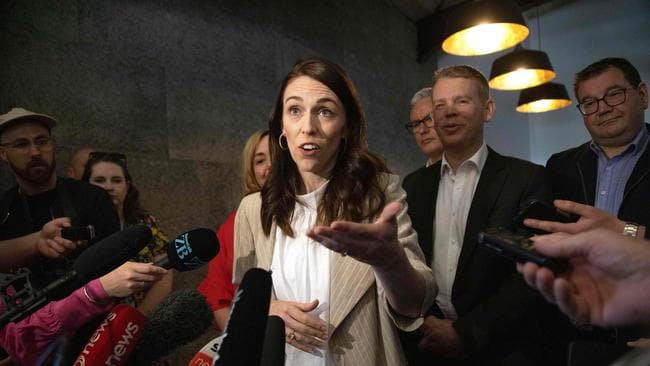 The same could be said about New Zealand Prime Minister Jacinda Ardern. She's a brilliant politician, but has been a grossly incompetent administrator. And with her seismic re-election on Saturday, New Zealand is in for a dangerous three years.
 The RBA's decade-long experiment with record low interest rates has created an economy that is dependent on low borrowing costs and has emboldened the Federal government to dramatically blow the government debt out to $1.7 trillion over the next decade.
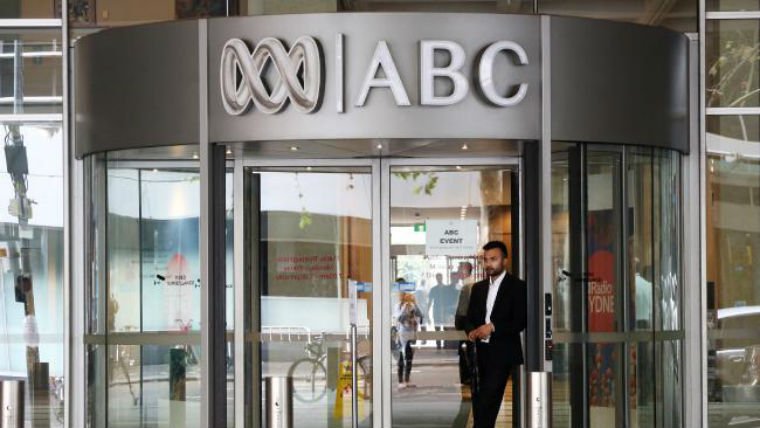 Congratulations! You have just started an internship at Australia's public broadcaster, the ABC.
 After seven hard months of social isolation, economic pain and despair about the future, the time has come to change course.
 It perfectly describes the popular reaction to this week's federal budget and the news the country faces more than a trillion dollars of government debt.
 This narrative creates anxiety because it follows that there really is a climate emergency and that we have pushed nature out of balance.
 Maybe after living under Boris Johnson's restrictions for the next six months, you'd want to get as far away from your house as possible. Or maybe Australians ― some of whom haven't been able to leave the house for more than two hours since July ― wanted to visit you.
 My modelling has estimated that it could take until 2045-46 for the Commonwealth government to deliver a budget surplus, with total debt expected to peak at $2.05 trillion and not be paid off until 2079-80.
 Instead of sticking to its guns, the Rob Guest Endowment swiftly capitulated, issued a grovelling apology, vowed to do better and cancelled the scholarship for 2020. So much for supporting the younger generation and "helping them achieve their dreams" as the endowment proudly purports to do.