If you had a wound that was gushing blood onto the floor and your doctor prescribed a mop and bucket, you'd ask where he got his practicing certificate and why he wasn't fixing the actual problem.
 Yet this approach is exactly how most western governments are tackling the question of skyrocketing electricity bills.
In Australia, household electricity costs have increased by over 100 per cent in the last decade, or over five times the rate of inflation.
Worse is yet to come with wholesale and futures electricity prices on the east coast now regularly over $100 per megawatt hour compared to the historic benchmark of $50 and widespread acknowledgement that the investment climate for energy is effectively broken.
But after commissioning countless reviews into the operation of the energy market, re-stating support for the Renewable Energy Target, seeking to squeeze the Snowy Mountain Scheme for more power and imposing export restrictions on gas companies, the Turnbull Government announced in Tuesday's Budget a one-off $75 payment to pensioners to compensate for increased household energy bills.
This story is the same throughout the western world, including in the United Kingdom, where despite household electricity prices increasing by 133 per cent in the decade to 2014 on the back of a commitment to reduce carbon emissions, favour renewables and dismantle coal power stations, the Conservative Government has just announced that if re-elected on 8 June it will put a "cap" on electricity bills.
The problem in both countries, as well as in Germany, which has amongst the highest electricity prices in Europe, where over 50 per cent of household power bills are government charges, and around 330,000 households have their electricity cut off every year, is that governments are trying to bend the rules of physics, engineering, markets and nature, to fit in with a flawed political ideology.
Electricity machines that can operate 24 hours a day seven days a week fuelled by the natural energy stored in coal, gas and uranium will always be more efficient than machines dependent on the vagaries of Mother Nature, whether solar, wind or hydro-electric.
Real markets where private sector suppliers are given the freedom and the ability to develop new products to meet the demand of consumers will always work better than fake markets created by government bureaucracies to find solutions to problems that they themselves create.
Fiddling with markets also leads to unintended consequences.
The Blair Government pushed more diesel cars onto the British market because they emit less CO2 than conventional petrol. Ten million cars later, London is now reportedly choking on nitrogen oxide (a diesel by-product) and governments are looking at new ways to force diesel cars off British roads.
Northern Ireland's "Cash for Ash" scandal where businesses were paid GBP1.60 for every GBP1 they spent on "green energy" made it profitable to burn good trees to heat unoccupied rooms and may cost taxpayers nearly GBP 500 million.
In Germany, despite renewables achieving what most would consider to be a critical mass, the Renewable Energy Levy has increased from 0.2 cents per kilowatt hour in to 6.88 cents in 2017 and funds new renewables as well as compensates existing renewables for the fall in the wholesale price caused by these extra renewables.
Fiddling is also expensive. Last year it was estimated that compliance with the UK's Climate Change Act would cost consumers and businesses over GBP 300 billion by 2030 and Germany's "Energiewende" 520 billion Euros by 2025.
It is only in the USA, which has embraced unconventional gas exploration and development to the chagrin of environmentalists, where the price of energy is falling. It is ironic that while in the laissez faire US CO2 emissions have fallen, in meddling Europe emissions reduction has now stalled.
Renewables are only viable if they are built or funded by government or if government uses taxes or red tape to "nudge" the market and ensure that the cost of alternatives are increased to match the cost of renewables.
It is like an athlete that wants to win Olympic gold but is only the tenth fastest runner so they spend their days lobbying to get the other nine disqualified or hobbled, rather than just training harder or looking for another career
To this end, it is instructive that on Monday renewables advocates used their PR channel (a.k.a. Four Corners) to re-argue the circular logic that the best way to prevent a significant increase in electricity bills is to introduce an emissions intensity scheme to penalize fossil fuel generators, forcing them to increase their prices to match renewables.
If western governments were serious about tackling energy bills, they would put energy affordability and security ahead of CO2 reduction as the goal of the electricity system.
In Australia, the Turnbull Government should abolish or at the very least close the Renewable Energy Certificate scheme to new generators. If it won't abolish or privatise the Clean Energy Finance Corporation (CEFC) then it should at least ensure that the CEFC is allowed to fund lower emissions coal, gas and nuclear power generators.
Governments should also ensure that renewable operators are required to account for those periods of low or no power generation, either through batteries or by paying for reliable back-up generation. This would allow more accurate comparisons between the costs of different technologies.
While using taxpayer money to fund new or upgraded electricity generators is not ideal, Australians already pay over $2 billion every year in renewable subsidies. This money would be better used to just build new, multi-decade fossil fuel or nuclear power generators for use until technologies improve.
With 100 years' worth of black coal, 1,000 years of brown coal, hundreds of years of gas and 30 per cent of the world's uranium, Australia should have the lowest electricity bills in the world.
Reducing costs would be a far better long term solution than the quick fixes of seeking to control private electricity demand or offering temporary bill relief.


 In the House of Representatives on March 11, 1999, Peter Costello, then treasurer, accused the ALP of lacking discernible values: "The Labor Party stands for nothing but populist oppositionism."
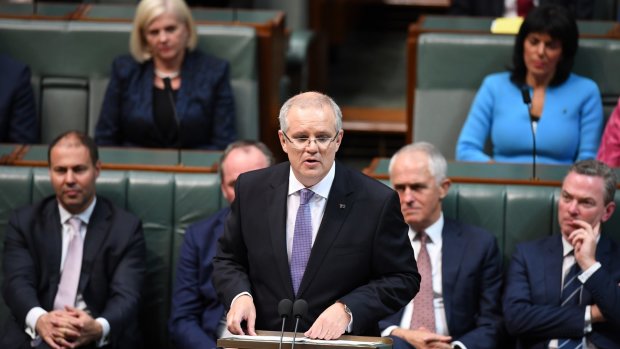 A unique period in Australia's modern history is drawing to a close. For three decades both of the country's major political parties held a commitment to policy reform based on the principles of economic liberalism.
 The debate over strengthening section 46 of the Competition and Consumer Act is about to heat up again.
 Returning to his home town and the inevitable protests for the first time since the inauguration, President Trump may have kept the PM waiting for a few hours. But it was worth it.
 While most Australians would consider employer involvement in these private financial matters to be antiquated, absurd, patriarchal, or even downright suspicious, the law currently allows considerable third party involvement in your superannuation.
 It is also when we get to hear why government should tax more. To hear some people tell it, the power of taxation is quite astonishing — it can solve any and every social ill.
 Today, the Victorian "civil liberties" advocacy organisation had this to say about Gillian Triggs, who as President of the Australian Human Rights Commission since 2012 has overseen some of the worst known abuses of section 18C:
 And that will continue under the government's
 But where is the fairness in asking the majority of Australians — three quarters of whom don't have a university qualification — to subsidise the debt of tomorrow's professional class who are likely to earn more over their lives than they will?
 It is true that the Racial Hatred Act 1995 was introduced following the tabling of three government reports in the early 1990s, but it is not accurate to say section 18C reflects the recommendations put forward in those reports. Not one of those reports recommended for a civil prohibition on offensive or insulting language.
 Robbery and theft have declined 13 per cent from the last quarter of 2016. Other serious crimes such as murder and assault are stable. This stands in stark contrast to Victoria where serious crime is skyrocketing, up 20 percent over the past two years.
 It was a long overdue foray from him into the debate about our changing national identity. Unfortunately many on the political left demean that debate by labelling it as merely a manifestation of the so-called "culture wars" and as a debate not worth having. But as the left knows perfectly well, culture is everything.
 For decades Australia and its Asia-Pacific neighbours benefited from a relatively stable region in which open markets, inclusive regional institutions, uncontested freedom of navigation and a favourable balance of power underpinned by the United States' predominant military presence in the Western Pacific were the order of the day.
 Unfortunately, it seems politicians are more concerned with suppressing competition rather than freeing our housing markets.
 The end of the low-value threshold was first flagged by the government in December 2014. It formed part of last year's budget. Now there is actual separate legislation before parliament, and a Senate committee inquiry that will give its verdict on the legislation the same day Scott Morrison releases his 2017 budget.
 NXT MP Rebekha Sharkie has
 But this cost cannot be avoided simply by letting people out of prison. Criminal justice reform must always be about maximising community safety.
 According to Textor representatives of big government, big business, and big unions "all meet each other in Qantas lounges and have the occasional manufactured blue on the stage of a forum. And yes, they do have some fundamental differences, but my contention would be that it's not as big as the differences between small and big businesses, not as big as the differences now between the public and political class."
 Regardless of the naysayers and the doubters who still campaign to this day for the UK to remain in the EU, have no doubt the Brexit divorce will go ahead. By 2019, the UK will be out and free to be a major player on the global stage once again.