Friday, February 14, 2020

Roaring Into The Twenties

When Ricky Gervais came roaring onto the stage at the recent Golden Globe awards, he cemented his place as the first anti-woke hero of the 2020s.

"If you do win an award tonight, don't use it as a platform to give a political speech," Gervais said.  "You're in no position to lecture the public about anything.  You know nothing about the real world — most of you spent less time in school than Greta Thunberg.  So if you win, come up, accept your little award, thank your agent and your god, and f— off."

And, pre-empting the inevitable fallout, Gervais reminded the audience:  "Remember, they're just jokes!"

Gervais knew what he was doing.  He was daring the Hollywood wokeocracy to reach for the outrage button in an era when every second joke triggers a garbage fire on Twitter, or at the very least a string of interminable online think pieces about how "problematic" it is.

And that's the rub.  That is the whole dynamic that made the 2010s such a dreary and frankly depressing era.  Like the celebrities lampooned by Gervais, everyone and everything, it seems, is serious and pompous and exhausting.  Nobody has any fun anymore.

It's not just that we're no longer able to tell a few bawdy jokes.  It's not even political correctness itself.  It's the deeper mentality that has engulfed society at large, a pathological tendency to see the worst in everything.

These days, it seems like no aspect of daily life — from how we carry our groceries back from the shops to how we get to work in the morning — is safe from overbearing guilt, or worse still oppressive regulation.  Meanwhile, advertisements abound telling us we drink too much, we eat too much, that we're sending our family to the poorhouse with every harmless punt and that — despite ample evidence to the contrary — a great many of us are unknowing bigots.

It's a mindset that casts Australia and everyone who's in it with original sin.  Everywhere you look, there are naysayers peddling the myth that Australia is a Dickensian hotbed of inequality, on stolen land, spreading poison around the world in the form of our number one export, the demon coal.  Black armband history is nothing new, but over the last decade the grievance industry has boomed, with an army of moral guardians waxing lyrical about how every Australian institution — from our constitution to the local footy club — is seeped in racism, sexism and "toxic masculinity".

To be fair to Australia, it is a disease that's afflicted the Western world in general.  Look at Prince Harry (or whatever he goes by these days), wincing at the thought of commercial aviation — the modern miracle that allows millions to see the world — saying that "We all have to do better".  Or Nike, which marketed itself a couple of years back by celebrating the cause of an elite athlete who refused to stand for the national anthem.  Not to be outdone, Gillette released an ad the following year suggesting that its customers were latent misogynists.

And, appropriately, Time's Person of the Year at the tail-end of the last miserable decade was a sour-faced teen whose most famous public utterance is a finger-wagging "How dare you?"

Say what you like about Scott Morrison, but when he says "How good is Australia", it resonates.  Because more than ever before, there is a deep thirst in the community for a bit of good news, a reprieve from the drudgery of whatever the chattering classes happen to be banging on about.  We want to feel good about ourselves again.

It's not as if there aren't public policy problems in Australia — there are.  Too many people are out of work, red tape is choking our chance at prosperity, taxes are obscenely high and decades of overregulation have transformed electricity — in one of the most energy-rich countries on the planet — from a basic utility to a luxury good for too many.

But none of those things make Australia — let alone Australians — inherently bad.  All it means is that Australia has untapped potential, and lots of it.

And ironically, in global terms things have never been better.  Extreme poverty has more than halved since 2010 and, as of 2018, more than half the world's population has been in the middle class for the first time in human history.  Every available indicator — from literacy to infant mortality — continues to improve.

Meanwhile, freedom is making a comeback in the West, as patriots around the world elect governments that promise to dismantle the worst excesses of the bureaucratic-managerialist state.  Donald Trump's seismic cuts to tax and red tape have created the most free and prosperous economy America has seen in generations.  Boris Johnson's thumping victory last year obliterated the hitherto-insurmountable resistance of the "Remoaner" elite.

And while Scott Morrison's policies — to the limited extent he has any — are somewhat hit-and-miss, we can credit him for heading off the most wantonly destructive policy platform in living memory, a horrible reality we were all but guaranteed to suffer through had the Liberal party continued on the trajectory set by Morrison's deeply unpopular and woefully inept predecessor.

And of course, as the popularity of Ricky Gervais's diatribe shows, the world is increasingly seeing through the dead end of identity politics.  Ordinary people are no longer allowing themselves to be intimidated into silence.  The emperor's clothes are falling off.

By speaking up, by revolting at the ballot box, by opening their wallets for the Peter Ridds and Israel Folaus of the world, mainstream Australians are casting off the yoke of windbag politicians, joyless bureaucrats, condescending "experts", preachy celebrities and every other noxious strain of self-important know-it-all who gets off on micro-managing almost every conceivable facet of the human condition, while making us pay through the nose for the privilege.

So, Australians all let us rejoice.  Let's draw a line under that wretched decade of self-flagellation and start living large again.  It's time to ditch the acrimony and nihilism of the 2010s, and embrace the feel-good twenties.

Thursday, February 13, 2020

Intellectual freedom?  Only if your values are ''aligned''

The university year began with a rumbling noise that all is not well with intellectual freedom in this country.  What started as a small story at a Queensland campus has become a very big one that demands attention if we care about the future of the current generation of young Australians, the next generation, and the trajectory of freedom in this country.

Generation Liberty is home to a group of young Australians, who are committed to understanding and promoting the way in which freedom has enriched people across the history of civilisation.  I have come to know many members.

They are an eclectic bunch mostly under 25.  So good luck to those creepy fiends of identity politics who try to filter these young people by sex, sexual orientation, racial and religious traits.  This futile search will throw up these common threads only:  they are curious contrarians.  They engage in furious debates, don't take themselves too seriously and are willing to listen to others.  They want to learn things they haven't always been taught at school or at university, the history of Western civilisation, warts and all, the ebbs and flows of freedoms and its impact on people.

Last month, Gen Lib, as we call it, applied to have a stall at Market Week, an extended part of O Week at Queensland University of Technology, which runs in late February.  By email in late January, Alisha Pritchard from QUT's student guild declined Gen Lib's application, telling it the committee had "decided that your brand does not align with our values".

In the days that followed, Drew Pavlou, a student who sits on the University of Queensland's senate, started a petition to ban Gen Lib from UQ's market day activities too.  Pavlou describes himself as a human rights campaigner.  He has tweeted a video of himself supporting Hong Kong protesters at UQ.  Alas, his lack of support for intellectual freedom at home creates a serious credibility problem for him.  In other social media posts Pavlou has called for crushing dissent, burning books and said Gen Lib members "need to be bullied into submission".

What on earth are they afraid of?  This year, Gen Lib intends to run a book club for students that will include Metamorphosis by Franz Kafka, Joseph Conrad's Heart of Darkness, Jane Eyre by Charlotte Bronte, Lord of the Flies, by William Golding, Albert Camus's The Stranger, Mark Twain's The Man that Corrupted Hadleyburg, A Christmas Carol by Charles Dickens, and Homage to Catalonia by George Orwell.  Gen Lib also will chat about what we call Big Fat Books, including The Gulag Archipelago by Alexander Solzhenitsyn, Atlas Shrug­ged by Ayn Rand and Friedrich Hayek's The Road to Serfdom.

Which book frightens QUT's student guild or the student representative on the UQ senate's peak governing body so much that they don't want students knowing about Gen Lib?

When news broke of this censorship of Gen Lib, QUT's student guild ran for the hills, claiming a litany of other reasons for Gen Lib's exclusion.  But remember its first response to Gen Lib:  "Your brand does not align with our values".

At one level, this is a story about a group of students who have not been taught about the empowering forces of intellectual freedom, let alone the history of freedom across a few thousand years of Western civilisation.

But it is part of a much bigger story that includes a vice-chancellor, too.  Following questions from this newspaper to the Education Minister, QUT vice-chancellor Margaret Sheil released a statement last week saying that O Week gives priority to guild-affiliated clubs, and Gen Lib could affiliate and apply next year.  In any case, "the available area for stalls during O Week is currently at capacity", she said.

Then came some pure puffery.  "QUT does not operate on the basis of left or right-wing bias:  the effectiveness of all we do here relies upon remaining open to a variety of contesting viewpoints and to the merits of evidence," Sheil said.

Was Sheil misinformed about the facts or was she being disingenuous?  Either way, the university's leader failed to address the fact that the student guild at QUT rejected Gen Lib's application for Market Week, not O Week, and on the basis that its brand did not align with their values.

On Wednesday afternoon, QUT backed away from its first statement.  Peter Gatbonton, QUT's manager of student engagement, emailed an invitation to Gen Lib's Theodora Pantelich, inviting them to be part of O Week.

What happened to no space?  Maybe like a late guest pulling out from a wedding reception the chaps from the Socialist Alternative couldn't make it after all.

Seriously, are we meant to be grateful that QUT administrators caved in to pressure and managed, after all, to find space for the ideas of freedom at QUT's O Week?

Perhaps, in her private moments, the vice-chancellor of QUT wonders how the heck it reached this dismal state of affairs among her students.  In truth, the responsibility rests with university administrators like her.  Rarely from the goodness of their hearts or the brilliance of their minds do VCs defend intellectual freedom.  They tend to do it once forced, when exposed, and shamed.  Like here.

Vice-chancellors love talking about deliberately ambiguous concepts such as "diversity" and "inclusion" rather than a bedrock principle called intellectual freedom.  Worse, they have overseen the cementing of these woolly words on campus to shut down div­erse views and students who challenge the orthodoxy feel excluded.

We know this from a survey of students conducted last year.  Rather than listening to the public exhortations of VCs, we asked students about their experience at universities.  Forty-one per cent of them said they felt unable to express their opinions at university.  This is what transforms a small story about a student guild at QUT into a very big story about the strangulation of intellectual freedom.  The story gets bigger still.  It includes a set of laws that are lame and a regulator that has had no discernible impact on improving intellectual freedom at Australian universities.

Start with the Higher Education Support Act 2003.  As a condition of receiving federal money from taxpayers, it provides that "a higher education provider ... must have a policy that upholds free intellectual inquiry in relation to learning, teaching, and research".  Then there is the HES Framework 2015 that says:  "The higher education provider has a clearly articulated higher education purpose that includes a commitment to and support for free intellectual inquiry in its academic endeavours".  This framework requires a university "governing body ... to develop and maintain an institutional environment in which freedom of intellectual inquiry is upheld and protected".

Now for the regulator.  The Tertiary Education Quality and Standards Agency is empowered to enforce the HES Act and the HEC Framework so taxpayers and students know publicly funded universities are carrying out their core mission to educate their students.

TEQSA's own report card is woeful.  Like VCs around the country, TEQSA's chief commissioner, Nick Saunders, has mentioned intellectual freedom, including when asked at a Senate estimates inquiry, but there is scant evidence of a regulator genuinely committed to holding universities to their core mission of intellectual freedom.  If this is yet another rogue bureaucracy ignoring its remit from government, the government has a chance to appoint a new kind of bureaucrat.  TEQSA chief executive Anthony McClaran is leaving his role at the end of next month.  The search for a new boss may be the chance to boost the heft of this body.

But, then again, maybe the law needs reforming.  After all, requiring a policy on paper about intellectual freedom is meaningless;  what matters is enforcement.  This story, then, is also about the federal government.  A series of them, in fact.  Intellectual freedom has been on the slide for decades, going back to the atrocious treatment of Geoffrey Blainey at the University of Melbourne in 1984 when he aired his view that the Hawke government's 40 per cent intake of poor immigrants from Asia could threaten the country's social cohesion unless managed properly.  He was hounded off campus as a racist.  Blainey is not a racist;  he is one of Australia's finest historians.

There has sometimes been a bit of talk from politicians, prime ministers too, and a bit of legislative tinkering such as Julia Gillard's changes to the HES Act in 2011.  But still, today, too many university campuses are not known as places of learning where intellectual freedom thrives.  If they were, a student guild running stalls for new students wouldn't dream of banning a Gen Lib stall on the basis that its brand did not align with the guild's values.  If intellectual freedom were taken seriously, a vice-chancellor would not put up with this baloney on their campus.  And neither would the regulator or our government.

The Education Minister has the authority to direct TEQSA in the exercise and performance of its powers.  Isn't it time then for a ministerial kick up the regulator's backside?  If not now, when?  What will it take for that to happen?

Remember, too, that thousands of Australians are still waiting for the Morrison government to support intellectual freedom by supporting Peter Ridd, who was sacked by James Cook University for challenging the quality of climate science.

Instead, Education Minister Dan Tehan has plans to tweak this, and tinker with that, tightening up the government's "compact" with each publicly funded university to include universities reporting on their approaches to supporting freedom of intellectual inquiry on campus.  That'll fix things, then.

Another more difficult, but not impossible, route to intellectual freedom is to remove sources of public funding from universities that fail at that core mission.

A baker's mission is to bake.  A lawyer gives legal advice.  A plumber will fix your plumbing.  Yet we need laws, regulators, compacts and codes to convince university administrators their core job is to offer intellectual freedom on campus.

No wonder Generation Liberty is thriving, attracting curious young people hungry for what publicly funded universities fail to offer them.  It is a safe bet that, far away from student guilds and VC offices, our values about freedom align very closely with millions of Australians.

Activist Judges Misrepresent Mabo To Create Privileged Class

The High Court's decision on Tuesday to exempt an entire group of people based on their racial identity from the operation of national migration laws is the most radical instance of judicial activism in Australian judicial history.

The High Court's decision concerned two individuals who were not born in Australia and were not Australian citizens but who claim biological descent from Abor­igines and Torres Strait Islanders.

After the two non-citizen individuals were sentenced for separate and unrelated offences against the Queensland criminal code, the Home Affairs Minister cancelled their visas and they were detained under the provisions of the Migration Act 1958 on the suspicion of being unlawful non-citizens and were liable to deportation.

This law relies on the commonwealth's power under section 51 (xix) of the Constitution to make laws with regards to "aliens" — a phrase that established High Court precedent understands as referring to non-citizens.

The High Court, by a narrow majority, has arbitrarily written into this aliens power a new exemption.

The majority decided that it was not open to the parliament to treat an individual who can prove sufficient descent from an Aboriginal Australian as an alien.  The majority claims that because the common law recognises indigenous native title to the land as surviving the reception of the common law and the sovereignty of the Australian crown, it follows that indigenous Australians also have an inextinguishable right to enjoy their traditional lands and maintain their cultural and spiritual connection to them.

The result is the legal fairytale of a unique class of individuals who are non-citizens as well as non-aliens.

The decision to limit the commonwealth's power to decide who is and is not an alien is a direct attack on the sovereignty of the crown.

Justice Michelle Gordon introduced her decision by stating that "the fundamental premise" of the High Court's 1992 Mabo decision "is that the indigenous peoples of Australia are the first peoples of this country", and the connection between the indigenous peoples of Australia and the land and water that now make up the territory of Australia was not severed or extinguished by European "settlement".

This is a misrepresentation of the Mabo case.  The basis of the court's decision to recognise native title in Mabo was that it existed within the common law system and that this was an institution derived from the sovereignty of the crown.

Yet the decision this week is founded on the opposite premise that, in at least respect of alienage, the racial identity of a person supersedes the sovereignty of the crown.

The majority decision is a total repudiation of racial equality.

By carving out an exception in the Australian Constitution for people on the basis of their immutable biological characteristics, the High Court has created a new class of person "consigned to inhabit a constitutional netherworld in which they are neither citizens ... nor aliens", as Justice Stephen Gageler noted in his dissenting judgment.

This fact alone should put to rest the idea that recognising historical facts in the Constitution would not lead to unintended consequences.  The credibility of the minimalist case advanced by some "conservatives" for constitutional recognition of indigenous Australians has been swept away.

Any proposal that would insert a new provision into the Australian Constitution that would mark out some kind of recognition of indigenous Australians would inevitably come before the High Court.

The question now will be:  if the High Court is willing to create a separate and privileged class of person that is beyond the scope of Australia's migration laws, then what would it be prepared to do with a preamble or declaration written into the Constitution?

Each of the seven High Court judges offered their reasons for their decisions.  This means that the judges responsible for this mess cannot hide behind the judgment written by another judge.  It also means that a divided majority judgment will be easier to knock down by a future court.

But to do this would require judges who are more willing to hew to the basic legal principles that formed this commonwealth.  In this respect this decision should be a wake-up call for Coalition governments.

Three of the four judges forming the radical majority were nominated by the Abbott and Turnbull Coalition governments.  The supposedly conservative Coali­tion has failed in its basic task:  preserving our country's Constitution by appointing judges willing to play the proper role of saying what the Constitution means, rather than what judges would like it to mean.

During the next 13 months two of four judges in the majority — justices Geoffrey Nettle and Virginia Bell — will reach the mandatory retirement age.  The two replacements must both be explicitly capital-C conservatives.

Anything else will be a further betrayal of the Constitution and of Australians.

Friday, February 07, 2020

McKenzie's Removal Was A Bad Day For Democracy

In the Battle of Bridget, the unelected bureaucrats have triumphed over the will of the Victorian people with the effect of diminishing the value of our democracy.

Senator Bridget McKenzie has paid a steep price for the sports rorts scandal, being forced to resign as Minister for Agriculture and leave Cabinet.

The usual narrative around McKenzie's dismissal was that it was inevitable;  that she had abused her position when she was Minister for Sport by handing out grants to clubs in marginal Liberal and National seats.

But there is another way of looking at this, one where three groups of unelected bureaucrats, under the direction of the shadow attorney-general, used their positions to unfairly target a high performing and popular conservative female senator for Victoria.

Group of unelected bureaucrats #1, the Australian National Audit Office, undertook an audit of the Community Sport Infrastructure Program.  As Minister for Sport, McKenzie had responsibility for allocating funds to sports clubs around Australia.  This audit was undertaken at the request of the shadow attorney-general, Mark Dreyfus.

Dreyfus specifically asked the ANAO to investigate the circumstances surrounding the $127,000 check that went to the Yankalilla bowls club in the lead up to the 2018 by-election in the of Adelaide electorate of Mayo.

But the ANAO, of its own volition, went beyond that remit of investigating the $127,000 cheque to looking into the entire $100 million multi-year grants program.

The finding by the ANAO was apparently that some successful grant applications were "not those that had been assessed as the most meritorious in terms of the published program guidelines".  But assessed as meritorious by who?

That would be group of unelected bureaucrats #2, Sports Australia, which is the government agency responsible for advising on and administering the sports grants program.

Sport Australia invented a rating system out of 100 to assess grant applications, with the expectation that those with a higher score would receive the funding.  McKenzie's office developed its own methodology which, naturally, led to do different assessments.

There is the broader public policy question of why the Commonwealth government even has the authority to hand over significant taxpayer dollars to local sporting clubs.  Surely that would be better managed at the state, local, and community levels.

But given the Commonwealth does have that power, someone must decide where the grants are allocated.  And in a parliamentary democracy like Australia, it is the bureaucrats who advise and ministers who decide.

Even the ANAO report concluded that "program guidelines identified that the Minister for Sport would approve Community Sport Infrastructure Grant Program funding".

Certainly, some of McKenzie's grant allocations were questionable.  Her $36,000 grant to a shooting club in Wangaratta that she was a member of was a clear conflict of interest.  McKenzie should have declared the conflict and recused herself from providing grants to firearms clubs.

Ultimately, it was an investigation carried out by group of unelected bureaucrats #3 at the Department of Prime Minister and Cabinet that uncovered that and a second conflict of interest that led to McKenzie's resignation.

But, even there, it is worth remembering that shooting is an Olympic sport that Australia has won five gold medals in.  And some of the other grants which have been questioned in the media don't seem so dodgy on reflection.  Sport Australia advised the minister that the Gippsland Lakes Roller Derby would be a worthy recipient of a $500,000, grant having received a rating of 98 out of 100.

McKenzie formed a different view and decided to allocate $500,000 to the Pakenham footy club to build changing rooms for female footy and netball players.  The Sport Australia bureaucrats rated the footy club as only 50 out of 100.

That tells you everything you need to know about this issue.  Unelected bureaucrats wanted grants to go to roller derby.  But an elected member of parliament thought the footy club was more deserving.  Which is more consistent with community expectations?

The sports grants program was far from a pure and clean process.  But there is a much bigger principle at stake, which is that ministers must hold the ultimate responsibility for how taxpayer dollars are allocated.  They — and not the unelected Canberra-based bureaucrats — are the ones who face voters every three or six years.

Like it or not, that is how democracy works.

Climate Wars Are The Aussie Brexit

Climate change is to Australia what Brexit is to Britain.  That's because, just like on Brexit, perspectives on climate policy are as much about one's views on the future of the economy and society as they are on with the merits of the issue itself.

Because most of the inhabitants of the Canberra press gallery bubble can't see past the froth on their cappuccino, Tuesday's vote for the parliamentary leadership of the federal National Party has been presented as basically the product of Barnaby Joyce's ego and personality.  Maybe.  But something much bigger was at stake.

Under one leadership candidate, the Nationals would continue to follow the Liberals' climate change policies, which place a priority on adherence to the Paris Accord.  Pursuant to the accord, Australia has agreed to impose the deepest per capita cuts to CO2 emissions in the developed world.

Under the other candidate, the Nationals' position on climate change would instead have prioritised cheaper energy and industrial development.  A majority of the National Party MPs and senators voted for the first candidate.

These two positions reflect vastly different assessments of the politics of climate change and vastly different worldviews.  It seems that to several Liberal MPs (and presumably a few National MPs, too), if the Coalition somehow did more on climate change, many of the political challenges posed by climate change would go away.  This might be true, but history has demonstrated that more action on climate change never seems to be enough to satisfy those demanding further reductions in emissions.

Furthermore, the evidence that the public is demanding action on climate change is more nuanced than commonly assumed.

The evidence for this is not only the outcome of last year's federal poll, which was presented by many as the climate change election.  There's also data from surveys such as that by JWS Research reported in this newspaper in November:  when respondents were prompted on what they thought were the three most important issues the government should focus on, the environment and climate change was ranked fourth, behind cost of living, hospital, healthcare and ageing, and employment and wages.


INCREDIBLY REVEALING

When respondents were unprompted, 34 per cent nominated the environment and climate change, 28 per cent named healthcare and 22 per cent said employment and wages.  It is incredibly revealing that despite all of the attention devoted to climate change in nearly every single walk of life in this country, only about one-third of people rank it as one of the top three issues on which the government should focus.

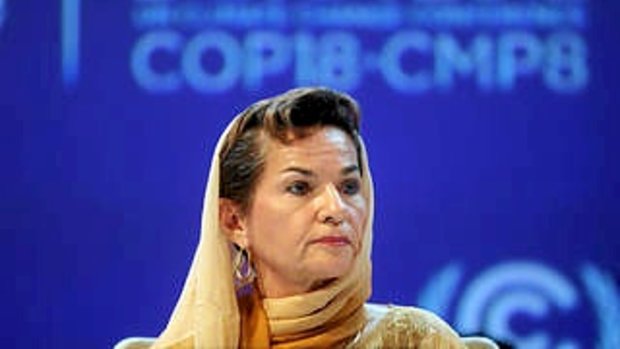
When for example, former United Nations Framework Convention of Climate Change executive secretary Christiana Figueres said climate change policies provided "the chance to re-create the economy, to re-create the world", it's not unreasonable for those who believe the world could be better but who don't think it should be re-created, to take people like Figueres at their word and push back.


"THE PARTY FOR WORKERS"

This is the point that Nationals senator and former resources minister Matt Canavan made this week when he talked about the future of the Nationals as "the party for workers ... workers in coalmines, workers in shipyards and workers in factories".

Canavan was one of the four people most responsible for the Coalition's federal election victory in May — the others being first and foremost Prime Minister Scott Morrison, Treasurer Josh Frydenberg and the Liberals' federal director Andrew Hirst.  Canavan's work went largely unnoticed in Sydney and Melbourne but he was the one who turned the debate about the future of Australia's coal mines into a vote for or against economic development in regional Australia.  A large part of the reason the Coalition won 23 seats in Queensland to Labor's six is because of Canavan.  One outcome of the Nationals' leadership vote this week is that he is now on the backbench.

A re-created zero-emissions economy consistent with the vision of someone like Figueres has little place for workers in factories and definitely doesn't have room for coalminers.

At least for the British, as of Friday last week when Britain officially left the European Union, Brexit for the moment is settled.  In Australia though, there's no end in sight to the so-called climate wars.

Thursday, February 06, 2020

Defang Bureaucrats So They Can't Be Used As Political Pawns

The revelations about how former prime minister Tony Abbott and other conservative activists were pursued by the federal Attorney-General's Department at the behest of Labor legal affairs spokesman Mark Dreyfus represents a failure of our democracy and the rule of law.

My Freedom of Information request­ uncovered further details about how the organiser of the Conservative Political Action Conference, Andrew Cooper, and conservative speakers at that conferenc­e, including Abbott, were required to register as agents of foreign influence by the Attorney­-General's Department.

Last July 22, Dreyfus attended a briefing with senior represent­atives of the Integrity and Security Division, the bureaucrats from the Attorney-General's Department who were responsible for enforcing the Foreign Influence Transparency Scheme.  This occurred just days before Kristina Keneally's speech to the Senate which sparked a media frenzy about the CPAC conference.

The FITS scheme was introduced into federal parliament in December 2017 and came into force a year later.  The purpose of the Dreyfus briefing was to inform him about the implementation of the scheme.

In notes recorded by an A-G's departmental official, Dreyfus "specifically raised the upcoming Conservative Political Action Conference to be held in Sydney 9-11 August 2019, as an example of an event that may trigger registration obligations under the scheme and asked what the Department planned to do about it".

It is clear the bureaucrats went straight to work following up Dreyfus's request, and by August 2 last year they had sent letters to Abbott, inviting him to register as an agent of foreign influence, as well as Andrew Cooper, who as president of conservative advocates LibertyWorks was the co-­organiser of CPAC.

What is also clear from the FOI request is that the departmental bureaucrats busily monitored the speaker list of the CPAC Australia website each day so that they could also invite others to register as agents of foreign influence.

On October 22, the department sent Cooper a letter demand­ing he turn over all documents regarding the CPAC conference within 14 days, with the threat of being imprisoned for six months if he failed to comply.

It was clear from reporting in The Australian at that time that Attorney-General Christian Porter­ was unaware of the actions of bureaucrats in his department.  He said he had made it "clear to my department that I expect it to demonstrate a focus on the most serious instances of non-­compliance".

He then added what might be seen as an understatement:  "I'm not persuaded this focus has been perfectly demonstrated to date."

The bluntness of this legislation was foreseeable.  My Legal Rights Audit 2018 warned that the Foreign Influence Transparency Scheme Act 2018 remove­d procedural fairness, the right to silence and the privilege against self-incrimination.

The very people responsible for protecting our democracy from political interference have been actively undermining it.  Using the power of the state to target political opponents is behavio­ur you expect only in authorit­arian regimes.  Yet this is what Dreyfus apparently sought to do.

Australians understand that foreign interference in our politics is a serious issue and one that our laws should seek to prevent.  It was shameful of Dreyfus to seemingly try to ­harass his political opponents by using a law designed to address the genuine issue of political interference by communist China.  If it was found that a Coalition MP had tipped off bureaucrats under the guise of national security legislation to investigate the links between an Australian prog­ressive activist organisation co-hosting a conference with a US organisation there would be wall-to-wall outrage at the ABC and The Guardian.  Rightly so.

Yet some mainstream media outlets have been all but silent when it comes to reporting revel­ations of the misuse of national ­security apparatus to hound their ideological opponents.

In any other liberal democracy, to require a person to hand over any information where the consequence of refusing is jail time would require these bureaucrats to stand before a judge and secure a warrant.  Not here.

A recent poll by Dynata found 64 per cent of Australians believed unelected bureaucrats had too much control over our lives.  The Dreyfus revelations show Australians are right to be worried.

The FITS legislation needs to be recast to defang the bureaucrats as well as opportunistic politicians such as Dreyfus who apparently use it target enemies.

Monday, February 03, 2020

Unelected Bureaucrats Engaged In ''Political Hit Job'' At Labor's Request

The real scandal in the grants administered by Nationals Senator Bridget McKenzie is that unelected bureaucrats at the Australian National Audit Office engaged in political hit job against a conservative politician at the request of Shadow Attorney-General Mark Dreyfus.

The ANAO undertook its Award of Funding under the Community Sport Infrastructure Program audit at the request of Mr Dreyfus.

The shadow attorney-general requested an audit into the circumstances surrounding then-Liberal candidate for Mayo's funding of a local bowls club in the lead up to the 2018 by-election.

It is curious that no one in the media has questioned why in a liberal parliamentary democracy like Australia a member of the opposition can direct unelected bureaucrats to investigate a minister of the Crown.

Going beyond its original remit of investing the provision of a $127,273 cheque to the Yankalilla bowls club, the ANAO engaged in a far-reaching audit of all grants administered under the Community Sport Infrastructure Grant Program.  Grants under the program could be provided under the discretion of then-minister for sport, Ms McKenzie.

Ms McKenzie's apparent failure was that several projects which received grants did not meet the criteria established by Sport Australia, which is an unelected statutory agency.

But this is an egregious misunderstanding of how democracy works.  Bureaucrats advise.  Ministers decide.  If public servants want to decide how taxpayer funds are allocated, they should run for parliament.

Mainstream Australians would much prefer an elected member of parliament to decide how their money is spent, not faceless, unelected members of the Canberra swamp.

A recent poll by Dynata found that 64 per cent of Australians believe unelected bureaucrats have too much control over our lives.

In reporting on the issue on Tuesday, the ABC thought they had found two fatal smoking guns.

The first was the apparent revelation that the minister's office was running a parallel process to Sport Australia for where the grants should be allocated, as evidenced by a spreadsheet leaked to and reported by the ABC.

Far from a smoking gun, this spreadsheet appears to exonerate Ms McKenzie of any wrongdoing.

The spreadsheet shows that the majority of the 223 projects marked as "successful" in the first round of grants went to Labor-held seats.  As McKenzie said, this is "reverse pork-barreling".

Some 94 projects were in Labor-held seats, with 87 in Liberal, 35 National, and seven in seats held by independents.

The second would-be smoking gun is the $500,000 grant provided to the Pakenham Football Club, which received a rating of 50 out of 100 by Sports Australia but received the highest possible grant.  The Pakenham Football Club is in the marginal Liberal seat of La Trobe.

According to Sport Australia, that $500,000 would have been better provided to the Gippsland Lakes Roller Derby in the safe Nationals seat of Gippsland, which received a rating of 98 out of 100.  Only an unelected and out-of-touch public servant could think it is a better idea to fund the roller derby than the footy in Victoria.

Besides, the ratings out of 100 are mere inventions of the bureaucracy designed to give the process fake scientific credentials.

More to the point, the funding to the Pakenham footy club was to build change rooms for female footballers and netballers, something the woke ABC would usually celebrate.  Instead, the ABC would rather play political football for the Labor Party even if it means female footy players lose out on much-needed facilities.

To be sure, the potential misuse of taxpayer funds is a big policy issue and must be investigated.

In October last year, this government gifted $1 billion of taxpayer funds to the Clean Energy Finance Corporation to underwrite more intermittent, expensive, and unreliable renewable energy.  No one lost their job.

In 2018, this government gave $444 million to the Great Barrier Reef Foundation which at the time had an annual revenue of around $10 million.  No one lost their job.

For a decade both Coalition and Labor governments gave more than $88 million to the scandal-plagued Clinton Foundation.

Yet Ms McKenzie could lose her role as deputy leader of the Nationals for faithfully discharging her duties as a minister and an elected member of parliament.

Ms McKenzie has been engulfed by a scandal.  Just not the one spun in the media.

A member of the Opposition directed the ANAO to investigate a political opponent, the ANAO then went beyond the remit of this original request, and the taxpayer-funded ABC conspired with a leaker to obtain and report on confidential information with the potential effect of ending the political career of an elected member of parliament.

Investigate that.

Friday, January 31, 2020

We Need A Full Public Inquiry Into Labor And The Pen-Pushers' CPAC Outrage

As revealed in The Australian today, my Freedom of Information request has revealed that former prime minister Tony Abbott and president of LibertyWorks and organiser of the 2019 Conservative Political Action Conference, CPAC, Andrew Cooper were investigated by the Attorney-General's Department at the instigation of Shadow Attorney-General Mark Dreyfus.

The FOI reveals that on 22 July 2019, eight days before Senator Kristina Keneally's speech to the Senate condemning CPAC, opposition legal affairs spokesman and former and former attorney general, Mark Dreyfus QC, met with senior representatives from the Integrity and Security Division of the Attorney-General's Department for a briefing on the Foreign Influence Transparency Scheme, and "specifically raised the upcoming CPAC conference to be held in Sydney on 9-11 August 2019 and asked what the Department planned to do about it."

This is a shocking development.  Using the power of the state to target political opponents is something that occurs in the authoritarian regimes, not a liberal democracy like Australia.

Here is part of the FOI:

Senior bureaucrats have been caught conspiring in secret with the ALP to intimidate and harass Labor's political opponents.

This conspiracy between Dreyfus and powerful public officials has threatened Australia's democracy and national security.

Andrew Cooper put it well when he told The Australian, "Mr Dreyfus has deliberately and methodically sought to use the state to censor the free speech of his political opponents at CPAC."

"It is a contemptible and cowardly act."

Too right.

But the fact the Attorney-General's Department were able to do this and its worrying powers were foreseeable.

My Legal Rights Audit 2018 warned that the Foreign Influence­ Transparency Scheme Act 2018 was found to remove procedura­l fairness, the right to silenc­e and the privilege against self-incrimination.

There must be an independent and public inquiry into this scandal to establish how far and deep this conspiracy has spread.

This absolutely disgraceful scandal shows why this law needs to be completely recast so this can never happen again.

Economic Zone Can Be Boost For North

Making Northern Australia a special economic zone with low taxes and less red tape, and devolving governance away from Canberra to regional hubs such the Kimberly, will deliver an economic boom and make Australia safer.

According to a report earlier this month, the Government is planning to strengthen Australia's engagement with India and Southeast Asia, in part to reduce Australia's economic dependence on China.  The rise of China over the past two decades has generated many benefits for the Australian economy, particularly in the resources sector.  Increased demand for commodity exports from Australia has driven investment, job creation, and supported the growth of regional communities.

However, this has come at the cost of a growing dependence on the Communist dictatorship which, if not managed, will erode Australia's economic and political sovereignty.

The federal government's planned return to a Budget surplus this financial year would not be possible without the revenue generated from commodity exports to China.  This has created a vulnerability for Australia and provided China with leverage.

In December the Chinese Ambassador to Australia, Cheng Jingye, hinted at this when he said China's purchases of Australian exports "... is largely responsible for the federal budget returning to surplus ahead of schedule".

Northern Australia Minister Matt Canavan, for one, appears alive to the issue, stating "we [Australia] shouldn't hitch our star to one country because that elevates risk, not just from a political perspective but from an economic one, too."

The task is to pivot Northern Australia, which is the area above the Tropic of Capricorn and all of the Northern Territory, away from its heavy reliance on China.

There are already some good initiatives underway.  During the recent US-China trade war, concerns were raised that a large amount of the rare earth minerals used for US military equipment and industry came from China, creating a national security vulnerability.

This led to renewed interest in Australia culminating in an agreement last year for the US to expand its use of Australia's rare earth minerals including antimony, manganese, and rutile.  Australia is the second largest producer of rare earths, accounting for 13 per cent of global production.  This initiative sits alongside the Northern Australian Infrastructure Facility, which provides finance to projects in the region, and an expansion of defense capabilities in areas such as Darwin.

Now is the right time to build on this good start by turning Northern Australia into a Special Economic Zone.

SEZs are designated areas where tax and regulation are significantly relaxed or reduced.  The focus of such a zone in Northern Australia would be to promote investment, create employment opportunities, and transform depressed and under-developed regions into areas of considerable economic activity and opportunity.

Reducing regulation and red tape will enable the development of more infrastructure, such as dams, which is crucial to the development of the region.  The North of Australia receives approximately 60 per cent of Australia's rainfall but currently only about two per cent is captured.

Crucially, a special economic zone will enable the North to access more diverse sources of capital and investment.  The two major impediments to business investment in Australia are the corporate tax rate and red tape.  Australia's corporate tax rate of 30 per cent is well above the OECD average of 25 per cent, while red tape reduces the size of the Australian economy by $176 billion each year which is the equivalent to 10 per cent of GDP.

As a consequence, new private sector business investment in Australia is just 10.9 per cent of GDP which is lower than the rate in the economically depressed Whitlam-era.

A lower regulatory and tax impost will help the north access more capital from the US, South-East Asia, and India.

Economic liberalisation is not only necessary for economic prosperity.  It is now a national security imperative.

Friday, January 24, 2020

Welcome To The Real World, Law Grads

There are a few responses to all those young graduate lawyers complaining about hard work, long hours and low pay.

The first is:  "Welcome to the real world."

If they don't like being a lawyer they could try running a small business.

Small business owners regularly report working 60 or 70 hours a week.  Even if young lawyers think they should be earning more for their time, at least they're still getting paid.

If you're starting a small business there's every likelihood you're not paying yourself, and if you fail all you've got left are loans that must be paid back somehow.

Another response to unhappy law graduates is:  "No one is forcing you to be a lawyer."

In this newspaper on Tuesday it was reported that a young lawyer responded to a survey from the Law Society of South Australia by saying he made more money from bar-tending than from his first legal job, at which he worked 16 hours a day, seven days a week for a salary of $600 a week.

Such a claim might be true.

But there's also a chance that for a young person fresh from tertiary education — where they've grown accustomed to spending half the year on holidays, and when they're actually at university, studying and attending lectures for four or five hours a day — working in an office in a full-time job under anything other than the idyllic conditions of undergraduate life might seem onerous.

That could lead to the evils of their condition being somewhat exaggerated.

Inevitably, there have been calls for the government to regulate the pay and conditions of young lawyers, because the long hours effectively mean they are being paid the equivalent of less than the minimum wage mandated by law.

However, one of the hallmarks of a "profession" is the ability of members of that profession to regulate themselves in matters such as the terms of employment, the conditions of entry into the profession, and disciplinary processes.

Ultimately, it must be up to law firms themselves to decide what is and isn't an appropriate workload for their staff.  Furthermore, it should never be forgotten that firms have a responsibility not only to their employees, but also to their clients.


HAYNE PAIN

During the Hayne royal commission, there were numerous stories of the ridiculous and unreasonable hours being worked by lawyers at firms representing the banks.  Many complaints were levelled at the firms, when in fact a more appropriate target of those criticisms would have been the commission for initiating demands for documents and evidence according to timelines that in many cases were completely unreasonable.  If a royal commission wants all the documents relating to a particular transaction to be delivered to it within 24 or 48 hours, no bank or law firm representing that bank can say they can't comply because their staff have gone home to sleep.

Not all of the grievances of young lawyers are unfounded.  Low pay as a graduate employee comes with the territory and applies in many other kinds of employment, not just the law.  The same applies to working long hours.  But there is a point where the expectations that young lawyers might have about work hours turn into demands that are manifestly unreasonable.  Where that line is will vary according to circumstances and it is a line impossible to legislate for.  Which is why the government should not and cannot enforce a hard-and-fast rule on working hours for lawyers.

The more the government regulates an area of employment, the more it becomes an industry and the less it is a profession.  Unfortunately, that's why school teaching ceased to be a profession many years ago.

More government regulation of young lawyers' employment is certainly an option — but it's the wrong option.

If the fees that top-tier firms charge their clients increase, as a result not only of higher wages but also from the costs of complying with new regulations, then the costs will inevitably flow through to mid-tier firms and eventually suburban practices.  The end result will be that for normal people, legal advice will become even more unaffordable.

A Tale Of Two Malcolms

When it comes to that ugly chapter in Australian political history that was Malcolm Turnbull, we always knew what we were getting.  It was always — always — about Malcolm.  For some, it was endearing.  For most, it was exhausting.  And ever since Turnbull was blasted out of the Lodge — with his outlandish streams of revisionist history — it's been downright sad.

But in capitalising on this summer's bushfires, Turnbull has gone from bitter and twisted to positively ghoulish.  As hundreds of Australians lost their homes and, tragically, their lives, Turnbull has wedged a callous "I Told You So" into the media cycle at every opportunity.

But what would the climate crusader of the present make of the ghost of Turnbull past?  Well, when you look at his past comments, it looks like Prime Minister Turnbull would be guilty of the very same "denialism" that Citizen Turnbull bemoans today.

Take his rant in TIME magazine last week.  "These fires show that the wicked, self-destructive idiocy of climate denialism must stop," Turnbull wrote.

But as Prime Minister, Turnbull was rightly more circumspect about invoking bushfires in the so-called "climate wars".  As has been reported this week, Turnbull was asked in 2018 about similar comments from the Greens.  "Look, I'm disappointed that the Greens would try to politicise an event like this," the then-PM replied.  "You can't attribute any particular event, whether it's a flood or fire or a drought or a storm, to climate change".

Today's Turnbull has also joined the chorus of climate evangelists demanding steeper emissions cuts.  "The world must drastically cut its greenhouse gas emissions," Turnbull says, adding that "Australians no longer need to sacrifice economic growth to reduce emissions".

But again, Turnbull was much more averse to emissions targets in October 2017, when answering a question in Parliament from fellow Liberal Julia Banks.  "We know that, were Labor to implement its policy of a 45 per cent cut in emissions by 2030, a 50 per cent renewable energy target would add nearly $200 a year to household energy bills," Turnbull bellowed.

Which brings us to Turnbull's newfound embrace of renewables and vendetta against coal, which is so extreme that one almost expects to see the one-time PM glued to a Brisbane road sometime soon.

Writing for the Guardian, Turnbull has said that "above all we need to face this fact:  Coal is on the way out.  It is a matter of life and death.  The world must, and I believe will, stop burning coal if we are to avoid the worst consequences of global warming".

Did Turnbull think that we'd all forget the time he chuckled along when Scott Morrison brought a lump of coal into Question Time?  Or when he admonished Bill Shorten for "turning his back on all of those coalminers" and being in an "ideological trap set for him by the Greens"?

There's plenty more where that came from, floating around Hansard and Turnbull's own website.  But you get the idea.

Of course, Turnbull's few remaining defenders will put all of that down to "extremists" in the Coalition.  Turnbull wanted "real" climate policy, they will all say, but he was sabotaged by conservative "wreckers" in the party room.

It's a cop-out as cowardly as it is convenient.  And besides which, it's wrong.  De facto conservative leader Peter Dutton was loyal to Turnbull for almost all of his term as PM, emerging as a leadership contender only when it became clear that Turnbull's political skills were so woefully inept that the Coalition was headed for electoral wipe-out.

And yes, there were a handful of MPs who — for many good reasons — would have crossed the floor to vote against the NEG.  But that would have been a footnote of history had Turnbull not whittled the Coalition's majority down to one at the 2016 election.

Turnbull's recent appearances appear to have nothing to do with climate change or energy policy or the future of the planet.  They are presumably about Turnbull's need to rationalise and soothe the disappointment of his overhyped rise, and the humiliation of his spectacular fall.

In these bushfires, Turnbull has found his post-politics raison d'etre.  The Akubra and check shirt are long gone, and the leather jacket is out of mothballs.  Malcolm the climate warrior is back, with — quite literally — a vengeance.

And what about the ordinary Australians over whom Turnbull once governed?  The coal miners and exporters and small businesses and farmers and families and pensioners who will lose out if Australia takes the extreme and destructive "climate action" that Turnbull and his ilk are clamouring for?  The millions of Australians whose living standards will be tanked by the economic vandalism that will cost millions of jobs and jeopardise entire industries?

Well, they're probably just collateral damage.  Because as always, it's all about Malcolm.

Thursday, January 23, 2020

We'll Not Prosper In A World Tied By Red Tape

While the wider Australian economy struggles under excessive regulatory burden and lack of ­opportunity, the Canberra swamp charges ahead as a perpetual growth machine.

According to Deloitte Access Economics's latest quarterly business outlook released on Monday, Australia continues to suffer the triple threat of drought, a downturn in housing construction, and low confidence among consumers and business.

According to the ­report, Australia is "locked into slow growth" with an outlook ­described as "comfortably treading water rather than roaring into recovery".

Claims about the robustness of the economy do not stand up to scrutiny.  Even Josh Frydenberg in The Australian on Wednesday pointed to an International ­Monetary Fund report showing only "tentative signs of improved market sentiment" and recent data showing unemployment has fallen to the still high rate of 5.2 per cent.  Conditions are sluggish and the federal government is not doing enough to improve productivity.

But while Australia's private sector is living "in the slow lane" and "productivity growth has been as dead as a doornail", Deloitte ­reserved special praise for the ­nation's apparent economic leader, the ACT.

"Canberra is defying the ­national downturn, continuing the drive which has seen it record its largest ever share of the nat­ional economy.  Job growth is healthy and lower interest rates are loosening the noose on family budgets," noted the paper's lead author, Chris Richardson.

Data published by the Australian Bureau of Statistics in Nov­em­ber reveals what is so unique about the ACT.  Last year "public administration and safety" — which refers to most public sector activities but doesn't include education and health — accounted for about 28 per cent of the ACT's economic activity alone.  Nationally, public administration and safety accounts for about 5.7 per cent of the Australian economy.

Success for Canberra is based on a business model of regulatory and bureaucratic expansion.  A paper last year by a team of ­researchers at the Mercatus Centre of the George Mason Univer­sity in the US and RMIT in Melbourne found that the number of regulatory restrictions in Australia increased from about 2000 in the late 1970s to 95,000 in 2015, and in that time has ­become substantially more complex and wordy.

Government agencies have been given broad powers and discretion to administer this regulatory expansion, which in turn leads to further calls for red tape.  This month the Australian Communications and Media Authority ­released a discussion paper on ­impartiality and conflicts of interest in news broadcasting.  Having taken the initiative to identify the problem, it now assumes the ­responsibility for solving it.  This will undoubtedly mean more powers for bureaucrats and more regulatory burden for commercial broadcasters.

Notably, the public broad­casters — another intractable part of the swamp — were explicitly excluded from the scope of the ACMA's review.

The expansion of regulation is further facilitated by former politicians who, on retirement from parliament, rarely cease being members of the permanent political class.

In the past 12 months, former ministers Julie Bishop and Christopher Pyne have come under criticism for taking jobs closely connected to their former port­folios.  For many, this confirms the view that there is a revolving door between the corridors of power in parliament and the lobby and consultancy industry.

This system has many benefits for firms such as Deloitte, which benefits directly from bureaucratic expansion.  Between 2007 and 2017, the annual collective value of government consulting contracts between the federal ­government and the big four ­accounting firms — Deloitte, PricewaterhouseCoopers, Ernst & Young and KPMG — increased from $44m to $453m.  The total in that period amounted to $3.4bn.

But economic success for Canberra, which is contingent on the proliferation of big government, necessarily comes at the expense of the rest of the country, which must contend with more regulations and red tape.

The consequences for this model are plaguing the Australian economy.  For instance, private sector investment has sunk to 10.9 per cent of gross domestic product, which is lower than the levels experienced during the hostile Whitlam years.  The rates for small businesses ­exiting the economy are at historic highs.

Redefining economic success to mean the size of the public sector is a recipe for disaster in the real economy.

Australians already understand the problem of red tape.  Polling by Dynata of 1016 Australians last month found 64 per cent of Australians agreed with the statement that "unelected bureaucrats have too much control over our lives".  The same poll found 58 per cent of ­respondents believe Australia has too much red tape.

Red tape is the largest barrier to economic opportunity and prosperity in Australia.  My research estimates red tape reduces economic output by $176bn a year, the equivalent to 10 per cent of GDP.

You could say that this makes red tape Australia's largest ­industry.

Challenging this status quo and cutting red tape and lowering taxes will lead to significant economic benefits for all of us.  The US under the Trump administration, by adopting red tape ­reduction programs such as the one-in, two-out model for new rules, has lifted the US out of its sluggish Obama era "recovery".

Relying on the bureaucracy to generate economic growth will only feed the beast that is already strangling the private sector.  Draining the swamp will mean that more Australians can reach their potential and unleash prosperity in the Australian economy.

Monday, January 20, 2020

Celebrate A Day Of Unity

This year, the bushfires have well and truly dulled the usual noise around Australia Day.  There has been a notable absence of activist voices either calling to change the date of Australia Day or stop celebrating it altogether.

The extraordinary response of the Australian public to the devastation has brought to the fore a strong sense of community, a sense of belonging and a deep sense of patriotism.

The last few weeks have shown that those of us who are ashamed of being Australian are few and far between.  They have shown that that Australians are not in the slightest bit ashamed of being Australian, and in fact feel the opposite.

In new polls of over 1,000 Australians conducted by Dynata, 85% of respondents said that they were proud to be Australian.  This is the same across all age groups, with the polls finding that 82% of all 18-24 year-olds feel the same way.  This lays to rest the media narrative that somehow younger Australians are disillusioned, pessimistic and unpatriotic.

The polls also reveal that 71% of us are proud of our history, while only a tiny 5% disagree.  This highlights that Australians do not share the negative view of our history as taught in our universities and propagated in the media.  In fact, 83% agreed that "Australia Day should be an opportunity to respect the contribution that everyone has, and can, make to Australia".

Australians acknowledge our shared history, and wholeheartedly reject the repetitiveness of the grievance industry.  71% of us want to continue to celebrate Australia Day on 26 January and only 11% think the date should be changed.  The same percentage believe that "Australia Day is an authentic way for Indigenous and non-Indigenous Australians to celebrate being Australian" — only 12% disagree.

Australians are tired of the same old debate fuelled by strident activists who say that we must be ashamed of our country and that we should not celebrate our success.  The polls also reveal that 70% believe that there should be less political agreement about Australia Day, while only 11% disagree.

There is a yawning gulf that exists between what the liberal elite, the media and academics like to tell us what we should think about ourselves, and the reality of what we actually think about ourselves.  This is epitomised in the tweets of Walkley award winner and novelist Jane Caro AM, who regularly takes to twitter to tell everyone how deeply and utterly ashamed of Australia she is.  "I'm so ashamed of my country" she tweets.  "So ashamed of NSW";  "It makes me ashamed to be Australian";  "I'm ashamed of Aussie politics";  "I am ashamed of those of my country men and women";  "Ashamed of its leaders";  "Ashamed and shocked".  And so on.

The way in which Australians have rallied together over last two months is hardly indicative of a country full of self-loathing and unpatriotic men and women.

Modern Australia has been historically successful.  It is the home of a diverse nation with a proud history.  Australia has an inheritance which extends both into the ancient past through Indigenous Australia and across the world to the United Kingdom from where we draw our political system and to all the other countries from which our people have arrived.

The complexity and depth of our history has produced a political culture bound by particular values that are adaptive to the way we live and the aspirations we have for our families and our communities.

The fires have not only united Australians as a nation, but they have also done much to refocus our minds on what is to be Australian, and what Australian values actually are.  These values are immortalised at the Isurava battle site on the Kokoda Track where the words "courage, endurance, mateship and sacrifice" have been etched into four stone pillars.  And although though "mateship" is quite difficult to define as a concept, it has long since summed up what it means to be Australian.

These values are time tested, providing the opportunities for all Australians to live good and successful lives.  This is what Australians will be celebrating on 26 January.

Tuesday, January 14, 2020

Don't let the truth of these terrible weeks be forgotten or rewritten

The infernos of January 2020 will be remembered for destroying so much of south-eastern Australia.  I weep for their victims.  So many people and so much wildlife in so much pain.

In terms of area of land burnt, these last few weeks may be recorded as unprecedented.  This has everything to do with our mismanagement of the landscape, including the lack of hazard reduction burning especially in eucalyptus forests.

We were warned in the report from the 1939 Royal Commission by Judge Leonard Stretton, and in the more than 18 major inquiries since, forests are potentially dangerous and explosive places.  Fuel loads must be kept within acceptable limits.

Blaming the recent fires on climate change is to rewrite our temperature history, something the Australian Bureau of Meteorology has been doing for some time.  This has involved the:

  1. remodelling of measured values
  2. addition of hotter locations to only the most recent years in the compilation of a national average trend
  3. transition to electronic probes that are designed to record hotter for the same weather, and
  4. deleting of the hottest day in the official record, which was January 3, 1909.

These misdeeds have all been comprehensively documented, yet the current government turns a blind eye, while referring the matter of a firefighter who claims an Indigenous heritage to the Australian federal police.  It is as though we are ruled over by a political elite more interested in continuing subsidies to electricity companies, and continuing funding to corrupt coral reef researchers — both of which have a vested interest in catastrophe — rather than listening to practical solutions to these and other major environment issues currently confronting Australia.


BUSHFIRE HISTORY:  REMEMBERING JANUARY 1939

The "Report of the Royal Commission to inquire into the causes of and measures taken to prevent the bush fires of January 1939 and to protect life and property and the measures to be taken to prevent bush fires in Victoria and to protect life and property in the event of future bush fires“ begins:

In the State of Victoria, the month of January of the year 1939 came towards the end of a long drought which had been aggravated by a severe hot, dry summer season.  For more than twenty years the State of Victoria had not seen its countryside and forests in such travail.  Creeks and springs ceased to run.  Water storages were depleted.  Provincial towns were facing the probability of cessation of water supply.  In Melbourne, more than a million inhabitants were subjected to restrictions upon the use of water.

Throughout the countryside, the farmers were carting water, if such was available, for their stock and themselves.  The rich plains, denied their beneficent rains, lay bare and baking;  and the forests, from the foothills to the alpine heights, were tinder.  The soft carpet of the forest floor was gone;  the bone-dry litter crackled underfoot;  dry heat and hot dry winds worked upon a land already dry, to suck from it the last, least drop of moisture.  Men who had lived their lives in the bush went their ways in the shadow of dread expectancy.  But though they felt the imminence of danger they could not tell that it was to be far greater than they could imagine.  They had not lived long enough.  The experience of the past could not guide them to an understanding of what might, and did, happen.  And so it was that, when millions of acres of the forest were invaded by bushfires which were almost State-wide, there happened, because of great loss of life and property, the most disastrous forest calamity the State of Victoria has known.

These fires were lit by the hand of man

Seventy-one lives were lost.  Sixty-nine mills were burned.  Millions of acres of fine forest, of almost incalculable value, were destroyed or badly damaged.  Townships were obliterated in a few minutes.  Mills, houses, bridges, tramways, machinery, were burned to the ground;  men, cattle, horses, sheep, were devoured by the fires or asphyxiated by the scorching debilitated air.  Generally, the numerous fires which during December, in many parts of Victoria, had been burning separately, as they do in any summer, either "under control" as it is falsely and dangerously called, or entirely untended, reached the climax of their intensity and joined forces in a devastating confluence of flame on Friday, the 13th of January.

On that day it appeared that the whole State was alight.  At midday, in many places, it was dark as night.  Men carrying hurricane lamps, worked to make safe their families and belongings.  Travellers on the highways were trapped by fires or blazing fallen trees, and perished.  Throughout the land there was daytime darkness.


THE IMPORTANCE OF HAZARD REDUCTION BURNING

Just last week, at the height of the January 2020 bushfire emergency, Minister for Home Affairs Peter Dutton referred a complaint against a firefighter, who allegedly falsely claims Aboriginal heritage, to the Australian federal police.  I have no opinion on Bruce Pascoe's lineage, but I do know that the people he identifies with have real solutions to our recurrent bushfire tragedies.  Their culture has a long history of land management through the expert use of fire as a tool to create visually pleasing and practical mosaics resistant to the spread of wildfires.

Pascoe's book Dark Emu draws from the more technical work by Bill Gammage entitled The Biggest Estate on Earth.  This essential reader explains how Aborigines actively and skilfully managed the land in a far more systematic way than has ever been acknowledged.  And I know, from my time spent reading original sources at the South Australian Museum about the Yaraldi of the Lower Murray River, that there were also complicated systems of governance, with a focus on a sustainable harvest and the storage of food.

Judge Stretton's 1939 report also noted:

When the early settlers came to what is now this state [of Victoria], they found for the greater part a clean forest.  Apparently, for many years before their arrival, the forest had not been scourged by fire … Their canopies had prevented the growth of scrub and bracken to any wide extent.  They were open and traversable by men, beasts and wagons.  Compared to their present condition, they were safe.

While quick to refer Pascoe, who is best known for his unorthodox and controversial perspective on Aboriginal history, to the federal police, Dutton and his government have over a very long period of time turned a blind eye to the rewriting of Australia's historical temperature record by Blair Trewin and David Jones of the Australian Bureau of Meteorology.  The work of Trewin and Jones underpins the notion of an unprecedented climate emergency when the real issues are perhaps the management of fuel loads in forests and current resourcing.

Indeed, now absurdly corralled by the climate change meme, Prime Minister Scott Morrison is actively promoting the need for yet another Royal Commission as though this will prevent future bush fire tragedies.  Yet recommendations of previous Royal Commissions have never been implemented.  For example, a hazard reduction burn across at least 390,000 hectares each year was recommended for the state of Victoria.

It is because “The Elites” don't trust the work of practical land managers, whether that be thinning young forests to ensure that a proper over-storey canopy develops, or adopting straightforward hazard reduction burning programmes.  Climate change may be a convenient scapegoat, but it will not protect our land into the future.


HOTTER AND DRIER SUMMERS

On Sunday morning the Prime Minister said on national history a royal commission into "the killer bushfire season" is necessary and reiterated claims that the nation is facing a "new normal", with more severe natural disasters on the way;  he said he would be seeking more powers to allow the Australian Defence Force to respond more quickly.

Bill Gates has famously said that if you can't measure it you can't manage it, and that fundamental to improvement is the capacity to accurately measure.

Yet we have a situation where key statistics are either remodelled or ignored.

Mr Morrison mentioned hotter and drier summers in his television address.  The historical record shows that the landmass of Australia is not drying out.  Last year, 2019, was exceptionally dry.  But the long-term trend is not towards a drier continent but rather we have on average had consistently wetter years since the 1970s, as shown in Figure 1.

It is also the case that summers are not getting drier, as shown in Figure 2.

According to the Bureau, recent summers have been hotter, but such claims would not pass scrutiny if assessed, for example, for inclusion in the Guinness Book of records.  This is because of all the changes to the way temperatures are now measured.

The Rutherglen agricultural research station has one of the longest, continuous, temperature records for anywhere in rural Victoria.  Minimum and maximum temperatures were first recorded at Rutherglen using standard and calibrated equipment back in November 1912.  Considering the first 85 years of summer temperatures — unadjusted, as in not homogenised — the hottest summer on record at Rutherglen is the summer of 1938-1939.

At Rutherglen, the first big equipment change happened on 29 January 1998.  That is when the mercury and alcohol thermometers were replaced with an electronic probe — custom built to the Australian Bureau of Meteorology's own standard, with the specifications still yet to be made public.

According to Bureau policy, when such a major equipment change occurs there should be at least three years (preferably five) of overlapping/parallel temperature recordings.  Except the mercury and alcohol thermometers (used to measure maximum and minimum temperatures, respectively) were removed on exactly the same day the custom-built probe was placed into the Stevenson screen at Rutherglen, in direct contravention of this policy.

The policy implications are significant, far more significant than Pascoe paraphrasing some text from the early explorers to make a point while claiming an Aboriginal heritage.

In 2011, the Bureau made further changes to how it measures temperatures in that it stopped averaging one-second readings from the probe at Rutherglen over one minute.  The maximum temperature as recorded each day at Rutherglen is now the highest one-second spot reading from the custom-built probe.  That is correct — spot reading.

Across Australia, non-standard methods of measuring (spot readings) from non-standard equipment (custom-built probes) make it impossible to establish the equivalence of recent temperatures from Rutherglen — or any of the Bureau's other 695 probes in automatic weather stations — with historical data.


REWRITING OUR TEMPERATURE

It was at the Sydney Institute in 2014 that I first began to detail the extent to which the Australian Bureau of Meteorology has rewritten our temperature history to create the impression of catastrophic global warming using the technique of homogenisation.  This is in addition to the issues with calibration.

Back in 2014, I showed how temperatures are changed in the ACORN database, and not by a small amount.  I showed that the recorded values — the actual measurements — are often changed by more than a degree from the original measurements to remove the cooling trend from at least 1940 to 1960.  Cooling the past makes the present appear hotter.

If we consider, as an example, Bourke in western New South Wales, the temperature as measured using a mercury thermometer in a Stevenson Screen at the official recording station was 38.9 degrees Celsius.  This value was changed to 38.4 in the first official ACORN database, and then dropped-down by a further 0.3 degrees when the Bureau published version two of ACORN.

This is in addition to the more recent issues that I have uncovered, issues caused by the transition to electronic probes without due regard to calibration.  In the case of Mildura, I have shown that the official electronic probe is regularly recording 0.4°C hotter than the mercury thermometer in the same shelter.

Then there is the issue of how all the temperature series are added together.

Concerned that the Bureau made many errors in its calculation of the mean Australian temperature, Merrick Thomson, a retired accountant, asked questions in a submission to a government enquiry some years ago, specifically:

  1. Why was the mix of stations changed with the transition to ACORN, and why was this not explained and declared, particularly given that it has resulted in a large increase in the annual temperature for Australia.  He calculates this was 56°C.
  2. What criteria is used to determine whether or not a station becomes part of the national network, and specifically, why was the very hot location of Oodnadatta added to the national network in 2011?

His submission was never acknowledged, and his questions never answered.

So, when the Bureau announced that last year was the hottest on record we can have absolutely no confidence that this is true.  The charts they show and values they present are totally contrived.

I recently explained to Chris Smith on Sky News that the hottest day ever recorded in Australia using standard equipment at an official recording station is 51.6°C at Bourke in January 1909.  I also explained that this legitimate record has been expunged from the record by Blair Trewin at the Bureau.

Over the last six years, I have provided more and more evidence — some of it reported by Graham Lloyd and published in The Australian — which shows Blair Trewin, under the direction of David Jones, is falsely rewriting our temperature history.  But nothing has ever been done about this.  Rather, successive state and federal governments have let the belief in human-caused catastrophic global warming grow while neglecting the forests.

I have it on good advice that the detail of my accusations against the Bureau have been discussed in Cabinet, including in the presence of Peter Dutton and Scott Morrison.  At that time then prime minister Tony Abbott was apparently keen to have some sort of inquiry into the industrial-scale remodelling by Jones and Trewin through the process of homogenisation, but it is said his efforts were thwarted by Greg Hunt and Julie Bishop.


ELITE WISDOM VERSUS PRACTICAL KNOWLEDGE

For decades respected Aboriginal elders have been invited onto local bushfire management committees, only to find government-appointed chairpersons refusing to even record their advice.  In the Dreaming active land management is so important, while a particular zeitgeist and red tape now most deliberately prevent it.

Then there is the issue of adequate resourcing.  So much money is provided to science managers to fake news about the Murray River, the Great Barrier Reef and human-caused catastrophic climate change.  Yet the real and pressing issues concerning management of weeds, feral animals, and fuel loads in forests is mostly ignored.  Meanwhile, artificial constraints on commercial opportunities for the sustainable harvest of so much of our natural bounty, including kangaroos and crocodiles, are indirectly imposed by Hugh Jackman and other Hollywood celebrities who support campaigns led by Terri Irwin.

Grahame Webb has spent a lifetime overseeing the successful resurgence of crocodile numbers in the Northern Territory, only to now be prevented from realising any commercial gain for his Aboriginal colleagues because of successful campaigning by Hollywood Elites.

As Bruce Pascoe writes in Black Emu:

Strangely, though, when Ross Garnaut, who prepared the climate-change policy for the Rudd Government in 2008, championed kangaroo farming as a way of conserving the land and cutting greenhouse gases, because cattle are greater polluters than motor cars, the press could hardly contain their contempt.

I've discussed the need to not only restore the historical temperature record, but also the need to restore the estuary of our longest river system, with Minister Simon Birmingham.  But he tells me that there is no advantage in it for South Australia.  Also, he has told me that the Australian Greens — steered on this issue by his fellow South Australian Sarah Hanson-Young — would never support such an initiative.

I met with Hanson-Young back in 2011.  She told me that while she sees some merit in the Murray River having an estuary, South Australian Greens and Liberals "will hold the line" together on the issue.

It is the case that here in Australia, just a few rule over us, and at the behest of their politics that has scant regard for the natural environment, and little more for the economy.

Contrary to the impression given by our ABC, quiet Australians of diverse lineage are not being heard, while the mostly white leadership across The Greens, Coalition and Labor parties together decide how key issues will be managed.

Worse, it is a fact that practical individuals who operate outside the current zeitgeist are hounded by our elites and our government.

The terrifying infernos of recent weeks are a wake-up call.  It is time that the Prime Minister and all the Ministers in the current Australian government showed some real leadership.

They know the real issues, and they understand the politics.  So, it is past time they climbed out from under the thumbs of the catastrophists embedded in our most important government-funded institutions.

Stop taking orders from them, and start referring them to the AFP.  Their misdeeds are significant.

Friday, January 10, 2020

Don't Tie Recovery In Red Tape

The best way of getting fire-devastated communities back on their feet would be to create special economic zones exempt from taxes, charges and regulations.

In the weeks and months ahead many people will be making many suggestions on what we should do to recover from the devastating bushfires.  That's as it should be.  Now is the not the time for a hands-off approach from federal, state and local governments.

An important lesson from the 2009 Victorian bushfires is that a significant barrier to the economic and social recovery of affected communities was red tape.

In the wake of those fires, which destroyed even more homes than have been lost in the past month, home owners were left waiting for years for permission from local and state government to rebuild their houses.

Eventually, in 2014 the Victorian government removed some of the planning red tape it had imposed only a few years earlier during its initial reaction to the bushfires.  It's an encouraging sign that Andrew Colvin, the former Australian Federal Police commissioner appointed to lead the new National Bushfire Recovery Agency, has publicly acknowledged the potential of red tape to delay recovery.

If the agency wanted to be truly innovative, it could urge the state and federal governments to establish special economic zones in affected areas.  Businesses in such zones could be exempted from particular government taxes, charges and regulations.

This idea isn't as radical as it sounds.  In Victoria the Andrews Labor government did something similar three years ago when the Hazelwood coal-powered plant in the Latrobe Valley closed.  An "economic growth zone" was established to encourage businesses to invest in the area, with incentives such as reduced rates on stamp duty.  Premier Daniel Andrews pledged to cut red tape in the zone, so that planning decisions could be made more quickly.

The only question is why it takes something like the closure of a power station, with the loss of 750 jobs, or a tragedy such as the bushfires for government to recognise the barrier red tape poses to community development.

There are also some things that should not happen in the wake of the latest bushfires.

As much as the Greens might wish otherwise, the ability to analyse and discuss the causes and consequences of the fires must not be curtailed.  According to Greens senator Sarah Hanson-Young, Australia is now experiencing "climate fires" and "the time for debate is over".

Such a statement is misconceived, because it wrongly assumes there has been a debate about the relationship between climate change, land management and the bushfires.

The federal government doesn't need to set up another royal commission.  Since the royal commission established by the Victorian government after the 1939 bushfires, there have been something like 18 major inquiries into bushfires in Australia, and nearly all of them have come to exactly the same conclusion.

Active management of public land through measures such as controlled burning and hazard reduction is essential to manage the risk of bushfires.  None of this is new.

Bill Gammage's 2011 book The Biggest Estate on Earth — How Aborigines made Australia describes how Indigenous Australians managed the land for thousands of years.

The Biggest Estate won numerous prizes including the 2012 Prime Minister's Prize for Australian History, the Queensland Literary Awards prize for best work of history, and the non-fiction prize at the Victorian Premier's Literary Awards.

About 19 per cent of Australia's land mass is subject to conservation and environmental restrictions;  2.07 per cent of that land mass is classed as a Category Ia area (strict nature reserve) according to the International Union for Conservation of Nature, which means there can be no human disturbance in it except for scientific and educational purposes.  A further 4.96 per cent of Australia's land area comprises national parks.

The approach that prevails across all levels of government in this country in relation to the management of public land is that it should be all but put beyond human use.  So, for example, in NSW it is even illegal to collect deadwood and fallen trees without a permit.

It is these kinds of attitudes to land management in Australia that need to be reviewed as we look to recover from, and prevent a repeat of, the devastating bushfires.

Monday, January 06, 2020

Tragic, But Unprecedented?  Not Yet

The word unprecedented is applied to almost every bad thing that happens at the moment, as though particular events could not have been predicted, and have never happened before at such a scale or intensity.  This is creating so much anxiety, because it follows logically that we are living in an uncertain time:  that there really is a climate emergency.

The historical evidence, however, indicates fires have burnt very large areas before, and it has been hotter.

Some of the catastrophe has been compounded by our refusal to prepare appropriately, as is the case with the current bushfire emergency here in Australia.  Expert Dr Christine Finlay explains the importance of properly managing the ever-increasing fire loads in an article in The Weekend Australian.  While there is an increase in the area of national park with Eucalyptus forests, there has been a reduction in the area of hazard reduction burning.

The situation is perhaps also made worse by fiddling with the historical temperature record.  This will affect the capacity of those modelling bushfire behaviour to obtain an accurate forecast.

We have had a horrific start to the bushfire season, and much is being said about the more than 17 lives lost already, and that smoke has blown as far as New Zealand.  Unprecedented has been the claim.  But just 10 years ago, on 9 February 2009, 173 lives were lost in the Black Saturday inferno.  On January 13, 1939 — Black Friday — two million hectares burnt with ash reportedly falling on New Zealand.  That was probably the worst bushfire catastrophe in Australia's modern recorded history in terms of area burnt and it was 80 years ago next week.

According to the Report of the Royal Commission that followed, it was avoidable.

In terms of total area burnt:  figures of over 5 million hectares are often quoted for 1851.  The areas now burnt in New South Wales and Victoria are approaching this.

Last summer, and this summer, has been hot in Australia.  But the summer of 1938-1939 was probably hotter.  In rural Victoria, the summer of 1938-1939 was on average at least two degrees hotter than anything measured with equivalent equipment since, as the table below shows.

The summer of 1938-1939 was probably the hottest ever in recorded history for the states of New South Wales and Victoria.  It is difficult to know for sure because the Bureau of Meteorology has since changed how temperatures are measured at many locations and has not provided any indication of how current electronic probes are recording relative to the earlier mercury thermometers.

Further, since 2011, the Bureau is not averaging measurements from these probes so the hottest recorded daily temperature is now a one-second spot reading from an electronic device with a sheath of unknown thickness.  In the United States, similar equipment is used and the readings are averaged over five minutes and then the measurement recorded.

The year before last, I worked with the Indonesian Bureau of Meteorology (BMKG), and understood their difficulty of getting a temperature equivalence between mercury thermometers and readings from electronic probes at their thousands of weather stations.  The Indonesian Bureau has a policy of keeping both recording devices in the same shelter and taking measurements from both.  They take this issue very seriously and acknowledge the problem.

The Australian Bureau of Meteorology has a policy of a three year period of overlap, yet the metadata shows that for its supposedly highest quality recording stations (for example Rutherglen), the mercury thermometer is removed the very same day an electronic probe is installed.  This is a total contravention of the Bureau's own policy, and nothing is being done about it.

I explained much of this to Australia's Chief Scientist in a letter some years ago — neither he nor the Bureau, deny that our current method of recording temperatures here in Australia is not covered by any international ISO standard.  It is very different from methods currently employed in the United States and also Indonesia, and as recommended by the World Meteorological Organisation.

Then there is the issue of the remodelling of temperatures, I explained how this affects trends at Rutherglen in a blog post early last year.

The remodelling, that has the technical term of homogenisation, is a two-step process.  With respect to the temperature maxima at Rutherglen, the Bureau identified a "statistically significant discontinuity" in 1938-1939.  Values were then changed.

It is somewhat peculiar that the Bureau did not recognise, in its process of remodelling the historical data for Rutherglen, that the summer of 1938-1939 was exceptionally hot because of drought, compounded by bushfires.  Rather David Jones and Blair Trewin at the Bureau used the exceptional hot January of 1939 as an excuse for remodelling the historical temperature record at Rutherglen, with the changed values subsequently incorporated into international data sets.

These made-up values are then promoted by the United Nations' International Panel on Climate Change (IPCC).  This propaganda is then tweeted by Hollywood superstars like Bette Midler to The Australian Prime Minister.

After a recent Sky News Television interview I did with Chris Smith several people have contacted me about the hottest day ever recorded in Australia.  They have suggested it is January 16, 1889, when it was 53.1 degrees Celsius at Cloncurry in Queensland.  A problem with this claim is that the temperature was not measured from within a Stevenson screen, though it was a recording at an official station.  A Stevenson screen (to shelterer the mercury thermometer) was not installed by Queensland meteorologist Clement Ragge at Cloncurry until the next month, until February 1889.

The hottest temperature ever recorded in Australia using standard equipment (a mercury thermometer in a Stevenson screen) at an official recording station is 51.7 degrees Celsius (125 degrees Fahrenheit) at the Bourke Post Office on January 3, 1909.

As the saying goes, we are all entitled to our own opinion — not our own facts.