Red tape is exacerbating the economic fallout brought on by the coronavirus crisis by making it more difficult for businesses to adjust to changing circumstances.
 While no one could foresee the outbreak of a global pandemic, politicians and bureaucrats have willingly ignored the red tape crisis for years.
Red tape increases the likelihood of economic crises, deepens these crises when they occur, and prevents a quick economic recovery.
Red tape makes the economy more susceptible to economic shocks by putting unnecessary pressure on businesses even during the good times. Many businesses, especially small and family-owned ones, run on very slim margins which are made even slimmer by unnecessary compliance obligations. When a crisis hits and cash flow slows, red tape diverts resources away from recovery and toward compliance.
During a crisis red tape prevents businesses from responding in the most effective way. Rather than adapting their business model or innovating to respond to the changing needs of consumers, some businesses are left with no choice but to shut down. This creates enormous stress for owners, with many small business owners risking their family home used as collateral for business loans, and for employees who are now out of the job.
And red tape acts as a handbrake on economic recovery by adding to the cost of starting new businesses and employing new staff.
Three recent examples demonstrate how red tape is making the current economic crisis worse.
Food truck owners in Western Australia have warned that they are likely to lose their livelihoods as their entire calendars are cancelled in order to comply with the federal government's limit on the size of gatherings. To respond, food truck owners want the freedom to serve food in alternative settings. Cafes and restaurants have been allowed to respond to the lock-downs announced over the weekend by providing takeaway or delivery options. Excessive compliance obligations, however, prevent food trucks from adapting in a similar manner.
Food trucks must be registered under the WA Food Act 2008, with the council where the truck is stored, and with each council they wish to operate in. Each of these registrations requires submitting a form (usually around five pages long), providing supporting documents such as a floor plan and evidence of the truck's registration with the council it is garaged in, and paying a fee. These forms typically take around 10 days each to process and once approved food trucks can only be operated in specified areas of each council.
Sandra Bahbah, who owns a Perth-based food truck, explained to WAToday, "This is going to be a disaster for the industry. A lot of [businesses] will fail because they won't be able to afford the hit".
Supermarket operators want to respond to rapidly escalating demand by restocking outside of the usual hours so that the shelves can be full for customers the following day. But rules which prohibit supermarkets from making deliveries outside of strict timeframes prevent this stocking from occurring. These timeframes vary from council to council, and between different supermarkets within each council. Russell Zimmerman, executive director of the Australian Retailers Association, explained the situation to The Australian earlier this month, saying "If we could get those trucks into those retail stores at other times beyond the curfew times [typically 7am to 10pm], there is a huge opportunity to get the stocks into the shelves so that people would then realise that the stock is there". Fortunately, some states have acted on this, but there is much more to do.
Section 487 of the Environment Protection and Biodiversity Conservation Act 1999 allows activists to engage in "lawfare" to delay and disrupt major development projects. My recent research estimated that this has put $65 billion of investment at risk since the year 2000 by holding up projects in court for a cumulative 10,100 days. Section 487 has placed a significant burden on the economy, but it does not improve environmental outcomes. I have demonstrated that 94 per cent of cases brought about through it have not resulted in substantial changes to the original project proposal.
These three examples illustrate the broader cost of red tape which I have estimated to be $176 billion each year. This cost captures of all the businesses never started, the pay rises never given, and the hours spent complying with the edicts of unelected bureaucrats rather than training new employees and running a successful business.
This red tape burden is one of the key causes of Australia's weak economic foundations. New private sector business investment is only 10.9 per cent of GDP. This is the lowest level since the last recession in 1990-91 and is even lower than the average rate in the turbulent times under the Whitlam government.
Low business investment is caused by excessive red tape, an inflexible labour market, and a corporate tax rate that towers above the OECD average.
No matter how quickly or slowly the coronavirus crisis passes, these structural issues must be addressed.
Governments at the local, state, and commonwealth level must cut red tape to lessen the severity of the forthcoming economic crisis, and enable a quicker recovery where businesses can open and people can get back into work.


 Coronavirus has demonstrated that totalitarian regimes fear the free dissemination of information more than perhaps anything else. Coronavirus spread in part because the medicos and ordinary people of Wuhan were not allowed by Chinese authorities to warn their countrymen or citizens of other countries. The world watched as the doctor that tried to sound the alarm about the virus died at the same time as journalists were expelled from the province.
 Seven modest measures to cut inefficient and wasteful government spending worth $30bn could be redirected to help fund the commonwealth government economic recovery packages, which assuming an annual salary of $80,000 could save 375,000 jobs.
 Without wanting to downplay the seriousness of the medical crisis facing the world it is important to talk about the broader implications of the crisis. A lot of people are using the opportunity to peddle their pet hobby horses.
 As supermarkets witness brawls over toiletries, the Morrison government has unveiled a $189 billion stimulus package in an effort to keep our ailing economy ticking over. The government has also taken a stand to discourage panic buying and ensure that enough supplies are left on the shelves for the most vulnerable members of our community.
 In his press conference last Wednesday, Scott Morrison said "if you hear it from me, if you hear it from a Premier, if you hear it from [Chief Medical Officer] Dr [Brendan] Murphy, if you hear it from those official sources and websites, that's the information you should follow." This is likely wise advice in the current health panic. But Australians may instead reflect on the many times the government experts and elites have been flat out wrong or misleading.
 If there's one thing that sums up what's happened to the Australian economy after 29 years without a recession, it's the symbolism of someone holding a Stop/Go sign being paid twice as much as a school teacher.
 While QE has been precipitated by the public health response to coronavirus, the radical nature of the response is a result of a weakening economy on the back of more than a decade of failed monetary policy.
 That consists of VCs putting their heads in the sand rather than confronting those trying to nobble intellectual diversity on campus. It includes VCs sending long emails about how proud they are of their diversity programs, with no sense of the irony that diversity of opinion is not part of that program. And it means VCs devoting more energy to attracting foreign students than defending freedom of expression.
 Last year, RBA Governor Philip Lowe tested the waters with talk of quantitative easing and negative interest rates with the proviso, "our current thinking is that QE becomes an option to be considered at a cash rate of 0.25 per cent, but not before that." With last week's decision to cut the cash rate to 0.5 per cent, the RBA is now just one cut away from what it has termed "unconventional monetary policy". At the Australian Financial Review Business Summit on Wednesday, RBA Deputy Governor Guy Debelle increased expectations of QE stating, "there are scenarios in which we are certainly going to have to consider that ― absolutely."
 And how does the nation's second-largest public broadcaster measure on transparency? Based on a recent freedom of information request submitted to SBS it seems that the Right to Know is a right designed only for those Australians who are employed in Big Journalism, rather than the millions of Australians who are concerned with what the public sector do with their money.
 The High Court's decision in February that indigenous Australians should be treated differently in the Constitution because of their racial identity was the most radical judgement in Australian history. It destroyed the idea that Australians have about multiculturalism that there was one law in Australia and that everyone was subject to the law in the same way.
 Over the past decade universities have privatised the profits from the fees paid by overseas students. University vice-chancellors in this country enjoy building Taj Mahals to themselves and earning an average annual salary of close to $1 million.
 It is divisive, but so is all discrimination law.
 Environment Minister Lily D'Ambrosio is conscripting every citizen to become an unpaid rubbish sorter.
 In last week's
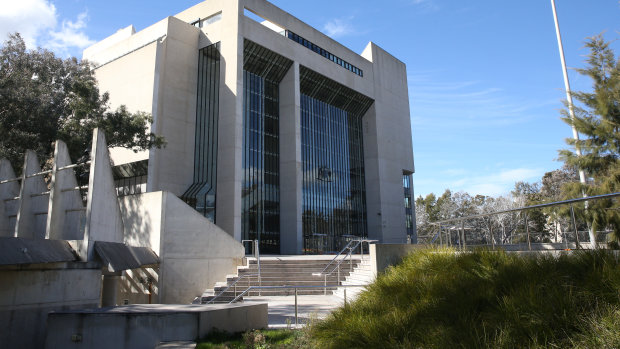
  On Tuesday the High Court handed down a decision in relation to how non-citizens who identified as Aboriginal would be treated under the Constitution, and in particular if they were subject to the commonwealth's migration laws.