The word unprecedented is applied to almost every bad thing that happens at the moment, as though particular events could not have been predicted, and have never happened before at such a scale or intensity. This is creating so much anxiety, because it follows logically that we are living in an uncertain time: that there really is a climate emergency.
 The historical evidence, however, indicates fires have burnt very large areas before, and it has been hotter.
Some of the catastrophe has been compounded by our refusal to prepare appropriately, as is the case with the current bushfire emergency here in Australia. Expert Dr Christine Finlay explains the importance of properly managing the ever-increasing fire loads in an article in The Weekend Australian. While there is an increase in the area of national park with Eucalyptus forests, there has been a reduction in the area of hazard reduction burning.
The situation is perhaps also made worse by fiddling with the historical temperature record. This will affect the capacity of those modelling bushfire behaviour to obtain an accurate forecast.
We have had a horrific start to the bushfire season, and much is being said about the more than 17 lives lost already, and that smoke has blown as far as New Zealand. Unprecedented has been the claim. But just 10 years ago, on 9 February 2009, 173 lives were lost in the Black Saturday inferno. On January 13, 1939 — Black Friday — two million hectares burnt with ash reportedly falling on New Zealand. That was probably the worst bushfire catastrophe in Australia's modern recorded history in terms of area burnt and it was 80 years ago next week.
According to the Report of the Royal Commission that followed, it was avoidable.
In terms of total area burnt: figures of over 5 million hectares are often quoted for 1851. The areas now burnt in New South Wales and Victoria are approaching this.
Last summer, and this summer, has been hot in Australia. But the summer of 1938-1939 was probably hotter. In rural Victoria, the summer of 1938-1939 was on average at least two degrees hotter than anything measured with equivalent equipment since, as the table below shows.

The summer of 1938-1939 was probably the hottest ever in recorded history for the states of New South Wales and Victoria. It is difficult to know for sure because the Bureau of Meteorology has since changed how temperatures are measured at many locations and has not provided any indication of how current electronic probes are recording relative to the earlier mercury thermometers.
Further, since 2011, the Bureau is not averaging measurements from these probes so the hottest recorded daily temperature is now a one-second spot reading from an electronic device with a sheath of unknown thickness. In the United States, similar equipment is used and the readings are averaged over five minutes and then the measurement recorded.
The year before last, I worked with the Indonesian Bureau of Meteorology (BMKG), and understood their difficulty of getting a temperature equivalence between mercury thermometers and readings from electronic probes at their thousands of weather stations. The Indonesian Bureau has a policy of keeping both recording devices in the same shelter and taking measurements from both. They take this issue very seriously and acknowledge the problem.
The Australian Bureau of Meteorology has a policy of a three year period of overlap, yet the metadata shows that for its supposedly highest quality recording stations (for example Rutherglen), the mercury thermometer is removed the very same day an electronic probe is installed. This is a total contravention of the Bureau's own policy, and nothing is being done about it.
I explained much of this to Australia's Chief Scientist in a letter some years ago — neither he nor the Bureau, deny that our current method of recording temperatures here in Australia is not covered by any international ISO standard. It is very different from methods currently employed in the United States and also Indonesia, and as recommended by the World Meteorological Organisation.
Then there is the issue of the remodelling of temperatures, I explained how this affects trends at Rutherglen in a blog post early last year.
The remodelling, that has the technical term of homogenisation, is a two-step process. With respect to the temperature maxima at Rutherglen, the Bureau identified a "statistically significant discontinuity" in 1938-1939. Values were then changed.
It is somewhat peculiar that the Bureau did not recognise, in its process of remodelling the historical data for Rutherglen, that the summer of 1938-1939 was exceptionally hot because of drought, compounded by bushfires. Rather David Jones and Blair Trewin at the Bureau used the exceptional hot January of 1939 as an excuse for remodelling the historical temperature record at Rutherglen, with the changed values subsequently incorporated into international data sets.
These made-up values are then promoted by the United Nations' International Panel on Climate Change (IPCC). This propaganda is then tweeted by Hollywood superstars like Bette Midler to The Australian Prime Minister.
After a recent Sky News Television interview I did with Chris Smith several people have contacted me about the hottest day ever recorded in Australia. They have suggested it is January 16, 1889, when it was 53.1 degrees Celsius at Cloncurry in Queensland. A problem with this claim is that the temperature was not measured from within a Stevenson screen, though it was a recording at an official station. A Stevenson screen (to shelterer the mercury thermometer) was not installed by Queensland meteorologist Clement Ragge at Cloncurry until the next month, until February 1889.
The hottest temperature ever recorded in Australia using standard equipment (a mercury thermometer in a Stevenson screen) at an official recording station is 51.7 degrees Celsius (125 degrees Fahrenheit) at the Bourke Post Office on January 3, 1909.
As the saying goes, we are all entitled to our own opinion — not our own facts.


 More people than ever before are in full-time work, exports are booming, and West Australians possess a lifestyle that is the envy of the Eastern States.
 In this country, a committee assembled by the
  First, Mackenzie is employed at Sydney University, which is a taxpayer-funded institution. According to its annual report last year, the university pocketed a total of $710.3m in Australian government grants, plus an extra $45.5m in NSW government grants. This is hardly an insignificant amount of taxpayer dollars.
 Australian governments and regulators increasingly want to automate public administrative processes and regulatory compliance, taking advantage of new generations of technologies like artificial intelligence and blockchain to provide better services and controls with lower bureaucratic costs. There are good reasons for this. But our would-be reformers will need to study how robodebt went wrong if they want to get automation right.
 I've since shown that this was helped along by the Bureau replacing a mercury thermometer with an electronic probe that
  To take full advantage of this once in a generation opportunity, the Morrison government must aim for much more than a bare-bones FTA. It should use the existing Australia-New Zealand Closer Economic Relations Trade Agreement (CER) as a blueprint for a comprehensive agreement complete with reciprocal work rights for Australian and UK citizens.
 Becoming a hairdresser in New South Wales requires approximately 1,224 hours of study and can cost $12,060. In order to open a restaurant in the same state you must fill out 48 separate forms and acquire 72 licences.
 If that comparison seems dramatic, it is meant to be. The government's ham-fisted measures have absolutely no place in a liberal democracy like Australia.
 In an address to the Centre for Policy Development (CPD) last month, Hayne argued "a director acting in the best interests of the company must take account of, and the board must publicly report on, climate-related risks and issues relevant to the entity". Hayne appears to believe climate risk should be considered a fiduciary duty for company directors, which under the Corporations Act would mean it attracts a maximum penalty of five years in prison for a breach.
 Commonwealth public servants have had no big-picture reform narrative to work towards, and while the Coalition has spent the past few years chopping and changing prime ministers and ministers, the public service has been left alone to amuse itself.
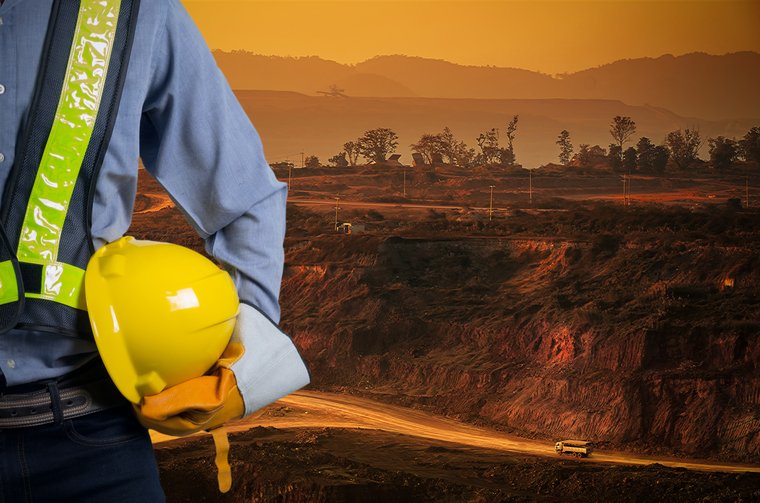 As reported in these pages on 27 November, the McGowen government has reached out to the federal government to establish a "one-stop shop" for environment approvals. This means that WA would be able to conduct the environmental assessment on major projects in the state, such as gas, gold, and iron ore developments, removing the need for assessment at the federal level as well.
 The subject matter discussed during this convention would have left anyone in the room who was not currently employed in the humanities wondering if they were witnessing the collapse of Western Civilisation. Day one began with a presentation called Ecopotency: Writing blak to power and influence in Australian ecopoetics, which was concluded by "an embodied performance of new poems and an exploration of ecopoetic spaces from the perspective of a young Munanjali queer". Following lunch, the audience enjoyed an afternoon of group self-flagellation while they listened to poems designed to "disrupt the national amnesia of the settler mythscape through dismantling the modern mythology of Australia as a settled space". They were also asked to ponder "much if not most of the built-up and over-built landscape that is the crime scene of post-Invasion Australia". In another presentation Naming without Claiming? Compositing Feminisms in the Environmental Humanities, the audience was told that "from the nature/culture binary to the notion of situation knowledges, feminist conceptual labours are arguably foundational to contemporary environmental humanities scholarship".
 Nobody had loathed Morrison's predecessor more than I had, but even I'd underestimated the way in which the Liberal party's vote would be boosted by blasting Malcolm Turnbull out. I shouldn't have, though, because there was a precedent. And so now, as we approach the tenth anniversary of the 2009 leadership spill, on the first of December, it's worth reflecting on the first time that the Liberal party vanquished its miserable ghost — and with him, the Coalition's electorally-poisonous climate change policy.
 The consequences for Westpac continued to mount. The bank is expected to be fined more than $1 billion. It lost $6 billion in market capitalisation, or 7 per cent of its value.
  It is not acceptable for bureaucrats to be running a covert political operation out of the Attorney-General's Department to silence Australians because of their political beliefs, but they are able to under the Foreign Influence Transparency Scheme legislation.
 Right now, the common law can distinguish between the legal liability of active publishers of information (like newspapers and broadcasters) and the passive platform operators that allow users to publish information themselves. Courts decide where this distinction is drawn according the unique facts of each case.