Friday, August 02, 2019

Campus Freedom Of Speech Gagged By Chinese Money

Australian universities have been slow to act against worrying ­violence and intimidation by pro-Chinese Communist Party stud­ents on campus.

Unwilling to upset their CCP-dependent business models, in­action has been prioritised at the expense of free debate.

On Wednesday, a Hong Kong democracy rally at the University of Queensland turned violent when 200 pro-CCP counter-protesters­ arrived.

In several shocking videos shared on social media, pro-CCP students can be seen screaming, ripping up posters, blasting out the Chinese national anthem and even punching and grabbing the neck of pro-Hong Kong students.

Worryingly, a Chinese Twitter account responded to a video I posted of the incident by declaring that the "students deserved it.  But it was waste of time kicking the pig's ass.  They cant (sic) get rid of the habit of eating s...".

This comes after Hong Kongers were violently attacked by masked thugs at a train station on the way home from a pro-freedom rally last weekend.

As well as ongoing concerns about freedom in Hong Kong, the alarming affair at the University of Queensland raises serious questions about how Australian universities' dependence on Chinese international students compromises free intellectual inquiry.

The ability of pro-CCP forces to mobilise hundreds of people on one Australian campus in a couple of hours should raise eyebrows.  There are more than 152,000 Chin­ese students at Australian universities, making up almost 40 per cent of Australia's $34 billion international student market.  (By comparison, there are 9000 students from Hong Kong.)

This places hundreds of thousands of students who have sympathies­ with, and are closely monitored by, a heavily authorit­arian regime at our universities.  This has a chilling effect on ­campus culture and classroom discussion.  Professor Clive Hamilton, a former Greens candidate, meticulously catalogued a range of on-campus incidents and use of Chinese international students by the Chinese government in his book last year, Silent Invasion:  China's influence in Australia.

The large number of Chinese students could help explain the University of Queensland's insipid response to recent events.  Last month Hong Kong students began protesting at the university against the extra­dition law.  Student newspaper Semper Flor­eat reports that, one day, campus security told them to pack up and leave, and instructed that "no political or religious protests would be permitted on campus grounds the following day".  This is an un­acceptable demand for a university that exists to promote debate.

The subsequent day's rally was ultimately allowed to go ahead on the condition no "discriminatory materials" would be present — raising questions about what is considered "discriminatory".

In response to the incident this week, the university's statement refused to explicitly name the pro-CCP students as the provocateurs or even mention the content of the protests.  There was also no mention­ that students who were physically violent would be dealt with strictly by the university.

The statement simply reiterated that it expects "staff and stud­ents to express their views in a lawful and respectful manner, and in accordance with the policies and values of the university".

The university's policies provide little comfort.  Its discrimin­ation and harassment policy explicitly forbids "offensive ­language" based on "national or ethnic origin".

This policy could be interpreted to effectively forbid students from criticising the actions of the CCP — because criticism of the Chinese government could be genuinely offensive to some based on their national origin.

The University of Queensland is also yet to adopt the model code on free speech proposed by former chief justice Robert French.

This is not the first time the act­ions of pro-China students have come under the spotlight.  Last year Victoria University cancelled the screening of an anti-China documentary after pressure from the campus Confucius Centre and the Chinese consulate.  In 2017, there were four known incidents, including a University of Sydney lecturer being forced to apologise for a map showing territ­ory ­disputed by China, a University of Newcastle lecturer condemned on social media for a list showing Hong Kong and Taiwan as separate territories, and Monash­ University withdrawing a textbook because of a quiz question that offend­ed Chinese stud­ents.

Students are also not the only conduit for influence.  There is now a Confucius Institute at nine Australian universities, including many of the prestigious Group of Eight institutions such as the universities of Sydney, Melbourne, NSW, and Queensland.  There is even one integrated into the NSW Department of Education.

These institutes are funded and overseen by the Hanban, a fully funded subsidiary of China's Ministry­ of Education.  Their formal mission is to promote Chinese language and culture, and in doing so provide an uncritical view of Chinese society.  They typically include­ one local director and one Chinese director appointed by the Hanban, providing direct influence inside our universities.

The reputation of Australian universities is dependent on pro­viding­ a high-quality education in an atmosphere of free intellectu­al inquiry.  The thirst for Chinese student money must not be allowed to undermine the critical­ capacity of our higher-education institutions.  The violence at the University of Queensland is an important reminder that universities need to get their internal affairs in line to protect free expression on ­campus.

Friday, July 26, 2019

Time To Voice Concerns

All Australians are equal.  Our legal status should not be determined by race, ethnicity, gender, or skin colour.  Any proposal to divide Australians by race is illiberal, undemocratic, and inegalitarian.

In his maiden speech to the Parliament on Wednesday evening, newly minted Liberal Senator for NSW Andrew Bragg renewed calls for an indigenous-only "voice" to parliament.  Such a voice is to be entrenched in Australia's constitution, and would be solely comprised of and solely represent indigenous Australians.

Senator Bragg argued that "the campaign that 'race has no place' in the Constitution may sound good, but it is a campaign that should have been run in the 1890s as we crossed that Rubicon in 1901."  It is correct that race has been a part of the constitution since it was first drafted.  But that just means that we must fight even harder to purge the constitution of race by removing the two existing references to race.  Only then will all Australians be truly equal before the law.

This objection notwithstanding, Senator Bragg is absolutely correct when he stated "we want all Australians to be proud of our great nation."  But the proposal for an indigenous-only voice will not achieve this.

The concept of a voice for a group of Australians based on race offends every principle of the rule of law, equality before the law, and liberal democracy.  There are 26 million Australians, each one of whom deserves an equal and loud voice which our liberal democratic system of government facilitates.  No group of Australians should be placed above any other.

The "voice" also assumes that indigenous Australians are one homogenous group with the same view on all issues.  This is a mistake.  There are substantial differences in opinion amongst indigenous groups across the nation, and within those groups themselves.  Indigenous Australians should be viewed as autonomous and free-thinking individuals endowed with free will to form their own thoughts, views, and beliefs.

Even at the 2017 Constitutional convention in Uluru which recommended the voice, consensus for the idea was only reached after several delegates walked out after ironically complaining their voices weren't being heard.

Subsuming an individual to a broader identity group based on their race is de-humanising and undignified.  In this way, the voice is an unsavoury application of identity politics for it holds that the interests of indigenous Australians can only be forwarded by other indigenous Australians.  This shatters the very model of representative democracy that has seen Australian become one of the freest and most prosperous nations.

The practical problem of an indigenous specific body is that it would in effect become a highly unrepresentative third chamber of Parliament.  The voice would inevitably practice a veto power of policies passed by the Australian parliament through shaming politicians into agreeing with it's advice.  The voice could also never be confined to issues solely affecting indigenous Australians because all major policy issues, from heath, to education, to infrastructure, affect all Australians regardless of the skin colour.

None of these criticisms are to deny the real and significant challenges facing many indigenous Australians and communities.  High rates of suicide, incarceration, joblessness, violence, and family and community breakdown have ruined too many lives.  We are all Australians and we all share a responsibility to care for one another and create a better future.

But proposals for constitutional identity politics will not address these challenges.  Instead, there are a number of principled and practical initiatives that could be pursued.

Firstly, fair dinkum land rights should be embraced which would allow indigenous Australians to enjoy the same bounty of private land rights that the rest of Australia enjoys.  This means the ability to buy and sell land, borrow against it, and decide what types of economic development will be allowed.

Secondly, governments should promote a policy of localism.  This means devolving power away from Canberra and the major cities to local communities in the regions who are at the coal-face.  The Minister for Indigenous Australians Ken Wyatt acknowledged the importance of local control when he stated in his address to the national press club earlier this month that "even the most well intentioned modern policies and programs have still tended to take a top-down command-and-control approach".

Finally, Australian governments should promote development in regional areas to expand economic opportunity and job creation.  In practice this means removing obstacles to growth, such as red tape, environmental regulations, and special legal privileges which allows activists to engage in frivolous and vexatious litigation to thwart development.

In the debate over an indigenous voice it is important to remember that there is no "them";  only "us".  Australians are an inseparable people with a common purpose, set of interests, and shared destiny.  Race has no place in the Australian Parliament.  Race has no place in Australia's constitution.

Friday, July 19, 2019

Uluru Statement Overturns Equality Of Rights

It's understandable that some of Australia's biggest companies including BHP, Rio Tinto, Lendlease, Qantas and Woolworths would support the Uluru Statement.  Business leaders have a stake in the success of all Australians, just like everyone else does too.

The opinion of Rio Tinto's CEO, who lives in Sydney, on how to overcome Indigenous disadvantage is important, but it's no more or less important than that of a motor mechanic in Leonora or a primary school teacher in Burnie.

Few Australians would challenge the claim that something is desperately wrong when for example Aboriginal and Torres Strait Islander Australians make up 2 per cent of the population but are 28 per cent of the adult prisoners in jail.

The hopes first of the 1967 Referendum half a century ago, then of the introduction of equal pay, then of land rights, and then of the Apology remain unfulfilled.  Indigenous "recognition" though the symbolism of a statement in the Australian Constitution was up until very recently assumed to be another stage in this process.

Now there is the Uluru Statement that seeks to enshrine in the Constitution a "First Nations Voice" for Indigenous Australians to the Commonwealth Parliament, to create a government commission to supervise "agreement-making between governments and First Nations" and encourage "truth-telling" about Australia's history.

The Uluru Statement is misconceived on the basis of principle and practice and is incompatible with Australia as a liberal democracy.

Race has no place in the Constitution.  Martin Luther King Jr. didn't stand on the steps at the Lincoln Memorial in Washington in August 1963 and say he wanted his children to be treated differently from white children.  What he called for was "freedom and equality".

It is unsustainable for business leaders to argue, as some have, that they're simply supporting the aims of the Uluru Statement, and its practicalities can be determined at a later date.  This is to ignore the fact that how something will be achieved is as important what is achieved.  Even something as seemingly simple as who is an Indigenous Australian and who might be able to vote to choose "the Voice" is highly problematic, to say the least.

In relation to Indigenous policy in this country, a number of business leaders are suffering from what Milton Friedman talked about in 1975 in a well-known interview.

"One of the great mistakes is to judge policies and programs by their intentions rather than their results.  We all know a famous road that is paved with good intentions.  The people who go around talking about their soft heart ... I admire them for the softness of their heart, but unfortunately it very often extends to their head as well.  [For example] the fact is that the programs that are labelled as being for the poor, for the needy, almost always have effects exactly the opposite of those which their well-intentioned sponsors intend them to have ..."

It is soft hearts and hard heads that business leaders should bring to Indigenous policy.  Business leaders should talk about the things they know something about.

So to begin with they should acknowledge that the creation of real property rights for Indigenous Australians that allow individuals to buy and sell land they own, and to borrow against it, will in many circumstances be more likely to create economic opportunity than does native title.

Then business leaders could go on and say that solutions to Indigenous disadvantage are more likely to be found through the drive and initiative of the private sector and the free market than from government.

Helen Hughes, who was one of Australia's foremost thinkers about Indigenous policy and who worked for many years with the Centre for Independent Studies, once calculated that the federal government's Remote Indigenous Housing Program was building houses at an average cost of $600,000, when the private sector was building the same-quality house for $300,000.

The legitimate desire of business leaders to do something and to be seen to do something about one of this country's most fundamental challenges should not defeat the bedrock principle of Australia's democracy, which is that every citizen is entitled to equal legal and political rights regardless of their race, ethnicity, or indigeneity.  This is a principle that the Uluru Statement overturns.

Tuesday, July 16, 2019

Regulatory Dark Matter:  How Unaccountable Regulators Subvert Democracy by Imposing Red Tape without Transparency

Unelected regulators are imposing red tape on businesses and the community with little democratic oversight, resulting in significant and irreparable economic damage.

My new report measures 'regulatory dark matter' defined as regulatory actions taken by departments and agencies that are subject to little scrutiny or democratic accountability. Regulatory dark matter consists of legislative instruments and quasi-regulations including; guidance documents, codes, letters, and publications made by agencies.

Five agencies in the finance and banking sectors have piled on 75,976 pages of regulatory dark matter, negatively affecting businesses and consumers in these sectors. This page count is more than 52 times larger than Tolstoy’s War and Peace and 8 times larger than the legislation passed by Parliament granting power to these agencies.

Regulatory dark matter is inherently undemocratic. The level of delegation by the parliament leaves agencies unaccountable and free to expand their power at the expense of burdening the economy with further red tape.

The proliferation of guidance material that provides the regulator’s interpretation of existing regulation in effect adds a softer form of regulation to which businesses are forced to comply.

Regulators amplify the regulatory effect of legislation. For every page of enabling legislation passed by Parliament we can expect 8 more pages in regulatory material.

Regulatory dark matter undermines the ability of smaller businesses to compete with larger established firms by forcing them to devote increasing resources to understanding and complying with regulation.

If the Morrison government wants congestion busting in the public service, and wants to create 250,000 new small and family businesses, it must cut red tape and reign in the regulators.

Regulatory dark matter contributes to the red tape burden on the Australian economy which already costs $176 billion each year in lost economic output.

Red Tape drives up the cost of living for all Australians and damages our international competitiveness, reducing investment and undermining productivity and wage growth.

Regulators need to be held accountable for their role in increasing the red tape burden.

Why Is NSW Fining Farmers Under Laws That No Longer Exist?

The New South Wales government must grant an amnesty to all farmers who are being prosecuted under laws which no longer exist.

They are facing huge fines of up to half a million dollars for clearing vegetation on their own land and the threat of additional fines of up to $13,000 a day are also reportedly being directed toward farmers who refuse to answer questions from the Office of Environment and Heritage.
According to Webb & Boland solicitor Brendan Moylan, farmers are being targeted by the OEH for actions taken under now repealed legislation.  Moylan has worked with many farmers who "had they waited for the law to change, their actions would have been legal under the new legislation."

Moylan has told Ben Fordham's listeners of the chilling realities faced by farmers who have gone years without an income due to the drought and now face bankrupting fines:  "When you're sitting in your clients shed putting the rifle away ... trying to help him go inside away from the firearms cabinet, there's something inherently wrong with the way that we're approaching this issue."

Native vegetation laws are a thorn in the side of farmers trying to run their business and make ends meet.  Farmers must obtain a permit to clear trees and scrub on their own private land, and are required to set aside large amounts of their land to be locked away from future clearing.  This red tape has decimated farm stock because many farmers cannot properly manage invasive native vegetation.  The result is an undermining of productivity, made worse by drought conditions, resulting in higher food prices, lower land value, and a loss of income to farmers, their families and local communities.

Adding insult to injury are the associated costs of maintaining land to government specifications.  Landowners bear the full cost of removing weeds and controlling feral animals, for example.  Every minute spent on complying with red tape is a minute less to spend on the farm doing productive work.

Dictating what farmers can and cannot do with their own land is a clear violation of property rights.  Farmers should be free to clear land for crops and grazing without having to jump through bureaucratic hurdles and give up sovereignty over their own property.  Agriculture regulation has grown to such a large extent that it is questionable whether farmers truly still have private property.  It is government ownership and control by stealth.

At a minimum, farmers should be compensated for the income forgone due to compliance with native vegetation laws.  This would force the government to take the cost of their regulation more seriously instead of burdening those who can least afford it.

Recent outcry about the rate of land clearing from inner city activists completely overlooks the realities faced by people in the bush.  The idea that activists living in their concrete inner suburbs care more about the land than multi-generational farmers who have poured their lives into the land is insulting.  Farmers know best how to allocate the use of their property and are more than aware of the benefits of environmentally sustainable practices.

The reason for volatility to land clearing rates is farmers are acting under uncertain regulatory conditions.  When the laws are relaxed, as they have recently been in NSW, farmers have an opportunity clean up their land that went by the weigh side under a stricter regime.  On the other hand, if farmers are fearful of increased restriction, they will naturally want to exercise their property rights while they can.

The NSW government recognised that previous vegetation laws were unfair to farmers and too restrictive on land rights when they repealed the law.  This was a very welcomed move.  However, it is unjust for the government to be prosecuting farmers for violation of laws that have now been repealed and were recognised as unfair.

As farmers struggle to make ends meet in a time of drought and low product prices, the government needs to cut red tape across the board in the agriculture sector.  This would allow farmers to continue to work the land producing the country's food, clothes, and grain, all of which the Sydney-based bureaucrats who are prosecuting farmers rely on.

Thursday, July 11, 2019

Voice To Parliament Carries The Same Risks It Did Two Years Ago

The principle that all Australians should not be divided on the basis of their race or skin colour is a cornerstone of our freedoms and the rule of law.  This clear principle — that race has no place in the Australian Constitution — is being ­undermined by a bipartisan campaign to divide Australians in our nation's founding document by ­establishing a special body to represent indigenous Australia to be a "voice" to parliament on issues relevant to indigenous Australians.

Yesterday, Indigenous Australians Minister Ken Wyatt revealed in an address to the National Press Club that the federal government intended to "bring forward a consensus option" for an indigenous "voice" to be presented at a referendum during the present term of parliament.

This appears to be a different position than the Coalition offered voters before May's federal election.  The Prime Minister did not tell the so-called quiet Australians who elected the Coalition that he supported political and legal rights being accorded to Australians on the basis of their race.

While remaining committed to some form of constitutional recognition, the view of the Coalition was that which was expressed by former prime minister Malcolm Turnbull, who rejected the proposal for a voice in October 2017, saying "the government does not believe such an addition to our ­national representative institutions is either desirable or capable of winning in a referendum".

The flaws of the proposals are the same as they were then.  In practice, the voice could never be confined to issues solely affecting indigenous Australians.  This is ­because all major policy issues, such as health, education and ­infrastructure, apply to all Australians regardless of their race.  The voice also presents an unprecedented threat to our representative institutions.  It is inevitable that a representative body for indigenous Australians would effectively practise a veto power over any policy passed by any Australian parliament.  Rather than a formal veto power, the power of the body would be to shame parliaments into agreeing with its advice.  The alternative is to oppose the indigenous voice.  Conversely, an official, constitutionally enshrined voice that repre­sents one view might crowd out other views in the indigenous community.

The minister is seeking inspiration from the 1967 referendum, which he notes "was the result of tireless advocacy and an extraordinary momentum for change".  It is important to consider what the ­nature of that change was.

In 1967 almost 92 per cent of Australians agreed to "alter the Constitution so as to omit certain words relating to the People of the Aboriginal Race in any State and so that Aboriginals are to be counted in reckoning the Population".  In other words, Australians then overwhelmingly voted to remove references to race in the Constitution.  Now both parties are asking Australians to put race back into the Constitution.  This is not progress in indigenous affairs, it is a significant backwards step.

Wyatt criticised paternalist policies developed in Canberra.  He said "even the most well-­intentioned modern policies and programs have still tended to take a top-down command-and-control approach".  But the solution to the problem he has correctly identified is fundamentally flawed.

Localism should be embraced, which would see communities — indigenous and non-indigenous — given the power to make their own decisions that are appropriate for them.  This is a fundamental part of addressing the challenges in indigenous communities, but decentralisation does not require the abolition of the universality of the Australian Constitution.

Unfortunately, a significant problem in indigenous affairs today is the assumption that the types of policies that promote success and human flourishing are culturally contingent.  The fundamental building blocks of a successful life — the dignity of work, safe neighbourhoods, stable families and economic opportunity — are the same regardless of one's ­racial background.  Constitutional change is not required to promote these building blocks.  Instead, Australian governments should focus on practical outcomes for ­indigenous Australians, such as ensuring more children attend school and more economic opportunity reaches remote areas.

Any proposal to establish a ­special voice for some people and not others is illiberal and a violation of all principles of racial equality.  The parliament, which is open to participation from all ­Australians, ­remains the best body to address these needs.

Even just challenging these ideas and asking Australians to divide themselves by race might divide Australia along those lines forever.  If the referendum for an indigenous voice wins, Australia's system of representative government will be up-ended.  If the referendum fails, it will be a win for an industry that thrives on stoking resentment between segments of the Australian population.

In an age of identity politics, it is a test of the federal government to promote a vision of unity, not further division.  If it were to consider ­establishing a voice to parliament, the Morrison government might fail this important test.

Monday, July 08, 2019

Red Tape Reduction A Way To Prosperity

Australia is starting to see bi-partisan economic leadership, with both the federal Coalition government and the WA state Labor government cutting red tape and taxes to unleash prosperity, as President Trump has done in the United States.

One week ago, Prime Minister Scott Morrison announced at an event with the WA Chamber of Commerce and Industry in Perth that the Coalition government would cut red tape, lower taxes, and reform industrial relations as a part of his government's ambitious economic reform agenda.  The red tape reduction effort will be led by the highly capable Ben Morton, the Assistant Minister to the Prime Minister and federal Member for Tangney.

At the state level, the McGowan government announced the Streamline WA web portal on 25 June, which will allow Western Australians to "share ideas on how the government can improve and simplify the regulatory process".  This is an exciting development.

The bi-partisan embrace of cutting red tape is sensible.  Cutting red tape does not mean eliminating all regulation.  It means eliminating regulation which is unnecessary and goes beyond what would minimally be required to achieve a public policy goal, such safer workplaces.  Governments should aim to achieve regulation which is "minimally effective":  the fewest rules needed to achieved a given objective.  But the current regulatory regime is far from minimally effective.

My research estimated that red tape costs Australian businesses, workers, and families $176 billion each year, which is the equivalent to 10 per cent of Gross Domestic Product.  This cost represents all of the businesses never started, the jobs never created, and the dreams and aspirations which go unfulfilled due to bureaucratic interference.

State government policy is a key driver of this red tape burden.  My preliminary research found 79 per cent of the total number of regulations required to gain government approval of a resources project in WA are imposed by the state government.  And approximately 40 per cent of all regulatory obligations arise form reporting duties alone.

The Roy Hill iron ore mine demonstrates the point.  It required some 4,967 licenses, permits, and approvals for the pre-construction phase alone.  More were required for the operational and export phases.

On top of the red tape burden are state taxes, foremost amongst them is the payroll tax which is a tax on jobs and wages.  When a business's total wage bill increases as a result of recruiting more staff or paying higher wages, so too does their payroll tax bill.

In WA, businesses must pay the payroll tax when their total annual taxable wages exceed $850,000.  However, the threshold in other states ranges from $1 million in NSW (from 2021), to $1.5 million in South Australia.  Victoria, hardly a state with a burgeoning resources sector, is the only state with a lower threshold at $650,000.

The cumulative impact of red tape and high taxes is weighing on the WA economy, where new private business investment has declined by over 50 per cent in the past five years, and is at its lowest level in over a decade.  At the national level, new private sector business investment is now lower as a percentage of GDP that it was during the Whitlam era.

To avert this decline, the McGowan government should:  reform the environmental approvals process to reduce duplication with the federal government, reduce the number of permits businesses require as a part of the planning approvals process, and introduce a one-in-two-out approach as in the United States where two regulations are repealed for each new one introduced.

On payroll taxes, at a minimum the tax-free threshold should be lifted.  But a more ambitious agenda would see it scrapped altogether and replaced with the less distortionary broad-based land tax, coupled with reductions to government spending.

Western Australia has always been an entrepreneurial, go-ahead state.  It has led the nation for years with a thriving resources sector and can once again be a leader through an ambitious agenda to cut red tape and taxes.

Friday, July 05, 2019

Folau Has Set A Minefield For Bosses

Israel Folau versus Rugby Australia is the court case everyone, except our politicians, wants to talk about.  The suggestion that it's merely a contractual dispute that has nothing to do with broader questions about the right to freedom of speech or freedom of religion is misconceived.

The precise nature of Folau's contract and what it allows Rugby Australia to do or not do is for the court to decide.  But as so often happens in such situations, the matters at stake go beyond the narrow issues of the courtroom arguments.

Tim Soutphommasane, a former commissioner at the Human Rights Commission, has dismissed the issues the case raises with the claim, "Here we go again with our tedious culture war."  Nothing could be further from the truth than to believe what's happening is merely "tedious".  The fact that Soutphommasane could say something like that is yet another argument for abolishing the organisation he once worked for.


CENTRAL ISSUES

One of the central issues the case raises is the question whether an individual entering into an employment contract can give up their right to practise their faith, or in Folau's situation quote the Bible on social media.  Or, to put it another way, can an individual agree to a contract, the terms of which discriminates against them?

If the answer is "yes" then there's a number of consequences.

The first is that under current Australian law such contracts are unenforceable.  Employees and employers can't agree to a contract that avoids federal legislation.  In this case Section 351 of the Fair Work Act prevents an employer from discriminating against an employee or prospective employee on the basis of "the person's race, colour, sex, sexual preference, age, physical or mental disability, marital status, family or carer's responsibility, pregnancy, religion, political opinion, national extraction or social origin".  Admittedly, it gets more complicated because the Fair Work Act does allow employers to discriminate in some circumstances such as when discrimination is "taken because of the inherent requirements of the particular position concerned".

A second conclusion is that if employees and employers do have "freedom of contract" to agree between themselves on what's in an employment contract, then presumably if the two parties can agree on matters such as the employees not quoting the Bible, they should also be able to agree to things like the rate of pay, which they can't do at the moment.

Another conclusion, which has been appreciated by some of the more thoughtful commentators on the left, is that if a court finds that under the terms of his contract Folau can be sacked for his social media posts about his religion because either Rugby Australia or one of its sponsors found those posts offensive, there's not much, assuming the contract is appropriately drafted, from stopping another employer from sacking an employee for expressing their opinions about politics.


GOOD ARGUMENTS ON BOTH SIDES

If the answer to that is "no" — and if you believe that this is a case that goes beyond what's in Folau's contract and that employees should be free to express religious viewpoints, even if they are hurtful and offensive, you'll be coming down in favour of freedom of speech and freedom of religion.  But you'll be making it difficult for employers to manage their brand and their staff.  Eventually employers will end up only employing employees who've never had an opinion on anything.

These are not easy questions, on which there are good arguments on both sides.  And they're important questions that go to the heart of how we live and work and play together.  It's no wonder Scott Morrison, when he was initially asked about Folau, refused to answer and said only "I think the issue has had enough oxygen".

The very worst way to overcome the challenges posed by this intersection between the rights of employers to enforce the terms of a contract and an employee to exercise their freedom of speech and religion is to automatically rush to a legal or legislative solution.  In the long term we're far more likely to be able to live together in a community, if whatever sanctions of Folau or Rugby Australia we deem appropriate are enforced not by the courts or the Parliament — but by public opinion.

Wednesday, July 03, 2019

Costly Clamps On Free Speech

Australian university leaders and their supporters have asserted repeatedly that there is no problem with free speech on campuses.  The evidence hardly supports this.

If there were no problem, James Cook University would not have unlawfully sacked Peter Ridd for criticising his colleagues' science about the Great Barrier Reef.

If there were no problem, students would not have attempted to shut down Bettina Arndt's speeches at La Trobe University and the University of Sydney.

If there were no problem, the National Tertiary Education Union would not be calling for legislated protection for academic freedom.

If there were no problem, more than 60 Australian academics would not have signed up for Heterodox Academy's pledge for greater viewpoint diversity on campus.

If there were no problem, former chief justice Robert French's review into university freedom of speech would not have concluded that many university policies "use broad language capable of impinging on freedom of expression".

University of NSW law dean George Williams argued on this page last week that the real threats to free speech are off-campus, in defamation and national security laws.  He is right to point out other issues — but on campus individuals are not only subject to these laws, they are also ruled by hundreds of other concerning policies created under the state and federal acts that establish universities.  University policies mean that free speech is more restricted on campus than in the public sphere, despite universities' fundamental role in facilitating debate.

I have been assessing the state of free speech on campus since early 2016.  The most recent audit late last year analyses more than 190 policies and actions at Australia's 42 universities.  It found four in five have policies, or had taken action, hostile to free speech.

I was the first to point out that university policies prevent "insulting" and "unwelcome" comments, "offensive" language and, in some cases "sarcasm".  Despite Williams's assertion, it is obvious the policies are poorly drafted, often prioritise ideological endpoints such as "social justice", and reflect many institutions not committed to free expression.

French analyses several policy types, including student and staff misconduct, social media and the use of grounds.  These policies contain undefined requirements against being "unduly offensive" and "inappropriate" or a "bully".  The vagueness of these policies is far beyond anything that exists in Australian law.  Is it inappropriate to support Scott Morrison or oppose same-sex marriage?  Does it count as bullying to criticise women being forced to wear the burka?

The answers depend on arbitrary judgment.  In other words, the state of free expression on campus is dependent on the benevolence of university bureaucrats, who tend to have their own biases.  Whatever your view on specific issues this is problematic.

French responded to these issues by proposing a free speech model code for universities that states free speech is a "paramount" right on campus — therefore hopefully overwriting other complicating policies.

Universities are waking up to the damage caused to their institutions by the lack of protection for free speech.

The University of Western Australia is the first to adopt French's model code.  It states that freedom to express ideas "is constrained neither by their perceived capacity to elicit discomfort, nor by presuppositions concerning their veracity".  This is because we do not know the validity of ideas before they've been debated.  Truth emerges from a contest, not from everyone thinking the same.  We must allow people to express all ideas, even bad ones, to ensure we can find the good ones.

University chancellors, who have a fiduciary-like responsibility to protect freedom of intellectual inquiry, also have come out in support of French's model.  The chancellors understand their institutions' reputations and viability are under threat if they do not support free speech.

The power of ideas is once again being demonstrated.  The University of Melbourne has released a new policy on free speech, albeit with weaker wording than UWA.  University of Sydney vice-chancellor Michael Spence, after long saying the aggressive protest against Arndt did not show anything, also has committed to reassessing his university's policies in the context of the French review.  The Australian National University, the University of Queensland and the University of Wollongong also are moving to adopt French's recommendations.

But it is only the beginning — the challenge is fostering a culture open to a diversity of ideas.  Written policy can influence culture but it does not necessarily define practice.

The challenge for universities is that almost everyone tends to think the same way, breeding groupthink and alternative ideas being shouted down or, even more often, never voiced in the first place.  French briefly acknowledges the importance of a culture of debate in the conclusion of his review.

The case for free speech fostering a diversity of ideas on campus is a work in progress.

Friday, June 28, 2019

Legislating Free Speech

What is happening to Israel Folau should not happen in a free society.  GoFundMe's hypocritical decision to shut down a fundraiser for rugby star and devout Christian Israel Folau is another win for the self-appointed cosmopolitan elite who want to control how Australians speak and think.

Last Monday, GoFundMe, a website which allows users to solicit donations for a variety of causes, announced that it would be closing Folau's fundraising campaign and issue refunds to the nearly 10,000 donors who had given their support.  Folau was seeking $3 million to fund legal fees to bring an action against Rugby Australia to the Fair Work Commission for unlawfully terminating his contract after he made comments on social media expressing a dramatic but traditional Christian view of morality.

In April, Folau shared on his Instagram account an image which said to "drunks, homosexuals, adulterers, liars, fornicators, thieves, atheists, idolaters" that "Hell awaits you!  Only Jesus saves."  The self-appointed arbiters of morality — who largely reject the concept of sin and hell — wanted more than to disagree with Folau's theological assertion, as is our right in a free society.  They wanted to silence him, penalise his speech, and to stop people from donating to his cause.  This is fundamentally totalitarian.

GoFundMe buckled to an outcry of activists largely focused within Australia's media outlets and on Twitter, alleging the campaign violated the site's terms of service.  "As a company, we are absolutely committed to the fight for equality for LGBTIQ+ people and fostering an environment of inclusivity.  While we welcome GoFundMes engaging in diverse civil debate, we do not tolerate the promotion of discrimination or exclusion."

By any definition, GoFundMe did discriminate against Folau and exclude him from use of the site — just as Rugby Australia excluded the star from playing the sport he excelled at for Australia.  This aggressive approach to inclusion and equality has an oppressively unequal impact.  As Comrade Napoleon and his ruling pigs would proclaim at Animal Farm, "all animals are equal, but some animals are more equal than others."

GoFundMe may be in breach of discrimination laws, but should be free to exercise discretion about who it associates with — just as a Christian school should be free to decide who it employs or who it admits as a student.  But it nonetheless deserves criticism for acting as a political tool which enforces a progressive ideological conformity.  This is illustrated by the site refusing to exercise a similar discretion when a fundraiser was launched for the "egg boy" for "legal fees" and "more eggs" after being filmed assaulting a member of parliament in March.  This is despite campaigns in support of "the legal defence of alleged crimes associated with ... violence" are in violation of GoFundMe's vaunted terms of service.

Also insincere is the horror that crowd-funding could be used for legal fees, at a time when, for instance, others were crowdfunding for life-saving surgery.  So will we also see the same people express indignation about Greens senator Sarah Hanson-Young using the very same site to raise funds for her defamation lawsuit against former Liberal Democratic senator David Leyonhjelm?  Crowd-funding for legal fees is an important mechanism for enabling people to assert their rights under the law and find justice.  The fact that Folau's campaign generated $700,000 in donations before it was shut down illustrates how important this case was for many Australians — not because they wanted Folau to continue playing Rugby, but because of what his case symbolises for the place of Australians of faith in the public square.

This is the important lesson of this ongoing saga.  In order to participate in Australian society, people of religious faith are expected to be silent about their beliefs — or to express those beliefs in a manner which just so happens to be ideologically indistinguishable from secular progressivism.  Folau has been told that he can either retract what he said and play rugby again in Australia, or he can seek opportunities overseas in another competition.  Being a Christian and feeling free to occasionally make public statements about your faith should not require such a choice — not in a free country that is comfortable with tolerating religious differences and beliefs.  In effect, Folau is being forced to choose between two religions:  his Christianity or state-sponsored secular progressivism.

Even wives are now expected to disavow their husbands:  pressure has been exerted on Netball Australia, the national administrative body for the sport, to act in response to Folau's wife and Adelaide Thunderbirds player, Maria Folau, for publicly supporting her husband's fundraising campaign.  As of writing that contract remains intact.

Religion is being aggressively driven out of the public square.  The political risk is that actions taken by Rugby Australia and GoFundMe will invite a regulatory response.  The current proposal from the Morrison government is to introduce a religious discrimination act and to establish the position of religious freedom commissioner within the Australian Human Rights Commission.  Further details about these reforms are urgently needed, but the thought of the AHRC being given more laws to administer is a troubling prospect — given its history administering laws like section 18C of the Racial Discrimination Act there is sufficient reason to consider that a pessimistic prospect for freedom.

Yet this can be no worse than what the Labor party proposed ahead of the May election.  The ALP's 2018 policy platform opposed the ambiguous concept of "harmful harassment" as "an unacceptable abuse of the responsibilities that come with freedom of speech and must be subject to effective sanctions."  Australia has temporarily avoided this fate, but it is the credo of radical progressive activists, and it is what they intend to enact when they possess the levers of power.

Folau's case is an important test for Australian society.  If someone as prominent as Israel Folau can be silenced like this, then the danger to unknown Australians of faith is far reaching.  To excuse this would be to signal that we as a culture have elevated authoritarian ideas about identity politics and allow them to restrict how we practise freedom in our everyday lives.  A healthy liberal democracy depends on the good faith of its members to tolerate speech they may find disagreeable — and to disagree in open debate.

Wentworth Must Stand

At the University of Sydney we can see what happens when students are no longer taught our history.  When the halls of higher learning focus more on identity politics and postmodernist ideas of power structures instead of historical context and nuance.  When the suggestion of teaching Western Civilization or a course on the great books is met with accusations of white supremacism.  Before you know it we have a bunch of entitled activists trying to tear down a statue of the University founder and great Australian hero, William Charles Wentworth, whose only crime was being a man of his time.

The activists behind this campaign are the privileged offspring of irresponsible academics and university bureaucrats, who care more about pushing their ideology than passing on knowledge and ideas to the next generation.  This is made clear by their ridiculous choice of target.  Along with setting up the University, Wentworth established one of the first Australian independent newspapers in 1824, was the first European to find a passage across the Blue Mountains, and was the author of the New South Wales constitution, the foundation stone of Australian democracy.  To these critics all such achievements should be dismissed because Wentworth carries the baggage of ideas of race that would have been unexceptional in his era.  This is yet another instance in which history is weaponised, as significant figures from the past are viewed through today's academic lens of identity politics.

No historical figure is without their flaws, but any balanced assessment of Wentworth would see the positives vastly outweigh the negatives.  Born in Australia to a convict mother and a highwayman father, Wentworth was the champion of ex-convicts and the descendants of convicts.  He fought for their equal rights against the "exclusives", rich free settlers like the Macarthur's, who thought the entire convict class should be permanently excluded from positions of influence.  It is in large part because of Wentworth that these "exclusives" were defeated and Australia developed a classless and egalitarian society.  Nevertheless, his critics dare to attack him as "aristocratic" simply because he was lucky enough to receive an English education, without which he never would have been inspired to found the University.

Wentworth Must Fall is a pale imitation of the Rhodes Must Fall campaign, which ultimately saw a statue removed from the University of Capetown in South Africa.  In both cases pulling down statues is a poor way to conduct historical debates, but it is also a sign of the activists' utter ignorance that they think the two men have comparable records.  Rhodes was an imperialist from Britain who supported the ongoing conquest of Africa, whereas Wentworth was born in an existing Colony in which he wanted the settlers to enjoy the same rights and liberties he associated with the United Kingdom.

He was no more of a violent colonialist than any migrant or descendant of migrants who now lives on land once occupied exclusively by traditional owners (a description which would also fit most of the activists).  Importantly, within Wentworth's lifetime the same rights and liberties he had fought for on behalf of Europeans began to be extended to the indigenous peoples of Australia, a process which culminated in the 1967 referendum.

Activists have been trying to get traction on this issue for the last three years.  In response centre-right clubs and student groups on campus have sought to debate the matter with them, to no avail.  Perhaps the activists know so little of Wentworth and his time they would be ill equipped to debate his legacy.  They have decided that his colonial status must have made him a hate-filled oppressor, so who would bother to read a book on such a character?

The activists also claim that their intended goal is to "decolonise" the University of Sydney.  The only way to truly decolonise the institution would be to abolish it.  It is inherently a colonial-era institution that was originally established by public-spirited men like Wentworth in emulation of Oxford and Cambridge.  The motto of the University of Sydney is Sidere mens eadem mutate, which translates to "the stars change, the mind remains the same" or "the same learning under new stars".  It was set up to bring the knowledge of the enlightenment to a new colony and to ensure that it was ready for the responsibility of democracy.  By any measure, it has been a tremendous success.

This campaign is not about justice or righting some ancient wrong, but rather about activists showing as many people as possible how amazingly woke and virtuous they are.  Wentworth set up the university to train the people of his beloved native country for the democracy that he helped to establish.  These activists are doing their best to prove that they are unworthy of the gift.

Thursday, June 27, 2019

The Public's Fury At Being Told What To Do And Think Has Exploded With The Folau Fiasco

Trust the perennially sanctimonious Kerryn Phelps to capture in a couple of sentences why the Israel Folau saga has resonated with so many.  The one-time MP took to Twitter on Tuesday to share her thoughts on the matter.

"The haters and homophobes have been waiting since the YES vote for a trigger to set off a 'religious freedoms' campaign as revenge," she wrote.  "#Folau's contractual dispute gives them that trigger and a rallying point for bigotry dressed up as concern for 'religious freedom'."

It's a response that was as predictable as it was pious.  It's the kind of sneering elitism that "quiet Australians" in their thousands rejected last month.  Even those who disagree with what Folau said — and most do, myself included — recognise the treatment of Israel Folau for what it is:  The militant, with-us-or-against-us modus operandi of the professionally woke.

But the Kerryn Phelpses of the world do have a point in one respect.  This is not your garden variety free speech issue in the sense that nobody is being deprived of their rights by the state, per se.  The complexity in the Folau case is that all the players are private — not government — actors.

Maybe Rugby Australia did have the right to sack Folau as a matter of contract law (or maybe not, but that's for the courts to decide).  The likes of Qantas and ANZ can direct sponsorship money wherever they like, and they wouldn't be the first big corporates to engage in such asinine virtue-signalling.  GoFundMe is a private platform, and may very well have been within its rights under its own terms of service to boot out Folau's fundraising appeal, hypocritical and selective as that may have been.

But just because those organisations could have done what they did doesn't mean that they should have.  As a matter of public policy, the Folau affair is a dead end, but as a cultural issue, it is troubling.  It's another front in what the left derisively write off as the "culture wars", in a world in which what can and can't be said (by force of law or otherwise) is becoming increasingly limited.

And here is where Phelps is dead wrong:  The media feeding frenzy created by the Folau case is not a "rally point" seized upon by the right.  If the left are frustrated by the amount of attention Folau is getting — and no doubt they probably are — then they only have themselves to blame.

As many have noted, if Rugby Australia had simply issued a statement distancing themselves from Folau's views and moved on, then his original Instagram post would have been long forgotten by now.  But by overreacting, the Rugby Australia — and the "inclusivity" zealots egging them on — have turned one man's particular religious beliefs into a full-blown national brouhaha.

That said, there are those in the left who know how counterproductive the response to Folau's Instagram post have been.  Labor frontbencher Stephen Jones has pointed out that multiculturalism in practice means confronting — and tolerating — elements of some cultures with which we disagree.  And former President of the Australian Human Rights Commission Gillian Triggs — of all people — has voiced valid concerns about the Folau affair's implications for freedom of religious expression.

The reason that the Israel Folau case resonates is that it is so depressingly familiar.  It's a reflection of the fact that for all the talk about "inclusiveness" and "tolerance" and "diversity", picking on Christians is still okay, even fashionable.  It's a reminder of cases like Mark Allaby, who during the same-sex marriage debate was forced by his employer to choose between his day job at PwC and voluntary position on the board of the Australian Christian Lobby.

Regardless of its content, Israel Folau's Instagram post has morphed into an act of civil disobedience at a time in which a tiny elite is dictating the boundaries of acceptable opinion.  It has tapped into the frustration of we all feel when yet another advertiser is browbeaten into pulling advertising money from Sky News while we're all forced to fund the ABC.  The grating repetitiveness of climate debates in which anyone who goes against the zeitgeist is a "denier" and that anyone concerned about the costs of addressing it — as Shorten so infamously said — is "stupid".  The irritation we all feel when our bank or airline or supermarket gushes about every fashionable cause under the sun at the same time as they're apparently indifferent to customer service.

With Israel Folau, the dam seems to have burst.  At time of writing, the Australian Christian Lobby's fundraising page has, in less than 48 hours, raised something just shy of two million dollars.  It's safe to say that the vast majority of donors don't share Folau's religious beliefs, but they are defending with their wallets his right to air them.

And for many of us, there is the sense that what happened to Folau could happen to me next.

Tuesday, June 25, 2019

Cut Red Tape And Keep Investment In The Black

Scott Morrison's vision to cut red tape will allow more Australians to reach their potential and for the Australian economy to flourish.

In an address to the Chamber of Commerce & Industry of Western Australia yesterday, the Prime Minister highlighted the need to "bust regulatory congestion" to remove "obstacles to business investment".

His announcement that Assistant Minister to the Prime Minister Ben Morton will lead a review of red tape is an excellent first step.  This move, along with Josh Frydenberg's commitment to driving productivity growth, is the beginning of an ambitious third-term agenda for the Coalition.

It is right for the government to focus on regulatory reform and cutting red tape.

Red tape is the biggest barrier to economic opportunity and prosperity in Australia.  My research estimates red tape reduces economic output by $176 billion a year, the equivalent to 10 per cent of gross domestic product.  This makes red tape Australia's biggest industry.

The lesson from the US under President Donald Trump is that cutting red tape and lowering taxes lead to an economic boom, and not just in terms of profits to businesses.

Since Trump came to office in January 2017, the unemployment rate has dropped to 3.6 per cent;  the lowest rate since 1967;  ­unemployment for minorities reached its lowest levels ever recorded;  the unemployment rate for women has fallen to 3.1 per cent, which is the lowest since 1953;  422,000 jobs have been added in the manufacturing sector;  and private sector business invest­ment has increased from 17 per cent to 18.1 per cent of GDP.

This has led to the US labour market gradually tightening, which has placed upward pressure on wages and put workers in a stronger bargaining position.

The centrepiece of the reduction of red tape in the US has been a one-in-two-out approach, where two regulations are eliminated for every one introduced.  Last year, 12 regulations were repealed for each new regulation introduced, resulting in a $US23bn reduction to regulatory costs.

The result is that in Trump's first full year as president in 2017, total pages of legislation passed dropped by 36 per cent.

This is the largest reduction since records began in 1936.

In Australia, red tape affects every sector of the economy, from multi-billion-dollar projects in the resources sector to small shops on the local high street.  The Roy Hill iron ore mine in the Pilbara in Western Australia, for example, required 4967 licences, permits and conditions for the pre-construction phase alone;  and a contravention order was recently issued by a local council in NSW to a small food shop whose bottle of hand soap in the bathroom was less than 50 per cent full.

These examples demonstrate why business investment in Australia is just 11.8 per cent of GDP, which is lower than during the business-hostile Whitlam years.  Low rates of business investment truncate the nation's capital stock, which reduces productivity growth, and holds down real wages growth in the private sector.

As well as dragging down productivity and wages, red tape is pushing up the cost of living.

My research last year found that consumer prices in sectors with heavy government intervention have risen far faster than sectors with minimal intervention.

Across 20 years from 1997 to 2017, the cost of housing increased by 330 per cent, childcare by 310 per cent and electricity by 215 per cent.

But cutting red tape is not just an economic issue.  It is a profound moral issue:  red tape is disempowering.  It prevents Australians from starting their own business, winning a pay rise and following their dreams.

Every hour spent on complying with red tape is an hour less dedicated to business expansion, in the community or helping the kids with their homework.

It is inherently undignified for an entrepreneur, a farmer, a prospector or a small-business owner to seek the permission of bureaucrats to start or expand a business or take on a new project that will employ more people and create greater opportunities.  The disposition of a risk-averse bureaucracy will always clash with the entrepreneurial flair of hardworking Australians who are willing to take a risk, often putting their family home on the line, for the betterment of our nation.  What have ­bureaucrats and regulators ever risked for Australia?

The exciting policy agenda of the Morrison government to cut red tape, along with reforming industrial relations and cutting income taxes, will help reverse the decline of small business, boost investment and allow the Australian middle class to prosper.

Friday, June 21, 2019

Intrusions That Just Drive Us Crazy

Maybe ASIC is trying to do to big public companies what the AFL is well on the way to doing to the game of Australian football.

Numerous and never-ending changes to the rules, ever-shifting interpretations of those rules by an ever-increasing number of umpires and tribunals, and now the introduction of "Behavioural Awareness Officers" patrolling through the crowd is a recipe for the destruction of a once-great game.

Players, coaches and most importantly AFL supporters now spend more time talking about the latest hare-brained scheme from AFL House than they do talking about the game of football.  And this doesn't take account of the fact that it's impossible to attend a game of AFL football without being preached at by the AFL about climate change, identity politics or whatever is the latest bien pensant topic that's taken the fancy of the administrators.  To know what Australia could look like in a decade one only needs to study the AFL today.

The decision of the Australian Securities and Investments Commission to have an ASIC-appointed psychologist sit in on the board meetings of ASX companies to monitor corporate "culture" is exactly the sort of stunt the AFL would try if ever the AFL were let anywhere near a public company.  As was reported in this newspaper, at least one leading company had described what ASIC is doing as "stupid" because directors would of course change how they act while the psychologist was present.  Stupid is one word for what ASIC is doing.  Other words to describe ASIC's behaviour are dangerous and Orwellian.

It is gravely disturbing that it appears ASIC is trying to keep what it is doing a secret.  It is not known to how many companies and to which companies ASIC has sent psychologists, although Qantas, Woolworths and AMP have been named.  When the psychologist engaged by ASIC was asked by The Australian Financial Review to comment on her work she replied that she couldn't because of confidentiality agreements.  There are so many problems with what ASIC is attempting to do that it is hard to to know where to begin.  Not the least of difficulties raised by having a government-enforced psychologist being in attendance at a board meeting is that even if they say nothing, their mere presence ultimately makes them complicit in the board's decisions.  Blurring the line between the decisions of a private organisation and the actions of a government regulator violates the rule of law.  Furthermore, it's impossible to have democratic and transparent oversight of ASIC if they're conducting such operations in secret.

What ASIC is doing is exactly the sort of behaviour by regulators that is documented by my research paper released last month.  Regulatory Dark Matter — How unaccountable regulators subvert democracy by imposing red tape without transparency examines how ASIC, the Australian Prudential Regulation Authority, the Australian Competition and Consumer Commission, the Australian Accounting Standards Board, and the Auditing and Assurance Standards Board used not just legislation, but regulation, and quasi-regulation in the form of guidelines, policies and directives to increase the burden of red tape on business.

One measure of red tape, which is simple but admittedly broad-brush is the number of pages of legislation regulating an activity or an organisation.  The above-mentioned five regulatory agencies are empowered to act under a total of 9520 pages of legislation.  But these agencies also have powers under another 75,970 pages of regulations and quasi-regulations.  For example, ASIC operates under 2900 pages of legislation, in addition to 2750 pages of regulations and explanatory documents and another 8260 pages of regulatory guidance.  Presumably somewhere in nearly 14,000 pages of law and regulations, ASIC has divined that it has the power to send psychological commissars to sit in judgment of the actions of company directors.

It's absolutely no wonder that red tape costs the Australian economy $176 billion a year and is now the nation's largest industry.  And surely red tape is part of the explanation why new private sector investment in the economy is lower than during even the Whitlam era.

Sending in psychologists to company board meetings might make the staff of ASIC feel better about themselves, but it won't do anything to solve this country's red tape crisis.

Friday, June 14, 2019

How Bureaucratic Dark Matter Is Swallowing Our Wealth

At every turn businesses are weighed down by red tape that prevents growth, discourages job creation, and sucks resources away from productive activity.  Adding to the burden is the unknown nature of regulation that requires businesses to constantly be involved in researching regulation and the intentions of multiple regulators.

Like dark matter that doesn't emit light and cannot be directly observed, there are many forms of regulation that have a significant regulatory effect yet escape adequate scrutiny.  In my report, Regulatory Dark Matter:  How Unaccountable Regulators Subvert Democracy by Imposing Red Tape without Transparency, I define regulatory dark matter as "actions taken by departments and agencies that are subject to little scrutiny or democratic accountability."

Parliament delegates the power to create regulation, allowing regulators to expand the red tape burden without the restriction of having to pass legislation through parliament.  Legislative instruments are implemented by a process that lacks direct democratic accountability, and quasi-regulation that lacks official legal status but none the less has a restrictive effect in practice, is layered on top.

Looking at just five regulators in the banking and finance sectors the report finds 75,976 pages of regulatory dark matter.  To put that number in perspective, the page count is more than 52 times that of Tolstoy's War and Peace.  It is also eight times larger than the legislation passed by parliament that grants powers to these agencies.  This means, that for every page of legislation we can expect eight more pages to be added by the regulators.

A large amount of regulatory dark matter is made up of quasi-regulatory documents including regulatory guides, bulletins, and information sheets that clarify and interpret official regulations.

These documents combine to create a mountain of material weighing down on businesses.  While they may lack official legal status, these documents cannot be safely ignored as they provide insight into how the regulator intends to enforce regulations.  Guidance material may assist businesses with understanding existing regulation, but they also contain an additional level of interpretation.

The power granted to unelected bureaucrats has contributed to Australia being ranked 77th out of 140 countries for the burden of government regulation by the World Economic Forum.  Agencies are faced with the incentive to expand their power and size through rulemaking that is unchecked by direct democratic accountability.  This has seen public sector employment increase from 12 to 15 per cent of the workforce over the last five years.

But the problem really begins with the bias toward government intervention on the part of our politicians.  When the government takes an active role in administrating licenses, controlling wages and employment contracts, handing out subsidies, and promising government guarantees, the perpetuation of a large bureaucratic state is unavoidable.  To administer this level of intervention Parliament must delegate powers to technocrats to deal with the intricacies of designing and implementing regulation.

To address Australia's red tape problem, governments need to take a lighter approach to regulation.  Regulation is too often hastily introduced to combat problems that can often be adequately dealt with by the market and existing law.

To reduce red tape, governments at all levels should implement a one-in-two out policy that requires politicians to identify two regulations to be removed when proposing new regulation.  This would weed out bad regulation and erect a hurdle for the introduction of new regulation.

All new regulation needs to be designed in a way that reduces the ability of unelected bureaucrats to expand their powers.  This means reducing vague language that allows a high level of discretion on the part of the regulators.  Clear language in legislation and regulation that minimises the use of legalese would also reduce the need for detailed guidance documents.

Politicians need to hold the agencies that operate on delegated power from Parliament accountable for their role in increasing the red tape burden.  Regulatory dark matter ought to be recognised and addressed.  It undermines business investment, reduces economic opportunity, and, worst of all, it is undemocratic.

Saturday, June 08, 2019

Race Has No Place

All Australians are equal.  Our legal status should not be determined by our skin colour or our race.  This clear principle is being undermined by a campaign to divide Australians in our nation's founding document through the constitutional "recognition" of Aboriginal and Torres Strait Islander peoples.  The "recognition" agenda currently advocates for the establishment of a special body to represent Indigenous Australia, enshrined in the Constitution, to be a "voice" to parliament on issues relevant to Indigenous Australians.

As is typical whenever any form of "recognition" is proposed, it has been unquestioningly adopted by the Canberra consensus, such as the left-wing media, the legal establishment, academia, and the upper echelons of corporate Australia.  In May alone, 21 law firms collectively announced their support for an Indigenous voice.  21 investment banks, superannuation funds and accounting firms soon followed suit.  For the National Reconciliation Week, a group of 14 major organisations from the Elevate Reconciliation Action Plan also issued a statement in support.  The Sydney Morning Herald launched a campaign to lobby the parliament to implement the Uluru Statement and promise to declare a referendum accordingly.

Never mind that these were the policies that Labor presented to and were rejected by the electorate in last month's federal election.  The re-elected Coalition government has floundered in its response.  In hopes of achieving "recognition" without constitutional change, or at least to delay it further into the future, the federal government appears to support a powerful non-constitutional body to represent Indigenous Australians, which resembles a hybrid of the scandal-plagued and abolished ATSIC and the Australian Human Rights Commission.

The incoming Indigenous Affairs minister, Ken Wyatt, has prepared laws to establish a new Indigenous commission run by elected "elders" which would review government policies, activate taskforces, receive complaints about agencies from "empowered communities" and inform "itself on any matter it thinks fit".

The practical problem of such a body, whether enshrined in the constitution or not, is one of obvious mission creep.  Such a body could never be confined to issues solely affecting Indigenous Australians because all major policy issues, such as health, education, and infrastructure, apply to all Australians regardless of their race.  And it couldn't be any other way.  All Australians are Australians, regardless of their race, ethnicity, gender, or sexual orientation.

It is inconceivable that a representative body for Indigenous Australians would not effectively practise a veto power over any policy passed by any Australian parliament.  Rather than a formal veto power, the power of the body would be to shame parliaments into agreeing with its advice, lest it "go against" the Indigenous "voice".  The accusation of racism itself is the veto.  This would in effect render parliament incapable of representing all Australians.  As Robert Menzies once said of the proposal to establish an economic advisory council, "the power to advise is the power to coerce".

These problems are only enhanced when enshrined into the Constitution.  Moreover, it threatens to put a fault-line down the middle of our system of representative government.  Advocates are honest about this.  In July 2017, the Referendum Council delivered its Uluru Statement from the Heart, declaring that Indigenous tribes were sovereign nations, and that this sovereignty was not ceded or extinguished.  At present this is an assertion not based on fact.  However, it is becoming apparent that the endgame of "recognition" is recognition of sovereignty.  All Australians regardless of race have a shared destiny, but any concession of sovereignty, or attempt to enshrine a race-based body in the Constitution, will put a wall between Indigenous and non-Indigenous Australians.  Race has no place in Australia's founding document.

To hijack a favourite phrase of the Left, recognition advocates are on the wrong side of history.  As prime minister, Tony Abbott planned for a referendum on recognition to coincide with the 50th anniversary of the successful 1967 referendum, and the Uluru Statement itself called on Australians to follow the same precedent, claiming "in 1967 we were counted.  In 2017 we seek to be heard".  In 1967, Australians voted by an overwhelming margin to "alter the Constitution so as to omit certain words relating to the People of the Aboriginal Race in any State and so that Aboriginals are to be counted in reckoning the Population".  Now, however, the proposal is to insert further references to race in the Constitution.

Part of the problem in Indigenous affairs is the assumption that the types of policies and institutions which promote success and flourishing are somehow different for Indigenous and non-Indigenous Australians.  And, further, that an Indigenous-only body is the only way to promote the welfare of Indigenous Australians.  But the fundamental building blocks of a successful life are the same regardless of one's race, and include access to the dignity of work, crime-free communities, stable families, home ownership and economic opportunity.  The basic needs of human beings are not culturally contingent.  It would be much better if the government focussed on attaining practical outcomes for Indigenous Australians, such as ensuring more children attend school and more economic opportunity finds its way to remote areas.

Addressing these challenges may require local solutions.  But this does not demand that the universality of the Australian constitution be undermined.  Any proposal to establish a special "voice" for some people and not others is illiberal and a violation of all principles of racial equality.  The parliament, which is open to participation from all Australians, remains the best body to address these needs.

Even just challenging these ideas and asking Australians to divide themselves by race will divide Australia along racial lines forever.  If the referendum for an indigenous "voice" wins, Australians will be divided in our institutions and in the constitution itself.  If the referendum fails, advocates will use it to fuel resentment and fan division throughout the country.

What is needed now more than ever in an age of identity politics is a vision of unity, not division.  All Australians, regardless of race, share the same nation, institutions, and land.  The Morrison government must not ask Australians to divide themselves by race.

Friday, June 07, 2019

Police Raids On ABC And Others Are Disgraceful

The Australian Federal Police's raid of the Australian Broadcasting Corporation overnight is a national embarrassment.

Yesterday morning, AFP officers arrived at the national broadcaster's Sydney headquarters with a warrant that named two reporters and a news director.  The raid was in relation to the "The Afghan Files", a 2017 story that exposed the alleged killing of unarmed civilians by Australian special forces based on leaked top-secret defence force documents.  The BBC has declared the raid "an attack on press freedom" and "deeply troubling".

The disturbingly broad warrant listed dozens of search terms and allowed them to "add, copy, delete and alter" material from the ABC's computers.  The officers spent almost nine hours inside the building, searching computers over sandwiches and flat whites.  They searched more than 9,000 files and downloaded an estimated 50 relevant documents on to USB drives.  The drives will be sealed for two weeks while the ABC appeals the warrant.  The whole affair was live tweeted by the ABC's John Lyons.

The storming of police into a public broadcaster would be expected in an authoritarian regime, not Australia.  While there is much to be criticised about the media, a free press fearlessly holding the powerful to account is essential to a functioning democracy.  "The only security of all is in a free press", American founding father Thomas Jefferson once wrote in a letter to Marquis de Lafayette.  "The force of public opinion cannot be resisted, when permitted freely to be expressed.  The agitation it produces must be submitted to.  It is necessary to keep the waters pure."

Worryingly, on the day before the ABC raids, the AFP raided the home of News Corp's Annika Smethurst.  It was in relation to a 2018 story about a plan to provide security agencies with the power to spy on Australians.  Australia's journalists' union has said Smethurst was subject to "intimidation" and "harassment".  The AFP has said this raid was unrelated to the ABC raid.  Australia's home affairs department has also reportedly pressured radio presenter Ben Fordham to reveal the source of a leak.  These two incidents have received substantially less sympathy than the raid on publicly funded ABC, showing that a clear double standard is at play based on the owner of the media outlet in question.

The day-to-day operations of the AFP are outside the direct control of the Australian government.  But that does not absolve politicians of responsibility.  These are leak investigations, presumably meaning the government could withdraw, if not change, the law to provide stronger press protections.

These raids are overshadowing prime minister Scott Morrison's ongoing visit to London to commemorate D-Day.  This should be a moment of celebration following the shock re-election of Morrison and his Liberal-National coalition.  Instead, it sends the signal that Australia could be taking an authoritarian turn.

Australia, a leading liberal democracy, should be proudly protecting the ability of journalists to speak truth to power, particularly in the context of growing threats around the world to freedom of expression.  Australia's moral authority to criticise the likes of Russia and Turkey is damaged by raids on the press.  And these raids are not the only worrying sign.  Free speech has been undermined by a range of other laws and developments recently, including Section 18C of the Racial Discrimination Act, harsh defamation laws, and moves to undermine encryption.

Hopefully, these raids, and their associated global embarrassment, will spark a much-needed bipartisan national debate in Australia about how to protect free speech.

Business Needs To ''Mind The Gap''

Anyone who's ever been to London and travelled on the Underground will know the words "mind the gap".  The phrase, together with concepts such as parliamentary democracy, the rule of law, freedom of speech and freedom of the press is one of Britain's great contributions to the world.

"Mind the gap" is a useful description for one of the reasons why Scott Morrison and the Coalition won the federal election.  Between what the elites living in Sydney/Melbourne/Canberra think is important, and what the rest of Australia living in the suburbs and in the regions put priority on:  there's a gap.

On Wednesday The Australian Financial Review's senior correspondent Aaron Patrick provided a crystal clear insight of this.

At the election:  "the poor;  the isolated and the little educated were more likely to switch votes to the Coalition.  Only the privileged residents of the inner cities were convinced to shift to Labor."

As Patrick pointed out, these results might appear to some to be counter-intuitive.  But from another perspective they're not at all.  All that's happened in this election is that the difference between what the Coalition and Labor used to be, and what they are now, became more obvious.  The policies of the progressive left are a long way from the concerns of the middle and working classes and that's always been the case.  Many Australians still prefer to practice their faith by going to church instead of watching an Al Gore video.

Likewise, Treasurer Josh Frydenberg should mind the gap when it comes to economic policy reform.  He should understand that one side there's the virtue-signalling engaged in by the chief executives of big business and their followers in the accounting, law and consulting firms.

On the other side there's the real-life, day-to-day concerns of the productive economy.  And the gap between those two is growing.

Calls for a comprehensive program of economic reform have grown this week in the wake of the national accounts showing that the annualised growth rate of the economy fell to 1.8 per cent.  Per capita economic growth fell for the third consecutive quarter — for the first time in nearly four decades.  Meanwhile the limits of record-low interest rates are starting to become obvious.

Twenty-seven years of uninterrupted economic growth has bred a complacency in business and the community that our prosperity will always be assured.  That's one of the explanations for a lack of debate about serious economic reform.


INTEREST IN BIG PICTURE REFORM WANES

Another explanation is that the CEOs of Australia's major companies simply aren't interested in big picture reform anymore.
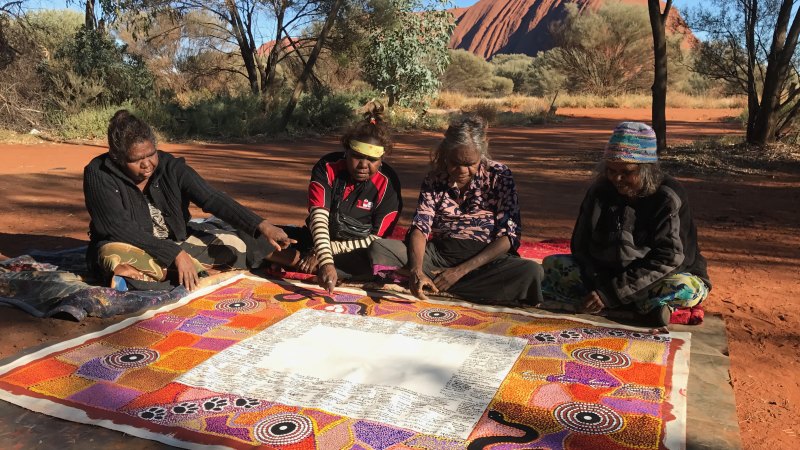
It's wrong to say big business doesn't have a voice in public policy debates:  it does.  The debates most corporate CEOs get involved with these days are about identity politics, diversity targets, and climate change.  None of those topics has anything to do with generating economic growth.  Even on climate change, very few of those CEOs advocating "a price on carbon" do so because it will help grow the economy.  Instead the argument simply is that some form of carbon tax is inevitable.

In the same way as the Coalition could have gone after the votes of wealthy voters in the leafy suburbs of Sydney and Melbourne during the election campaign and so probably lost office;  Josh Frydenberg could follow big business down the path of things such as gender quotas for company boards.  And he can see where they will get him and the economy.

The Treasurer's alternative is to jump the gap.  The "Big Three" issues of economic reform:  red tape, tax, and industrial relations are what the Coalition must engage with.  As countless surveys make clear they're the real issues for real business.

Furthermore, no-one needs to study surveys to see what works to generate growth.  Anyone can just look at America under Donald Trump.

Policymakers obsess over his trade policies while ignoring his cuts to red tape and tax that have had a huge impact on business confidence and investment.

There's nothing trendy or glamorous about reforming red tape, tax, and industrial relations.  They're the policy equivalent of the bread-and-butter kitchen table concerns of voters in western Sydney and regional Queensland.  And it was those voters that helped the Coalition to win the election.

Thursday, June 06, 2019

A Violation Of Racial Equality

All Australians are equal.  The legal status of Australians should not be decided according to their skin colour or race.  Any proposal that seeks to establish a special "voice to Parliament" for some people and not others is radical, illiberal, and a violation of all principles of racial equality.  Our nation's founding document should not divide us.

Australia has just commemorated National Reconciliation Week, a period in which Australians are asked "to reflect on our shared histories and relationship with Aboriginal and Torres Strait Islander peoples and explore how each of us can contribute to achieving reconciliation".

This year, the focus turned to advocacy for a referendum to "recognise" Indigenous Australians in the constitution by establishing multiple representative bodies at a national, state and local level to advise Parliament on issues relevant to Indigenous Australians.

The establishment of such bodies, or an Indigenous voice to Parliament, is one of the most radical proposals for constitutional change in Australian political history.  It risks establishing a parallel system of representative government based on race.

The suggestion that the voice could be confined to issues affecting Indigenous Australians is fundamentally incoherent.  All policy decisions that have a general application are Indigenous policy decisions because Indigenous Australians are Australians.

Dangerously, the voice would in practice exercise a veto over any policy passed by the federal Parliament.  While a formal veto would not be written into the powers of the voice body, the political risk would make it too costly for a government to go against the Indigenous voice.  The accusation of racism, rather than the formal powers of the voice, is the veto.

In June 2017, the federal government's Referendum Council delivered its Uluru Statement from the Heart, which called on the Australian people to follow the precedent set by a successful effort to change the constitution in 1967.  In the statement it said "in 1967 we were counted.  In 2017 we seek to be heard".

Constitutional recognition advocates have always had a weak claim to be the spiritual successors of the 1967 referendum.  In that year Australians voted by an overwhelming margin to "alter the Constitution so as to omit certain words relating to the People of the Aboriginal Race in any State and so that Aboriginals are to be counted in reckoning the Population".

The symbolic importance of this vote should not be underestimated.  While the practical effect was to centralise much of, and kick-start the massive growth of, the Indigenous affairs bureaucracy in Canberra, this was a positive step forward in removing references to race in our constitution.

Australian voters then began to understand that race had no place in the constitution.

It is true that many Indigenous Australians face a range of challenges from unemployment, high rates of incarceration, and drug and alcohol abuse.  Addressing these challenges may well require local solutions.  Many conservatives are in favour of broad-based political decentralisation and empowerment of local communities to solve local problems.  But this doesn't mean that the universality of the Australian constitution needs to be compromised.  Nor does it mean that the concerns and needs of Indigenous Australians are fundamentally different to that of non-Indigenous Australians.

The basic needs of humans, Indigenous and non-Indigenous, are not culturally contingent.  For example, all Australians need access to the dignity of work, effective policing to reduce crime and violence, home ownership and high-quality education to live flourishing lives.  And the Australian Parliament, which represents all Australians regardless of race and is open to participation from all Australians, remains the best body to address these issues.

The idea of formal equality under the Crown is the cornerstone of the constitution and the principle underlying our freedoms and the rule of law.  Challenging this idea is a challenge to national unity and Australia itself.

Regardless of how the country votes in a referendum for constitutional recognition or an Indigenous voice, Australia will lose.  Merely asking Australians to divide themselves by race will divide Australia along racial lines forever.  The dignity of Indigenous Australians demands that they be treated the same as non-Indigenous Australians, which means being included and represented in a common national body:  the Australian Parliament.

Monday, June 03, 2019

Bureaucrats Immersed In Canberra Bubble Out Of Touch With Nation

Last month's federal election result throws up a worrying anomaly.  The ACT electorates diverge markedly from the nation.  In the ACT, the electors embrace the ALP big time.  In the Canberra-based Australian Public Service, one group is under-represented:  people who vote for the Coalition government.

Federal bureaucrats apply an intense focus to diversity and inclusion.  It is the subject of endless meetings, conferences, workshops, strategies and taskforces.  Executives and senior staff spend hours poring over their plans to achieve diversity targets.  They do well, with outcomes for women at 59 per cent of the workforce.

The results are not so impressive for the disability, ethnic and the LGBTI and other letter groups.

The theory is that the makeup of the APS should mirror the Australian community.  The gurus say this will aid policy development that draws on the ideas of the diverse Australian community.  And, after all, the community pays the bureaucrats' salaries.

Nationwide the Coalition attracted 41.5 per cent of first-preference votes on May 18;  the ALP 33.8 per cent.  In the ACT, the voting pattern is flipped:  Coalition 31.2 per cent and ALP 41.6 per cent.

Returns for some electorates are even more divergent.  In the seat of Canberra the two-party preferred outcomes were 67.4 per cent for the ALP and 32.6 per cent for the Coalition.  In the ACT seat of Fenner the result was 61 per cent for the ALP and 39 per cent for the Coalition.  The national two-party-preferred result was Coalition 51 per cent and ALP 49 per cent.

The APS prides itself as a professional outfit that has served the nation well.  Its record in this regard is solid.  Its emphasis on professionalism means officers subjugate their political opinions when discharging their duties.

However, more subtle influ­ences may need to be addressed.  Care has to be taken to ensure the APS does not become disconnected from the broader national community.  An APS officer in Canberra easily can become captured by a limited insider's perspective.

During my time in the APS I observed a tendency to superficially tolerate the trendy accepted wisdom.  For example, right-wing politicians and institutions were dismissed with a "tut-tut" as out of step with community values.  Many espoused climate change as an impending threat requiring dramatic shifts in economic and industry policy.  An intellectual arrogance permeated some groups who showed disdain for ordinary folk as incapable of grasping the true intent and effects of policy.  No one could rest until every aggrieved minority group achieved a suitable voice and representation.

I found a culture among regulators, in Canberra, that showed intolerance of those who complained or proposed more effective ways to achieve fairness.  This often was amplified by a disturbing ignorance about the impact of regulations on an individual, company or industry.

Scott Morrison bemoans "the Canberra bubble", so it makes sense for his re-elected government to combat the tendency for groupthink.  First, MPs develop good local networks and listen attentively to constituents.  We need a mechanism to ensure worthwhile views of constituents are thought about.  Promising ideas should be shared with the APS.

Second, portfolios and agencies develop consultative arrangements.  These should cover a range of interested parties, not just the familiar lobbyists, industry associations, non-government organisations and other Canberra players.  Special attention should be paid to identifying and listening to innovators in their fields.

Third, most departments with policy responsibility should consider relocating some staff to other cities and localities.  One benefit of such a shift is the engagement of more staff from outside the APS.  Many Canberra bureaucrats have difficulty even contemplating a shift from Barton to Tuggeranong, let alone moving to an interstate city.  A move of one agency's operations to a regional centre last term was equated with having to live in Siberia.

Fourth, senior Canberra staff should be encouraged to travel to meetings and conferences outside the ACT.  The more intrepid could even discover intelligent people in regional and rural Australia.

Fifth, the digital transformation of government should be used to enrich the input of citizens and businesses into policy formulation and review.

These ideas may seem basic.  But too many in the APS think the internet and the Canberra scene provide sufficient information on Australians' views of policy.

I also worry about the capacity of the APS to continue to attract talent.  Melbourne and Sydney are predicted to grow to cities approaching eight million in the next 30 years.  Cities of that size will offer immense career opportuni­ties for young people with talent.

Life in trendy voting Canberra may not seem all that attractive.