Tuesday, October 08, 2002

Corporate Social Responsibility or Civil Society Regulation?

The Harold Clough Lecture for 2002,
Perth, 19 August 2002


INTRODUCTION

Business corporations traditionally face two groups which regulate their behaviour.  The marketplace, which includes business competitors, and government.  Now there is a new regulator, civil society, or more particularly Non-Government Organisations (NGOs) such as Greenpeace, Amnesty International the Councils of Social Service and the like.  The tools that NGOs use to regulate business are very different to the market and government;  they are, in the first instance, neither price nor law.  Often they are just ideas expressed in a strange new language:  the language of Corporate Social Responsibility (CSR) or its many aliases like Corporate Citizenship, the Triple Bottom Line, the Stakeholder Corporation and so on.  This language, these ideas are seductive, they appear benign.  But make no mistake -- Corporate Social Responsibility is really Civil Society Regulation in disguise.

Civil Society Regulation occurs where NGOs set the standards for business behaviour.  Corporations choose to adopt or not to adopt these standards at their risk.  While governments have the power of legislation, the ability of civil society organisations to regulate business behaviour through naming and shaming is becoming more powerful. (1)

CSR is a serious challenge to Australian corporations and to the Australian electorate.  It is an assault on the interests and rights of "real" stakeholders, those who have invested in or are creditors of corporations.  It occurs when managers bow to pressure from interests that have no contract with the corporation, whether by way of employment, or supply of goods or services, or through ownership.  CSR is also an assault on the interests of the electorate.  It occurs by undermining the formal democratic consensus as to what constitutes reasonable business behaviour.  It also occurs when governments grant NGOs such status that it enables them to set themselves up as judges of corporate behaviour.  CSR proponents want to change society in ways that they have hitherto been unable to do through the parliament and the courts.  Corporations that indulge CSR, without the express sanction of their shareholders, are quite literally, misguided.

Some concepts of the corporation are so misguided, they regard the corporation as no more than a process for grievance-settlement in society at large.  For example,

One of the most significant things that companies could do to make themselves good "stakeholder corporations" is to ensure they give ... rights to external review, to stakeholders (and stakeholder groups) with legitimate complaints about the company.  The right to access justice -- to be able to make claims against individuals and institutions in order to advance shared ideals of social and political life [my emphasis] and to rectify relations that have gone wrong -- is an essential part of citizenship in a contemporary democracy. (2)

And further,

We are unnecessarily constrained by the belief that the representative institutions and legal system of the state should be the exclusive or even the primary, home of political deliberation. (3)

These ideas challenge the corporation and the role it has fulfilled in the modern capitalist economy, indeed even in the highly state-regulated modern capitalist economy.  The view that all stakeholders have, prima facie, an entitlement to a managerial role in a corporation is regarded by some as "socialism by another name". (4)  Indeed, a problem with CSR, in particular stakeholder theory, is the difficulty of adjudicating between not only the demands of stakeholders who have a contractual relationship with the corporation, but those who do not.  All corporations accept the need to deal with traditional stakeholders, and the law provides the means of settling disputes with each.  But CSR invites two further impositions.  First, it counts as a stakeholder anyone who wants a piece of a corporation.  To paraphrase one manager's view, "a stakeholder is anyone who can do you damage."  Second, it attacks the very purpose of the corporation -- its commercial relationship with the market and its owners.

Corporations combat these misguided ideologies with some difficulty.  The ideologies' proponents apparently want no more than to enlist the help of corporations to build a better world, one with less exploitation, or a sustainable environment, and so on.  To be against CSR is, therefore, to be a rapacious capitalist.  The difficulties in fighting "goodness" have become so apparent that some corporations have decided to embrace "goodness".  Some engage in "stakeholder dialogue", or seek to work "beyond compliance", or seek to enter a state of "corporate citizenship".  Corporations embrace these dialogues as a means of enhancing their reputation, or of at least avoiding damage to it.  No doubt, from time to time, some corporations use these dialogues for competitive advantage.

Under current law, responsibility of the board of directors and managers is to the shareholders;  they have a fiduciary duty to them.  The new CSR deal is that the fiduciary duty should be extended to society, that entities other than the owners should have some claim if the corporation fails to fulfil a socially desirable role.  One of the real risks in incorporating the views of too many, over and above contractual obligations, is that it gives managers the opportunity to neglect their fundamental duties.  Acting for different causes may provide an excuse not to deliver maximum shareholder benefit.

No corporation wants to be singled out for attack by NGOs for not being socially responsible.  Most corporate responses to CSR are designed to forestall the new "democratic dialogues" and the interference in corporate objectives they imply.  They are designed to ward off regulation.  They may in fact just aid the introduction of "soft" law, which in time turns into "hard" law.  A primary assumption of CSR is that governments -- through the sale of government businesses and some industrial and financial deregulation -- have withdrawn from their duty to protect citizens from the impact of the market economy.  This misrepresents the fact that corporate regulation has increased substantially in the period of so-called deregulation.  A second assumption is that international corporations are now more powerful than nation-states.  Coca-Cola may be the biggest brand name in the world, and it no doubt will fight to protect its market and brand name, but in the final analysis it just makes soft drink!  Coca-Cola's power to change society is less than a government with tax revenues a fraction of Coke's assets.

The one hope for corporations to keep civil society regulation to a minimum is to work with shareholders and government.  Corporate social responsibility is no more and no less than an instrument used by non-corporates to gain leverage over corporations for political purposes.  Any political control over corporations should be exercised by the Parliament and the courts and based on the broad consensus on which those processes rely.


RESPONSES TO CSR

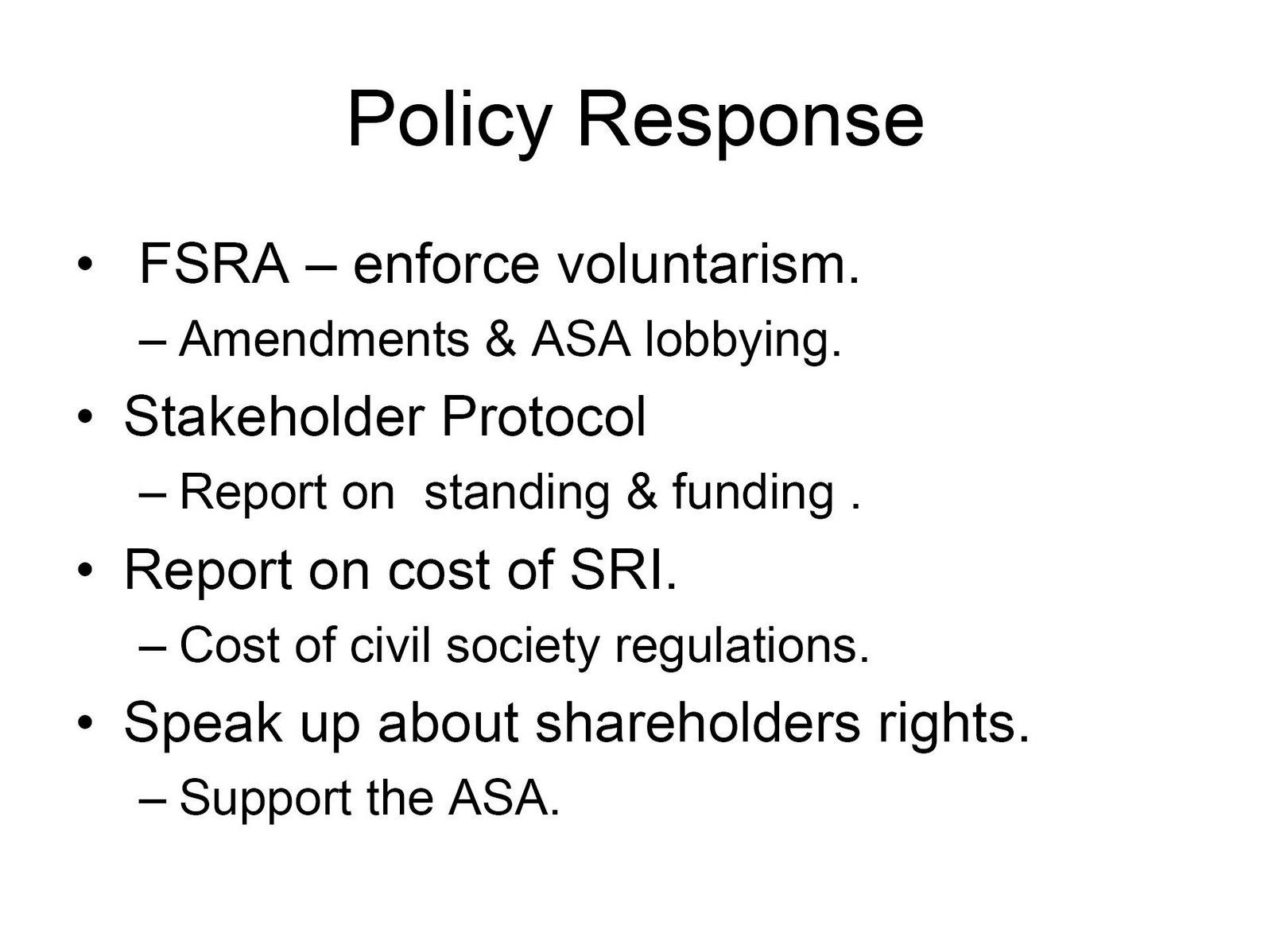
The issue for corporations, acting both individually and in concert, is how to respond to civil society regulation.  The wrong responses will weaken the commercial purpose and strength of individual corporations, the market sector as a whole and the democratic regulatory environment in which they operate.  The right response will maintain the commercial purpose of corporations and the democratic nature of the regulatory environment.  At the heart of the strategy is to make the NGOs prove their bona fides:  question the extent to which they represent anyone or anything;  question the size of their membership;  question the source of their funds;  and question their expertise.  In other words, question their standing and their legitimacy.  There are four steps to this strategy:

Support the resolution of issues, not organisations.  Corporations should not fund those advocacy NGOs that undermine them.  If they believe there is a need for engagement, then make contact directly with the real interests involved, for example locals, not with established political activists.  If there are technical issues involved, then fund the science or the experts, not the advocates.

Invoke a protocol.  If it is worthwhile, or otherwise unavoidable to deal with NGOs, then do so through a protocol.  A protocol requires the NGO to prove its standing by way of expertise or representation, and in so doing requires a disclosure of relevant NGO information to shareholders.

Disclose dealings with NGOs as a cost of compliance.  Inform the shareholders of the cost of civil society regulation as a cost of doing business, not as a down payment on "corporate citizenship" or "social responsibility".  Do not argue a false case;  argue that you obtained the least-cost solution to a compliance problem.

Fund the intellectual arguments against CSR.  The CSR bandwagon is already rolling through the universities and being discussed in various forums with the sponsorship of some corporations.  The resources that NGOs devote to advocacy, in many cases their sole purpose, is probably as much as corporations, which have most of their money tied up in the business.  There is rarely a voice raised in criticism of CSR.  Those voices need to be assisted.

CSR LiteCSR GoldCSR Premium
Corporate philanthropy
and positioning
Ethical investment
Reputation indexes
Scientific credibility
Government involvement
"Business as usual""Reputation games""Civil socialism"
Shareholders not affected
Stakeholders not affected
Where stakeholders
become judge and
jury, they gain power
Shareholders/electorate
lose power
Stakeholders and civil
regulators gain power
Foundations
ANZ Infrastructure Services
Ansett Frequent Flyers
FTSE4Good
Ethical investment
Good Reputation Index
CalPERS
Financial Services Reform Act
WWF and The Great Barrier Reef
Greenpeace
and the Olympics

CSR LITE

These responses can be used against any activities that constitute CSR.  To better understand the nature of the challenge it is worth recognising the enormous variety of activities that constitute CSR.  The foregoing diagram suggests three levels of CSR, ranging from lite to heavy.

Some activities cause no essential disturbance to shareholder value, for example, the disbursement of funds for charitable purposes through a Foundation.  This is classic philanthropy, and such activities could be labelled "CSR Lite".  These activities do not pretend to change the nature of the business, it is a "business-as-usual scenario".  Of course, there are business foundations that have become distinctly anti-business.  The Ford Foundation and the Turner Foundation come to mind.  And a cautionary tale, even at the Lite end of the spectrum:  there is a tendency for corporates to use the language of CSR for marketing purposes.  This encourages the media and NGOs to push the barrow.

For example, the ABC's George Negus recently interviewed (5) John Clarke, managing director of ANZ Infrastructure Services on the bank's investment in wind power.  Negus asked, "Is this part of the whole triple-bottom-line thing ... the whole social responsibility in investment?"

Clarke responded, "Well, certainly ... we believe ... we can get a balance and long-term equilibrium between the community, the environment and our stakeholders."  Clarke was happy enough to use the language of CSR.  His real answer as to why ANZ were in the business of wind power came later in the interview.  He said, "of course, you've got a long-term power purchase agreement with the retailers, which [is] required under the renewable legislation."

The triple bottom line or socially responsible investment were not the motivating factors, they were only a convenient cover for an investment made viable by legislation.  The facts are clear but why hand political power to the ABC and the environmentalists when the economics are secure?  The bank's reputation is secure only as long as the investment is secure.  The indulgence with fashionable statement hands power to those who want the corporation to do things that are not, and should not be, its responsibility.

Some uses of the CSR label are much more brazen.  In her presentation to the second National Conference on Corporate Citizenship held in November 2000, Gina Hanson, corporate citizenship manager of Ansett Airlines, related a scheme for soaking up Ansett's massive liability in Frequent Flyer points.  Hanson suggested that, to relieve Ansett of the dual burdens of the points and the many calls on Ansett for free travel from persons in need, St Vincent de Paul should open an FFP account.  Customers could donate their points to the account, the needy could apply to St Vincent de Paul to draw on them.  The gain for the airline was that the seats would be allotted at non-peak times.  "It would really help our business and ease our situation with regards to accommodating customers by having those points burnt up in other hours." (6)  This was a bright idea never acted upon, but it was patently a business deal.  It was mistaken to suggest it was anything other than that.


CSR GOLD

CSR Gold represents medium-strength interference in shareholder value.  Of concern are schemes which generate measures of performance for the investor under the rubric of CSR -- for example, so-called ethical investment or a corporate reputation index.  Where these schemes are voluntary and transparent, there is not too much cause for concern.  For example, the FTSE4Good Index measures corporation performance on environmental sustainability, relationships with stakeholders and support for universal human rights.  The assessment is undertaken in a reasonably objective manner by independent analysts.  But even here there are problems.  Embarrassingly, WorldCom was ranked in the top 50 companies in the world, and ranked 23rd in the USA as at June 2001.  FTSE was not to know then what it now knows about WorldCom, but having held itself out as an assessor of ethics, it is assumed it knew what it was doing.  Of course, in this case, the same would hold true for financial performance analysts.

Apart from the problems of poor prediction, there is enormous scope to use information and misinformation to play "reputation games".  In such games, measures of performance become especially problematic where the claims are false, and where those who set and judge the measures of performance are not impartial.  These problems are multiplied when the schemes are compulsory.

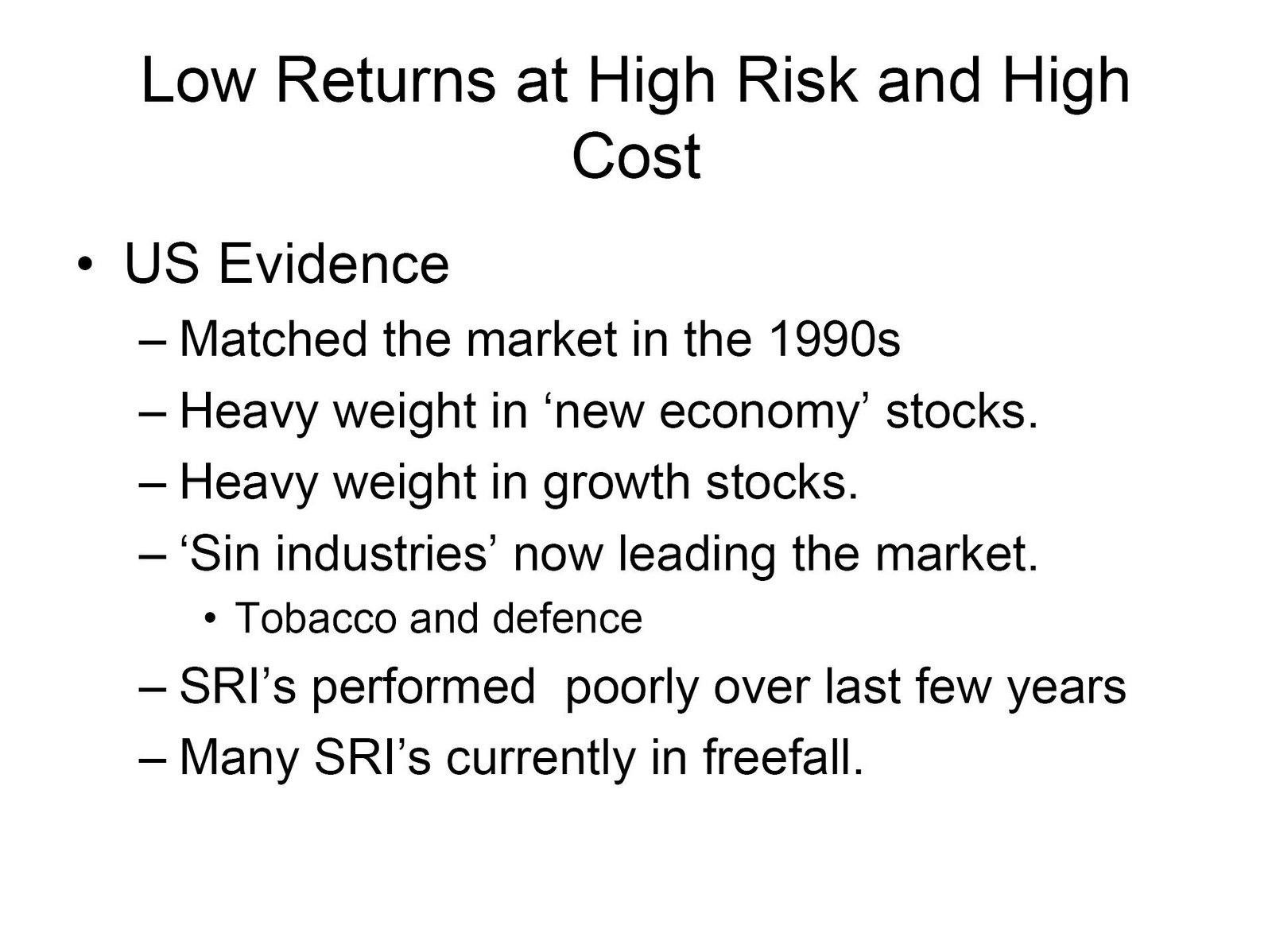
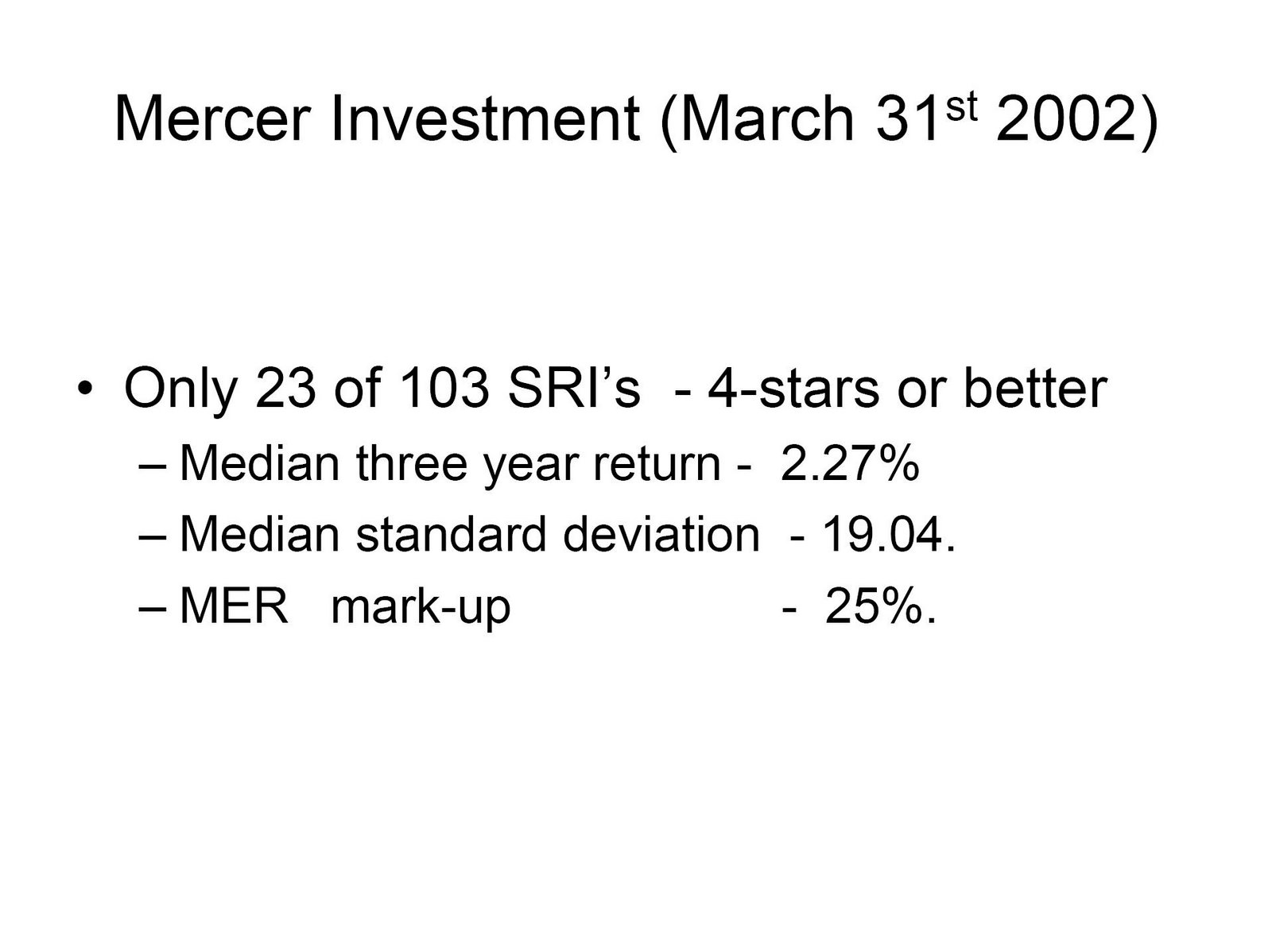
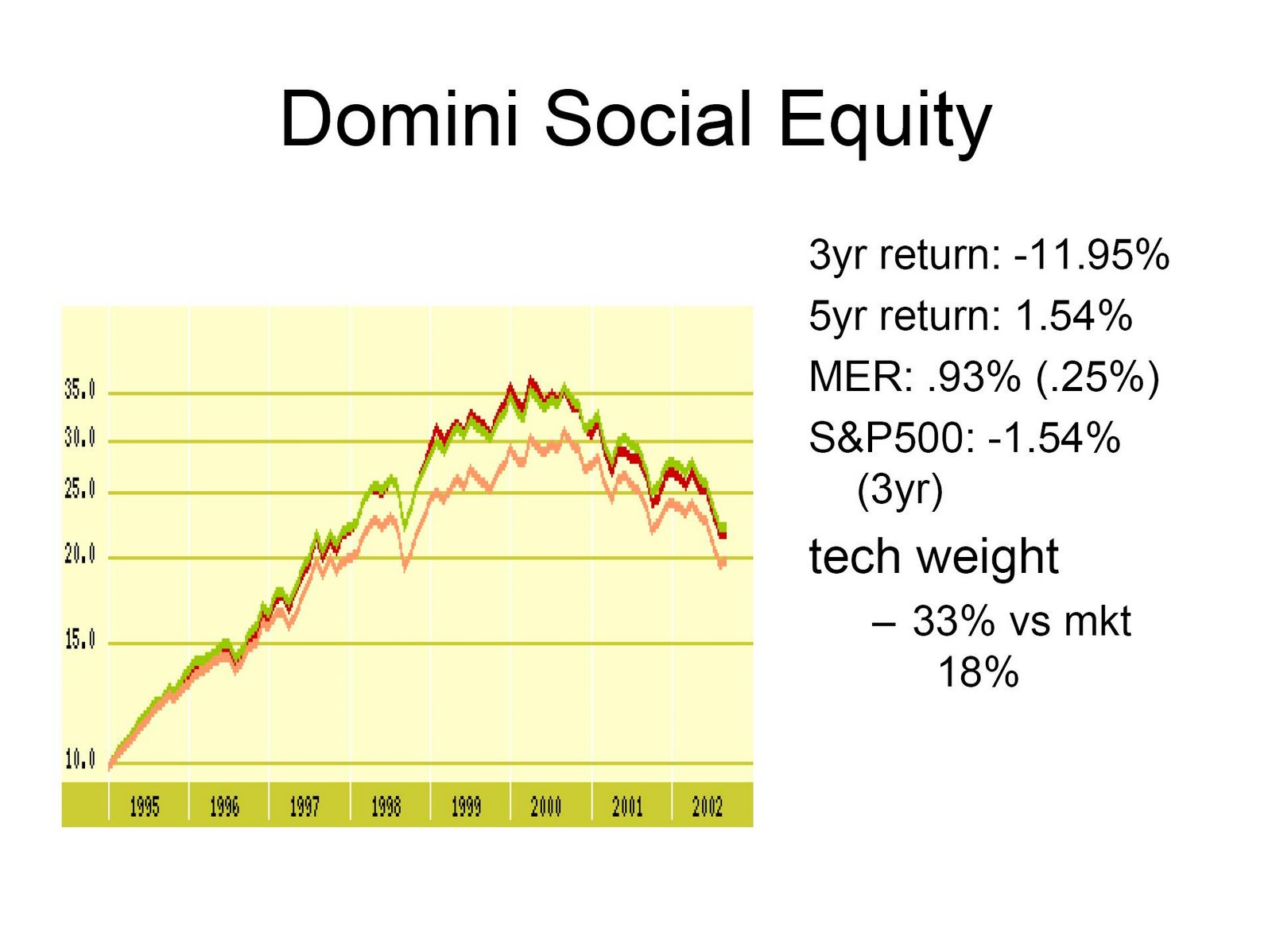
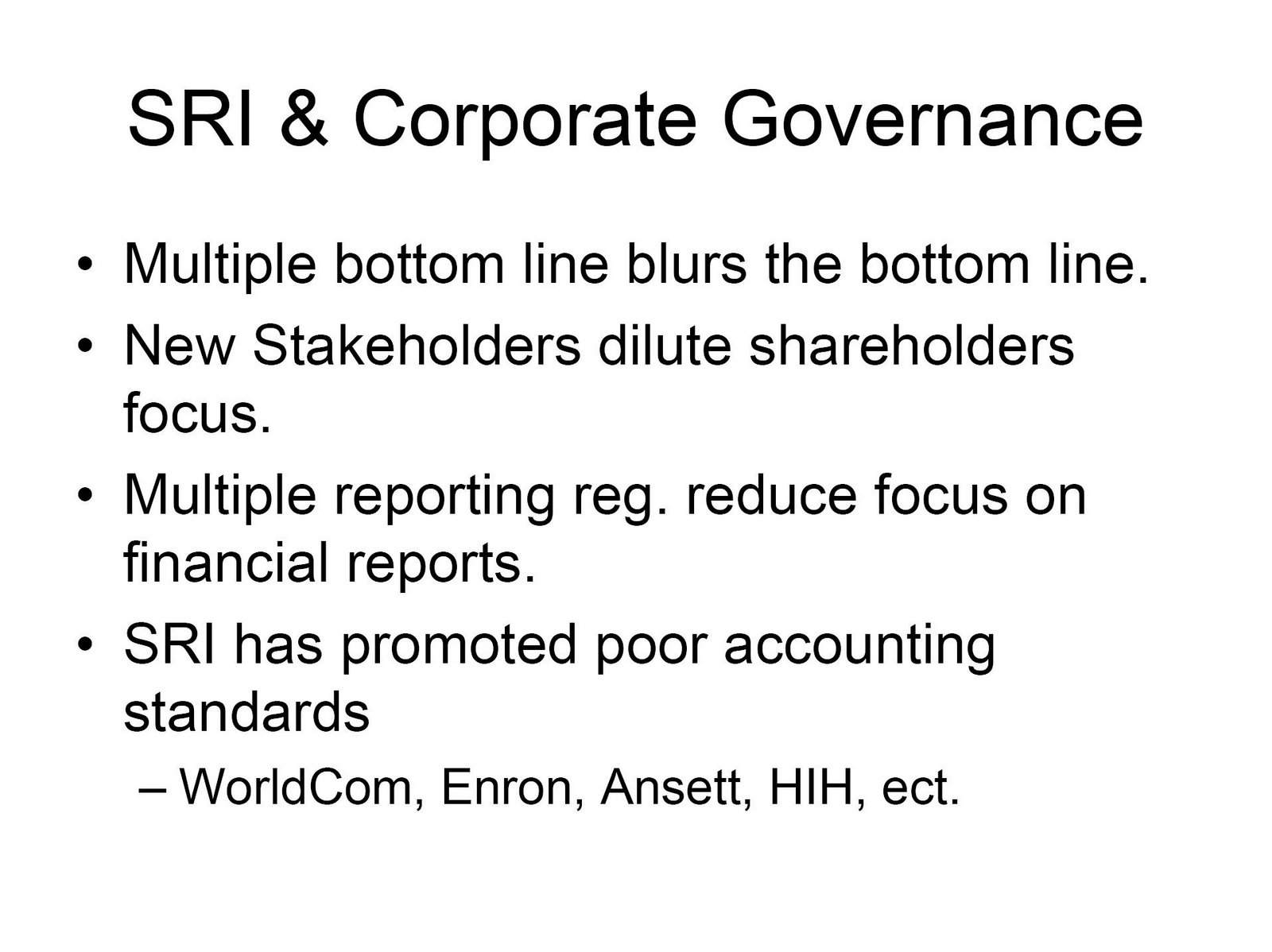
The issue of false claims becomes particularly problematic in ethical or socially responsible investment.  While the promoters of Socially Responsible Investment (SRI) funds maintain that there is no trade-off between financial returns and the pursuit of non-financial goals such as environmental sustainability and labour relations, their claims are based on outdated, overseas research and fail to consider the extra management and screening costs associated with SRI funds.

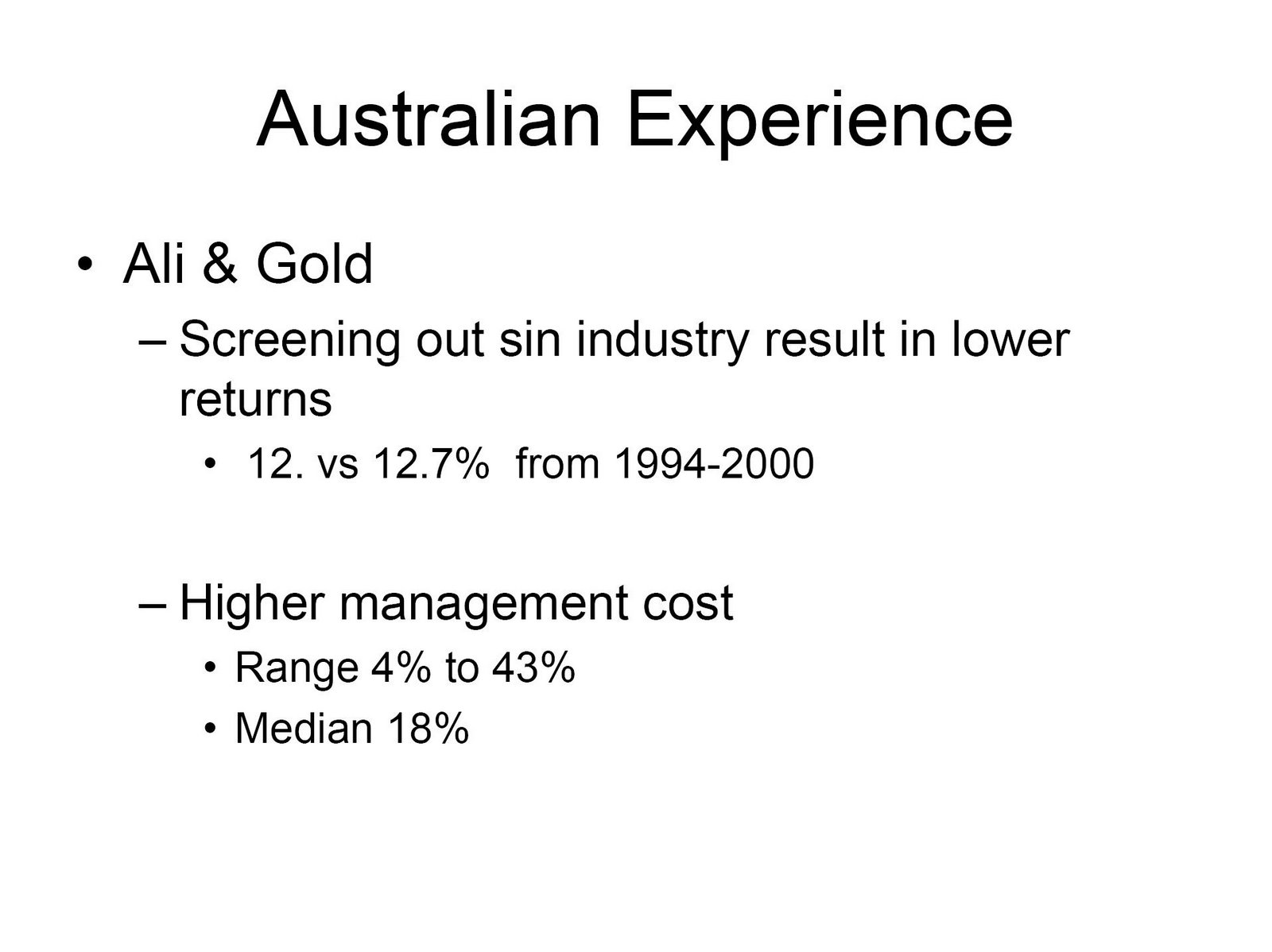
Two Australian analysts, Ali and Gold, (7) provided the first independent examination of the performance of SRI funds in Australia.  They found that excluding "sinful" industries -- such as alcohol and gambling (which the majority of Australian SRI Funds do) -- between 1994 and 2001 would have resulted in a performance shortfall of 0.70 per cent per year, reducing the broad market return from 12.7 per cent to 12 per cent.  They also found that "investors in Australian SRI Funds generally face additional fee imposts, compared with investors in mainstream Australian, managed investment schemes or superannuation funds.  This is largely attributable to fund managers passing on to investors the development and marketing costs for SRI funds and the fees paid to external service providers (primarily, index vendors and SRI research providers)". (8)  In other words, the available evidence indicates that SRI funds impose a significant cost on, and yield a lower net return to, investors than do non-SRI funds.

On the issue of impartiality, The Good Reputation Index published in The Sydney Morning Herald and The Age attempts to measure the social, environmental, labour, ethical as well as the financial and public relations reputations of the top 100 companies operating in Australia and New Zealand.  It is designed as a tool for Civil Society Regulators and as a guide to corporations in their deliberations about Corporate Social Responsibility.

In constructing the index, the Fairfax Press adopted what is now the standard methodology -- basing the index on the views of high-profile NGOs, the likes of Greenpeace, Amnesty International, the ACTU and so on.  And it included the views of most of the leading lights of the corporate social responsibility industry, like the St. James Ethics Centre.  We were not invited to be a judge!  An analysis of the data (9) shows that, according to the Index and therefore the CSR regulators:

  • Financial performance and social responsibility are inversely related.  Only one of the top ten most socially responsible corporations is ranked among the top 20 firms in terms of financial performance.  Conversely, just three of the top ten financial performers were ranked in the top 20 in terms of social responsibility.
  • Government protection and direction is good and market competition is bad.  Five of the top 10 most socially responsible corporations are government-controlled.  Two, Australia Post (ranked 1st) and Queensland Rail (ranked 5th), are government-owned monopolies.  Telstra is partially government-owned and heavily regulated.  Holden and Ford are sustained by taxpayer subsidies.  None of the top ten financial corporations are government-owned or subsidised and all face vigorously competitive markets.
  • Funding social activists is a key to social responsibility.  Each of the highly ranked socially responsible corporations donates heavily to corporate social responsibility groups (including many of the organisations who acted as judges for the Index).  Westpac (ranked 2nd), Alcoa (ranked 6th) and ING (ranked 10th) are not simply generous financial contributors, but are also strong promoters of the triple bottom line.  Westpac has taken the lead in promoting ethical investment in Australia and ING has taken a similar approach around the world.  One must at least suspect that their high ranking is a reward for their contribution to the cause.

The tussle between corporations and NGOs over corporate reputation has reached new heights.  It is now a game of cat and mouse, with shareholders having to pay to bribe the civil society regulators.


CSR PREMIUM

The greatest potential to disturb shareholder returns and to let in the civil society regulators occurs in CSR Premium.  These cases may involve private investment decisions based on prejudice, or flawed legislation which purports to do no more than assist disclosure but in fact imposes behaviour, or the improper use of scientific analysis, or where government simply hands its responsibility directly to an NGO.  In these instances, those stakeholders who have made no significant contribution to the corporation's activities gain power at the expense of shareholders and creditors.  They also gain power at the expense of the electorate through Parliament.  These are instances of "civil socialism".

SRI investment managers fall well and truly into CSR Premium when, in addition to misleading investors on the costs and benefits of the fund, they deny their members investment opportunities, by pursuing other agendas.  CalPERS, the Californian Public Employees' Retirement System is the world's largest pension fund.  CalPERS has US$150 billion in assets and has long been a champion of CSR causes.  Unfortunately for California's public servants, it also has a very poor investment record, losing around US$20 billion in the first two years of this decade.  It was one of the largest investors in, and losers from, Enron and WorldCom.

Earlier this year, at the instigation of its union trustees, it withdrew its investment from a number of countries, in particular, Malaysia.  It kept its investments in Argentina, and now stands to lose considerable pension funds because of the collapse of the Argentinian economy.  It appears to have withdrawn funds from the healthier Malaysian economy on the basis of labour standards issues.  The assessment of labour standards was undertaken for CalPERS by an unnamed NGO which did not publish its methodology.  Clearly however, the methodology was flawed because it did not recognise the facts that Malaysian wages doubled in the 1990s and that unemployment is below 3%.  In fact, there are around 1.7 million guest workers out of a workforce of just 6 million, so a lot of poor people are being provided with employment because of investment in Malaysia.  The suspicion is that the report reflected the fact that industry unions are discouraged in Malaysia (although enterprise unions exist) and Malaysia competes with California in electronics.  In other words, US unions have used their members' funds, and the cover of CSR ideology, to indulge in some old-fashioned protectionism.

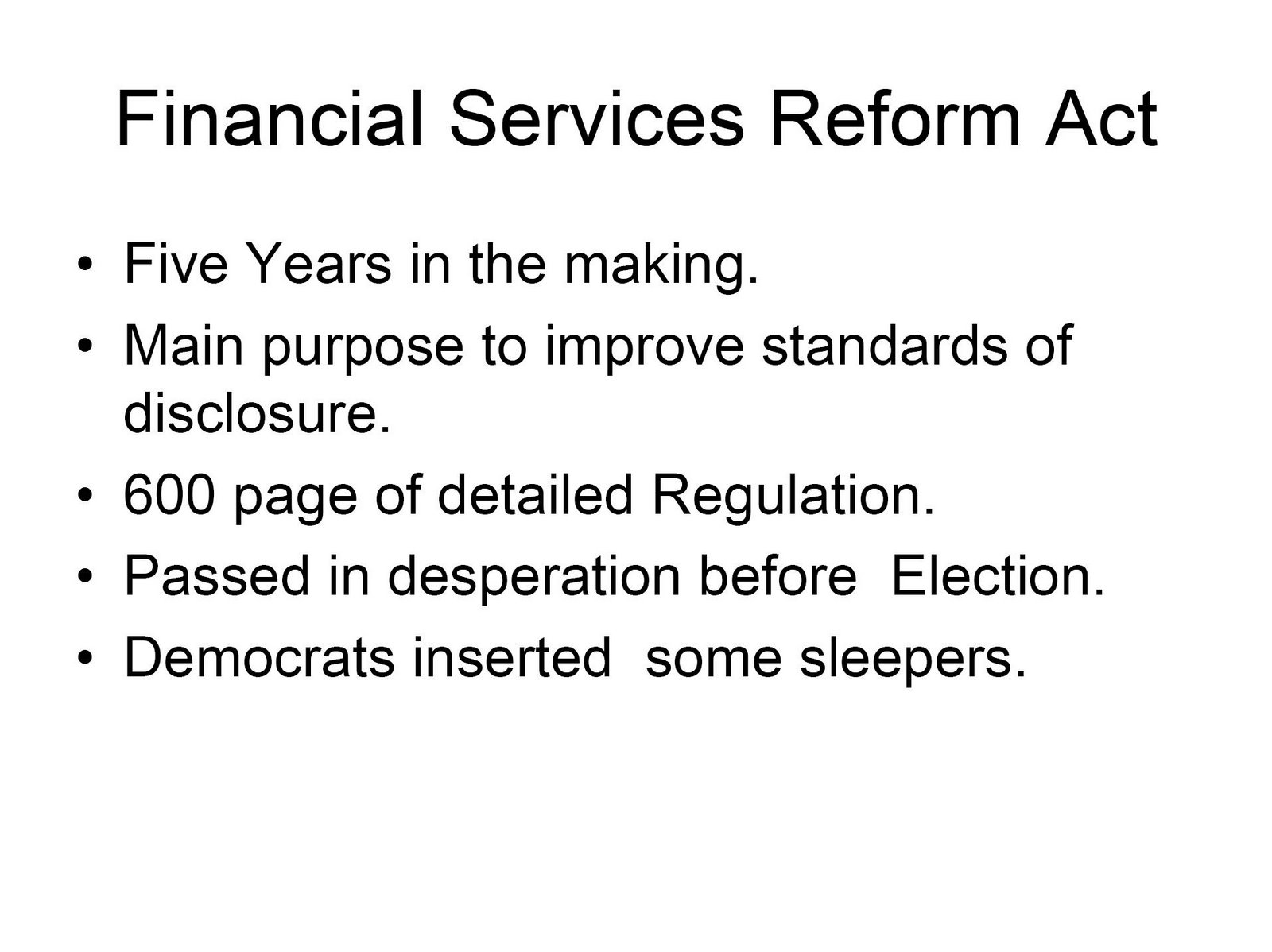
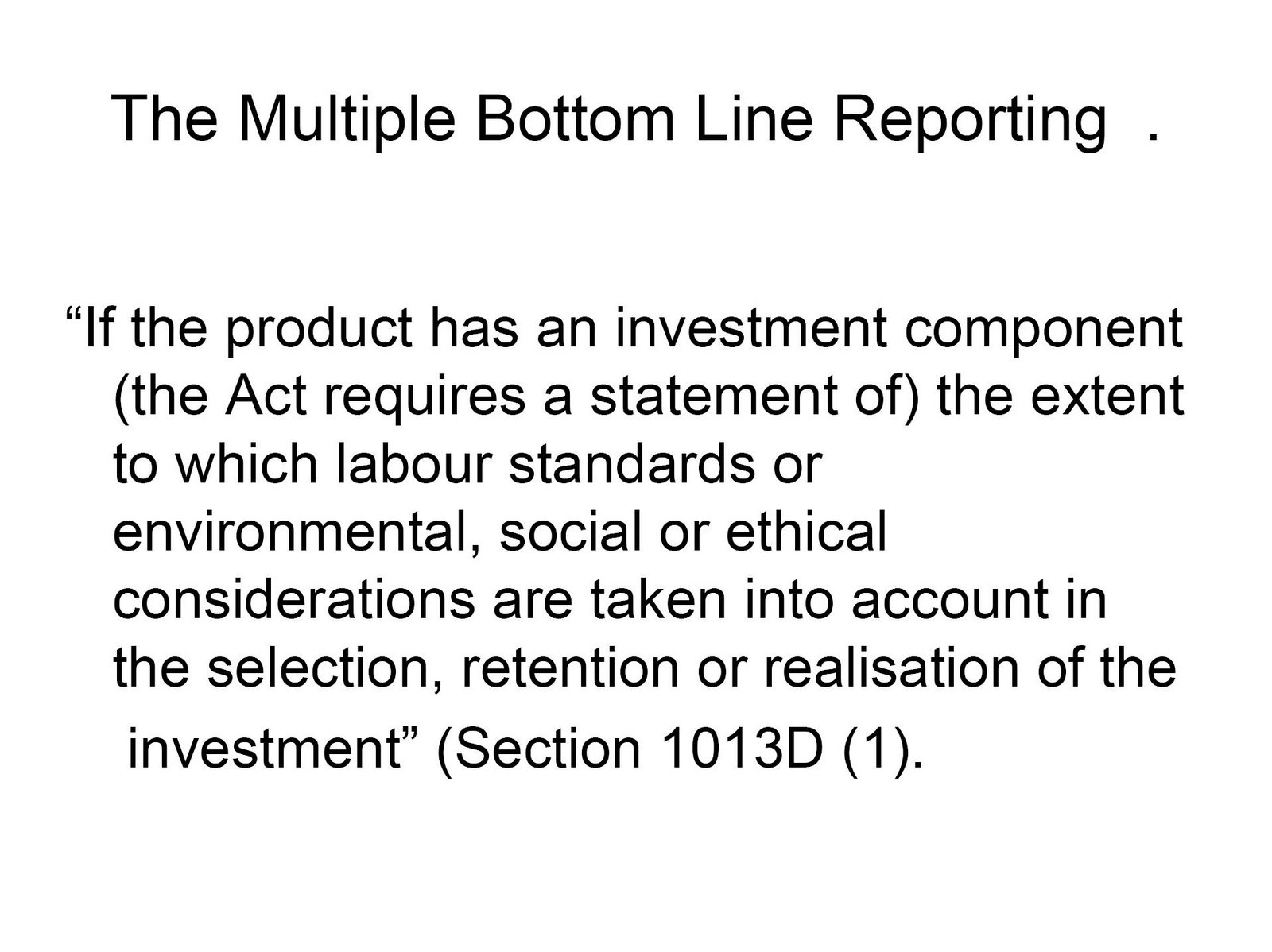
Closer to home, and perhaps more serious, the Financial Services Reform Act of 2001(FSRA) (10) is a legislative step into the brave new world of CSR.  The Act seeks to place open-ended moral restraints on private investment decisions which, if they were applied to individuals, would be an outrage.  The Act includes disclosure provisions in the offer of financial products designed to give prospective investors sufficient financial information to decide whether or not to invest.

The provision applies particular disclosure requirements to all superannuation, life insurance and managed investment products.  The requirement is that the financial institution concerned disclose for every product the extent to which it has taken into account labour standards and environmental, social and ethical considerations.  The requirement is thus imposed on approximately $650 billion of Australian savings, including the principal form of government-enforced savings -- superannuation.

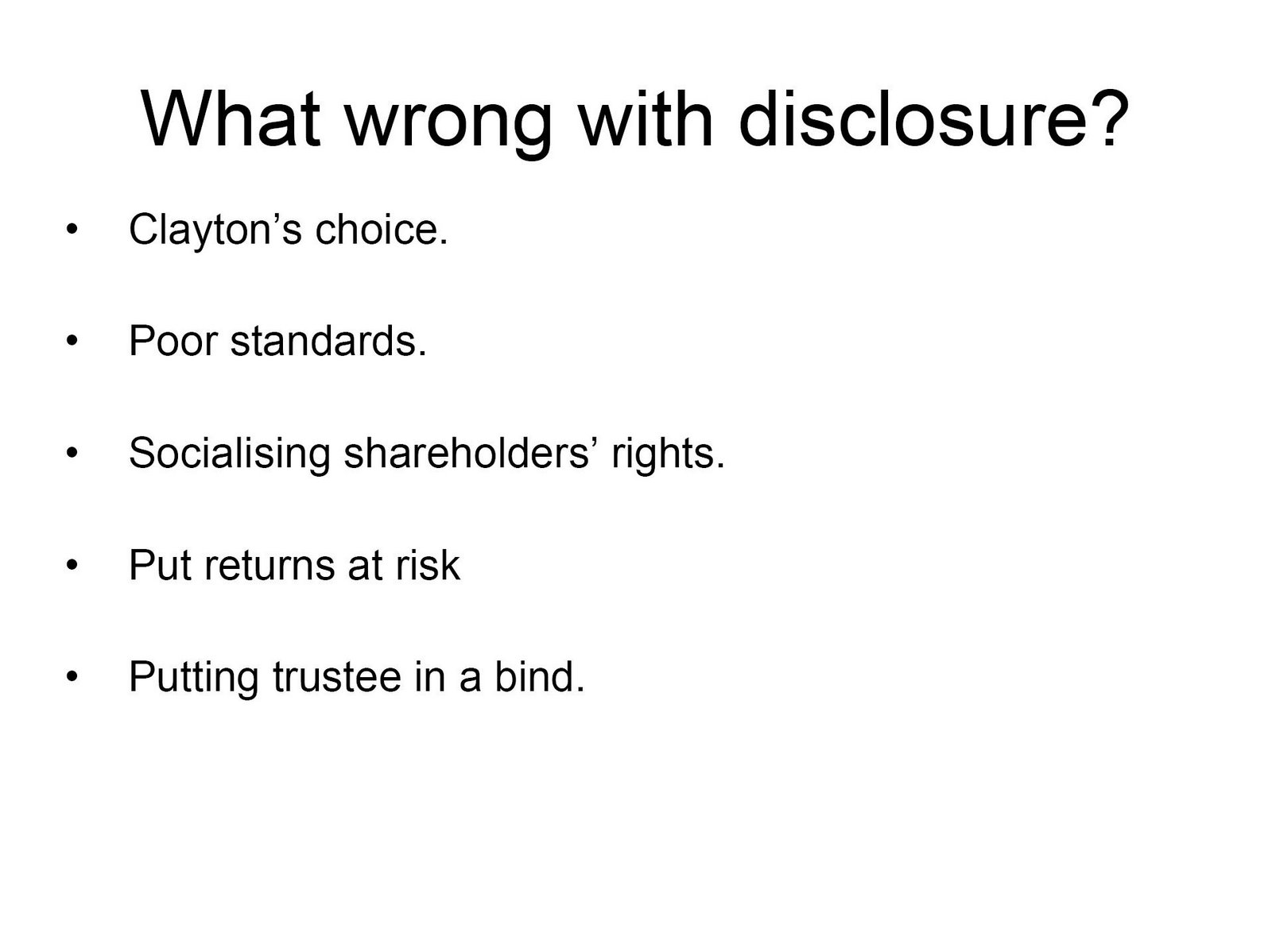
That may be reasonable if objective standards comparable with those for financial reporting, where auditors are sued for incompetence and gaoled for malfeasance, existed.  Of course they do not.  Nevertheless, disclosure requires the institution to formulate and express its attitudes and practices to matters that range from difficult to impossible to define.  It is open to businesses to state that they do not take these matters into account in their investment decisions.  No institution, however, will state that it does not take such matters into account -- in part, because if they did, NGOs and the media would label them as unethical or anti-social.  Silence would be treated as guilt.  More importantly, businesses in reality almost always "take into account" these issues to some degree, so a nil return would in most cases be untruthful.  The normal investment selection processes involve winnowing out fraudulent (that is unethical) propositions or those with high risk exposures arising from their corporate practices.  NGOs would exert pressure for highly detailed disclosure statements under each of the headings and would seek to supervise the behaviour of the institutions concerned against those written statements in ways favoured by those groups.

In the end, this is no less than an attempt, by indirect and stealthy means, to impose new and poorly defined community service obligations and prescribed behaviours on business.  By means of legislation and mandatory guidelines, the corporate sector is obliged to undertake actions (and report on them) that may adversely affect its profitability and that it would not necessarily undertake voluntarily.  The Act will encourage significant distortion of investment decisions and management effort to placate hostile groups, which have little financial stake in the institutions or businesses affected.

These provisions dilute the influence of shareholders and the responsibility of corporate management to its shareholders.  They also interfere with the market's ability to direct activity to the things consumers most want, not by learning from identified market failures but by imposing the preferences of organised minorities whose demands could provide an excuse for company boards and management for poor financial performance.  In the extreme, it might be used as an excuse for business failure on the grounds that the corporation had focused, perhaps very successfully, on "social responsibility" criteria and had thus failed to make a profit.  Failure to control labour costs might be equated with high labour standards.  Zealous environmental performance might translate into huge expenditure to avoid trivial environmental injury and so on.

The expansion of these "bottom line" concepts is accompanied by the phenomenon of a growing list of interest groups which elect themselves as "stakeholders".  A stakeholder is traditionally a person who has a stake, someone who has put up something of value to promote the enterprise in question and risks losing it.  It equates those with ownership and contractual rights with those with mere interests.  It is this trend towards giving everyone a say in everyone else's business that lies beneath much of the pressure for the FSRA provision.  It is a perversion of the idea of democracy.  It is a new form of corporatism.

An example of the improper use of science is the World Wide Fund for Nature (WWF) (11) campaign that lead to both the Commonwealth and Queensland Governments recommending urgent and significant changes to land management practices in catchments that drain onto the Great Barrier Reef.  In June 2001, WWF published a Great Barrier Reef Pollution Report Card, which concluded that the Great Barrier Reef was being threatened by land-based pollution.  While the report made many allegations of reef impact from agriculture, it did not substantiate any of the claims.

The lack of substantiation did not dissuade the Queensland Government, which responded to pressure from the WWF campaign by establishing a Reef Protection Taskforce.  At its establishment, representatives on the Taskforce asked that the current level of scientific understanding on impacts of terrestrial run-off on the Reef be provided.  A science statement was developed for the Taskforce to provide a "consolidated view of our current understanding of the impacts of terrestrial run-off on the Great Barrier Reef World Heritage Area".  This document discussed threats to the Reef, but again provided no reference to actual damage to the Reef.

Several Taskforce members noted this fact, with the following comments being made by members:  "So the widespread impact [of terrestrial run-off] is not substantiated."  "But the scientists have tried very hard to prove there is an impact."  "Let's not get hung up on the science."  And this from the WWF member, "Let's go forward on the basis of the precautionary principle."  At the insistence of several Taskforce members, the science adviser agreed to redraft the science statement.  A revised science statement was issued with the comment to the Chairman of the Taskforce that "We wish to clearly point out that whilst there is no evidence of widespread deterioration, there is documented evidence of localized deterioration on individual nearshore reefs".

This was the first statement from reputable scientists clearly alleging an impact from land-based run-off on the Reef.  Unfortunately for the proponents, the scientific papers on which this conclusion was drawn provided no evidence that agriculture or other land-based sources of run-off were having an adverse impact on the Reef.

The Reef Campaign came at the price of undermining scientific integrity.  According to Professor Bob Carter of the Marine Geophysical Laboratory, James Cook University, "one of the relatively new problems that faces us is that governments are increasingly basing their actions on advice provided by unnamed consultants, or on unrefereed reports from government agencies ... This is a recipe for disaster.  Good science operates on a consensus basis, using material that has been subjected to rigorous peer review and published in journals of international standing."  It is a dereliction of duty for governments to devise standards for water quality and run-off regimes without direct studies of impact.  The issues could have been resolved if governments had been prepared to scrutinize the evidence in the published scientific literature and not just buy off the NGOs.

An example where government simply handed the whole show to green groups was the Sydney Olympics.  Environmental NGOs played a key role in the development and delivery of the environmental agenda of the Sydney Olympics.  Greenpeace mounted a significant Olympics campaign over 7 years leading up to the Bid and the Games.  Greenpeace International and its office in Sydney, Greenpeace Australia, actively participated in the 1993 bid to host the Games, joining with government and industry in drafting the "Environmental Guidelines", Sydney's plans for an environmentally-friendly Games.

Greenpeace adopted a "watch-dog" role, which included monitoring the performance of organisers, offering advice and criticism and reporting on the performance of Games organisers.  SOCOG dealt with Greenpeace in a number of ways.  "SOCOG treated Greenpeace as an organisation with a legitimate interest in the Games and involved them as much as possible.  This reflected their role in the Bid, their expertise in the environment, their ability to tap a global network of knowledge and their ability to become involved whether we wanted them or not [my emphasis]." (12)

The Greens helped to establish the standards in all key performance areas, energy conservation, water conservation, waste minimisation, pollution avoidance and the protection of the natural environment.  A consortium of Greens lead by the Australian Conservation Foundation was paid $160,000 for their work by the NSW and Commonwealth governments to keep an eye on the organisers.  Greenpeace, true to its view on independence, did not accept government funds.  The Greens were on the stage with SOCOG at the launch of various environment initiatives, for example the CEO of Greenpeace launched the waste strategies initiative with the Minister for the Olympics.

Essentially, the strategy of SOCOG was to invite the Greens into the tent.  It was part of the "engagement strategy" now common in the corporate sector.  It used the language of "stakeholder" at its crudest.  Stakeholder status was granted to the Greens because of the damage that the Greens could do to the Olympic image.  It was also a "beyond compliance" strategy, doing more than the law required.  The Olympic Games showcased the best of the best, so everything associated with the Games has to be the best of the best.  Greenpeace used the Games like any other business, to use the badge of the Olympics to push their product.  In this case, however, they paid nothing and they delivered nothing, except the threat of bad publicity.  The strategy of engagement delivered power over programs and the judgement of outcomes to those who threatened blackmail.  There was a time when such behaviour was considered bad form.  Greenpeace stole a moral march on the IOC and the governments, and the IOC, the fans and the taxpayers paid for it.

A proper acquittal of government funds would ensure that public servants and technically competent people were in the decisio-nmaking positions, albeit with advice from lobbies.  The Sydney Olympics pushed well beyond the proprieties to indulge in an exercise of damage control and used funds for experiments in environmental management that had insufficient scientific scrutiny.


CONCLUSION

CSR comes in many guises;  when corporations embrace it, they displace shareholder rights with "stakeholder" wishes.  When governments support it, they hand power to unelected groups at the expense of voters.  The intent of our analysis is not to regulate civil society or to prevent debate about the role and function of corporations.  But a power play where "civil society regulators" bypass the shareholders, the creditors and the electorate, needs to be recognised and responded to.

The sensible response to CSR is to approach issues on their merits and deal in proof and facts.  It is to deal with those who have legitimate rights in the matters at hand, and real resources at risk.  This approach does not undervalue collective decision-making or public goods, or the need for government intervention to correct market failure.  In fact, it is designed to incorporate the wishes of the owners of corporations and the electorate by holding up to scrutiny those intermediaries who seek to influence events and outcomes.

The key tool for the scrutiny of the intermediaries, in particular advocacy NGOs, is the protocol.  Where a government or a corporation or a foundation judges that it is desirable that an NGO be granted standing or given access to its resources, certain information should be gathered, and made available respectively, to the public or to the shareholders or to the trustees.  The protocol is the requirement to supply proof of standing and to make the information available to the owners, in return for the grant of standing.

The following information should be sought and disclosed.  It is similar information to that which corporations disclose to their owners and the wider public as a matter of course.

Legal status:  The Constitution or Articles of Association.  These should be sufficiently detailed to prove the status of the organisation and to identify office holders, along with the structure of responsibilities and appropriate systems to ensure accountability.

Operating status:  Proof that the organisation is voluntary in that the governing body is drawn from the organisation's constituency and members are not remunerated;  is non-profit in that surplus funds cannot be distributed to members/shareholders;  is non-government in that it is independent from any Government.

Membership:  There must be a verifiable list of the membership, in all categories in which they are available.  That is, a list which distinguishes members -- people with voting rights -- from supporters.  The list should not be made public, although there should be evidence that new membership is encouraged.

Elections:  Document the process whereby the governing body is drawn from the organisation's constituency;  the process by which members are able to be involved in the policy-formation process and the procedures to ensure that any member or supporter has free access to, and ability to make copies of, all decisions of the governing body.

International affiliation:  provide information on off-shore affiliates, associated parties;  on the degree of non-resident input in terms of board membership and general membership, and extent of offshore funding.

Financial statement:  The financial activities and financial position of the organisation should be prepared in accordance with generally accepted accounting principles and include:  significant categories of contributions and other income;  expenses reported in categories corresponding to the descriptions of major programmes and activities contained in the annual report;  and all fund-raising and administrative costs.

Use of funds:  Money should be used in a manner specified by the NGO when it asks donors (and when those funds are tax-assisted) for donations.  Information should be provided which shows the percentage of total income from all sources applied to programmes and activities.  The percentage of public contributions that has been applied to the programmes and activities described in solicitations.

Fund-raising:  Solicitations and informational materials must be accurate, truthful, and not misleading.  Solicitations shall include a clear description of the programmes and activities for which funds are requested.

Claims to expertise:  other than membership interest.  The qualifications, whether formal or by way of publications, of those who will speak or act on behalf of the organisation in its representations to the provider, research undertaken, and whether research has been assessed by independent peer review.

Shareholders, and the electorate working through the formal channels of democracy, are the allies of corporate CEOs in their struggles with civil society regulators.  The protocol, the non support of NGOs, the disclosure of dealings to shareholders and the support of those who assemble the arguments against the new regulation are sensible ways to deal with the challenge.  These are not easy matters for corporations, but we are spending considerable energy on the issue and will continue to develop the arguments and engage the public debate.  The alternative, giving in, seems too expensive.


ENDNOTES

1.  See Murphy, D. and J. Bendell, 1997.  "The Politics of Corporate Environmentalism", paper presented at the Business Responsibility for Environmental Protection in Developing Countries conference, September 1997, Heredia, Costa Rica, Universidad Nacional and UNRISD.

2.  Parker, C. 2002.  The Open Corporation:  Effective Self-Regulation and Democracy.  Melbourne:  Cambridge University Press, 227.

3.  Parker, 2002, 7.

4.  Barry, N. 1999.  Anglo-American Capitalism and the Ethics of Business.  Wellington:  New Zealand Business Roundtable, 29.

5.  ABC TV New Dimensions:  Future.  Interview with George Negus, 10 July 2002.

6.  Hanson presentation in Birch, D. ed. 2000.  Proceedings of the Second National Conference on Corporate Citizenship, Rio Tinto and Deakin University, Corporate Citizenship Research Unit.  November, 16-17, 138.

7.  Ali, P. and M. Gold. 2002.  "An Appraisal of Socially Responsible Investments and the Implications for Trustees and Other Investment Fiduciaries", Centre for Corporate Law and Securities Regulations, The University of Melbourne.

8.  Ali and Gold. 2002, pages 30–31.

9.  "The Good Reputation Index 2001", Sydney Morning Herald, October 22, 2001.

10.  See Wood, R.J., 2002. The Financial Services Reform Act:  A Costly Exercise in Regulating Corporate Morals.  Backgrounder.

11.  See Wood, R.J., 2002. "WWF Says Jump:  Governments Ask, How High?"

12.  Otteson, P. 2001.  "Greenpeace and the Sydney 2000 Games:  What Are The Lessons?" Paper delivered at 4th IOC World Conference on Sport and Environment, Nagano, Japan 3-4 November.  Also interview with Peter Otteson, 26 June 2002.

Sunday, October 06, 2002

Infrastructure:  Whose Interest Rules?

The Bracks Government has struggled when it comes to infrastructure, both in deciding what to do and in getting things done.
Its problem stems from two things.  First in opposition it opposed not just specific initiatives but the basic philosophy behind Kennett's approach to infrastructure.  Second, as a Government it knows that Kennett by-and-large did the right thing for the right reason in terms of infrastructure.

What the Brack's Government needed after winning office was a Blairite Third Way type infrastructure plan, to help resolve this quandary.  If this is what they had in mind when they established the Infrastructure Planning Council (IPC) they will be disappointed.

While the Final Report of the Council released last month has its strengths, in particular the section on water, the section on transport -- the area the Government needs the most assistance -- is abysmal.

Rather than provide a fresh approach, based on rigorous research the IPC appears to have largely cobbled together the opinions and arguments of interest groups.  The problem with this approach aside from offering little new, is that it is only as good and as balanced as the set of interested groups whose views are sought.

In the case of water, on which there is a good deal of recent quality research and a broadly-based set of interests, the approach worked well.

However, in the case of transport which has long been dominated by the anti-car lobby, it has failed badly.

The Report concluded that "the two fundamental priorities of transport infrastructure ... are public transport and healthy rail competition for freight".  It calls for pie-in-the-sky target of 20% of passenger journeys to be via public transport by the year 2020 -- a three found increase in the sectors share.  Cars and road are presented as harmful things that need to be comprehensively suppressed through the use of such things as higher car registration fees, limiting parking access, imposing road user charges, giving trams priority, and traffic free zones.  Only six of the Report's fifty-two paragraphs on transport concern road construction and while the Report recommends the inter-connection of the metropolitan freeways, it states that "such connections (are a) low priority compared to upgrading public transport system".

In short the Report gives public transport which accounts for just 6 per cent of personal travel far higher priority in terms of infrastructure than cars which account for over 73 per cent of personal travel on a statewide basis, 83 per cent on urban fringe and over 90 per cent in rural areas.  Of course, public transport and rail are vitally important, but so is road infrastructure.

The Report is strangely mute on the privatisation of public transport which has stopped the freefall in public transport usage.  It says nothing about the $1 billion investment currently underway by the private metro train and tram operators.  It also says nothing about the large investment under consideration by the new private owners of the interstate rail network.

To the Government's credit, it has rejected most of the more silly recommendations of the Report.  In particular it will continue to give high priority to road construction.

Nonetheless, the Report failed to provide a balanced approach to transport planning and does not provide an appropriate vision for infrastructure.  It back to the drawing board once again.


ADVERTISEMENT

Tuesday, October 01, 2002

Qualified Accolades as Government Crosses the Public-private Divide

Public Private Partnerships (PPPs) worldwide are redefining the frontiers between public and private provision of infrastructure.  Victoria has seen their profile raised with the planned partnership for the Scoresby Freeway.  This project has assumed notoriety both from its escalating costs and the ambiguous government messages about whether it is to be paid for by real or phantom tolls.

PPPs extend the traditional sub-contracting of private providers in government project development.  They provide finance and can also incorporate design, management, building, maintenance, and operation.  Usually the deal involves governments leasing the facility and eventually gaining full ownership.

As well as roads, PPPs finance, airports, phone links, court houses and myriad other pieces of infrastructure that allow us to trade, travel, talk and litigate.  Governments traditionally provided these capital structures with their own funds.

Harnessing private sector skills and approaches to public provision is always likely to bring cost savings.  Better value for money is obtained partly by opening projects to the greater scrutiny that is inherent with commercially provided finance, and partly through putting pressure on trade union monopolies.

In Australia, State Labor Governments, anxious to avoid antagonising trade unions loudly claim to have "no ideological presumption that either the private or the public sector can deliver projects more efficiently or effectively".  That said, the key saving is from trying to avoid the sort of wasteful work practices presently under the spotlight in the Cole Royal Commission.

As illustrated by continued delays with the Saizeriya food factory and a slew of other operations, Victoria is particularly susceptible to union pressure in construction projects.  PPPs offer the potential for hard-nosed private sector operators to counter indulgent working conditions, which in the past were responsible for massive cost over-runs on government projects.  Indeed, in the UK, which like Australia has a "no ticket no start" union culture on building sites, lower construction costs have been crucial in bringing a claimed 17 per cent cost savings from PPPs.

Not surprisingly, union leaders have tried to discourage partnerships, which they see as threatening the practices which, though wasteful, contribute to their power base.

As a result, Australian ALP State Treasurers are walking a tightrope between seeking savings and placating their union allies.  For this reason, for the time being Victoria has quarantined their major school expenditures from the PPP concept.  NSW however has not seen the need to make this exclusion.

Political opposition has contributed to these partnerships experiencing a slow start in Victoria.  The $500-900 million Spencer Street station redevelopment is the only project of substance that has reached approval stage.  That said, one PPP not normally mentioned by the present Victorian Government is the highly innovative $1.8 billion City Link project (it was, after all, a Kennett/ Stockdale initiative).

Victoria's legacy of inefficient government built infrastructure projects contributed in the early 1990s, to downgrades in the State's credit rating and a generally moribund economy.  Infrastructure projects in the pre-Kennett/ Stockdale era included excessive costs of electricity and gas facilities and roads like Melbourne's south east "arterial" with its in-built inefficiencies designed to leave it uncompetitive with union dominated public transport.

PPP systems plan to prevent such waste with rigorous procedures in place both to solicit projects from the private sector and to test costings for new infrastructure between government provision and different forms of private ownership.

However a lingering anxiety about PPPs concerns the new-found source of funding they offer to government.  While in the past a new police station was financed out of current revenues, it can now be paid off on hire purchase.  This adds weight to other troubling trends.  Over recent decades, privatisation and out-sourcing have reduced the call for government spending on infrastructure, reflected in lower relative levels of State Government investment.  Australia-wide this peaked at 4.8 per cent of GDP in the late 1970s and is now half that share.  Yet the aggregate size of State and local government has increased from around 16 per cent to 20 per cent per cent of GDP.

In other words, a diminished call on public expenditures has not been matched by downsizing public sector activity.  Always reluctant to hand back money to those from whom they have taken it, State and local governments have boosted their expenditures to fill the gap left by activities they have exited.

PPPs offer politicians more scope to spend in areas which offer political dividends while seemingly not increasing the level of government spending.  This requires increased sophistication by budget-watchers and credit rating agencies to measure government spending over time on a consistent basis.

It is due to these sorts of considerations that Public Private Partnerships deserve just two and not three cheers.  But for its two cheers, the partnership approach offers the prospect of considerable savings in public money.


ADVERTISEMENT

Sunday, September 22, 2002

Regulating Your Morals with Your Money

Do Australians want an army of social engineers to control their investments?

Clearly some do, as shown by the existence of so-called ethical funds.  But then, most do not.

Well, we are about to lose our choice and be forced into the hands of the social engineers.  The Financial Services Reform Act, passed in the dying hours of the last Government, imposes disclosure requirements on all funds managers which will, in effect, force them to inquire into the labour, environmental, social and ethical standards of the Australian corporate sector.

At first sight, the legislation appears relatively innocuous.  Who could object to disclosure on labour, environmental, social and ethical matters?  No doubt the Minister was persuaded that the amendment was harmless and would even aid "transparency".  Upon closer examination however, the legislation is much more intrusive than it seems.  The transparency is more apparent than real.  In practical terms, disclosure requires the institutions to formulate and express attitudes and practices on four matters which range from difficult to impossible to define.

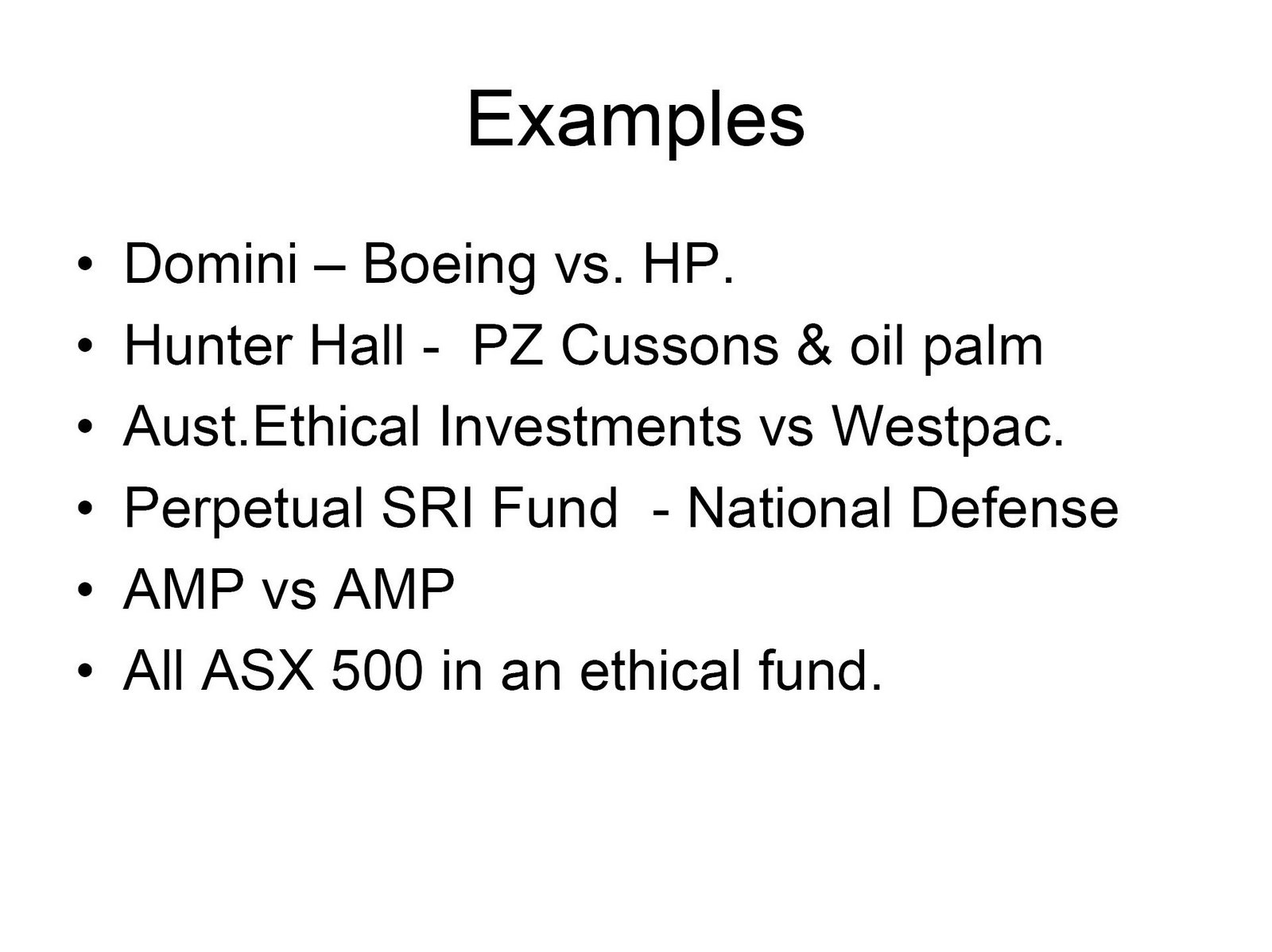
Institutions will be forced to decide what is an ethical activity.  Ethical funds have for example commonly declared armament manufacturers such as Boeing to be unethical.  Yet these funds have frequently invested heavily in the computer manufacturers that provide the guidance systems for Boeing's missiles.  They also over-looked the fact the missiles manufactured by Boeing protect the lives of many innocent people.

The funds will be forced to decide what constitutes good labour standards, for example, whether it is adequate to follow the laws of the land or follow the dictates of the union movement.  They will be forced also to decide and measure environmental standards -- not just those required under law, but above-the-law pushed standards.

In theory, businesses could state that they do not take these matters into account, thereby avoiding scrutiny and the subsequent paper chase.  In practice, however, no institution will state that it does not take such matters into account, in part because if it did, pressure groups would label it as unethical or anti-social.  Silence would be treated as guilt.  In any case, it is a reality of business that those matters are almost always "taken into account" to some degree.

Contrary to the claims of the ethical lobby, these provisions will cost investors.

The provisions will not only impose extra reporting requirements but require funds to hire social engineers, ethicists, environmental scientists and labour market analysts to screen for good behaviour.  Of course the cost of these services will be borne entirely by investors.  Many funds managers actually like the extra work, as it means more money to them.  Judging from existing ethical funds, the reporting requirement could force management costs up by as much as 45 per cent.

Moreover, there is no reason to believe that an ethical screen will compensate for higher management costs through higher yields or lower risks.  Indeed, if anything, the evidence points in the other direction.

Forcing unnecessary and costly investment criteria on investors is not only a breach of their rights, but a serious threat to their future.


ADVERTISEMENT

Thursday, September 19, 2002

Power to the People:  Privatisation and Deregulation of the Electricity Industry in Australia

An address delivered at
Johannesburg, 18 September 2002


"Until self-trained economist Edwin Chadwick came along, 19th-century Britain had a huge problem with its convicts bound for Australia:  most were dying before they reached the "fatal shore" down under.  Chadwick, however, proposed a solution as effective has it was simple.  Instead of paying sea captains by the number of convicts that boarded their ships, he suggested paying them for the number of convicts who disembarked from their ships -- under their own power.  It worked.  Soon after Chadwick's policy was implemented, convict survival rates surged to over 90 percent."

"Entrepreneurial Economics for Fun, Profit, and a Better World",
by Alex Tabarrok (May, 2002)


BACKGROUND TO PRIVATISATION IN AUSTRALIA

THE AUSTRALIAN POLITICAL ENVIRONMENT

Private ownership uses those same insights that Chadwick discovered two centuries ago.  It is based on incentives and, harnessed with competition to meet market needs, is the most powerful means of promoting efficiency and high living standards.

Fifteen years ago, following a century of increasing government ownership, it was a new concept and Australians, like most people, are conservative and suspicious of radical new approaches that might impose risks of severing rights that have evolved.

Australia's political structure also makes it a difficult country in which to embark upon reform.  A federation of nine jurisdictions, a bicameral parliamentary system and the fact that the Federal Government of the day seldom controls both Houses of Parliament means change is normally gradual.  That served us relatively well in resisting the vast wave of nationalisations and increased government ownership that swept Britain, France and much of Europe fifty years ago.  It may be a liability in pursuing the modern ideological perspective of reform to downsize government based on a greater confidence in the market place.

Nonetheless, change does come about.  As for deregulation and market reforms, Australia followed general global trends.  Something similar also occurred in the case of privatisation but in that case it was assisted by another midwife, financial crisis.

Over the past dozen years, well in excess of $100 billion of previously owned government businesses have been sold to the private sector.  In terms of industry sector these were dominated first by the government's half float of Telstra and secondly by the electricity and gas industry.  The Figure below illustrates the industry shares.

Figure 1

The sums raised from privatisation understates the magnitudes involved since, concurrent with and subsequent to it, there has been considerable new private investment in areas formerly reserved for government.


IMPETUS TO AUSTRALIAN REFORM

Reforms in Australia were spurred by three different but associated factors:

  • seeking improved management efficiency,
  • neutrality in the dealings of SOEs with other parties, and
  • privatisation of assets both to better meet these goals and to relieve budgetary pressures.

It was in fact the Hawke Labor Government that, initially in the mid-1980s, first embarked on some rather tepid movements in the direction of deregulation.  Because many in the Labor Party cut their teeth on the need for more, not de, regulation, once the process got underway a euphemism was required.  In Australia, the moniker was "micro-economic reform", which progressively became more serious, especially in the early 1990s following a report on competition policy chaired by businessman/academic Fred Hilmer.

As well as attempting to dismantle layers of government restraint of business, deregulation had three other dimensions:

  • placing government business entities on a footing similar to private businesses and at arms length from the political process;
  • ensuring "open access" by users of and suppliers to natural monopoly facilities like electricity lines and rail tracks;  and
  • terminating as the exclusive preserve of government entities, certain activities including infrastructural facilities.

Privatisation in Australia was sparked by the Thatcherite revolution.  In Australia and elsewhere this was derided by Labor Governments when they were out of office but adopted in part when such governments became sufficiently established and able to carry their constituents in a shift from ideology to pragmatism.  For the conservative side of politics, the path followed was observation of successful privatisation measures and then mollifying its more curmudgeonly elements who worried about "selling the family silver".  Privatisation however was never electorally popular in Australia and remains unloved even though service outcomes of the privatised entities show demonstrable improvement over their predecessors.

Although the Federal Labor Government–in power for 13 years from 1982–moved towards privatisation, the areas it chose were those where government business entities were heavily involved in a competitive business environment.  The entities included the Commonwealth Bank, Qantas and a pipeline business.

Massive impetus to privatisation was given by a collapse of State Government financial instrumentalities in the early 1990s.  Not only did this reveal mismanagement that shook the confidence of those championing State owned business, but the consequences also placed the State Governments that had presided over these businesses in a parlous financial position.

The most serious was that of Victoria and a Liberal Government was elected in 1992 with a privatisation platform.  The electricity industry was the prime target and this program brought a melding of the deregulation, pursuit of business efficiency and privatisation strands.


ELECTRICITY REFORM AND PRIVATISATION

Privatisation

The vigorous process of privatisation which the Victorian Liberal Government embarked upon following its election in 1992 radically transformed the Victorian economy.  Following many years during which the State was among Australia's worst performers with low income growth and fiscal mismanagement, the post 1992 period saw it converted to enjoy rapid growth and a sound budgetary position.

Asset sales were a major feature of the policy both as a means of restoring the State's low credit rating position and allowing lower levels of taxation, and as a means of injecting greater competitiveness into the State's economy.  Privatisation of the Victorian electricity assets accounted for the lion's share of the State's asset sales in a process which was among the most notable in the world.

Some $23 billion was earned from the Victorian privatisations of electricity and a further $5 billion from gas.  From the electricity privatisations alone, the Auditor-General put the annual savings net of expectations from dividends etc. at $760 million per annum, equivalent to about 9 per cent of the State's own taxation raisings.

By the time of the Government's fall in 1999, as well as electricity, the state owned gas, rail, bus services, trams and ports had been privatised.

In addition, the Government had brought in private ownership to build its major urban road development, City Link and had introduced private ownership of prisons and hospitals.  The success of the Victorian privatisation, especially of electricity, brought other State Governments to pursue that same policy.

Nonetheless, only in Victoria and South Australia was the privatisation of electricity complete.  Union opposition in NSW, the largest state, has meant very little privatisation, even though the Labor Government is keen to sell its electricity assets.  The NSW Liberal Opposition, having lost an election on a platform that included electricity privatisation is now ostensibly even more against its privatisation than the Labor Government.  In Queensland, a gradual privatisation may be taking place as several new generation facilities are being built largely by private enterprise.

In Western Australia, the State Government has privatised its gas business but both the State's major parties oppose privatising electricity.  Western Australia is a stand-alone jurisdiction not linked with the rest of the Australian grid.

The following Figure illustrates that Victoria (which comprises about 30% of the Australian market) dominated Australian privatisation with South Australia (comprising about 8% of the Australian market) also fighting above its weight.

Figure 2


Structural reform and issues emerging

The basis of the Australian reforms and privatisations, in line with those in other jurisdictions, was a disaggregation of the previous monopoly over electricity supply into generation, long distance transmission, local distribution and retailing.  Generation Transmission Distribution Retailing

This disaggregation was planned in Victoria concurrently with the privatisation but other states also embarked on a disaggregation of the industry.  Privatisation in Australia, leveraging off the mistakes made in the UK, was set in train to allow for a maximum role of competition as the discipline to promote efficiency and prevent price gouging.  In Victoria and South Australia, generation was disaggregated to the maximum–essentially seven separate Victorian suppliers and five in South Australia.

It was intended for generation and retailing to operate in a totally deregulated market with distribution and transmission, which were viewed as "essential facilities" or natural monopolies, to be regulated.

At the onset, generation, transmission and distribution/retailing were to be structurally separated but there were no specific long-term measures to prevent re-aggregation.

Although retailing and distribution were sold as combined units, they were to be "ring fenced" to prevent the distribution business favouring its affiliate.  In the event all five of the original Victorian host distribution business/retailers now have separate companies handling the two activities.  What has surprised some is that all the privatised retailers and some of those remaining in government hands have moved to acquire some generation of their own.  This is a function of the need that retailers see for some control over their supply, particularly in view of the wholesale price shifts to which electricity is now subject.

Retail was a part of the electricity industry envisaged as being contestable and requiring no more regulation than is required of other retail activities.  In fact, although commercial supply is now largely deregulated, governments have been cautious about deregulating household supply.  Both in NSW and Victoria, retail competition at the household level has been accompanied by safety nets that make it unattractive for retailers to poach customers.  This on-going regulation of retail supply has resulted in some market confusion and is reported to have been the straw that resulted in two of the five original owners of Victorian retailers exiting the market.  Commercial customers have seen a churn rate from their host retailer of about 40% but the regulations in place have meant that very few households have switched retailer.

Other developments have not followed the path that was expected.  In the case of transmission, a centrally planned provision was envisaged.  However, a situation recognised from the outset is that transmission and new generation are alternatives.  If transmission is provided free or at regulated prices this may discourage a more rational and lower cost development of new generation.

This led to provision being made for entrepreneurial interconnects in the National Electricity Law.  And Transenergie, a subsidiary of Hydro Quebec, has started building these entrepreneurial links.  This has in turn given rise to issues concerning the circumstances under which a regulated augmentation of links should be permitted.  The danger is that links which are financed by a compulsory charge on the customer, might lead to incentives to site generation in places that are distant from major markets.  If someone else is paying for transmission, the rational generation business will take its profits and socialise its losses.

Australia's electricity market no longer comprises several internal market supplied by monopoly firms.  It is now a multiplicity of bilateral contracts between generators, and retailers strongly underpinned by a "gross pool" through which virtually all electricity has to be bought and sold.  The four states that are in the National Electricity Market (NEM) are connected by transmission links though the different states all comprise regions that sometimes have constrained interconnects.

Essentially the NEM is a one-way market with the demand emerging from whatever end-users require and with supply being offered by generators at different price levels.  All supply is paid the same price, that of the highest bid plant that is loaded.  In the short term, generators are relatively indifferent to the price of that part of their supply for which they have contracts (probably 90% plus of the market) and will often bid close to their marginal costs for this part of the load.  Compared to a price norm of about $30 per MWh, at present prices can rise to as much as $10,000 per MWh which makes retailers especially keen to be fully contracted.

A rather complex National Electricity Code controls the rules under which generation and transmission are placed on the market.  And the fact that the price has oscillated has contributed to unease in certain quarters that there is price manipulation.  Of course, the price oscillations have always been there but were masked in the past because the monopoly provider called in higher merit order plant without this actually being specifically priced.


PRICE OUTCOMES

WHOLESALE PRICES

The overall outcome has been much lower average prices than most people expected.  Over the past four years the average wholesale price in the two largest sub-markets, NSW and Victoria has been below that required to justify new baseload capacity, a price commonly estimated to lie between $34 and $45 per MWh depending on the State.  Compared with a pre-reform intra-company price of $38-44 per MWh in NSW and Victoria the price outcomes have been as shown in Table 1 and Figure 3.  By and large, contract prices have reflected these spot prices.

Table 1
Average Prices in Major National Electricity Markets ($)

YearNSWVICQLDSA
1999 July-June23.725.15549.7
1999 -- 200028.926.145.360.6
2000 -- 200138.445.442.257.3
2001 July-December27.426.72826.4

Figure 3

These wholesale price outcomes are very much the telescoped outcome of prices that have ranged from near zero levels to needle peaks of $9000 per MWh.

The very high price excursions cause political difficulties especially where major customers allege generators are abusing market power.  The effect of the high price excursions on average prices is not inconsiderable.  Even though the prices above $1,000 prevail less than one third of one percent of the time in all jurisdictions, they have an affect in raising prices by between 12% and 25%.

Table 2
Effects of High Price Excursions

Number
of hours
% of
time
affect on
average
price
NSW24.50.1918%
Vic30.50.2312%
SA40.50.3125%
Qld24.50.1914%

The high price incidences occur in all jurisdictions that have a market in place.  They are not due to private ownership–indeed the price peaks have led to claims that generators are exercising market power and it is the NSW generators who have been most strongly accused of such abuse.  NSW has the most highly concentrated supply, with essentially only three portfolio generation businesses.

That said, the competition authority, the ACCC, has recently issued a report that says abuse of market power by generators is not occurring.  In many respects the best evidence of this is the much lower aggregate prices that we have seen and the evidence of generator financial distress.  In this respect only one of the generators is publicly listed, the 2000 MW Loy Yang.  Since that plant was sold in 1997 for $4.8 billion, in spite of the business since markedly improving its productivity and availability, its value is now at least $1billion less than its sale price as a result of very low wholesale prices.

As Table 1 showed, prices in Victoria have risen as demand has gradually increased.  But it has been the peak prices that have brought this about.

The price developments in Victoria and other states have led to predictable new investment responses.  South Australia and Queensland were short of capacity, saw high prices and have experienced a surge of new investment.  Victoria has a surfeit of baseload power but a shortage of peaking capacity and again the market has responded.  NSW was relatively comfortable in both respects.  These capacity augmentations are summarized below.

Table 3
New Generation Investments

StateCommitted Projects (MW's)
South Australia1,130 MW baseload since 2000
NSW220 MW peak since 2000
Queensland2,496 MW baseload since 2000
Victoria856 MW peak since July 2001

DISTRIBUTION AND RETAIL

Distribution and transmission profits are largely controlled by government regulation.  In the case of transmission, price reductions required by regulation have resulted in considerable marking down of value.  For distribution, even though the businesses have complained about regulators' price setting, the outcomes have left values unchanged.

With retailing, an activity that was thought to have little value at the time of privatisation, recent sales of a stand-alone retailer and the implicit price of the retailing arm of a retailer/distributor, have demonstrated rather more value.  Electricity retailing has upside potential because of the other retailing opportunities it offers through levering off its developed customer relations.


POST-PRIVATISATION ASSET RESALES

Prices resulting from market forces and regulatory decisions have been major factors in establishing the value of the privatised businesses.  A further factor has been global trends and perspectives.  In this respect many British and American energy businesses during the later part of the 1990s when the privatisations took place had decidedly different business strategies than they now have.  The euphoric attitudes to the prospect of capitalising on overseas energy opportunities are now more subdued.

In some cases this has resulted from a new realism in assessing earning prospects due to changed perceptions about regulatory risk or more sober market forecasts.  Broader events like the collapse of Enron have also played a role.  The general view is that the prices for the Victorian and South Australian energy assets would be somewhat reduced today.  Nonetheless, new buyers have emerged and the assets continue to command good prices.

The following table summarises the available information on post privatisation asset price movements.

Table 4
Estimated Changes in the Asset Values of On-Sold Victorian Electricity and Gas Businesses

SectorBusinessApprox Change in Value
RetailPulse (2002)+ 40%
DistributionCitipower (1998)
Powercor (1999)
Citipower (2002)
+ 5%
+ 5%
- 6%
TransmissionPowernet (2000)
GasNet (2001)
-17%
-20%
GenerationLoy Yang (2002)-25%

OUTCOMES IN PERFORMANCE OF THE ELECTRICITY INDUSTRY

DISTRIBUTION

Victorian distribution businesses since privatisation have shown marked increases in productivity and in customer service.  This is probably better relative to the government businesses but fully documenting the productivity performance of the distribution businesses is difficult.

On the available data, between 1994/5 and 2000/01 all states achieved substantial labour productivity gains.

In comparative terms, in 2000/01 labour productivity in NSW and Queensland, though showing considerable improvements, remained only 78 and 63 per cent respectively of Victoria's level.  South Australia, post its privatisation, appeared to have leap-frogged Victoria labour productivity, while Western Australia (which covers only the South East interconnected system) was also well ahead.

Figure 4

ESAA

The above measure of efficiency levels, labour productivity, excludes the important component of capital productivity.  Energy businesses themselves attempt to determine their relative efficiencies to set internal targets (and, in the regulated environment in which distribution operates, to deter regulators from seeking excessive price reductions).

Benchmarking one of the Victorian distribution businesses against 104 US utilities, the Pacific Economics Group (PEG) found that the Company's computed overall cost is 44% of that of the average U.S. firm.  The study's findings would have placed United Energy close to the frontier of efficiency.

The following table shows United Energy compared with the average in the sample compiled by PEG.

Figure 5
AVERAGE VALUES OF VARIABLES IN THE BENCHMARKING STUDY

VariableUnitsUS Sample
Average
United
Energy
United
Energy/
Sample
Average
Total CostThousands of $(US)377,782,714171,158,5030.45
Price of Capital ServicesIndex Number1.001.071.07
Price of Labor Services$1,000(US) per Employee51.7536.590.71
Price of MaterialsIndex Number1.121.080.97
Total CustomersCustomers695,777538,0000.77
Retail DeliveriesMWh17,358,0006,448,6050.36
Miles of Distribution SystemMiles20,4803,3870.36
% of Distribution System ElectricPercent89%100%1.12

Source:  Pacific Economics Group, Kaufmann, L., Lowry, M.N., and Hovde, D., United Energy Performance, Results of International Benchmarking, November 1999, p. 39

Reliability of distribution in Victoria has improved considerably since privatisation.  The ORG sets targets for each of the businesses, targets that are far less controversial than those covering prices.

A steady improvement in reliability, as measured by minutes off supply, has been experienced in the years since 1995 as illustrated below.

Figure 6

Source:  Essential Services Commission

The improvements have been seen in all five distribution businesses as illustrated in Figure 7 below.

Figure 7

Source:  Essential Services Commission

A small increase was recorded in minutes off supply in the first half of calendar 2001.  This was ascribed to more normal storm situations following a very benign first half year in calendar 2000.  The Office of the Regulator General noted that the distribution businesses remained on track to the target reductions in minutes off supply that had formed part of the 2001 rate re-set.

In respect of reliability, the Victorian outcome has shown relatively more improvement than that in other jurisdictions.  Figure 8 illustrates this.

Figure 8

Figure 8 shows that improved performances have been logged by Victoria (outages down 64 per cent) and NSW (outages down 24 per cent).  Queensland showed 47 per cent increased outage times and in South Australia an increase of 36 per cent was logged.


GENERATOR PERFORMANCE

As with distribution, it is rarely possible to assemble simple benchmarks allowing state by state comparisons between generation businesses.  Using simple labour productivity is difficult.  For example, output per employee, as well as having definitional problems with employees following a greater use of contract labour, also compares Victoria's brown coal generators with other states' black coal generators which employ less labour partly because they do not own and mine their own coal.  Similarly, gas generators and hydro-electric generators require fewer staff.

In addition, as with distribution businesses, profit figures are now not readily available because the privatised businesses' profits are normally consolidated into parent company accounts and not separately identified.

The available data shows that productivity in all state systems has experienced marked improvements.  The comparative performance of five states is shown in Figure 9 below.

Chart 5

Source ESAA

Part of the improved productivity of the generators is their greater availability.

Not only did the pre-1992 generation sector exhibit gross over-manning but the generators were available for less than 80 per cent of the time.  Having generators available to run at short notice allows an ability to meet unexpected changes in demand, thus bringing about lower prices at such periods and allowing higher earnings by the generators.  The improvement in Victoria's generators has been outstanding as Figure 10 illustrates (perturbations in the last two years in South Australia and Victoria reflect new capacity coming on line).

Figure 10

Source:  ESAA


PRICES TO CUSTOMERS

While Australian prices do not compare favourably to those in the lowest cost supply system in the world, that of Eskom, they are low by world standards (see appendix).  The shift to a competitive market means it is no longer possible to discover prices in the traditional way by dividing revenue by energy usage and subdividing this into different customer classes.  The historical data remains useful for the regulated customers, where energy price is determined by governments and the customers are captive.

Comparisons of consumer prices are also complicated because of very different usage profiles–Victoria tends to have peakier, and hence more expensive, demand than the other states.  The data is shown below.

Figure 11

Source ESAA

Nor is it possible to provide directly comparable numbers for contestable customers.  However around 40% of customer load is supplied by non-host retailers.  Prices fell considerably where the customers were free to shop in NSW and Victoria, though reflecting a more recent tightening of supply, they have tended to rise somewhat, though are still well below pre-deregulation levels.

Figure 12

Source:  ESAA


PRIVATISATION VERSUS CORPORATISATION

All Australian electricity supply businesses are now either privatised or state owned but operating under corporations law with more-or-less independent directors.  This is a development over the last ten years and there is no reputable body that advocates returning the operations of electricity supply firms to the public service.

Corporatisation itself meant a considerable improvement in productivity and customer orientation.  Further improvements followed with privatisation and, by and large, the government owned firms in Australia have lifted their performance and match those of the private firms.  All suppliers have, as shown in the earlier tables, exhibited much greater efficiency in terms of labour productivity, and supply security.

Nonetheless, corporatisation remains a half-way house.  Privatisation remains a preferred approach.  It does so for reasons over and above the advantages it brings in releasing the government from capital expenditure obligations and consequent improvement in debt levels.

Privatisation allows a more enduring improvement in efficiency for several reasons.

  • The government ownership makes expansion and pursuit of synergies more difficult.  The firm would need to obtain ministerial approval for such measures and this is likely to be more difficult (especially where there have been histories of ill-advised government business expansion) than is the case with private shareholders.  In the electricity and gas industries, where market development appears to be favouring some limited re-aggregation of retailers and generators, such inflexibility is likely to adversely impact on the GBEs.
  • There may also be some residual areas where private ownership and the improved incentives inherent in it will prove beneficial.  In this respect, the one serious business error of an Australian electricity firm since the reform program has been one of the NSW generation businesses which entered into very poor contracts and lost a sum close to its net worth.
  • Irrespective of intentions, Governments will meddle in the behaviour of the firms they own.  Some examples in Australia have been:
    • The board appointments, which have occasionally been political, as when the NSW placed the ex leader of the Trade Union federation on the board of one of its generators.
    • State governments have made known their preferred form of labour management to those charged with business management;  managers in such circumstances feel obliged to follow ministerial preferences even where they entail costs.
    • In NSW, the government has put in place a mandatory insurance scheme between the state owned retailers and generators.  While stabilising prices, this seriously impedes the development of risk markets and would not be possible if there was major private ownership.
  • Finally, government ownership leaves no market for the firm itself.  Other firms can sell parts of themselves off or face takeovers from entities that consider they can manage their assets more effectively.  Australian privatised energy businesses have seen a number of second round sales.  Government ownership can do little more than change the team.

OUTCOMES THAT MIGHT HAVE BEEN IMPROVED

The foregoing indicates that the Australian development is incomplete.  The supply industry in the largest State is almost exclusively government owned.  Aside from this, the privatisation program has been remarkably successful.  It has raised far more than was expected and has brought an enhanced level of efficiency.  Much was learned from the mistakes in the UK experience.

The disaggregation prior to privatisation has had some deficiencies.  These include leaving South Australia with only one host retailer, a situation that may have led to higher prices because of the difficulties new rivals without a local base have experienced in establishing themselves.

A further criticism concerns the NSW disaggregation its generation three portfolio businesses when six or more separate businesses could have been created.  There are claims that this brings the risk of UK style market power.

A further more insidious issue is the dividing line between governments and business.  Governments, especially when they do not own assets, want to see prices as low as possible.  But "free beer" cannot be supplied indefinitely.  There is a risk in some of the interventions that governments have made or threatened that some new investment will be deterred with a low price in the short term resulting in higher prices at a later stage.  Short-termism is an enduring problem with government decisions and a major reason for privatisation.

Establishing market governance that is immune to political intervention in something with as high a public profile as electricity is a major challenge in all jurisdictions.  We have not yet got it right in Australia.


LESSONS FOR SOUTH AFRICA

While I have no detailed knowledge of the South African power industry, I understand generation, transmission distribution and retailing is dominated by the government owned business, ESKOM.  Your industry, which is comparable in size to that of Australia, is corporatised, with transmission, distribution and generation all separated, though there is little private sector participation.

While generation is considered to be managed to a high degree of technical efficiency, the Australian experience indicates that further cost savings and benefits from improved flexibility are found once ownership is changed and incentives to discover these are in place.

Competition in spot bidding and for contracts also sharpens efficiency levels, though this does require retailing and distribution to be separated or ring fenced from each other.  Full separation also makes it difficult to have the government impose cross-subsidies on the business, perhaps to facilitate system extension.  Although a political disadvantage, requiring subsidies to be clearly visible and on-budget rather than obscured is a major benefit to sound governance.

The disaggregation and privatisations in Australia are important beacons for South Africa.

One approach to be avoided is the experience of Indonesia. (1)  Indonesia left the electricity supply under a monopoly (Perusahaan Listrik Negara, PLN) but, starting in 1990, it invited private supply of generation into the monopoly business.  Some 26 plants were constructed on a build-own-operate basis, amounting to about one third of total capacity.  The government accepted take-or-pay contracts with prices denominated in US dollars (in addition the state owned enterprise was not permitted to raise prices to take account of its own cost increases as a result of Indonesia's currency falling to one fifth its previous $US rate and to the reduced demand.).  The outcome has been ruinous losses.


ENDNOTES

1.  See Ross H. Mcleod, Second and Third Thoughts on Privatisation in Indonesia, Agenda Vol 9, No. 2, 2002


APPENDIX

Saturday, September 14, 2002

Regulation Thwarts Market Growth

Superficially, NSW Treasurer, Michael Egan's letter Owning up to facts on electricity, (AFR Letters, 11 September) is correct in saying that the NSW Government is not the State's price regulator.  However, the comprehensive ownership of both the generation and the retail firms in the industry has allowed the government to require its businesses to participate in a form of compulsory price insurance.

Covering half of demand, this has suppressed market signals and prevented the growth of risk alleviation products that respond to the market views of participants rather than those of the Government.  This regulatory intervention is also thwarting the ability of the NSW electricity businesses to acquire sophisticated risk management skills, thereby jeopardising the growth of a mature market that can operate free of central planning.

Mr Egan is also playing fast with the truth on energy prices in NSW.  In fact, NSW wholesale prices last year were higher than those in both Victoria and South Australia.  While the Government-owned NSW electricity industry has performed creditably over recent years, on a range of measures its privatised counterparts in Victoria, and more recently South Australia, have performed better.  The likelihood of this outcome was, of course, a major factor in Mr Egan himself fostering the privatisation of the NSW industry.


ADVERTISEMENT

Sunday, September 08, 2002

The Mother of All Lawsuits

An explosion of liability claims is causing escalating insurance costs.  Some doctors and other service providers are refusing to take the risk of continuing to practice.  Whether through increased costs or services becoming no longer available, the consumer is the ultimate loser from this.

Hence, we have State and Commonwealth Governments searching for ways of limiting the costs that providers of goods and services might be up for if things go wrong.

Ironically, all this is happening at the same time as the mother of all class action suits began this week in the Victorian Supreme Court.  That suit stems from a different sort of explosion -- the one that occurred at the Esso managed Longford plant in 1998.  The Esso suit has the potential to rewrite the law of contract and negligence with dramatic implications for businesses, governments and even unions.

The action was initiated almost immediately after the explosion by two of the most aggressive plaintiff law firms -- Slater and Gordon and Maurice Blackburn Cushman.  They were subsequently joined by law firms representing 22 insurance companies which paid out a reported $200-$300 million in claims to businesses resulting from loss of gas supplies.

The action is being funded by these law firms on American-style no-win, no fee basis.  In other words, the law firms are funding the action and will only be remunerated if they win.  According to BRW Magazine, the lawyers will, if they win, receive their costs plus a 25 per cent premium.  The claimants do not have to pay any money up front.  The action is a no-loss arrangement for them.

The claimants could number in the millions, legal costs could reach $100 million and, if awarded, damages could be as high as $500 million.  This could easily be Australia's largest class action case ever.

The case is hardly clear cut.  While the Victorian Supreme Court has ruled that Esso was responsible for the Longford explosion and therefore the cessation of gas supplies, this does not mean that it should be liable for all downstream effects.  Firstly, Esso did not have contracts with consumers.  Esso's contract of supply was with the government owned Gascor.  Second the contract between Esso and Gascor expressly considered the possibility of disruption and includes a clause exempting Esso from any liability for loss of profit or consequential loss.  Third, Esso had no ability to ensure alternative gas supplies;  these powers lay with the Government.  Fourth, many consumers knew of the risk, took out insurance and have received compensatione for their losses.

If the court rules against Esso, it will dramatically increase the cost of, and risk to, suppliers and users of essential facilities from airlines and other public transport to electricity.  It would undermine the ability of parties to apportion risks and liabilities through contracts.  It would provide a disincentive to people to take appropriate precautions like insurance and back-up systems.  It would open up an almost unlimited horizon of activity to ambulance-chasing lawyers.

The process illustrates the needless costs imposed on us by lawyers, both in diverting the consumer's dollar in their direction and in undermining the ability of firms to offer goods and services.


ADVERTISEMENT

Saturday, September 07, 2002

Regulating Your Morals with Your Money

Do Australians want an army of social engineers to control their investments?

Clearly some do, as shown by the existence of so-called ethical funds.  But then, most investors -- over 99 per cent -- do not.

Well, they are about to lose their choice and be forced into the hands of the social engineers.

The Financial Services Reform Act, passed in the dying hours of the last Government, imposes disclosure requirements on all funds managers which will, in effect, force them to inquire into the labour, environmental, social and ethical standards of the Australian corporate sector.

At first sight, the legislation appears relatively innocuous.  Who could object to disclosure on labour, environmental, social and ethical matters?  No doubt the Minister was persuaded that the amendment was harmless and would even aid "transparency".

Upon closer examination, however, the legislation is much more intrusive than it seems.  And the transparency is more apparent than real.  In practical terms, disclosure requires the institutions to formulate and express its attitudes and practices on four matters which range from difficult to impossible to define.

Institutions will be forced to decide what is an ethical activity.  Ethical funds have for example commonly declared armament manufacturers such as Boeing to be unethical.  Yet these funds have frequently invested heavily in the computer manufacturers that provide the guidance systems for Boeing's missles.  They also over-looked the fact the missiles manufactured by Boeing protect the lives of many innocent people.  The funds will be forced to decide what constitutue good labour standards.  For example, whether it is adquate to follow the laws of the land or follow the dictates of the union movement.  They will be forced to decide and measure environmental standards -- not just those required under law, as every firm does that, but above-the-law standards.

In theory, businesses could state that they do not take these matters into account thereby avoiding scrutiny and the subsequent paper chase.  In practice, however, no institution will state that it does not take such matters into account, in part because if it did, pressure groups would label it as unethical or anti-social.  Silence would be treated as guilt.  In any case, it is a reality of business that those matters are almost always "taken into account" in some degree, so a nil return would, in most cases, be misleading.  The normal investment selection processes involve winnowing out unethical or high risk actions.

In short, the legislation gives the pretence of voluntarism but not the reality.  And it goes well beyond mere reporting.

If proof were needed of the likely impact, we can turn to the UK where similar but milder, legislation came into effect two years ago.  Over 50 per cent of UK pension fund trustees are now pursuing on-financial objectives, not because they believe that they are interest of their unit-holders, but rather to protect their good names from attack by activists.

Contrary to the claims of the ethical lobby these provision will cost investors.

The ethical lobby's sales pitch is that investors can "do well by doing good".  That is thery can pursue non-financial goals at no financial cost.  Indeed some even claim to have the secret to beating the market by being clean, green and union friendly.

Over the 1990s ethical investments were often able to match the market.  Some even were even able to beat the market.  This is now, however, proving to be another mirage of a bubble economy.

Ethical funds have tended to invest in blue chip companies, in growing industries which, in the 1990s, tended to be socially "acceptable" industries, such as dotcoms, telcoms, and services.  In short, they have tended to invest in the leading firms in the fastest growing segments of the market.

The leading firms of the 1990s are now leading the market down and the old economy stocks are the stars.  As a result most ethical funds are struggling.  Ironically despite their ethical screens, ethical funds have been some the largest losers from recent corporate collapses including Enron, WorldCom, Ansett and HIH.

Ethical funds are also more costly to manage.  They not only need a team of financial analysts, but a team of social engineers, ethicists, environmental scientists and labour market analysts, to screen for good behaviour among the stock chosen by the financial people.  Recent research found that ethical funds have expense ratios (management costs as share of funds invested) of between 1.5 and 2.5 per cent which compares very poorly with the average expense ratio of non-ethical funds of about 1 per cent.

In short, ethical funds cost more to manage, adopt higher levels of risk and yield lower returns than funds that adopt strictly financial criteria.  This should surprise no one.

Forcing unnecessary and costly investment criteria on the investors is not only a breach of their rights but a serious threat to their future.

The Government needs to go back to the drawing board and give us our freedom back.


ADVERTISEMENT

Thursday, September 05, 2002

Calpers, a Lesson in Hypocrisy

Asian investors were in shock earlier this year when the California Public Employees' Retirement System, or Calpers, announced plans to withdraw its investments from Malaysia, Thailand, Indonesia and the Philippines.  While it subsequently reversed its decision on the Philippines, it has reconfirmed its intention to withdraw from the other countries.

Calpers is not just the largest pension fund in the world (it has assets of $149 billion), but one with a reputation as a leader in corporate governance and in the corporate social-responsibility movement.  While Calpers' investment in Thailand, Malaysia and Indonesia only amounts to $219 million, the concern has been that other investors would follow suit.  Well, relax.  Commercial investors were never going to follow Calpers' lead, as it was a clear route to losing money.  And now, its reputation as an investor and leader in corporate governance is in free fall.

However, its decision, particularly in regard to Malaysia, is instructive of the activist role funds like Calpers have taken on.  Calpers' decision was based on commissioned research that not only concluded that these Asian countries were bad risks, but that Argentina was the most promising of the emerging markets.  Since this research was completed in December 2001, the Thai and Indonesian markets have done well and the Malaysian market has held steady, while the Argentine market has collapsed (down 66% in dollar terms as of mid-July).  Moreover, these trends were well-advanced and known in February when Calpers made its decision to divest.

Why would any fund pursue such a strategy?  The answer, in a word, is politics.  Calpers is fundamentally a political organisation.  It is the monopoly provider of pension services to California's state public servants.  Its board is composed overwhelmingly of political types:  elected officials and political appointees.  And it has close union links.

A political orientation naturally leads to activism.  But for a long time Calpers restricted its activism to improving standards of corporate governance, not only in companies it was invested in but in the corporate sector as a whole.  However, from 1998 on Calpers broadened its activism to include non-corporate aims;  it jumped into social activism.  Since then, it has joined shareholder resolutions promoting higher spending on alternative energy, reductions in greenhouse gases, free AIDS drugs and country boycotts.  Calpers has also coordinated its corporate-governance resolutions with union campaigns.

Calpers crossed the rubicon by divesting from profitable investments.  In 2000, at the insistence of Phil Angelides, the state's treasurer and Calpers trustee, it withdrew its investments from tobacco firms.  This decision was made despite warnings from consultants and staff that it would cost at least $30 million in transaction costs.  From the time of the vote to the end of May this year, tobacco stocks outperformed the S&P 500 Index by 90%.  Calpers is now considering another demand from Mr. Angelides to divest from companies that operate in "offshore tax havens".  The rationale is that these firms "are avoiding taxes" and are "more difficult to sue".

Calpers' decision to divest from Asia followed similar logic.  In early 2000, Mr. Angelides, with union support, announced that Calpers should take into consideration labour and other human-rights standards in its emerging-nation investments.  Other members of the Calpers board and staff initially strongly disagreed.  According to the San Francisco Chronicle:  "Opponents ... warn that if fund managers start mixing social activism with their investment decisions, the funds will lose money".  At the end, the board gave in to Mr. Angelides' demands and altered its selection methodology.

Previously, Calpers had employed Wilshire and Associates to develop a selection process that incorporated the use of a range of commercially focused indexes, gathered from reputable published sources.  These indexes measured market volatility, regulation and legal system, investment restrictions, settlement proficiency, transaction growth and growth of technology.  The previous methodology also included indexes on the level of economic development and political stability.

In 2001 it eliminated the growth of technology index, augmented the political stability index and added two new indexes:  transparency and labour standards.  The transparency index measures monetary and fiscal policy, accounting standards and stock-market listing.  These are commercially relevant issues and the measures are compiled by reputable independent sources.  The political-stability index measures civil liberties, judicial independence and political risk.  A strong argument can be made on commercial grounds for their inclusion and they were also derived from reputable sources.

Politicisation came with the measure of labour standards.  Calpers hired the consultancy arm of an arguably union-friendly non-governmental organisation, Verite, to compile the measure.  Verite adopted the standards promoted by the U.S. union movement.  As for its methodology, it made assessments largely based on interviews with labour activists and research on newspaper articles (which in turn were largely generated by these activists).

Thailand was excluded from the Calpers list largely on market as well as transparency factors.  Indonesia was excluded on the basis of a number of factors.  Malaysia, however, was excluded in the end based on a labour-standard assessment.  As in the past, Malaysia ranked high on market-related factors and would have remained on Calpers' list except for its low ranking on labour standards (the fifth lowest of 27 countries).  Malaysia was also ranked poorly on civil liberties and some transparency issues, but it was the low ranking on labour standards that pushed it off the list.

In reality, the performance of the Malaysian labour market has been excellent, with high job growth, low unemployment and a doubling of real wages over the last decade.  Moreover, it has absorbed two million migrant workers from surroundings countries whose labour standards the Calpers study surprisingly rates more highly.  And in contrast to the Calpers study, Malaysia's labour market was this year rated by the World Competitive Index as number two among emerging nations in terms of attractiveness to investors, and the seventh across the world.

Malaysia has long been on the bad books of the U.S. union movement.  It has been the leading critic of attempts to include labour standards in trade and investment deals and of the labour standards promoted by the union movement.  And it has been highly successful in attracting investment away from the U.S.

It is important that Asian policy makers and investors see through the corporate social responsibility rhetoric of Calpers and understand the political agenda that drives this fund and others like it, for they are growing in number and influence.

Wednesday, September 04, 2002

Corporate Social Responsibility:  A Threat to Shareholders

An address to the Australian Shareholders Association,
Melbourne, 3 September 2002


The Conscientious Investor

Triple bottom line:  noun.  A business principle that measures corporate performance along three lines:  profits, environmental sustainability, and social responsibility.

One of the unsung achievements of the federal government is that it has succeeded to some extent in rolling back the Orwellian concept of political correctness, or PC, in public discourse.

Consequently, I was surprised to discover only last week that the government has, with seeming insouciance, institutionalised a most pernicious form of political correctness in the nation's savings system.  My background paper outlines the implications of amendments accepted by the government from the Labor, Democrats and Greens parties and incorporated in the Financial Services Reform Act.

The bill, some 600 pages long, was presented to parliament by then-financial services minister Joe Hockey and became law in March, although full implementation will take up to three years.  Under the provisions of the new law, Australian superannuation, life insurance and managed funds will have to follow a form of triple bottom line (TBL) accounting.

As with most PC mantras, the triple bottom line sounds innocuous, almost motherly in character, but it has come to disguise a political agenda.  In its original formulation, TBL was employed as a voluntary framework for measuring and reporting corporate performance against economic, social and environmental parameters.  Even in this narrowest of definitions, it is apparent that it is impossible to come up with a standardised measure of environmental and social outcomes that would apply across all corporations.

But there is a good public relations case and sometimes a compelling economic case to be made that TBL is a worthwhile exercise and some companies have recognised this.  There is quite an international consulting industry involved in pushing TBL.  Highly active in this lucrative and competitive business are many different interest groups.  A web search on Google of TBL threw up 334,000 references, many of which identified it with the anti-globalisation lobbies.  Not surprisingly, these interest groups have been pushing for TBL to become compulsory so that the rights of "stakeholders" will be treated equally with those of shareholders.  When stakeholders are defined in the widest possible terms to include people with no financial exposure either directly or indirectly to a company's operations there is almost inevitably a conflict between the "stakeholders" and "shareholders".

The federal government, courtesy of Hockey, has gone further than anyone else down this path of creating a legal framework that offers the practical prospect that stakeholders will be in a position to demand equal, even superior, rights to shareholders.  Under provisions of the act, the custodians of a significant proportion of Australia's household saving will be obliged to report the labour standards, environmental, social or ethical considerations they take into account when they invest those savings.  Responsibility for defining the standards to be applied has been handed over to the Australian Securities and Investment Commission.  That's a real hospital pass for ASIC.

Just think of the vexed question of labour standards, ranging from unionised or non-unionised workplace to specifics such as paid maternity leave, before you get to the far fuzzier area of environmental and social standards.  The potential writ of the TBL extends way beyond the financial institutions covered explicitly in the bill.  Would, for example, it be socially responsible for a superannuation fund to invest in a tobacco company, a casino or a farming operation that used genetically modified seeds?  Theoretically, it would be possible for the super fund to simply say it did not take non-financial factors into consideration;  that it was fulfilling its mandate to maximise investors' returns.  In practice, that would invite yourself to be targeted by special interest groups and the media.

Even if the required data is given in the most general of terms, the act provides a degree of legitimacy for "stakeholders" to argue that this falls short of the community service requirements implied by the law.  The government has provided the ideal avenue for activist interest groups to leverage their case by providing soft targets in financial institutions that trail the pack in terms of non-financial performance.  The savings institutions covered by the legislation have more than $600bn under management.  They represent the single most important source of external investment capital for Australian industry.

There is a danger that application of this law will distort the pattern of investment in a deleterious fashion.  This conclusion is backed by the Good Reputation index published by The Sydney Morning Herald and Melbourne's The Age last year.  The criteria employed were based largely on the views of interest groups that compete for the claim to be the most environmentally or socially active and sensitive.  The newspapers looked at Australia's top 100 companies and found not one of the top 10 in the index ranked in the top 10 in terms of financial performance.  Only one, Foster's, made it into the top 20.

The impact of this act will be to further reduce the retirement benefits going to Australians through compulsory super.  Not only has super become a cash cow for the tax system, it has become an arm of social engineering.  The tragedy is that it is beyond repeal.  The critical amendments were written and supported by a coalition of Labor, Democrats and Greens, who are destined to retain a majority in the Senate and be in a position to block any return to sanity on the part of government.

Monday, September 02, 2002

Trade Matters

Australia and the Global Trade System:  From Havana to Seattle
by Ann Capling
Cambridge University Press, Victoria, 2001);  pb $A39.95 (260 pages)

This history of Australia's participation in international trade negotiations over the past 50 years is detailed and comprehensive.  It draws on careful research into official files and interviews with key participants in these seemingly unending negotiations.  This study pays tribute to these "trade warriors", though in retrospect many of the policies pursued were dubious.

The conclusion of this study, that "Australia has been a deeply influential player in the multilateral trading system since its creation" (page 7) overstates the evidence offered.

  • Australia took a high profile in the 1946-48 ITO negotiations, when it argued on behalf of under-developed countries that full employment and economic development should be included.  But "the negotiating skill and expertise demonstrated" (page 35) also contributed to the US Congress rejecting the Havana Charter.  A hollow victory!
  • During the difficult early years of the GATT, Australian governments' propensity for trade preferences and protectionism threatened to undermine the fledgling institution.  In the McEwen era (1947-71), these policies also imposed severe costs on the Australian economy.
  • The brief period of economic reform under Whitlam, which included the 25 per cent across-the-board tariff cut, was reversed with the return of the Fraser Coalition Government.

When the Hawke-Keating Governments adopted economic reform in the mid-1980s (symbolised by floating the Australian dollar and reducing trade barriers unilaterally), this philosophy was absorbed into the tool-box of trade negotiators just embarking on the Uruguay Round negotiations.  Convening the Cairns Group and undertaking some "honest brokering" in services' trade enabled Australia's negotiators to influence outcomes and to mediate among the major players (the EU and the US), as well as engaging important non-OECD members.  This contribution to the multilateral trading system is justly acclaimed.

At the beginning of her book, Ms Capling defines her purpose, "to provide a political analysis ... of trade policy and trade diplomacy" (page 7).  Yet on the next page, she claims to examine "the role of the State in Australia's political and economic development", and "the inter-play between competing economic and political interests in policy-making".  The absence of any economic analysis of trade and the linkages between the domestic economy and international trade and capital flows leaves serious gaps in this story-line.

For example, trade negotiations under fixed exchange rates were quite different from those after 1983, when the Australian dollar had floated and capital flows were deregulated.  The grudging recognition of comparative advantage and trade theory (page 114) does little to fill the economic vacuum, and probably weakens the relevance of political determinants of trade policy.  Any policy has both costs and benefits that have to be evaluated.  References to reciprocity, non-discrimination and transparency throughout the volume need explanation.  Without an understanding of the economics behind these three founding principles of the multilateral trading system, there is no standard against which to assess the political outcomes.  The political inclination towards preferences in Australia until the mid-1960s -- now reappearing in the preoccupation with "free trade" agreements -- indicates more interest in reciprocity than in multilateralism.  Usually, large economies (US, EU, Japan) show most interest in reciprocity because they have the bargaining power to influence their terms of trade.

Not only trade negotiators have promoted Australia's profile in the multilateral trading system.  Academic economists such as Corden, Swann and Lloyd advanced trade theory, as did Garnaut, Snape and others who do get passing reference in the volume.  The "power of (economic) ideas" to influence policymakers is not addressed, while the "essentialism" of politics is rampant.  The role of the Tariff Board (and its successors) in changing attitudes is surely relevant to the politics of trade policy.

Another strange imbalance in this book is its undisguised dislike of all things American.  All US motives are regarded as malign and no recognition is granted for US success in establishing and sustaining the multilateral system of trade and payments after the chaos of the 1930s and World War II.  US trade polices -- like Australian -- are also the product of its domestic policies.  Western Europe's self-centred and discriminatory trade policies, on the other hand, are largely ignored or condoned here.  Only in references to agricultural trade is the European Commission criticised, although Australia's trade relations with the Commission have been poor throughout.

The book closes with an assessment of the future of the WTO, besieged as it is from many directions.  Satisfying developing-country interests while keeping the major players (US and EU) in "the club" will not be easy, especially with increasing resort to preferential trade agreements, which break all three of the founding principles of the multilateral trading system.  Overcoming these difficulties depends on commitments by governments to engage with civil society at home and to pursue genuine multilateralism in WTO meeting rooms.  This volume provides much advice on how Australia should proceed -- and many traps to be avoided!

No Nuggets Here

Nugget Coombs:  A Reforming Life
by Tim Rowse
Cambridge University Press, 2002 $59.95 (419 pages)

Back in 1984, Hugh Stretton, whose word is law in such matters, described Dr H.C. ("Nugget") Coombs as one of Australia's premier "Social Democratic Intellectuals".  Beginning in the dark years of the early 1930s, Coombs set out "to improve the world" using a network of national institutions, including the Commonwealth and Reserve Banks, the federal public service and the Australian National University, as his springboard.

Coombs' career as a reformer is clearly of great interest to the Australian reader and yet Tim Rowse has ended up writing an exceedingly dull book about him.  The reader's heart sinks as earnest summaries of the deliberations of impersonal bureaucratic committees in which Coombs was involved alternate with a succession of paraphrased policy statements.

Rowse has unwisely succumbed to the cult of impersonality which was a deliberate part of Coombs' modus operandi.  A commitment to seeking reform through committees and institutions placed a premium on "amiable impenetrability".  The best way to further social democratic change in Australia was by damping down confrontation of any kind, whether personal or ideological.  For his part, Rowse was never going to do anything that would disturb the calm as indicated by his willing compliance with a ban placed on interviews with Mrs Coombs.

Reading Rowse's account can, in truth, only be persevered with because of a prior knowledge of the important events making up Coombs' life and times.

The Great Depression of the 1930s was, for Coombs, "the most significant event" he ever experienced.  An important reason why the Scullin Labor Government failed to cope with the Depression was because it lacked advice from sympathetic experts who understood precisely how complex economic and financial mechanisms operated.  Labor always seemed to prefer simple views and solutions.  The Depression confirmed its atavistic distrust of the banking system (dismissed as "the Money Power"), making it vulnerable to crackpot remedies peddled by Jack Lang or Major Douglas.

The challenge was serious and Coombs' response was suitably bold.  He enrolled at the London School of Economics where a doctoral thesis on central banking was intended to train him up as an expert who would solve technical problems for a reforming government without arousing hostile conservative passions.

Coombs joined the Commonwealth Bank after he returned to Australia, but his agenda was effectively stymied, the ALP still stubbornly equating university-educated economists with deflationary orthodoxy.

The Second World War, when government control of the economy foreshadowed an eventual Hayekian road to serfdom, was Coombs' salvation as a reformist.  He was summoned to Canberra where he advised the Treasury on the conversion of the banking system into a publicly regulated wartime utility.  After 1942, the Labor Government appointed Coombs to administer its schemes of wartime rationing and post-War reconstruction.

When peace came, government intervention turned to the task of overcoming poverty through full employment.  Coombs sought to counteract Labor's nativist economic outlook by seeking to link the creation of more liberal post-War international trading arrangements to this mighty objective.

Coombs adapted Sidney and Beatrice Webb's strategy of "permeation" to suit Australian circumstances.  He was not wedded to a single party, although Liberal party hotheads insisted he was.  Worthy aims were best achieved by forging and maintaining agreement among key policy-makers and then getting their priorities rubber-stamped by elected politicians.  Polarisation was, for Coombs, a dirty word.  He did not support Chifley's attempt to nationalise the private banks because it was controversial and divisive.  It hindered the development of a cooperative understanding between private and public bankers.

Menzies defeated Labor in 1949, but Coombs stayed on as Governor of the Commonwealth and then the Reserve Bank until he retired in 1968.

The presence in the Menzies cabinet of a rural socialist rump in the form of the Country Party provided Coombs with enough leverage to continue to peddle, if ever so discreetly, a social democratic line.  Until the Reserve Bank was created in 1960, the private banks were subject to a regime of semi-voluntary regulation administered by the Commonwealth Bank which, at the same time, was active in offering "socialist competition" in the market for financial services.

Coombs opposed the eventual splitting-off of the Reserve Bank from the Commonwealth Bank for as long as he could.  He also sought, although without success, to outflank rivals in Treasury by implanting like-minded economists in the Australian National University.  Such setbacks were indicative of a broader unfavourable trend.  Coombs could delay, but not prevent, the historic transition from a Chifley-style guided economy to a Hawke-era market mediation.

The Keynesian apparatus of 1945 was in truth fatally flawed.  Australia's full employment policy, despite its inflationary potential, did not rest on stable institutionalised wage restraints.  Its nemesis came in the 1970s when wage pressures spiralled out of the control of the Arbitration Commission.

Coombs, as an adviser and consultant to the Whitlam Government, was fated to witness the destruction as well as the creation of Australia's post-War settlement.  His 1972 appointment as a high-powered economic adviser highlighted Labor's continuing shortage of technical expertise.

The failure of the Whitlam experiment marked a crisis of faith for Coombs.  He was bent on using public-sector institutions to foster social change and yet the collapse of the Keynesian paradigm made this approach seem passé.  Coombs sought to re-energise policy-making by pressing for a more "responsive" style of public administration.  Bureaucrats, he insisted, needed to take account of a range of new lobby groups, including women, arts practitioners, Aborigines and the conservation movement.

The painful split between ministers and career public servants that occurred when Whitlam was Prime Minister troubled Coombs deeply.  As a remedy he recommended the creation of a Cabinet Office to promote "rapport".  This proposed body was to be fully amenable to the ministry of the day.  It was to be composed "for a particular government predominantly of persons sympathetic with their general political philosophy".  It is likely that such an arrangement would have served to further speed up the promiscuous mingling of lobbyists, advisers and career bureaucrats in Canberra.

Rowse's coverage of Coombs' post-Whitlam years is too patchy to allow us to judge in detail if these notions of responsiveness and rapport were as inimical to good governance as any policy of "relevance" tends to be.  It is clear, though, that Coombs caused needless heartache as Chancellor of the Australian National University when, in an effort to get rid of confrontation by caving in to it, he opted for appeasement when faced with a demanding group of modish New Left students.

Coombs was active as a policy advocate, concentrating in his latter decades on indigenous issues and the environment, up until he suffered a serious stroke two years before his death in 1997.  He never experienced a period of idleness mixed with good health in which to reflect calmly on whether any of the changes he was busy forging might have consequences other than the ones he intended.  This is an important question for reformers, past and present, and the stages of Coombs' career are directly pertinent to it, but sadly Rowse's lifeless account seems almost deliberately intended to stifle rather than stimulate ongoing interest in his reforming aspirations.