Wednesday, July 26, 2017

A Brown Coal Plan That's Worse Than Finkel?

The Victorian Government's new Statement on Future Uses of Brown Coal, released earlier this month, is further proof that there is no such thing as bipartisanship when it comes to energy policy, and that those who strive for agreement are on a fool's errand.

The press release accompanying the statement said that the government had "unveiled a new policy that will drive investment, create jobs and balance environmental needs in future Victorian coal projects."

The policy also allegedly "supports projects that create highly-skilled jobs and boost investment in areas like the Latrobe Valley and Gippsland."

Sounds great for a state whose historic wealth was built on mining — gold — and whose world-class gas and brown coal deposits gave it Australia's lowest cost energy for decades.

But it always pays to read the fine print.

While the Andrews Government claims to be open to new projects, and to creating jobs in the Latrobe Valley, the two page statement says that "decisions regarding new uses of brown coal will be made against the backdrop" of the State Government's commitments to reduce carbon dioxide emissions by 15-20 per cent between 2005 and 2020, and to achieve "net zero greenhouse emissions" by 2050.

It also said that emissions standards for new projects "initially be set equivalent to emissions from existing efficient gas-fired generation i.e. 0.3 tonnes of CO2 equivalent per tonne of coal or 0.45 tonnes of CO2 equivalent per megawatt hour."

In plain English, these are virtually impossible benchmarks for any coal project to achieve, akin to saying that you're happy to eat vegetarian food so long as it comes from an animal.

It also shows the damage that targets and goals can do when the policy and program rubber actually hits the road.

Carbon dioxide is as inevitable an outcome from coal-fired power stations as it is from human breathing.  Assessing mining and electricity projects on the basis that in 2050 Victoria must have no net emissions virtually guarantees that no project will make the grade.

The old Hazelwood Power Station emitted 1.5 tonnes of CO2 per megawatt hour of electricity produced and Victoria's most modern operational plant, Loy Yang B, emits around 1.2 tonnes.  In Germany, the global brown coal industrial powerhouse, emissions at the upgraded Neurath power station are 0.9 tonnes and its planned BOA plant will be 0.75 tonnes.

Setting new brown coal power station emissions limits at half the level of world's best practice and referencing a benchmark that uses a different fuel source — gas — makes no sense, and is worse than the Finkel Review.

The statement also makes it clear that with some exceptions, the government prefers that "new brown coal projects source their coal from existing mines" which is hard to reconcile with claims to support jobs and industry growth.

The only possible outcome is the eventual departure of all existing brown coal generators from the Victorian market with no replacements.  Given that coal accounts for around 80 per cent of Victorian electricity, this is a big problem.

However, given that this brown coal policy was announced only two days after a $50,000 grant to radical environmental lawyers Environmental Justice Australia to "help Victorians engage in the process of approving projects" on top of the ban on new gas fields and adherence to the 34-year-old prohibition on uranium mining, it is hard to shake the feeling that the Greens are setting the policy agenda.

A feeling reinforced by the astounding weekend announcement that the Andrews Government would spend $4.7 million on climate change innovation grants and workshops throughout the state, which was welcomed by Friends of the Earth as it would "bring jobs and investment to regional Victoria".

The Victorian Government should be doing everything it can to support new private sector jobs in mining, develop new brown coal projects and reduce the cost of energy.  This means new mines, new power stations and new competitors to existing generators.

None of these objectives can be achieved by looking at the electricity sector through carbon dioxide glasses.

As long as policy makers continue down this path, blackouts and electricity rationing will become more common and the price rises of over 100 per cent since 2006 will be just the beginning.

Monday, July 24, 2017

Eureka Movement Struck Much More Than Gold

Many think the Eureka Stockade was a battle for workers' rights.  However, this famous rebellion on the Victorian goldfields was really about our right to vote and a revolt against higher taxes.

The Australian Gold Rush didn't just produce enormous wealth.  The Chartists on the Victorian goldfields in the 1850s, and the demands they made after the Eureka Stockade, permanently shifted our political landscape.
It's true the Australian labour movement did not exist until after Eureka.  But many of its supporters claim ideological roots from the stockade events, or claim the union movement was formed on the goldfields.  All of this ignores the fact the diggers were independent workers fighting for less regulation and lower taxes, and that Australia's success as one of the world's oldest continuous democracies can be traced to them.

In the 19th century, the Victorian government was seeking revenue to fund the colony's expansion.  It imposed a costly miners' licence on the mostly poor and unsuccessful prospectors — essentially, a mining tax enforced through aggressive harassment by authorities.

In November 1854, Welsh Chartist and gold miner Basson Humffray formed the Ballarat Reform League.  The aim was to counter the injustice and official corruption on the goldfields, and the diggers wanted democratic representation.  They presented the government with a list of demands, taken directly from the People's Charter.  The charter came from a British movement, formed in 1838, to establish a basic set of principles.

Many of these Chartists ended up in the Australian goldfields, and applied the same principles, claiming "an inalienable right of every citizen to have a voice in making the laws he is called upon to obey — that taxation without representation is tyranny".

The Ballarat Reform League demanded universal male suffrage, the abolition of the property qualifications for MPs, payment for MPs, voting by secret ballot, short-term parliaments and equal electoral districts.

Nearly all of these demands were eventually granted in Victoria's 1856 general election.

A Miner's Rights permit was introduced, costing only £1 a year ($80 today), and the monthly miner's gold tax was abolished.

The famous leader of the miners, Peter Lalor, who went on to become the member for the new district of Ballarat in 1855, famously told parliament that "if democracy means opposition to a tyrannical press, a tyrannical people or a tyrannical government, then I have ever been, I am still, and will ever remain, a democrat".

Lalor refused to be guided by a collective of individuals, but was guided by values.  He spoke fondly of a society governed by free men and liberal institutions embodied in British constitutional procedures.  He was sceptical of both a powerful working class and an overbearing government tyranny.

For unions to claim that they were the owners of the rebellion that founded our democracy is both mischievous and wrong.  Eureka should be celebrated as a clear and unwavering revolt against higher taxes and big government.

Friday, July 21, 2017

The Old Alliance Of Liberals And Business Has Turned Uneasy

On Wednesday, this newspaper's chief political correspondent Phillip Coorey reported that at a private dinner in Sydney on Monday evening Prime Minister Malcolm Turnbull urged the leaders of big business to donate money to the Liberal Party and to do more to promote the government's policy agenda.

Apparently a number of chief executives responded by questioning the PM as to precisely which parts of the government's plans for higher taxes and more regulation he thought business should support.

Both sides have a point.

Chief executives have forgotten that, by and large, Coalition governments are better for their business, their shareholders, and their customers than Labor governments.

The amount of time CEOs spend complaining about the lack of political leadership in this country is inversely proportional to the effort they devote to being involved in the public policy debate.  And when bosses do speak out, it is more likely to be on something they care about personally, like gay marriage, rather than the need to cut red tape.  Over the past decade the voice of big business in much of the public policy debate has diminished, to the point where it is at risk of becoming non-existent.  The number of big business leaders in Australia who are actually "leaders" and who are not simply corporate bureaucrats who have got to the top after decades of being good at playing office politics can be counted on the fingers of one hand.

Liberals are right to complain about the unwillingness of corporate Australia to get their hands dirty by entering the policy and political fray.  The Prime Minister said Australians "can't hide under the doona and hope the big changes in the economy will stop or go away".  He's right.  When it comes to industrial relations reform in particular, too many CEOs have been more than happy to hide under the doona.

But Liberals should also realise that as government and government regulators get bigger and more powerful, the consequences for business leaders stepping beyond the bounds of consensus opinion increase exponentially.

For example, Treasurer Scott Morrison's proposed "Banking Executive Accountability Regime" (quaintly called by the Treasury Department BEAR) gives the Australian Prudential Regulation Authority draconian powers to police corporate behaviour and intervene in internal management decisions.

The supposed justification for BEAR is that banks must conform "with community expectations".  One can speculate what might happen at some time in the future if ever APRA decided that the policy or political activity of a bank did not meet "community expectations".  In the years ahead it will be easier and simpler for bank bosses to not get involved in politics.

The imposition of new regulations like BEAR highlight the point the business bosses were making to the PM.  At the moment, there's not a great deal of the Turnbull government's policy agenda that's worthy of the support of big business — even if big business were inclined to give that support.

On the one hand the PM says he wants business to speak out, but when the banks ventured to say the Coalition's bank tax was a bad idea the response was from the Treasurer was "cry me a river".

The truth is that "multinational corporations" are no less a convenient whipping boy for Liberals as for Labor.  The Turnbull government recently decided that it was appropriate use of taxpayer funds to insert in household letterboxes around Australia a brochure advertising its new Diverted Profits Tax and Multinational Anti-Avoidance Law.  The brochure was headed "If a multinational corporation makes money in Australia, it's only fair it pays tax in Australia".  The unstated assumption of the brochure is that multinationals don't pay their fair share of tax, which is demonstrably false.  The relevance of the law to most Australian households is zero.  The only purpose of such taxpayer-funded advertising from a Coalition government is to reinforce the left-wing stereotype of multinational companies as selfish and greedy who don't pay their taxes.

Yet on Monday night it was the bosses of these very same multinational companies from whom Malcolm Turnbull was seeking donations.  So it should be no surprise that discussion over dinner between the PM and the CEO's was described as "robust".

Thursday, July 20, 2017

Ideological Evasion

Malcolm Turnbull's speech to London think tank Policy Exchange on 11 July provided an insight into his government's ideology, and there was little to like for conservatives.

In a speech dedicated to Benjamin Disraeli, one of the founders of the United Kingdom's Conservative party, Turnbull mounted an argument for the state's role in securing the borders and fighting terrorism, rightly framing this as necessary for defending liberal values.  The speech, though, ultimately showed a government bereft of sound philosophy and trapped in the language of its opponents, its leftward drift distinguished by vague gestures towards pragmatism.

At the start of his speech, the Prime Minister dismissed the importance of political "labels", arguing that they have "lost almost all meaning".  But labels matter.  Most people do not have the time or inclination to follow politics closely.  Instead, they rely on finding representatives who broadly share their values, often by looking at the way they describe themselves.  In politics as in any market, people look for brands they trust.  Given this, a repudiation of labels like "conservative" and "liberal" can only indicate a desire to evade scrutiny.

Having eschewed labels, Turnbull claimed for himself "the sensible centre", and described the Liberal Party, by reference to founder Robert Menzies, as a "party of progress", born at a time when classical liberalism was "out of fashion".  Nonetheless, he went on, the lodestar of his party has always been freedom, "based in a deep, instinctive respect for the dignity and worth of every individual".  For Turnbull, Australia is a nation united by universal political values, like democracy and the rule of law, and these stand apart from "religion and tradition".  In the defence of this vision "there is no space for the mush of moral relativism" because "in order to be free a person must first be safe".

Read together, these statements indicate that Turnbull's centrism is really a progressive liberalism of the American variety.  There is no principled commitment to limited government.  Instead, the interests of the individual and the state are to be "balanced" with a focus on "getting results".  But the long, productive marriage of convenience between conservatism and liberalism has been based on the shared conviction that an expansive, managerial state will interfere with their cherished institutions and values, whether the family or religion or the freedom to operate in society unmolested by, in Michael Oakeshott's phrase, the dreams of others.  Turnbull's utilitarian balancing act challenges this conviction.  In doing so, it shatters the centre-right's historical consensus, and, in a trend already apparent, forces both conservatives and classical liberals out of the Liberal Party.

Calling this centrism is a cheat.  Appeals to pragmatism are just a way of smuggling past voters ideological positions that ought to be out in the open.  A party that asserts it is only interested in solutions begs all of the important political questions:  what are the problems, for whom are they problems?, is it the role of the state to solve the problems?, and so on.  These appeals also trade on the fallacy of moderation, the unsupported assumption that the truth probably lies somewhere in the middle.  The centrism to which Turnbull's government aspires presents itself as a reasonable compromise, but it is itself an ideological position, hidden behind its very unreasonableness.

This evasiveness enables the Government to leverage the historical association of liberalism and the Liberal party with the cause of limited government while showing no such commitment.  Measures like the bank tax can be presented as noble compromises, aberrant but justifiable, rather than as manifestations of the government's true progressive ideology.

It also helps to obscure the growing conflict between the theory of liberalism propounded by the Government and the facts of the world.  Turnbull's sketch of liberal institutions standing somehow apart from a country's traditions is increasingly belied by, among other things, the threats that the Prime Minister discussed in his speech.

It was quite striking that the only conservative achievement of this government was framed by Turnbull in left wing terms:  border security is good because it helps to win public support for multiculturalism.  But the only reason to have borders is if it is true that the institutions of a country depend in some way on the culture of the people who live there.  Liberal institutions depend upon acculturation to liberal norms — our formal freedom of speech, for example, depends on the norm of toleration, lest speech be drowned out by heckling and intimidation.  We have borders because not everyone shares these norms, and because these norms originally arose through the trust created by a shared identity.

Liberal values are products of Western civilisation.  They are rooted in universal principles but this should not fool us into thinking they are universally held.  If they were, then Turnbull would not have also been discussing the threat terrorism poses to our country.

By contrast, a few days before Turnbull spoke in London, Donald Trump spoke in Warsaw.  Trump situated liberal democracy and the pre-political norms on which it depends within our national traditions, stating that "The world has never known anything like our community of nations" and that "Our adversaries ... are doomed because we will never forget who we are".  The unique identities of Western countries are the source of our freedoms, and our best shield against the threats to them.  This truth would not have been forgotten by Menzies or Disraeli.

In his speech, the Prime Minister shrugged off the importance of ideological labels so that he could present his progressive liberalism as high-minded, results-oriented centrism.  He presented a vision of government in which individual rights are to be traded-off against the needs of the state, supposedly in defence of liberal institutions but not the culture upon which they depend.  Behind all the posturing was an ideological conviction increasingly at odds with reality, which probably explains the desire to obscure it.  This government's faux-centrism is John O'Sullivan's law in action:  any institution not explicitly right wing becomes left wing over time.

I'm A Doubter — And A Sceptic Too

The Associated Press is a worldwide news agency headquartered in New York City.  It issues "The Associated Press Stylebook" which is the definitive guide for "anyone who cares about good writing".  The latest 2017 edition explains that anyone who doesn't accept that the world is warming from "man-made forces" is best described as a "climate change doubter".

So, you may believe in climate change from natural causes, but if you don't believe it is human-caused right now — at this point in our history:  you are best described as a "doubter".

According to my Webster's Dictionary of Synonyms, the word "doubt" is synonymous with scepticism.  Except that the new 2017 AP Stylebook clearly explains that use of the word "sceptic" is not appropriate for those of us who doubt that recent warming is not wholly caused by us.

Why would The Associated Press be so concerned about global warming that it has bothered to issue a rule for editors and journalists that makes a somewhat dubious distinction between use of the term "sceptic" and doubter?

Indeed, why have literary-types become so concerned with taking-sides in what might otherwise be a wholly scientific debate?  And how strong is the empirical evidence that recent warming is actually human-caused?

The official science, as published by the United Nation's panel on climate change, makes this very claim about global warming being caused by humans through reference to the Equilibrium Climate Sensitivity.  In the panel's last report this ECS value is calculated to be 3.2°C.  Given the stated 0.85°C increase in global temperatures for the period 1880 to 2012, and assumptions about greenhouse gases and infrared radiation, this would indeed mean that most of the recent warming has been caused by carbon dioxide (CO2).

Except how sure can we be sure that 3.2°C is the correct ECS value?

The ECS refers to the change in global mean near-surface air temperature that would result from a sustained doubling of atmospheric (equivalent) CO2.

A Swedish chemist, Svante Arrhenius, was the first to introduce the concept, and he proposed that a doubling of atmospheric CO2 could lead to a 5 to 6°C increase in global temperatures — so Arrhenius' ECS was about double the United Nation's current value.

Arrhenius acknowledged that his calculations were speculative.  In fact, Arrhenius's calculations were based on the work of Samuel Langley who attempted to determine the surface temperature of the Moon by measuring the infrared radiation leaving the Moon and reaching the Earth.  It wasn't until 1988, however, that this very speculative theory captured significant political attention.

On a very hot summer's day in 1988, James Hansen, then a NASA chief, claimed a 4.2°C global temperature increase would result from a doubling of atmospheric CO2.  Hansen was quoting output from general circulation models, which from the 1960s had incorporated a version of Arrhenius's original calculations based on the Moon.

Since Hansen's 1988 testimony, these estimates have been continuously adjusted down.  In the United Nation's 1995 report, for example, a doubling of CO2 was predicted to cause a 3.8°C increase;  then in 2001 a 3.5°C increase;  and in 2007 a 3.26°C increase.  In 2008, twenty years after his initial influential testimony, Hansen issued a statement to the effect that his central estimate for lambda () was now 0.75, requiring a further reduction of the official climate sensitivity estimate by one-quarter, to 2.5°C for a doubling of CO2.  Though the most recent United Nation panel's best estimate, which is output from exactly 30 general circulation models, is 3.2°C.

So far, I have mentioned a lot of possible values for the ECS, but they are all based on theoretical calculations.  They ignore results from actual experiments.  Modern high-resolution spectroscopy has enabled the measurement of the absorption and emission of infrared radiation by CO2 but only since the 1980s.  These measurements indicate that the sensitivity of the climate to increasing concentrations of CO2 was grossly overestimated by Arrhenius, and these overestimations persist in the computer-simulation models that underpin the work of the United Nations to this day.  Spectroscopic methods, which are essentially experimental scientific methods, suggest an ECS of something closer to 0.33°C.

If we were to accept this much lower ECS value, then suddenly the United Nations would need a new explanation for the purported temperature increase of 0.85°C during the twentieth century.  The simplest explanation would be that recent warming, like past warming, has been caused by natural phenomena — the same mechanisms, for example, that caused the Medieval and Roman warm periods.  And if you believe this you are a doubter — according to the Associated Press.

Regarding the Associated Press, there are subtle differences in the meaning of the words "doubt" and "sceptic".  To "doubt" is to feel uncertain about something, especially a religion beliefs.  While a sceptic is a person inclined to question accepted opinions.

I don't feel uncertain about human-caused global warming.  I've considered the maths and the relevant scientific literature, and I'm simply sceptical of the alleged 97 per cent consensus.  In fact, there is good reason to doubt the ECS values from the computer models that incorporate assumptions from a fanciful theory about the surface temperature of the Moon.

Tuesday, July 18, 2017

Medicare Details Available On Dark Web Is Just Tip Of Data Breach Iceberg

Modern governments use a lot of data.  A lot.

Our social services are organised by massive databases.  Health, welfare, education and the pension all require reams of information about identity, social needs, eligibility, and entitlement.

Our infrastructure is managed by massive databases holding information about traffic flows, public transport usage, communications networks, and population flows.

Our security is maintained by complex information systems managing defence assets, intelligence data, and capabilities and deployment information.

We should be thinking about these enormous data holdings when we read the news that thieves have been selling Medicare numbers linked to identities on the "dark web" — a mostly untraceable anonymous corner of the internet.

That last detail is what has made this such a scandal for the government, as Human Services Minister Alan Tudge and the Australian Federal Police have scrambled to identity the systems' weaknesses.

But the fact that the Medicare numbers are being sold is the only thing that makes this an unusual data security breach.  Australian government databases are constantly being accessed by people who are not authorised to do so.

Here's just a taste.  Last year the Queensland Crime and Corruption Commission revealed it had laid 81 criminal charges and 11 disciplinary recommendations in the space of 12 months for unauthorised access to confidential information by police.  One of those was a police officer who had been trawling through crime databases looking for information about people he had met on a dating service.  He was convicted of 50 charges of unauthorised access.

A Queensland police officer was disciplined in May this year for using the police database to share the address of a woman with her husband who was subject to a restraining order.

The Victorian government's police database was wrongly accessed 214 times between 2008 and 2013, by "hundreds" of officers.

Earlier this year 12 staff were fired from the Australian Taxation Office for accessing tax data on celebrities and people they knew.

We could go on.  These of course are the instances we know about because they have been detected and reported on.  There are undoubtedly others.

Governments manage a lot of data because we ask them to do it a lot, and to do what they do well.

They run thousands of complex systems.  Many of these systems have been jerry-rigged and adapted from earlier systems, a series of politicised, over-budget and under-delivering IT projects stacked on top of each other over decades.

But these repeated episodes of unauthorised access show that these complex systems are in dire need of reform.

It is clear that the "permission" structures on these government databases are deeply broken.

In the debate over mandatory data retention one of the big questions was whether law enforcement and regulatory agencies should have to obtain a warrant before accessing stored data.  In the end the government decided no warrant was necessary — because warrants could only slow down investigations.

This is exactly the sort of loose permission structure that leads to abuse.  Just two weeks after data retention officially came into effect this April, the Australian Federal Police admitted one of its members had illegally accessed the metadata of a journalist.

This breach was entirely predictable.  Data retention opponents repeatedly predicted it.

Last week's Medicare breach has been made possible because thousands and thousands of people — bureaucrats, health professionals, and so on — can access the Medicare database.  Most police officers, bureaucrats, and health professionals are trustworthy.  But it only takes a few bad actors to wreck a system built on trust.

Rather than leaving data access up to the discretion of thousands of people, we need stricter codified rules on data access.  Government databases need to be restructured to prevent, not simply penalise, government employees from going on fishing expeditions through our data.

The point isn't to provide a legal or technological fix to the problem of unauthorised access.  Rather, we should completely reimagine who owns the information that the government keeps on all of us.  We ought to own and control our information, not the state.

New cryptographic technologies increasingly being applied to blockchain and cryptocurrency applications allow for even greater personal control over information.  If applied, they would only allow government agents to know exactly what they need to know.

And it would move us from a system of surveillance and big data, to one of personal disclosure and privacy.

In the past, economic reform was targeted at big sectors like banking, telecommunications, and trade.

As Australian governments evolve inevitably into complex information brokers, the next wave of reform will have to focus on data management.

Thursday, July 13, 2017

Price Of Electricity Is Rising, Not Sure About Temperatures

Because the masses believe that global atmospheric temperatures are rising unnaturally — the Hazelwood coal-fired power station was decommissioned, and the price of electricity is surging across Australia.

The evidence, however, for a rise in global temperatures is actually not that compelling — unless you believe the output from computer models.  Rather, since at least November 2009 there has been evidence piling up and up, and up some more, that key temperature records are being remodelled to prop-up the notion that global temperatures are rising — and to agree with the output from the computer models.
This might all sound conspiratorial.  Except there is nothing particularly secret about what is happening.

For example, a brand-new peer-reviewed paper explains how recent adjustments to the RSS satellite temperature record are optimised, resulting in a 30 per cent increase in global warming — not new warming, but warming of the pre-existing record.

Of course, this remodelling has been happening for some time with the surface thermometer-based temperature record.  Again, it is legitimised through the peer-review literature, and also the notion of homogenisation — a fancy word for saying that scientists can remodel temperature measurements until they show warming of approximately 0.9 degree Celsius per century, in accordance with theory.

If you can't make sense of the technical literature, go and read the Climategate emails, which are a stash of private correspondence between leading climate scientists available online since November 2009.  For example, Phil Jones wrote to Tom Wrigley in September 2009,

If you look at the attached plot you will see that the land also shows the 1940s blip (as I'm sure you know).  So, if we could reduce the ocean blip by, say, 0.15 deg C, then this would be significant for the global mean — but we'd still have to explain the land blip.

(Phil Jones heads the Climatic Research Unit, the University of East Anglia, which creates HadCRUT, a key surface temperature dataset which informs the United Nations, which created the Paris Climate Accord, which affects government policy here in Australia — including how much I pay for my electricity.)

All the key surface global temperature datasets have since adjusted away the 1940s land and sea blip.

British rock-star and television personality Brian Cox held-up such a revisionist depiction of global temperatures when he was a panellist on Q&A last year.  When Malcolm Roberts queried the chart, suggesting that it was simply an erroneous temperature reconstruction missing the 1940s blip — the One Nation Senator was laughed at and jeered.

I have taken some solace in the knowledge that while there is much adjusting of temperature measurements in the development of official trends (surface and satellite), the original, raw data is also being recorded — and filed.  So, I have always thought, once this obsession with catastrophic global warming eventually comes to an end (as surely it must), we will be able to start over, with the real data.

Except, the Australian Bureau of Meteorology has recently put in place strict limits on how cold a temperature can actually be recorded.  So, when the automatic weather station which now operates in the town of Goulburn (not far from Canberra), recorded a measurement of minus 10.4 degree Celsius, the "quality control" system in place "corrected" this to minus 10.0 degree Celsius.  None of this is denied.  When I protested, the Bureau emailed:

The correct minimum temperature for Goulburn on 2 July, 2017 is -10.4 recorded at 6.30am at Goulburn Airport AWS ... The Bureau's quality control system, designed to filter out spurious low or high values was set at -10 minimum for Goulburn which is why the record automatically adjusted.

Further attempts at clarification have been met with stonewalling.  Though after three days the Bureau did insert the correct measurement of -10.4 degree Celsius into the CDO dataset, where -10.0 had previously been showing.  Once upon a time, if a scientist perceived a possible error (e.g. equipment malfunction), they had the option of simply reporting no result.  The idea of making up a number would have been abhorrent.

This automatic resetting will be facilitated with the move from liquid-in-glass thermometers (which must be read manually) to electronic thermistors in automatic weather stations as now operating at Goulburn.

The correction of actual measurements in ostensibly raw datasets is perhaps the insidious consequence of a process that began some twenty years ago.  Back in 1996 Simon Torok and Neville Nicholls published the first homogenised dataset for Australia, building on the work of Phil Jones and others, who were already publishing global remodelled historical temperature reconstructions — as updates.


Footnotes:

[i] Mears, CA and Wentz, FJ 2017.  A satellite-derived tropospheric atmospheric temperature dataset using an optimized adjustment for diurnal effects, Journal of Climate, https://doi.org/10.1175/JCLI-D-16-0768.1

[ii] Torok, SJ and Nicolls, N 1996.  A historical annual temperature dataset for Australia, Australian Meteorological Magazine, volume 45, pages 251-260.

Wednesday, July 12, 2017

No, Mr. Turnbull, Robert Menzies Didn't Move To The Centre.  He Created It

On Tuesday night I was there to witness, first-hand, Prime Minister Malcolm Turnbull's explosive comments on the place of conservatism in the Liberal Party.

The Prime Minister's remarks were made as part of a speech delivered to the UK think tank Policy Exchange, which had just awarded him the 2017 Disraeli Prize for Australia's successful immigration policies.
With the aid of a teleprompter, Turnbull delivered his speech in the Institute of Mechanical Engineers building in Westminster.

Turnbull quotes Liberal Party founder Robert Menzies on the naming of the party:  "We took the name 'Liberal' because we were determined to be a progressive party, willing to make experiments, in no sense reactionary but believing in the individual, his right and his enterprise, and rejecting the socialist panacea."


LEADERS CREATE THE CENTRE

But the Turnbull speech didn't just rebuff reactionary conservatism.  He stated that Menzies also rejected "classical liberalism" and endorsed the "sensible centre" — a phrase he attributes to Tony Abbott.

The underlying issue with the centre is that, sitting in no man's land, you are bound to get sprayed by bullets from both sides.

The centre is not a place of vision and purpose.  It does not inspire either your political base or the country.  It gives you no idea what you want to achieve or why you want to achieve it.

If you think back to great political leaders, none sought out the centre.  They created the centre.

Menzies himself came to power in 1949 by fighting against the nationalisation of banks, and the cosy consensus of creeping socialism of the era.


MENZIES WAS SCATHING OF THE THOSE WHO BELIEVE IN NOTHING

Menzies was not a moderate, he was scathing of unprincipled Liberals.  Turnbull could have also quoted Menzies complaining about "Liberals who believe in nothing but still believe in anything if they think it worth a few votes.  The whole thing is tragic."

Winston Churchill, who Turnbull glowingly refers to, was on the fringes of British politics throughout the 1930s because of his rejection of appeasement.  Churchill inspired the nation by declaring, just a few-hundred metres from where Turnbull spoke, that "we will fight them" — a battle cry for defending Western civilisation.

Margaret Thatcher and Ronald Reagan similarly changed the course of the West by pursuing liberalisation at home and an aggressive anti-Soviet strategy abroad.  They scoffed at the idea of the centre.

In practice, for centre-right parties appeals to the centre have meant taking policies from a left-wing play book.  A key question at a time of sluggish economic growth is:  what does the "sensible centre" mean when it comes to economic policy?  Does so-called pragmatism demand higher taxes and bigger government?


VALUES WIN VOTES

This is not only bad policy;  it is electorally toxic — as British Prime Minister Theresa May discovered last month.  It is notable that during her keynote address to party conference last October, May sought to "embrace a new centre ground".

Come the June general election, May failed to stand up for a set of values and present a positive vision.  This was in deep contrast to Jeremy Corbyn's rousing — and economically dangerous — calls for a radical socialist agenda that inspired millions more than expected to vote Labour.

By not distinguishing himself from Labor, Turnbull runs the same risk as May:  giving people no reason to vote for him.  If given a choice between Labor and Labor-lite, voters may as well just choose the real thing — as 15 consecutive Newspolls have shown voters intend to do.

There were strong parts to Turnbull's speech.  He said that to be welcoming you must decide your own immigration policy.  Speaking on terrorism, Turnbull scorned the "mush of moral relativism".  In response to a question from Viscount Matt Ridley, Turnbull lauded the benefits of global trade and, apparently contradicting himself, rightly stated that:  "The Liberal Party stands for freedom or it stands for nothing."

If Turnbull wants to win the next election he needs to stand for something.  Be it from the liberal or the conservative strain of Liberal Party thinking, the Australian people want leadership and vision.  They want someone who can inspire by applying a values-driven approach to the serious issues we face.  Thinly veiled jumps to the left will not do.

Friday, July 07, 2017

Why Should Conservatives Support Malcolm Turnbull's Liberals?

When a few days ago Immigration Minister Peter Dutton urged "rusted on conservatives" to continue supporting the Liberal Party he was giving voice to the hopes of every federal Liberal MP sitting on a close margin.

The trouble is that while Dutton wants the support of "rusted on conservatives", his party haven't returned the favour.

Under Tony Abbott "rusted on conservatives" saw the Liberals increase the top marginal rate of income tax and abandon the cause of freedom of speech.

Under Malcolm Turnbull "rusted on conservatives" have seen a Liberal government raid their superannuation, implement an arbitrary tax that's reduced the value of the bank shares they own, and promise higher income tax rates by increasing the Medicare levy.

Those "rusted on conservatives" who while not personally affected by these Liberal policies, nevertheless still believe that old conservative chestnut — "you can't tax your way to prosperity".  Many will have looked at the most recent budget papers and seen that over the next five years the taxes and revenue collected by the federal government as a share of GDP will grow by 10 per cent.

A "rusted on conservative" with a grandchild among the 700,000 Australians who are unemployed sees a Liberal government doing not much to reduce the barriers to young people getting a job.

When "rusted on conservatives" raise these issues with Liberal MPs they usually get one of two responses — "At least we stopped the boats" or "Labor will be worse".

This is not say there haven't been some Liberal achievements.  Abbott repealed the carbon tax, and on freedom of speech Turnbull went further than his predecessor dared.  But, overall since the Liberals' came to office in 2013 it's been pretty slim pickings for "rusted on conservatives".  Indeed it's been pretty slim pickings for anyone who believes that a Liberal government should argue for their principles instead of just copying Labor.


PREPARING FOR WORSE MEASURES

When Tony Abbott talks of the Liberals being at risk of slipping their philosophical moorings he's reflecting the views of not only "rusted on conservatives", but also how economic liberals see the Liberal's policies such as the bank tax as fundamentally wrong and as preparing the ground for even worse measures from Labor.  Which is exactly what happened when the Labor administration in South Australia introduced its own version of what Morrison did.

The fact that it was under Abbott himself that the Liberals' philosophical slippage started is absolutely true.  But that doesn't negate the merits of the arguments Abbott is making.  And in any case, Turnbull promised to be better than Abbott.  Turnbull promised to lead a "thoroughly Liberal government".

"Rusted on conservatives" — and many other kinds of voters beside — can easily appreciate the simple points Abbott made last week.

"We have an abundance of energy — but the world's highest power prices;  an abundance of land — and property prices to rival Hong Kong's;  some of the world's smartest people — yet with school rankings behind Kazakhstan."

What worries "rusted on conservatives" is that for the time being there's no sign the Liberals are going to improve.  In a speech a fortnight ago to the Liberals' federal council, federal Treasurer Scott Morrison said the Liberals would no longer "slavishly follow past political orthodoxies, simply because they worked before".  This statement would have been a concern to anyone who thinks that the "past political orthodoxies" of economic reform under Hawke, Keating, and Howard were actually pretty good for Australia.

The last time the Liberals warmly embraced a strategy of just giving people what they wanted the party was led by Billy McMahon.

In his speech Morrison basically said that from now on the Liberals would forget about arguing for their political principles and would concentrate instead on giving the people what they want.  At one level that's unobjectionable.  Democracy is all about the government reflecting the will of the people.  But for Australia, we have a problem when giving the people what they want is unaffordable, and when 51 per cent of the people receive their income from the taxes paid by the other 49 per cent.

When political parties abandon the task of policy leadership, they start to lose the reason for their existence.

Laws Should Be Changed To Allow Patients Right To Try Experimental Lifesaving Drugs

HOW far would you go if you were told that you had an incurable cancer and just 12 months to live?

I went 12,000 miles to save my life.  After being declared terminally ill two years ago, I moved from Melbourne to the UK to enter a clinical trial of an experimental drug at Barts Hospital in London.

There were only 75 of us on this trial worldwide.  Three months later I was in complete remission.  Six months ago I was told I had no detectable cancer.

But fewer than 3 per cent of terminally ill patients can access such trials.  And drug companies are wary of opening compassionate access schemes because adverse effects outside of trials could affect their drug's approval.

This means dying patients have to wait for phase 1, 2 and 3 clinical trials, where the experimental treatment is randomised against the existing treatment in an antiquated system to get drugs to market.  My drug for chronic lymphocytic leukaemia has taken 30 years to reach that stage.

My drug has since received Therapeutic Goods Administration approval — but it is still not available on pharmacy shelves.

In a cruel case of irony, the drug was created in Melbourne.  But I am still forced to make the long, expensive journey to the UK every three months to give a blood test and return with my daily supply.

All this is so I can receive an Australian-created drug that is available to me in the UK, but not here.  It's also been approved in the US, but not here.

This cruel absurdity puts lifesaving drugs out of reach and must be dealt with.

In Victoria, where the government is pushing ahead with assisted-suicide legislation giving terminally ill patients the right to end their own lives, the question needs to be asked:  why can't we introduce "right-to-try" legislation, which would also give them the right to try and save their life?

Right to Try laws are commonplace in the US.

They were created to enable terminally ill patients to try experimental therapies that have completed phase 1 testing but not yet been approved by the Food and Drug Administration.

Right to Try expands access to potentially lifesaving treatments years before patients would normally be able to access them.  No one can guarantee that a particular treatment will be effective, but these laws return choice and control over treatment options to where it is most effective:  with patients and their doctors.

I was only 40 years old, with three young children, and I was prepared to do whatever it took to be here for them.  Wouldn't you want the option to try anything to save your life?

Right to Try laws are designed to help the other 97 per cent of patients who cannot enter clinical trials.  It has been signed into law in 37 states in the US — helping to eliminate the legal barriers to access.  The legislation has its roots in the HIV epidemic, as realised in the movie Dallas Buyers Club, where people with the virus sought access to experimental drugs through sometimes illicit means.

But the current spate of legislation began in 2014, thanks to the work of the Goldwater Institute, a Phoenix-based libertarian think-tank that objected to what it saw as unnecessary government interference between patients, their doctors, and pharmaceutical companies.

Right to Try has been endorsed by the Trump administration with the support of Vice-President Mike Pence, which has given the movement added momentum.

Some physicians, ethicists, and regulatory officials say the laws could harm more patients than they help — but who could argue with any one patient's quest to save his or her life?

If a doctor believes an investigational drug is your best hope, they can then initiate contact with that drug manufacturer's compassionate-use program to discuss options for access.

Few diseases exemplify the need for Right to Try legislation more than motor neurone disease — the average MND patient survives less than 2½ years post-diagnosis.

There is only one approved medication and it extends life by only a couple of months.  Patients die before clinical trials can go through their phases.

Right to Try offers hope to people with no other options.

By allowing dying patients to conduct their own trials, under doctor supervision, we will discover uses for drugs under conditions scientists had not expected.

There are passionate views on both sides of the assisted-suicide debate.  Surely everyone can agree that, first and foremost, we should know whether we have done all we can to save a life.

Had Right to Try legislation existed in Victoria, ironically the birthplace of my drug, Venclexta, I and many other patients would have been able to access it outside of a clinical trial.

I am lucky I managed to get it;  others are no longer here to share their stories.

Cut Red Tape To Launch Five-Step Recovery Plan

A popular myth is that Australia survived the 2007-08 global financial crisis because our major banks didn't collapse and a tech­nic­al recessi­on was never called, but closer inspection reveals we didn't survive the GFC.  Indeed, the prospects for many workers and businesses have never been worse.

Nonetheless, we should be optimisti­c about our future­.  Here are five steps the government should follow to turn the economy around and restore prosperity.

Step one is to stop living in denial­.  The economy is in bad shape.  Private sector real wages went backwards by 0.3 per cent over the past year.  Business investment is expected to reach a record­ low 9 per cent of GDP in just three years.  And the unemployment rate is closer to 15 per cent when those marginally attached­ to the labour force are counted, as Adam Creighton showed on this page on May 22.

Meanwhile, annual income growth has been 65 per cent slower since the GFC than in the years between the Keating recession and the GFC.  And to top it off, ­government debt will reach $725 billion by 2027-28.  All this after 26 years of unbroken econo­mic growth.

Step two is to understand we can do something about it.  The Grattan Institute recently found that two-thirds of the decline in non-mining business investment is due to "benign long-term structural changes in the economy".  In other words, sit back and watch decline unfold.  But decline is a choice.

Bad policy has caused economic decay.  Good policy delivers recovery.

Step three is to acknowledge that we do not have a deficiency in aggregate demand.  We have a collapse­ in the capacity of the economy to generate wealth.  This is why productivity growth and investmen­t are low.  When there are fewer things of value being produced, there is less income being generated.

Calls for more government interve­ntion to support aggregate demand are wrongheaded.  We have had a decade of deficits, monetary easement and public infrastructur­e spending.  Yet, instead of productivity and growth, all we managed was more debt.

Step four is to stop listening to the usual suspects.

We were told by the Treasury, the Reserve Bank of Australia and numerous private­ sector economists not to worry about the end of the mining investment boom.  Non-mining investment would pick up once the exchange rate depreciates and interest rates and wages drop.

Well, the exchange rate is down 25 per cent since 2011, interest rates have been at record lows since 2013, and many Australians haven't had a pay rise in years.  Yet non-mining business investment is missing.  The usual suspects have long been forecasting that busi­nes­s investment and growth would come back.  But how?

Which brings us to the last step:  eliminate bad policies.  There are many to choose from, from high corporate and personal income tax rates to an overbearing regulatory state.  One area often talked about but seldom acted upon in earnest is red tape.

Most people think of it as a few pesky forms that must be filled in, or a couple of hours on the phone to the local council.

However, what most people don't know is that it can take up to 5000 licences, approvals, and permits to set up a new mine, as was the case with the Tad's Corner Project in central Queensland's Galilee Basin.

Meanwhile, starting a new restaurant in NSW requires filling out 48 different forms and obtaining 72 licences.

Red tape could well be the biggest­ impediment to growth in Australia.

My recent research found that red tape costs Australia $176bn a year in lost econo­mic output.  This makes red tape Australia's biggest industry.  The good news is that there is a lot of low-hanging fruit.

Here is where the government should start.  Implement a one-in, two-out policy, meaning that for every new rule or restriction implemented, two must be repealed.

Of course it is a crude approach, but it is easy to implement and worked wonders in the Canadian province of British Columbia.  Abolish the energy efficiency equipment program that mandates minimum energy efficiency levels for commercial and residential equipment and appliances, and which adds to the cost of products without making a difference to the environment.

Eliminate section 487 of the federal environmental law, which allows green groups to sabotage development without incurring the costs of their actions.

Remove domestic regulation of product safety standards and instead­ permit market entry of all products cleared by overseas regul­ators of good standing.

Domestic regulations add to compli­ance costs without improving safety outcomes.

There is no shortage of red tape.  The government should start cutting.  It will make a bigger difference­ than most people think.

Wednesday, July 05, 2017

If Only Trump Were Australian

Amongst the recent brouhaha about US President Trump's late-night tweeting habits, a lot of people missed a major speech he delivered last week on energy policy which included details of a new six point plan to achieve "American energy dominance" (actual transcript here).

Note already the difference with Australia — in America, the government is aiming for "energy dominance" whereas in Australia the government is just trying to keep the lights on.

The President's plan had six points:  revive and expand the US nuclear energy sector;  revoke Obama-era restrictions on financing foreign coal-fired power plants;  construction of a new petroleum pipeline to Mexico;  sale of more US natural gas to South Korea;  approval of two new LNG export permits and creation of a new offshore oil and gas program.

These new initiatives, together with the approval of the Keystone and Dakota oil pipelines, cessation of the so-called "war on coal" and decision to withdraw from the Paris Climate Change Agreement are game-changers that will help to ensure the US keeps its mantle as a re-emerging energy powerhouse and the world's top producer of oil and gas.

More importantly, it reveals the extent to which Australia and the US, two wealthy western countries with considerable natural resources, are pursuing vastly different approaches to energy security and economic growth.

On nuclear power, President Trump has announced a wholesale review of US nuclear energy policy to "find new ways to revitalise this crucial energy resource".

But in Australia, which despite 30 per cent of the world's uranium, no nuclear power stations and federal and state legislative bans on uranium and nuclear exploration and development, policy change isn't even on the political radar.

On coal, the US is removing Obama-era environmental rules that were designed to price coal out of the market and also make it easier to open new mines.

But in Australia, the government is trying to figure out how to legislate a new Clean Energy Target and appears happy to let protesters continue to use Section 487 of the Environment Protection and Biodiversity Conservation Act to indefinitely delay major new resource projects.

On the Paris Climate Change Agreement, whereas the Trump Administration has point blank refused to agree to cut domestic emissions while the developing world does as it pleases, the Turnbull government has doubled down on the 26-28 per cent target it inherited from the Abbott government.

Even on tax, while the US is actively seeking to reduce the company tax rate from 35 to 15 per cent, the Australian Government's ambition is limited to cutting the rate from 30 to 25 per cent over nine years while overseeing a review of the Petroleum Resource Rent Tax to "help better protect Australia's revenue base and ensure that companies are paying the right amount of tax on their activities in Australia".

However, the most important difference between the two nations may very well be on gas policy and exports.

In the US, the development of new sources of gas, including via fracking, has resulted in a vast and growing LNG export industry, and competitive tension with other fuel sources like coal that has led to falling electricity prices.

But in Australia, many areas have banned new gas exploration, and state and federal renewables policies are destroying the competitive price tension between gas and coal, which are all responsible for electricity price increases of over 100 per cent between 2006 and 2016 with additional 20 per cent increases taking effect from 1 July.

And of course, while the US is using its regulatory system to increase LNG exports, Australia is using its to restrict them.

No prizes for which approach is going to result in more investment, jobs, taxation and export income, and act as a price signal for the discovery of more supply resulting in lower costs for domestic consumers — and which approach will do the precise opposite.

A few quotes from President Trump's speech highlight the radically different approach the US is taking to energy policy.  Imagine how refreshing it would be if an Australian Government or Opposition policy maker said something similar:

We're here today to usher in a new American energy policy — one that unlocks millions and millions of jobs and trillions of dollars of wealth.  For over 40 years ... Americans' quality of life was diminished by the idea that energy resources were too scarce to support our people ... Americans were told that our nation could only solve this energy crisis by imposing draconian restrictions on energy production.  But we all know that was all a big, beautiful myth.

When it comes to the future of America's energy needs, we will find it, we will dream it, and we will build it.  American energy will power our ships, our planes and our cities.  American hands will bend the steel and pour the concrete that brings this energy into our homes and that exports this incredible, newfound energy all around the world.

We're going to be an exporter ... We will be dominant.  We will export American energy all over the world ... These energy exports will create countless jobs for our people, and provide true energy security to our friends, partners, and allies ... But this full potential can only be realised when government promotes energy development ... We cannot have obstruction.  We have to get out and do our job better and faster than anybody in the world, certainly when it comes to one of our greatest assets — energy.

America is determined to use its natural resources to create jobs, cut costs and drive economic growth.  Unless Australia wants to be left behind, we must do the same.

Monday, July 03, 2017

State Government Bank Levy Makes South Australia Riskiest Place For Investment In Australia

Imagine being an international investor looking at Treasurer Tom Koutsantonis's Budget.  You wouldn't be interested in his infrastructure spend and "future jobs fund".

You'd immediately hone in on the fact that the South Australian government has doubled down on the Federal Coalition's bank levy by introducing its own state bank levy.

And you'd immediately understand that this makes SA the riskiest state to invest in, in a country that is looking like an increasingly risky place to invest.

South Australia has the highest unemployment rate in the nation.  It needs firms to put their money into the state and create productive private sector jobs.  No government spending can substitute for an attractive economic investment climate.

In this, the state's bank levy is almost comically bad.  The federal bank levy is arbitrary, punitive and unjustifiable.  Treasurer Scott Morrison groped around for a rationale for taxing the big banks, finally landing on:  people "don't like you".

Koutsantonis's tax is even more arbitrary and its rationale even more slight.  In his Budget speech, he said that the "banking sector is very profitable" and that given, in his view, the GST should be applied to financial services, SA should expropriate some of the big banks' money.

But this is nothing more than a rhetorical shell game.  The SA bank levy looks nothing like the GST, developed and refined over nearly two decades to be as efficient as possible.  The GST is a consumption tax specifically designed to be paid by consumers.

Koutsantonis says he will ban the banks from passing his tax onto consumers.  (This is astonishing by itself — the SA government is going to start regulating banks?  We ended state-based financial services regulation 20 years ago.)

Finally, the GST was specifically devised in order to get rid of state-based taxes on financial products.  These taxes — the bank account debits (BAD) tax and financial institutions duty (FID) — were uniformly agreed to be inefficient, to disproportionately harm the poor, and to harm Australia's international competitiveness.

Getting rid of the FID and BAD tax was a key part of the GST deal.  Is SA going back on that deal?  Is it dipping out of the GST compact?  How do Koutsantonis and Premier Jay Weatherill think the other states and Commonwealth, should respond?

With the imminent closure of Holden, SA needs to be looking to grow its economy and attract investors.  But if there's one thing investors hate, it is policy uncertainty.

Policy uncertainty is exactly what Koutsantonis has delivered.

Friday, June 30, 2017

Contempt Drama May Spur Reform Of Outdated Law

Taxpayers are entitled to engage in public debate, including to criticise those whose salaries they fund:  politicians, bureaucrats, judges.

The time has come to reform contempt of court laws to better protect freedom of speech.
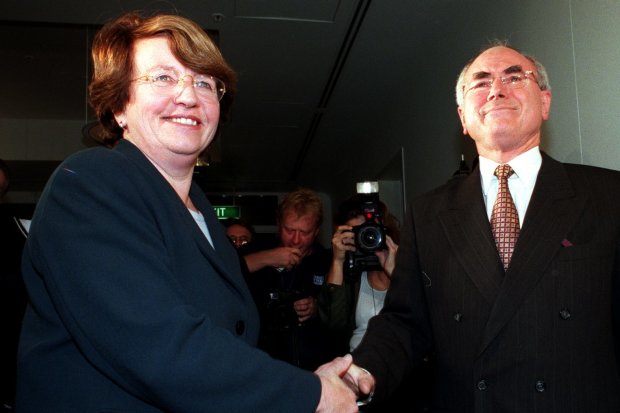
Earlier this month, three ministers in the Turnbull government — Greg Hunt, Michael Sukkar, and Alan Tudge — came remarkably close to becoming defendants in a contempt of court trial.

The conduct that triggered the Victorian Court of Appeal into action involved comments made by the three Victorian members of federal parliament — which were published in a news report in this newspaper — on the adequacy of sentencing in terrorism cases in their home state.

According to the court, such a trial would have proceeded but for an apology and retraction by the ministers concerned.

The decision to summon the three ministers at a hearing into the matter was an extraordinary step.  Direct clashes between the three arms of government are rare in Australia.  But this was an example of a clear conflict between the judiciary and the executive.

Victorian Chief Justice Marilyn Warren explicitly acknowledged this when she said the ministers' conduct equated to a failure "to respect the doctrine of separation of powers".

Such a claim — that robust public criticism of the sentencing habits of the judiciary by ministers of the crown amounts to a breach of the doctrine of the separation of powers — is a big call.

Frankly, I disagree with the assertion that mere words could put our system of government at risk.  But putting that to one side, the case is likely to cause ongoing ramifications.

In demanding an explanation from the three ministers, the Court of Appeal may have unwittingly set in train a process leading to the reform of the law of contempt of court.

The case certainly raises a number of legitimate concerns.  Chief among these is the threat it represents to freedom of expression.

The judgment, handed down by Chief Justice Warren on June 23, is troubling for those that believe strongly in the principle of free speech.

That the court took steps to schedule a mention hearing in this matter is frightening enough.  But the idea that the court had formed the view that the conduct of the ministers, as well as this newspaper, amounted to a breach of the sub judice rule is even more alarming.

The decision in this case has also been used as an unequivocal warning against other members of the government from acting in the same way:  "The court states in the strongest terms that it is expected there will be no repetition of this type of appalling behaviour.  It was fundamentally wrong.  It would be a grave matter for the administration of justice if it were to re-occur."

This is fiery language from the judiciary, which tends to go out of its way to use sober language.  The judgment is an attempt to narrow parameters of debate around the court, and coupled with the decision to commence these proceedings in the first place it may be successful in the short term.

However, in the long term it's likely that this will be used as an example of the need for reform.

South Australian senator Nick Xenophon's call this week for a parliamentary inquiry is the start of that process.  The initiative is a very good one.

Given the recent raw experience of the Coalition it will be inclined to support the inquiry, as will senator Derryn Hinch, as well as others on the crossbench who believe in free speech, such as the LDP's senator David Leyonhjelm.

Senator Xenophon said he intended to pursue an inquiry along the lines of terms of reference used in previous contempt of court inquiries conducted by the Australian Law Reform Commission and the NSW Law Reform Commission.

Both inquiries recommended changes to the law.

Those inquiries also show the existence of reforms that ought to garner broad support, such as the peculiarity of the process used in contempt cases.

The great US Supreme Court judge Hugo Black called for reform to the unusual mode of trial involved in contempt of court proceedings in his dissenting judgment in United States v Barnett:  "... one person has concentrated in himself the power to charge a man with a crime, prosecute him for it, conduct his trial, and then find him guilty".  Those words were written in 1964.  Surely now the time has come for reform.

A parliamentary inquiry into the crime of contempt of court will allow for the problems in this area of law to be uncovered.

Wednesday, June 28, 2017

How Howard's Great GST Bargain Got Trashed By Canberra

Policy elites take the view that former prime minister John Howard did a deal with Meg Lees and the Democrats to introduce the GST.  In a trivial procedural sense that is accurate.  More importantly, however, Howard did a deal with the Australian people that in return for repealing a huge bunch of nuisance taxes, the Commonwealth could levy a broad-based goods and services consumption tax.

The electorate has held politicians to that deal — tampering with the GST has very quickly become a no-go zone.  Politicians who try to vary the rate, or base, fast find themselves on the receiving end of voter dissatisfaction.

Australia has done very well out of the GST settlement — many inefficient taxes have been repealed and massive revenue flows have been directed to the states and territories.  While there is some dissatisfaction with the distribution of GST to Western Australia, the tax quickly became a widely accepted and understood part of the fiscal landscape.

Howard's genius in devising the GST was to ensure that the Commonwealth that collected the tax had no incentive to vary the arrangement while ensuring that it bore all the political cost of doing so.  After 17 years, the political class has found a loophole.

An unprincipled Coalition government is trashing the Howard settlement.  First, we saw the attempt to apply the GST to low-value imported goods bought online for under $1000.  That piece of silliness is at the Productivity Commission to work out how it can be done — mind you, the start date for this yet-to-be-designed tax is July next year.  But it is the bank levy that looks to be the most egregious violation of the GST settlement.

The levy announced at the last budget is a nuisance tax — exactly the sort of tax the GST was meant to eliminate.  All sorts of propaganda has been proposed to justify the tax, but the bottom line is that there is a hole in the budget due to excessive spending and the government needed a plug.  Who better to whack than those ungrateful banks — who, apparently, have plenty of money and can afford it anyway.

Contrast the bank levy with the ill-fated mining tax.  Taxing rent is the economic equivalent of a perpetual motion machine and was always a bad idea.  Nonetheless, the government hoped to substitute a tax on rent for royalties — in theory, at least, an economic improvement.  Contrast the bank levy with the carbon tax.  There the government had the notion that a less carbon-reliant economy would lead to improved living standards sometime in the future.  That view seems to be bipartisan policy.


NO NOBLE NOTIONS

The bank levy has no such noble notions — rather, it is a mechanism to raise revenue from people who have annoyed the government.

That South Australia would copy the bank levy seems to have caught everyone off guard.  In an audacious move, the South Australians have not just wedged the federal government, they have skewered them.  How does it argue that the state-based bank levy is a violation of the GST agreement but the identical federal-based levy is not?

Of course, we should all have seen this coming.  After all, when the federal government introduced the mining tax Mark II they promised to refund all royalties and the states responded promptly by raising their royalty rates.

One way of thinking about federal-state fiscal arrangements is as a cartel.  The various tax bases are carved up and shared out with a dominant player and a series of smaller players.  At the last budget, we saw the dominant player create a new tax base and provide political cover for the smaller players to increase their share.

It gets worse.


COMPELLED TO FOLLOW SUIT

If South Australia manages to "get away" with its bank levy, all the other states will almost certainly be compelled to follow suit.  The GST distribution mechanism penalises states that do not fully exploit their existing tax bases.  Not only will not having a bank levy result in lower tax revenue, it could also result in lower GST revenue from the Commonwealth.

Howard's GST settlement requires the Commonwealth to jealously maintain integrity of the system.  But when the Commonwealth itself breaks the deal, it could be impossible to stop the states from defecting as well.

Monday, June 26, 2017

SA's Bank Levy Adding To Business' Burden Is Derelict Conduct

It's hard to know where to start on the South Australian bank tax.  It is just that bad.

The massive new impost on the four major banks and the ­Macquarie Group was announced by SA Treasurer Tom Kout­san­tonis in the state budget ­released last week.

The Treasurer believes the tax will raise $370 million over the next four years.  But as we know, the assumptions behind revenue estimates from new taxes are ­almost always somewhere just short of heroic.

And the problem with the new bank tax is not whether it will raise the revenue claimed by the government.  The key issue is that new taxes on any part of the state's economy are the last thing that state needs.

One of the great moral challenges of our time is getting people into fulfilling, meaningful work.  This is a particular challenge in SA.  The under-­utilisation rate in SA is the highest in the country at 16.6 per cent, ­according to the May labour force figures from the Australian ­Bureau of Statistics.  While unemployment fell in every other state in Australia, it climbed to 7.3 per cent in South Australia.

And this is where Koutsan­tonis's rhetoric about the profitability of the banks is most galling, because unprofitable businesses can't employ people.  It's only companies making money that are able to do so.  In a very real way, the SA bank tax is a tax on jobs.

If the Treasurer was interested in reversing the downward spiral in which his state finds itself, he might want to consider doing the opposite:  cutting taxes and cutting red tape to attract investment now draining out of the SA economy.  The ability of any state, or country for that matter, to attract investment is largely a function of risk.  Risks can take many forms, and there are some that cannot be controlled.  But regulatory risk is something over which governments have complete control.  And the SA economy has just been saddled with another risk consciously imposed by government.

It's unconscionable.  It's economic vandalism.  And it presents investors with yet another reason to turn somewhere else.

This is bad policy.  And the timing couldn't be worse.

Sadly, the ability of the federal Coalition government to attack the measure is fatally wounded by the fact it laid the blueprint.  Technical, legal and constitutional ­arguments aside, the bank tax is ­either a good idea in principle or it's not.  The suggestion that it's a good idea at the national level but a bad idea at the state level just doesn't wash.  The door to the SA bank tax was opened by federal Treasurer Scott Morrison.

Comments by Malcolm Turnbull could not have made that more obvious when he said, "... the question that Mr Weatherill has got to answer is that, is his decision going to make business in South Australia more competitive or less competitive".

Replace the words "Mr Weatherill" with "Mr Turnbull" and "South Australia" with "Australia" and you've got a knock-down ­argument against Turnbull and Morrison's own policy.

And does anyone believe this will be the end of it?  The West ­Australian government flagged ­almost immediately its interest and said it will be watching the ­implementation of the SA tax with great ­interest.

And the overseas experience gives us a good indication of what's to come here in Australia.

Britain introduced a bank liabilities tax in 2011.  Since that time the rate at which the tax applies has been increased seven times.

Of course it's also worth pointing out that while it would have been better for Britain to refuse to bail out its banks during the global financial crisis and therefore avoid the cost to the taxpayer and the ­attendant moral hazard that comes with that kind of government action, the rationale for a bank tax in Britain was stronger than here.  The British bank levy was about recouping the $47.5 billion that had been spent bailing out the banks.  In Australia, where no such costs have been directly ­imposed on the taxpayer, the ­stated rationale for both the federal and the state bank tax has been to raise revenue to pay for unrelated public expenditure.

SA is unlikely to be the last state to implement its own bank tax.  And I'd wager that the rate of the federal bank tax won't stay at 0.06 per cent either.

But at a time of slow — and in some cases negative — growth, politicians seeking to pursue policies that add further burdens on business are engaging in negligent conduct.

Instead, our elected representatives need to be implementing policies that will lead Australia into a future of opportunity and prosperity.  More and higher taxes have never been able to achieve that.

Saturday, June 24, 2017

Central Bank Has A Strange Idea Of How To Strengthen The Economy

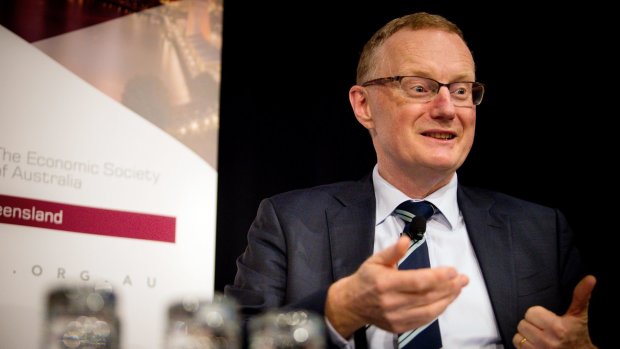
Who wouldn't like to get a huge pay increase?  According to RBA governor Philip Lowe we should all be nagging our bosses for a greater share of the national economic pie.  If we all got a huge pay increase that "would be a good thing".  Mind you — keeping our jobs would be a very good thing.

Therein lies the problem with Philip Lowe's comments.  A growing economy, with surging profits, and a declining unemployment rate should be a great time to be telling the boss that you needed a tad more in your pay packet.  But outside of official government forecasts the economy doesn't look to be in that happy place.  Right now rising wages would simply translate to rising business failures and greater unemployment.

In the last financial year private sector wage growth was a paltry 2 per cent — the lowest level since records began in 1998.  Public sector wage growth was 2.4 per cent.  In the March quarter of this year the annual private wage growth rate was even lower at 1.8 per cent.

The budget papers are forecasting an increase in Australian wage growth over the next few years — to a massive 3 per cent in 2018-19.  Yet we know that wage growth has been in decline since 2011.  Why should the turnaround happen now?  Apart from encouraging workers to get a bit more bolshie what policy will the government, or the RBA, introduce to drive economic growth to higher levels in order to justify massive pay increases?  This is the same government that is increasing the tax burden in a slowing economy.

What isn't clear is why Dr Lowe thinks higher wages is a good idea right now.  Hopefully he does not subscribe to the notion that increased wages will lead to increased inflation.  This populist notion is quite wrong — inflation leads to higher wage demands, but not vice versa.  Similarly I hope he doesn't subscribe to the notion that increased demand from consumers will stimulate the economy.  Economic stimulus will only come from lower taxes, less red tape, and fewer of the bad policy choices that have increased sovereign risks over the last decade.  Australians are very likely to use higher wages to buy down household debt.


SLUGGISH PERFORMACE

The fact of the matter is that Australian economic performance has been sluggish since the GFC.  True, we did avoid a "technical recession" but nobody could seriously argue that we are as relaxed and comfortable as we were prior to 2008.  Given the debt and deficits that successive Commonwealth governments have run and will continue to run for the foreseeable future it is entirely unsurprising that private growth, private initiative, private investment, and private wages continue to languish.

Wanting Australians to enjoy higher wages is admirable but Dr Lowe should be talking to his own bosses in Canberra about their policy choices to make that happen.  He might even talk to them about productivity.  Paul Krugman was quite correct to say that in the long run it is almost everything.  Without productivity improvements wages simply cannot increase without imposing huge economic and social costs on the economy.  With a government that taxes too much and regulates too much it is unlikely that productivity improvements will drive the sort of wage growth we'd all like to see.

Friday, June 23, 2017

Why The Libs Will Never GetUp!

Many things will be talked about when the Liberal Party's hierarchy gather in Sydney this weekend for their federal council meeting.  Those focused on the short-term will be discussing two numbers — 14 and 30.

The Coalition under Malcolm Turnbull has now lost 14 consecutive Newspoll surveys to Labor.  Famously, the current PM said the former PM had to be removed because the Liberals had lost "30 Newspolls in a row".  Those focused on the long-term will be contemplating the future for the Liberal Party and for liberalism in the years ahead.

No doubt there'll be some debate about how bright that future is.  Whether a centre-right version of GetUp! can be created to campaign for the Liberals in the same way GetUp! campaigns for the Labor Party will inevitably be raised as a topic — as it's been raised in Liberal and conservative circles for years.  After about one minute's reflection, any Liberal who knows anything at all about politics will come to the conclusion that there's no way a non-left wing version of GetUp! can be developed to assist the Liberal Party.

For as long as the Liberals' parliamentary leadership continues to claim their policies are "pragmatic", "non-ideological" and "centrist" there'll never be a centre-right version of GetUp! campaigning for the Liberals.  The reason someone sits in a cold and blowy church hall on a Wednesday night in the middle of winter telephoning strangers asking for their vote is because they want to change the world.  Opening our borders to refugees is changing the world.  As is cutting the country's emissions of carbon dioxide to zero.

The objectives of the left might be hopelessly misconceived, but to those who believe in them have convinced themselves such objectives are ambitious, optimistic, and positive.

The left-wing politicians supported by the likes of GetUp! aren't afraid to talk about their ideology of social change.  Many Liberal MPs are terrified of admitting they're motivated by a political philosophy.  The Liberals' last federal budget promised higher taxes, higher government spending, and more regulation.

If you agreed with such things you probably wouldn't join a Liberal-leaning GetUp!  The chances are you'd be out campaigning for the Greens.  Liberals now fear GetUp! nearly as much as they fear the ACTU.  One of the reasons some backbench Liberal MPs gave for not supporting a repeal of Section 18C of the Racial Discrimination Act is they were worried GetUp! would campaign against them.

The capacity of the left to mobilise grassroots community activism has always been admired from afar by the Liberals.  In recent years that's turned to fear as activism has been harnessed into marginal seat campaigns that could decide elections.  Of course much of that "grassroots" activism is nothing of the kind — it is scripted, coordinated, and funded by trade unions and left-wing, non-government organisations.

Young people are particularly susceptible to left-community activism because for nearly all of their life everything they got was given to them by someone else.  The core message of the left is that there's always someone else to pay.  Bitter experience of the real world gets older people to vote a certain way, whereas misplaced idealism is what directs young people to vote they way they do.

Passion goes a long way in politics.  Jeremy Corbyn, who'd be the British prime minister now if 2227 voters out of 32 million had changed their ballot, might not be exactly passionate, but he had more passion than Theresa May.  Donald Trump was passionate.  Hillary Clinton was not.  A few months before the election Clinton couldn't comprehend how Trump would be generating such momentum and so many donations given, that her campaign had 800 paid staff, and Trump's had only 130.  It's hard to recall the last time a Liberal politician in Australia was passionate ... about anything.

Perhaps the last time a Liberal displayed some passion was on election night last year when Malcolm Turnbull thought he might have lost the election.  If the Liberals ever presented an ambitious policy agenda of personal and economic freedom, and if they got passionate about it, then they wouldn't need a centre-right GetUp!  They'd be able to win elections on their own.

Is That Tax Policy Or Slapstick Comedy?

The relationship between taxpayers and government should be symbiotic — to the mutual benefit of each party.  This is certainly what Adam Smith had in mind when he wrote that everyone should contribute to the support of government in proportion to the revenue they enjoy under the protection of the state.  He also wrote that paying tax was a badge of freedom and not the mark of a slave.  How times have changed.

A lack of fiscal discipline has seen ten years of budget deficits translate into over half a trillion dollars worth of debt.  That is over five hundred thousand million dollars.  You'd think that the government would have stopped spending money, cut staff, and salaries.  Delayed, or even cancelled, big ticket spending items that are unaffordable?  Well, no.

The government have turned a symbiotic relationship into a parasitic relationship.  The past week has seen two disgraceful tax incidents.

At the last budget, the government announced a bank levy — a tax on tier-two bank capital.  As if taxing capital was ever a good idea.  This is a tax that strikes at the very heart of the banking system.  Banking, as a business, involves lending borrowed money.  Lending out your own money is venture capitalism.  Expect to see some capital rationing and higher lending rates in the next few years as banks pass this levy onto their customers.

To make matters worse, the government contrived to apply this levy to only five banks.  One of those banks has threatened to move their operations offshore.  It takes a special kind of stupid to so obviously destroy Australian economic activity and local initiative.  It seems, however, that our friends in Canberra are up to the challenge.  Mind you — have they ever stopped to think why investment, wages, and economic growth have been so sluggish of late?  Probably not.

Not to be outdone, South Australia has just announced they will be copying the federal bank levy.  This is precisely the sort of state-based nuisance tax that the GST was brought in to eliminate.  It is very disappointing that politicians are reneging on the tax deal that the Howard government negotiated with the Australian people when the GST was introduced a mere 17 years ago.  Of course, it is very difficult for the federal government to hold the South Australian government to account when they themselves are trashing the Howard legacy.

Then there is the GST on low-value imported goods fiasco.  The government has a tax law that will come into effect on July 1, 2018 but has asked the Productivity Commission to advise them how to actually make it work.  Clearly, it can't operate on the same basis as goods above the $1000 threshold.  That isn't economically viable — the government would be borrowing money to collect less tax than it cost to collect the revenue.  Even our current crop of politicians realised that wasn't too smart.

Plan B was to require online business platforms to collect the tax from their own clients and then pass it on to the Australian government.  This required foreigners to voluntarily comply with Australian tax laws when Australian citizens have to be coerced into compliance.  This would almost certainly have resulted in Australians being geo-blocked on many platforms.  On the positive side, nobody would have to worry about the slow NBN speeds if Australians were excluded from online activity.

All this sounds like some low-budget slapstick comedy, but this is what tax policy has become.  Canberra needs to get serious — stop trying to grow the tax take and focus on growing the economy.

Senator's Inspirational First Speech Savages Welfare Traps

"I remember the first time we found welfare money in our bank account shortly after our arrival in Australia," South Australian Senator Lucy Gichuhi said this week in an inspirational first speech.  "We were terrified because we were not used to receiving money for nothing from strangers.  All I knew was that the only time you get money is when you work for it.  I said to my husband, 'We will have to return it‘."

Gichuhi is Australia's first black African-born senator.  She arrived in Australia on a "warm summer day in 1999", and was immediately struck by Australia's successful melting pot.  "Right in that airport, I encountered Australians, Europeans, Asians and Africans from all over the world, living and working together harmoniously".

Nevertheless, Gichuhi explains the difficulty of financial management and balancing work, home life and raising young children.  In particular, she was shocked by our welfare system — the idea of paying people money to not work made no sense.

"The message was quite clear:  I could choose to be a victim and receive a handout for a long time, or I could choose the more challenging but empowering road and find a job and learn how to balance work and family life," Gichuhi said.  In the end, she chose empowerment, "I had to put an end to this tedious welfare-work dance ... I chose to work, even if that meant going back to school and changing my career path to suit my circumstances".

Quoting from John Howard's first speech, Gichuhi derides our welfare trap destroying opportunity and choice.  "This trap creates stress on those who soon discover they are unable to find a way out.  Welfare now becomes their only choice.  This creates a welfare-dependent syndrome that could be intergenerational."

Gichuhi also hits out at the corporate welfare trap:  "As an accountant, I believe the corporate welfare mentality should be traded for a sustainable business model mentality".

Gichuhi has "learnt that spending money you have not worked for fundamentally changes who you are and inhibits your capacity and ability to become all you could be".  In the end, "a job is the best form of welfare".

Gichuhi grew up on the beautiful slopes of Mount Kenya, where she discovered that "true poverty was when a person is unable to freely choose their own destiny.  It is when a person does not have options."  She says her:

Role as a senator is to ensure in any way I can, great or small, that Australia does not slip into the latter form of poverty.  Most importantly, Australian civil institutions, such as the legal, political, electoral and socioeconomic institutions, must remain transparent and accountable to every Australian.

Gichuhi, a first generation immigrant, has come to see what many Australians born here can miss.  The great opportunities provided by a free, democratic country.  But also seen the dangers of a welfare system that punishes work and disempowers.  The new senator from South Australia is one to watch.