Wednesday, August 28, 2019

When Regulators Roam Out Of Control

Ask Australian business people and industry representatives in formal meetings about our nation's regulatory burden, and you will be told that reform is necessary, a governmental inquiry would be welcome, and the evidence detailing the burden of red tape is persuasive.

Ask them privately, and the language is much less measured.  They will say that the sea of legislation is vast and impenetrable, that additional regulations being proposed are insult piled upon insult, and that regulators are out of control.  It is a potent combination of private anger and public diplomacy and acquiescence.

Business leaders look at financial estimates of the cost of red tape and say they still do not capture the Kafkaesque nightmare of dealing with a regulator determined to make itself a not so silent partner.  Previously it has been difficult to quantify the cost of such harassment, but last week's Federal Court judgment in ASIC v Westpac demonstrates it to be it is $34 million of shareholder funds just for one company.

Australian entrepreneurs with operations in the USA have endorsed President's Trump use of rules such as "one in two out" for new regulations, and seen the economic upside.  But more than that they've seen the importance of regulators being brought back within the confines of the rule of law.  As one with experience of the Obama era put it to me, what do you do when a team from the EPA literally parks itself in your head office for months on end, asking endless questions and interfering in decision-making?

In search of quantifiable evidence of the red tape burden, I have counted pages of legislation, as was done recently in the financial services sector.  This revealed that while there was an already impressive 9,524 pages of relevant legislation, plus a further 19,011 pages of regulation, and an even more incredible variety of "regulatory dark matter" such as the guidelines, notes, advice and so on, running to 56,965 pages.

We've also cooperated in a project using world-leading AI techniques revealing the number of regulatory restrictions in Federal legislation has increased from about 2,000 in the late 1970s to 95,000 by 2015.  This analysis is fundamental to build a case for change, but there is the further research challenge of how best to capture and cost the culture of unlimited discretion in which regulators operate?

At last, there's direct evidence, thanks to a landmark case of ASIC's pursuit of Westpac for alleged breaches of the National Consumer Credit Protection Act 2009.  The detail of the case is literally irrelevant.  Just as Herr K in Kafka's The Trial was never told the nature of his offence;  it was the power of the prosecutor and not the strength of its case that mattered.

For a considerable period, Westpac argued with gusto the merits of its defence, but ultimately it caved and in November 2018 agreed to a settlement in which it would have paid a $35 million fine.  Striking a blow against expediency and for the rule of law, Justice Nye Perram in the Federal Court refused to endorse the settlement, stating "I will not declare conduct which is not unlawful to be unlawful.  "How," he asked, "can the court be expected to assess the reasonableness of the proposed penalty if it be left in the dark about what the actual problem is?"

Despite this more than reasonable question ASIC simply resumed pursuit of its quarry through the court, but on 13 August 2019, Justice Nye Perram in the Federal Court found wholly in favour of Westpac on points of fact and on points of law.  ASIC was ordered to pay costs.

In response, ASIC said it would "carefully examine" the judgment but that in any event, it had been a "test case".  If it was such an important test case, why had it been so willing to settle in 2018?  The reality is that maintaining ambiguity by NOT testing the law would have allowed it greater scope to pursue other companies.  Labelling it now a "test case" is a risible retroactive rationale for prosecuting a corporation for the "vibe" of its alleged offending.

I have pointed out a litany of previous such cases where ASIC's pursuit of alleged corporate wrongdoing had comprehensively failed in court.  These include Australian Securities & Investments Commission v Fortescue Metals Group Ltd [No 5][2009] FCA 1586 and a case against a former AWB Executive which the judge labelled an "abuse of process" which "brings the administration of justice into disrepute in the minds of right-thinking people."

I have also discussed how regulators like ASIC (but not only ASIC) use regulatory dark matter (so-called soft law), enforceable undertakings, and "cooperative regulation" to achieve outcomes never contemplated by and certainly not overseen by democratically elected representatives.

I can only imagine — and certainly hope — that in the Westpac boardroom when their case was discussed in late 2018 the tone of the conversation veered towards the anger and frustration I described earlier.  But nevertheless, the decision was for abasement and apology for a crime directors must have known their corporation had not committed (since the crime could not even be accurately described).  It was submission to a forced confession in a manner that would have made Lenin or Torquemada proud.

Before the Federal Court's decision, we did not know how to quantify the price we pay for our out of control regulators, how to quantify the price we pay for a culture in which regulators can endlessly abuse their authority and operate well beyond the rule of law.  Thanks to Westpac and Justice Nye Perram we now know:  $34 million, multiplied across every large and small business in Australia.

Tuesday, August 27, 2019

Why Won't The Left Admit:  Their War On Alan Jones Is A War On Dissenting Opinion

The woke lynch mob has been busy recently, ramping up their perennial crusade to blackball centre-right voices in the media.  For the past fortnight, the target has been their white whale:  Veteran broadcaster Alan Jones.

Jones came under fire for a spray against Jacinda Ardern which was, effectively, a mangling of the old advice to "put a sock in it".  His words were poorly chosen, and Jones has since apologised.  It should be noted as well that Jacinda Ardern not only accepted his apology, but did so graciously.  Whatever you think of Ardern's politics — and I am personally no fan — as a statesman she is a class act.

All other things being equal, that would have been the end of the matter.  But when it comes to conservative commentators, the rules are different.  Howls of righteous outrage ensue — and continue long after the original incident has been forgotten.

The Greens' Adam Bandt moved in for the kill, launching a "petition" that declared that "Alan Jones has no place on Australian radio" and called on 2GB management to sack him.  At the time of writing, Bandt's apparent data-harvesting exercise has gathered a puny 16,800 "signatures".  For those playing along at home, that amounts to about a third of Bandt's own primary vote in the seat of Melbourne at this year's election, and far less than the approximately 500,000 Australians who tune into Alan Jones' radio show every week.

Naturally, the left-wing commentariat chimed in.  The ABC's Virginia Trioli took to Twitter, musing that the problem with Jones was that he was "something akin to an anarchist", using his "privilege and power to make people afraid, cynical and distrusting of democratic institutions such as governments, courts, schools and public servants".

In other words, according to Trioli it's not that public institutions are out of step with the community, rather it's Australians who are too stupid to realise that a bloke on AM radio is manipulating them into being "afraid, cynical and distrusting" of the warm embrace of the state.

More to the point, if there really is "privilege and power" in Australian broadcasting, it is vested in the taxpayer-funded, omnipresent media juggernaut that is the ABC.  Alan Jones' voice relies on advertising revenue and the goodwill of people voluntarily tuning in.  Trioli derives hers from other people's money obtained by force of law.

Now, of course, Trioli obviously has the right to criticise Alan Jones — silly and hypocritical as those criticisms may have been.  Similarly, the lily-livered companies that pulled advertising from Jones' show were within their commercial rights to do so, and would be far from the first big corporates to engage in such asinine virtue-signalling.

But we should be concerned about the marauding band of militant leftists seeking to hound every dissenting voice off the air.  And we should be deeply worried about parliamentarians like Adam Bandt using his taxpayer-funded platform to dictate the editorial decisions of a private media organisation.

And while Alan Jones may not be everyone's cup of tea, in a free society there is a simple mechanism for that:  Don't listen to him.

But of course, it's not about that.  It isn't enough that the left has the option of not listening to Jones, they need to prevent the rest of us from doing so.

And that's the rub.  It's not even really about Alan Jones himself, it's about his listeners, about the Australian mainstream that the left can't bring itself to understand, let alone appeal to.  For the likes of Bandt and Trioli, the large and growing audience for centre-right analysis and opinion is just a basket of deplorables which polite society should treat with a thinly-veiled disdain.

Above all, this is about the left's frustration that despite their best efforts — and in the ABC's case, over a billion dollars in annual public funding — people are still voting with their feet and flocking to commentators who espouse common sense, limited government, fundamental freedoms and the dignity of the individual.  Identity politics, climate hysteria, Trump-related conspiracy theories and the rest of the guff churned out by other outlets just doesn't rate.

It's a lot easier to shut someone up than win an argument on the issues, and self-proclaimed "progressives" would obviously prefer that Scott Morrison's quiet Australians stayed quiet.  But unfortunately for them, in Alan Jones there is one voice that will not go quietly.

Friday, August 23, 2019

No Call To Heed A Divisive Voice

Localism, property rights and regional economic development will help improve the lives of indigenous Australians more than another Canberra-based body.

In his delivery of the 19th Annual Vincent Lingiari Memorial Lecture last week, Indigenous Australians Minister Ken Wyatt ruled out holding a referendum on inserting an indigenous-only voice in the Constitution.  This is the right call.  Such a voice would be divisive, illiberal and inegalitarian.  More important, the voice would not resolve the systemic problems facing many indigenous Australians.
According to the Australian Institute of Health and Welfare report, Australia's Welfare 2017, 29 per cent of indigenous households live in social housing, compared with 4 per cent for non-indigenous households;  61 per cent of indigenous Australians are in the labour force, compared with 77 per cent of non-indigenous Australians;  and the age-standardised indigenous imprisonment rate is 13 times more than for non-indigenous Australians.

These challenges are not the product of a lack of welfare.  A 2017 report by the Productivity Commission estimated that direct welfare expenditure per person on indigenous Australians is $44,886, about twice the rate for non-indigenous Australians at $22,356.

The first step to addressing challenges in indigenous communities is to assess why welfare doesn't appear to be working.  It could be because of the unavoidable incentives that welfare creates, the money isn't reaching those who are in most economic need but is being siphoned off by intermediaries, or that welfare has played an important role but has reached the point of diminishing returns and perhaps is causing decreasing returns (every additional dollar making the situation worse).

Governments also must change the overall approach and mentality towards indigenous policy.

In many ways, there is no difference between indigenous and "non-indigenous" policy.  The basic underpinnings of a successful and flourishing life are not culturally contingent but include access to economic opportunity, safe communities, caring families and high-quality healthcare, education and infrastructure.  It is unclear why an indigenous-only voice would be required to communicate this.

There are, of course, important local differences that must be taken into account with policy implementation and delivery, as with all public policy.  And advocates of a voice are right when they say that voices in remote Australia aren't being heard by city-based policymakers.

But the answer is not to have another centralised, Canberra-based body but the opposite:  to embark on a program of broad-based decentralisation and localism where Canberra devolves power to the states, which in turn devolve power to regional and local authorities.

In an earlier speech to the National Press Club on July 18, Wyatt acknowledged the issue of centralisation when he argued that "even the most well-intentioned modern policies and programs have still tended to take a top-down command-and-control approach".

At the heart of decentralisation is the individual and their property rights.  Indigenous Australians must be able to enjoy the bounty that property rights offer in the same manner as non-indigenous Australians.

This means the ability to buy and sell their own land as individuals or families, borrow against that property, and decide what types of economic development will or will not take place.

The final policy focus ought to be regional economic development.  Indigenous Australians need jobs in the same way non-indigenous Australians do.  In practice this means removing the barriers to economic opportunity such as red tape, environmental regulations and special legal privileges that allow activists to engage in frivolous and vexatious litigation to thwart development.

An exemplar in how not to advance indigenous economic success include the native vegetation laws introduced by the Queensland government in May last year, which made it harder for farmers to clear native vegetation on their private land to allow for new agriculture projects.  Among those adversely affected were indigenous landowners in the Cape York region of far north Queensland.

Indigenous activists such as Noel Pearson strongly opposed the laws.  At the time the laws were being debated in 2016, Pearson stated:  "We're (indigenous Australians) not going to lift ourselves out of the poverty and misery we live in unless we have balanced development."  In other words, it's our land and we should be able to do what we want with it.

Practical policies that create jobs, encourage more children into school, and reduce violence will improve the lives of indigenous, and indeed all, Australians.  We do not need a race-based body to tell us that.

Friday, August 16, 2019

What Are These Central Banks Up To?

It's funny how in such a supposedly egalitarian country as Australia we pay so much deference to public servants.  We pay them a lot (much more than their overseas counterparts), we give them a lot of power, and perhaps most important of all, we hardly ever question what they do.

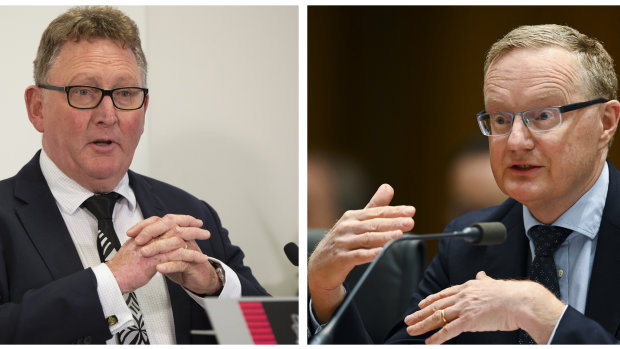
The attitude of politicians, the business community, and most of the media to Philip Lowe, the governor of the Reserve Bank of Australia, proves the point.  You could make a good argument that Lowe is the most powerful person in the country.
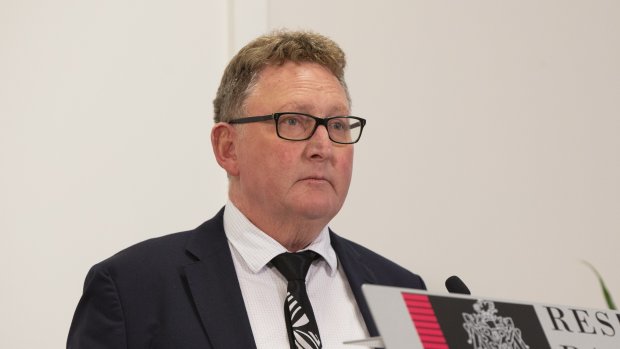
The Reserve Bank board of which he's the chairman sets the most important price in the economy — the price of money, his independence is enshrined in law, and while his decisions are scrutinised they're seldom questioned or criticised.

Heretical questions that no one dare ask these days such as why so many economists think it's a bad idea if the government decided the price of pencils but they happily accept a government committee setting the price of money, and why should there even be a central bank in the first place can be left to one side for the moment.

The question for the next few years ahead will be what checks and balances will apply to Lowe and the Reserve Bank as they contemplate what in Lowe's recent words to the House of Representatives Standing Committee on Economics are "extreme unconventional policy measures".

It's understandable that if you are going to have a central bank and if you are going to give it a mandate to ensure financial stability the bank should be independent of politics.  But very few people, at least in this country — compared to America where the actions of the Federal Reserve are the subject of regular Twitter commentary by the President — have asked what happens if the Reserve Bank was ever to adopt "extreme unconventional policy measures".


SHOCK AND AWE

While Lowe hasn't ruled out "extreme unconventional policy measures" at least he hasn't yet embraced them as his counterpart across the Tasman Sea appears to have.  Last week the Reserve Bank of New Zealand cut interest rates by 50 basis points to a record low of 1.0 per cent in a move described as "Shock and awe Kiwi style".  The decision prompted the production of a research paper from New Zealand's leading think tank, the New Zealand Initiative, entitled The Unreserved Bank of New Zealand — Why unorthodox monetary policy needs boundaries.  While there are differences between the responsibilities of the two countries' central banks, nearly everything the paper says about the Reserve Bank of New Zealand applies to Australia.  It should be compulsory reading, not just for every member of Parliament, but also for all nine members of the Reserve Bank Board.

A key argument of the paper is that such policy could result in the Reserve Bank of New Zealand undertaking essentially political functions.

"Under quantitative easing, the RBNZ could become an alternative to Inland Revenue [ATO] and the Treasury as it would provide (indirect) funding to the government by purchasing government bonds.  If it went beyond that and started purchasing corporate assets, it could also morph into something resembling a sovereign wealth fund.  If it chose to fund projects of a certain nature (say bonds with an infrastructure background or related to specific policy areas), it would again be more akin to Treasury."

Lowe's remark that in the face of persistently weak economic and wages growth, "We [the RBA] would need to look at all monetary options, fiscal options and structural options", has passed with barely a murmur.  Maybe it's because in Australia we think that producing helicopter money or implementing quantitative easing is what other countries do.

When self-funded retirees are getting less than 2 per cent interest on their term deposits because of the decisions of the Reserve Bank they've got no one to complain to.

In 2009 when the Rudd government handed out $900 in cash to taxpayers to stave off the global financial crisis it was the decision of a democratically-elected government ultimately accountable to the electorate.

If ever the Reserve Bank does implement "extreme unconventional policy measures", to whom Lowe will be accountable for his success or failure is unclear.

Greens Only Want To Make Power Less Affordable

A Greens-backed bill prohibiting government funding of coal-fired power in Australia would further worsen Australia's electricity crisis.  Government intervention in the energy market has seen electricity prices increase by 220 percent over the last 20 years, far outpacing inflation and wage growth.

Policies that favour renewable energy at the expense of coal and gas have proceeded every major jump in electricity prices.  This has been the case with the introduction of the Renewable Energy Target in 2000, its expansion in 2009, the introduction of a carbon tax in 2012, and the signing of the Paris Climate Agreement in 2015.  The only substantial drop in electricity prices over the past 20 years followed the repeal of the carbon tax.

Contrary to what green groups would have you believe, coal-fired power cannot be replaced by wind and solar any time soon without major breakthroughs in battery and storage technology.  Coal remains one of the cheapest and reliable sources of electricity generation.

This is why there are currently some 256 coal-fired power stations being constructed around the world.  This includes 126 stations which are currently being built in China and 33 in India, many of which will be powered with coal exported from Australia.

In contrast, as a result of onerous red tape on the resources sector and subsidies to wind and solar energy, no new coal-fired power stations are currently under construction in Australia, and only three coal-fired units have been built since 2006.  This is despite the existence of over 1000 years' worth of coal deposits sitting beneath Australian soil.

Not only are our unnecessarily high electricity bills a burden for many Australians struggling to heat their homes in winter, they are also crippling businesses.  High electricity costs and reduced power reliability has made Australia less competitive and has contributed to private investment falling to a historically low 11.4 per cent of GDP.  This is lower than the rate which prevailed during the economically hostile Whitlam era and is a key cause of slow productivity growth and stagnant real wages in the private sector.

All forms of electricity generation should compete in an open and free market without government intervention.  When the market is left to its own devices, the technological makeup of the grid will deliver affordable and reliable power in line with the needs of households and businesses.

The bid to ban government funding of coal power is objectionable, not because the government should be funding coal, but because it would further distort the market away from reliable electricity production.  The bureaucratic government management approach to electricity has long poured billions of dollars into unreliable renewables and undermined the profitability of coal-fired power.

To address Australia's energy crisis, the government needs to take a technologically neutral approach to energy production to ensure the market's ability to deliver affordable and reliable power.  This means withdrawing from the Paris Climate Agreement, ending the subsidisation of renewable energy, and not continuing with the Renewable Energy Target beyond 2020 when it is due to end.

Governments at the Commonwealth and state level must also reduce regulation and red tape on the development of coal-fired power stations (such as provisions which allow frivolous litigation), lift restrictions on gas explorations (such as state-based bans and moratoria), and remove the ban on the development of nuclear power.

A policy of technological neutrality where governments do not pick winners in the energy market will ensure Australia can return to being a nation of affordable and reliable energy.

Saturday, August 10, 2019

The G-G Should Resign

Australia's constitutional system cannot function properly with a Governor-General inserting himself into contemporary political debate.  If the current Governor-General wishes to do so, then he should resign the office.

At the Garma Festival of Traditional Cultures in north-east Arnhem Land last weekend, Governor-General David Hurley urged Australians to move quickly to secure an unspecified constitutional amendment to recognise Aboriginal and Torres Strait Islanders.  His Excellency gave the comments to an ABC television reporter on August 3, saying of a referendum for constitutional recognition that "it's been put on the table ... terms are on average three years, and three years in the cycle of the country is a very short time ... so we need to move fairly quickly on what we think are going to be the outcomes here".  His Excellency also warned of what would happen if the government did not get the question right:  "when we get to the referendum our history is if we vote No, they're very either slow to resurface, or they don't resurface".

The Governor-General's comments represent an extraordinary intervention into a strongly-contested political topic.  There is rarely an appropriate occasion for the Queen's representative to give comments to a journalist, and there is never a time for a Governor-General to give comments to a journalist about proposals to amend the Australian Constitution.  While His Excellency stopped short of expressing outright support for a Yes vote at a referendum, the act of presuming that a referendum is going to occur and that it should be done sooner rather than later are both politically-loaded comments.  It reveals a departure from detached impartiality on the issue, and can be interpreted as revealing a preference on the underlying policy question.  A Governor-General should make every effort to avoid even an appearance of this.

Indeed, not only has the parliament not been presented with a bill to initiate a referendum, there is currently no consensus from "recognition" supporters on what a referendum question should ask.  The content of the question, and whether the question will be asked at all, are still very much live policy questions.

Compounding the Governor-General's error was the venue for making the comments.  The Garma Festival of Traditional Cultures, held annually in north-east Arnhem Land in the Northern Territory, is a four-day festival of Indigenous cultural exchange.  Key features of the Garma Festival are speeches and policy discussions, and it has in recent years become a venue for discussion and engagement on the matter of constitutional reform.  The Governor-General's participation this year coincided with the provocative comments by renowned Indigenous leader Galarrwuy Yunupingu, who threatened to throw the Australian Constitution into the sea if the Commonwealth did not present a model for substantive constitutional reform.  "If they don't come to us with an answer, we will tell you what ... the Yolngu people are going to do ... We will dismiss the Constitution ... we thrown [sic] it out of Australia into the saltwater ... It will be wonderful.  The Yolngu people will stand on the land and see if that document will float away into the ocean," Dr Yunupingu said.  Such comments could, with little difficulty, be regarded as a threat to unilaterally declare independence from the Commonwealth.

The role of the Governor-General is too often written off as a ribbon cutting, rubber-stamping accoutrement of the Australian Constitution.  This is an inaccurate description.  Aside from the ceremonial duties, the Governor-General has the important duty to safeguard the Australian Constitution.  And at the heart of the Australian Constitution and Australian political tradition is the principle of parliamentary sovereignty.  This means that it is the role of the House of Representatives and the Senate to debate and resolve policy questions.  The individual appointed to the office of Governor-General should, like the monarch he or she represents, strive to stay above the political fray.  To do otherwise would violate the trust of Her Majesty and the Australian people by using the position to make political demands or set a political agenda.

This is not to say that the Governor-General's position should somehow exist in a vacuum outside the political arena.  The Crown is at the apex of Australia's constitutional structure.  It is by definition a political entity.  But it plays a different role than the other constitutional entities.  The political role of the Governor-General is to ensure that the process of lawmaking complies with all relevant constitutional requirements and conventions.  Vice-regal interventions in the political process may be more dramatic in the case of intractable parliamentary crisis.  Such was the case in 1975, when the unpopular Whitlam government was not able to pass appropriation bills in the Senate, leaving the federal government in the position of not being able to function.  It was only resolved when Governor-General Sir John Kerr commissioned Malcolm Fraser as caretaker prime minister on the condition that Fraser would in turn immediately pass appropriation bills and advise Sir John to dissolve parliament and declare a double dissolution election.  This was not a constitutional crisis, as historians often refer to it, but was an occasion where a Governor-General exercised the power of the office under the constitution in an appropriate manner to put an end to a political crisis.

Even in these circumstances, the Governor-General is not required to answer questions from television journalists at an event with strong political themes.  Governor-General Hurley's comments were so far afield of appropriate vice-regal behaviour that it calls into question whether His Excellency should remain at the post.

None of this should detract from General Hurley's long and outstanding service as a soldier and senior officer in the Australian Army, including a stint as Chief of the Australian Defence Force from 2011 to 2014.  The nature of these comments has however undermined the dignity of his current office.  The standards of behaviour of vice-regal appointees are high for a good reason — to ensure that political questions are answered by the people through their elected representatives in parliament.  Conduct to date is sufficient to justify a resignation, and would help ensure that such interventions do not become a regular and accepted part of the vice-regal role.  Any further such interventions and resignation should be requested forthwith.

Friday, August 09, 2019

How Chinese Investment Is Challenging Our Academic Freedom

Recent scenes of chaos at the University of Queensland as pro- and anti-Hong Kong freedom demonstrators squared off on campus, and reports that the Chinese-based families of anti-communist protesters have received visits from Beijing's security apparatus, are only the tip of the iceberg when it comes to infiltration of our universities by the Chinese Communist Party.

Even more disturbing is the news that a number of our prominent universities have signed highly profitable agreements which essentially give bureaucrats in Beijing control over what is taught at Australian university campuses.

It turns out that numerous universities have signed contracts with Hanban, the agency under China's education ministry which oversees so-called Confucius Institutes which have sprung up on campuses across the country.

Australia currently has the third-highest number of Confucius Institutes and classrooms in the world, behind the USA and the UK.

The formal mission of the Confucius Institutes is to promote Chinese language and culture around the world.

However the informal mission is to promote a highly uncritical view of Chinese society, and it is considered part of a wider pattern of activities which ensure that the Beijing-determined narrative is adhered to by everyone.

Among other things, this means that subjects known as the "three T's" — Tibet, Taiwan and Tiananmen Square — cannot be discussed in many classrooms without fear of backlash.

Last year ASIO paid visits to 18 different universities, research interests and internet suppliers regarding the influence of Chinese government.

This month Education Minister Dan Tehan will meet with a number of vice-chancellors to discuss the matter and to work out what can be done to maintain institutional autonomy, control over the curriculum and teaching standards.

This is a good first step but it will not solve the problem.

In March this year, the US government released a report on activities of Confucius Institutes on American campuses and concluded that they were tightly controlled arms of the Chinese government and least 10 US universities have moved to close the doors of the Institutes.

The report also raised the question about whether employees should be classified as foreign agents.

Among the 13 universities which currently host Confucius Institutes in Australia, and which have handed over academic freedom to Beijing, are the Universities of Sydney and Queensland respectively.

All this raises grave questions about the state of free intellectual inquiry in Australia, as well as the influence of the Chinese government on campuses.

It also exposes the double standards and utter hypocrisy of the vocal academics who, over the past two years, have been fighting tooth and nail to prevent the Ramsay Centre for Western Civilisation from running a Bachelor of Arts in Western Civilisation on their campuses.

Since the Ramsay Centre announced its intentions to partner with Australian universities, we have heard endlessly from these academics that its mere presence would somehow endanger academic freedom.

ANU's academic union branch president Matthew King said he was "very concerned that this (BA in Western Civilisation) would violate the core principles of academic freedom, integrity and independence".

In the meantime the University of Queensland, which is currently in negotiations with Ramsay Centre, has had to reassure its staff that "the University will only pursue a partnership with the Ramsay Centre providing it is consistent with the University's policies of autonomy over curriculum, academic appointments, academic freedom and governance arrangements".

Yet the same university seemed unwilling or unable to stop 200 pro-CCP students who were filmed aggressively yelling, blasting the Chinese national anthem and even punching and kicking pro-democracy in Hong Kong protesters on campus.

The university's statement is unsatisfactory to say the least.

It did not name the pro-CCP students as the perpetrators of the violence nor did it mention disciplinary action.

It did not even mention how violent the protests had actually been, despite viral videos being widely available on social media.

The significant number of Chinese students at the university might go a long way to explaining the university's lacklustre statement and response.

As yet, the University of Queensland has not signed up to the model code on free speech recommended by former chief justice Robert French.

Time and time again, staff have bandied about the phrases "academic freedom" and "integrity" when they have happily and willingly signed away both to Beijing.  The sheer hypocrisy is astounding.

The fact of the matter is that academic freedom has absolutely nothing to do with the opposition to the Ramsay Centre for Western Civilisation.

Even when the University of Sydney's Vice-Chancellor Michael Spence announced that he would consider taking the Centre's $64 million grant if it gave the university complete control over the curriculum, the reading list and the academic appointments, the staff continued to oppose it.

This fury results partly from a certain complacency on behalf of some members of academia, who for years have happily presumed Western Civilisation, both as a concept and a unit of study, to be long since dead and buried.

The Ramsay Centre has rudely and violently interrupted their ideological reverie of a world without Western Civilisation.

Such is their loathing of Western civilisation that they have chosen to hand over academic autonomy to an authoritarian Communist regime via the Confucius Institutes.

They have shown that they would prefer this to their own civilisation, which has given all of us a liberal democracy, the rule of law, equality under the law, freedom of speech, and conscience and religion, which are the values and institutions which make Australia the successful, peaceful and prosperous nation that it is today.

Wednesday, August 07, 2019

Outrage Culture Is Killing Free Speech

Australia is becoming increasingly intolerant of speech.  From the Australian Rugby Union terminating Israel Folau's playing contract to the fake controversy about the impending visit of British writer Raheem Kassam to attend the Conservative Political Action Conference in Sydney, examples of a growing outrage culture mount every day.

Adding to this list is today's decision by the High Court to unanimously uphold the sacking of a public servant for posting criticism of government policy using an anonymous Twitter account.  Michaela Banerji had been employed at what was known at the time as the Department of Citizenship and Border Protection (it is now part of the Department of Home Affairs) but was fired when it was discovered she was running the account, which she had used to comment on immigration policy and the detention of asylum seekers.

The Administrative Appeals Tribunal originally found that the sacking violated Banerji's constitutional implied right to freedom of political communication, but the High Court held that the restrictions placed on public servants' freedom of speech by the Australian Public Service code of conduct are proportional to the public's right to have an apolitical public service that can be trusted to administer the policies of governments no matter the results of elections.

What should concern Australians about this decision is not whether the High Court interpreted the law correctly—a unanimous decision suggests the court had no doubt about that.  Instead, what we need to start thinking about is whether we want to have a country in which codes of conduct for employees purport to govern such a wide range of speech.  Moreover, we should wonder whether we can have democratic government if every time anyone says anything about anything, we jump all over each other.

It is this concern that links this case to other recent free speech issues.  Banerji's case is distinguishable from Folau's case on the grounds that her commentary was directly related to her job, but his was not.  Recall that Israel Folau was sacked for his esoteric religious beliefs (he thinks more or less all of us will burn in hell), but even if it is true that rugby is the game they play in heaven, this does not make the Australian Rugby Union a religious organisation.  On the other hand, Banerji was employed to implement government immigration policy and her social media activity seemed to suggest that perhaps she was not able to perform that function properly.

A narrow reading of this case to the effect that public servants must refrain from commenting on policy directly related to their employment is appropriate.  But as a general rule, it cannot be the case that the 1.9 million Australians who work in the public sector (or even just the subset of those who work under this particular code of conduct) must refrain from political commentary altogether.  That would be far too broad.  As is often the case with freedom of speech issues, those cheering a decision to silence someone on one day often end up bemoaning the silencing of another person on another day.  For example, though it is sometimes forgotten, many public servants do have conservative views and so this is a decision that neither side of politics can be complacent about.

As with the phoney Kassam issue, the main point to take from today's decision is that we need to rediscover some robustness in the face of disagreement.  We should have enough faith in one another to believe someone can and will faithfully perform a task despite disagreeing with it, and we should worry less about the possibility that someone, somewhere holds a view different from our own.  We should do this not because of any silly belief that even stupid speech is somehow edifying, but because the alternative, a world of speech codes and outrage and constant checking on one another, is simply exhausting.  An online activist herself, Banerji contributed to the outrage culture, and so she ought to reflect on whether she herself helped set the petard that has hoisted her into unemployment.

The Art Of Persuasion Needs More Than Abusive Language

I am on a unity ticket with Noel Pearson, whether he cares to admit it or not.  Like the work of the respected indigenous leader, my work endeavours to help people overcome disadvantage, to enjoy the dignity that comes from work, and the human flourishing that comes from greater freedom and economic prosperity.

Like Pearson, I strive for more localism because decision-makers closer to the ground understand issues better than Canberra bureaucrats.  To that end, the debate about a constitutionally entrenched indigenous voice to parliament is not a contest over who cares more about indigenous Australians.  I simply disagree with Pearson about the means to overcome disadvantage.

I favour universal rights and freedoms over a separate voice for one class of Australians.  As I say, the essence of human equality is that there is no "them".  There is only us.

It was unfortunate that a clever man such as Pearson accused me of sending in "child soldiers", all young white conservative men, he said, to peddle lies about the campaign for a constitutionally entrenched indigenous voice.

Pearson's claim, made at the Garma festival on the weekend, is unworthy of him, and of intellectual curiosity.  Is he saying that young white conservative men have no place in national debates?  If so, and this is only one flaw among his many claims, he will need to muster more rational arguments to draw millions of Australians to his cause.  I believe race should not attract special advantages or special opprobrium.

Aboriginal leader Galarrwuy Yunupingu may need to revise his strategy too.  At the annual gathering in northeast Arnhem Land, he said that if indigenous people did not get what they wanted, the Yolngu people would throw the Australian Constitution into the sea.  Are these the sounds of men on the losing side of a debate?

I contribute to important national debates by using research, principled reasoning and always a respectful tone.  Not everyone agrees with me.  That is not the point of what I do.  I engage in Australia's big conversations because a thriving contest of ideas is the single most important piece of intellectual machinery that will lead us to rational policies enabling people to flourish and the country to prosper.

For many years, my research has shown why there is no place for race in our Constitution.  My analysis, to be released this month, will build on my principled position:  as a tolerant and democratic country, we should be colourblind;  everyone is equal under the law;  our universal rights accrue to us as human beings, not as gifts from government.  This is classical liberalism writ large, and the foundation stones of our democratic project.

Pearson's weekend pique was a calculated snub to debates that keep our democracy healthy and strong.  Pearson's deliberately colourful and carefully crafted claim about "child soldiers" was a reminder of a ploy used more than a decade ago by historians when their cosy and tight control over the teaching of Australian history came under threat.

In his 2004 book, The History Wars, historian Stuart Macintyre conjured up the imagery of war to impugn the views of those with different views about our history:  like war, their arguments were brutal and unjust, and had to be stopped.  Macintyre labelled those who challenged the then left-leaning orthodoxy about Australian history as "neo-conservative ideologues", "right-wing polemicists", "the History War Crusaders", the "fundamentalists", the "Australian deniers" of the Stolen Generations.  He took aim at "opinionated columnists" who wrote with the "ring of a Stalinist ideologue".

It was nonsense.  It was not a war;  it was a long overdue debate about our history.  If it felt brutal for Macintyre and his fellow travellers it was because they had grown soft, forgetting what it feels like to have their positions probed and challenged and, in some cases, overturned.  Pearson is not soft.  He knows plenty about confrontation.  That makes his ratcheting up of fake war talk so damaging to his credibility.  It makes no sense for Pearson to allude, in the same weekend address, to that sparkling age of Enlightenment only to then try to shut down people with different views.  He may as well just say stop testing ideas, stop probing for details, stop teasing out the consequences of my proposal.  Just stop challenging me.

Accusing me of using "child soldiers" to delegitimise my role in national debates won't further the cause of a constitutionally entrenched indigenous voice.  By coarsening debate, imbuing language with gratuitous violence and desperate assertions, Pearson undermines that broader cause.

This is not a war.  There are no soldiers.  This is an important debate about a proposal to fundamentally alter the guidebook to our democracy.  How will this change alter the sovereign power of parliament if parliament cannot abolish this constitutionally entrenched special right for one group of Australians?  Doesn't constitutional entrenchment give that separate voice for one class of Australians a level of legal power and political heft that makes comparisons with other bodies, such as the Productivity Commission, entirely spurious?

Why is Pearson splitting hairs to assert a distinction between race and indigeneity without explaining the difference?  More to the point, Pearson's label change from race to indigeneity makes no difference to the core issue of why one group should have separate constitutional privileges.  What is the purpose of a separate voice for one class of people given indigenous people sit in our parliament under democratic processes that give every voter, indigenous and non-indigenous, the same rights?  And why are advocates of the voice whitewashing the dismal record of the Aboriginal and Torres Strait Islander Commission, that earlier voice to parliament?

Changing our Constitution warrants a full and frank testing of all pertinent issues.  And this raises Pearson's other flawed claim that I should all roll over and agree because a few former chief jus­tices and a few conservative commentators side with Pearson.  None of that seals the deal for constitutional change.  Neither Pearson nor former High Court chief justice Murray Gleeson have answered a critical question:  how can our federal parliament remain sovereign if parliament is not empowered to abolish a separate voice for one class of Australians?

A referendum will not be won by telling Australians they must vote yes to a voice.  The art of persuasion needs more than abusive language.  A hero for a cause is someone who matches his skill with literary flourishes and thundering intonation with sound substance and principled arguments.

Australians can rest assured that I will remain respectful and principled in a contest of ideas over whether we should cement in our Constitution a separate voice for one class of Australians.  That contest of ideas is the best hope for the government settling on a sensible resolution.  That is also, by the way, the sign of a magnificent working democracy.

Friday, August 02, 2019

Keep The ACCC Out Of Social Media

Nearly exactly the same things said about social media today could have been said in the middle of the 15th century about the development of movable type and the printing press.  People will use books and newspapers to say nasty things about each other;  foreign powers will distribute pamphlets to undermine domestic governments with the result that eventually the sources of authority in society will be challenged and even overturned.

Five hundred years ago the Catholic Church could no more hold out against the printing press than can governments and the traditional mainstream media hold out against Facebook and Google and whatever succeeds them.

In a fight between government and technology, in the long run, technology usually wins.  The reason technology wins is because the best and most powerful technologies empower individuals — which is precisely why, on the whole, kings and queens in the 15th century and governments in the 21st want to regulate and control technology.

This is the context in which the release last week of the report of the "Digital platforms inquiry" from the Australian Competition and Consumer Commission must be seen.  The report is just another manifestation of the history-long, never-ceasing attempts of governments and authorities to prevent the spread of whatever it is (usually its ideas and technologies) they believe could damage their own interests.

One of the very few possible justifications for the involvement of the ACCC in the field of social media is to investigate the extent to which the traditional news media is hampered by rules and regulations that don't apply digital platforms.  And related to this is the question of whether Facebook and Google are "publishers" with all the legal liability that entails.  These were issues the ACCC largely avoided.

Instead of focussing on these legitimate policy considerations, the ACCC instead spent its time inventing a whole series of new regulatory burdens to be imposed on digital media companies to level the playing field with traditional companies — which is exactly the opposite of what they should have done.  Unfortunately no bureaucratic organisation whose entire raison d'etre is the creation and application of regulations will ever recommend doing themselves out of a job.

The ACCC wants a whole series of new powers for itself and other regulators to control the news and opinions citizens have access to, through the ACCC's oversight of the algorithms determining what users see on their screens.  While the manipulation of algorithms of the big technology companies leaves a lot to be desired, the alternative to private companies choosing what citizens see is having the government decide.

The ACCC is absolutely wrong when it claims that "high-quality journalism" is "essential for a well-functioning democracy".

What's essential for a well-functioning democracy is for individuals to have freedom of speech and freedom of thought.  Journalists should have exactly the same freedoms to speak and write as any other citizen.  The "high-quality journalism" that the ACCC believes exists is usually simply the left-progressive opinions of journalists working for traditional news media organisations.

Perhaps the worst part of the ACCC report is its attempt to tackle the alleged problem of "fake news" by requiring digital media companies to monitor the spread of "disinformation" on social media.  What the ACCC is suggesting is eerily reminiscent of a report into media regulation commissioned by the previous federal Labor government.  In 2012 the so-called "Finkelstein Inquiry" recommended that the government appoint a "News Media Council" to regulate the publication and dissemination of news.  After a widespread uproar, Labor shelved the idea.

Now just a few years later, the ACCC is back with very similar suggestions and it's using exactly the same rationale to justify government censorship of the media as that employed in the Finkelstein Inquiry.  Apparently, in the words of the ACCC, the spread of digital media content means it is "difficult for consumers to ascertain the veracity, trustworthiness and quality of the news and journalism they access online".

Probably the only worthwhile outcome of the ACCC report is that perhaps unwittingly it highlights the stark choice we face into the future.  Either we as individuals decide for ourselves the sources of news and opinion we trust or we leave it to the government and the ACCC to decide for us.

Indigenous Voice Of Division Would Force Parliament's Hand

Proponents of an indigenous voice to parliament make two key claims:  it would be confined only to areas affecting Aboriginal and Torres Strait Islanders, and it would not become a third chamber of parliament.  Both claims understate how far-reaching such a body is likely to become.

In an opinion piece in these pages on July 26 ("Cleanest way to establish a voice"), esteemed constitutional lawyer Anne Twomey refers to a draft constitutional amendment she prepared in 2015 to provide guidance on how a constitutionally enriched voice might work.  The first part of Professor Twomey's proposed amendment states that an Aboriginal and Torres Strait Islander body "shall have the function of providing advice to the parliament and the executive government on matters relating to Aboriginal and Torres Strait Islander peoples".

But this seemingly unobjectionable limitation hides how far the remit of the voice would be.  All major policy decisions made by parliament affect Aboriginal and Torres Strait Islander peoples, including tax, welfare, education, health, infrastructure, industrial relations, environmental regulation, financial market regulation, and superannuation.  It couldn't be any other way.  Laws are passed by parliament on behalf of all Australian citizens regardless of their biological make-up.

Even assuming an Aboriginal and Torres Strait Islander body could represent the diversity among indigenous Australians is questionable.  There is no more a single indigenous view on policy than there is a single non-indigenous view.  But the proposal for a voice cuts against the model of Westminster parliamentary democracy, based on geographical rather than racial representation, that underpins the success of modern Australia.

Professor Twomey also flatly rejects the claim that an indigenous voice to parliament would act as a third chamber.

In a separate article on July 13 ("Fright-monsters keen to deny voice a fair go") Professor Twomey states "the only people suggesting this (that the voice would become a third chamber) are those who are opposing it, so we can strike this off the list of problems".  Professor Twomey asserts that the proposed indigenous voice is not a radical concept as it would join numerous other bodies "whose job it is to ensure that the parliament is better informed about particular subject matters".

Chris Kenny in his article from July 20 ("Uluru plan could not be fairer") similarly claims that if critics must describe an indigenous voice as a chamber, "then it will not be a third chamber but perhaps the 598th chamber".  But the entire point of having an indigenous voice is that it must not be just another body among many others.  That is why proponents insist on it being constitutionally enshrined — to elevate it above the other bodies and to prohibit its abolition by parliament.

If the voice is to be just another government body, then it doesn't need any special representation.

The government could establish the voice right away, without the need for constitutional change.  But if the voice is to be something more influential, then it will necessarily need to have a more privileged place within the policymaking, development, and implementation process.

This is why the voice would become a de facto third chamber (if not de jure — although even on this point we cannot be sure until a concrete proposal is established).

Parliament would be reluctant to go against the advice of the voice, not necessarily because of the quality of its advice, but out of fear of being shamed into action.  In a time of identity politics, the image of a majority non-indigenous parliament going against the advice of an indigenous-only body would make it difficult for parliament to go against that advice.

Despite disagreement about the voice, there is broad agreement that the views of many indigenous Australians are not reaching the policymakers in Canberra.

This is not an argument for another Canberra-based bureaucracy, though, but its opposite.  More localism achieved via the decentralisation of policy to local communities would empower those in remote areas to take control of their own lives in a way that Canberra never could.

Policymakers, commentators, and activists on both sides of the debate should come together to develop a positive and united policy program based on localism, regional economic development, and providing real property rights to indigenous Australians.  This would deliver practical outcomes without compromising on the universality of the Constitution.

Regardless of the intentions of proponents, the voice would become an exercise in identity politics where every policy issue would be viewed through the prism of race.  This would create an irreparable, permanent, structural, and racial divide in Australia from which this nation would never recover.

Campus Freedom Of Speech Gagged By Chinese Money

Australian universities have been slow to act against worrying ­violence and intimidation by pro-Chinese Communist Party stud­ents on campus.

Unwilling to upset their CCP-dependent business models, in­action has been prioritised at the expense of free debate.

On Wednesday, a Hong Kong democracy rally at the University of Queensland turned violent when 200 pro-CCP counter-protesters­ arrived.

In several shocking videos shared on social media, pro-CCP students can be seen screaming, ripping up posters, blasting out the Chinese national anthem and even punching and grabbing the neck of pro-Hong Kong students.

Worryingly, a Chinese Twitter account responded to a video I posted of the incident by declaring that the "students deserved it.  But it was waste of time kicking the pig's ass.  They cant (sic) get rid of the habit of eating s...".

This comes after Hong Kongers were violently attacked by masked thugs at a train station on the way home from a pro-freedom rally last weekend.

As well as ongoing concerns about freedom in Hong Kong, the alarming affair at the University of Queensland raises serious questions about how Australian universities' dependence on Chinese international students compromises free intellectual inquiry.

The ability of pro-CCP forces to mobilise hundreds of people on one Australian campus in a couple of hours should raise eyebrows.  There are more than 152,000 Chin­ese students at Australian universities, making up almost 40 per cent of Australia's $34 billion international student market.  (By comparison, there are 9000 students from Hong Kong.)

This places hundreds of thousands of students who have sympathies­ with, and are closely monitored by, a heavily authorit­arian regime at our universities.  This has a chilling effect on ­campus culture and classroom discussion.  Professor Clive Hamilton, a former Greens candidate, meticulously catalogued a range of on-campus incidents and use of Chinese international students by the Chinese government in his book last year, Silent Invasion:  China's influence in Australia.

The large number of Chinese students could help explain the University of Queensland's insipid response to recent events.  Last month Hong Kong students began protesting at the university against the extra­dition law.  Student newspaper Semper Flor­eat reports that, one day, campus security told them to pack up and leave, and instructed that "no political or religious protests would be permitted on campus grounds the following day".  This is an un­acceptable demand for a university that exists to promote debate.

The subsequent day's rally was ultimately allowed to go ahead on the condition no "discriminatory materials" would be present — raising questions about what is considered "discriminatory".

In response to the incident this week, the university's statement refused to explicitly name the pro-CCP students as the provocateurs or even mention the content of the protests.  There was also no mention­ that students who were physically violent would be dealt with strictly by the university.

The statement simply reiterated that it expects "staff and stud­ents to express their views in a lawful and respectful manner, and in accordance with the policies and values of the university".

The university's policies provide little comfort.  Its discrimin­ation and harassment policy explicitly forbids "offensive ­language" based on "national or ethnic origin".

This policy could be interpreted to effectively forbid students from criticising the actions of the CCP — because criticism of the Chinese government could be genuinely offensive to some based on their national origin.

The University of Queensland is also yet to adopt the model code on free speech proposed by former chief justice Robert French.

This is not the first time the act­ions of pro-China students have come under the spotlight.  Last year Victoria University cancelled the screening of an anti-China documentary after pressure from the campus Confucius Centre and the Chinese consulate.  In 2017, there were four known incidents, including a University of Sydney lecturer being forced to apologise for a map showing territ­ory ­disputed by China, a University of Newcastle lecturer condemned on social media for a list showing Hong Kong and Taiwan as separate territories, and Monash­ University withdrawing a textbook because of a quiz question that offend­ed Chinese stud­ents.

Students are also not the only conduit for influence.  There is now a Confucius Institute at nine Australian universities, including many of the prestigious Group of Eight institutions such as the universities of Sydney, Melbourne, NSW, and Queensland.  There is even one integrated into the NSW Department of Education.

These institutes are funded and overseen by the Hanban, a fully funded subsidiary of China's Ministry­ of Education.  Their formal mission is to promote Chinese language and culture, and in doing so provide an uncritical view of Chinese society.  They typically include­ one local director and one Chinese director appointed by the Hanban, providing direct influence inside our universities.

The reputation of Australian universities is dependent on pro­viding­ a high-quality education in an atmosphere of free intellectu­al inquiry.  The thirst for Chinese student money must not be allowed to undermine the critical­ capacity of our higher-education institutions.  The violence at the University of Queensland is an important reminder that universities need to get their internal affairs in line to protect free expression on ­campus.

Friday, July 26, 2019

Time To Voice Concerns

All Australians are equal.  Our legal status should not be determined by race, ethnicity, gender, or skin colour.  Any proposal to divide Australians by race is illiberal, undemocratic, and inegalitarian.

In his maiden speech to the Parliament on Wednesday evening, newly minted Liberal Senator for NSW Andrew Bragg renewed calls for an indigenous-only "voice" to parliament.  Such a voice is to be entrenched in Australia's constitution, and would be solely comprised of and solely represent indigenous Australians.

Senator Bragg argued that "the campaign that 'race has no place' in the Constitution may sound good, but it is a campaign that should have been run in the 1890s as we crossed that Rubicon in 1901."  It is correct that race has been a part of the constitution since it was first drafted.  But that just means that we must fight even harder to purge the constitution of race by removing the two existing references to race.  Only then will all Australians be truly equal before the law.

This objection notwithstanding, Senator Bragg is absolutely correct when he stated "we want all Australians to be proud of our great nation."  But the proposal for an indigenous-only voice will not achieve this.

The concept of a voice for a group of Australians based on race offends every principle of the rule of law, equality before the law, and liberal democracy.  There are 26 million Australians, each one of whom deserves an equal and loud voice which our liberal democratic system of government facilitates.  No group of Australians should be placed above any other.

The "voice" also assumes that indigenous Australians are one homogenous group with the same view on all issues.  This is a mistake.  There are substantial differences in opinion amongst indigenous groups across the nation, and within those groups themselves.  Indigenous Australians should be viewed as autonomous and free-thinking individuals endowed with free will to form their own thoughts, views, and beliefs.

Even at the 2017 Constitutional convention in Uluru which recommended the voice, consensus for the idea was only reached after several delegates walked out after ironically complaining their voices weren't being heard.

Subsuming an individual to a broader identity group based on their race is de-humanising and undignified.  In this way, the voice is an unsavoury application of identity politics for it holds that the interests of indigenous Australians can only be forwarded by other indigenous Australians.  This shatters the very model of representative democracy that has seen Australian become one of the freest and most prosperous nations.

The practical problem of an indigenous specific body is that it would in effect become a highly unrepresentative third chamber of Parliament.  The voice would inevitably practice a veto power of policies passed by the Australian parliament through shaming politicians into agreeing with it's advice.  The voice could also never be confined to issues solely affecting indigenous Australians because all major policy issues, from heath, to education, to infrastructure, affect all Australians regardless of the skin colour.

None of these criticisms are to deny the real and significant challenges facing many indigenous Australians and communities.  High rates of suicide, incarceration, joblessness, violence, and family and community breakdown have ruined too many lives.  We are all Australians and we all share a responsibility to care for one another and create a better future.

But proposals for constitutional identity politics will not address these challenges.  Instead, there are a number of principled and practical initiatives that could be pursued.

Firstly, fair dinkum land rights should be embraced which would allow indigenous Australians to enjoy the same bounty of private land rights that the rest of Australia enjoys.  This means the ability to buy and sell land, borrow against it, and decide what types of economic development will be allowed.

Secondly, governments should promote a policy of localism.  This means devolving power away from Canberra and the major cities to local communities in the regions who are at the coal-face.  The Minister for Indigenous Australians Ken Wyatt acknowledged the importance of local control when he stated in his address to the national press club earlier this month that "even the most well intentioned modern policies and programs have still tended to take a top-down command-and-control approach".

Finally, Australian governments should promote development in regional areas to expand economic opportunity and job creation.  In practice this means removing obstacles to growth, such as red tape, environmental regulations, and special legal privileges which allows activists to engage in frivolous and vexatious litigation to thwart development.

In the debate over an indigenous voice it is important to remember that there is no "them";  only "us".  Australians are an inseparable people with a common purpose, set of interests, and shared destiny.  Race has no place in the Australian Parliament.  Race has no place in Australia's constitution.

Friday, July 19, 2019

Uluru Statement Overturns Equality Of Rights

It's understandable that some of Australia's biggest companies including BHP, Rio Tinto, Lendlease, Qantas and Woolworths would support the Uluru Statement.  Business leaders have a stake in the success of all Australians, just like everyone else does too.

The opinion of Rio Tinto's CEO, who lives in Sydney, on how to overcome Indigenous disadvantage is important, but it's no more or less important than that of a motor mechanic in Leonora or a primary school teacher in Burnie.

Few Australians would challenge the claim that something is desperately wrong when for example Aboriginal and Torres Strait Islander Australians make up 2 per cent of the population but are 28 per cent of the adult prisoners in jail.

The hopes first of the 1967 Referendum half a century ago, then of the introduction of equal pay, then of land rights, and then of the Apology remain unfulfilled.  Indigenous "recognition" though the symbolism of a statement in the Australian Constitution was up until very recently assumed to be another stage in this process.

Now there is the Uluru Statement that seeks to enshrine in the Constitution a "First Nations Voice" for Indigenous Australians to the Commonwealth Parliament, to create a government commission to supervise "agreement-making between governments and First Nations" and encourage "truth-telling" about Australia's history.

The Uluru Statement is misconceived on the basis of principle and practice and is incompatible with Australia as a liberal democracy.

Race has no place in the Constitution.  Martin Luther King Jr. didn't stand on the steps at the Lincoln Memorial in Washington in August 1963 and say he wanted his children to be treated differently from white children.  What he called for was "freedom and equality".

It is unsustainable for business leaders to argue, as some have, that they're simply supporting the aims of the Uluru Statement, and its practicalities can be determined at a later date.  This is to ignore the fact that how something will be achieved is as important what is achieved.  Even something as seemingly simple as who is an Indigenous Australian and who might be able to vote to choose "the Voice" is highly problematic, to say the least.

In relation to Indigenous policy in this country, a number of business leaders are suffering from what Milton Friedman talked about in 1975 in a well-known interview.

"One of the great mistakes is to judge policies and programs by their intentions rather than their results.  We all know a famous road that is paved with good intentions.  The people who go around talking about their soft heart ... I admire them for the softness of their heart, but unfortunately it very often extends to their head as well.  [For example] the fact is that the programs that are labelled as being for the poor, for the needy, almost always have effects exactly the opposite of those which their well-intentioned sponsors intend them to have ..."

It is soft hearts and hard heads that business leaders should bring to Indigenous policy.  Business leaders should talk about the things they know something about.

So to begin with they should acknowledge that the creation of real property rights for Indigenous Australians that allow individuals to buy and sell land they own, and to borrow against it, will in many circumstances be more likely to create economic opportunity than does native title.

Then business leaders could go on and say that solutions to Indigenous disadvantage are more likely to be found through the drive and initiative of the private sector and the free market than from government.

Helen Hughes, who was one of Australia's foremost thinkers about Indigenous policy and who worked for many years with the Centre for Independent Studies, once calculated that the federal government's Remote Indigenous Housing Program was building houses at an average cost of $600,000, when the private sector was building the same-quality house for $300,000.

The legitimate desire of business leaders to do something and to be seen to do something about one of this country's most fundamental challenges should not defeat the bedrock principle of Australia's democracy, which is that every citizen is entitled to equal legal and political rights regardless of their race, ethnicity, or indigeneity.  This is a principle that the Uluru Statement overturns.

Tuesday, July 16, 2019

Regulatory Dark Matter:  How Unaccountable Regulators Subvert Democracy by Imposing Red Tape without Transparency

Unelected regulators are imposing red tape on businesses and the community with little democratic oversight, resulting in significant and irreparable economic damage.

My new report measures 'regulatory dark matter' defined as regulatory actions taken by departments and agencies that are subject to little scrutiny or democratic accountability. Regulatory dark matter consists of legislative instruments and quasi-regulations including; guidance documents, codes, letters, and publications made by agencies.

Five agencies in the finance and banking sectors have piled on 75,976 pages of regulatory dark matter, negatively affecting businesses and consumers in these sectors. This page count is more than 52 times larger than Tolstoy’s War and Peace and 8 times larger than the legislation passed by Parliament granting power to these agencies.

Regulatory dark matter is inherently undemocratic. The level of delegation by the parliament leaves agencies unaccountable and free to expand their power at the expense of burdening the economy with further red tape.

The proliferation of guidance material that provides the regulator’s interpretation of existing regulation in effect adds a softer form of regulation to which businesses are forced to comply.

Regulators amplify the regulatory effect of legislation. For every page of enabling legislation passed by Parliament we can expect 8 more pages in regulatory material.

Regulatory dark matter undermines the ability of smaller businesses to compete with larger established firms by forcing them to devote increasing resources to understanding and complying with regulation.

If the Morrison government wants congestion busting in the public service, and wants to create 250,000 new small and family businesses, it must cut red tape and reign in the regulators.

Regulatory dark matter contributes to the red tape burden on the Australian economy which already costs $176 billion each year in lost economic output.

Red Tape drives up the cost of living for all Australians and damages our international competitiveness, reducing investment and undermining productivity and wage growth.

Regulators need to be held accountable for their role in increasing the red tape burden.

Why Is NSW Fining Farmers Under Laws That No Longer Exist?

The New South Wales government must grant an amnesty to all farmers who are being prosecuted under laws which no longer exist.

They are facing huge fines of up to half a million dollars for clearing vegetation on their own land and the threat of additional fines of up to $13,000 a day are also reportedly being directed toward farmers who refuse to answer questions from the Office of Environment and Heritage.
According to Webb & Boland solicitor Brendan Moylan, farmers are being targeted by the OEH for actions taken under now repealed legislation.  Moylan has worked with many farmers who "had they waited for the law to change, their actions would have been legal under the new legislation."

Moylan has told Ben Fordham's listeners of the chilling realities faced by farmers who have gone years without an income due to the drought and now face bankrupting fines:  "When you're sitting in your clients shed putting the rifle away ... trying to help him go inside away from the firearms cabinet, there's something inherently wrong with the way that we're approaching this issue."

Native vegetation laws are a thorn in the side of farmers trying to run their business and make ends meet.  Farmers must obtain a permit to clear trees and scrub on their own private land, and are required to set aside large amounts of their land to be locked away from future clearing.  This red tape has decimated farm stock because many farmers cannot properly manage invasive native vegetation.  The result is an undermining of productivity, made worse by drought conditions, resulting in higher food prices, lower land value, and a loss of income to farmers, their families and local communities.

Adding insult to injury are the associated costs of maintaining land to government specifications.  Landowners bear the full cost of removing weeds and controlling feral animals, for example.  Every minute spent on complying with red tape is a minute less to spend on the farm doing productive work.

Dictating what farmers can and cannot do with their own land is a clear violation of property rights.  Farmers should be free to clear land for crops and grazing without having to jump through bureaucratic hurdles and give up sovereignty over their own property.  Agriculture regulation has grown to such a large extent that it is questionable whether farmers truly still have private property.  It is government ownership and control by stealth.

At a minimum, farmers should be compensated for the income forgone due to compliance with native vegetation laws.  This would force the government to take the cost of their regulation more seriously instead of burdening those who can least afford it.

Recent outcry about the rate of land clearing from inner city activists completely overlooks the realities faced by people in the bush.  The idea that activists living in their concrete inner suburbs care more about the land than multi-generational farmers who have poured their lives into the land is insulting.  Farmers know best how to allocate the use of their property and are more than aware of the benefits of environmentally sustainable practices.

The reason for volatility to land clearing rates is farmers are acting under uncertain regulatory conditions.  When the laws are relaxed, as they have recently been in NSW, farmers have an opportunity clean up their land that went by the weigh side under a stricter regime.  On the other hand, if farmers are fearful of increased restriction, they will naturally want to exercise their property rights while they can.

The NSW government recognised that previous vegetation laws were unfair to farmers and too restrictive on land rights when they repealed the law.  This was a very welcomed move.  However, it is unjust for the government to be prosecuting farmers for violation of laws that have now been repealed and were recognised as unfair.

As farmers struggle to make ends meet in a time of drought and low product prices, the government needs to cut red tape across the board in the agriculture sector.  This would allow farmers to continue to work the land producing the country's food, clothes, and grain, all of which the Sydney-based bureaucrats who are prosecuting farmers rely on.

Thursday, July 11, 2019

Voice To Parliament Carries The Same Risks It Did Two Years Ago

The principle that all Australians should not be divided on the basis of their race or skin colour is a cornerstone of our freedoms and the rule of law.  This clear principle — that race has no place in the Australian Constitution — is being ­undermined by a bipartisan campaign to divide Australians in our nation's founding document by ­establishing a special body to represent indigenous Australia to be a "voice" to parliament on issues relevant to indigenous Australians.

Yesterday, Indigenous Australians Minister Ken Wyatt revealed in an address to the National Press Club that the federal government intended to "bring forward a consensus option" for an indigenous "voice" to be presented at a referendum during the present term of parliament.

This appears to be a different position than the Coalition offered voters before May's federal election.  The Prime Minister did not tell the so-called quiet Australians who elected the Coalition that he supported political and legal rights being accorded to Australians on the basis of their race.

While remaining committed to some form of constitutional recognition, the view of the Coalition was that which was expressed by former prime minister Malcolm Turnbull, who rejected the proposal for a voice in October 2017, saying "the government does not believe such an addition to our ­national representative institutions is either desirable or capable of winning in a referendum".

The flaws of the proposals are the same as they were then.  In practice, the voice could never be confined to issues solely affecting indigenous Australians.  This is ­because all major policy issues, such as health, education and ­infrastructure, apply to all Australians regardless of their race.  The voice also presents an unprecedented threat to our representative institutions.  It is inevitable that a representative body for indigenous Australians would effectively practise a veto power over any policy passed by any Australian parliament.  Rather than a formal veto power, the power of the body would be to shame parliaments into agreeing with its advice.  The alternative is to oppose the indigenous voice.  Conversely, an official, constitutionally enshrined voice that repre­sents one view might crowd out other views in the indigenous community.

The minister is seeking inspiration from the 1967 referendum, which he notes "was the result of tireless advocacy and an extraordinary momentum for change".  It is important to consider what the ­nature of that change was.

In 1967 almost 92 per cent of Australians agreed to "alter the Constitution so as to omit certain words relating to the People of the Aboriginal Race in any State and so that Aboriginals are to be counted in reckoning the Population".  In other words, Australians then overwhelmingly voted to remove references to race in the Constitution.  Now both parties are asking Australians to put race back into the Constitution.  This is not progress in indigenous affairs, it is a significant backwards step.

Wyatt criticised paternalist policies developed in Canberra.  He said "even the most well-­intentioned modern policies and programs have still tended to take a top-down command-and-control approach".  But the solution to the problem he has correctly identified is fundamentally flawed.

Localism should be embraced, which would see communities — indigenous and non-indigenous — given the power to make their own decisions that are appropriate for them.  This is a fundamental part of addressing the challenges in indigenous communities, but decentralisation does not require the abolition of the universality of the Australian Constitution.

Unfortunately, a significant problem in indigenous affairs today is the assumption that the types of policies that promote success and human flourishing are culturally contingent.  The fundamental building blocks of a successful life — the dignity of work, safe neighbourhoods, stable families and economic opportunity — are the same regardless of one's ­racial background.  Constitutional change is not required to promote these building blocks.  Instead, Australian governments should focus on practical outcomes for ­indigenous Australians, such as ensuring more children attend school and more economic opportunity reaches remote areas.

Any proposal to establish a ­special voice for some people and not others is illiberal and a violation of all principles of racial equality.  The parliament, which is open to participation from all ­Australians, ­remains the best body to address these needs.

Even just challenging these ideas and asking Australians to divide themselves by race might divide Australia along those lines forever.  If the referendum for an indigenous voice wins, Australia's system of representative government will be up-ended.  If the referendum fails, it will be a win for an industry that thrives on stoking resentment between segments of the Australian population.

In an age of identity politics, it is a test of the federal government to promote a vision of unity, not further division.  If it were to consider ­establishing a voice to parliament, the Morrison government might fail this important test.

Monday, July 08, 2019

Red Tape Reduction A Way To Prosperity

Australia is starting to see bi-partisan economic leadership, with both the federal Coalition government and the WA state Labor government cutting red tape and taxes to unleash prosperity, as President Trump has done in the United States.

One week ago, Prime Minister Scott Morrison announced at an event with the WA Chamber of Commerce and Industry in Perth that the Coalition government would cut red tape, lower taxes, and reform industrial relations as a part of his government's ambitious economic reform agenda.  The red tape reduction effort will be led by the highly capable Ben Morton, the Assistant Minister to the Prime Minister and federal Member for Tangney.
At the state level, the McGowan government announced the Streamline WA web portal on 25 June, which will allow Western Australians to "share ideas on how the government can improve and simplify the regulatory process".  This is an exciting development.

The bi-partisan embrace of cutting red tape is sensible.  Cutting red tape does not mean eliminating all regulation.  It means eliminating regulation which is unnecessary and goes beyond what would minimally be required to achieve a public policy goal, such safer workplaces.  Governments should aim to achieve regulation which is "minimally effective":  the fewest rules needed to achieved a given objective.  But the current regulatory regime is far from minimally effective.

My research estimated that red tape costs Australian businesses, workers, and families $176 billion each year, which is the equivalent to 10 per cent of Gross Domestic Product.  This cost represents all of the businesses never started, the jobs never created, and the dreams and aspirations which go unfulfilled due to bureaucratic interference.

State government policy is a key driver of this red tape burden.  My preliminary research found 79 per cent of the total number of regulations required to gain government approval of a resources project in WA are imposed by the state government.  And approximately 40 per cent of all regulatory obligations arise form reporting duties alone.

The Roy Hill iron ore mine demonstrates the point.  It required some 4,967 licenses, permits, and approvals for the pre-construction phase alone.  More were required for the operational and export phases.

On top of the red tape burden are state taxes, foremost amongst them is the payroll tax which is a tax on jobs and wages.  When a business's total wage bill increases as a result of recruiting more staff or paying higher wages, so too does their payroll tax bill.

In WA, businesses must pay the payroll tax when their total annual taxable wages exceed $850,000.  However, the threshold in other states ranges from $1 million in NSW (from 2021), to $1.5 million in South Australia.  Victoria, hardly a state with a burgeoning resources sector, is the only state with a lower threshold at $650,000.

The cumulative impact of red tape and high taxes is weighing on the WA economy, where new private business investment has declined by over 50 per cent in the past five years, and is at its lowest level in over a decade.  At the national level, new private sector business investment is now lower as a percentage of GDP that it was during the Whitlam era.

To avert this decline, the McGowan government should:  reform the environmental approvals process to reduce duplication with the federal government, reduce the number of permits businesses require as a part of the planning approvals process, and introduce a one-in-two-out approach as in the United States where two regulations are repealed for each new one introduced.

On payroll taxes, at a minimum the tax-free threshold should be lifted.  But a more ambitious agenda would see it scrapped altogether and replaced with the less distortionary broad-based land tax, coupled with reductions to government spending.

Western Australia has always been an entrepreneurial, go-ahead state.  It has led the nation for years with a thriving resources sector and can once again be a leader through an ambitious agenda to cut red tape and taxes.

Friday, July 05, 2019

Folau Has Set A Minefield For Bosses

Israel Folau versus Rugby Australia is the court case everyone, except our politicians, wants to talk about.  The suggestion that it's merely a contractual dispute that has nothing to do with broader questions about the right to freedom of speech or freedom of religion is misconceived.

The precise nature of Folau's contract and what it allows Rugby Australia to do or not do is for the court to decide.  But as so often happens in such situations, the matters at stake go beyond the narrow issues of the courtroom arguments.

Tim Soutphommasane, a former commissioner at the Human Rights Commission, has dismissed the issues the case raises with the claim, "Here we go again with our tedious culture war."  Nothing could be further from the truth than to believe what's happening is merely "tedious".  The fact that Soutphommasane could say something like that is yet another argument for abolishing the organisation he once worked for.


CENTRAL ISSUES

One of the central issues the case raises is the question whether an individual entering into an employment contract can give up their right to practise their faith, or in Folau's situation quote the Bible on social media.  Or, to put it another way, can an individual agree to a contract, the terms of which discriminates against them?

If the answer is "yes" then there's a number of consequences.

The first is that under current Australian law such contracts are unenforceable.  Employees and employers can't agree to a contract that avoids federal legislation.  In this case Section 351 of the Fair Work Act prevents an employer from discriminating against an employee or prospective employee on the basis of "the person's race, colour, sex, sexual preference, age, physical or mental disability, marital status, family or carer's responsibility, pregnancy, religion, political opinion, national extraction or social origin".  Admittedly, it gets more complicated because the Fair Work Act does allow employers to discriminate in some circumstances such as when discrimination is "taken because of the inherent requirements of the particular position concerned".

A second conclusion is that if employees and employers do have "freedom of contract" to agree between themselves on what's in an employment contract, then presumably if the two parties can agree on matters such as the employees not quoting the Bible, they should also be able to agree to things like the rate of pay, which they can't do at the moment.

Another conclusion, which has been appreciated by some of the more thoughtful commentators on the left, is that if a court finds that under the terms of his contract Folau can be sacked for his social media posts about his religion because either Rugby Australia or one of its sponsors found those posts offensive, there's not much, assuming the contract is appropriately drafted, from stopping another employer from sacking an employee for expressing their opinions about politics.


GOOD ARGUMENTS ON BOTH SIDES

If the answer to that is "no" — and if you believe that this is a case that goes beyond what's in Folau's contract and that employees should be free to express religious viewpoints, even if they are hurtful and offensive, you'll be coming down in favour of freedom of speech and freedom of religion.  But you'll be making it difficult for employers to manage their brand and their staff.  Eventually employers will end up only employing employees who've never had an opinion on anything.

These are not easy questions, on which there are good arguments on both sides.  And they're important questions that go to the heart of how we live and work and play together.  It's no wonder Scott Morrison, when he was initially asked about Folau, refused to answer and said only "I think the issue has had enough oxygen".

The very worst way to overcome the challenges posed by this intersection between the rights of employers to enforce the terms of a contract and an employee to exercise their freedom of speech and religion is to automatically rush to a legal or legislative solution.  In the long term we're far more likely to be able to live together in a community, if whatever sanctions of Folau or Rugby Australia we deem appropriate are enforced not by the courts or the Parliament — but by public opinion.

Wednesday, July 03, 2019

Costly Clamps On Free Speech

Australian university leaders and their supporters have asserted repeatedly that there is no problem with free speech on campuses.  The evidence hardly supports this.

If there were no problem, James Cook University would not have unlawfully sacked Peter Ridd for criticising his colleagues' science about the Great Barrier Reef.

If there were no problem, students would not have attempted to shut down Bettina Arndt's speeches at La Trobe University and the University of Sydney.

If there were no problem, the National Tertiary Education Union would not be calling for legislated protection for academic freedom.

If there were no problem, more than 60 Australian academics would not have signed up for Heterodox Academy's pledge for greater viewpoint diversity on campus.

If there were no problem, former chief justice Robert French's review into university freedom of speech would not have concluded that many university policies "use broad language capable of impinging on freedom of expression".

University of NSW law dean George Williams argued on this page last week that the real threats to free speech are off-campus, in defamation and national security laws.  He is right to point out other issues — but on campus individuals are not only subject to these laws, they are also ruled by hundreds of other concerning policies created under the state and federal acts that establish universities.  University policies mean that free speech is more restricted on campus than in the public sphere, despite universities' fundamental role in facilitating debate.

I have been assessing the state of free speech on campus since early 2016.  The most recent audit late last year analyses more than 190 policies and actions at Australia's 42 universities.  It found four in five have policies, or had taken action, hostile to free speech.

I was the first to point out that university policies prevent "insulting" and "unwelcome" comments, "offensive" language and, in some cases "sarcasm".  Despite Williams's assertion, it is obvious the policies are poorly drafted, often prioritise ideological endpoints such as "social justice", and reflect many institutions not committed to free expression.

French analyses several policy types, including student and staff misconduct, social media and the use of grounds.  These policies contain undefined requirements against being "unduly offensive" and "inappropriate" or a "bully".  The vagueness of these policies is far beyond anything that exists in Australian law.  Is it inappropriate to support Scott Morrison or oppose same-sex marriage?  Does it count as bullying to criticise women being forced to wear the burka?

The answers depend on arbitrary judgment.  In other words, the state of free expression on campus is dependent on the benevolence of university bureaucrats, who tend to have their own biases.  Whatever your view on specific issues this is problematic.

French responded to these issues by proposing a free speech model code for universities that states free speech is a "paramount" right on campus — therefore hopefully overwriting other complicating policies.

Universities are waking up to the damage caused to their institutions by the lack of protection for free speech.

The University of Western Australia is the first to adopt French's model code.  It states that freedom to express ideas "is constrained neither by their perceived capacity to elicit discomfort, nor by presuppositions concerning their veracity".  This is because we do not know the validity of ideas before they've been debated.  Truth emerges from a contest, not from everyone thinking the same.  We must allow people to express all ideas, even bad ones, to ensure we can find the good ones.

University chancellors, who have a fiduciary-like responsibility to protect freedom of intellectual inquiry, also have come out in support of French's model.  The chancellors understand their institutions' reputations and viability are under threat if they do not support free speech.

The power of ideas is once again being demonstrated.  The University of Melbourne has released a new policy on free speech, albeit with weaker wording than UWA.  University of Sydney vice-chancellor Michael Spence, after long saying the aggressive protest against Arndt did not show anything, also has committed to reassessing his university's policies in the context of the French review.  The Australian National University, the University of Queensland and the University of Wollongong also are moving to adopt French's recommendations.

But it is only the beginning — the challenge is fostering a culture open to a diversity of ideas.  Written policy can influence culture but it does not necessarily define practice.

The challenge for universities is that almost everyone tends to think the same way, breeding groupthink and alternative ideas being shouted down or, even more often, never voiced in the first place.  French briefly acknowledges the importance of a culture of debate in the conclusion of his review.

The case for free speech fostering a diversity of ideas on campus is a work in progress.