Taxpayers are entitled to engage in public debate, including to criticise those whose salaries they fund: politicians, bureaucrats, judges.
 The time has come to reform contempt of court laws to better protect freedom of speech.
Earlier this month, three ministers in the Turnbull government — Greg Hunt, Michael Sukkar, and Alan Tudge — came remarkably close to becoming defendants in a contempt of court trial.
The conduct that triggered the Victorian Court of Appeal into action involved comments made by the three Victorian members of federal parliament — which were published in a news report in this newspaper — on the adequacy of sentencing in terrorism cases in their home state.
According to the court, such a trial would have proceeded but for an apology and retraction by the ministers concerned.
The decision to summon the three ministers at a hearing into the matter was an extraordinary step. Direct clashes between the three arms of government are rare in Australia. But this was an example of a clear conflict between the judiciary and the executive.
Victorian Chief Justice Marilyn Warren explicitly acknowledged this when she said the ministers' conduct equated to a failure "to respect the doctrine of separation of powers".
Such a claim — that robust public criticism of the sentencing habits of the judiciary by ministers of the crown amounts to a breach of the doctrine of the separation of powers — is a big call.
Frankly, I disagree with the assertion that mere words could put our system of government at risk. But putting that to one side, the case is likely to cause ongoing ramifications.
In demanding an explanation from the three ministers, the Court of Appeal may have unwittingly set in train a process leading to the reform of the law of contempt of court.
The case certainly raises a number of legitimate concerns. Chief among these is the threat it represents to freedom of expression.
The judgment, handed down by Chief Justice Warren on June 23, is troubling for those that believe strongly in the principle of free speech.
That the court took steps to schedule a mention hearing in this matter is frightening enough. But the idea that the court had formed the view that the conduct of the ministers, as well as this newspaper, amounted to a breach of the sub judice rule is even more alarming.
The decision in this case has also been used as an unequivocal warning against other members of the government from acting in the same way: "The court states in the strongest terms that it is expected there will be no repetition of this type of appalling behaviour. It was fundamentally wrong. It would be a grave matter for the administration of justice if it were to re-occur."
This is fiery language from the judiciary, which tends to go out of its way to use sober language. The judgment is an attempt to narrow parameters of debate around the court, and coupled with the decision to commence these proceedings in the first place it may be successful in the short term.
However, in the long term it's likely that this will be used as an example of the need for reform.
South Australian senator Nick Xenophon's call this week for a parliamentary inquiry is the start of that process. The initiative is a very good one.
Given the recent raw experience of the Coalition it will be inclined to support the inquiry, as will senator Derryn Hinch, as well as others on the crossbench who believe in free speech, such as the LDP's senator David Leyonhjelm.
Senator Xenophon said he intended to pursue an inquiry along the lines of terms of reference used in previous contempt of court inquiries conducted by the Australian Law Reform Commission and the NSW Law Reform Commission.
Both inquiries recommended changes to the law.
Those inquiries also show the existence of reforms that ought to garner broad support, such as the peculiarity of the process used in contempt cases.
The great US Supreme Court judge Hugo Black called for reform to the unusual mode of trial involved in contempt of court proceedings in his dissenting judgment in United States v Barnett: "... one person has concentrated in himself the power to charge a man with a crime, prosecute him for it, conduct his trial, and then find him guilty". Those words were written in 1964. Surely now the time has come for reform.
A parliamentary inquiry into the crime of contempt of court will allow for the problems in this area of law to be uncovered.


 The electorate has held politicians to that deal — tampering with the GST has very quickly become a no-go zone. Politicians who try to vary the rate, or base, fast find themselves on the receiving end of voter dissatisfaction.
 The massive new impost on the four major banks and the Macquarie Group was announced by SA Treasurer Tom Koutsantonis in the state budget released last week.
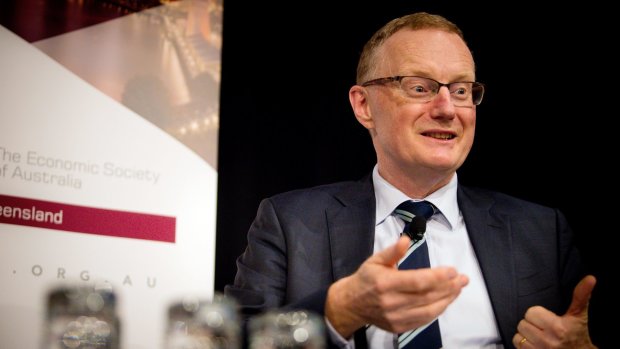 Therein lies the problem with Philip Lowe's comments. A growing economy, with surging profits, and a declining unemployment rate should be a great time to be telling the boss that you needed a tad more in your pay packet. But outside of official government forecasts the economy doesn't look to be in that happy place. Right now rising wages would simply translate to rising business failures and greater unemployment.
 The Coalition under Malcolm Turnbull has now lost 14 consecutive Newspoll surveys to Labor. Famously, the current PM said the former PM had to be removed because the Liberals had lost "30 Newspolls in a row". Those focused on the long-term will be contemplating the future for the Liberal Party and for liberalism in the years ahead.
 A lack of fiscal discipline has seen ten years of budget deficits translate into over half a trillion dollars worth of debt. That is over five hundred thousand million dollars. You'd think that the government would have stopped spending money, cut staff, and salaries. Delayed, or even cancelled, big ticket spending items that are unaffordable? Well, no.
 Gichuhi is Australia's first black African-born senator. She arrived in Australia on a "warm summer day in 1999", and was immediately struck by Australia's successful melting pot. "Right in that airport, I encountered Australians, Europeans, Asians and Africans from all over the world, living and working together harmoniously".
 The Commonwealth government has an almost untrammelled ability to appoint anyone it likes to powerful bureaucratic positions such as the AHRC presidency. The choice was for the government was to pick someone that would defend fundamental human freedoms like freedom of speech, or to pick someone who represents the status quo who would oversee the continued erosion of our freedoms.
 From June 2017, to "finkel" will be a term to describe how a government sets up an independent review that quickly gets hijacked by vested interests, rewrites its own terms of reference and delivers a report with skewed modelling and a patchwork of contradictory recommendations burning its political masters.
 In this latest round of funding from the ARC, a total of $77 million of taxpayers' money is being distributed to a variety of academics from several disciplines whose research has been deemed to be both of "national priority" and "critical importance". This of course implies that their output will benefit society at large and will make a positive and indelible impact on Australia, improving citizens' lives and ensuring its continued success as a prosperous, peaceful and stable nation.
 Now this survey has been widely reported — especially in the Fairfax press. We've been reminded of Oliver Wendell Holmes' Jr. statement that he liked paying tax as "the price we pay for a civilized society". He is quite correct — tax is the price we pay for a civilised society. Yet nobody ever stops to ask what sort of civilised society Holmes had in mind. How much tax did he pay? In 1904, when he made that statement, the United States did not have an income tax. The income tax was introduced in 1913 after a constitutional amendment.
 It's easy to point to Jeremy Corbyn's magic money tree to explain why young people voted — particularly the costly plan to scrap university fees. However, to find the answer we must dig a little deeper.
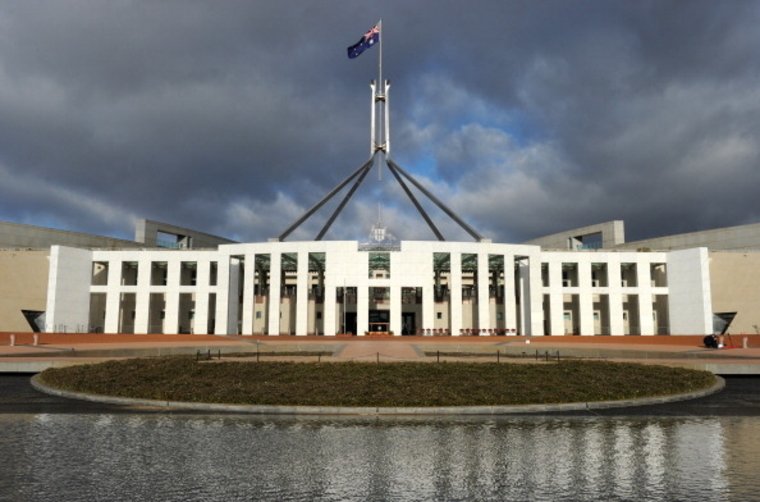 It took someone who's been in the federal Parliament for just over a year to say what was obvious and what everyone was thinking, but which his colleagues, some of whom have been politicians for decades, were afraid to admit.
 The genius of capitalism is that through the system of risk and reward, within a framework of secure borders, an independent legal system, and respect for personal property rights, it has provided the means for the genuine needs of billions of individuals to be met.
 Until now, their High Court appointments could just as easily have been made by a Labor government — which isn't a problem unless you consider the progressive interpretation of the Australian Constitution that has made centralised government the norm a disaster. It's a similar story at the AHRC: Ed Santow, who was appointed the Human Rights Commissioner in May 2016, has said nothing of the QUT case or the Commission's pursuit of Bill Leak last year. The very least the government could do is to save the country from another Gillian Triggs. Instead, the government has the opportunity to appoint a president who actually believes in human rights; and make an important symbolic choice by appointing someone who prioritises mainstream values like freedom of speech and of religion.
 This is why the two proposals contained in the Uluru Statement released last week — a treaty between indigenous and non-indigenous Australians and a new constitutional body to represent the interests of indigenous Australians — will not be accepted by the public. Both proposals would divide Australians by race. And Australians will not have a bar of that.
 Workshop attendees reported that the behaviour of such individuals in tutorials and seminars made them feel bad about themselves and to doubt their own abilities. They even employed the term "gaslighting" in order to describe how they felt about the way in which white men interacted with women and non-white fellow students. "Gaslighting" is a psychological technique used by sociopaths and narcissists to manipulate their victims.