The famous American author Mark Twain is rumoured to have once said "If voting made a difference, they wouldn't let us do it".
 The year 2016, though, was supposed to be the year where voting did make a difference. But the twin political disruptions of 2016 — Brexit in the United Kingdom and the election of Donald Trump as President in the United States — have not lived up to expectations.
Indeed, it is now clear that Brexit will not happen. On 23 June 2016 the British were presented with two options in a referendum: "Leave the European Union", or "Remain a member of the European Union". There was no "hard Brexit", no "soft Brexit", and no mention of a "customs union", of payments to the EU, or of cross-jurisdictional mobility. Leave means leave.
Except the elites have another idea. Some 17.4 million Britons voted to Leave, 16.1 million voted Remain; 406 constituencies voted to Leave, 242 to Remain; and nine regions voted to Leave, and just three to Remain.
Yet just 160 members of the House of Commons voted to Leave, and 486 voted to Remain. The Prime Minister Theresa May is one of those 486.
The political class never had any intention of implementing the will of the British people.
This intent was on display when the House of Commons voted against a "no deal Brexit" — better known just as Brexit — 321 votes to 274. This means the only way out of the EU will be some sort of compromise position. And the only compromise on the table is the one put forward by Theresa May which has been twice rejected by the House of Commons.
In all likelihood Article 50 — the provision which once triggered gives effect to Brexit — will be extended, at first for a few months and then beyond a year. By then the political class is hoping that the 17.4 million Brexiteers will lay down their arms and ride quietly into the night.
The situation across the Atlantic isn't much better. Trump's presidency on the whole has been a success. So far it has included substantial corporate tax cuts, deregulation, withdrawal from the Paris climate change agreement, convincing Nato allies to pay their share of common defence costs, a renewed approach to North Korea and appointment of conservative judges.
But, as in the United Kingdom, the political class in the United States has sought to nullify Trump's presidency ever since he was elected on 8 November 2016.
Almost every argument for removing Trump from the Presidency has been used. The electoral college is outdated. Trump conspired with the Russians to steal the election. He is mentally unstable and should be removed from the presidency under the 25th Amendment to the United States Constitution.
And then there is the biggest brickbat of all: Donald Trump is an avowed and unapologetic racist.
Democratic party Senator and 2020 presidential candidate Kirsten Gillibrand, for example, claimed in the wake of the tragic New Zealand terror attack that Donald Trump "embraced and emboldened white supremacists".
Importantly, it is not just members of the Democratic party that have been doing their best to stop Trump.
It was Republican Senator John McCain who voted against repealing Obamacare, after having campaigned on it for eight years. And it was a majority Republican House and Senate that for two years refused to pass funding to build a wall or barrier on the southern border.
This left Donald Trump with no choice but to make a national emergency declaration to build the wall. It is little surprise that the establishment is trying to stop that, too. Recently the Republican Majority Senate voted 59-41 to cancel Trump's February proclamation of a border emergency. Twelve Republicans voted with the Democrats, triggering Trump to issue the first veto of his presidency.
But Trump himself also appears to be straying from "Trumpism". He still talks tough on illegal immigration, but at his State of the Union address in February of this year Trump stated he wants legal immigrants "in the largest numbers ever".
Trump's "bring the boys home" approach to foreign policy has been replaced with keeping troops in Syria and escalating rhetoric on regime change in Venezuela.
His hostility to trade deals has softened markedly (a welcome change, but a change nonetheless). And the "swamp", far from being drained, appears to be alive and well.
None of this is to knock Donald Trump. He is one man who was sent into Washington D.C. to shake things up. And he has given it his best. But in the end it appears that Washington always wins.
Australia faces similar challenges. The upcoming election is interesting for what isn't being discussed. Voters are concerned about three big issues: rapid population growth. high electricity costs and political correctness.
But the political class is intent on not talking about these issues. Both the Coalition and Labor have fundamentally the same view on these three issues. There is literally no difference on population growth. The Coalition offers a slightly less destructive climate change policy, with a 39 per cent renewable energy target as opposed to Labor's 50 per cent target. And the government's decision to ban Milo Yiannopoulos from entering Australia is just the latest example of their apathy, if not outright hostility, to free speech. A hostility that will only be outdone by a Shorten Labor government.
So voting, at least for the meantime, may not make a difference. But actions still do. And that is why despair is not the right response. Rather, we should follow another apocryphal quote, this time from Mahatma Ghandi who said "be the change you want to see in the world".
For those feeling disenfranchised, this means living in a way that will create a better future. If political parties, neighbourhood councils, or local organisations are not functioning properly, then it is up to all of us to either develop alternative institutions or use our freedoms to join up and make them better.


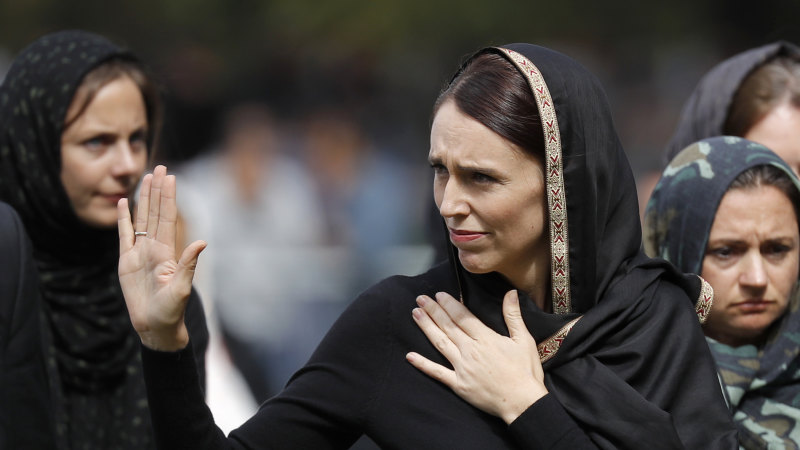 The Christchurch attacks were senseless acts of terror that reverberated around the world, but we need to be wary of knee-jerk proposals to limit our freedoms — in this case, restrictions on free speech via tighter regulation of the internet.
 Had the author of "After Christchurch universities have a responsibility: abandon Ramsay" been other than a Sydney University academic, it is doubtful the Herald would have published. To paraphrase George Orwell, there are some things so foolish that they could have been written only by a member of the intelligentsia.
 First the Department of Home Affairs told Yiannopoulos they were planning to deny him a visa. Thanks to the advocacy of three Liberal MP's, Tim Wilson, Amanda Stoker and James Paterson, the minister rightfully overturned this decision.
 Control of superannuation gives the union movement an influence over the factors of production regardless of how much union membership declines.
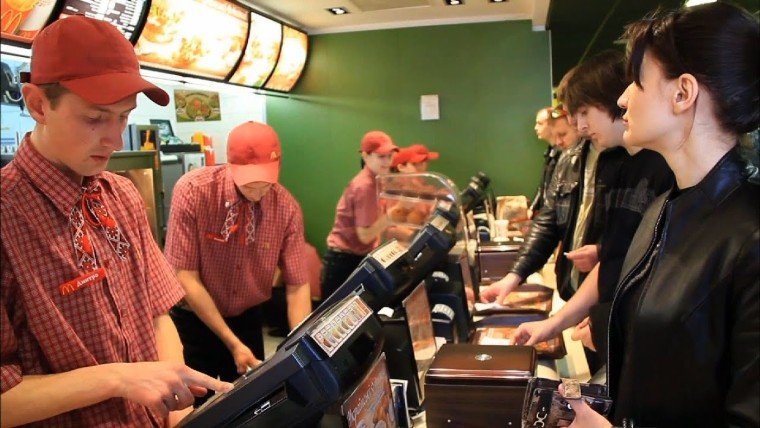 A living wage would be set to an amount that could cover necessary living expenses. While Labor has not indicated how this would be determined, the ACTU has called for the minimum wage to increase by 11 per cent during the next two years.
 Comprising six "flagship" themes, academics behind the project claim that over the next few years, they will not only tackle a number of "issues of global importance" but that they will also provide solutions to them. They are it seems, determined to show Australians that what they do is actually beneficial.
 New economic modelling prepared by Managing Director of BAEconomics and former executive director of the Australian Bureau of Agricultural and Resource Economics, Dr Brian Fisher, was released on Tuesday. It shows that the emission reduction obligations under the Paris Climate Agreement will cost Australia at least $89 billion in terms of foregone economic output, and result in 78,000 fewer jobs over the period 2021-2030.
 Until now, the Marvel Cinematic Universe films — such as the Avengers films, Black Panther, or Iron Man — have been reliably-inoffensive escapist fiction, if at times blandly formulaic.
 After all, it's much more exciting to be an eco-warrior than it is to sit through hours of algebra, or come to terms with acid-base equilibrium systems and their applications.
 Economic forecasters are puzzled by the behaviour of wages. We are approaching full employment. Bosses and recruitment firms complain about labour shortages. The economy continues to grow. In these circumstances, the price of labour should be increasing.
 But Ridd is equally passionate about his profession, and has spent years questioning the orthodoxy that climate change is "killing the reef". In speaking out against this climate alarmism, Ridd put himself on a collision course with his employer, James Cook University. After years of warnings, censures and absurd gag orders, Ridd was finally made to walk the plank. Now, he's fighting back, in a case with momentous implications for free speech in Australia.
 Australia's Environment Minister, Melissa Price, also recently claimed this summer's bushfires as a consequence of climate change. I grew up with stories from my late father of terrible bushfires — infernos — back in 1939. The Black Friday firestorm of 13 January 1939 destroyed four times the area of farmland and forest as the devastating February 2009 fires — and twenty times as much as burnt this last summer.

 The plan also calls for a government imposed "living wage", and government provision of food, water, healthcare, and education. And calls for action on climate change are a smokescreen for back-door socialism.
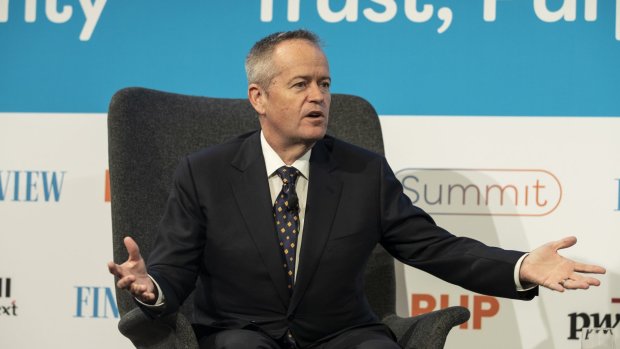 On Tuesday, in his speech to The Australian Financial Review Business Summit, Scott Morrison wanted to get the media talking about the risk of a recession under a Labor government.
 The 28-year yardstick is relevant because that is the time since Australia last experienced a full-blown aggregate economic recession, defined as two consecutive quarters of negative economic growth.