Thursday, February 21, 2019

The NAB Board Will Pay A Heavy Price

The story of the resignation from NAB of its chief executive Andrew Thorburn and its chairman Ken Henry after the Hayne royal commission is instructive.
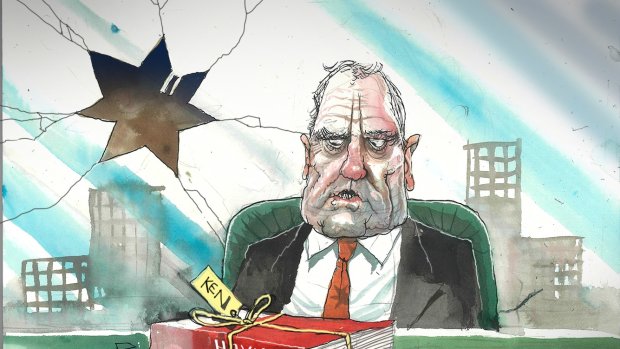
It reveals just how hopeless the boards of directors are of most big businesses in Australia.  What happened at NAB demonstrates that, these days, directors are more likely to make the easy and supposedly popular decision rather than the right decision.

NAB got it the wrong way around.  Thorburn and Henry should have stayed and it should have been the board that quit.

The board of NAB caved into pressure from two sources — politicians wanting a scalp from the royal commission and the media lynch mob.

This is exactly the sort of pressure that shareholders pay company directors to resist.  In the long run, appeasement never works.  The NAB board should have refused to accept the resignations of Thorburn and Henry and given them their full and public support — any director who felt unable to do so should have stepped down.

There may be reasons for their resignations not yet publicly disclosed, but for all intents and purposes it looks like the NAB board felt it had to accept the resignations because Thorburn and Henry were singled out in a few sentences in the final report of the royal commission.

According to Commissioner Kenneth Hayne:  "Having heard from both the CEO, Mr Thorburn, and the chair, Dr Henry, I am not as confident as I would wish to be that the lessons of the past have been learnt.  More particularly, I was not persuaded that NAB is willing to accept the necessary responsibility for deciding, for itself, what is the right thing to do, and then having its staff act accordingly."


DANGEROUS PRECEDENT

The commissioner is entitled to his opinion — and Thorburn and Henry are entitled to challenge that opinion.  Whether the commissioner was going beyond his terms of reference in stating his feelings as to whether NAB executives had demonstrated sufficient guilt and remorse for their own and their predecessors' misdeeds is another question.

Thorburn and Henry did absolutely nothing wrong when they gave their evidence to the royal commission.  In this country (at least for the time being), you're allowed to defend yourself when you're in the witness box, whether at a royal commission or in a court of law.  Likewise, witnesses are under no obligation to accept the assumptions of the questions from the lawyers interrogating them.

In his evidence, Henry acknowledged his own and the bank's failings — but at the same time he made it clear he wasn't willing to endorse the imputation that the bank as an entire organisation and the bank's staff as a whole were to blame for the mistakes of a few.  He was widely criticised for the manner and tone in which he defended the bank and its staff.  While Henry's supposed "arrogance" was minutely dissected in the media, the substance of what he said, namely that the overwhelming majority of the bank's employees were good people trying to do the right thing, was almost entirely ignored.

The NAB board has set a dangerous precedent for every other bank — and indeed for every other big business in Australia.  What the NAB board has effectively said is if you're an executive and you upset the government and its regulators by having the courage to defend yourself and your staff against them, then your job is at risk.

The fight between big business and government is only just beginning.  New legislation imposes jail of up to 15 years for individuals guilty of corporate crimes, and penalties of up to $525 million for companies guilty of civil offences.

The Coalition has spent the past few years bashing big business, and if Bill Shorten wins the federal election big business will be bashed even harder.  What could happen under a Labor government will be bad for Australia, but if company boards follow the precedent set by NAB, those boards will only have themselves to blame for what happens to their businesses.

Thursday, February 14, 2019

Radical Feminism Has No Place In Psychology

Australian boys and men seeking help for mental illness may soon find themselves being lectured about toxic masculinity and white privilege.

The Australian Psychological Society (APS), Australia's peak body for psychologists, has signalled that it is likely to follow the path of the of the American Psychological Association (APA), and adopt something similar to the APA's newly-released Guidelines for Psychological Practice for Boys and Men.

The APA's guidelines have been fiercely and widely critiqued.  Not only for the partisan and divisive language used, but also for their poor scientific practice.  Most worryingly the document takes aim at not just "toxic masculinity" but "traditional masculinity" which in turn is defined by the most thuggish aspects of male behaviour.  Positive attributes of masculinity such as honour, strength, sacrifice or, to use an Aussie phrase, mateship are noticeably left out.

The president of the Australian counterpart, Ros Knight, has brushed aside such concerns.  She said, "there is an opportunity for us to consider whether making specific practice guidelines for boys and men would be a sensible thing to do".  And further explained:  "I think as a result of the APA really bringing this much more to the fore, it's something that we're going to think about doing in 2019."

The politicised nature of the guidelines is visible even in the introduction.  Which begins sentences with caveats that seem to accuse the very people they are claiming to help.  One begins "although boys and men, as a group, tend to hold privilege and power based on gender ..."  The document then moves onto a glossary of terms, most of which are borrowed from the jargon of identity-politics:  Oppression, Privilege, Cisgender, Gender Bias, Gender Role Strain and Gender Sensitive.  Their definitions are not backed by the citing of evidence and credible academic papers, but instead by quoting the words of controversial activists such as American feminist Dr Peggy McIntosh.

In doing so, the guidelines notably fall into the postmodernist trap of prioritising group identity above that of the individual.  As noted by Sally Satel, a practising psychiatrist and lecturer at the Yale University, "... it is questionable because it encourages clinicians to assume, before a patient even walks in the door, that gender is a cause or a major determinant of the patient's troubles."

In other words, the guidelines take the data-driven area of psychology and shape it into an activism driven practice.

One of the psychologists responsible for the guidelines, Ryan McDermott, was unabashedly forward in the activist roots of the document saying in relation to the guidelines:  "If we can change men ... we can change the world."  This statement rests on the presumption that there is something inherently wrong with men in the first place.  Unlike women, who as we all know, are all beautiful beings of goodness being held back by the patriarchy.

Professor of Psychology, Jordan Peterson, has publicly critiqued the guidelines.  In response to a segment on the early socialisation of boys, which claims that men who socialise their boys in a traditional manner will damage the mental health of their offspring, he cited statistics showing that it is fatherless boys who are over-represented in crime, addiction and other anti-social behaviours.

He then posed the question;  "If it is fatherless boys who are violent, how can it be that masculine socialisation produces harm both to mental health and society?"

The guidelines do have some very small moments of sanity hidden among the activist agenda.  As feminist academic Christina Hoff Summers noted, there is a segment recommending that "for boys and adolescents, shorter sessions, informal settings outside the office (e.g., playground), instrumental activities, using humour and self-disclosure ... may provide more congruent environments than traditional psychotherapy."  Unfortunately, these rare moments of wisdom are buried under partisan and divisive jargon about "Eurocentric masculine ideals of restrictive emotionality".

The APA guidelines stated purpose is to address the mental health crisis that has been facing men for the past few decades.  Six men will take their lives in Australia today, a statistic that demands a response from the psychological community.  But the APS would be misguided if it follows the American approach to this issue, in which the stated purpose appears to have overwhelmed by radical feminist slant.  It would be a self-defeating move because the politically charged, bias and overtly partisan language used is more likely to drive men away from seeking psychological help.

We must not let activism and political interest take over the human sciences in Australia — particularly in such a vital field as mental health — but this is what will happen if activists are allowed to set the agenda in professional associations and associations of scholars.

Monday, February 11, 2019

Queensland's Rising Incarceration Rate Calls For Criminal Justice Overhaul

Queenslanders are facing a massive increase in criminal justice costs but without any promise the spending will lead to safer communities.

This is the key finding of a new Queensland Productivity Commission report on incarceration and reoffending.

The report shows a radical rise in the number of Queenslanders going to prison.  The incarceration rate, meaning the proportion of adults who are in prison, has risen 44 per cent since 2012.

There are more than 9000 offenders in Queensland prisons, which are at 130 per cent capacity.

On average, each prisoner costs state taxpayers $107,000 per year.  This works out to about $900 million each year for incarceration.  What's more, the report estimates that taxpayers are on the hook for up to $6.5 billion in new prison construction.  That sort of money can buy a lot of schools and roads.  Or hire more police.

Of course, by themselves these numbers do not tell the whole story.  If every extra dollar makes us safer, then these are dollars well-spent.

But there is growing evidence that prison does not always increase community safety.

While crime has fallen overall in recent decades, prisons have grown less effective in correcting offenders' behaviour.  The number of prisoners who return to prison within two years of release has risen from 29 per cent to 40 per cent in the past decade.

The report suggests one of the reasons for this trend is more offenders serving short sentences.  The median sentence is 3.9 months.

Short sentences are often used for non-violent crimes, like drug and property offences.  Prison is a costly and often disproportionate punishment for these offences.

Sentences this short do not allow for rehabilitation programs but do expose offenders to the negative effects of prison, like being with other offenders and being separated from positive influences like family and work.  The result is frequently an escalation of criminal behaviour — the opposite of what we hope our tax dollars are buying.

These findings reveal a starting point for criminal justice reform:  strengthening alternative punishments for non-violent offending.  As the commission notes, 70 per cent of offenders are already in some form of community corrections, but these punishments receive just 10 per cent of the corrections budget.

The main alternative to incarceration is community service, where offenders are put to work to repay some of their debt to society.  Unfortunately, in Queensland, offenders serve on average just 30 hours of community service, even though they are ordered to serve 64 hours on average.

If community service is to be part of the solution, it needs to be a lot better, and a lot tougher, than it is right now.  My research shows that allowing for-profit businesses to participate in community service would increase the quality and quantity of the work offenders must perform.

Community service should be imposed together with electronic monitoring and restitution orders that require offenders to directly compensate their victims.

The Commission has also broken new ground by making Queensland the first state to consider whether criminal justice reform also means rethinking the scope of the criminal law.  For example, many economic regulations carry criminal penalties when civil penalties would adequately capture their seriousness.

Expanding the criminal law can be wasteful both because of enforcement costs and in terms of reduced economic productivity.  In that sense, it is akin to red tape.

In this way, the report reiterates its main point:  everyone benefits from an efficient criminal justice system that focuses on preventing and prosecuting the most serious offences, and taking the most dangerous criminals off the streets.

Saturday, February 09, 2019

Three Years In An Aussie Re-Education Camp

The next cohort of prospective undergraduates who plan on studying Australia's history at university in 2019 should scrutinise the subject descriptions on offer with considerable care.  If they are hoping that three years of a university education might provide an understanding of modern Australia in terms of our debt to Western civilisation, they should steer well clear.

If, however, they would like to know more about becoming a political activist, race relations or LGTBQ rights, they should ideally do a BA in Australian History.  This is because Australia's history has been re-packaged and re-labelled by ideologically-driven academics and presented to undergraduates as a social and political commentary on contemporary issues rather than as a study of actual history.  Students are, in short, being swindled.
My report, Australian History's Last Stand:  An Audit of Australian History Teaching at Universities, reveals that Australian history as a discipline is suffering from the same existential crisis which is currently crippling the humanities in universities across the West.  Rather than being provided with a solid grounding in the key social, political and economic events which formed our nation, students are being served up a flavourless, colourless and depressingly bland dish of identity politics.

Of the 147 subjects which were taught across 35 universities in 2018, a total of 102 treated to greater or lesser degrees, the left's favourite themes of class, race and gender.  This means that three quarters of all subjects which purportedly focus on Australia's past do so through the modern fixation with identity politics.  The examples are as ludicrous as they are numerous.  In "Race and Place" at the University of Wollongong, students were asked to consider the following:  "Why does race matter now?  In a progressive, multicultural country such as Australia we highly value equality and therefore believe that racial heritage should not influence people's opportunities."

At Monash University, those who enrolled in "Australian Stories:  People, Place, History" explored "crime and punishment, gender and sexuality, the environment, family [and] race relations", while students at the University of New South Wales taking "Inequality in Australia" were asked to consider "How was inequality influenced by race, gender, sexuality, age and disability?" and "When and why did it become a political issue?"  Why indeed.

Students who took "Migration Nation:  History Culture Identity" at Melbourne University drew upon the work of "historians, social and cultural theorists, policy makers, activists, writers and artists" to understand "how history continues to shape contemporary society".  Meanwhile, over at Federation University, students who opted for "From the Coast to the Outback" were promised a "thorough overview of the major issues confronting Australians in the present".  By no stretch of the imagination could this be deemed as history.  Those academics who are clearly more interested in writing the past as a way of empowering minorities and the oppressed than they are with constructing a narrative motivated by professional rather than present-day political concerns, should consider transferring to more suitable departments, such as sociology or political science.

This monomania and apparent addiction to applying identity politics to the past is disastrous on many counts.  It does nothing to explain the origins of this free nation which has been built over the last 230 years.  It fails abysmally to expose students to the ideas, values and institutions of Western civilisation which were brought to these shores by the British in 1788, and which, like it or not, we continue to benefit from.  Unsurprisingly, research undertaken for Australian History's Last Stand found that in the 147 subject descriptions, no single subject mentioned either "liberalism/liberal", "agriculture" or "free trade", while "democracy" and "capitalism" featured just once each.

The obsession with identity politics also means that students will never discover the rich tapestry of characters who have made incalculable contributions to the development and success of this nation, and who have been cast aside in favour of the collectivist narrative struggles between different groups.  It is simply astounding that not one single prime minister, either Labor or Liberal, is mentioned in any of the 147 subjects.  Tellingly however, Pauline Hanson, who is alive and kicking, features rather a lot.

A degree in Australian history looks like three years in a re-education camp, where any natural interest which might have existed at the beginning will be well and truly extinguished by the end.  Identity politics renders Australia's history uninspiringly, mind-numbingly dull.  What student really wants to sit through class after class, semester after semester, being indoctrinated by political activists masquerading as historians?  Where is the inspiration if every subject you choose is taught using the same tedious predictable template?  And the university administrators wonder why students are leaving the humanities in droves.

What a degree in Australian history does not look like is a comprehensive, instructive exploration of all facets of Australia's history which will produce highly knowledgeable, well-rounded graduates.  As Cicero remarked, "To know nothing of what happened before you were born is to remain forever a child".  It is not only failing to elevate the students, but it is ultimately infantilising them by stunting their intellectual growth.

In his monograph Why Western Civilisation is Our Future, Cambridge historian Professor Robert Tombs muses with characteristic perspicacity that "ignorance of history makes democratic national conversation at best impoverished, at worst impossible".  There is little doubt that our history departments are in the business of churning out graduates who, having majored in identity politics, sorry, Australian history, land jobs in the civil service, the government, in journalism and in politics.  And every year when Australia Day comes around, it is these individuals, full of moral righteousness, who are imposing their skewed version of Australia's past on the rest of the population, whether the population wants it or not.  It is this vocal, virtue-signalling minority which makes proper, intelligent national conversations nigh impossible.

Friday, February 08, 2019

Banking Royal Commission:  Duplicitous Banks, Foolish Borrowers

The funniest thing to come out of the Hayne royal commission is a story that appeared in The Sydney Morning Herald on Monday.

Titled "I'm amazed they approved me:  CBA lashed for lending to the naive", the article began as follows.

"One victim of irresponsible lending, 24-year-old Georgia Clark, believes the banking royal commission's recommendations are a missed opportunity to protect the vulnerable from systems designed to reward bankers' greed.  The Sydney journalist walked into a Commonwealth Bank branch when she was 19 to ask for a loan to pay for a holiday to Europe and pay some other expenses.  Though she was a full-time student who was working casually in hospitality, she was given an unsecured personal loan of $18,500 with an interest rate of 16.9 per cent.  She fell behind on the repayments and talked to the bank about getting back on track, but at "no stage would they lower the rate, even despite my financial troubles".

Georgia went to on say that she felt "the bank took advantage of her naivety and she was the victim of irresponsible lending".  She said she finished up paying almost $9000 in interest on her original $18,500 loan, with her "ordeal" ending a year ago when her parents paid off the loan, and she is now paying them back.

The article concluded with Georgia claiming "I am amazed that they approved me for the loan and my parents felt the same.  I was fortunate to have my stepdad and mother back the loan, but a lot of other young people would not be as fortunate."

There's so much wrong about a 20-something complaining a bank gave them money to go on a holiday it's difficult to know where to begin.

As far as we can tell no one forced Georgia to go on a holiday to Europe.  She chose to borrow the money and she knew what the interest rate was.

The royal commission uncovered plenty of instances of bad behaviour by the banks, but from what we know, what happened to Georgia doesn't have much to do with "bankers' greed".

Certainly a bank loan loan for $18,500 is a not insignificant obligation on a 19-year-old, and maybe the CBA could have asked Georgia whether she'd thought of going on a cheaper holiday to Byron Bay instead of Europe.  But that's also a question Georgia could have asked of herself.


TWO-WAY STREET

What's been lost in much of the discussion about the banks is that lending money is a two-way street.  Banks choose to lend money and borrowers choose to borrow that money.  Just as lenders sometimes make bad decisions, so too do borrowers — that's a consequence of a free-enterprise economy — and it is a point that perhaps the royal commission could have done more to acknowledge.  Not every bad loan is the bank's fault.

The Comments section from SMH readers under the original article provides an interesting perspective from mainstream Australians about what occurred to Georgia.

One reader asked:  "So you got a loan you asked for?"

Another remarked:  "Do people ever take responsibility for their own actions?  She was 19.  An adult by law.  Can drive, get a loan, get married, go to an adult prison, yet they feign stupidity when they get themselves into this."

A number of readers recounted their own personal experiences about borrowing to go on a holiday or to buy a car.  "When I was in my early 20s I decided to go on a 6-week trip to Europe.  I saved for months so I could afford it.  I would never have dreamed of borrowing the money."

One reader, Jo, used Georgia's case study to venture into a broader social commentary:  "Talking on a mobile phone whilst driving is someone else's fault because they didn't stop me.  Taking illegal drugs is someone else's fault because they didn't stop me.  Speeding is someone else's fault because speed cameras only raise revenue."

Perhaps the final word on this should go to a reader rejoicing in the pseudonym of "Sir T":  "Genuinely encouraged by the common sense responses here ... Taking responsibility for one's actions may become a new trend."

Children Lose Out If Academics Shade Literature With Gender Politics

The news that academics from Queensland University of Technology are demanding that the selection of texts recommended by the national curriculum should "better reflect the sexual diversity of the classroom" provides us with more evidence that academics are more interested in engaging in political activism than they are in imparting the knowledge and wisdom of great literature.

To put books into pigeonholes based on the class, race or gender of the author, the subject matter of the book, or the identity of the student, is disastrous.  All school students should be exposed to great literature, because the great books speak to each and every one of us about our human condition.  They speak to us about being rich, being poor, being happy and being sad.

The ideas and themes treated in great literature are universal, not particular, and they have endured and will continue to endure for generations because of their universal appeal.  There is a reason why the Globe Theatre in London was able to put on Shakespeare's plays to a full house in 37 languages, including Maori, Urdu and Swahili.

The idea that books should be chosen according to the students' background or sexuality is patronising.  It is essentially telling them that they don't possess sufficient imagination to read books that do not in some way reflect their own lives and environment.  It is like saying that because the experience of a 15-year-old Australian today is different to that of a Scottish king in the 12th century, they should not read Macbeth.

The books that we devour as children and in our teens form us.  They shape our world, they give us insight, and they teach us to use our imaginations.  The total dependence on a thoroughly modern invention, identity politics, to analyse texts means that all this precious insight and experience is lost.  It is an enormous loss that results in serious problems and raises serious questions.  The greatness of these books will remain undiscovered and unexplored if they are only read using one viewpoint.

We cannot weed out bad ideas and develop the good if we insist on restricting our thinking to the unsophisticated classifications of race, gender and class.  Society cannot continue to progress if we choose to observe the world through such narrow and limited prisms.  This monomania and obsession with identity politics is impoverishing rather than enriching the students, who will hardly be motivated to read any of these books, if all they are going to hear in the classroom is the same old tropes of class, gender and race.

This is a problem with which Mark Bauerlein, English professor at Atlanta's Emory University, has long been preoccupied.  Author of the bestseller The Dumbest Generation:  How the Digital Age Stupefies Young Americans and Jeopardizes Our Future (Or, Don't Trust Anyone Under 30), Bauerlein has seen student numbers falling rapidly in the humanities.  The reason, he says, is because of the predominance of identity politics in all disciplines related to the humanities.

He believes that it is because identity politics is a downer.  Students will say, "You're going to sit and talk about (Ralph Waldo) Emerson and how racist he is?  I don't want to take this class!  I don't want to hear so much negativity."

Identity politics is a negative.  It is not a positive idea.  In the words of Somerset Maugham:  "To acquire the habit of reading is to construct for yourself a refuge from almost all the miseries of life."

Both QUT researchers behind the paper Queering Senior English are employed in the faculty of education, where everything is examined through the lens of class, race and gender.  It's hardly a secret that humanities are hotbeds of identity politics or what is sometimes referred to as "the identitarian Left", which now defines itself, and engages with others, through the prism of identity rather than on the basis of ideas.

History as a discipline in Australia, as taught at university, has already been destroyed:  it has been turned into a vehicle for political activism.  As revealed in my audit Australian History's Last Stand:  An Audit of Australian History Teaching at Universities, the fact that Australians laid the foundations of one of the world's most successful liberal democracies, which has achieved unprecedented levels of personal freedom and social equality, is simply not being taught to students.

Of the 147 history topics taught across 35 universities, a total of 102 deal with the themes of class, race and gender.

This effectively means that three quarters of all topics that purportedly focus on Australia's past do so through the modern lens of identity politics.  Sadly, it seems that English is going the same way, which is a tragedy for every Australian child, regardless of class, race or gender.

Friday, February 01, 2019

Labor Is Coming After Apple Pie-Baking Nanas

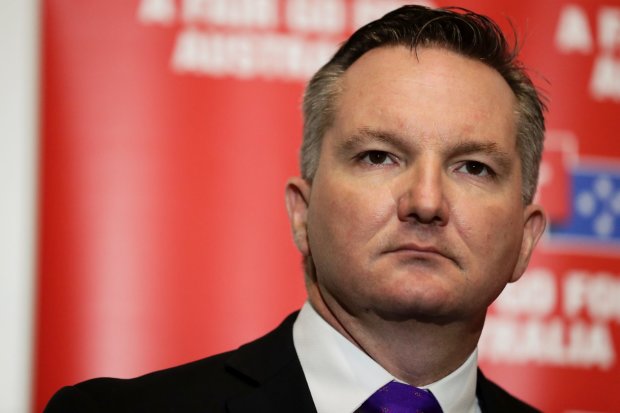
On Thursday, Labor's Shadow Treasurer Chris Bowen said something that a politician is never supposed to utter.  At least not in public.

In response to those who will face higher taxes under Labor's proposed changes to Australia's dividend imputation system, Bowen said they were "entitled to vote against us".

On one level this is unobjectionable as it describes the democratic process — don't like one mob, just vote for the other.

But the reason that comment has rubbed so many people up the wrong way is it shows that one side of politics just doesn't care about those who would be hurt by their policies.

It sends a message that if you are not going to vote for Labor then Labor will not govern for you.

So much for the idea of the national interest.  But Bowen and Labor should care more.  Under their latest proposal to hike up taxes, cash refunds for retirees for so-called excess franking credits from shares they hold would be abolished.

This would result in some $55 billion in extra taxes being levied on Australian retirees.

It would also partially undo an important feature of Australia's tax system.  Without franking credits corporate income would effectively be taxed twice.

First corporate profits are taxed at the company tax rate, which is 30 per cent for large businesses.  This is close to the highest corporate tax rate in the world.

Second, businesses pay dividends out of income which has already been taxed.

This means when shareholders pay tax on those dividends, they are paying tax on income which has already been taxed.  The franking credit system gets around this by allowing the corporate tax rate to be deducted from the shareholder's individual tax rate.

This means the extra tax paid above the corporate rate is the difference between the corporate rate and the shareholder's marginal tax rate.

The rub is that many retirees do not work, or work very little, so they have a low or zero marginal income tax rate.  This means that the difference between the company rate and their marginal rate can be negative.  In this case the shareholder receives a rebate.  And it is this rebate that Labor wants to eliminate.

Labor likes to conjure up images that only old rich men chomping on cigars have the know-how to exploit this feature of Australia's tax system.

But recent analysis by Professor Sinclair Davidson revealed some interesting facts.

Davidson, who is a professor of economics at RMIT University, found that 56 per cent of those who receive the cash rebate are women, 68 per cent of whom are over the age of 60, and 47 per cent of whom are either single or widowed.

Labor is coming after apple pie-baking nanas, not monocle-wearing monopoly men.

What is worse, though, is that the changes would be retrospective meaning they would apply to decisions already made.

This is a particular problem for retirees given that plans for retirement are made over a period of years and decades.  Not that the Coalition government can complain.

It did, after all, propose its own retrospective tax hikes on self-funded retirees through the superannuation system in 2016.

If the Coalition was committed to lower taxes it would have more credibility in opposing Labor's tax hikes.

Perhaps one positive to come out of Labor's proposed tax hike, though, is it has brought up concerns about inter-generation political warfare.

Opponents of Labor's proposed tax hike claim Labor is setting up a battle between older self-funded retirees and younger working families.

This criticism has some merit but it misses the broader and intense inter-generations battle that has been raging for some time.

For years it has been the Baby Boomers who have dominated politics.  There are a lot of them and they are for the most part wealthy.

They have benefited greatly from the differential tax treatment of superannuation, rising asset prices from low interest rates, and rising property values.

At the same time as the boomers have amassed great wealth, their younger cohorts in Generation Y (or Millennials born between 1977-1995) and Generation Z (born from 1996 onwards) have been left with some $500 billion in gross government debt at the Commonwealth level alone.

And every last cent of this debt will need to be paid back by today's younger Australians through higher future taxes.

Inter-generation inequity is a legitimate concern but the best way to resolve it is to reduce government spending and pay down the debt, not hit nanna with another tax.

Thursday, January 31, 2019

Does The Morrison Government Have The Strength To Slash Red Tape?

The future of freedom in Australia was dealt a blow at the start of the year with Senator David Leyonhjelm's announcement that he will be resigning from federal politics to have a tilt at the state level in New South Wales.

The Liberal Democrat Senator from NSW was one of precious few voices in Canberra who could be relied upon to advocate for the freedoms of all Australians.
Whether it was lower taxes, freedom of speech, or reducing crony capitalism, Leyonhjelm was front and centre.  And while he may yet do great work in the NSW Parliament, the nation as a while will miss his voice in Canberra.

Amongst all of his achievements the one that will perhaps have the longest lasting legacy is the Senate Red Tape Committee which Leyonhjelm established and chaired.

The Committee investigated the effect of red tape in Australia across a range of industries, from health services to liquor licensing to the resources sector.

All told the Committee handed down nine separate inquiries, with a total of 57 recommendations for how governments around the country can cut red tape.  The quality of analysis in the inquires puts the Treasury and the Productivity Commission to shame.

The inquiries by the Committee reveal that red tape is by far the single biggest impediment to economic opportunity in Australia.

At the macroeconomic level, red tape reduces economic output by $176 billion each year, which is the equivalent to 10 per cent of GDP.  This cost isn't just financial.  It represents forgone human potential:  all of the businesses that are never started, the jobs never created, and the dreams never fulfilled as a result of red tape.

This red tape is supported by an intimidating array of unelected, yet well-funded and powerful regulators.  My research estimated that as of 2016 the commonwealth government maintained some 1,181 entities, bodies, and administrative relationships all of which operate behind the curtain of Canberra's power politics and out of sight of the voters.  Of those bodies, some 497 are involved in policy design or enforcement of the federal regulatory system.  And that doesn't include all of the bodies that exist at the state or local level.

These costs are being felt at the coalface by working families.

The Senate Committee's findings make clear that red tape is holding back new private sector business investment, which currently sits at just 11.7 per cent of GDP.  This is only just above the rate that prevailed during the recession of the early 1990s and is lower than during the economically hostile Whitlam years.

Lower business investment stunts capital formation, depriving the next generation of Australians economic opportunity and the inherent dignity entailed in an honest day's work.

Low capital formation also reduces the demand for workers which holds back employment and wages growth.  This is why wages growth in the private sector have barely kept pace with inflation over the past three years.

Of equal concern is the disproportionate impact that red tape has on smaller businesses.  Small businesses are not just smaller versions of big businesses.  They do not have the human resource departments, the IT systems, or the in house legal, accounting, or tax expertise of their larger counterparts.  This means the marginal cost of extra red tape is far higher for smaller than larger businesses.

This is a key reason why larger businesses often advocate for more regulation.  It helps impose disproportionate costs on their smaller competitors, causing some to exit the market and stopping others from entering.

What the Committee highlights is that urgent work is needed to reduce red tape to unleash prosperity and expand opportunity.  This means introducing broad-based, systemic approaches to delivering sustainable reductions to red tape.

Initiatives such as a one-in-two-out approach, where two pieces of regulation (or "regulatory restrictiveness clauses") are repealed for each new piece introduced is an approach that has great promise.

Yes, such an approach is simple.  But it has delivered great success.  The Canadian province of British Columbia, for example, achieved a 41 per cent reduction to red tape from 2001 to 2015 utilising such an approach.  During this time, the province went from being one of the poorest-performing economies in Canada to among the best.

More recently, in 2017 the Trump Administration in the United States set a goal of repealing two new regulations for every new one introduced.  So far Trump has dramatically exceeded that goal, cutting six regulations for each new one introduced, fuelling economic and employment growth.

Australia, too, can experience such an economic renaissance with an ambitious red tape reduction agenda.

Senator Leyonhjelm will be remembered for his good humour, sharp arguments, and for the enduring contribution he made to the future of freedom in Australia.  To honour that legacy, state and commonwealth governments should heed the advice of the Senate Red Tape Committee and slash away at Australia's overbearing red tape problem.

Wednesday, January 30, 2019

Labor's Franking Credits Plan Adds Up To A Nana Tax

Australia's dividend taxation regime is a complex solution to a simple problem.

It is well known and understood that double taxation of corporate income gives rise to economic distortions.
The simple solution to that problem would be to make corporate income tax-free in the hands of shareholders.

But no.  So a somewhat complicated system was introduced that taxed dividend income at the shareholder's marginal rate with company tax effectively becoming a withholding tax.

The first version of this tax allowed franking credits to offset taxable income and excess credits were lost.

In effect this meant that taxpayers with a zero liability, and corporate income, could face a marginal tax rate at whatever the company tax rate was at the time.

The second version — introduced by the Howard-Costello government — took the policy to its logical conclusion.  Taxpayers with a zero tax liability and excess credits would be refunded the full amount of pre-paid tax.

This is not a radical idea — millions of taxpayers over-pay their tax and get a refund every year.

Labor now proposes to roll back to the first version of the tax.

A range of arguments have been proposed in support of this reform.

It's a return to the original policy design.  Cash refunds are some sort of rort.  Shareholders are rich anyway.  The money is better spent on public hospitals.

Only 8 per cent of taxpayers are impacted.  Australians are over-invested in the Australian economy anyway.  This latter argument is particularly strange — an Australian government would be discouraging local investment.

The questions that should be asked are "Is the revenue actually there?", "Are there behavioural responses that will undermine the policy?", "Where is the burden of the tax going to fall?".

In an attempt to answer these questions I had a look at the ATO individual taxation statistics for 2015-16 (the latest available year) and specifically at their individual sample file.

This data file provides detailed tax information for a representative sample of the taxpaying population.


REVENUE EXPECTATIONS

According to the ATO data some 21 per cent of the Australian population report receiving franked dividends in that year.

I then used the tax tables to calculate an imputed tax payable for each taxpayer and compared that amount to the amount of franking credits.

Some 6.1 per cent of taxpayers appear to earn excess franking credits — less than the 8 per cent Labor claims.  That could be good or bad for Labor's expectations as to revenue.

So the next question is, who are these 6.1 per cent?

Women make up 56 per cent of taxpayers earning excess franking credits but only 48 per cent of the sample data.

Of those women, 68 per cent are over 60.  Labor wants to tax your Nana.  But maybe Nana is rich.  Maybe Nana and Pops have organised their affairs so that the share portfolio is in Nana's name so as to minimise their joint tax liability.

So I went and had a look at the total and taxable incomes for all women and then those women with excess franking credits.

Taxable and total income figures for those women with excess credits tended to be lower than all women on average, and for each age group.

To be certain that this wasn't due to tax planning I then added the franking credits back to total income and recalculated all the average and found the same result.

These women are not "rich" and, on the assumption that not reporting spousal details indicates single status, some 47 per cent of these women are either single or widowed.

So a whole lot of (widowed) elderly women are about to face a marginal 30 per cent tax rate under a new Labor government, and will lose a portion of their current income.

The numbers go down once I account for the pension guarantee that Labor has proposed — but not by much.  We are being invited to believe that this tax grab on the elderly won't have any flow-on effects to their children and loved ones.

What could these women do to "avoid" the tax on their livelihoods?

I expect that many will sell down their share portfolios to qualify for the pension (or for more of the pension) and use the proceeds to renovate their homes.

I doubt that this is the policy intent, but it does suggest Labor will raise a lot less revenue than it imagines, and that the social costs of this policy are higher than they anticipate.

Friday, January 25, 2019

Australians And Their Original Sin

In his book The Strange Death of Europe — Immigration, Identity, and Islam the British writer Douglas Murray compares the attitude many Australians have about their country's history to that of the Europeans.

"Whereas for contemporary Europeans, colonialism is just one of our middle-ranking, midway sins, for Australians, colonialism has become the nation's founding, original sin.  And not because like European nations it stands accused of having plundered other countries in its search for wealth, but because it stands accused of plundering itself — of being a colonialist project still sitting on its colony," he writes.

Murray goes on to comment that the "conquering of one group by another and the ill-treatment of the losers by the victors is the story of most nations on earth.  But for Australians the historic treatment of the Aborigines and other first peoples is a subject that has in recent decades moved from the margins of public debate to the core — to the country's deepest, founding sin."

To some extent the contest about Australia's history and the meaning of things like Australia Day is a testament to our humanity.  The fact that in the weeks leading up to January 26, as Australians are coming back to work from their summer holidays of the beach and watching cricket, the nation is engulfed in a conversation about what it means to be Australian is not entirely a bad thing.  Sometimes this conversation is derided as unimportant and merely an aspect of the "culture wars".

Given what the government and its associated entities devote to telling the public what it means to be Australian, its entirely appropriate to interrogate the story they're communicating.  The federal government is spending $48 million to commemorate the 250th anniversary of Captain Cook's arrival in Australia.

Douglas Murray's assessment of how parts of elite opinion view this country is surely correct.  For the Greens Party, celebrating Australia Day represents an attempt to "airbrush" from history "200 years of dispossession, oppression, and resistance".  But this is not the view of Australia Day held by the vast majority of Australians.

In a survey of 1000 Australians conducted earlier this month by Research Now, only 10 per cent of respondents said the date of Australia Day should be changed while 75 per cent said the date should not be be altered.

Eleven per cent of those surveyed disagreed with the statement "Australia has a history to be proud of", while 76 per cent agreed.  These findings are consistent with a poll from Advance Australia showing 71 per cent of Australians believe Australia Day should not be moved.

There were two other noteworthy outcomes from the Research Now survey.

The first was that 92 per cent of people agreed with the statement "freedom of speech is an important Australian value" and 77 per cent said the same about freedom of religion.

The second outcome was about the attitude of young people to Australia Day.  Only eight per cent of respondents between the ages of 18 to 24 believed Australia Day should not be celebrated on January 26.  55 per cent of that age group said Australia Day shouldn't be moved and 37 per cent didn't have an opinion on it.  This finding about the attitude of young people to Australia Day corresponds with a phenomenon that has confounded the left in this country — namely that one of the reasons for the resurgence of public interest in ANZAC Day is because of support from the nation's youth.

On practically any measure you could care to think of, while of course Australia faces many challenges, this country ranks as one of the very best places in the world to live, which goes some way to explaining the Australians' attitudes to Australia Day.

And it appears the rest of the world has a pretty positive attitude to Australia and to its companies.

The 2019 Edelman Trust Barometer released a few days ago surveyed 33,000 people across 27 countries on a range of questions.

When people across the world were asked about their level of trust in global companies headquartered in specific countries, Australian companies were ranked the fifth-most trustworthy, behind Switzerland, Germany, Canada, and Japan, but ahead of the UK and the United States.

Monday, January 21, 2019

Australia Day Discord Devised By Academe

To understand the self-loathing narrative pushed on us by some Australians about the date of our national day, you need only examine the way Australia's history is being taught.

There is a direct correlation between the version of our history taught in universities, and the story that is yearly trotted out to Australians in the lead-up to January 26.

And the historical themes preoccupying the academic community tend to frame public debate as well as policy decision making.  The themes are based on class, race and gender, which are of course the Left's trope du jour.

In my audit of Australian history teaching at universities — Australian History's Last Stand — by far the most dominant theme is identity politics.  The report found that of the 147 subjects taught across 35 universities last year, a total of 102 either focus on or make reference to class, race and gender.  This means the vast majority of subjects offered by history departments employ the lens, to a greater or lesser extent, of identity politics through which to view our past.

It is almost impossible for students to study this nation's past without encountering the modern obsession with class, race and gender.  It appears that our history has been enlisted to support political causes by academics who are more concerned with rewriting the past through identity politics than they are with a narrative motivated by professional concerns.

It hasn't always been so.  Historians such as Manning Clark, Geoffrey Blainey, Allan Martin, John Hirst and Stuart Macintyre might have been divided by politics, but they all shared a traditional approach to the discipline of history.  They saw their roles with clarity, which was to understand and study Australian society, agreeing that history is about the expanse of time in which human beings have lived and acted.

All operated under the assumption they were able to paint a fairly accurate picture of past events by using a linear model of historical thinking and sifting through historical evidence.  However, in the 1960s there appeared a range of radical post-structuralist and postmodernist theories invented by a group of mostly French philosophers who essentially rejected such notions of the linear model, historical evidence, objective truth and knowledge.

Perhaps the most influential of these was Michel Foucault, philosopher, historian, social theorist and inventor of the neologism power-knowledge.  He proposed that knowledge is power, and history is fiction, and the historian's only role is to be social commentator and political activist.

The approach to Australia's history in academe carries all the hallmarks of Foucault's radical postmodernist theory.  Many individuals who specialise in Australia's history have wholeheartedly embraced the idea that they are political activists and social commentators whose self-proclaimed role is to rewrite the past as a way of empowering minorities and the oppressed.

The problem is that history is distorted when it becomes a conscious vehicle for advancing contemporary political agendas.  In Australia's case, much of our history is not only being distorted but is being ignored completely.  Because the story of our success as a modern nation based on the ideas of liberalism is almost absent from the university curriculum, it is completely omitted from the narrative being pushed by the anti-Australia Day lobbyists.

There is little if any discussion of the fact that Australians laid the foundations of one of the world's most successful liberal democracies, which has achieved unprecedented levels of personal freedom and social equality and which continues to attract people from all over the world.  There is little, if any, recognition of Australia as a beneficiary of Western civilisation.

But you only need to look at the result of the recent poll conducted by Research Now to understand just how wide is the divide between academe and the nation, and how mainstream Australians regard themselves and this country.

The results showed that 75 per cent of Australians want to keep Australia Day on January 26, that 76 per cent are proud of Australia's history and 88 per cent are proud to be Australian.  Moreover, 92 per cent think freedom of speech is important and 77 per cent believe freedom of religion to be an important value.

There is clearly no identity crisis among the majority of Australians who turn out in force each January to celebrate this country's past, present and future.

Wednesday, January 16, 2019

Anti-Australia Day Activists Claim There Is A Groundswell Against January 26.  Polling Says Otherwise

If your only way of finding out about what's happening in this country is either by listening to ABC or reading the Guardian, you'd think the entire country is embarrassed about being Australian, wracked with guilt about Australia's history and overwhelmingly opposed to celebrating Australia Day on January 26.

Indeed, you'd likely wind up mistakenly thinking that there is a groundswell of anger from mainstream, everyday Australians who believe that Australia Day is by far the most pressing issue facing Australians in 2019.

However, a poll conducted by Research Now, has revealed that this is exactly the opposite to what mainstream Australians really think about themselves as Australians, their history and their values.

In fact, Australians are fundamentally optimistic and positive about being Australian.

The results of the poll show that 87 per cent of Australians are proud to be Australian, while a tiny 3 per cent are not.

When it comes to Australia's history, 76 per cent of the respondents believe this country has a history to be proud of, while only 11 per cent did not.

The polling also found that 75 per cent of Australians think that we should continue to celebrate Australia Day on January 26 while only 10 per cent actually want the date to be changed.  Chances are that if you polled the Canberra Press Gallery with the same questions, the numbers would be significantly different.

These results expose the massive divide between the majority of Australians and the minority of vocal individuals who continually push the narrative of national self-loathing and self-flagellation on to everyday Australians.

The results simply reveal that there is an enormous disconnect between what Australians think about themselves, and what we are being told Australians think about themselves.

Every year, when Australia Day comes around, elements of the media, the political class and a small but noisy group of activists on Twitter, pull out all stops to impose their own version of Australia's history on the nation.

They are, however, completely and utterly out of touch with mainstream Australia.

Not only are they out of touch, but it seems that the more strident they are in their opposition and the more they obsess about changing the date, the more that Australians want to keep the date.

When Research Now asked the same question about Australia Day in 2018, 70 per cent of Australians were favour.  This year, the number has gone up to 75 per cent.  The poll also shows that young people are not being drawn to the divisive argument of opposing our national day.

The more this vocal, activist minority pushes its agenda down their throats, the less inclined everyday Australians are to go along with it.

The poll found that last year 17 per cent of young Australians between the ages of 18-24 said that Australia Day should not be celebrated on January 26.  This year's poll shows that, that number has plummeted to just 8 per cent.  They, like the majority of Australians know that there are more important issues to think about.
The incessant hounding of the public by activists is having the opposite effect than they intend.

Similarly, our political class likes to present the issue of freedom of speech and freedom of religion as fringe cultural issues being pushed by a small number of conservatives.

Yet again, the poll reveals that the opposite is true.

When asked what they thought about these values, a whopping 92 per cent of the respondents considered freedom of speech to be an important Australian value while 77 per cent said freedom of religion was an important Australian value.

Again, this exposes the disconnect between mainstream Australians and our political class.

Many of the left-wing activists that will be taking part in protests on January 26 have moved on from the change-the-date campaign and are advocating the abolition of Australia Day all together.  These activists will never be happy until there is no celebration of our successful, liberal, prosperous, modern nation.

Prime Minister Scott Morrison is right when he says there is a majority of "quiet Australians'' who aren't obsessed with the issues pushed by the Canberra bubble or a noisy minority.  He was right to come down hard on radical local councils who are refusing to hold citizenship ceremonies on Australia Day.

The Federal government is correct to insist that citizenship ceremonies should be celebrated on the 26th because it is the federal government that gives councils the power to hold them.

The government is perfectly entitled to take away that power from rebellious councils such as Darebin in Victoria, which last year actively encouraged people to go to work on January 26 and take another day off.

Critics of the Prime Minister's decision have said this is a "public relations stunt designed to further divide this country'' but the refusal to participate in celebrating Australia as a united country is the truly divisive force.

January 26 marks the foundation of modern Australia and it should be celebrated by all Australians.  Rather than being ashamed of it, we should be proud of it.

On January 26 the majority of Australians will be rejecting the overwhelmingly negative rhetoric about this nation's history.

They will not be out in the streets in force, but they will be with friends and family, celebrating what it is to be Australian.

Friday, January 11, 2019

Federal Election:  A Paltry Policy Battleground

With this year's federal election now only a few months away, the main themes of the Liberals' campaign are becoming clear.

The Liberals will spend a lot of time talking about Labor's policies on two particular issues — border protection and taxes.
It's says a great deal about the Liberals' policy development processes (or lack thereof) that after more than five years in power they're left with basically just those two things to campaign on.  The Liberals are terrified to talk about industrial relations, they don't have an energy policy and on questions of values such as freedom of speech and freedom of religion they can't agree among themselves on a position.

Meanwhile, the two big social policy initiatives pursued by the Liberals, namely significant increases in funding for education and disability services were instituted by the Labor Party as the "Gonski" reforms and the National Disability Insurance Scheme.

The Liberals are likely to have more political success talking about border protection than taxes.  The Coalition has shut 19 immigration detention centres and there are approximately 1300 people in detention.  In July 2013 there were 10,000 people in detention.

The differences between Liberal and Labor are less obvious when it comes to taxes.

Over their five years in office the Liberals have increased existing taxes and introduced their own new taxes — which is exactly what Labor plans to do too.


LIBERALS ARE FRUSTRATED

The sense of frustration among Liberals that they appear to be gaining little electoral advantage from Labor's proposals to further increase taxes might have something to do with the fact that it was the Liberals who first started down the road to higher taxes when they introduced the so-called "deficit levy", which increased the top personal income tax rate (including the Medicare Levy) to 49 per cent.

Since then, of course, the Liberals have increased the rate of tax on superannuation savings (in the process breaking an explicit election promise), introduced the bank tax and abolished the GST-free threshold on imported low value goods.

The Liberals have been reduced to trying to convince voters that when they raise taxes it's necessary and it's good policy, but when Labor raises taxes it's unnecessary and is bad policy.  It's certainly true that Labor's plans to restrict negative gearing, increase capital gains taxes and eliminate cash rebates for dividend imputation credits are of a different nature to the kind of tax increase pursued by the Liberals, and have potentially far-reaching consequences, but it is still the case Labor is merely following down a road a first trod by the Liberals.

Treasurer Josh Frydenberg is correct to point that if a future Labor government reintroduces an increase in the top rate of personal income tax to 49 per cent, Australia's top marginal rate will be among the highest in the world and it will cut in compared to other countries at a relatively small multiple of average weekly earnings — 2.2 times.

The trouble is, it was the Liberals who raised the top marginal rate of personal income tax to 49 per cent in in 2014 as a temporary "deficit levy".  Before that the last time the highest marginal rate of personal income tax was 49 per cent was in 1988.

As yet neither the Liberals nor Labor have talked about taking the top marginal rate back to 60 per cent, which is what it was when Bob Hawke became prime minister after Malcolm Fraser.  Perhaps Australian taxpayers should be thankful for small mercies.

The Liberals' tax problem is part of a bigger challenge they'll have in prosecuting their economic case.  For example, the government is fond of saying that since it was elected more than 1.2 million jobs have been created.  But as was reported on Tuesday, nearly all of the jobs growth in 2018 was in the public sector.  Over the year government jobs increased by 300,000 while the number of people employed in the private sector fell by 93,000.

At the next federal election the Labor Party is promising higher taxes and more government — which is not very different from the Liberal's track record since 2013.

Friday, December 21, 2018

Legal Rights Audit 2018

The erosion of the fundamental legal rights of all Australians have accelerated under federal law in 2018.

My report Legal Rights Audit 2018 revealed that the legal rights of the presumption of innocence, natural justice, the right to silence and the privilege against self-incrimination are explicitly breached by 358 separate provisions in Acts of federal Parliament.

By stripping away important principles like the presumption of innocence, the right to silence, and the privilege against self-incrimination, our legal system will not achieve just outcomes.

The fact that there has been another substantial increase in legal rights breaches proves it is a systemic problem.

The Morrison government must make it a priority to reverse course and address our legal rights problem.

These findings are a huge blow to the idea that Australia’s legal system is built on the rule of law.

Thursday, December 20, 2018

Businesses And Workers Pay A High Price For Zero Emissions Targets

Don Harwin is to be credited for his role as the state's Minister for Energy and Utilities.  But his recent suggestions for the future of energy and climate policy in Australia are misguided.

This week Harwin touted the NSW government's policy of net zero emissions by 2050, argued for the integration of climate and energy policy, and decried the lack of co-operation between state governments and the Commonwealth.

Interestingly, Harwin also argued for the need to "avoid unnecessary market interventions or distortions" — which is strange given that he is apparently unconcerned with the distortion caused by the $4.8 billion in subsidies that the renewables sector receives each year.

The definition of "unnecessary" appears to mean any intervention that favours coal, while all interventions that favour renewables are conveniently considered to be "necessary".

Mr Harwin also states that the NSW government "did not in principle oppose" the now-abandoned clean energy target or the emissions intensity scheme and was "quite happy to support" the National Energy Guarantee.

However this, too, appears inconsistent with the desire to avoid unnecessary market interventions, as each proposal was the functional equivalent to a carbon tax and would have ushered in mammoth amounts of government regulation.

This is because the only way that NSW could ever get close to the net zero emissions target is through substantial taxpayer-funded favouritism of the renewables sector.

And this spells one thing:  higher prices for consumers and businesses.

Over the past 10 years the share of wind and solar in the National Energy Market has grown from around 2 per cent to 10 per cent.

At the same time, over that period residential electricity prices have risen a staggering 110 per cent.  This is five times the rise compared with economy-wide inflation — which has increased by just 22 per cent.

This means that Australia now has the fourth-highest electricity prices in the world, according to the Australian Competition and Consumer Commission (ACCC).

That is despite the fact that Australia has over 1000 years' worth of coal, 30 per cent of the world's uranium deposits, and an abundance of onshore and offshore gas.

This is wreaking havoc on industry.

An ACCC report from 2017 gave the example of a retail grocer whose electricity bill increased by 53 per cent in just one year.

And BlueScope steel, which employs 6000 Australians, saw its electricity and gas costs rise by some 92 per cent in just two years.

All told, more than 65,000 jobs have been destroyed in the energy-intensive manufacturing sector in the past decade, in part because of high and rising electricity prices.

That is 18 jobs lost each day — 18 fewer Australians who are able to experience the dignity of work.

Mr Harwin doesn't mention these people or businesses.

Perhaps that's because they don't count to policy-makers obsessed with reducing emissions.

What is worse is that these economic and social costs are being imposed without a discernible environmental benefit.

Australia accounts for just 1.3 per cent of global emissions from human sources.  NSW accounts for just a fraction of that — and humans account for just 3 per cent of all emissions from human and non-human sources.

Even the entire Australian economy shutting down would make no noticeable difference to global emissions or the global climate.

Sitting underneath emission reduction policies is the idea that there is an inevitable global transition taking place from coal to wind and solar.  But this is demonstrably false.

Global spending on renewable energy declined by 7 per cent in 2017;  the largest drop in 15 years

China recently removed targets for the construction of solar farms and issued orders for local governments not to approve solar farms that need subsidising.

There are some 2240 coal-fired power stations currently in operation around the world.

A further 708 have been announced, or have received pre-permission or permission to be constructed.

A report released by the International Energy Agency on Tuesday found that coal still provides the largest source of electricity in the world and will continue to do so for some years.

And the jewel in the crown of the environmentalists, the Paris Climate Agreement, is disintegrating.

The largest emitter of greenhouse gases, China, is completely unconstrained by the agreement and is expected to increase its emissions by 150 per cent by 2030 on 2005 levels.

The second-largest emitter, the United States, has announced it will exit the agreement.

And not one of the nations in European Union, who are collectively the third-largest emitters of greenhouse gases, are on target to meet their emission reduction targets.

This wrangling over energy policy gets to a much deeper divide within the Coalition at the state and Commonwealth level, which in turn reflects a divide within the Australian electorate.

It is a contest between Penrith and Paris.

Between lower power prices and lower emissions.

And between the hardworking suburban working- and middle classes and the inner-city elites.

The permanent political class in Canberra and on Macquarie street have for years disregarded the interests of anyone who lives more than 10km from the city.

Whether on energy, population growth or the culture wars, the interests of the out-of-touch elite has taken precedent.

Now is the time for the NSW and Commonwealth governments to provide leadership by getting out of the Paris Climate Agreement, removing subsidies and allowing Australia's resources sector to flourish.

Tuesday, December 18, 2018

Tyranny Of The T-bone

While England was in the middle of tearing itself apart during the Civil War, Oliver Cromwell and his fellow puritans were so profoundly offended by the singing of Christmas carols that they passed an Act of Parliament in 1644 to ban it.  Three years later, in June 1647, the Long Parliament passed an ordinance which abolished the celebration of Christmas altogether.

Despite the prohibition, people continued to hold clandestine religious services, as well as to sing their favourite carols.  In effect, Christmas went underground, although perhaps not quite underground enough.  An MP at the time complained that he had been deprived of a good night's sleep on Christmas Eve by his neighbours' noisy preparations for "the foolish day".
By the 1650s, Cromwell had cracked down on adultery, swearing, fornication and drunkenness.  Pubs all over the country were boarded up as "dens of Satan", racehorses were confiscated from their owners and fighting cocks, bears and dogs were slaughtered.  As Thomas Babington Macaulay would later quip, the puritans were concerned less with the pain of the animal than the pleasure of the spectator.  Finally, dancing, playing cards, traditional games and joyous celebrations at country weddings also became illegal activities.

It might not come as a complete surprise that Cromwell and his ilk, who believed that they were part of the elect while everyone else was doomed to Hell, were not universally popular.  By suppressing anything remotely pleasurable, they did not endear themselves to the unelected.  The daughter of a Wiltshire church warden lamented that "we had a good parson here before but now we have a Puritan.  A plague or a pox on him that ever he did come hither".

Unfortunately, there are members of society today who appear to be doing their damnedest to replicate the austere and joyless world of 17th century Cromwellian England.  And many of them seem to work at People for the Ethical Treatment of Animals.  This week, they have made an important announcement regarding Christmas:  "Look out Australia, the meat-free revolution is here ...!"  Turkeys are out and tofu is in.  Apparently "it's never been easier to enjoy a cruelty-free Christmas feast."

Are the good folk at Peta really driven by a genuine concern for the wellbeing of turkeys or is it something else?  Their recent attempt to get Bunnings to replace its meat sausages with vegan versions at its ubiquitous sausage sizzle suggests that there is more to it than that.  To paraphrase Macaulay, they are less concerned with the welfare of animals than they are the pleasure of the men who shop for hardware.

Driven by equal measures of intolerance and religious fervour, these new puritans are determined that life in Australia should be devoid of all joy and colour.  The American journalist and satirist, H.L. Mencken joked that puritanism is "the haunting fear that someone, somewhere, may be happy".  This modern-day morality dictates that smoking, drinking, and sugar, things which do make some people happy, are deeply sinful and thus should be expunged from society.

Carnivores beware.  The next pursuit on the growing list of transgressions is the act of eating meat.  The anti-meat taskforces argue that it is not only contributing to climate change and environmental degradation but that meat is actually being used by the patriarchy to oppress women.  Ladies, it turns out that we are being subjugated by steak and tyrannised by T-bones.

This latest insanity has of course been simmering away in the humanities departments of Western universities for decades.  In 1990, Carol J. Adams, American feminist-vegan, animal rights activist and Yale graduate responsible for introducing women's studies into the University of Rochester while she was an undergraduate in the 1970s, wrote a book entitled The Sexual Politics of Meat:  A Feminist-Vegetarian Critical Theory.

The New York Times hailed it as a "bible of the vegan community".  In this work, she proposed that "male dominance and animals' oppression are linked by the way that both women and animals function as absent referents in meat eating and dairy production, and that feminist theory logically contains a vegan critique ... Patriarchy is a gender system that is implicit in human/animal relationships."  Adams made the highly questionable connection between meat and gender which has since been embraced by subsequent generations of academics.

Last year, for example the Journal of Feminist Geography published a peer-reviewed study produced by an academic who went to South America to interview all three of Argentina's vegetarians and who concluded that due to the toxic masculinity of meat, women have to fight back against the patriarchy by rejecting it.

Most recently, Shareena Z. Hamzah, a postdoctoral researcher at Swansea University has recommended in an article for the Conversation that in order for women to stop being oppressed and to wrestle power back from men, society needs to modify its language.  From now on, we should cease using meaty metaphors.  Idioms such as bringing home the bacon, flogging a dead horse, and the elephant in the room will henceforward be considered hate speech.

All this madness has come about since the humanities rejected their original purpose in the 1960s.  Derived from the expression studia humanitatis or the study of humanities, for 500 years, their purpose had been to make sense of and understand the world through the Western tradition of art, culture and philosophy.

In the 1970s and 1980s however, there appeared a range of "new humanities" subjects which rejected this tradition.  The new humanities were underpinned by a range of radical post-structuralism and post-modernist theories which had been conjured up in the previous decade by a predominantly French group of philosophers.

Rather than making sense of the world, academics employed in humanities departments are now flooding it with absolute nonsense which is daily encroaching on our lives.

But just as Cromwell and his cronies failed to stop the English from celebrating Christmas, drinking beer and dancing around the maypole in the 17th century, these new puritans will not stop us from enjoying our sausages and steak in the 21st century.

Friday, December 14, 2018

When Politicians Desert Their Voters

These days much is made of the so-called "crisis of democracy" in the West.  At one level it's hard to disagree with the view that even if democracy is not in crisis, at a minimum it is facing some not-insubstantial challenges.

That yesterday in London 200 Tory MPs could vote to keep in power Theresa May, a Prime Minister who is implementing Brexit in a way clearly contrary to the wishes of the British people as expressed in a referendum, is reasonably clear evidence that something somewhere isn't working.

Brexit itself, Donald Trump's election and the implosion of politics in France, Italy and potentially Germany are all assumed to be examples of the "crisis".  Certainly one way of viewing what's happening in many countries is as a challenge to democracy.

It's not democracy that's in crisis — it's politics in crisis.  The two are very different things.

Democracy is an idea.  Politics is the putting of ideas into practice.  The concept of one person one vote, of self-government and of the right to remove and replace those who rule over us is as powerful and as relevant as it's ever been.  In Venezuela people are willing to die for democracy.

When politicians and the public agreed with each other on the main issues relating to economics, politics and culture, as they did in Western liberal democracies for most of the second half of the 20th century, the process of government was relatively straightforward.

Over time the inevitable happened.  The major political parties came to resemble each other, as did the politicians representing those parties.

David Goodhart, the British political analyst, describes this process brilliantly in his 2017 book The Road to Somewhere — The Populist Revolt and the Future of Politics.  As Goodhart analyses it, politics in countries such as the UK (and by implication the United States and Australia) looked increasingly like a contest between Tweedle Dum and Tweedle Dee and "conventional party politics has become narrower, less ideologically distinct, more insider dominated, both in personnel and also in the interests represented".

The problem for the major political parties is that on many issues the politicians and the public no longer agree with each other, and parties have no way of responding to this change.  On free trade and immigration, for example, the gulf between elite political opinion and that of the average voter in the average Western liberal democracy is growing, partly because political elites have always assumed the people would always agree with them and so have stopped making the arguments for their position.

And instead the frustration of voters has been expressed through support for the minor parties.


LICENSING OF RELIGIOUS PRACTICE

At the same time as the major political parties became more alike they came to see politics as merely, as Theresa May famously said, "getting the job done".  To be successful a politician had only to display technical competence.

Sometimes, though, reconciling different values and beliefs doesn't lend itself to managerialist solutions.

So, for example, yesterday in an attempt to protect "religious freedom" the Morrison government announced it would legislate to prevent discrimination on the basis of religion.  In essence what the government proposes is that, to remedy the problems of existing state-based anti-discrimination law interfering with the exercise of religious beliefs, it will introduce its own additional federal anti-discrimination laws.

There are numerous problems with such a proposal, including the fact the federal government would be engaging in the de facto licensing of religious practice.

Despite what Liberal and Labor politicians believe, energy and climate change policy doesn't lend itself to a managerialist fix either.  The choice between lower carbon emissions and lower energy prices is ultimately determined according to the principle of what subjective value is to have priority.

In America, on the right Donald Trump blew up the Republican Party after he realised (by accident or design) that what Republican voters wanted was different from what their party was offering.  On the left Bernie Sanders nearly blew up the Democratic Party.  In Britain Jeremy Corbyn is doing something similar to the Labour Party.

In Australia it remains to be seen whether our system of compulsory voting can continue to temper the Trump and Brexit-like convulsions of other countries.

Integrity Body Has Limited Power Now But Just Watch This Space

The only way to ensure vested interests in the federal government don't misuse their power is to ensure the federal government doesn't wield so much power in the first place.

The Morrison government's proposed Commonwealth Integrity Commission, designed to sit above the multitude of other special purpose integrity oversight agencies, is a repudiation of bedrock principles of the English legal system.

Wide-ranging anti-corruption agencies too often turn into kangaroo courts.  Tackling corruption is on its face a highly virtuous mission, and agencies committed to this are always under threat of elevating this mission above inconveniences such as complying with the rule of law and respecting the legal rights of individuals caught up in their investigations.

In NSW, the Independent Commission Against Corruption has left a trail of destruction in its wake since its establishment in 1988.  It has proven much better at destroying lives and careers than it has at tackling real criminality.

Its pursuit of Australian Water Holdings in 2014 ended the political career of then premier Barry O'Farrell for failing to remember receiving a bottle of wine.

A magistrate in 2016 dismissed allegations of misconduct against former emergency services commissioner Murray Kear from an incident in 2013.

ICAC also has displayed a tendency to exceed its defined authority, as the High Court found in the commission's pursuits of former NSW premier Nick Greiner in 1994 and former crown prosecutor Margaret Cunneen in 2015.

To its credit, the federal government is trying to avoid the excesses of NSW's ICAC by limiting its power and scope.  It may not realise how vulnerable those designs are:  Bill Shorten immediately responded yesterday by calling for a federal ICAC to have more power and a wider scope.  The Coalition has given it the keys to do this.

The proposed Commonwealth Integrity Commission is a new bureaucracy, and the nature of bureaucracies is to grow in size and power across time.  Members of a bureaucracy are, just like people in other sectors of the economy, motivated by increased job and financial security.

As US economist William Niskanen once observed, the bureaucrat is "not entirely motivated by the general welfare or the interests of the state".  In other words, a bureaucrat working at a federal ICAC will have a natural incentive to increase the size and prestige of ICAC, and to justify its existence by pursuing cases that don't necessarily merit the attention in the first place.  As former High Court justice Dyson Heydon noted in a 2010 case, special purpose quasi-judicial bodies tend to "lose touch with the traditions, standards and mores of the wider profession and judiciary" while becoming "overenthusiastic about vindicating the purposes for which they were set up".

On the other hand, the incentive for politicians is never to criticise ICAC lest they be criticised as weak on corruption.

When the High Court in 2015 ruled the NSW ICAC had gone too far with its powers, the state rewarded ICAC with retrospective statutory validation for past investigations.

When a government passes laws to approve its past mistake, is it any wonder that Australians have had a gutful of politics as usual?  Just 46 per cent of Australians have trust and confidence in the federal government, down from 82 per cent in 2008, according to recent research published by Griffith University and Transparency International.

Less than 50 per cent of Australians aged between 18 and 44 believe democracy is preferable to any other form of government, according to the Lowy Institute.  Meanwhile, voters increasingly are rejecting the major parties in elections across the country.

What is at issue is that an out-of-touch governing elite has ­effectively rigged the political and economic system for its own ­benefit.

This elite does not necessarily break any laws but acts as a successful business model that confers more power on itself at the expense of tax-paying Australians.

These vested interests permit only the policies that support their interests, usually characterised by a greater role for regulators in the economic life of Australians.

This is why Australia's red-tape burden is equal to about 11 per cent of its GDP, or why the federal parliament has passed more than 5000 new pages of legislation this year, or why the number of provisions that undermine fundamental legal rights such as the presumption of innocence or the right to silence are persistently increasing.

Another layer of bureaucracy within the federal government will only add to this problem.

The federal government's decision to capitulate on a federal ICAC is a signal it has accepted the size and scope of the state must always increase.  The result is domineering government and a populace that enjoys shrinking freedoms.

Wednesday, December 05, 2018

Literacy And Numeracy Skills Are Declining As Students Are Taught To Be More Politically Active

Last week, thousands of angry and emotional schoolchildren carrying an array of crudely-made placards bearing messages of varying degrees of originality took to the streets of Sydney to protest against the Morrison government's "lack of action" on climate change.

Meanwhile, in a Melbourne kindergarten, four-year-olds were recruited by their teacher to protest against refugee rights on Nauru.
These baby-faced campaigners were pictured holding up a selection of signs with catchy slogans such as "Locking Up Our Children is Never the Answer", "No Child Should Live Like This" and "Political Leaders Must End this Harm".

However, the lack of Clag, along with the level of sophistication of both vocabulary and poster design, suggests that just maybe these preschoolers might not have made their own posters.

In the world of today's educationalist which is dominated by Left-wing and out-of-touch ideologues, you're never too young to protest.

Apparently if you're able write your own name, albeit in a thick blue pencil, stand on one foot for more than nine seconds, or draw a person with a body, you're old enough to be a political agitator.

What we are seeing is evidence of the degree to which Australian children, from preschool to Year 12, are being actively politicised in our classrooms by ideologically obsessed individuals masquerading as professional educators.

But the educator's job is to educate children, not indoctrinate them.

The students participating in the #SchoolStrike4Climate were clearly encouraged by their teachers to dodge their lessons to engage in a political activism.

These men and women are brazenly and energetically enlisting their charges in a political struggle against the current government.

Many teachers are far more concerned with creating legions of mini-me social justice warriors than they are with ensuring that their students actually know how to read and write.

Falling standards in reading, science and mathematics across every economic quartile and in all schools is testament to the fact they believe education to be about developing a social identity rather than acquiring knowledge.  Since 2015, Australia has performed abysmally in world rankings.

Reading literacy has seen us fall from fourth to sixteenth in the world, from seventh to twentyfifth in maths, and in science from fourth to fourteenth.  Much of this is due to the fact that Australian children are being uneducated at a terrifying pace, thanks largely to our flawed National Curriculum.

The first major problem is the existence of three cross-curriculum priorities which refuse to go away.

They are "Sustainability", "Aboriginal and Torres Strait Islander histories and cultures", and "Asia and Australia's engagement with Asia".

The curriculum has been deliberately designed so they are in every subject.  You'll find them in English, mathematics, science, humanities and social sciences, the arts, technologies, health and physical education, and languages.

For example, in English students will "develop the skills necessary to investigate, analyse and communicate ideas and information related to sustainability, and to advocate, generate and evaluate actions for sustainable futures".

In maths, children are taught to "develop the proficiencies of problem-solving and reasoning essential for the exploration of sustainability issues and their solutions".

In the meantime, five-year-olds in science class are being taught about how "Earth's resources are used in a variety of ways" while in Level 2 mathematics, algebra is taught by "using models such as linking blocks, sticks in bundles, place-value blocks and Aboriginal bead strings ..."

The second major problem with the curriculum is with their so-called General Capabilities.

These would on face value seem to be an attempt to teach children useful values, which is of course a very good thing.

However, rather than instructing them about the values around individual rights, parliamentary democracy and equality before the law, it turns out that these capabilities are simply a regurgitation of the Left's favourite tropes of identity politics, environment and social justice.

Take "Personal and Social Capability".

In this capability, students will "gain an understanding of the role of advocacy in contemporary society and build their capacity to critique societal constructs and forms of discrimination, such as racism and sexism".

In "Ethical Understanding", they are told that "complex issues require responses that take account of ethical considerations such as human rights and responsibilities, animal rights, environmental issues and global justice".  This is not education.  This is propaganda.

Next week, the University of Melbourne Graduate School of Education is hosting the 6th World Curriculum Studies Conference.  Unsurprisingly, there is an entire session devoted to man-made climate change.

It's also no wonder that according to the Organisation of Economic Co-operation and Development, 14 per cent of 15-year-old Australian students are functionally illiterate, and would not understand the instructions on a packet of headache tablets.

What's more is that 20 per cent of Australian youth's arithmetic skills are so bad that and they wouldn't be able to work out how much petrol is left in a tank by looking at a gauge.

Prime Minister Scott Morrison is spot-on when he says that there should be less activism and more learning in the classroom.

Let's start by depoliticising education by getting rid of these dangerous, ideologically driven fads and Left-wing platitudes masquerading as values and return to the fundamentals of what education is all about.

Tuesday, December 04, 2018

Turnbull's Act Of Woeful Hypocrisy

It is disappointing that Malcolm Turnbull appears to be taking part in the same headline-grabbing antics for which he has criticised others.  When his efforts to get clean air and run with a political narrative were disrupted by an intervention by Tony Abbott, prime minister Turnbull and his supporters were rightly frustrated and would blame his conservative rival for many of the government's problems.

Now, by publicly calling on Prime Minister Morrison to bring forward the federal election, and intervening in Liberal Party factional matters, Turnbull is allowing his legacy to become entangled in the same personal bitterness and vitriol he so despised as prime minister.  It is an act of woeful hypocrisy.

There is no doubt that the revolving door of prime ministers has caused instability over the past decade.  From this instability has flowed policy paralysis, which has led into the federal Liberal Party lacking a reform agenda to rally around.

What the Liberals have to understand is that a cultural narrative is just as important as an economic narrative.  A cultural narrative also needs to go beyond wearing a lapel pin.

Turnbull's key mistake was focussing solely on economic matters, and even there he disappointed.

His reasons for toppling Abbott were solely about an economic message and Newspolls.  His signature tax policy was to return a portion of income tax to the states, a good policy to address a serious issue of fiscal imbalance.  Yet he disappointed many by ruling it out just a few days later.

But more fundamentally, Turnbull as prime minister was not interested in culture.  He once said that he supported protecting religious freedom just as much as he supported same sex marriage, only to flick the issue off to the review for someone else to deal with.

If a leader is purely focussed on economic policy, then who is there to defend religious schools that could soon lose the right to teach their ethos according to their faith?  Who will stand up for freedom of speech on campus?  Who will stand up for workers once every coal mine in Australia is run out of town?  And who will argue for literacy and numeracy in schools, over trendy activism?

It was only after a fierce effort by those that believe in freedom of speech that Turnbull was prepared to put a bill to the Senate to deal with 18C, something his predecessor was unable to do;  Turnbull should be credited for this.

But his latest entry into the public consciousness is unhelpful and hinders the party from building the holistic story that can capture the imagination of voters.  Voters will support a party with a coherent plan and a vision for the nation's future.

Many journalists and commentators are running the line that the Liberal Party lost in the Victorian state election because the party was too right wing on issues such as climate and energy policy.

This is wrong.  The exact same journalists and commentators were not as forthcoming with an equal analysis of the left of politics after Labor's defeat at the 2013 federal election, or the defeat of the Labor government in South Australia, both largely based on climate and energy policy.

Mainstream Australians want lower power prices rather than global warming gesturing.

They don't think it should be illegal to offend somebody.  They find identity politics grotesque and anti-ethical to the spirit of egalitarianism and merit-based selection.  They want lower taxes for themselves and for their children through lower debt.  And they want to celebrate Australia Day, sing Christmas carols at Christmas time, and for their children to receive a first-rate education regardless of the income of their family.

If the Liberal Party can rally behind a united economic and cultural message to sell to voters, without being distracted by former leaders, it will go a long way to winning the next election, whenever that may be.